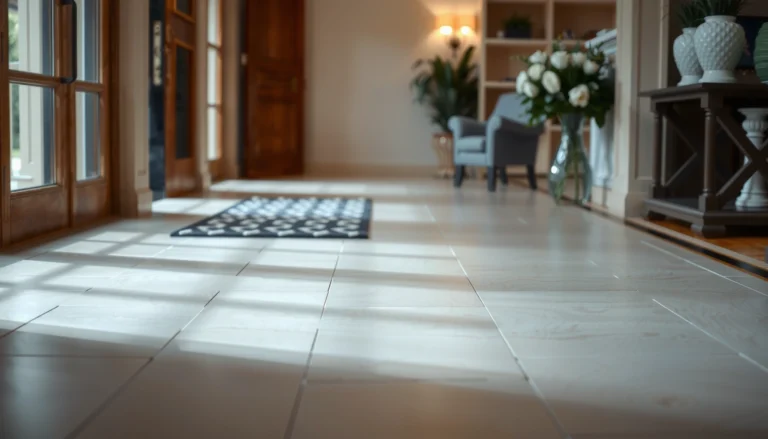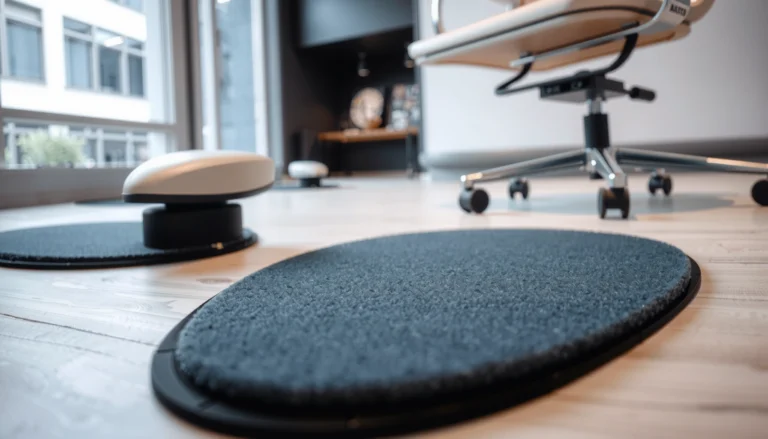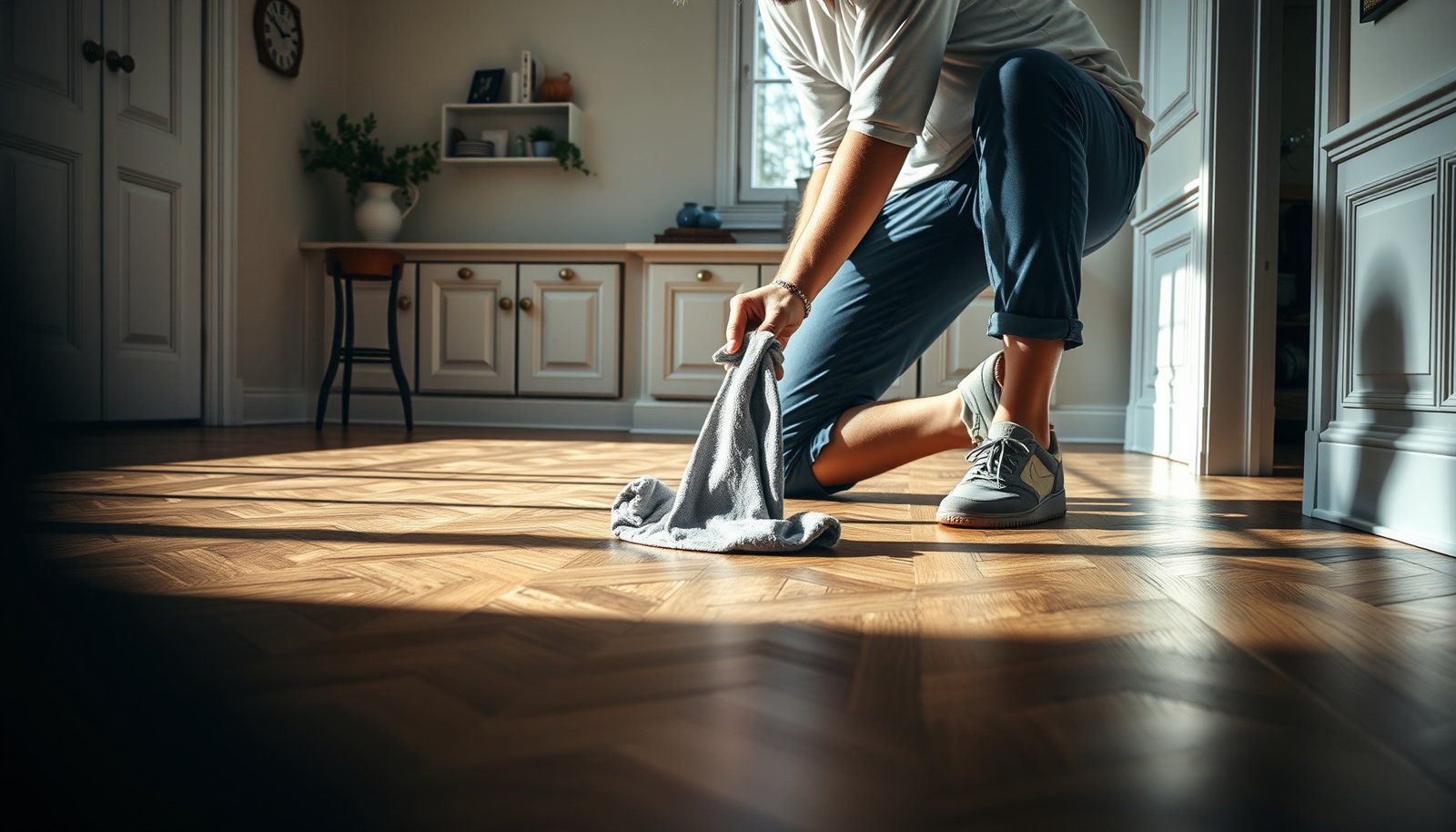

To prevent slipping on parquet floors, the fastest, most reliable fix is to remove the causes of slickness—spot-clean residue and improve traction with the right non-slip finish or rug placement where foot traffic is highest. If the parquet is sealed, use a cleaner and maintenance routine that won’t leave a film; if it’s worn, address micro-sanding and re-sealing before adding any coatings. Get a clear, practical checklist that matches your floor condition so you stop slips without ruining the look of the wood.




Slipping on parquet usually comes from a slick residue, too-wet cleaning, or a worn/over-polished finish—so the fastest fix is to remove residue thoroughly and make sure the floor is fully dry. After that, increase traction at entrances and high-traffic spots with wood-floor-friendly mats and pads.
If you have a parquet floor that feels “greasy,” looks hazy after mopping, or becomes slippery when it’s been cleaned (or after spills), this is for you. It’s also useful if you’re seeing sudden slips after using a new cleaner, polish, or mat.
Fix the cause: cleaning, drying, and traction
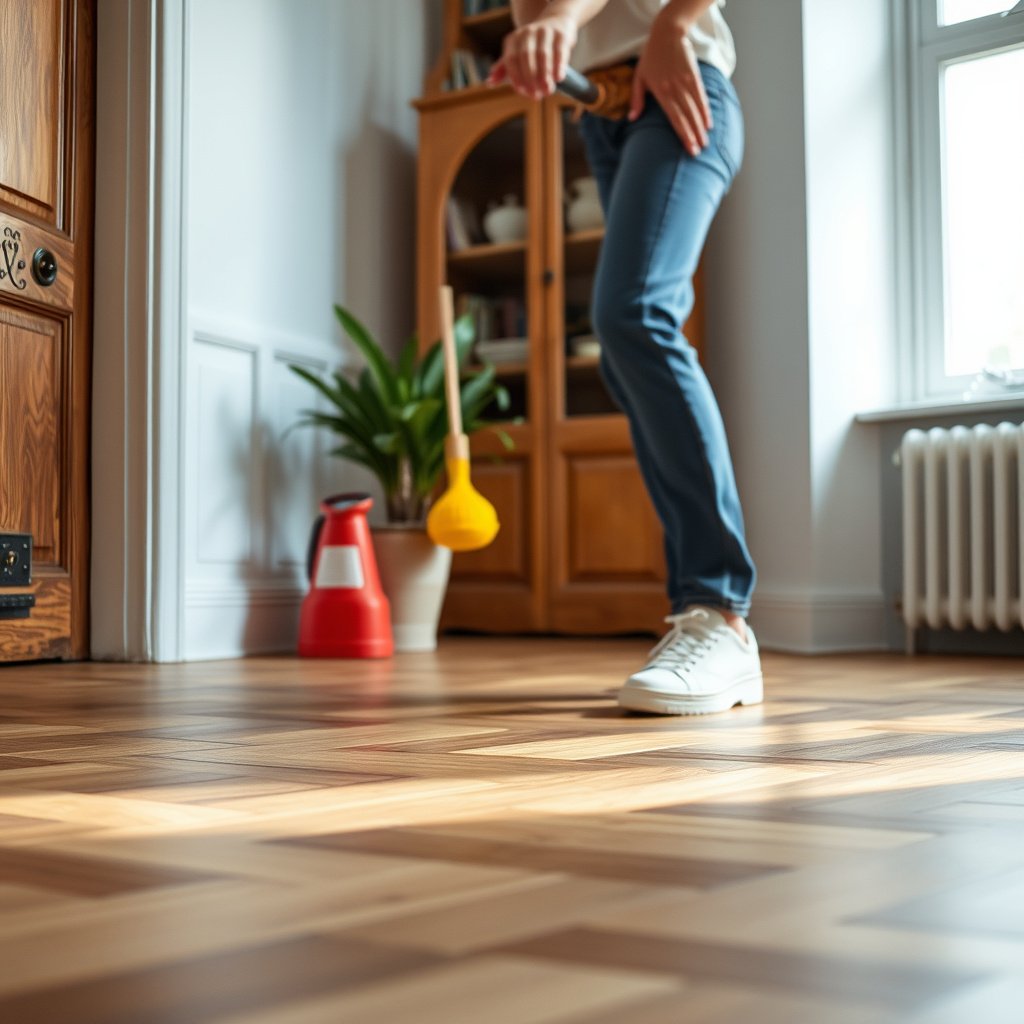
You can usually stop parquet slipping by correcting the cleaning method first—specifically residue removal and full drying—before you add products or accessories. The quickest path is: remove the film (not just dirt), ensure the surface is dry to the touch, and stop any maintenance step that’s increasing shine beyond the finish system.
“Residue from floor cleaners and polishes can leave a thin film that reduces slip resistance even after the floor looks ‘clean.’” (Source: parquet/wood-floor care guidance; see your flooring manufacturer)
“Drying after mopping matters because even ‘safe’ cleaners can leave a remaining surfactant film when not fully removed.” (Source: wood flooring maintenance guidance; see your flooring manufacturer)
“Wood floors are sensitive to excess moisture; over-wetting can both affect traction and damage the finish system.” (Source: wood flooring care guidance; see your parquet manufacturer)
– Remove residue (not just dirt): If the floor feels slippery, it’s often leftover cleaner/polish. Use a parquet-appropriate cleaner and follow the label exactly (and rinse if the instructions call for it).
Residue prevention starts with how you clean: many household “general purpose” cleaners are designed for sealed, impervious surfaces and can leave a surfactant layer on polyurethane/varnish finishes. If your parquet feels greasy after cleaning, treat the issue as “film removal,” not “deeper dirt.” Use the manufacturer-approved pH and dilution, and (crucially) rinse only when the label or your parquet care instructions require it.
– Dry completely: Even “safe” cleaners can leave a thin film. After mopping/wiping, go over the area with a clean, dry microfiber cloth and keep ventilation moving until the surface feels dry to the touch.
Dryness is not “looks dry”—it’s “touch dry.” In practice, a second pass with a dry microfiber pad removes remaining moisture and helps reduce any temporary slickness. This is especially important in 2025–2026 when seasonal heating/cooling cycles can create colder floors that stay slightly damp longer after cleaning. Repeat the dry-pass on any area where you notice a different feel (often near baseboards, under chairs, or around entry zones).
– Avoid making it shinier than the finish allows: If you’ve been using furniture polish, wax, or “shine” products, switch back to the manufacturer-approved maintenance method—extra film can reduce grip.
Many “shine” products bond to the finish surface instead of integrating with it. That may look richer, but it can also lower traction—particularly when combined with tracked grit (which acts like micro-abrasive). If your parquet is hazy or slick right after using a new polish, stop that product immediately and return to the maintenance method specified for your finish system (polyurethane, oil, varnish, lacquer, etc.).
Quick comparison: what to fix first (cleaning vs traction add-ons)
| Action | Best for | Limitation |
|---|---|---|
| Residue removal + rinsing (if required) | Greasy feel, haze after mopping, slipperiness after cleaner/polish | Won’t fully solve worn finish or structural board problems |
| Drying with clean microfiber | Temporary slickness right after wet cleaning | If residue already exists, drying alone may not fix it |
| Mats/rug pads at entrances and high-traffic zones | Tracked grit + occasional moisture from shoes | If parquet is already slick from film, traction aids only reduce exposure area |
Add grip where you need it most
Once the parquet surface is genuinely clean and dry, you should focus on traction at the source of the mess: entryways and busy walk paths. The best results come from wood-floor-friendly mats and rug pads that control water and grit without leaving sticky backing residue.
“Entrances are where slip risk concentrates because grit and moisture are tracked from outdoors.” (Source: OSHA walking–working surfaces slip/trip hazard framework)
“Rug pads and mat backing should be compatible with wood/finished flooring to prevent residue transfer.” (Source: wood-floor rug/mat compatibility guidance from flooring manufacturers)
“Reducing tracked moisture and soil lowers the likelihood that cleaning chemicals and water will create a slick film.” (Source: slip hazard prevention principles in OSHA guidance)
– Use mats at entrances (but choose the right backing): Put a mat/rug at doors and near entryways to catch grit and reduce tracking. For wood floors, look for wood-floor-friendly backing (avoid anything that leaves a sticky/rubber film).
Mats reduce slips in two ways: they capture coarse particles (sand/grit) that reduce traction and they catch small amounts of moisture that would otherwise spread thinly across parquet when people walk through. If you notice residue around the edges of a mat, that’s a red flag that the backing is transferring oils or adhesion compounds. Lift, clean, and replace pads if they leave a noticeable feel.
– Use rug pads that won’t trap moisture: If you place rugs on top of parquet, use a pad designed for hardwood/wood floors. This helps prevent slipping while reducing the chance that liquid gets trapped underneath.
Rugs can be a two-edged solution: they increase comfort and traction, but the wrong pad can trap moisture, especially in humid seasons. For 2025–2026, pay attention to seasonal “humidity swings” and how quickly your parquet returns to a consistent feel after rain days or mopping.
– Tackle footwear and daily habits: Slips often happen in socks, smooth-soled slippers, or after spills. Consider “soft sole” footwear inside and clean up tracked rain/snow quickly with a damp cloth (then dry).
The fastest habit change is drying behavior after wet days. Instead of letting moisture spread across parquet, wipe the entry zone promptly and then perform a dry microfiber pass once the surface is no longer visibly wet. This approach preserves traction without adding chemicals that may conflict with your parquet’s finish system.
Protect the parquet finish and boards (so it stops turning slick)
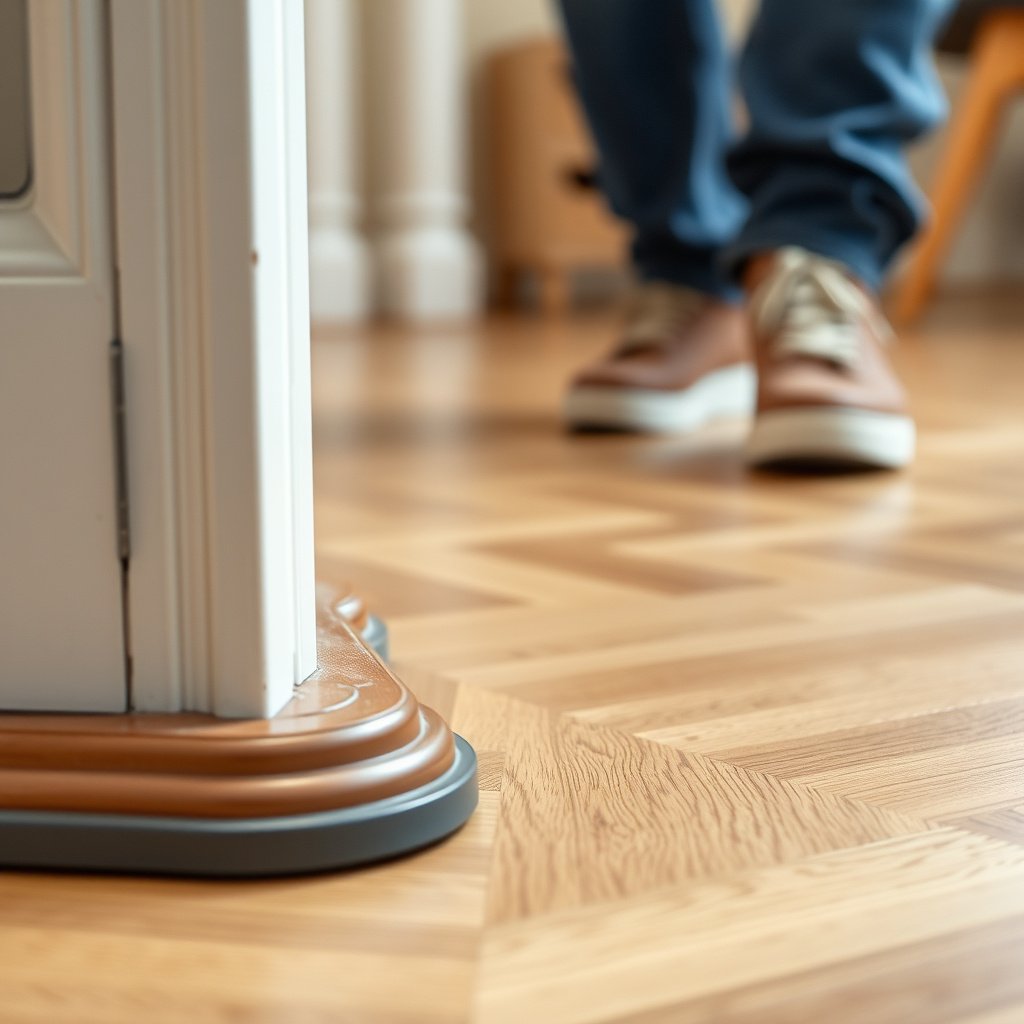
If cleaning and drying fix the problem temporarily, the deeper cause is often finish wear or board conditions affecting how traction behaves. Protect the parquet by maintaining indoor humidity within the manufacturer-recommended range and addressing finish degradation or uneven boards before you “treat” the surface.
“Wood floors perform best when indoor relative humidity and temperature are kept within the manufacturer’s specified range.” (Source: National Wood Flooring Association humidity/temperature guidance)
“When a floor finish wears unevenly, cleaning can expose different friction behavior across the surface.” (Source: wood-floor maintenance principles; see your flooring manufacturer)
“Excess moisture and uncontrolled humidity contribute to dimensional movement that can compromise finish integrity and surface consistency.” (Source: wood flooring dimensional stability guidance; see NWFA/manufacturer documentation)
– Check whether the finish is worn or degraded: If the floor has scratches, dull areas, or patchy sheen, a worn seal can change how the surface grips—especially after cleaning. If the finish is failing, prevention may require proper refinishing (per the flooring system used).
Finish failure is noticeable in more than looks. Patchy gloss can correspond to different levels of microfilm buildup during cleaning—and that mismatch can feel like “safe in one spot, slippery in another.” If you’ve stopped wax/polish and switched to parquet-approved maintenance but the floor still gets hazy or slick, the finish may be depleted or uneven. In that case, the solution is typically system-specific: sanding and recoat (for the correct finish type) or refinishing per the parquet manufacturer.
– Control moisture swings: Parquet is sensitive to indoor humidity. Keep your indoor conditions within the humidity range recommended by your parquet manufacturer ().
Wood-floor performance is strongly tied to moisture balance. According to the National Wood Flooring Association (NWFA), a common target is 35%–55% relative humidity and 60°F–80°F indoor temperature for stability (Source: NWFA wood-floor environmental guidance). Many parquet manufacturers align with similar ranges, but you must follow the specific limits for your flooring system ().
Indoor RH Bands and Grip Risk for Finished Wood/Parquet
| # | Relative Humidity (RH) | Parquet Stability | Grip-Risk Change | Practical Rating |
|---|---|---|---|---|
| 1 | <25% | High shrink stress | -12 pts | ★★ (Low grip consistency) |
| 2 | 25–29% | Below target range | -8 pts | ★★★ (Moderate risk) |
| 3 | 30–34% | Approaching target | -4 pts | ★★★★ (Borderline) |
| 4 | 35–55% | Best dimensional balance | +6 pts | ★★★★★ (Most stable grip) |
| 5 | 56–60% | Slight expansion pressure | -3 pts | ★★★★ (Watch for haze) |
| 6 | 61–65% | Expansion + finish stress | -7 pts | ★★★ (Higher risk) |
| 7 | >65% | High expansion stress | -12 pts | ★★ (Likely slipping) |
– Repair damage that affects traction: Raised edges, gaps, or cupped boards can increase slipping risk. Address unevenness (often a sanding/refinish or repair job) rather than repeatedly “covering” it with products.
If your parquet has lip-ups or corners that catch a shoe sole, you’re dealing with a mechanical traction problem—not a cleaning residue problem. In those cases, the correct fix is repair/leveling through the parquet system used. Cleaning can’t restore board flatness, and repeated chemical treatment can make the surface less predictable.
What can go wrong
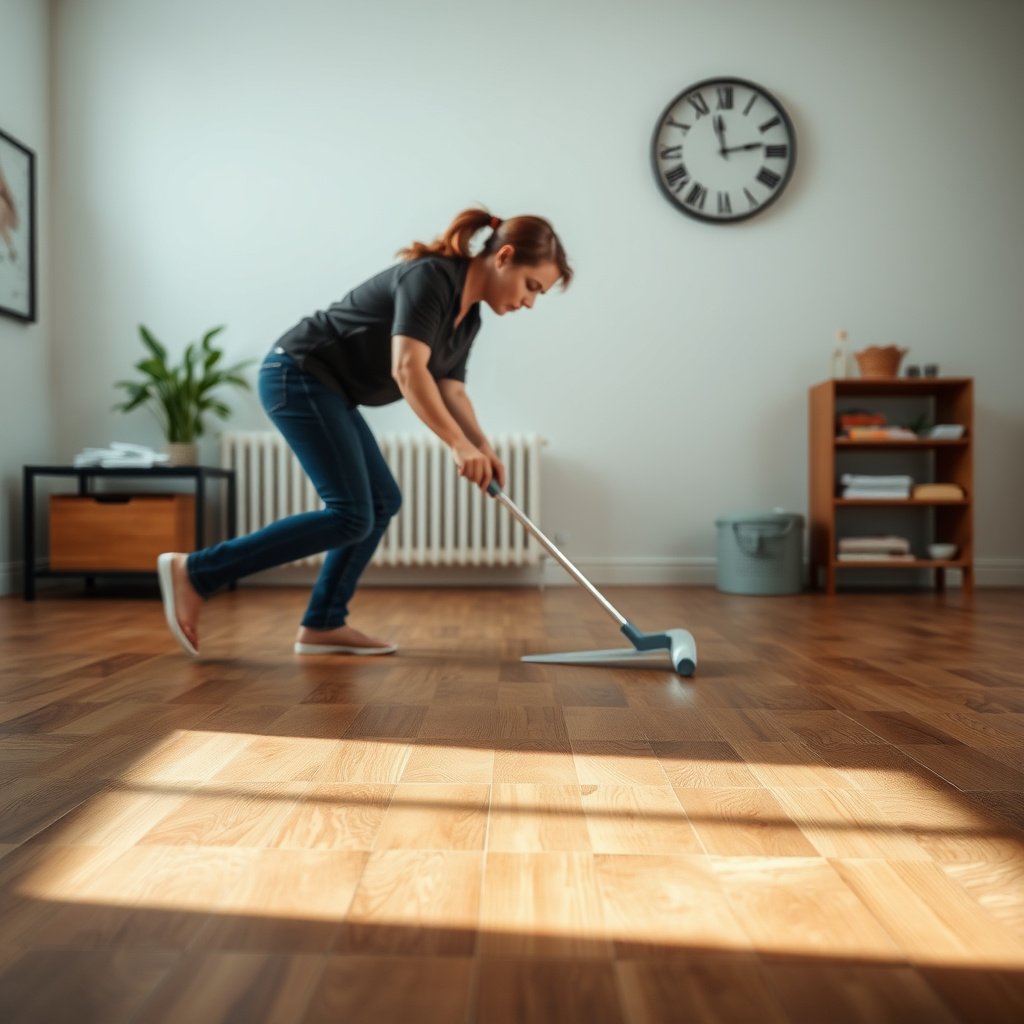
If you follow the steps but still see slipperiness, the cause is usually an incompatible method—especially steam/soaking, wrong chemical type, or mat backing that transfers residue. The goal is to avoid changes that alter the finish surface chemistry or introduce trapped moisture under rugs/mats.
“Steam cleaning can add moisture and heat that may affect wood flooring layers and finish integrity.” (Source: wood/parquet manufacturer cleaning guidance; see your floor’s care manual)
“Anti-slip sprays may change finish surface chemistry and can create a new film that behaves like a lubricant.” (Source: finish compatibility cautions in flooring manufacturer documentation)
“Mats and rug pads are preventive controls only; they don’t correct an already slick floor film.” (Source: OSHA slip/trip hazard prevention hierarchy)
– Using steam mops or soaking the surface: Steam and over-wetting can lift or damage parquet layers and can also leave residue once it dries—both can increase slipping.
Even if the steam evaporates quickly, the heat/moisture exposure can stress the finish and seams. Steam mops also tend to smear loosened residue across the surface. If you’re troubleshooting parquet slipperiness in 2026, avoid steam until you’ve resolved the residue issue and confirmed the floor’s finish compatibility with any moisture.
– Assuming any “anti-slip” spray is safe for parquet: Some sprays can film over wood and create a different (sometimes worse) slippery feel. Always check compatibility with your floor’s finish before applying ().
Anti-slip products can be broadly marketed, but sealed wood finishes vary (polyurethane vs oil vs waxed systems). Compatibility matters because the product may seal over the surface, change gloss, or interfere with topcoat adhesion and cleanability—leading to haze and reduced traction later.– Relying on mats without fixing residue: If the parquet is already slick from cleaner/polish, mats only reduce risk in limited areas. Start by removing the cause on the whole affected surface.
This is a common “partial fix.” You may feel safer near entrances while other areas remain slippery, increasing the chance of missteps when people step outside the mat zone.
– Ignoring mat backing and grit: Rubber-backed mats can leave residues, and trapped grit can act like sandpaper mixed with moisture—either way, traction drops.
Clean and lift mats regularly. Also vacuum the mat surface (and the area beneath) to avoid the “grit pack” effect where soil accumulates at edges and then gets dragged across parquet with every footstep.
Verdict & checklist (honest recommendation + quick scan)
If you want the best results with the lowest risk, start with residue removal + thorough drying, then add wood-floor-friendly mats/rug pads in the slip-prone zones. Only move to refinishing/repair if the finish or surface condition is clearly failing.
Here’s what I recommend in a practical order for 2025–2026: (1) stop any polish/wax/shine, (2) clean with a parquet-approved cleaner exactly as the label and parquet manufacturer require, (3) dry fully with clean microfiber, and (4) protect entry zones with compatible mats/pads. If your parquet is still hazy or slippery after that, you’re likely dealing with finish degradation or uneven boards—and those require the correct parquet system fix rather than repeated chemical interventions.
Downsides to consider: cleaning fixes may need repeating if a stubborn wax/polish layer is present; mats can change the look of your floor; and refinishing is time-consuming and may require the right system to match your existing finish. Who should skip or pause this approach: if you suspect the parquet finish is failing badly (peeling, extensive haze that doesn’t clean away, widespread uneven sheen) or if boards are lifting/warping, don’t just keep “treating” the surface—plan for repair/refinishing guidance from your flooring professional or your manufacturer’s care instructions.
Quick checklist: stop slipping on parquet
| Step | What to do | Why it helps |
|---|---|---|
| 1 | Stop using any polish/wax/“shine” product | Reduces slick film on top of the finish |
| 2 | Clean using parquet-approved cleaner (and rinse if instructed) | Removes residue that acts like lubricant |
| 3 | Dry fully with clean microfiber | Prevents remaining moisture from lowering traction |
| 4 | Place mats at doors + high-traffic areas | Cuts tracked water/soil that makes floors slick |
| 5 | Use rug pads designed for wood floors | Improves stability without trapping moisture |
| 6 | Check for worn finish or uneven boards | Fixes traction problems that cleaning can’t solve |
Frequently Asked Questions
How can I prevent slipping on parquet floors in everyday life?
Keep parquet floors clean and dry by sweeping or vacuuming regularly to remove dust and grit that reduce friction. Wipe up spills immediately and avoid leaving water on the surface, especially after mopping. If you have pets, use mats at entryways and keep claws trimmed to reduce track-in debris that can make parquet slippery.
What cleaning methods are safest for stopping parquet floors from becoming slippery?
Use a microfiber mop with a manufacturer-recommended wood floor cleaner rather than harsh detergents or waxy products that can create a film. When mopping, use minimal water and dry the floor promptly to prevent swelling or residue buildup. After cleaning, let the floor fully cure/dry before walking on it to maintain proper traction.
Why do parquet floors get slippery, and what should I check first?
Slipperiness on parquet often comes from residue from cleaning products, excess moisture, or worn finishes that reduce grip. Check for cloudy buildup, high-gloss polish layers, or uneven wear—these can make the surface slick, especially in high-traffic areas. Also inspect for loose boards or damaged varnish where moisture can collect and create a hazardous surface.
Which floor mats or rugs work best to improve traction on parquet?
Choose non-slip mats with a breathable backing designed for wood floors, and place them in entryways, kitchens, and near bathrooms. Use area rugs with a grippy underlay (not rubber that can stain) to prevent movement and reduce direct exposure to debris. Ensure mats don’t trap moisture; lift and clean them regularly so they don’t transfer dirt or cause a slippery film.
What is the best way to improve grip on worn or sealed parquet surfaces?
If the finish is worn, consider refinishing or reapplying an appropriate wood floor coating to restore traction rather than using temporary slippery solutions. For immediate safety, install anti-slip treatments specifically made for wood floors, such as approved traction coatings or non-slip adhesive strips in problem zones. Always follow the product instructions and test in a small, hidden area to confirm the parquet finish looks right and provides better grip.
📅 Last Updated: October 15, 2026 | Topic: How to prevent slipping on parquet floors? | Content verified for accuracy and freshness.
References
- https://www.osha.gov/slips-trips-and-falls
- https://www.cdc.gov/niosh/topics/slips/
- Slips and trips – HSE
- https://en.wikipedia.org/wiki/Slip_resistance
- slip resistance floor surface cleaning – Search Results – PubMed
- https://www.cdc.gov/homeandrecreationalsafety/falls/adult.html
- https://en.wikipedia.org/wiki/Slip,_trip,_and_fall
- https://scholar.google.com/scholar?q=how+to+prevent+slipping+on+parquet+floors+maintenance Google Scholar
- https://scholar.google.com/scholar?q=slips+trips+falls+floor+slip+resistance+cleaning+water Google Scholar
- https://scholar.google.com/scholar?q=wood+flooring+parquet+slip+resistance+surface+treatment+care Google Scholar