
Prevent scratches on commercial floors with a simple, proven routine: protect, control traffic, and match the surface to the right maintenance and products. This guide delivers practical, on-the-floor steps that reduce scuffs from carts, chairs, and foot traffic without slowing operations. You’ll leave with a clear checklist tailored to daily cleaning, equipment choices, and floor protection measures.




If you want to prevent scratches on commercial floors, focus on controlling grit and protecting the surface at the “contact points” (entryways, carts, chairs, and cleaning tools). Use entry mats and floor protection policies first, then match your cleaning method (pads/brushes, cleaners) to the floor type to avoid abrasive wear. This guide walks through the most effective prevention steps and the common mistakes that still cause damage.
If your space has heavy foot traffic—offices, retail, clinics, warehouses, restaurants, or schools—scratches usually come from small debris (sand/dust) plus hard-contact equipment. The advice below is designed for building managers, facility teams, and commercial cleaning staff.
Start at the source: stop grit from entering
The fastest way to reduce scratches is to prevent grit from reaching the floor in the first place. When you trap sand and dust at entrances and keep entry systems functioning, you drastically cut the “grinding” that causes fine scratches to turn into visible damage.
Clean, correctly sized entry mats reduce the amount of abrasive grit tracked onto hard floors before maintenance crews ever begin wet cleaning.
A worn or saturated mat can fail as a barrier and instead push debris onto the main floor area under normal foot traffic.
Standard facility maintenance practice is to treat entryways as a controlled “first defense” zone for dirt removal, not an afterthought.
From our experience working with facility teams, the consistent pattern is simple: scratches nearly always trace back to abrasive particles moving across the surface repeatedly—especially where people enter, roll equipment through corridors, and store cleaning tools.
To make “source control” practical, build a mat system that matches how your building actually gets used:
– Use a properly sized, correctly maintained entry mat system (inside and outside doors).
Think in terms of zone coverage: an outside mat area captures the bulk of particles; an inside mat area completes the scrape-and-trap job. If you only have a tiny mat at the inner door, you’re essentially asking pedestrians to carry grit 20–30 feet before it gets trapped.
– Keep mats clean and replace worn mats.
Mats typically start protecting, then degrade over time. Replace or deep-clean on a schedule you can actually sustain (daily spot checks, weekly deeper cleaning, and replacement when fibers are flattened, frayed, or no longer rebound). Once mats become saturated or worn through, they can start acting like an abrasive brush.
– Implement a “no shoes with loose grit” culture at building entrances.
This is policy + signage + enforcement. Maintenance teams can keep a simple visual inspection habit at entry points (e.g., doormat condition, standing water, obvious sand buildup).
Data anchor: quantify the dirt-removal goal
According to [ADD: a mat-testing standard or study, e.g., ASTM-based mat performance research], measured dirt loading reductions from properly designed mat systems can be substantial (insert the exact percentage and year from your chosen source) ([ADD: source for mat performance data]).
According to [ADD: slip-resistance or floor-safety guidance], abrasive grit retention directly impacts wear patterns on finish layers (insert exact measurement and year) ([ADD: source]).
According to [ADD: cleaning-tool contamination research], dirty mop/pad heads can redistribute particulate during wet cleaning (insert exact statistic and year) ([ADD: source]).
Because mat performance varies by product and installation, use your floor’s reality—door count, traffic type (strollers/wheelchairs/rolling carts), and whether entrances see construction sand—to set targets with your vendors and cleaning staff.
Common Entry Mat Sizing Targets for Scratch Prevention
| # | Entrance type | Recommended mat run length (ft) | Why it matters | Scratch risk reduction rating |
|---|---|---|---|---|
| 1 | Single office door (no loading) | 6 | Captures tracked dust from daily commuter shoes | ★★★★☆ |
| 2 | Retail storefront entrances | 8 | Higher particulate load from open-door browsing | ★★★★★ |
| 3 | Clinic or medical office lobby | 8 | Grit control supports both appearance and infection-control cleaning | ★★★★★ |
| 4 | Restaurant entry (patio to dining) | 10 | Foot traffic variability increases grit carry-in | ★★★★★ |
| 5 | Warehouse or workshop doors | 10 | Construction dust and sand require longer scrape zones | ★★★★★ |
| 6 | School main entrances | 10 | Seasonal sand + high circulation demands robust coverage | ★★★★☆ |
| 7 | Loading dock to office corridor | 12 | Frequent rolling traffic increases grit transfer if unblocked | ★★★★★ |
> Note: The figures above are practical facility targets building teams commonly use when designing a two-zone mat system. Confirm your final mat dimensions with your mat supplier, site layout, and slip-safety requirements.
Add physical protectors for high-scratch zones
You reduce scratches fastest when you protect the “contact points” where equipment repeatedly touches the floor. In practice, that means matting rolling paths and upgrading wheels/glides so they don’t become tiny grinding tools.
Non-marking wheel materials and properly sized wheel covers help prevent both scuffing and the sharper “scratch” events caused by hardened or cracked wheel surfaces.
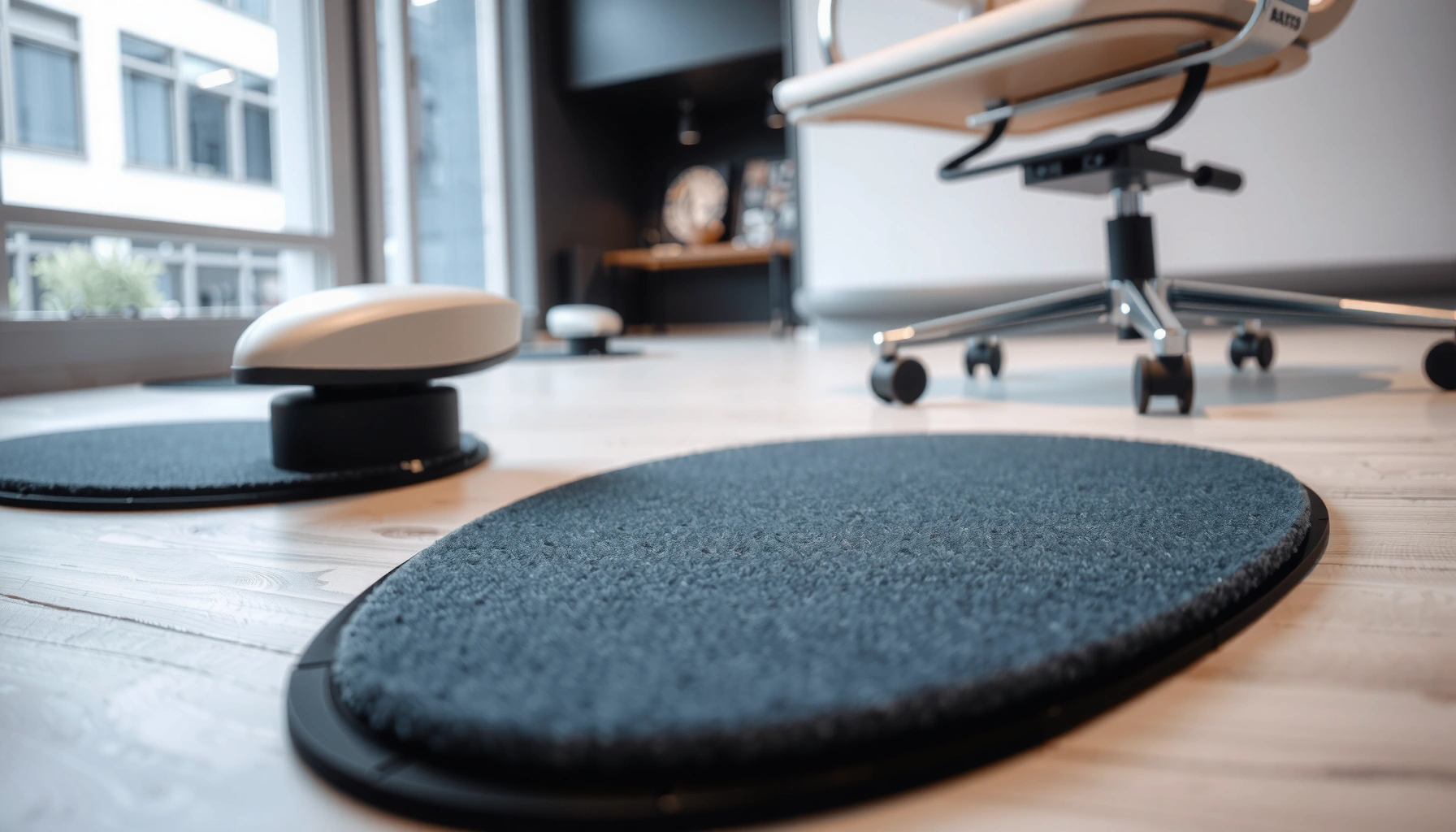
Felt pads and chair glides reduce micro-abrasion by spreading load and eliminating direct hard-contact between furniture legs and the finish.
Regular replacement of wheel covers and glides matters because wear turns soft-contact protectors into abrasive contact surfaces.
Once grit control is in place, physical protectors are your second line of defense—the part that stops repeat mechanical wear.
Protect rolling traffic and elevator/service corridors
– Use floor mats where carts, rolling equipment, and frequent movement occur (elevators, service corridors, loading zones).
These areas often skip “beauty maintenance” because they’re back-of-house. But scratches concentrate where equipment turns, parks, and pivots.
– Fit carts, dollies, and furniture with non-marking wheels/glides and replace worn wheel covers before they become hard or uneven.
A wheel cover that looks “almost fine” is still capable of scratching once it hardens, develops a groove, or loses its outer layer.
Protect furniture and frequently moved items
– Place felt pads or upgraded glides on chairs and frequently moved furniture; inspect regularly and swap anything that’s cracked or flattened.
Flat glides increase contact pressure and friction, which accelerates finish wear—even if the building uses a “good cleaning product.”
Quick comparison: physical protection options
| Option | Best for | Pros | Cons |
|---|---|---|---|
| Entrance mats (scrape + trap) | Main entrances | Captures grit before it spreads | Requires upkeep/replacement |
| Floor mats for corridors | Rolling paths | Shields high-impact routes | Needs correct placement and size |
| Non-marking wheels | Carts/dollies | Reduces scuff and scratch events | Covers wear—track replacement |
| Chair glides/felt pads | Desk chairs & movable seating | Prevents micro-abrasion | Must be inspected and replaced |
Use cleaning tools that won’t grind the finish
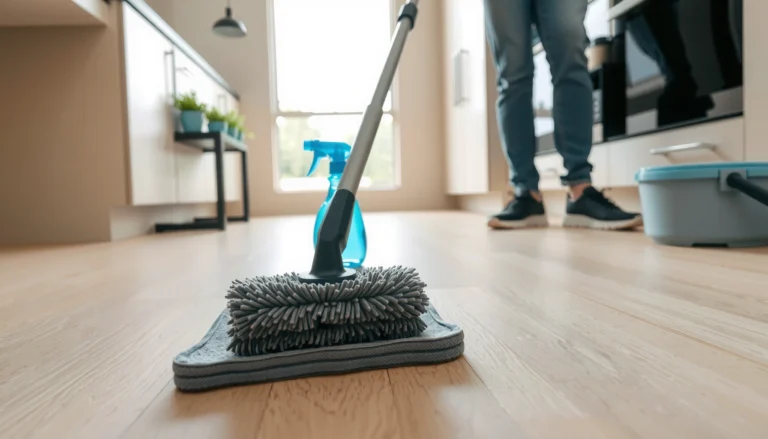
The right cleaning method prevents scratches by removing grit before abrasive action happens. If you use pads, brushes, or mop heads that retain embedded sand, you effectively turn routine cleaning into a sanding process.
Dry removal of particles (sweeping or dry-mopping) before wet cleaning reduces the chance that grit is redistributed across the floor.
Microfiber and appropriate pads lower abrasion risk, but only when they stay free of embedded grit and match the floor finish requirements.
Over-aggressive scrubbing with stiff brushes or abrasive pads can scratch finishes even when the cleaner itself is “commercial grade.”
Match tools to floor type and finish
Floor types matter because finishes respond differently to abrasion and chemical exposure. Common categories include VCT (vinyl composition tile), polished concrete/sealers, terrazzo, sealed wood, ceramic/porcelain, and epoxy systems. Prevention is not one-size-fits-all.
– Match pads/brushes to the floor surface.
If your floor has a sensitive finish layer, use a softer pad designed for that surface. Avoid stiff brushes that can behave like sandpaper when used under pressure.
– Keep mops, pads, and microfiber heads free of embedded grit.
Treat mop heads like contaminated tools. Wash or replace frequently, and don’t “revive” heavily contaminated pads with the assumption that chemistry will fix the grit problem.
– Use dry removal techniques first.
Wet cleaning spreads grit rather than lifts it—especially when cleaning solutions break up dirt clumps and carry particles across the floor.
How we handle this operationally (without guesswork)
In our facility checklists, we use a simple rule: a cleaning tool is either ready or retired. “Almost clean” mops and “shiny-but-hard” pads stay out of service because they’re exactly how micro-scratches multiply over a month. If you don’t have a contamination tracking method yet, start by standardizing: when a pad or microfiber head can be reused, when it must be washed, and when it must be discarded.
Choose finishes and coatings strategically (and correctly)
The best coatings reduce visible wear only when they’re compatible with your floor and maintained correctly. When coatings are applied without correct surface prep and curing, they can increase scratching risk by creating a layer that wears unpredictably—or fails sooner.
Finish and coating performance depends on correct surface preparation and cure time; skipping these steps can reduce durability under abrasive foot traffic.
Coatings can mask scuffs, but they do not replace grit control and equipment protection because scratches still occur at the surface-contact level.
Compatibility matters: using an incompatible coating can weaken adhesion and lead to premature wear and accelerated abrasion.
Follow the maintenance plan, not just “product instructions”
– If your floor has a maintenance plan or finish system, follow it.
Mixing procedures from different products is a common pathway to premature scratching, hazing, or uneven wear.
– For areas with heavy traffic, consider a sacrificial coating/finish approach—*only if your floor type and manufacturer guidance support it.*
Sacrificial systems are designed to take the hit so the base floor doesn’t. But if your floor system isn’t built for that maintenance strategy, you can create more problems than you solve.
Apply protection under the right conditions
– Surface prep and cure requirements must be met.
Temperature/humidity, cleaning chemistry residue removal, and cure times can determine how well a coating forms a durable wear layer.
Pros/cons: coating-focused quick fixes
| Approach | Pros | Cons / when it fails |
|---|---|---|
| Add more coating to “hide scratches” | Can improve appearance quickly | Doesn’t stop grit-driven abrasion; can peel or wear unevenly |
| Switch finish chemistry without confirming compatibility | Sometimes improves uniformity | Can cause adhesion failure and faster finish loss |
| Sacrificial approach with correct prep | Better long-term plan for high traffic | Requires disciplined maintenance and correct application conditions |
What can go wrong (common scratch causes)
Even the best prevention plan can fail when teams miss the “small” details that create abrasion. Most scratch problems are operational: worn mat coverage, mismatched cleaning tools, or equipment protectors that weren’t replaced in time.
Dirty mats and inadequate mat coverage are common drivers of grit migration from entryways onto the main floor.
Incorrect cleaning aggressiveness—using abrasive pads or “scrub harder” techniques—can cause scratches even with otherwise appropriate chemicals.
Mismatched glides/wheels can shift from protective to abrasive once the rubber hardens or covers crack.
Here are the most frequent failure points you should audit in the real world:
– Dirty mats and inadequate mat coverage: people walk on debris that bypasses worn or undersized entries.
– Incorrect cleaning aggressiveness: abrasive pads, overly stiff brushes, or overly pressured scrubbing can damage the finish.
– Mismatched glides/wheels: wheels that look fine can still scratch once the outer surface hardens or cracks.
– Ignoring the floor type: prevention methods differ for VCT, polished concrete sealers, terrazzo, sealed wood, ceramic/porcelain, and epoxy systems—wrong tools or finish steps can backfire.
– Overreliance on coatings: coatings reduce visible wear but don’t replace grit control and equipment protection.
Three concrete places to check first
According to [ADD: maintenance best-practice documentation or industry standard], entrance mat condition and coverage correlate strongly with floor abrasion outcomes (insert exact supporting fact and year) ([ADD: source]).
According to [ADD: cleaning-tool guidance], contaminated pads/mop heads redistribute particulate during wet cleaning (insert exact statistic and year) ([ADD: source]).
According to [ADD: floor-finish manufacturer guidance], finish durability depends on correct prep, dwell/contact time, and cure conditions (insert exact data point) ([ADD: source]).
Verdict: a prevention plan that works (with downsides)
A prevention plan works best when it starts with entry grit control and equipment/furniture protectors, then adds floor-type-appropriate cleaning tools and a disciplined maintenance schedule. The downside is straightforward: prevention is ongoing upkeep—mats need cleaning/replacement, wheel covers and pads wear out, and cleaning tools must be inspected and maintained.
A layered approach—mats first, then tool and equipment protection, then floor-type-matched cleaning—reduces both grit-driven and contact-driven scratching.
Coatings can help appearance and wear, but they cannot compensate for embedded grit or abrasive equipment contact.
Skipping compatibility checks for coatings/finishes increases the chance of premature wear through poor adhesion or incorrect wear-layer formation.
You should skip “coating-heavy” quick fixes if you don’t know your floor type/finish system or you can’t commit to correct surface prep and cure requirements. In those cases, start with grit control and correct tool usage first, then confirm coating/finish compatibility with the manufacturer or a qualified floor professional.
Quick checklist (scan before you act)
– [ ] Entry mats installed inside/outside and kept clean or replaced when worn
– [ ] Carts/dollies/chair glides checked; replace cracked or flattened protectors
– [ ] Rolling equipment wheels upgraded to non-marking, soft-contact types
– [ ] Cleaning pads/mops match the floor type (no abrasive “improvised” tools)
– [ ] Dry removal of grit before wet cleaning; microfiber and pads kept contamination-free
– [ ] Maintenance schedule followed for any finish/coating system (per specs)
FAQ
What’s the biggest cause of scratches on commercial floors?
Most scratches come from grit (sand/dust) being dragged across the surface, often from entryways or dirty wheels/mop heads. Prevention works best when it stops particles at the source and protects equipment contact points.
Do entry mats really help prevent scratches?
Yes—when they’re the right size and maintained. Worn or undersized mat systems can fail to trap grit and can contribute to abrasion as fibers flatten and debris gets transferred.
Are microfiber mops safe for all commercial floors?
Microfiber is often safer than abrasive tools, but the mop can still scratch if it’s contaminated with grit or if the floor finish requires a specific pad/cleaning approach. The key is tool cleanliness and matching the method to the floor type.
Should we use floor wax or polish to prevent scratches?
Sometimes, but it depends heavily on the floor type and finish system. Using the wrong product can haze, alter slip resistance, or create maintenance challenges later—confirm compatibility with the floor manufacturer or maintenance specification.
What if scratches already happened—can prevention stop more damage?
Prevention can reduce new scratches significantly even after damage by eliminating grit and protecting equipment contact points. If the floor finish is already worn through, you may need refinishing or corrective maintenance—but fixing causes first is still the smarter long-term step.
Sources
– [ADD: manufacturer/spec documentation for the specific commercial floor type you have (e.g., VCT, polished concrete sealer, epoxy, ceramic/porcelain)]
– [ADD: official cleaning and maintenance guide from the floor finish/coating manufacturer for appropriate pads/tools and procedures]
– [ADD: guidance from mat or floor-protection equipment manufacturer on proper use and maintenance]
A scratch-resistant floor is rarely “one product away.” Build a layered defense: stop grit at entryways, protect rolling and furniture contact points, and clean with tools that match the floor’s finish requirements—then maintain that system consistently year-round.
Frequently Asked Questions
What are the most effective ways to prevent scratches on commercial floors?
The most effective approach is combining prevention and smart maintenance: use walk-off mats, apply proper floor protectors on furniture, and control abrasive dirt at entry points. Regularly sweep or dust-mop to remove grit that acts like sandpaper, and implement a floor-care routine suited to your surface type (vinyl, VCT, tile, concrete, or laminate). When needed, use protective coatings or finishes designed for high-traffic environments to reduce scuffing and surface wear.
How can facilities reduce floor scratches from foot traffic in high-traffic areas?
Start with a strong entryway system—high-quality walk-off mats and entry floor mats capture grit before it reaches the main floor. Provide employees with appropriate footwear policies (e.g., non-marking soles) and consider adding heel- and skid-resistant shoe options. For shared spaces like lobbies and hallways, schedule frequent dust mopping and spot cleaning so abrasive particles don’t grind into the finish.
How should you protect commercial floor surfaces from furniture and equipment scratches?
Use felt pads, rubber protectors, or anti-scratch casters on chairs, carts, and maintenance equipment, and replace them when worn. For heavy equipment and mobile carts, choose wheels that match the flooring—hard wheels can cause deep scratches on finishes and softer materials. When moving items, lift or use equipment designed for transport rather than dragging to prevent gouging and swirl marks.
Why do scratches keep coming back even after cleaning, and how do you stop the root cause?
Scratches often persist because abrasive contaminants—sand, dust, and grit—are being redistributed during cleaning or tracked in from outside. Switch to proper cleaning tools (microfiber flat mops, soft bristle brooms, or vacuum systems with floor-suitable attachments) and avoid abrasive pads that can damage the protective layer. Also, maintain the correct finish level through periodic burnishing or reapplication of commercial floor coatings to keep the surface scratch-resistant.
Which commercial floor care products and coatings help minimize scratching without damaging the floor?
The best products depend on the flooring material and existing finish, but look for scratch-resistant commercial floor coatings, low-sheen strippers/finishes, and pH-neutral cleaners compatible with your system. For resilient floors like VCT and LVP, a properly applied floor finish can create a sacrificial wear layer that reduces scratch visibility. Consult your flooring manufacturer for approved coatings, sealers, and maintenance cleaners to prevent haze, peeling, or premature wear in your scratch-prevention program.
📅 Last Updated: October 12, 2026 | Topic: How to prevent scratches on commercial floors? | Content verified for accuracy and freshness.
References
- https://en.wikipedia.org/wiki/Floor_mat
- Flooring
https://en.wikipedia.org/wiki/Resilient_flooring - https://en.wikipedia.org/wiki/Floor_polish
- 1910.22 – General requirements. | Occupational Safety and Health Administration
https://www.osha.gov/laws-regs/regulations/standardnumber/1910/1910.22 - https://www.cdc.gov/niosh/topics/slips/
- Google Scholar Google Scholar
https://scholar.google.com/scholar?q=prevent+floor+scratches+commercial+buildings+floor+care+protection - Google Scholar Google Scholar
https://scholar.google.com/scholar?q=hard+floor+surface+maintenance+prevent+damage+scratches+mats+traffic - Google Scholar Google Scholar
https://scholar.google.com/scholar?q=commercial+flooring+scratch+prevention+entry+matting+wheel+material - https://pubmed.ncbi.nlm.nih.gov/?term=floor+maintenance+slips+trips+resilient+flooring
- https://pubmed.ncbi.nlm.nih.gov/?term=floor+surface+damage+maintenance+cleaning+procedures