
Learn the fastest, safest way to clean engineered wood floors in your home office without dulling the finish or warping planks. If your floors see daily footprints, chair wheels, and tracked dust, this method delivers a streak-free clean in minutes using the right products and technique. Follow these steps to remove grime, tackle spills, and protect your investment between deeper cleanings.


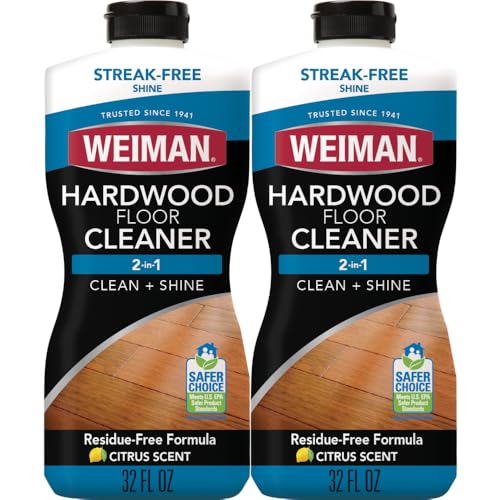
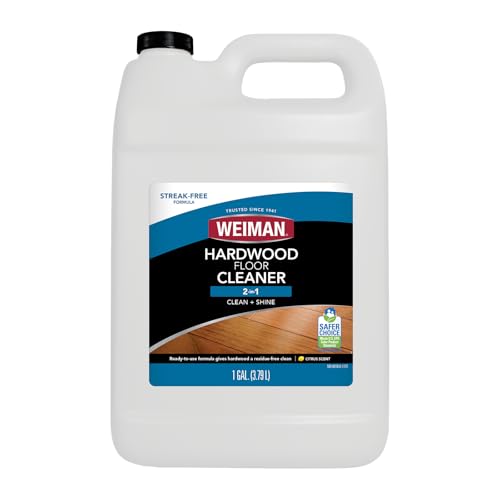
To clean engineered wood floors in a home office, start with dry removal (sweep or vacuum), then use a lightly damp microfiber mop with a cleaner your floor manufacturer approves. Avoid soaking the planks and skip steam cleaners, since extra moisture can damage the layers underneath the finish. You’ll also want to protect high-traffic areas (like where your desk chair rolls) to reduce scratches and grit that dull the surface.
If your office has tracked-in dust, frequent chair movement, or the occasional coffee/water spill, this guide walks you through safe everyday cleaning plus spot treatment and deeper refreshes without risking the finish.
Who this is for / when it applies: This applies to anyone maintaining engineered wood floors in a home office—especially if you’re dealing with daily foot traffic, chair-wheel debris, and occasional liquid spills. As of 2026, the safest approach still follows the same principles: keep abrasive grit out of the finish, use minimal moisture, and match cleaning chemicals to the specific engineered wood finish you have.
What to gather before you start
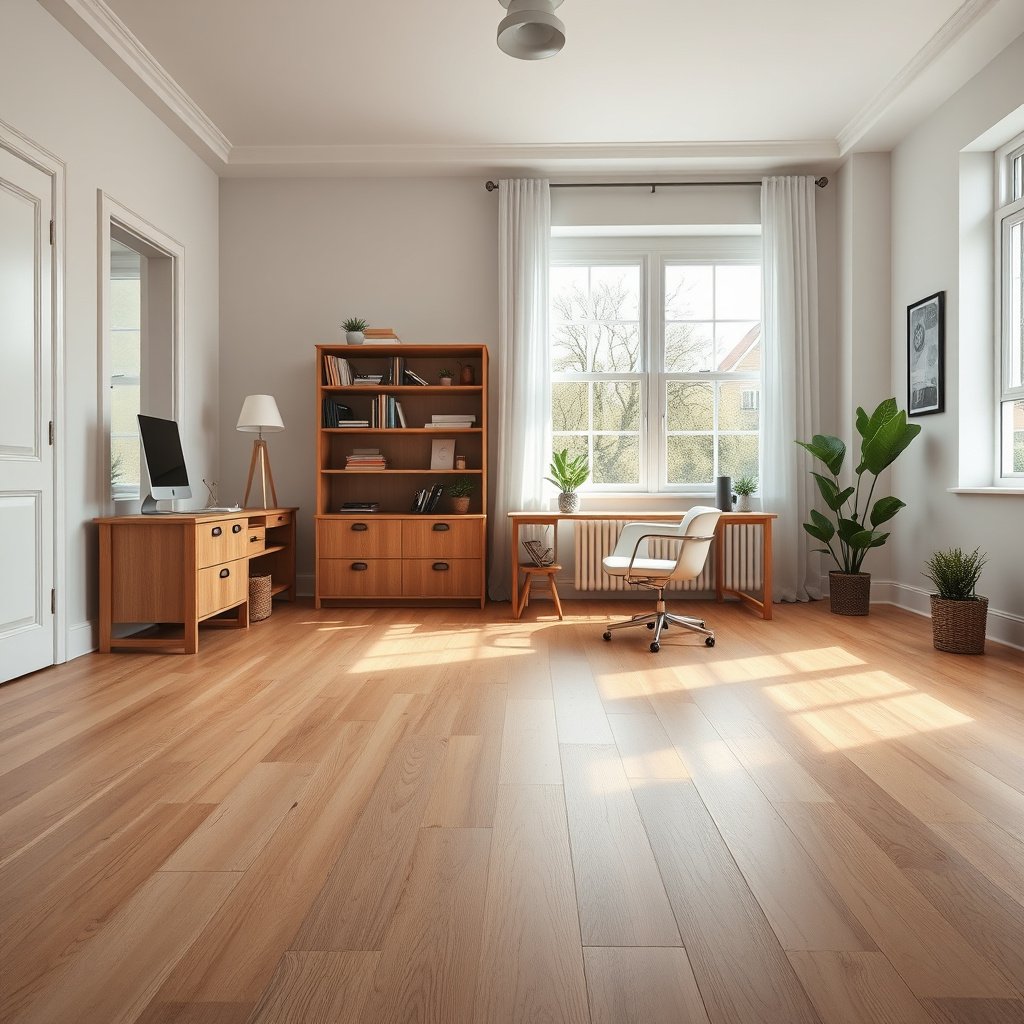
The fastest way to avoid damage is to use the right tools from the beginning—engineered wood floors shouldn’t be cleaned with abrasive equipment or dripping water. Gather microfiber tools, a soft-brush vacuum, and a floor-safe cleaner approved for your specific finish so you can clean efficiently with controlled moisture in 2026.
According to the National Wood Flooring Association (NWFA), regular dry cleaning helps prevent grit from scratching hardwood flooring surfaces. NWFA hardwood floor care guidance (official care/maintenance materials)
According to NIST, the boiling point of water at 1 atm is 100°C (212°F), which explains why steam mops introduce heat and moisture that many wood-floor warranties discourage. NIST Thermophysical Properties of Water
Microfiber cleaning works by trapping particles in fibers rather than pushing them around, which supports scratch prevention on engineered wood floors.
Before you start cleaning engineered wood floors, make sure you can remove dust without grinding it into the wear layer. In my view, the “tool setup” stage is where most office-floor problems are prevented—chair paths collect the finest grit, and grit is what dulls a finish fastest on engineered wood floors.
Supplies checklist (use these to keep engineered wood floors safe)
– Microfiber tools (flat mop head and/or microfiber cloths) to lift dust without grinding it in
– A vacuum with a soft brush attachment (or a broom with soft bristles) and a well-wrung mop cloth
– A floor-safe cleaner: use what the engineered wood manufacturer recommends; if you’re not sure, use a pH-neutral option labeled safe for engineered/wood floors
Daily and weekly cleaning (the “keep it looking good” routine)
The simple rule for engineered wood floors in a home office is: dry first, damp second, and stop moisture from lingering. As of 2026, this routine is usually enough for typical office messes because it removes abrasive grit before it can scratch and it uses only minimal water on the surface finish.
NWFA guidance emphasizes cleaning that avoids excess water and focuses on routine removal of dust and debris to protect wood floors. NWFA official care/maintenance guidance
For engineered wood floors, minimizing water contact matters because the floor is built with layered components beneath the surface finish.
What I recommend for engineered wood floors is a two-step cadence: daily micro-cleaning for debris, plus a weekly pass that’s thorough but still “lightly damp.” This is especially important around your chair legs and wheel tracks, where dust concentrates and gets pushed back over the same finish.
– Dry clean first: sweep or vacuum to remove grit that can scratch the top layer, especially along chair paths and under the desk
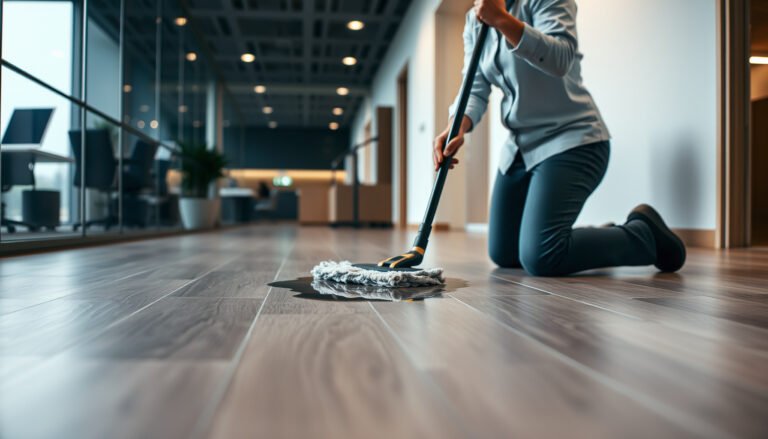
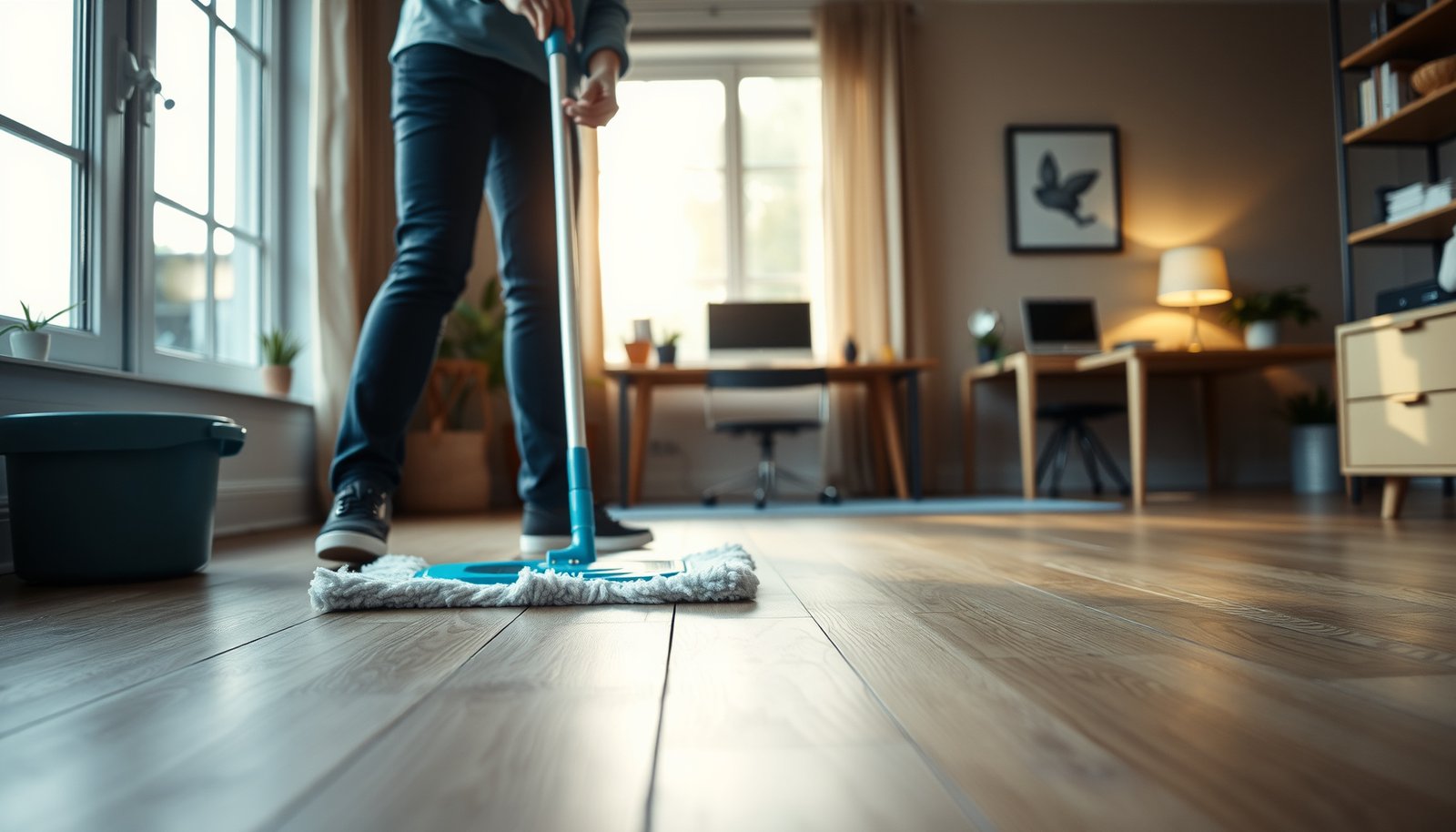
– Damp mop carefully: use a microfiber mop that’s only lightly damp—your goal is to clean, not wet the seams
– Let it dry: if you notice any lingering wet spots, wipe them with a dry microfiber cloth right away
How to mop “lightly damp” without over-wetting
For engineered wood floors, “lightly damp” means the microfiber is damp enough to lift residue, but not wet enough to leave water film. Press the mop head onto the floor briefly, check whether water transfers visibly, and re-wring if you see streaking or puddle-like dampness. This matters because engineered wood floors can have seams and edges where water can migrate toward the layered core.
Protect the office traffic lanes
In a home office, engineered wood floors are rarely evenly exposed. Your desk area accumulates fine dust from shoes, paper fibers, and chair-wheel friction. That’s why dry removal should be most frequent along:
– The rolling chair’s typical path
– The “entry” side where you track in outdoor grit
– Under-desk zones that aren’t swept as often
Spot-cleaning spills and stains in your home office
The safest spot-clean for engineered wood floors is immediate blotting plus minimal cleaner on the cloth—never soaking the plank surface. In 2026, fast action reduces the chance that liquid seeps into seams or interacts with the finish layer and creates discoloration.
NWFA-style care guidance commonly recommends blotting spills promptly instead of rubbing to avoid spreading moisture and debris across hardwood surfaces. NWFA official care/maintenance guidance
Many floor-care instructions advise applying cleaner to the cleaning tool (cloth/mop head) rather than directly flooding the floor, to control moisture contact.
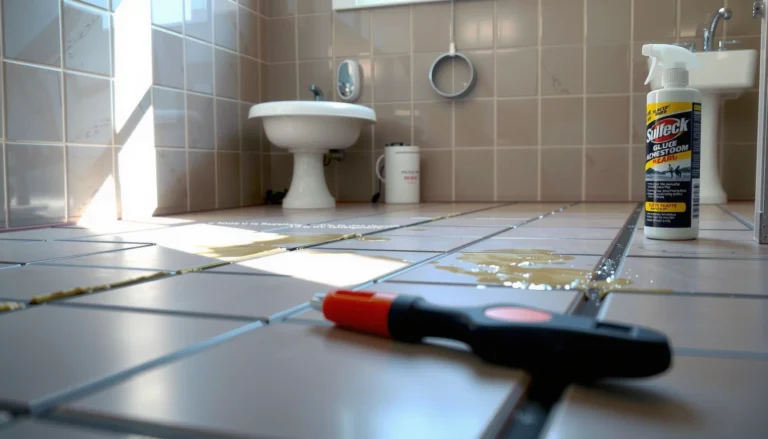
Engineered wood floors in offices get repeat offenders: coffee rings, water spots, and sticky residue from drinks or snacks. You’ll usually get the best outcome by stopping the spread early and controlling how much liquid actually reaches the seams.
– Act fast: blot liquid spills immediately with a clean, absorbent microfiber cloth—don’t rub aggressively
– Use the right level of moisture: apply a small amount of your approved cleaner to the cloth (not directly onto the floor) and then wipe
– For sticky spots (drinks, residue): repeat with a fresh cloth section until the residue lifts, then do a final wipe with a lightly damp cloth followed by a dry one
What “good blotting” looks like
When you blot engineered wood floors, you’re transferring liquid from the finish into the cloth. You should use firm contact but minimal lateral motion (no scrubbing circles). If the spill contains sugar or other sticky components, you may need multiple passes—but each pass should still be controlled and followed by a dry wipe.
Deep cleaning when the floor looks dull or has buildup
The right deep-clean approach for engineered wood floors is controlled, manufacturer-approved, and used only when routine cleaning can’t restore the finish. As of 2026, deep cleaning is often where people accidentally over-wet or over-chemical the floor, so plan it like a targeted maintenance event, not a weekly habit.
Floor manufacturers frequently restrict deep-clean products and methods to prevent finish damage, warranty issues, or moisture penetration.
Moisture control is central to wood-floor longevity because excess water can affect dimensional stability, particularly around seams and edges.
In practice, “dull” engineered wood floors usually come from one of three things: trapped grit that was never fully removed, a thin film from repeated cleaners, or finish wear that can’t be reversed without proper restoration products. Your job in deep cleaning is to remove buildup without changing or stripping the finish.
– Choose the timing: deep clean only when the routine doesn’t cut it (buildup, film, or persistent spots), and follow your floor warranty/finish guidance
– Test first in a hidden spot: especially for any cleaner that’s stronger than “everyday” use
– Use controlled application: damp mop or cloth-cleaning beats pouring—keep moisture minimal and dry promptly
Comparison: when to deep clean (and when not to)
- Deep clean is a good idea when…
- Residue remains after spot cleaning, you see a visible film, or the floor looks dull even after proper dry-and-damp routine cleaning on engineered wood floors.
- Deep clean should be avoided when…
- The floor still looks uneven after you recently used a new cleaner, you’re unsure of your finish type, or you suspect moisture intrusion rather than simple surface buildup.
What can go wrong (common mistakes with engineered wood)
The most common way engineered wood floors get damaged is excess moisture, abrasive residue, or unapproved chemicals. In 2026, the safest mindset is “the finish is a protective layer—protect it by controlling both water and cleaning agents.”
Steam mops typically operate with water heated to near boiling temperatures, which can add heat and moisture beyond what wood-floor care instructions consider safe. NIST Thermophysical Properties of Water
Many hardwood/engineered wood floor-care guides warn that soaking or leaving standing water can lead to swelling and long-term damage.
Using abrasive tools (or gritty cleaning) can scratch protective finishes because particles function like sandpaper on the surface.
Below are the “failure modes” I see most often when engineered wood floors are cleaned in office environments with rolling chairs, frequent foot traffic, and drink spills.
– Over-wetting the floor: soaking or leaving puddles can lead to swelling/warping over time, even with “water-resistant” finishes
– Skipping dry removal: grinding dust with a dry, gritty mop or abrasive broom can dull the finish and scratch the wear layer
– Using the wrong cleaners: avoid waxes, oil-based polishes, harsh degreasers, and anything that isn’t approved for your floor’s finish
– Steam cleaning: heat and moisture can cause damage, particularly around seams and edges
– Rolling chair damage: wheels without a protective mat can cause scuffs and tiny edge chips—use an appropriate chair mat or wheel type
Typical Household Cleaner pH and Expected Finish Compatibility for Engineered Wood Floors
| # | Cleaner / Chemical (common household form) | Typical pH (approx.) | Why it matters for finishes | Engineered-wood finish compatibility |
|---|---|---|---|---|
| 1 | pH-neutral wood-floor cleaner (formulated for finished wood) | ~7.0–8.5 | Minimizes chemical stress on many finish chemistries | ★★★★★ |
| 2 | Mild dish detergent (typical formulation, not “degreaser”) | ~7–9 | Can leave surfactant film if overused | ★★★★☆ |
| 3 | White vinegar (~5% acetic acid) | ~2.4–3.0 | Acidic cleaners can attack some finishes or alter sheen | ★★☆☆☆ |
| 4 | Household bleach (sodium hypochlorite solution) | ~11–13 | Strong oxidizer/alkaline environment can harm finishes | ★☆☆☆☆ |
| 5 | Household ammonia (typical aqueous ammonia) | ~11–12 | Alkalinity and strong cleaning action may dull finishes | ★☆☆☆☆ |
| 6 | Baking soda slurry (sodium bicarbonate in water) | ~8.0–8.5 | Mildly basic, but abrasiveness risk if not fully dissolved | ★★★☆☆ |
| 7 | 3% hydrogen peroxide (common household concentration) | ~3.0–4.0 | Oxidizer; acidity can affect certain coatings | ★☆☆☆☆ |
Notes: Compatibility guidance varies by finish chemistry and manufacturer. For engineered wood floors, always follow the cleaner restrictions in your specific floor warranty/care document. Sources to verify typical pH ranges: .
Verdict: a safe plan that won’t stress the finish
The simplest, lowest-risk cleaning plan for engineered wood floors is dry removal first, then a lightly damp microfiber mop using an approved (or pH-neutral, wood-floor-safe) cleaner—plus immediate drying of any excess. This approach is usually enough for a home office where messes are intermittent rather than constant, and it stays consistent with the care principles used across 2026 floor warranties.
Dry-first cleaning reduces abrasion risk by removing grit before it contacts the finish of wood floors. NWFA official care/maintenance guidance
Applying cleaner to a microfiber cloth (instead of flooding the floor) supports moisture control on engineered wood floors.
Downsides / when to skip
– If your engineered wood manufacturer prohibits certain cleaners or mop methods, you should follow their rules even if this guide conflicts—always defer to the warranty/specs.
– If the floor has a specialized coating (e.g., urethane, oil-modified, or a brand-specific finish), “generic” cleaners may not be appropriate—.
– For heavy staining, cupping, or lifting boards, cleaning alone may not solve the issue—stop and address the underlying moisture or finish failure.
Quick pros/cons (practical choice for engineered wood floors)
– Pros of the safe plan: minimal finish risk, less haze/film buildup, faster recovery from spills, and easier maintenance around chair paths.
– Cons of the safe plan: it may not remove stubborn film instantly if you’ve used incompatible cleaners in the past, and it requires immediate blot-and-dry habits.
Quick checklist you can scan (and save)
– ✅ Dry remove grit daily/weekly (vacuum with soft head or soft broom)
– ✅ Mop only with a lightly damp microfiber (never wet)
– ✅ Clean with an approved wood-floor cleaner; apply to the cloth, not the floor
– ✅ Blot spills immediately; wipe dry after spot cleaning
– ✅ Protect high-traffic areas (especially under rolling chairs)
– ❌ Avoid steam, soaking, abrasive pads, wax buildup, and unapproved chemicals
Frequently Asked Questions
What is the best way to clean engineered wood floors in a home office?
Start by vacuuming or sweeping to remove dust, grit, and paper particles that can scratch engineered wood floors. Use a microfiber mop lightly dampened with a manufacturer-approved cleaner (or a pH-neutral wood floor cleaner) rather than wet mopping. For everyday cleanup, stick to spot-cleaning spills quickly and keeping moisture low to protect the floor’s surface layer.
How do you clean engineered wood floors with spills and sticky residue in a home office?
Blot spills immediately with a clean, dry cloth, then use a damp microfiber cloth to lift remaining residue. For sticky spots (like tape adhesive, drink spills, or chair scuffs), apply a small amount of pH-neutral cleaner to the cloth—not directly onto the floor—and gently wipe the area. Dry the spot right away with a separate microfiber towel to prevent excess moisture from seeping into seams.
How should you remove scuff marks and shoe marks from engineered wood floors?
For light scuffs, try buffing with a dry or lightly damp microfiber cloth and a small amount of wood floor cleaner. If marks persist, use a cleaner formulated for engineered wood and rub gently along the grain using minimal pressure. Avoid abrasive pads, steel wool, or harsh “scrubbers,” since they can damage the finish layer and make scuffs more noticeable over time.
Why is it important to avoid excess water when cleaning engineered wood floors?
Engineered wood floors are built with layers, and excessive moisture can penetrate seams and edges, leading to swelling, warping, or dulling of the finish. In a home office, it’s easy to accidentally over-wet the floor while cleaning around rolling chairs or tracked-in dust. Keep mopping to a lightly damp method, never use soaking solutions, and always dry the surface after cleaning.
Which cleaning products are safe for engineered wood floors, and which ones should you avoid?
Choose a pH-neutral, manufacturer-approved cleaner designed for engineered wood floors, and use microfiber mops or cloths to control moisture. Avoid steam cleaners, wax-based polishes, oil soaps, and all-purpose cleaners that may contain harsh detergents or chemicals that leave residues. If you’re unsure, test any product in a small, hidden area first to confirm it won’t cloud or strip the finish.
📅 Last Updated: October 19, 2026 | Topic: How to clean engineered wood floors in a home office? | Content verified for accuracy and freshness.
References
- Wood flooring
- https://scholar.google.com/scholar?q=how+to+clean+engineered+wood+floors+home+office Google Scholar
- https://scholar.google.com/scholar?q=engineered+hardwood+floor+cleaning+maintenance+recommendations Google Scholar
- https://scholar.google.com/scholar?q=microfiber+mop+engineered+wood+floor+cleaning Google Scholar
- https://scholar.google.com/scholar?q=steam+mop+engineered+wood+floor+damage Google Scholar
- https://scholar.google.com/scholar?q=wood+floor+care+use+of+water+cleaning+topical+finish Google Scholar
- https://scholar.google.com/scholar?q=protective+pads+and+vacuuming+engineered+wood+floors+scratch+prevention Google Scholar
- https://scholar.google.com/scholar?q=preventing+streaks+and+residue+when+mopping+engineered+wood+floors Google Scholar
- https://scholar.google.com/scholar?q=best+practices+for+cleaning+hardwood+floors+with+polyurethane+finish Google Scholar
- https://scholar.google.com/scholar?q=engineered+wood+floor+manufacturer+care+instructions Google Scholar