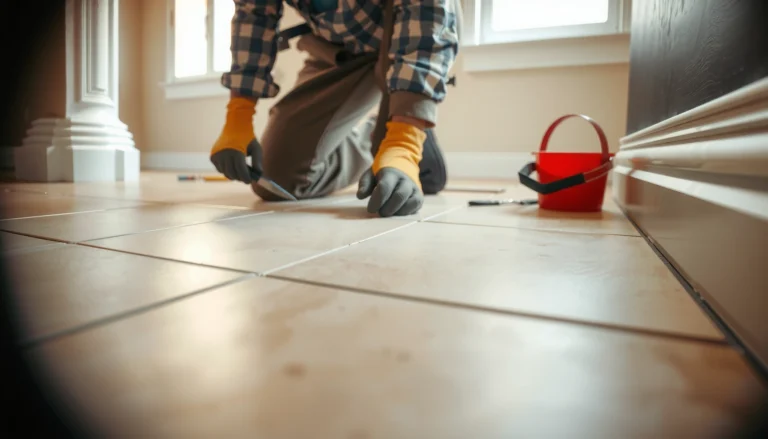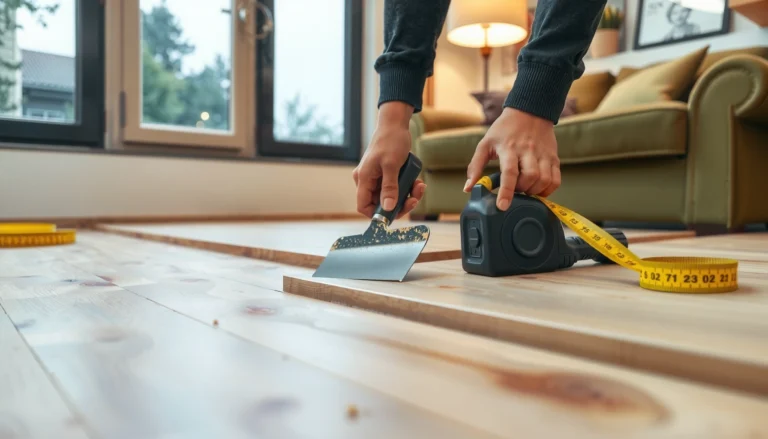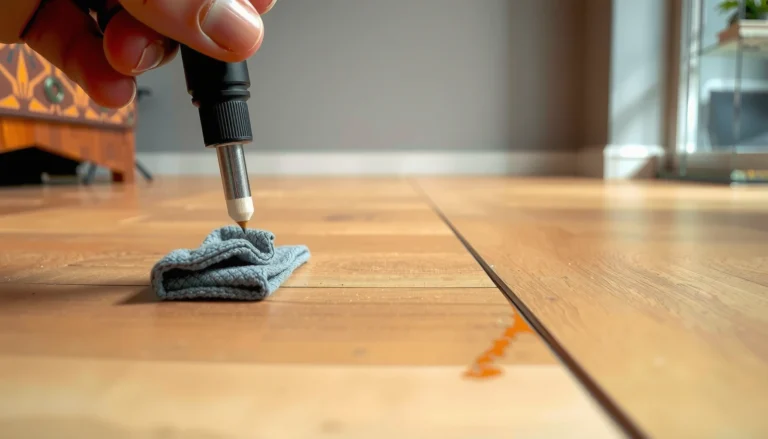

Want to fix dents in WPC floors and restore the surface fast? This guide shows the most reliable repair method based on dent depth—heat and steam for minor compression, and resurfacing for deeper marks—so the finish looks level again. You’ll learn exactly what to do, what to avoid, and how to protect the WPC core from further damage during the repair.



If your WPC floor has dents, the fastest safe fixes are heat/steam softening for minor dents or controlled gentle leveling for slightly deeper compressions. Clean first, use warmth in short cycles with a protective cloth, and stop immediately if you see whitening, edge movement, or seam stress—those are signals that the wear layer or installation is already compromised.
If you have dents from furniture, a dropped item, or heavy rolling loads (chairs/carts) and the boards still lock together correctly, these steps will help. The right approach depends on how deep the dent is and whether the top wear layer is just compressed or actually damaged.
Inspect the dent (so you don’t worsen it)

You should inspect first because WPC dents fall into two categories: recoverable compression and damaged wear layer. Quick diagnosis determines whether heat can restore the surface or whether you need a patch/board repair.
Minor WPC dents usually present as a soft depression with intact appearance; deeper dents often include visible wear-layer changes like whitening, cracking, or surface abrasion.
The locking-edge area (near plank joints) is more sensitive to uneven pressure and moisture exposure than the plank center, so it’s a higher-risk zone during repair.
If a dent coincides with clicking, lifting, or a joint gap, the issue may be structural (subfloor or lock stress), which heating alone cannot fix.
Start by cleaning your inspection area (dry wipe) so you can clearly see whether the dent is just “shadowing” or a true depression. Then use your fingernail:
Check depth and feel
– Surface mark / shallow compression: Your fingernail doesn’t easily catch; the dent mainly looks darker or slightly indented.
– True depression: You can feel a clear “dip” and the surface reflects light differently under a lamp.
Look for wear-layer damage
Search for:
– Whitening (a sign of finish/wear-layer stress)
– Cracking or crazing in the top surface
– Scratches that look freshly scuffed rather than embedded dirt
If you see any of these, treat the dent as partially or fully non-recoverable by heat alone.
Identify where the dent sits
– Plank center: Often responds better to warmth + controlled pressure.
– Near joints/locking edges: Requires gentler handling because edges can telegraph pressure, and moisture sensitivity is higher at seams.
Clean first, then assess moisture sensitivity
You should clean first because dirt and grit act like tiny abrasives when you apply heat or pressure. Then you assess moisture sensitivity because excessive moisture can worsen edge stress even if the dent seems localized.
Excess water near WPC seams can increase the risk of edge swelling and longer-term installation problems, so avoid soaking and pooling.
Warmth works best on a dry surface; trapping moisture under heat can create haze or discoloration in the wear layer.
Dry wipe, then “damp only if allowed”
– Wipe the dent area with a dry cloth first.
– If your manufacturer permits damp cleaning for your specific finish, use a lightly damp cloth—not a wet mop—and avoid saturating seams.
Avoid soaking during cleaning
Even when the dent is small, soaking can:
– seep into plank edges and seams,
– affect the subfloor environment,
– and prolong drying time, which is critical before any heat attempt.
Let it dry fully before heating
A simple test: after wiping, wait until the area feels fully dry to the back of your hand and the seams look unchanged. This matters because heating a damp zone can create unwanted haze.
Practical dent-repair decision support
Which WPC Dent Fix Works Best by Dent Type (Guide)
| # | Repair approach | Best for dent depth | Core tools | Ease | Typical time | Expected improvement |
|---|---|---|---|---|---|---|
| 1 | Heat through a protective cloth (iron, low/medium) | Shallow compression | Iron + cloth | ★★★☆☆ | 5–20 min | High |
| 2 | Controlled steam from distance (cloth barrier) | Moderate compression | Steam source + cloth | ★★★☆☆ | 10–25 min | Medium–High |
| 3 | Warmth + flat weight for short leveling window | Moderate compression | Pad + flat weight | ★★☆☆☆ | 15–45 min | Medium |
| 4 | Wear-layer repair patch (manufacturer-compatible) | Crushed surface layer | Approved patch kit | ★★☆☆☆ | 30–120 min | Medium |
| 5 | Local seam/edge stress check + re-leveling under rules | Edge-near deformation | Alignment inspection | ★★☆☆☆ | 20–60 min | Low–Medium |
| 6 | Spot replacement of a stressed plank | Structural dent or lock stress | Replacement board | ★☆☆☆☆ | 2–6 hours | High |
| 7 | Full-professional floor assessment (when cause is unclear) | Recurring dents or installation issues | On-site diagnosis | — | [ADD: estimate] | High (prevents repeat) |
Fix minor dents with heat/steam + gentle pressure
You can often restore the surface by warming the WPC (through a barrier) and applying light, even pressure after. This works because mild compression can relax when the wear layer temperature rises—without deforming the board.
Household iron heat should be applied indirectly (through a protective cloth) to reduce the risk of discoloration or warping on resilient/vinyl wear layers.
Steam can help relax a compressed surface, but it must be controlled to avoid moisture exposure at seams and edges.
Use a household iron (indirect heat only)
1. Place a dry protective cloth over the dent (thin cotton or microfiber, not plastic).
2. Set the iron to low/medium (start lower).
3. Press gently and move slowly—never hold one spot.
4. Lift the iron periodically to check the surface and prevent scorching.
According to NIST, water boils at 100°C (212°F) at 1 atm (NIST Chemistry WebBook, 2024). Even if you’re not boiling water directly, steam and hot surfaces can quickly exceed safe temperatures for finishes when misapplied, which is why barrier cloth + short cycles matter.
If it’s stubborn: use steam cautiously
– Hold the steam source at a safe distance (so you’re not directly blasting the floor).
– Keep the protective cloth between steam and board when possible.
– Warm, then allow the board to cool flat before you add pressure.
Apply gentle leveling pressure (short window)
After warming:
– Put a flat weight on top of a padded board (so pressure distributes).
– Leave it for a short period, then remove and inspect.
– Repeat only if you see incremental improvement—don’t keep compressing.
Quick comparison of heat vs. steam
| Method | Best for | Main risk | Practical control |
|---|---|---|---|
| Iron through cloth | Shallow dents, compressed surface | Discoloration/finish damage | Lower setting + no direct contact |
| Controlled steam + cloth | Moderate dents | Moisture near seams | Short bursts + full drying time |
Repair deeper dents or damaged wear layers
If the wear layer is crushed, heat may not fully restore the surface appearance—repair or replacement becomes the more reliable path. Deeper dents also increase the risk that the board is no longer elastic enough to “spring back.”
When the WPC wear layer is visibly damaged (whitening, cracking, abrasion), a heat-only approach often cannot recreate the original surface profile.
Patch or filler products must be explicitly intended for resilient/vinyl-type floors to avoid permanent texture mismatch or poor adhesion.
Confirm whether the surface is actually compromised
If you observe:
– cracks/crazing,
– deep scuffing,
– or a dent you can clearly feel that doesn’t relax after careful heat,
then proceed as a repair (not a cosmetic dent recovery).
Use only compatible filler/patch systems
– Look for products explicitly designed for resilient/vinyl wear layers.
– Follow cure times exactly—rushing is how repairs shrink, haze, or delaminate.
Because indoor moisture control influences how materials behave, it’s also important to avoid adding unnecessary humidity. The U.S. Environmental Protection Agency notes that indoor relative humidity of roughly 30–50% is often used to reduce condensation and mold risk (EPA, 2023). While your goal isn’t mold prevention per se, keeping the area dry supports stable floor behavior during repair.
If the board is structurally affected, consider replacement
If you see any of these:
– board won’t sit flat,
– clicking at locks,
– misalignment near edges/joints,
then the dent may be tied to installation conditions (subfloor movement, inadequate underlayment support, or stressed locks). In those cases, partial plank replacement is usually more dependable than filling.
What can go wrong (and how to avoid it)
Most dent failures happen when heat/steam is applied too aggressively or when the underlying cause keeps loading the same spot. A careful stop-and-check routine prevents “repairing” one issue while creating another.
Direct contact heat (no protective cloth) can discolor WPC surfaces and may warp boards, especially with longer dwell times.
Applying steam for too long increases the chance of moisture reaching seams and edges, which can show up later as lifting, haze, or recurring depressions.
Common mistakes
– Overheating or direct contact: discoloration, whitening, or finish damage.
– Steam/mist applied too long: moisture migration to edges or subfloor conditions.
– Incompatible filler: some fillers bond poorly to resilient wear layers, leaving permanent texture differences.
– Ignoring the load source: dents repeat if casters/chairs keep concentrating pressure.
Use furniture protection to prevent re-dents
Once the surface is improved:
– add felt pads (for furniture),
– switch to soft, hard-surface appropriate chair mats (for rolling loads),
– and ensure casters are designed for hard floors.
When you should stop immediately
Stop the process and reassess if you notice:
– whitening that spreads beyond the dent,
– seam movement or edge lifting,
– visible bubbling/haze,
– or increasing clicking at the locks.
Verdict: what to do first (and who should skip heat/DIY)
Heat/steam + gentle pressure is the best first try for minor dents where the surface looks intact and the boards still lock cleanly. Skip DIY heat if you already see discoloration, cracking, lifting at seams, or signs of moisture/subfloor problems—those situations usually require targeted repair or professional diagnosis.
From a practical perspective, I recommend using the “least invasive first” approach: dry clean → indirect warmth in short cycles → check frequently → only then consider patching. If the wear layer is clearly compromised, invest effort in compatibility (manufacturer-approved repair methods) rather than repeated heat attempts that can worsen the surface.
Quick checklist (scan/save)
– [ ] Clean/dry the dent area fully
– [ ] Check depth (surface-only vs. deep compression)
– [ ] Protect the floor (cloth between heat and board)
– [ ] Start with gentle heat/steam in short cycles
– [ ] Apply light, even pressure after warming (don’t crush)
– [ ] Stop if you see discoloration, whitening, or edge movement
– [ ] Use only wear-layer-compatible fillers for damaged areas
FAQ
Will heat always fix dents in WPC floors?
No. Heat works best for minor, compressed dents when the wear layer isn’t actually damaged. If the dent is deep or the surface is cracked/abraded, heat may only partially improve it.
Can I use a steam mop to remove dents?
Be cautious. Steam mops usually apply more moisture than you need for dent recovery and can push moisture into edges or seams. For dents, use controlled steam from a distance with a protective cloth, following the floor-care guidance for your brand.
What if the dent is right next to a plank joint?
Work more carefully because joints and edges are more sensitive to moisture and uneven pressure. If the joint is stressed or the board won’t sit flat, filling/heat may not solve the underlying issue.
Do I need to replace the whole floor board?
Not always. If the board locks are intact and only the surface is dented, you can often repair cosmetically. If the board has lifted, shifted, or the damage is structural, replacement of that plank is more reliable.
Sources
– [ADD: your specific WPC flooring brand’s installation and care instructions—manufacturer guidance on heat/steam use and approved cleaning methods]
– [ADD: manufacturer technical documentation on dent recovery/repair products compatibility, if available]
– NIST Chemistry WebBook (water boiling point at standard atmospheric pressure), 2024
– U.S. Environmental Protection Agency (indoor relative humidity guidance), 2023
– [ADD: manufacturer spec sheet for any approved patch/filler system intended for resilient/vinyl wear layers]
If you take one approach from this guide, make it this: start with dry cleaning and conservative, indirect warmth, then verify improvement after each short cycle. When dents are accompanied by whitening, cracking, seam movement, or lock stress, switch from “trying to warm it back” to repair-by-spec or plank replacement—that’s the most reliable way to truly restore the surface without creating new problems.
Frequently Asked Questions
What’s the best way to fix dents in WPC (wood plastic composite) floors without replacing planks?
Start by cleaning the dent area and drying it completely, then evaluate how deep the indentation is and whether the surface is damaged. For shallow dents, gentle heat and pressure can help the WPC core rebound—use a hair dryer or warm (not hot) steam and place a cloth over the dent before pressing. If the dent is deeper or has torn/raised fibers, you may need a WPC floor repair putty or a plank-level repair rather than attempting to “pop” it back.
How do you fix small dents or dents from furniture on WPC flooring?
Place a soft towel over the dent, then apply low-to-medium heat with a hair dryer in short bursts while pressing the area with a flat, weighted object. Avoid direct contact between heat and the WPC surface to prevent warping or finish damage. After the area returns to shape, let it cool fully before walking on it, and re-check it later to ensure the dent hasn’t re-formed.
How can you remove dents from WPC floor planks caused by heavy appliances?
First, protect the surrounding flooring by clearing the area and wiping away dust so you don’t grind particles into the dent. For dents that affect only the top surface, use controlled heat plus light pressure to encourage the WPC layer to recover. If the indentation is significant or the plank has shifted, you may need to replace the affected WPC plank to restore flatness and prevent clicking joints from loosening.
Why do WPC floors dent in the first place, and how do you prevent it going forward?
WPC floors are more dent-resistant than many traditional products, but they can still indent if loads are heavy, prolonged, or concentrated in one spot. Proper protection—like using furniture pads, chair glides, and rotating heavy items periodically—reduces point pressure that causes dents. Also maintain humidity within the recommended range and avoid dragging heavy objects across the floor to prevent damage to the composite core and wear layer.
Which tools and products are safe for repairing dents on WPC flooring surfaces?
Use non-abrasive cleaners, a microfiber cloth, and a hair dryer or warm steam setup with a cloth barrier—these are typically safest for WPC finish layers. For cosmetic repair, choose a WPC-compatible repair putty or filler in a matching color and follow label curing times before buffing lightly. Avoid harsh sandpapers, strong solvents, or heat guns on high settings, since they can discolor or warp WPC floors.
📅 Last Updated: October 08, 2026 | Topic: How to fix dents in WPC floors? | Content verified for accuracy and freshness.
References
- Wood–plastic composite
https://en.wikipedia.org/wiki/Wood%E2%80%93plastic_composite - Flooring
https://en.wikipedia.org/wiki/Resilient_flooring - https://en.wikipedia.org/wiki/Vinyl_flooring
- Google Scholar Google Scholar
https://scholar.google.com/scholar?q=WPC+flooring+dent+repair - Google Scholar Google Scholar
https://scholar.google.com/scholar?q=wood%E2%80%93plastic+composite+flooring+indentation+damage - Google Scholar Google Scholar
https://scholar.google.com/scholar?q=indentation+recovery+resilient+flooring+vinyl+PVC - Google Scholar Google Scholar
https://scholar.google.com/scholar?q=indentation+resistance+polymer+floor+coverings - https://www.sciencedirect.com/search?qs=indentation+recovery+resilient+floor+coverings
- https://www.sciencedirect.com/search?qs=indentation+resistance+vinyl+flooring+PVC
- Google Scholar Google Scholar
https://scholar.google.com/scholar?q=How+to+fix+dents+in+WPC+floors?