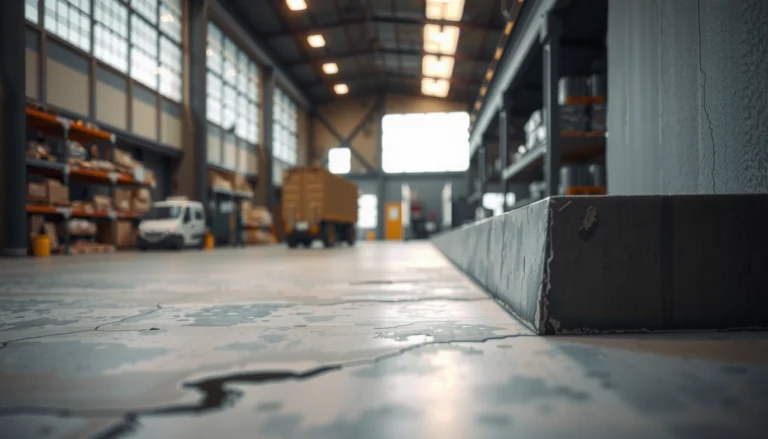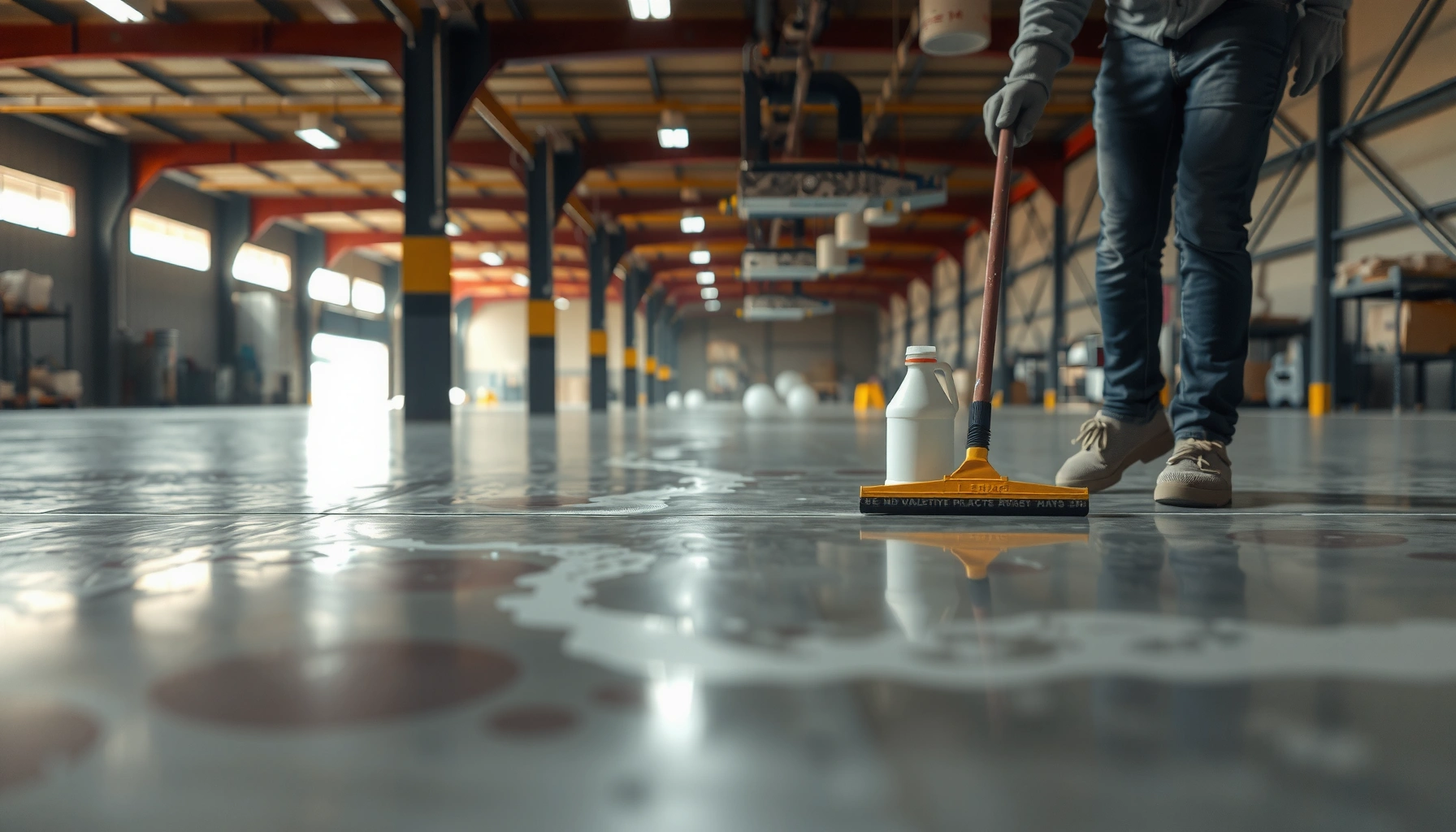

Need to fix discoloration on industrial floors fast, without guesswork? Start with the right diagnosis—whether the staining is chemical, moisture-related, or residue-based—then apply a matching cleaning, neutralizing, or restoration step to stop the discoloration from coming back. Follow the recommended surface prep and sealer protocol for a lasting, uniform finish that holds up under daily traffic and chemicals.


Discoloration on industrial floors usually comes from moisture, chemical spills, or embedded dirt/scale—so the fix depends on the cause. Start by cleaning to remove loose residue, then test the surface in a small area before you use a stain, etch, or coating repair method. In this guide, you’ll learn how to identify likely causes and choose the safest repair approach that matches your floor type.
This is most useful if your warehouse, garage, shop, or plant floor looks patchy, mottled, blotchy, stained around joints/drains, or faded after cleaning, welding, or chemical exposure. If you’re dealing with active leaks, flaking, or spalling, you’ll also see what to address first so the discoloration doesn’t come back.
Diagnose the cause before you treat
If you want discoloration to stop recurring, you need to identify the mechanism behind the color change before choosing cleaners or repairs. The fastest path is pattern recognition + a quick floor-type check, because concrete, epoxy/urethane coatings, polished concrete, overlays, and terrazzo all respond differently to chemicals and abrasives.
“Discoloration patterns can indicate the underlying driver: efflorescence often forms as a pale ‘salt’ haze, while chemical contact frequently creates random mottling or burn marks.”
“Moisture-driven issues are commonly concentrated near drains, joints, and expansion-control locations where water migration or vapor is highest.”
“ICRI’s Concrete Surface Preparation (CSP) profiles use a standardized 1–9 scale to describe surface roughness, which matters when you later choose grinding, shot blasting, or coating repair steps.”
“ASTM surface and moisture tests produce outputs with defined units (for example, ASTM F1869 reports moisture vapor emission rate in lb/1000 sq. ft./24 h), so results can be compared against coating system requirements.”
Check the pattern (what the discoloration is “telling you”)
– Straight lines / streaking: Often comes from traffic routes, squeegee patterns, cleaner runoff, or vehicle contact (rub marks, tire transfer, or detergent trails).
– “Ring” or halo-like areas: Common in moisture migration where water moves through the slab and carries dissolved minerals to the surface during drying cycles.
– Random mottling / blotches: Frequently linked to chemical contact (detergents, degreasers, quench water, welding spatter, hydraulic fluid) or inconsistent cleaning where some zones were scrubbed and others weren’t.
– Dark edges near drains/joints: Usually indicates localized moisture vapor, standing water, or repeated exposure at the weakest hydraulic points.
Confirm the floor type (because treatment compatibility is non-negotiable)
Discoloration repairs fail most often when someone treats “concrete” like it’s always bare concrete. Identify what you have:
– Bare concrete: Staining can penetrate pores; etching may worsen color variation if the contamination is mineral-based.
– Epoxy/urethane coated floors: Discoloration may be residue under the coating, moisture vapor trapped under the system, or chemical breakdown at the surface.
– Polished concrete: Surface burn, tooling marks, or embedded salts can change reflectivity and shade even when the slab isn’t materially damaged.
– Stamped overlays / micro-toppings / terrazzo: These have layered materials; color problems may be in the overlay skin rather than the base.
Look for root issues (so you don’t “fix” it twice)
Before you use any stain remover, etch, or coating, check:
– Active leaks (plumbing, compressed air condensate, hydraulic lines)
– Poor drainage or recurring puddles
– Standing water after cleaning or washdowns
– Moisture vapor emission concerns (especially on slabs with no vapor barrier or with recent operational changes)
– Repeated chemical exposure around the same zones (mixing stations, pallet wash areas, forklift fueling/maintenance zones)
Moisture and surface contamination diagnostics (what to measure first)
If discoloration is suspected to be moisture-related, it’s smarter to test early than to chase appearance with repeated cleaning.
Common Flooring Moisture & Surface Diagnosis Methods (ASTM/ICRI)
| # | Method (standard) | What it measures | Typical output unit | Usefulness rating |
|---|---|---|---|---|
| 1 | ASTM F2170 | In-situ relative humidity of concrete | % RH | ★★★★☆ |
| 2 | ASTM F1869 | Moisture vapor emission rate (MVER) | lb/1000 sq. ft./24 h | ★★★★★ |
| 3 | ASTM D4263 | Moisture/contaminant screening via plastic sheet test | Qualitative (condensation/no condensation) | ★★★☆☆ |
| 4 | ASTM F3010 | Surface porosity/absorption changes affecting coatings (as specified) | Test-defined metrics per method | ★★★☆☆ |
| 5 | ICRI CSP profiling | Defines surface roughness for prep | CSP 1–9 scale | ★★★★★ |
| 6 | ASTM C1583 | Rapid chloride ion penetration/salt-related performance (as applicable) | Test-defined ratings | ★★★☆☆ |
| 7 | ASTM D7234 | Evaluation of coating adhesion failure modes (as specified) | Qualitative/quantitative per procedure | ★★☆☆☆ |
Start with the right cleaning process
Start with cleaning that removes residue without changing the slab’s chemistry or damaging the surface profile. After cleaning, verify full dry-out and re-check the discoloration—many “stains” are actually salts, oils, or cleaner residue that look worse before the surface is properly rinsed and dry.
Remove loose soil first (least aggressive approach)
– Scrub + wet extraction is a strong baseline for dust, tracked dirt, and light soil.
– Use an oil/grease degreaser only when oil contamination is likely (dark footprints, tacky residue, maintenance areas). Mechanical agitation matters as much as chemistry.
– Avoid aggressive grinding as your first step. If the discoloration is residue-driven, grinding wastes money and can increase staining contrast by exposing more pores.
Rinse thoroughly, then dry fully
Residues can linger in concrete pores and in micro-voids under coatings. If you judge color while the floor is still wet, you’ll misread the outcome.
– Rinse until runoff is free of cleaner sheen or odor.
– Allow enough dry time for your environment and floor thickness. If you’re working near ongoing humidity, measure moisture conditions rather than relying only on “feels dry.”
Don’t mix chemicals
Chemical mixing is one of the biggest causes of permanent blotching.
– Do not combine acids and bleach (or unknown cleaners).
– Follow label dilution and dwell time exactly.
– If you suspect chemical exposure (battery acid, pickling solutions, quench chemicals), treat it as a compatibility risk and consider professional assessment.
Treat based on what the discoloration actually is
Treating “what it looks like” rather than “what it is” leads to repeat discoloration and, sometimes, coating failure. Once you match the symptom to the likely mechanism—salts, etch/burn, or oils—you can pick a controlled, repairable approach.
For efflorescence / salt haze
Efflorescence is often driven by dissolved minerals migrating with moisture and depositing near the surface.
– Use a cleaner designed for mineral deposits (not an aggressive general degreaser).
– Improve drying conditions and address moisture ingress (repairs, drainage corrections, leak prevention).
– If the floor is coated, salt contamination must be removed and the coating system’s moisture requirements must be met, or blistering can return later.
For chemical etching or surface burn marks
Etching changes surface chemistry and texture; washing alone rarely restores uniform appearance.
– The “fix” is typically controlled surface preparation (abrading/grinding/shot blasting within the coating/polish spec).
– Then apply an approved repair/leveling or refinishing step (for coatings, follow the system’s profile requirement—often defined via CSP/adhesion specs).
For oil / grease stains
Oil can be deeply absorbed and remain after visible dirt is removed.
– Use an oil-targeted degreaser plus mechanical agitation.
– For stubborn deep staining, you may need localized resurfacing or a spot repair system built for consistent appearance.
– Expect that true pore-embedded oil may require removal to a certain depth—not just more detergent.
If the floor is coated, plan for adhesion and compatibility
Coated floors need a “bond-first” mindset: discoloration repairs must protect adhesion as much as appearance. If discoloration sits under the coating layer, cleaning alone won’t fix the root cause of trapped moisture or contamination.
Discoloration under coatings often signals something deeper
– Residue left before coating can cause whitening, shadowing, or mottled color.
– Ongoing moisture vapor can create osmotic stress and eventual adhesion loss or texture changes.
Any patch work requires surface profiling
– Spot repairs usually need mechanical profiling for adhesion—your coating system’s technical data sheet should specify preparation method and target profile.
– Perform a small-area trial for color and cure consistency. When we’ve seen uneven matches in the field, it’s usually because prep depth and contamination removal differ slightly across the patch boundary.
Test compatibility before full-area work
– If the floor is older or its coating type is unknown, compatibility becomes a risk.
– Always run a test area to confirm you don’t soften, wrinkle, or further discolor the existing finish.
Pros/cons: cleaning-only vs. mechanical prep vs. coating spot repair
| Approach | Pros | Cons |
|---|---|---|
| Cleaning-only | Fast, lowest disruption | Often fails for etching/embedded contamination |
| Mechanical prep (abrade/grind) | Restores profile for bond; removes damaged skin | Can increase patch visibility if not blended correctly |
| Coating spot repair / system patch | Best durability when root cause is addressed | Requires strict compatibility and correct prep; color matching varies |
What can go wrong (and how to avoid it)
Most failures come from treating symptoms without controlling moisture, or from using the wrong chemistry on the wrong surface. If your discoloration is linked to ongoing contamination or slab conditions, appearance fixes alone won’t hold.
– Ignoring moisture intrusion: If water continues to reach the slab/coating, discoloration returns or worsens after you rinse and “heal” the surface.
– Using incorrect chemicals: Acid cleaners can darken concrete or damage certain coatings; oxidizers can react unpredictably with residues.
– Skipping surface testing: Applying stain, primer, or coating over damp/contaminated surfaces can lead to peeling, uneven texture, and persistent mottling.
– Changing surface profile unknowingly: Coatings and repairs are sensitive to prep level (for example, CSP target ranges from ICRI guidance). Too little prep reduces bond; too much can make blends stand out.
If the slab is actively spalling, cracked with moisture movement, or you see flaking/debonding already, treat the structural and moisture problem first—appearance-only steps won’t correct the failure mode.
Verdict: choose the least aggressive path first
If you want reliable results, start with cleaning and moisture/source checks, then move to mechanical prep or a system-specific spot repair only after you confirm what’s causing the discoloration. This approach saves money versus re-coating the entire floor, but the downside is you may need multiple small test patches to confirm compatibility and final appearance.
Skip DIY spot treatments if you suspect structural damage (spalling/cracking), recurring moisture intrusion, or if you’re working over an unknown or aging coating system—those cases usually need an on-site assessment by a floor coating/repair contractor.
Quick scan checklist (save this)
– [ ] Identify floor type (bare concrete vs. coating vs. overlay)
– [ ] Map the discoloration pattern (edges, rings, mottling, streaks)
– [ ] Check for leaks/standing water/drain issues
– [ ] Clean first (appropriate product + thorough rinse + full dry)
– [ ] Do a small test patch before full-area treatment
– [ ] If coated: follow system-specific surface prep/compatibility steps
– [ ] Re-check after dry time; repeat only if needed
FAQ
Can I remove discoloration on industrial concrete with just detergent?
Often, surface residue and mild haze improve after proper cleaning and rinsing, but true mineral staining (efflorescence/salt haze) or chemical etching frequently needs targeted mineral-removal and/or controlled surface preparation. If discoloration remains after full dry-out, focus on cause-based steps rather than repeating detergents.
Why does discoloration come back after cleaning?
Most commonly it’s ongoing moisture intrusion, continued chemical exposure, or contamination that remains in pores/voids and then reappears as conditions change. Without addressing the root cause (leak/drain/vapor), appearances typically won’t stay uniform.
Is it safe to use acid cleaners on industrial floors?
Acid cleaners can damage concrete surfaces and can harm coatings depending on chemistry and floor type. If you’re unsure, use the manufacturer instructions for your specific floor system and test in a small area first—when in doubt, choose a product designed for the problem (mineral deposits vs. oils vs. general soil).
Will spot repairs match the rest of the floor color?
Spot repairs can look different because stains and coatings cure and absorb unevenly across boundaries. Expect the best match when you do correct surface prep, use a repair system compatible with the existing finish, and run test patches to confirm appearance before expanding the repair.
Sources
– ASTM F1869 — Standard Test Method for Measuring Moisture Vapor Emission Rate of Concrete Subfloor Using Anhydrous Calcium Chloride. (Units and test basis referenced for MVER reporting.)
– ASTM F2170 — Standard Test Method for Determining Relative Humidity in Concrete Floor Slabs Using in situ probes. (Defines in-situ RH approach used in flooring moisture evaluation.)
– ASTM D4263 — Standard Test Method for Indicating Moisture in Concrete by the Plastic Sheet Method. (Used as a qualitative screening concept.)
– ICRI — Guidance on Concrete Surface Preparation (CSP) profiling using a standardized 1–9 surface preparation roughness scale. (Referenced conceptually for prep planning.)
– [ADD: source for manufacturer-specific coating system limits/requirements (moisture thresholds, surface profile targets, and approved cleaning agents) relevant to the exact coating/repair system you’re using]
Frequently Asked Questions
What are the most common causes of discoloration on industrial concrete floors?
Discoloration is often caused by moisture intrusion, chemical spills, oil or grease contamination, laitance from improper finishing, or surface wear exposing different concrete layers. Hard water, efflorescence, and rust staining from embedded metal can also create noticeable blotches and streaks. Identifying whether the stain is topical or penetrating is critical before choosing an industrial floor repair or resurfacing method.
How do you remove oil, grease, and chemical stains from industrial floors?
Start by degreasing the area using an oil-specific concrete cleaner or alkaline degreaser, then rinse thoroughly to prevent re-soiling. For chemical staining, use appropriate concrete stain removers (often acid-based for some mineral stains, but only after testing), followed by neutralization and water extraction if needed. After cleaning, allow the floor to dry completely before applying a stain treatment or industrial floor coating system to restore uniform appearance.
How can you fix efflorescence and water-related discoloration on concrete?
Efflorescence typically comes from moisture moving through the slab and depositing salts on the surface, so cleaning alone won’t be a long-term fix. Solve the root cause by correcting leaks, improving drainage, and controlling humidity, then remove salts using efflorescence cleaners or mild acid-based treatments designed for concrete. Once the surface is clean and dry, consider a moisture-mitigating epoxy or polymer coating to help prevent recurrence and improve overall floor appearance.
Which cleaning and restoration methods work best for stubborn discoloration on industrial floors?
The best method depends on whether discoloration is surface-only or has penetrated the concrete; a test spot is essential to avoid making it worse. For surface staining, mechanical methods like grinding or scarifying combined with industrial degreasers often yield the most consistent results. For penetrating stains, use specialized concrete stain removers or reactive densifiers, then seal with an industrial floor sealant or epoxy coating for stain resistance and color uniformity.
Why does discoloration come back after you clean or patch industrial floors?
Discoloration often returns when the underlying cause—such as ongoing moisture vapor transmission, recurring chemical exposure, or poor surface preparation—has not been addressed. Sealer or coatings may also fail if the surface was not properly profiled, dried, or treated for salts and contaminants. For long-lasting fixes, ensure proper industrial floor cleaning, moisture assessment, and adhesion-ready prep before recoat or refinishing, then maintain with the right cleaning chemistry.
📅 Last Updated: October 12, 2026 | Topic: How to fix discoloration on industrial floors? | Content verified for accuracy and freshness.
References
- Google Scholar Google Scholar
https://scholar.google.com/scholar?q=how+to+remove+discoloration+from+concrete+floors - Google Scholar Google Scholar
https://scholar.google.com/scholar?q=concrete+efflorescence+causes+prevention+repair - Google Scholar Google Scholar
https://scholar.google.com/scholar?q=rust+stains+on+concrete+cleaning+oxalic+acid - https://pubmed.ncbi.nlm.nih.gov/?term=concrete+stains+efflorescence+repair
- https://pubmed.ncbi.nlm.nih.gov/?term=rust+stains+concrete+cleaning
- Efflorescence
https://en.wikipedia.org/wiki/Efflorescence - https://en.wikipedia.org/wiki/Concrete_deterioration
- Rust
https://en.wikipedia.org/wiki/Rust - https://www.sciencedirect.com/search?qs=efflorescence+concrete+repair
- Heat Stress and Workers | Heat Stress | CDC
https://www.cdc.gov/niosh/topics/heatstress/