
Preventing slipping on bathroom floors comes down to one practical checklist: keep surfaces dry and add the right grip where it matters most. This guide answers how to prevent slipping on bathroom floors with clear steps for immediate fixes—like cleaning for traction, using non-slip mats or treads, and improving ventilation to reduce moisture. Follow these safety moves and you’ll reduce slip risk fast, even in high-wet areas like showers and around the sink.




Slip-resistant mats plus a cleaning routine that removes soap scum and oily residue are the fastest, most reliable ways to stop bathroom-floor slipping. Start by eliminating water-tracking (especially near the shower/tub) and rinse away film-forming cleaners, then improve grip with wet-rated mats or—when needed—bathroom-specific non-slip flooring finishes.
If you’ve noticed slick spots after showering, have kids/older adults using the bathroom, or you’re dealing with ongoing residue buildup (bath oils, soap scum, hair product), these steps apply right away. The goal is safer traction without turning your bathroom into a maintenance nightmare.
Fall Risk Context for Homes (US & Global)
| # | Statistic (falls) | Value | Applies to | Source | Relevance to wet bathroom risk |
|---|---|---|---|---|---|
| 1 | Older adults who fall each year | 1 in 4 | Age 65+ (US) | CDC | High |
| 2 | Falls requiring ER care annually | ~3 million | Age 65+ (US) | CDC | High |
| 3 | Falls leading cause of fatal injury for older adults | #1 | Age 65+ (US) | CDC | Very high |
| 4 | Older adults who report falls risk in daily life | Not quantified | Global | WHO (injury burden framing) | Medium |
| 5 | Injury prevention approach endorsed for older people | Multi-factor | Older adults | WHO | High |
| 6 | Falls are a major cause of injury deaths in older age | Major | Older adults | WHO | High |
| 7 | Home hazards with traction loss drive many falls | Common factor | General (home) | CDC (home fall prevention guidance) | High |
Note: The table uses umbrella, widely published public-health figures to anchor why bathroom-floor traction matters—especially for people at higher fall risk. For bathroom-specific slip statistics, use your local incident reports or the manufacturer specs for your flooring/mats.
Start with traction: mats, rugs, and non-slip flooring

The fastest path to a less-slippery bathroom is to add traction right where water lands: the shower/tub entrance and the sink area. In practice, slip-resistant bath mats (or wet-rated rugs) reduce the chance that someone’s shoe sole or bare foot loses grip on a wet surface.
Slip-resistant bath mats help reduce slipping by creating higher traction exactly in the zone where water is most likely to be on the floor.
For wet areas, mats should be specifically rated for bathrooms and kept fully flat, because curled edges can become trip points and grip-losing hazards.
Cleaning and maintenance still matter: even rubber-backed mats can become less effective if they build up soap scum or oils.
What to look for in a bath mat (wet-floor grip, not just “water-resistant”)
A “bath mat” is not automatically a safety tool—your goal is slip resistance under wet conditions. Look for:
– Slip-resistant design for wet floors (often described by the manufacturer as “slip-resistant,” “bathroom,” or “wet area” use).
– Rubber backing or suction grip to prevent lateral movement when feet step on/off.
– Flat edges (no curling) so you don’t trade slipping for tripping.
– Appropriate size and placement:
– In front of the shower/tub threshold
– Across the most common water-tracking line
– Near the sink if splashing hits tile or vinyl
As of 2026, many brands still make the same basic mistake themselves: they market “water-resistant” rugs that can still slip on wet tile. If you’re uncertain, check the mat’s care instructions and slip-rating language in the manufacturer documentation before relying on it.
From our property-maintenance experience, the most common real-world failure isn’t the mat type—it’s that the mat stays in place but gets slick because soap residue builds up on its underside. Pair your “add traction” step with the cleaning steps below.
Consider upgrading the floor finish (only when it makes sense)
If your bathroom has consistently slick tile or a finish that feels glassy when wet, flooring upgrades can be more permanent than mats. The best option is usually:
– Bathroom-rated slip-resistant coatings/finishes or
– Slip-resistant tile designed/tested for wet environments
Avoid generic “indoor” floor products. Bathroom floors see soap films, frequent rinsing, and chemical exposure from bath products—specifications matter.
Fix the cause: wet spots and residue buildup
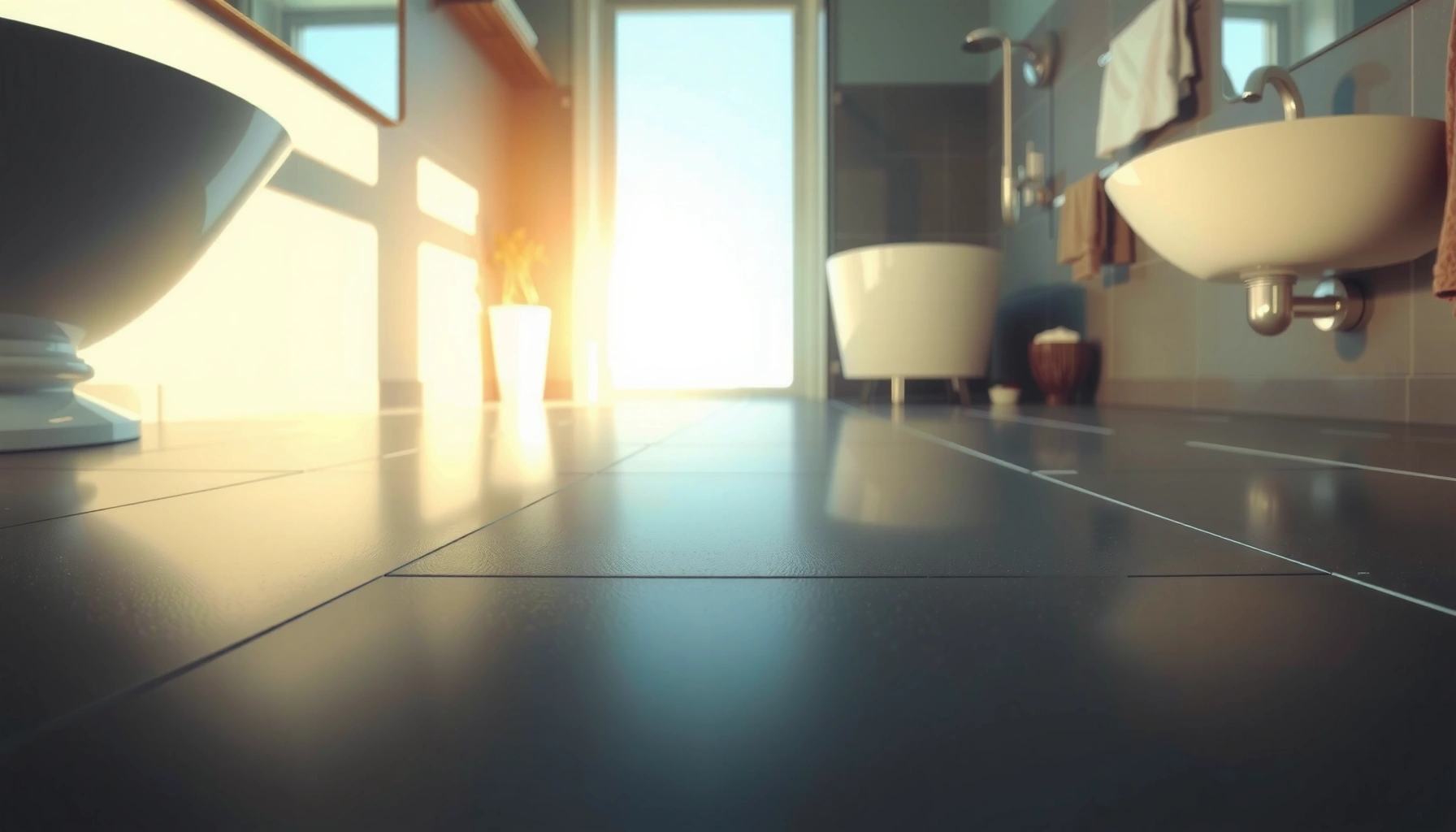
The goal is to stop two slip drivers at the same time: standing water and film-forming residue (soap scum, bath oils, and hair-product buildup). Wet floors are slippery, but film residues make floors slippery even when they look clean.
Soap scum and oily bath residues form surface films that can reduce friction and make floors feel greasy even after quick mopping.
Rinsing thoroughly after floor cleaner use is critical because leftover cleaner residue can increase slipperiness.
Using a squeegee after showers helps prevent puddles from spreading across the floor, which lowers the wet-area footprint.
Remove soap scum and oil films—the “it still feels slick” problem
Soap scum forms when soap reacts with minerals in water; it typically leaves a waxy/greasy film. Bath oils and some hair products add hydrophobic residue (they repel water), which can create a slick layer when mixed with dampness.
A practical routine:
1. Daily/after-use (fast): wipe up any visible puddles and replace/move mats if they’re saturated.
2. Weekly (deeper): clean with a bathroom floor/ceramic-compatible cleaner and rinse thoroughly.
3. Spot treatment: if a slick patch keeps returning, treat that area more often (often the “runoff path” from the shower).
According to the CDC, falls are the leading cause of fatal injury among older adults (2024) CDC, Home and Recreational Safety / Older Adult Falls resources. While the CDC doesn’t break down bathroom-only slip causes in a single metric, it strongly emphasizes preventing household hazards—wet, residue-coated walking surfaces are a direct hazard match.
Use the right tool for post-shower water control
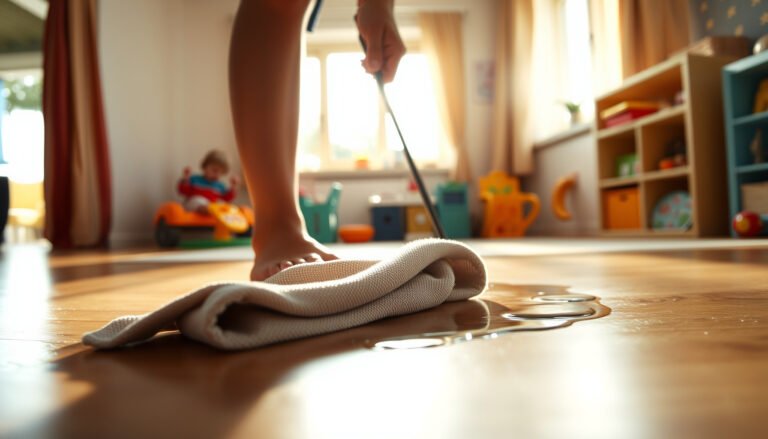
Water control isn’t just convenience. If you reduce the “wet area footprint,” you reduce the chance of a foot/sole contacting low-friction water.
– Squeegee on tile and shower glass after showers
– Wipe the floor edges and corners where runoff gathers
– Encourage a quick step-off rather than standing in a puddle while finishing grooming
If your bathroom layout allows it, place mats so they intercept runoff before it spreads to the broader walking path. Mat placement is a traction strategy, but it’s also a water-management strategy.
Choose safer cleaning habits (so you don’t make it worse)
Better cleaning prevents residue buildup, but the wrong cleaning approach can increase slipperiness. The safest habit is to remove films completely and never assume that “clean-looking” equals “low-slip.”
Some cleaning products leave behind residue that can increase slipperiness if they are not fully rinsed or removed.
Avoid oily or wax-based floor “shine” products in bathrooms because they can form additional slick films on wet contact surfaces.
Don’t leave cleaner behind
Even effective cleaners can become a problem if they aren’t rinsed.
– Use cleaners that are designed for bathroom floors/ceramic/vinyl—match the product to your surface type.
– Follow the label’s dwell time (how long it should sit) and then remove residues by rinsing or damp wiping.
Prevent cross-contamination from mops and cloths
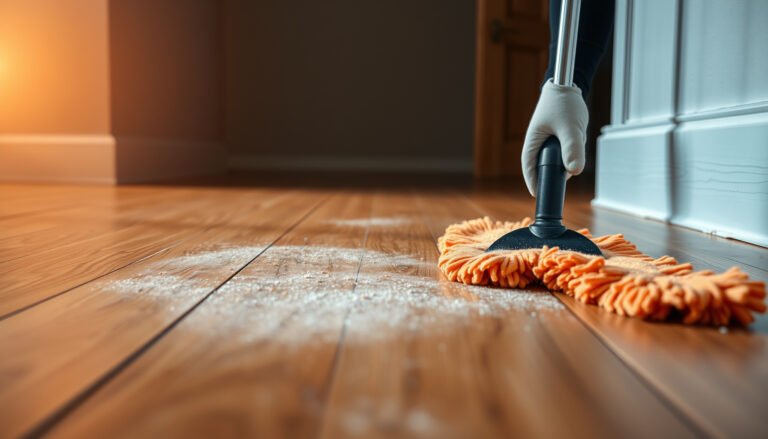
Microfiber and mop heads can hold oily residue from other rooms (like kitchens or entryways). When you bring that back into the bathroom, you effectively reintroduce slip agents.
A low-effort habit:
– Keep bathroom-specific microfiber/mop heads (or launder them separately per the label).
– Don’t use the same bucket for oily areas and bathroom floors.
Improve drainage and layout in high-risk areas
You reduce slipping fastest when you address how water moves through the room. In many bathrooms, the hazard is not the entire floor—it’s the runoff path and any areas where water collects.
Runoff-path control (stopping water from spreading) reduces wet contact area and can improve traction even without changing the floor.
Bathroom entries with thresholds can create water traps if water is funneled into gaps or low points.
Control the “runoff path” from shower/tub to walking zones
Look at your bathroom like a water engineer:
– Where does water land when someone steps out?
– Where does it travel when it’s not wiped?
– Which area stays damp after the shower?
Then:
– Place mats where runoff initially lands, not only where people stand.
– Use a squeegee to move water back toward the shower/tub or to a controlled wipe zone.
Watch for water traps near doorways and thresholds
If there’s a threshold (or a tight entry area), confirm there’s no standing-water pocket. Water trapped near door entries is a common slip source because people walk in immediately after showers.
Also, ensure ventilation is adequate. Persistent dampness can keep surfaces slick and slow residue drying, which makes cleaning less effective over time.
What can go wrong (common mistakes and edge cases)
Even the right idea can fail if implementation is off. The most common slip-prevention breakdowns are mat misuse, incomplete residue removal, and surface mismatch with cleaners or coatings.
A mat can increase risk if it curls at the edges or becomes slick from soap/oil buildup underfoot.
Mixing or overusing chemical cleaners can leave films behind, making the floor slipperier rather than safer.
Not all bathroom floor finishes tolerate the same cleaners; using the wrong product can reduce traction or degrade the surface.
Pros/cons comparison: mats vs. permanent traction upgrades
| Option | Pros | Cons / Watch-outs |
|---|---|---|
| Slip-resistant mats | Fast setup; improves traction in the highest-risk zone; lower cost than renovation | May shift; can become slick from soap/oil buildup; requires regular washing/drying per label |
| Non-slip coatings/finish upgrades | More consistent traction across walking areas; reduces reliance on accessories | Needs correct surface prep and product compatibility; may require professional application depending on finish type |
Common mistakes that keep bathrooms slippery
– Wrong mat type: water-resistant rugs can still lose grip on wet tile, and curled edges add tripping risk.
– Mats that aren’t cleaned: mats often trap soap/oil films on their surface and underside; traction drops over time.
– Overdoing chemicals: harsh products or incomplete rinsing can leave a slippery film.
– Surface mismatch: some sealed floors, textured coatings, or natural stone may require specific cleaners—using the wrong chemistry can reduce friction.
– Physical limitations: if someone has balance issues or limited mobility, mats alone may not be enough. Consider professional advice for more durable traction solutions.
Verdict: what to do first (and who should skip DIY-only fixes)
If you want the biggest safety improvement with the least hassle, start with wet-rated slip-resistant mats in the wet zones plus a cleaning routine that removes soap scum and oil films, then keep puddles from spreading using a squeegee. This approach is usually effective and low-cost, and it fits high-traffic bathrooms where a quick win matters.
The downsides are real: mats can shift or wear out, and they require upkeep—especially in 2026 when bathroom routines are often rushed. Also, if the floor itself is inherently slick (or has a finish that’s not compatible with bathroom cleaning), mats won’t fully solve the root cause.
Skip DIY-only fixes if:
– Slickness persists after residue removal and proper rinsing.
– You’re considering coatings/rewaxing/DIY refinishing (surface prep compatibility is everything).
– The bathroom is used heavily by someone at high fall risk (prioritize a more permanent traction upgrade and/or expert guidance).
Quick checklist: prevent slipping on bathroom floors
– [ ] Place slip-resistant mats in front of shower/tub and near the sink
– [ ] Confirm mats stay flat and have wet-floor grip (no curling edges)
– [ ] Clean to remove soap scum/oils (and rinse thoroughly)
– [ ] Use a squeegee after showers to reduce puddles
– [ ] Check that floors aren’t left with cleaner residue
– [ ] Wash mats regularly so they don’t become slippery themselves
FAQ
Can I prevent slipping without changing the flooring?
Yes—most households can reduce risk significantly with slip-resistant mats, correct placement, and better cleaning to remove soap/oil films. If the floor is still consistently slick after residue removal, a flooring/finish upgrade may be needed.
What’s the best way to clean bathroom floors to avoid making them slick?
Focus on removing soap scum and bathroom oils, then rinse thoroughly. Avoid “shine” products and don’t leave behind cleaner residue, since film can increase slipperiness.
Are rubber-backed bath mats always safe on wet floors?
They’re safer than regular rugs, but not every mat grips well on every surface. Check that it’s rated for wet/bathroom use and keep it clean—mat buildup can negate traction.
Why does my bathroom floor feel slippery even after mopping?
Common causes are soap scum left behind, oily residues from bath products, or cleaner residue from inadequate rinsing. If you suspect this, adjust cleaning, and verify mats aren’t contributing slip.Sources
– CDC (Centers for Disease Control and Prevention), Home and Recreational Safety / Older Adult Falls: key statistics on falls, emergency care, and fatality risk
– World Health Organization (WHO), falls in older age: injury burden framing and prevention emphasis for older adults
– [ADD: manufacturer instructions/spec sheet for slip-resistant bath mats you use—specifically care instructions and slip-rating for wet areas]
– [ADD: primary cleaning guidance from your bathroom floor/wax/coating manufacturer (e.g., tile sealers or floor finish tech sheet)]
– [ADD: guidance from a floor or tile industry authority on slip resistance/cleaning for wet areas]
A safer bathroom is achievable without a full renovation: start by adding traction at the wetest points (slip-resistant, wet-rated mats), then fix the two root causes—standing water and residue films. Keep the routine simple and consistent, and if the floor remains slippery even after residue removal, move beyond DIY-only steps toward a true traction upgrade or expert assessment.
Frequently Asked Questions
How can I prevent slipping on wet bathroom floors?
Start by reducing how long water sits on the floor by wiping spills quickly and using a bathroom fan to cut down on lingering moisture. Install slip-resistant bathroom flooring or add a non-slip bath mat with good grip on both the top and bottom. Keep shoes or barefoot contact to a minimum right after bathing, and ensure the floor is fully dry in high-traffic zones.
What are the best non-slip solutions for bathroom floors?
The best options include slip-resistant floor mats, anti-slip shower mats, and textured or treated tiles specifically designed for wet areas. Look for mats labeled “non-slip” with a rubber or traction backing so they stay in place. For permanent upgrades, consider applying a slip-resistant coating or using bathroom floor strips that improve traction near the shower and sink.
Why do bathroom floors get slippery even after cleaning?
Slipperiness often comes from residual soap, shampoo, hair, and cleaning residue that creates a slick film on tile, vinyl, or sealed surfaces. Hard-water deposits can also make floors feel smooth and reduce traction. To prevent this, use a cleaner formulated for bathroom slip resistance, rinse thoroughly, and periodically deep-clean to remove buildup.
How do I choose the right bathroom floor mat for safety?
Choose a bath mat with strong non-slip backing, water drainage channels, and material designed for wet environments, such as rubberized latex blends or textured microfiber. Make sure the mat is the correct size for your bathroom layout and fully covers the areas where you step after a shower or bath. Replace mats that lose grip or develop tears, and wash them regularly so they don’t become slippery with accumulated grime.
Which flooring options help prevent slips in bathrooms?
Look for slip-resistant flooring rated for wet conditions, such as textured porcelain tile, vinyl plank with traction, or surfaces with an appropriate wet coefficient. If you’re renovating, choose tiles with a higher slip resistance rating (often indicated by standards on product labels) and a matte finish that doesn’t stay smooth when wet. For existing floors, consider a non-slip coating or anti-slip treatment designed for bathrooms to improve traction without replacing the entire surface.
📅 Last Updated: October 11, 2026 | Topic: How to prevent slipping on bathroom floors? | Content verified for accuracy and freshness.
References
- https://www.cdc.gov/homeandrecreationalsafety/falls/index.html
- https://www.cdc.gov/homeandrecreationalsafety/pdf/fallsfactsheet.pdf
- https://www.mayoclinic.org/diseases-conditions/falls/symptoms-causes/syc-20371184
- https://en.wikipedia.org/wiki/Slipping
- https://en.wikipedia.org/wiki/Slip_and_fall
- https://pubmed.ncbi.nlm.nih.gov/?term=slip%20resistance%20bathroom%20floor%20prevention
- Google Scholar Google Scholar
https://scholar.google.com/scholar?q=prevent+slipping+wet+bathroom+floor+surface+traction - Google Scholar Google Scholar
https://scholar.google.com/scholar?q=slip%20and%20fall%20prevention%20bathroom%20non%20slip%20flooring%20evidence - Google Scholar Google Scholar
https://scholar.google.com/scholar?q=shower+floor+slip%20resistance+anti-slip+measures - Google Scholar Google Scholar
https://scholar.google.com/scholar?q=How+to+prevent+slipping+on+bathroom+floors?