


To make your wood floors less slippery, start by applying non-slip floor treatments designed for wood; these add a micro-textured layer that improves grip. Next, use area rugs or mats with rubber backing or anti-slip pads in key spots like entryways and kitchens to prevent slips. Finally, keep floors clean and dry by sweeping regularly and wiping spills immediately to avoid slippery residues. With these steps, you’ll enhance floor safety—explore further to discover more detailed strategies.


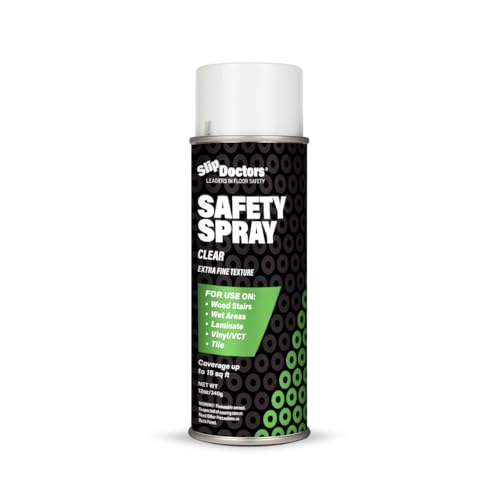

Apply Non-Slip Floor Treatments

Applying non-slip floor treatments is essential for enhancing safety on wood floors, especially in areas prone to moisture or heavy foot traffic. You’ll want to select non slip coatings specifically designed for wood surfaces to maintain the floor’s integrity while improving floor traction. These coatings create a micro-textured layer that increases grip without compromising the wood’s appearance. Before application, verify the floor is clean and dry to maximize adhesion and effectiveness. Use a roller or brush to apply the treatment evenly, following manufacturer instructions for drying times and number of coats. By applying these treatments, you reduce slip hazards efficiently, allowing you the freedom to move confidently across your wood floors without fear of accidents or injuries.
Use Area Rugs and Mats Strategically
Area rugs and mats serve as practical tools to protect your wood floors from wear, moisture, and dirt while enhancing safety by reducing slip risks. Proper rug placement near entryways, high-traffic zones, and slippery areas guarantees ideal traction. Choose mat materials with high grip—rubber-backed or anti-slip pads—preventing movement and sliding. Consider these factors:
| Location | Recommended Mat Material | Rug Placement Tip |
|---|---|---|
| Entryways | Rubber-backed | Secure edges to prevent curl |
| Kitchen | Anti-slip foam | Place near sink and stove |
| Hallways | Non-slip synthetic | Use elongated rugs |
Maintain Clean and Dry Floors Regularly

While strategically placed rugs help shield your wood floors from damage, regular cleaning and drying play an essential role in maintaining their integrity. Consistent floor cleaning removes dust and residues that increase slipperiness, while moisture control prevents warping and mold growth. To keep your floors safe and durable, follow these steps:
Regular cleaning and moisture control are key to protecting wood floors from damage and maintaining their durability.
- Sweep or vacuum daily to eliminate abrasive particles.
- Use a damp mop with a wood floor cleaner—avoid excess water.
- Immediately wipe up spills to prevent moisture buildup.
- Maintain indoor humidity between 30-50% to protect wood fibers.

[…] then dry thoroughly. If the finish looks dulled or slightly changed, consider using a matching wood floor cleaner and, if necessary, a refinishing product formulated for the existing finish type (polyurethane, […]
[…] sheet vinyl floors can be installed directly over properly prepared subfloors, but moisture control is critical—especially over concrete. Check the manufacturer’s installation guide for whether a […]
[…] an older floor that’s been vulnerable to spills—these steps are for you. The advice focuses on moisture control: preventing water from reaching seams and edges, and catching issues early before they become a […]
[…] “Resilient flooring performance depends heavily on substrate preparation, especially flatness and moisture control.” [ADD: source—RFCI/industry standard or your vinyl manufacturer’s installation guide] […]
[…] the install’s durability hinges on two things—subfloor flatness (to prevent gapping) and moisture control (to prevent movement, cupping, or hollow […]
[…] prevent mold under SPC floors, focus on moisture control: confirm a dry, flat subfloor and seal it before installation, then prevent any water intrusion […]
[…] meet the SPC manufacturer’s underlayment/vapor requirements—especially around grout ridges and moisture control. The fastest path to a trouble-free floating (click-lock) install is careful subfloor checks first, […]
[…] WPC flooring care guidance across resilient flooring categories centers on one theme: moisture control + chemical compatibility. WPC floors have an overall structure that includes a core and surface […]
[…] significant warping, ongoing movement, or suspected subfloor saturation—because the real fix is moisture control and board/subfloor […]
[…] the cause (movement constraints, moisture, or flatness). If you skip any prerequisite—especially moisture control or substrate flatness—lifting often reappears within weeks or after the next temperature […]
[…] and forklift traffic. This guide lays out exactly what to do—from inspection and cleaning through moisture control, surface preparation, and the right protective system—so the floor performs reliably once the […]