
Protecting engineered wood floors in a home office comes down to one clear priority: control moisture and abrasive damage from daily traffic and chairs. If you lock in a felt chair mat, use a quality floor protector for rolling casters, and prevent spills fast, you’ll keep the finish looking new even with frequent use. We’ll show you the exact do’s and don’ts to stop scratches, swelling, and dulling—so your floor stays stable and smooth.



Protect your engineered wood floors in a home office by using the right floor mats/chair protectors, controlling moisture, and cleaning gently with manufacturer-approved products. If you prevent grit (sand/dust) and standing water, you’ll avoid the most common finish dulling and edge swelling issues. In this guide, you’ll get practical, office-specific steps to reduce scratches, dents, and wear.
If you work at a desk with a rolling chair, have a door mat that captures grit, or notice more scuffs in the high-traffic “work zone,” this is directly relevant. The steps below also help if you’re unsure whether engineered wood can handle occasional messes—because it can, but only with the right routine.
If you’re trying to keep engineered wood floors looking consistent while you work (and not fight small daily hazards like chair-caster drag and tracked-in dust), the plan in this post is designed for you. As of 2026, the most reliable approach is still the same: reduce abrasion at the source, keep indoor conditions within the flooring’s accepted climate range, and use cleaning methods that don’t leave excess moisture behind.
Choose Office Floor Mats and Chair Protectors
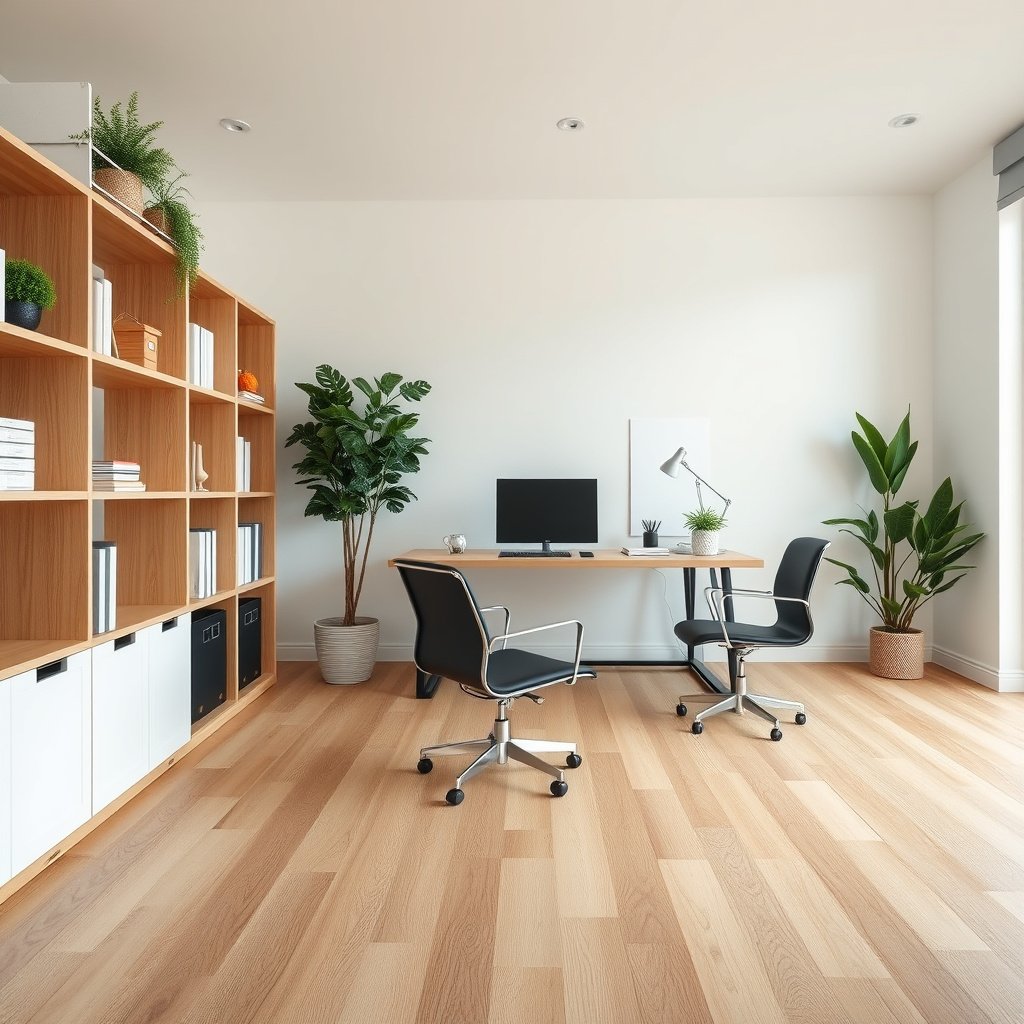
The quickest way to protect engineered wood floors in a home office is to stop chair casters and dragged dust from grinding the finish—starting with a hard-floor-rated chair mat and fresh felt pads. This matters because engineered wood finishes are only as durable as the surface layer you repeatedly abrade, and a rolling chair concentrates that wear in one “path.”
First, match the mat type to the floor: engineered wood floors behave like other finished hard surfaces (laminate/hardwood in terms of wear), so a hard-floor-rated chair mat reduces impact and caster slip-grab cycles. Second, protect stationary contact points (desk legs, side tables) with felt pads so the movement doesn’t act like sandpaper. Finally, be careful with rugs: some backings hold moisture, and engineered wood floors don’t like prolonged dampness.
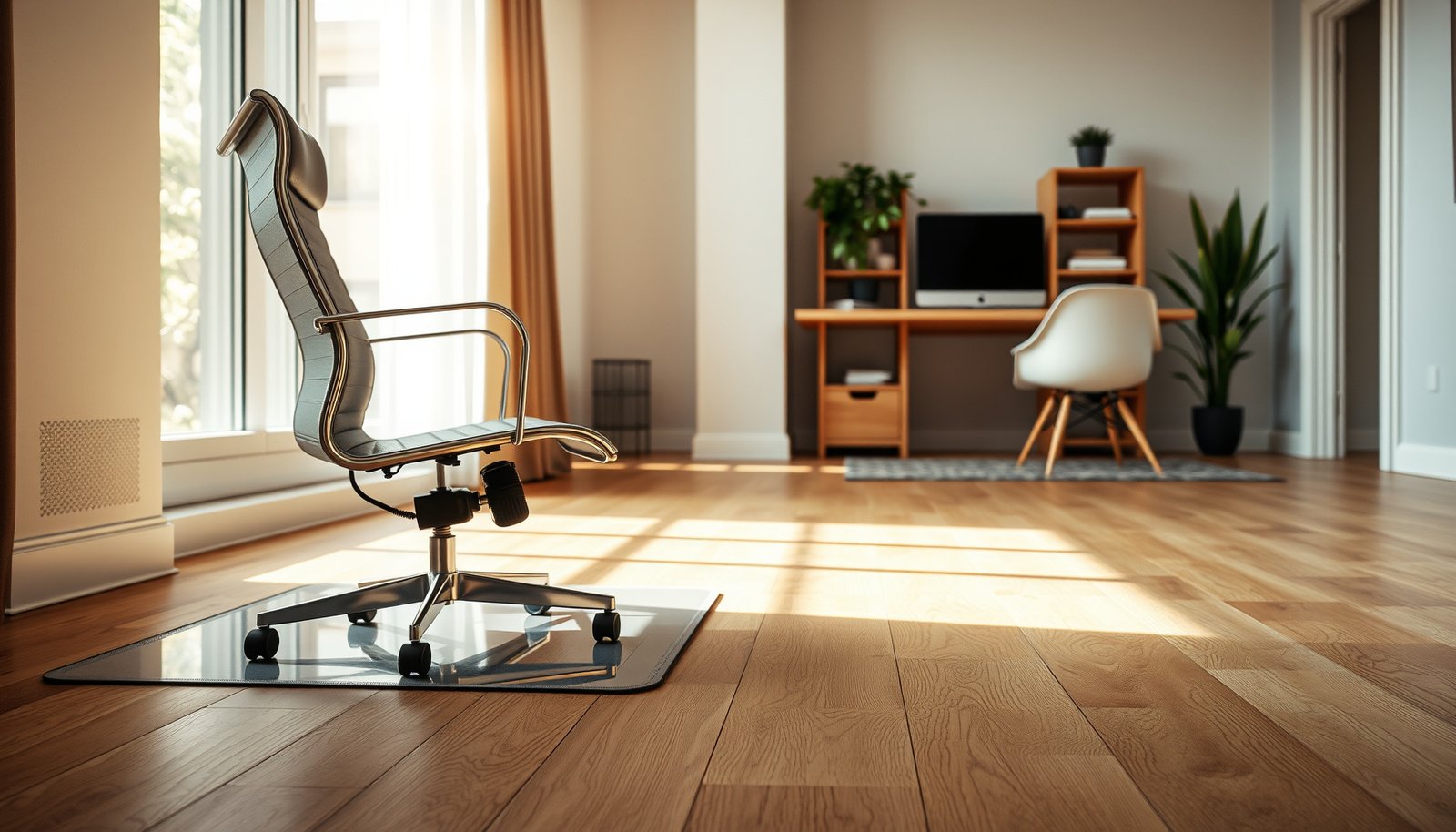
A chair mat intended for hard floors helps reduce caster wear and impact in the exact work zone where engineered wood floors take the most repeated contact.
Felt pads under desk furniture lower the likelihood that grit gets “worked” into the finish by friction as you slide or reposition items on engineered wood floors.
If a rug’s backing traps moisture, engineered wood floors can develop localized dulling and swelling near edges over time—especially in offices with occasional spills.
Chair mats: what to buy (and what to avoid)
A chair mat for hard floors is usually the best starting point because it creates a stable interface for rolling casters while reducing abrasion. Look for wording that it’s safe for hardwood/laminate-style finishes, and favor rigid or smooth-surface designs intended for hard flooring.
Here’s a practical comparison you can use while shopping:
- Hard-floor-rated chair mat (clear polycarbonate or similar hard surface)
-
Pros: reduces caster drag; smoother roll reduces micro-scratching in the work path.
Cons: mat positioning can shift; still requires routine cleaning of grit under/around the chair mat. - Carpet chair mats (felt/soft top)
-
Pros: designed for carpet pile; can reduce slipping on carpet.
Cons: can be abrasive or unstable on engineered wood floors; may trap debris beneath depending on the backing. - Foam or rubber-backed mats
-
Pros: sometimes cushier underfoot.
Cons: if they trap moisture or slow drying, engineered wood floors can show dull spots or swelling where dampness accumulates.
Felt pads for desk legs and storage furniture
Felt pads are simple, but they’re high-impact in a home office because engineered wood floors often get protected only at the chair zone. Add felt pads to:
– desk legs,
– filing cabinet feet,
– bookcases and side tables,
– and any rolling or sliding accessories that contact the floor surface.
Keep them current. Once felt pads wear through, they can start acting like abrasive contact points that grind grit into the finish of engineered wood floors.
Rugs: safe use requires airflow and moisture control
Area rugs can protect engineered wood floors from daily scuffs—but choose non-slip backing that won’t trap moisture. Periodically lift and air the rug, especially if your office has window condensation, HVAC drafts, or frequent kettle/coffee activity. In 2026, this “lift-and-air” habit is one of the easiest ways to prevent small damp episodes from becoming larger finish dulling problems on engineered wood floors.
Keep Humidity and Spills Under Control
The fastest protection for engineered wood floors is to control moisture—especially indoor relative humidity—and to wipe spills immediately so water can’t migrate into seams and edges. Even though engineered wood includes an additional construction layer compared with many solid floors, it still depends on stable conditions and careful drying to prevent finish breakdown and edge swelling.
In most homes, the problem isn’t one dramatic spill; it’s the steady exposure to fluctuating humidity plus small “wet cleaning” mistakes. For engineered wood floors, keeping humidity within your manufacturer’s recommended range reduces expansion and contraction stress that can loosen joints over time. In parallel, prompt spill response prevents water from traveling into seams where the top layer can’t fully shield the core.
According to the National Wood Flooring Association (NWFA), maintaining indoor relative humidity between 35% and 55% helps minimize dimensional movement in wood flooring. NWFA (National Wood Flooring Association) guidance on environmental conditions for wood floors
NWFA environmental guidance also recommends maintaining temperature in a comfortable indoor range (commonly cited as about 60–80°F) to support stable wood flooring conditions. NWFA environmental recommendations for wood flooring
If water sits near seams or edges, engineered wood floors can develop swelling and finish dulling; prompt wiping and drying is the most consistent prevention step. NWFA care guidance emphasizing spill response and moisture control
Use a hygrometer and aim for the manufacturer’s accepted climate
A hygrometer (simple humidity meter) is a practical tool because engineered wood floors react to real indoor conditions, not guesses. Start by checking:
– relative humidity (RH),
– temperature,
– and how quickly RH changes when HVAC cycles.
If your flooring brand provides a target RH range or limits, treat that as the priority rule. Many installs and maintenance guides assume “stable climate” behavior to limit expansion/contraction that can open seams on engineered wood floors.
Spill response: wipe immediately, then dry
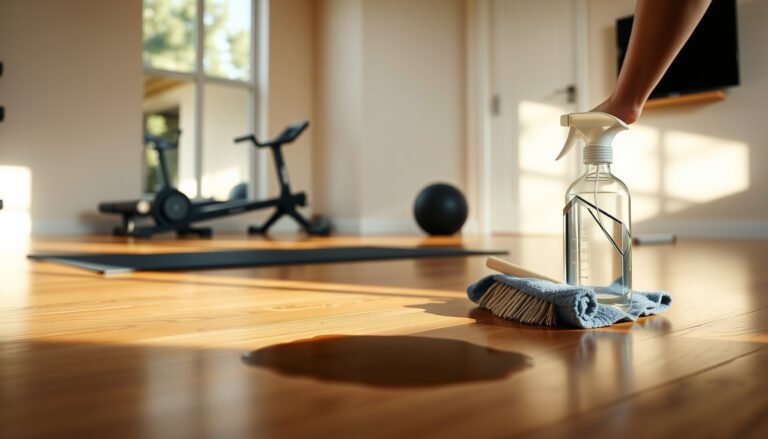
For spills, the most important sequence is speed and thoroughness:
1) blot—don’t smear,
2) wipe up with a soft, absorbent cloth,
3) dry the area fully.
Avoid letting liquid creep under furniture legs, into seam lines, or under rugs. In 2026, many home offices run humidifier/dehumidifier cycles; those changes can increase the chance that a spill stays in contact with engineered wood floors longer than you expect.
Condensation control near windows and vents
Home offices often have desk placement near windows or air vents. Condensation forms when warm indoor air cools on glass surfaces, and airflow patterns can keep engineered wood floors exposed to localized moisture. Redirecting airflow, using curtains strategically, and ensuring the floor isn’t exposed to repeated condensation drips are all moisture-control wins for engineered wood floors.
Indoor RH vs. Wood Equilibrium Moisture Content (EMC) at 70°F
| # | Indoor RH | EMC at 70°F | Movement risk for engineered wood floors | Stability rating |
|---|---|---|---|---|
| 1 | 30% RH | 5.1% | Higher (drier than typical) | ★★☆☆☆ |
| 2 | 35% RH | 5.9% | Moderate | ★★★★☆ |
| 3 | 40% RH | 6.7% | Low–moderate | ★★★★☆ |
| 4 | 45% RH | 7.6% | Low | ★★★★★ |
| 5 | 50% RH | 8.5% | Low | ★★★★★ |
| 6 | 55% RH | 9.3% | Low–moderate | ★★★★☆ |
| 7 | 60% RH | 10.1% | Higher (wetter than typical) | ★★☆☆☆ |
Clean Engineered Wood the Right Way
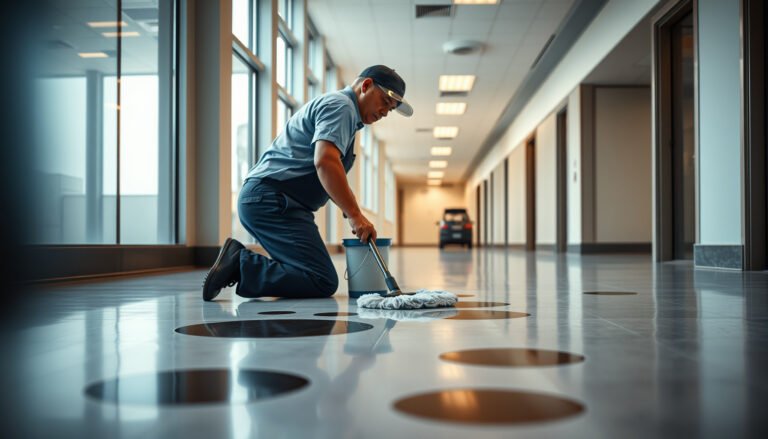
The best way to clean engineered wood floors in a home office is to remove grit regularly (sweep or vacuum) and use only manufacturer-approved, lightly applied cleaners—never soaking. This is how you prevent finish dulling from abrasive dust and avoid water-related damage that can occur even on engineered wood floors.
In an office, “cleaning” often includes quick spot wipes and occasional mopping. The risk is that wet cleaning—especially repeated damp passes—can push moisture toward seams and edges. A better routine is simple: keep grit off the floor, clean with the right product, and dry promptly.
According to NWFA wood-floor care guidance, you should avoid wet mopping on wood floors and instead use methods that keep water exposure minimal. NWFA care guidance on cleaning methods for wood flooring
Using a pH-neutral or manufacturer-approved cleaner reduces the chance of finish damage compared with harsh chemical products that can dull engineered wood floors. NWFA guidance emphasizing use of approved cleaners and avoiding harmful chemicals
For engineered wood floors, blotting and prompt drying matter because standing moisture is what drives swelling risk more than normal day-to-day foot traffic. NWFA spill response recommendations
Daily/weekly maintenance: sweep and vacuum correctly
Start with dry cleaning:
– Sweep or vacuum frequently to remove grit (sand/dust).
– Use a soft brush attachment to reduce finish scratching from particles being pulled across the engineered wood floor surface.
In my view of office-floor wear patterns, the “finish dulling” usually starts where dust accumulates and then gets repeatedly rolled or dragged across engineered wood floors.
Mopping: damp only, and follow the approved cleaner list
When you do clean with a product:
– use the specific cleaner your engineered wood manufacturer approves,
– apply lightly (dampen rather than soak),
– and dry the floor promptly if any liquid lands where it shouldn’t.
Many maintenance guides recommend a pH-neutral approach; if your flooring brand names a cleaner or specifies pH neutrality, follow that exactly. As of 2026, warranty coverage often depends on sticking to the approved cleaning method—especially in offices where floor exposure is frequent.
Avoid steam and aggressive degreasers
Steam cleaning can create more moisture than many engineered wood floors are designed to handle repeatedly. Aggressive degreasers and ammonia-based cleaners can also change how a finish interacts with oils and dust, which can accelerate dulling on engineered wood floors. If your brand’s guide says “do not use steam” or “do not use abrasive pads,” treat that as a hard rule.
Prevent Scratches, Dents, and Finish Wear
The fastest way to stop scratches and dents on engineered wood floors in a home office is to protect the chair movement path and stop abrasive particles from being dragged—then keep casters and equipment in good condition. This works because office damage is rarely random; it concentrates in predictable zones like the turning point and the route between desk and storage.
Once the work path is protected, the next priority is equipment behavior: worn chair casters can chew at finishes, and dragged items (boxes, vacuum heads, rolling carts) can create dents or persistent marks. Engineered wood floors recover poorly from repeated shallow abrasion because the finish layer wears and exposes more vulnerable material underneath.
Most scuffing on office wood floors concentrates around chair turning points and near storage transitions, where engineered wood floors experience repeated friction and impact.
If chair casters leave marks, the wheels may be damaged or abrasive; replacing them can reduce accelerated finish wear on engineered wood floors.
Lifting equipment instead of dragging it prevents concentrated denting that can be difficult to hide once the finish on engineered wood floors is compromised.
Map the “work zone” and protect it
Look at your office layout: the floor won’t wear evenly. It usually shows:
– a rectangular zone under the chair,
– a curved or irregular patch where you pivot,
– and scuffed lines near the desk-to-storage route.
Protect that area first. A well-placed chair mat and correctly positioned felt pads prevent engineered wood floors from receiving the highest loads from rolling impact and friction.
Replace worn casters and keep wheels clean
Even a good chair mat can’t fully compensate for damaged casters. If you notice marks:
– check caster wheel condition,
– remove debris that builds up on wheels,
– and replace wheels if they’re cracking, flat-spotted, or leaving tracks that look like scouring.
Damaged wheels can abrade engineered wood finishes faster than you’d expect because the wheel surface can act like a tiny tool-on-sandpaper.
Don’t drag; lift and reposition
This is a common office failure point: moving boxes, vacuum heads, or rolling carts. Instead of sliding those items across engineered wood floors:
– lift to reposition,
– use a dolly or lift handles where possible,
– and keep rolling carts’ contact points maintained.
It’s especially important on engineered wood floors because once the top wear layer is scuffed, repeated light abrasion keeps the damage open.
What Can Go Wrong
If you skip moisture control or use the wrong accessories, engineered wood floors can show dull patches, swelling near seams, or accelerated finish wear even if the floor is “engineered.” The key risk is usually an avoidable routine mistake—like trapping moisture under a mat, over-wetting with mops, or using cleaners that aren’t approved.
In a home office, the “wrong way” is often subtle: damp mopping done too frequently, a rug that never gets lifted, or felt pads that weren’t replaced after wear-through. These issues compound over weeks because office floors see repeated daily exposure.
Using a foam or rubber-backed mat that traps moisture can create localized swelling or dull spots on engineered wood floors.
Over-wetting during cleaning can still cause problems on engineered wood floors, because water exposure can reach seams and edges where the finish protection is limited.
Skipping felt pad replacement or applying the wrong cleaner can void parts of a flooring warranty if your engineered wood manufacturer ties coverage to specific maintenance practices.
Common mistakes to avoid
– Trapping moisture under mats or rugs: If the backing doesn’t dry quickly, engineered wood floors can develop uneven tone or swelling.
– Repeated damp mopping without drying: Damp passes that never truly dry can leave moisture behind in micro-gaps.
– Steam cleaning: Steam adds moisture and heat; it can exceed what many engineered wood finishes and adhesives tolerate.
– Ignoring warranty maintenance requirements: Many warranties explicitly list approved cleaning methods and disallow certain tools.
Wear-layer limits matter
Some engineered wood floors have a thinner top wear layer than others. Aggressive maintenance—scrub pads, abrasive brushes, or strong cleaners—can wear through that finish faster. If your engineered wood brand recommends a specific max-cleaning frequency or prohibits abrasive tools, follow it to protect the finish durability of engineered wood floors.
Verdict: a Practical Protection Plan
If you do just three things—(1) use a proper chair mat and felt pads, (2) control humidity within the manufacturer’s recommended range, and (3) clean with approved, lightly used products—your home office engineered wood floors will usually look better for longer. The reason is straightforward: office damage comes from grit abrasion and moisture exposure, and this plan targets both at the source.
That said, there are tradeoffs. Mats can shift, and frequent cleaning with the wrong product can accelerate wear. If you’re not able to respond quickly to spills or you can’t keep indoor conditions stable, prioritize climate control first rather than relying on “protective” accessories alone.
NWFA guidance emphasizes maintaining suitable indoor humidity levels to reduce wood flooring dimensional movement and related issues. NWFA environmental recommendations
NWFA cleaning guidance also highlights minimizing water exposure and using appropriate cleaning methods to protect the finish on wood floors. NWFA care guidance
Engineered wood floors still require the basics—dry cleaning, approved products, and prompt spill response—because moisture and grit drive the most common finish and edge problems.
– What you get: fewer scuffs in the chair area, less dulling from grit, and lower risk of swelling from accidental moisture.
– Downsides: chair mats require periodic adjustment, and “trying a new cleaner” can create finish issues that are hard to reverse.
– Who should skip (or adjust): If you can’t control humidity swings or you know you’ll leave spills unattended, address those conditions first. Otherwise, engineered wood floors may still show consequences despite protective accessories.
Scan-and-save checklist: protect your home office floor
| Task | What to do | Quick win |
|---|---|---|
| Chair protection | Use a hard-floor-rated chair mat | Covers the highest-wear area |
| Furniture contact | Add/replace felt pads | Stops grinding as you move items |
| Dirt control | Sweep/vacuum often | Prevents finish scuffing from grit |
| Humidity | Follow your manufacturer’s humidity guidance | Reduces expansion/contraction stress |
| Cleaning | Use manufacturer-approved cleaner; damp not wet | Prevents water-related damage |
| Spill response | Wipe immediately, then dry | Limits swelling at edges/seams |
Sources
– National Wood Flooring Association (NWFA). Wood flooring environmental conditions guidance (humidity/temperature recommendations) and care/maintenance guidance (cleaning methods and spill response).
– Forest Products Laboratory (U.S. Department of Agriculture). Wood Handbook information related to equilibrium moisture content (EMC) and moisture behavior of wood with changing relative humidity.
Protecting engineered wood in a home office comes down to preventing grit and moisture from reaching the finish and seams—so start with a chair mat, add felt pads, keep humidity stable, and clean with manufacturer-approved products (lightly, and never soaking). Use the checklist above, then adjust based on your floor’s warranty/maintenance guide. If you’re unsure what products or humidity range apply to your exact flooring, find your brand’s installation/maintenance documentation and follow it before changing your routine.
Frequently Asked Questions
What’s the best way to protect engineered wood floors in a home office from scratches?
Use felt pads or rubber-backed protectors under all office chairs, desk legs, and rolling casters. Add a high-quality area rug in the main walk-and-work zones and choose one with a non-slip backing that won’t trap grit. For daily protection, keep dust and sand off the floor because abrasive particles quickly dull the finish of engineered wood.
How can I prevent water damage to engineered wood floors when working from home?
Place a mat at entryways and under your desk setup where you may bring in moisture (umbrellas, wet shoes, or spills). Clean spills immediately with a slightly damp cloth, then dry the area thoroughly—avoid wet mopping that can seep into seams. If you use a humidifier or have seasonal dryness, keep humidity in a stable range to reduce expansion and contraction that can compromise the finish.
Why do engineered wood office floors get dull over time, and how do I stop it?
The dulling usually comes from micro-scratches caused by foot traffic, chair wheels, and fine dust acting like sandpaper. Vacuum with a soft brush attachment or sweep with a microfiber broom frequently to remove debris before it grinds into the protective wear layer. Use a manufacturer-recommended cleaner and consider a compatible refinishing or maintenance product when the finish starts to look worn.
Which chair wheels and flooring accessories work best for engineered wood in a home office?
For engineered wood floors, choose soft chair wheels (often labeled “hard floor” or “W-type” for hardwood) or use a clear chair mat designed for wood floors. Ensure the mat is the right size for your office layout so chairs don’t constantly roll off it. If you prefer rugs, select low-pile options that still allow smooth chair movement and won’t scratch the finish.
How should I clean engineered wood floors in a home office to avoid damaging the finish?
Use a pH-neutral, manufacturer-approved cleaner and avoid harsh chemicals that can strip the protective topcoat. Instead of steam mops, use a lightly damp microfiber mop and dry the surface promptly; excess water is a common cause of edge swelling. Establish a routine—quick vacuuming or sweeping, then targeted spot cleaning—so you don’t grind dirt into the wear layer.
📅 Last Updated: October 19, 2026 | Topic: How to protect engineered wood floors in a home office? | Content verified for accuracy and freshness.
References
- https://www.fpl.fs.fed.us/documnts/fplgtr/fpl_gtr190.pdf
- https://www.epa.gov/mold/moisture-control
- https://www.cdc.gov/mold/default.htm
- Engineered wood
- Wood flooring
- Wood flooring
- Humidity
- https://scholar.google.com/scholar?q=engineered+wood+floor+maintenance+protect+scratches+humidity+home+office Google Scholar
- https://scholar.google.com/scholar?q=office+chair+casters+protect+hardwood+flooring+felt+pads+chair+mat Google Scholar
- https://scholar.google.com/scholar?q=wood+flooring+moisture+damage+relative+humidity+maintenance+engineered+wood Google Scholar