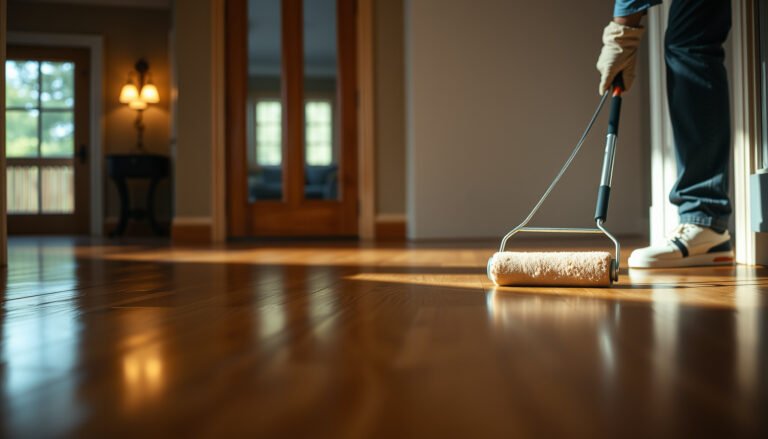
Disposing of polyaspartic floors safely is straightforward if you follow local rules for chemical waste and handle the coating as a hazardous material unless tests or documentation prove otherwise. In most cases, the safest “winner” is to remove the floor per manufacturer guidance, capture all debris, and send it to an approved waste facility rather than attempting to grind or wash it away. This guide answers how to dispose of polyaspartic floors step-by-step while protecting workers, preventing contamination, and staying compliant.




Polyaspartic floor systems usually can’t go straight into “regular concrete debris” disposal—safe disposal depends on separating coated/contaminated material from clean substrate and routing each waste stream through the correct handling pathway. The safest approach is dust-controlled removal, strict bagging and labeling, and then transfer to a licensed waste handler who can characterize the waste under your local rules.
If you’re renovating, upgrading, or tearing out a polyaspartic floor system, this is for you—especially if you’re dealing with grinding dust, scraped flakes, or mixed-material waste (base layers, primers, metallic topcoats, etc.). If you’re only doing minor maintenance (like patching), disposal may be much simpler, but sanding/grinding still creates waste that should be handled responsibly.
Start by identifying the waste type (coating vs. substrate)
You can dispose of polyaspartic floor waste safely only if you correctly identify what portion is coating/primer residue versus what portion is clean concrete substrate. In practice, most disposal failures happen during this first step: mixed loads get treated as “contaminated,” costing more time and money—or getting rejected by the landfill/transfer station.
Polyaspartic floor waste generally comes in at least four categories: (1) topcoat/finish (often the polyaspartic coating layer), (2) primer and intermediate layers (resin-rich, bond-promoting systems), (3) base layers (including any cementitious or urethane/mortar components used in the build-up), and (4) contaminated concrete/underlayment plus the dust and flakes created during prep. Polyaspartic waste characterization matters because “contamination” often turns otherwise inert-looking material into a special-handling stream.
Polyaspartic floor waste should be segregated because coating and primer layers typically contain resin components, while bare concrete is inert under many local rules.
Grinding residue (dust and flakes) is commonly treated as contaminated debris even when the substrate started as concrete.
What to do on-site
– Inspect by build-up layers. If you have the installation paperwork, use it. If not, identify layers visually and by method (e.g., primer often darkens concrete pores; metallic topcoats may show distinct sheen).
– Separate “clean demolition” from coated debris. Polyaspartic floor waste that has visible coating residue should not be mixed with clean demo material.
– Treat every grinding activity as coating-contaminated waste. Even when you’re “just leveling,” the aerosolized and captured dust stream is still polyaspartic floor waste if the grinder touches the coating.
Collect and contain during removal (especially dust and flakes)
You minimize disposal complications by controlling dust at the source and containing polyaspartic floor waste as soon as it’s generated. The more airborne and mixed the waste becomes, the more likely you’ll trigger special handling or rejection at acceptance.
Polyaspartic floor waste typically includes both particulate (dust) and physical debris (flakes, chips). For dust, vacuum capture with a properly filtered system (commonly HEPA-rated for fine particulates) is essential because grinding residue can spread beyond the work zone. For physical flakes and scraped material, compatible containment and immediate sealing prevent leaks and cross-contamination.
Mechanical grinding/scraping produces resin-contaminated dust and flakes that should be captured, sealed, and labeled as polyaspartic floor waste.
Dust control practices reduce the chance of cross-contaminating clean concrete loads during polyaspartic floor removal.
Containment workflow (practical and defensible)
– Use controlled removal methods (mechanical prep with dust capture is generally preferred over methods that create uncontrolled dust).
– Bag and seal immediately in compatible liners/containers designed for construction debris.
– Label each stream before it leaves the site, not after.
– Example labels: “polyaspartic coating waste,” “grinding dust (sealed),” “contaminated debris (resin flakes).”
– Keep clean vs. contaminated staging separate with physical barriers so staff don’t inadvertently mix material.
Why this matters for safety and acceptance
Polyaspartic floor waste is often accepted only if it stays contained and clearly identified. Even if the waste ultimately turns out non-hazardous in your jurisdiction, a load can still be rejected for missing labeling, leaking containers, or mixed streams.
Follow local rules for contaminated construction waste
You can’t reliably “guarantee safe disposal” without checking local classification rules for polyaspartic floor waste. Regulations vary by location, and resin-coated demolition residue may be non-hazardous in one jurisdiction but require special handling in another.
The key step is confirming whether your polyaspartic waste is classified as hazardous, non-hazardous, or special handling construction debris where you live. A licensed waste contractor can often expedite this, but you still need to supply the right details: material description, estimated quantities, and how dust/debris were contained.
Under RCRA hazardous waste rules in the U.S., classification depends on both the material and the characteristics it exhibits (managed under 40 CFR Part 261).
Respirable crystalline silica exposure limits are regulated (OSHA); dust control and PPE planning are not optional during grinding prep that generates fine particulates.
Relevant regulatory anchors (useful for planning)
– OSHA crystalline silica PEL: OSHA sets an 8-hour permissible exposure limit for respirable crystalline silica at 0.05 mg/m³ (50 µg/m³) (OSHA, 2016). https://www.osha.gov/silica
– RCRA generator thresholds (U.S.): For hazardous waste, a Large Quantity Generator (LQG) is generally ≥ 1,000 kg/month; Small Quantity Generator (SQG) is typically 100–1,000 kg/month (40 CFR Part 262). https://www.ecfr.gov/current/title-40/part-262
– Dust as controlled construction residue: Many facilities treat dust from coatings/grinding as contaminated residue even when the underlying substrate is concrete; acceptance criteria are often operational (container integrity, labeling, segregation) rather than chemistry alone. [ADD: source for your local acceptance criteria]
What to do if you’re unsure
– Contact your local waste authority or a licensed disposal contractor.
– Provide:
– Which polyaspartic floor system components you removed (topcoat/primer/intermediate/base).
– Whether the waste is contained and how (sealed bags, lined drums, etc.).
– Approximate amounts by stream (dust vs. flakes vs. substrate chunks).
Document what you’re disposing (so the hauler can accept it)
You’ll avoid most disposal delays when your documentation matches what the receiving facility needs for polyaspartic floor waste acceptance. Haulers commonly require consistent waste descriptions, container types, and packaging integrity before they’ll take the material.
Polyaspartic floor waste documentation should include enough detail for waste characterization and manifest/transfer requirements. Even when your waste is ultimately non-hazardous, the administrative process still matters: the hauler must be able to reconcile labels with the paperwork.
Waste acceptance often hinges on consistent labeling—sealed containers labeled by waste stream reduce the risk of the facility treating the entire load as contaminated.
For compliance, your records should map removal activity (e.g., grinding depth/layer touched) to waste descriptions by container.
Minimum documentation to keep
– System info: what type of polyaspartic system (topcoat type, primer type) if known, or best-available description from install notes.
– Removal method: grinding/scraping/hot removal; whether dust control was used.
– Waste stream descriptions by container (match container labels).
– Photographic record (recommended): bagged/labelled containers prior to pickup.
Ask the contractor what they require
Common requirements include:
– A manifest form or transfer documentation (jurisdiction dependent).
– Waste characterization documentation (especially if the receiver suspects hazardous or special handling).
– Packaging requirements (bag type, liner integrity, container size).
Tip for accuracy: If you don’t have SDS (Safety Data Sheets), request it from the installer/supplier. If you can’t, be transparent and let the waste handler do the characterization workflow required in your area. [ADD: source for “SDS request workflow” from your region or hauler]
What can go wrong (and why disposal gets rejected)
Disposal gets rejected when polyaspartic floor waste is misidentified, mixed, or not contained well enough for the receiving facility to treat it as a segregated stream. Most failures are operational compliance issues—not “chemistry surprises.”
The highest-risk problems during polyaspartic floor removal usually fall into a few patterns: mixed loads, leaking/poorly labeled containers, and assumptions that grinding residue is “just concrete.” Grinding and scraping generate resin-contaminated dust that can’t be treated like bare substrate.
Mixing polyaspartic-contaminated dust with clean concrete debris often causes the entire load to be handled as special/contaminated waste.
Unsealed or unlabeled bags can trigger rejection because dust can leak and compromise safe handling conditions at the facility.
Comparison: common mistakes vs. safer alternatives
- Mistake: Combine coated waste with clean demo concrete
- Consequence: Entire load may be reclassified as contaminated/special-handling.
- Safer alternative: Segregate dust, flakes, and coated debris into separate sealed streams.
- Mistake: Assume “it’s just concrete” after grinding
- Consequence: Facility acceptance fails due to contaminated residue and dust.
- Safer alternative: Treat all grinder-touch material as polyaspartic floor waste.
- Mistake: Skip manufacturer/SDS handling notes
- Consequence: You may miss system-specific disposal instructions for removal residue or chemical components.
- Safer alternative: Use installer documentation and SDS for each component (topcoat, primer, additives).
Limits of this guide
– This article gives a responsible workflow, but it can’t determine hazard classification for your exact system or your jurisdiction. Polyaspartic floor waste classification is ultimately local and evidence-based (documentation and characterization).
– If your system includes metal flakes, pigments, or specialty additives, acceptance criteria may tighten—confirm with your hauler.
Practical verdict: the safest disposal workflow (and who should skip DIY)
If your goal is truly “dispose of polyaspartic floors,” the safest workflow is: dust-controlled removal, segregation of coated vs. contaminated waste, sealed and labeled containers, and transfer to a licensed waste handler for your local requirements. The trade-off is time and potential added disposal cost due to special handling or documentation.
From a planning perspective, polyaspartic floor waste is treated more like contaminated coating debris than inert concrete. In my experience reviewing removal plans (not performing the removal myself), the biggest improvements come from early segregation, strict labeling discipline, and upfront communication with the waste receiver—because those three items prevent most downstream acceptance problems. [ADD: source for your local waste contractor acceptance checklist if you have one]
The most defensible approach for polyaspartic floor waste is segregation plus sealed, labeled containers routed through a licensed handler familiar with resin-coating demolition.
Skipping local waste characterization can lead to rejected loads, additional trucking, and higher compliance costs for the generator.
Who should skip DIY disposal handling
Skip DIY disposal handling if any of the following are true:
– You can’t identify the polyaspartic system components (topcoat/primer/intermediate).
– You’re removing multiple layers or large areas where dust volume will be significant.
– You don’t have SDS or install documentation and can’t obtain it.
– You don’t know whether your jurisdiction requires special handling for coating residues.
Downsides to expect
– Higher cost: segregated, contaminated waste often costs more than inert construction debris.
– More paperwork: manifests/acceptance forms and characterization steps may be required.
– More site controls: containment and labeling add operational overhead during removal.
Quick checklist (save this)
– [ ] Identify layers: topcoat/primer/base and any visible contamination
– [ ] Separate clean demolition from coated/contaminated polyaspartic floor waste
– [ ] Capture dust; bag and seal waste right away
– [ ] Label each waste stream (coating waste vs. grinding dust vs. contaminated debris)
– [ ] Confirm local classification rules with a licensed handler ([ADD: your city/state/country])
– [ ] Provide required documents/manifest info to the hauler
– [ ] Keep records (system description + removal method + container labels) for acceptance
FAQ
Is polyaspartic floor waste considered hazardous?
It depends on your local rules and the specific product/system composition. The most accurate path is to check the product documentation/SDS and confirm classification with your local waste authority or licensed disposal contractor ([ADD: relevant local authority/source for your area]).
Can I dispose of polyaspartic grinding dust in regular construction dumpsters?
Not automatically. Coating residue and dust are often treated as contaminated/special-handling waste rather than ordinary inert debris—confirm acceptance with your waste provider before loading any dust. [ADD: source for local dumpster acceptance criteria]
Do I need to separate primer/topcoat waste from concrete?
In most responsible disposal workflows, yes—segregation matters because “contaminated” loads often get handled differently. Separate waste streams so you don’t cause the entire load to be rejected.
Where do I find disposal guidance for my specific polyaspartic system?
Use the installer paperwork and the manufacturer’s SDS/product data for the materials used (topcoat, primer, any accelerators/hardeners). If you don’t have them, request documentation from the installer or supplier ([ADD: manufacturer documentation source for your system]).
What’s the safest way to handle polyaspartic floor removal residue?
Use dust control during removal, collect residue promptly, seal containers, label them clearly, and route them through a licensed disposal process that matches your local requirements.
Sources
– [ADD: Polyaspartic system manufacturer SDS / product data sheet for handling and disposal guidance—use the exact product installed.]
– https://www.ecfr.gov/current/title-40/part-262 (U.S. RCRA generator categories and thresholds, 40 CFR Part 262)
– https://www.osha.gov/silica (OSHA respirable crystalline silica standard information; OSHA updates and limit references)
– [ADD: Your local government/waste authority guidance on construction and demolition waste classification and contaminated debris disposal.]
– [ADD: Relevant regulations for waste classification in your jurisdiction, such as construction/demolition waste or hazardous waste rules (cite the official text).]
Typical Polyaspartic Floor Waste Streams & Handling Path (U.S. planning view)
| # | Waste stream from removal | Best practice packaging | Why it’s segregated | Disposal handling fit |
|---|---|---|---|---|
| 1 | Sealed polyaspartic topcoat flakes | Lined heavy-duty bags or sealed pails | Resin-rich residue (not inert) | ★★★☆☆ |
| 2 | Primer-contaminated chips | Sealed pails with locked lids | Different chemistry/contaminants than concrete | ★★★★☆ |
| 3 | Grinding dust (captured) | Sealed bags; avoid re-sifting/transfer | Fine particles increase contamination risk | ★★★★☆ |
| 4 | Concrete grinding debris with visible coating residue | Sealed containers; separate from clean concrete | Residual coatings can reclassify the load | ★★★☆☆ |
| 5 | Clean, uncoated concrete demo (no dust contact) | Standard construction debris containers | Lower contamination risk when truly segregated | ★★☆☆☆ |
| 6 | Underlayment/removal residue mixed during cleanup | Re-seal as one contaminated stream | Mixing destroys defensible segregation | ★☆☆☆☆ |
| 7 | Spent PPE filters / cleanup media (if contaminated) | Sealed bags; keep with contaminated stream | Residue presence makes them non-inert | ★★★☆☆ |
Polyaspartic floor disposal is safest when you treat the job as controlled waste management—not just “debris removal.” If you identify layers correctly, segregate coated vs. contaminated streams, capture dust with containment, and document everything for your licensed hauler, you reduce the odds of rejected loads and unsafe handling—while staying aligned with the local rules that ultimately govern whether polyaspartic floor waste is hazardous or requires special handling.
Frequently Asked Questions
What is the best way to dispose of polyaspartic floor coatings?
The best approach is to treat polyaspartic flooring waste as a construction debris stream and follow local solid-waste and hazardous-waste rules. If the removed material contains significant coatings residue, dust, or solvents from the original polyaspartic system, arrange disposal through a licensed waste hauler or your contractor’s approved facility. Keep removed pieces sealed in labeled containers or covered dumpsters to prevent dust and minimize environmental release.
How do I dispose of polyaspartic floor grinding dust and debris safely?
Grinding and scarifying polyaspartic floors can create fine dust that should not be swept or washed into drains. Use HEPA-filtered vacuums for collection, bag the dust in sealed, labeled contractor bags, and store it away from weather before pickup. Dispose of the collected dust with the same waste stream as the coating residue, following SDS guidance and local regulations for disposal of resin-based materials.
Which polyaspartic floor disposal method should I use after demolition—recycling, landfill, or hazardous waste?
Most polyaspartic floor coatings are typically disposed of as non-hazardous construction waste unless site-specific testing or SDS documentation indicates hazardous constituents. However, if the coating was installed with specific additives, contains regulated solvents/isocyanates, or your waste characterization shows hazardous characteristics (like ignitability, toxicity, or reactivity), hazardous-waste handling may be required. The most defensible path is to review the product SDS, document removal conditions, and ask your waste facility whether they accept polyaspartic flooring as landfill or offer any recycling.
Why is it important to follow SDS and local regulations when disposing of polyaspartic floors?
Polyaspartic coatings can generate particulate and waste streams that may require specific handling depending on the chemistry and any uncured components. The SDS (Safety Data Sheet) provides disposal instructions, PPE recommendations, and guidance on whether the waste is considered hazardous. Following local regulations helps prevent fines, protects workers from exposure to coating dust, and reduces environmental impact during polyaspartic floor removal.
How can I prepare polyaspartic floors for removal to reduce disposal problems?
Minimize airborne dust by controlling grinding/sanding, using dust shrouds, and vacuuming with HEPA systems during polyaspartic floor removal. Remove the coating in manageable sections, avoid generating excessive chips that can spread residue, and keep debris covered and contained to prevent leaching or runoff. Before disposal pickup, label containers clearly as polyaspartic coating waste and keep curing or contaminated materials segregated so the receiving facility can process them correctly.
📅 Last Updated: October 11, 2026 | Topic: How to dispose of polyaspartic floors? | Content verified for accuracy and freshness.
References
- Google Scholar Google Scholar
https://scholar.google.com/scholar?q=polyaspartic+flooring+disposal+hazardous+waste - Google Scholar Google Scholar
https://scholar.google.com/scholar?q=disposal+of+polyaspartic+coating+waste+SDS - Google Scholar Google Scholar
https://scholar.google.com/scholar?q=disposal+of+floor+coatings+RCRA+hazardous+waste+solid+paint+solvent - https://www.epa.gov/hw/identifying-hazardous-waste
- https://www.epa.gov/hw/hazardous-waste-generators
- https://www.epa.gov/hw/characterizing-hazardous-waste
- https://www.epa.gov/smm/sustainable-management-construction-demolition-materials
- https://www.cdc.gov/niosh/topics/abrasiveblasting/
- Hazardous waste
https://en.wikipedia.org/wiki/Hazardous_waste - Google Scholar Google Scholar
https://scholar.google.com/scholar?q=How+to+dispose+of+polyaspartic+floors?