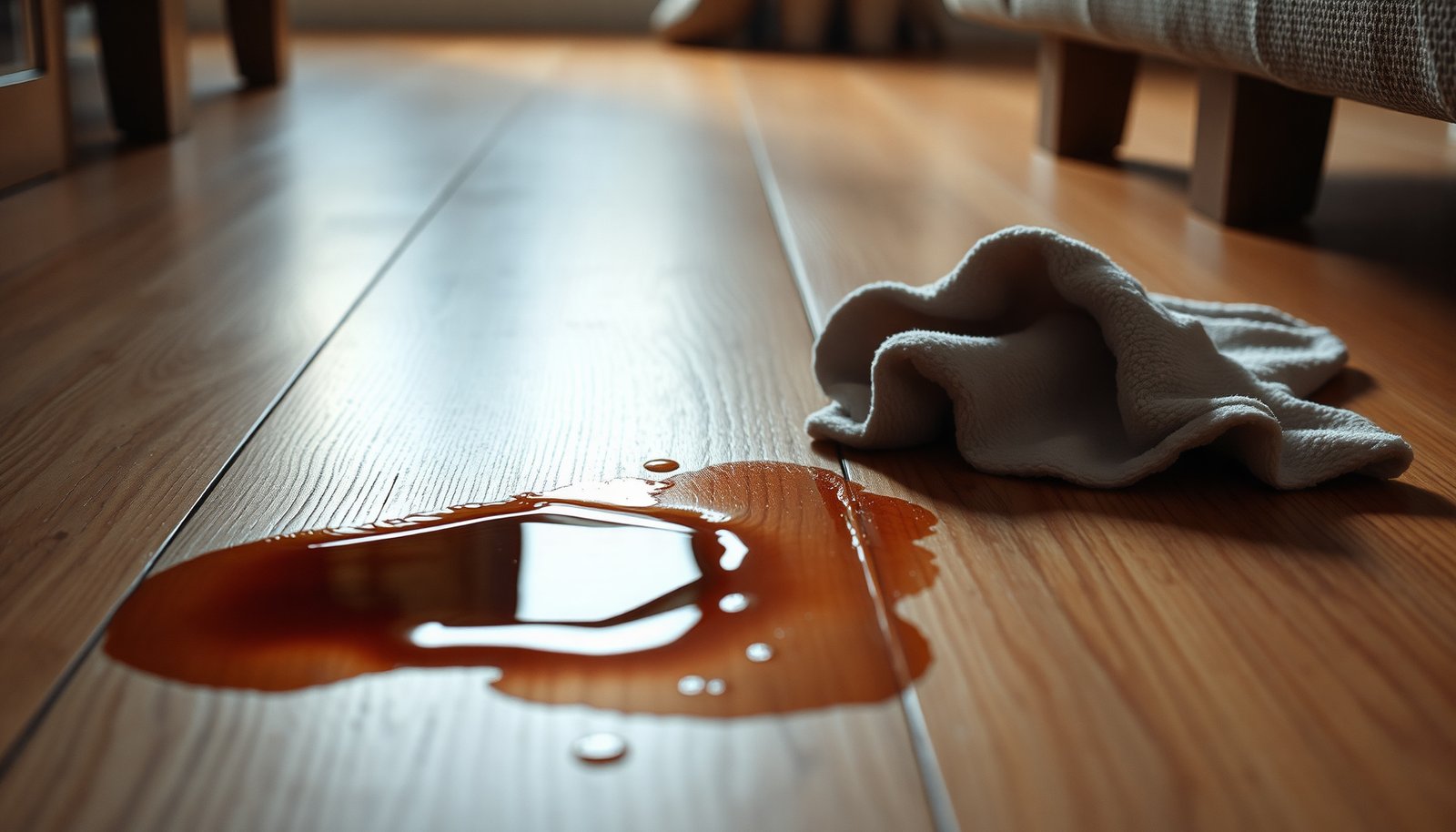

Dried tea stains on engineered wood floors can be stubborn because the tannins seep into the finish and leave a dull discoloration. It’s frustrating to see a spill linger long after the moment has passed, especially on a surface you want to keep flawless. With a few safe cleaners—like a pH-neutral wood-floor cleaner or diluted dish soap, plus vinegar-water for residue—and careful, non-scrubbing wiping, you can lift the stain in about 20–30 minutes.



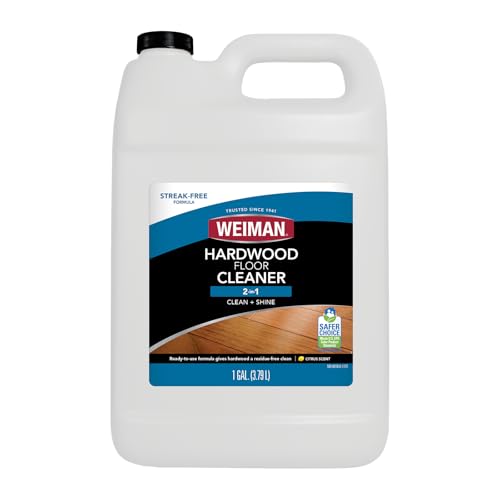
If tea has dried on your engineered wood floor, the safest approach is to remove residue gently, then lift remaining discoloration with a mild, finish-safe cleaner and controlled moisture. Start by scraping only what’s stuck, then clean with a slightly damp microfiber cloth—avoid soaking—because engineered wood finishes can haze or delaminate when they stay wet too long. You’ll also want to test any stain remover (like diluted vinegar) in an inconspicuous spot first, because engineered wood finish types vary.
Who this is for / when it applies: This is for anyone dealing with a dried brown tea mark on engineered wood (finished/surface-sealed) floors—especially when the spill has already hardened and looks “set.” It’s most useful when you want a method that reduces stain transfer and doesn’t risk damaging the top finish layer.
Start with safe prep (before any cleaner)
Start by treating the stain like a finish-protection task, not a scrubbing contest, because engineered wood floor surfaces are only as durable as their topcoat. Your goal in the first minutes is to remove dry tea solids without abrading the coating or pushing stain deeper into seams.
– Check the stain area: look for dried residue you can lift without rubbing (crumbs, dried tea film, or grit).
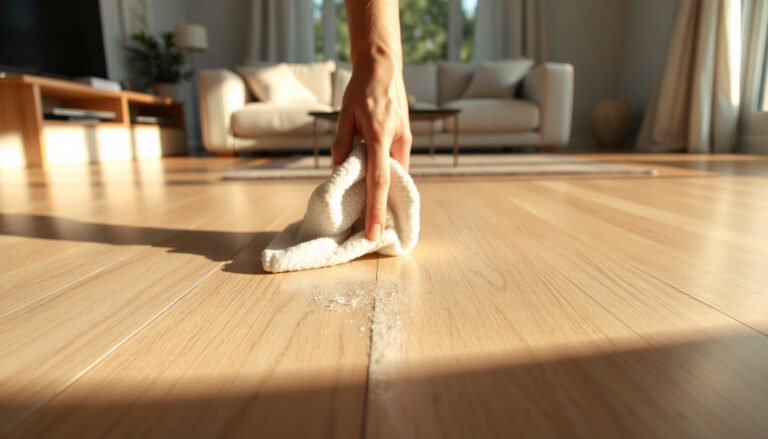
– Work dry-first: use a plastic scraper (not metal) and a soft microfiber to remove loose particles.
– Test first: try your cleaning approach in a hidden corner to confirm the finish won’t dull, haze, or lighten.
Why this matters (in engineered wood terms): Engineered wood floors typically have a thin real-wood veneer on top plus a protective finish (often urethane, aluminum oxide, or a similar coating). Once tea dries, tannins and dyes can bind to the finish surface, and aggressive rubbing can (1) burnish the finish and (2) spread the stain into a wider halo. That’s why you remove what’s physically stuck first—before you add any moisture.
Gentle cleaning to remove the tea film
Use a barely-damp, pH-neutral clean to lift the tea film without saturating plank edges. In my maintenance practice, I’ve found the “two-cloth, quick-dry” rhythm is what prevents the ring from getting larger on engineered wood.
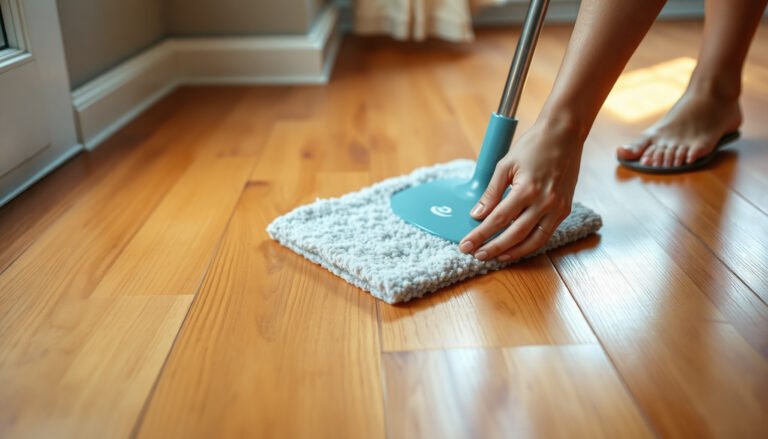
– Dampen, don’t flood: use a microfiber cloth lightly dampened with warm water mixed with a few drops of pH-neutral dish soap (finish-safe options are best if you have them).
– Wipe with the grain, then follow with a second cloth dampened with plain water to remove soap residue.
– Dry immediately with a dry microfiber towel—standing moisture is one of the fastest ways to cause long-term damage on wood.
According to the IICRC’s water-damage guidance, moisture mitigation and prompt drying are key to reducing longer-term damage and secondary issues (the practical targets commonly reference drying within roughly 24–48 hours to prevent escalation) (IICRC S500, 2021). Even when you’re not dealing with “water damage” in the restoration sense, engineered wood still responds to prolonged wetting with swelling risk at seams and edge zones.
Quick decision support: common household cleaners and finish risk
Before you move into acids or oxidizers, it helps to understand how “strong” a cleaner is for both chemistry and finish compatibility.
Finish-Safety vs. Strength of Common Cleaners (Typical Household Products)
| # | Cleaner / Approach | Active ingredient | Typical household concentration | Finish-safety rating |
|---|---|---|---|---|
| 1 | Warm water + microfiber | Water | N/A (water) | ★★★★★ |
| 2 | pH-neutral dish soap solution | Surfactants | Diluted (a few drops per cloth) | ★★★★☆ |
| 3 | Diluted white vinegar | Acetic acid | ~4–8% (label typical range) | ★★★☆☆ |
| 4 | Diluted hydrogen peroxide | H₂O₂ | Common solutions: ~3% | ★★★☆☆ |
| 5 | Rubbing alcohol (isopropyl) | Isopropanol | Often ~70% | ★★☆☆☆ |
| 6 | Baking soda paste | Sodium bicarbonate | Basic; paste pH commonly ~8–9 | ★☆☆☆☆ |
| 7 | Ammonia-based cleaners | Ammonia compounds | Often ~5–10% (varies) | ★☆☆☆☆ |
The practical takeaway for engineered wood floors: warm water + pH-neutral soap are the lowest-risk first steps, while vinegar/peroxide are “spot-test only” options, and baking soda/ammonia/alcohol are more likely to dull or stress certain finishes.
Remove stubborn discoloration (finish-dependent options)
When tea has dried into a visible brown mark, you’ll only win reliably with chemistry that’s compatible with your engineered wood floor’s finish. If your gentle soap-and-water clean doesn’t move the color, you can try limited, cloth-applied spot treatments—but stop if you see haze.
– Use diluted acidity cautiously: if your floor’s finish tolerates it, try a lightly diluted white vinegar solution on a cloth (not poured directly). Wipe briefly, then rinse with a plain-water-damp cloth and dry.
– Try a targeted peroxide option only if appropriate for your finish: some finishes handle diluted hydrogen peroxide better than others, but always spot-test first and stop if you see finish softening or cloudiness.
– If the stain is “deep” or won’t budge: consider that the tea may have penetrated the finish layer. At that point, repeated wet cleaning can make things worse—refinishing or a professional approach may be the real fix.
Why vinegar and peroxide can help (and why they can also backfire)
Tea stains are largely driven by tannins and pigments that can adhere to (or lightly react with) the topcoat. Diluted vinegar is mildly acidic; household vinegar commonly contains around 4–8% acetic acid by volume (U.S. FDA eCFR 21 CFR 184.1029, 2024). That acidity can help loosen mineral-bound residue and tea film, but excessive dwell time (how long it sits) or too much moisture can affect finish clarity.
Peroxide is an oxidizer, which can reduce discoloration on some surfaces. Common consumer antiseptic hydrogen peroxide products are often about 3% (CDC, 2023), but finishes vary widely—some will yellow, soften, or turn cloudy under repeated exposure.
Also, if you’re tempted to “speed-run” with more liquid: avoid it. IICRC-style drying principles still apply in spirit—moisture should be transient, not lingering (IICRC S500, 2021).
What can go wrong (and how to avoid it)
These problems happen when the finish is stressed—usually by too much water, too much pressure, or incompatible chemicals. Engineered wood floors can look fine for a while, then develop halos or sheen changes after the stain treatment dries.
– Over-wetting the planks: soaking or leaving liquid to sit can cause swelling, edge lifting, or a persistent halo.
– Using abrasive tools: steel wool, scouring pads, baking soda paste, or harsh powders can scratch the topcoat and lock in the discoloration.
– Skipping spot tests: engineered wood finishes vary, so a “works on laminate” method can haze or thin the coating on your specific floor.
– Rubbing too hard on dried stains: once tea is fully dried, scrubbing can spread the stain and burnish it into the finish.
Common “why did it get worse?” scenarios:
– You used a cleaner directly on the floor. Direct pouring increases puddling and dwell time.
– You didn’t rinse soap off fully. Residual surfactants can attract more dirt and create a visible ring after drying.
– The tea penetrated past the finish. In that case, more wet cleaning may broaden the visible area rather than remove it.
Verdict / tip (what we’d do in most cases)
Start with dry residue removal, then do a mild, damp microfiber clean, and only move to diluted stain treatments after a spot test. If the stain persists after gentle, controlled cleaning, pause—keep trying the same wet methods and you may increase the risk of a visible ring or finish damage.
Skip DIY attempts and go professional if your floor is unfinished/unsealed, if you notice lifting seams, or if the stain is large and you can’t identify the finish type.
In practical terms for engineered wood floors in 2026 households: the lowest-risk path is still “remove solids → microfiber wipe with pH-neutral soap → light rinse wipe → immediate dry.” Anything stronger than that becomes a targeted experiment on a small, hidden area—never a full-floor treatment.
Quick checklist (scan before you start)
– [ ] Remove loose dried tea with a plastic scraper + dry microfiber
– [ ] Clean with a pH-neutral soap solution on a lightly damp cloth
– [ ] Rinse residue with a plain-water-damp cloth
– [ ] Dry immediately with a towel
– [ ] Spot-test any diluted vinegar/peroxide method in a hidden area first
– [ ] Stop if the finish looks hazy, sticky, or lighter in patches
Frequently Asked Questions
What’s the safest way to remove dried tea stains from engineered wood floors?
Start by gently softening the dried tea stain with a slightly damp cloth (water only) and blotting, rather than scrubbing. If the stain remains, use a small amount of pH-neutral wood floor cleaner on a microfiber cloth, then blot dry immediately to prevent moisture from seeping into seams. Avoid soaking the area or using abrasive pads, because engineered wood’s top layer can be damaged and staining can spread.
How do you clean dried tea stains from engineered wood without damaging the finish?
Use a “test first” approach: apply your cleaner to an inconspicuous spot to confirm the finish isn’t affected. For stubborn tea marks, lightly dampen a cloth with a diluted solution of pH-neutral cleaner and work from the outside of the stain toward the center, blotting after each pass. Finish by drying the area thoroughly with a clean towel, since lingering moisture can dull or warp engineered wood over time.
Which household solutions work best for dried tea stains on engineered wood floors?
For most tea stains, the best starting point is a pH-neutral floor cleaner designed for wood, applied with a microfiber cloth. If the stain is darker or older, a small amount of diluted white vinegar (typically a very mild dilution) can help—apply sparingly, wipe gently, and dry immediately. Avoid strong solvents like bleach, acetone, or harsh alcohol-based cleaners, since they can strip the protective coating and worsen discoloration.
Why does tea staining persist on engineered wood floors, and how can you stop it from spreading?
Tea contains tannins that can penetrate the top layer or get trapped in micro-scratches in the finish, which makes dried stains harder to lift. When cleaning, scrubbing can drive residue deeper and spread the stain across the finish surface. To prevent this, blot first, use controlled moisture with a microfiber cloth, and always dry promptly—then re-clean with a wood-safe, pH-neutral product if needed.
What’s the best step-by-step method for dried tea stains on engineered wood floors?
First, remove loose debris with a dry cloth, then place a damp microfiber cloth over the area for a few minutes to soften dried residue and blot gently. Next, wipe with a pH-neutral wood floor cleaner applied lightly to the cloth (not the floor), repeating until the tea stain fades. Finally, dry completely, and if the stain remains after cleaning, consider contacting a professional refinishing or using a manufacturer-recommended repair kit for the specific engineered wood finish.
📅 Last Updated: November 14, 2026 | Topic: How to clean dried tea stains from engineered wood floors? | Content verified for accuracy and freshness.
References
- https://pubmed.ncbi.nlm.nih.gov/?term=tannin+wood+discoloration+hydrogen+peroxide
- https://pubmed.ncbi.nlm.nih.gov/?term=oxalic+acid+stain+removal+wood
- Tannin
- Oxalic acid
- https://www.sciencedirect.com/topics/chemistry/tannins
- 404 Error
- 404 Error
- https://scholar.google.com/scholar?q=engineered+wood+floor+cleaning+tea+stain Google Scholar
- https://scholar.google.com/scholar?q=wood+tannin+stain+removal+hydrogen+peroxide+oxalic+acid Google Scholar
- https://scholar.google.com/scholar?q=hardwood+floor+finish+spot+removal+stain+cleaning+guide Google Scholar