Want to estimate the cost of carpet tiles accurately? You’ll get a clear, practical pricing formula that shows how to calculate total installed cost from tile price, square footage, waste factor, and installation labor. Follow it and you’ll know whether your budget supports a DIY layout or requires professional fitting—before you buy a single box.




If you want a reliable ballpark, calculate your total carpet-tile floor area (then add waste) and multiply it by the tile’s quoted unit cost (per sq ft, per sq yd, or per box). From there, add floor prep, installation labor, and any extras like transitions, adhesives, and delivery/taxes—because those items often determine the “real” project total more than the tile cost itself.
If you’re planning an office refresh, tenant improvement, or room-by-room renovation, this is for you—especially if you’re deciding between different tile types (loose lay, glue-down, or click/installation systems) and need a cost estimate that doesn’t miss the common add-ons.
Measure the area (and plan for waste)
Start by measuring the floor area accurately, because every other line item (boxes, labor hours, adhesives, and transitions) scales from this number. Then apply a waste factor so you’re not surprised by cuts, pattern alignment, and odd-shaped perimeters—especially in commercial spaces with doorways, columns, and architectural returns.
For carpet tiles, suppliers commonly quote price in square yards or per box, so you’ll convert once and keep everything consistent. A simple and standard conversion is: 9 sq ft = 1 sq yd (a unit conversion many suppliers use when pricing by area).
“9 square feet equals 1 square yard,” which is the standard conversion used when carpet or flooring suppliers quote per sq yd pricing.
Carpet tile takeoffs are not “perfect tile math” because cutting, pattern breaks, and fixture layout typically require additional modules beyond nominal coverage.
For commercial carpet tiles, material waste allowances are commonly adjusted upward for complex layouts to avoid mid-install shortages.
How to measure (practical takeoff method)
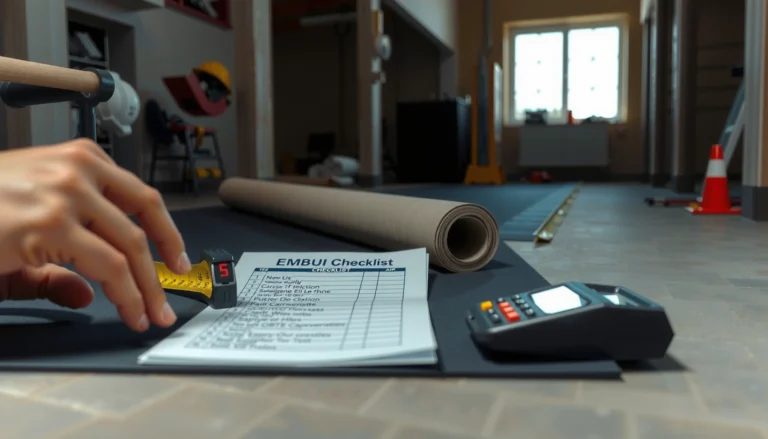
1. Measure total floor area in square feet (sq ft). Use interior dimensions and include the net walking surface you want carpeted.
2. Convert to square yards (sq yd) if needed. Use the conversion sq yd = sq ft ÷ 9.
3. Add waste for cuts and layout mistakes. If you don’t have a project-specific figure yet, start with a reasonable placeholder and tighten later: [ADD: your recommended waste % based on tile pattern/layout complexity].
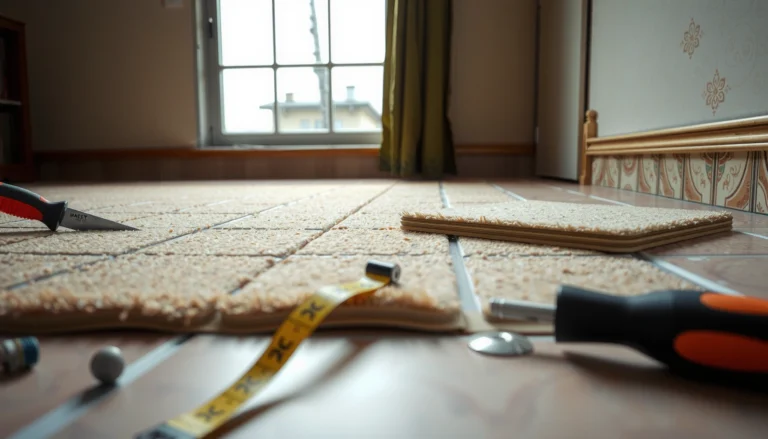
4. Sketch tricky zones. For angles, pillars, curved walls, and door recesses, sketch the layout and estimate the number of “lost” full tiles due to cuts.
From a planning standpoint, waste isn’t just “extra tiles”—it’s also extra labor time, because installers often spend more time scribing, trimming, and verifying seams around transitions.
Waste and layout complexity: how to decide faster
If your design is a straightforward monolithic grid (minimal obstacles), you can often stay near your lower allowance. If you’re working around frequent interruptions—doors, HVAC boots, built-ins—or using a tile pattern that can’t be easily “broken,” plan for more waste.
[ADD: source for a recommended waste allowance for carpet tile installations, such as manufacturer guidance or an industry estimating standard.]
Use the right unit: per box, per sq ft, or per sq yd
Choose the unit that matches your quote, then normalize your math to that unit before you multiply. The goal is to make every option comparable—otherwise you end up underestimating tile quantity because “nominal tile size” rarely equals “coverage per box.”
This section answers the most common estimator mistake: treating tile dimensions as coverage. In reality, the packaging typically provides coverage per box (and that already reflects install realities like spacing and trim allowances).
Coverage per box is typically stated on packaging or the manufacturer’s spec sheet and may differ from simple tile-count math based on nominal dimensions.
When comparing quotes, you should convert all price formats to one basis (sq ft, sq yd, or box) so totals reflect the same installed quantity.
Normalize your quote to a single unit
1. If quoted per box:
– Compute boxes as:
Required boxes = ceil((needed sq ft incl. waste) ÷ coverage per box)
– Round up because you can’t order partial boxes.
2. If quoted per sq ft or per sq yd:
– Multiply (needed area incl. waste) × unit price.
Verify “coverage” definitions
Check the manufacturer/spec sheet for what “coverage” means on the packaging. Some brands may list coverage including recommended allowances for cuts, while others strictly list calculated square footage from module count. Either way, you want to use the exact wording from the install/coverage documentation.
[ADD: source for how coverage is defined (from a manufacturer spec sheet or installation guide) for at least one common carpet tile line.]
Add installation and prep costs that commonly change totals
Your tile cost is only one part of the total; installation and subfloor prep often determine the final budget. The fastest way to avoid surprises is to decide early whether you’re self-installing or hiring a contractor, then list the prep requirements that apply to your substrate and tile system.
This is where “loose lay vs glue-down vs click systems” matters most: different installation methods can require different underlayment, adhesives, moisture mitigation, and prep tolerances.
Subfloor prep requirements—including patching, leveling, and moisture mitigation—are frequently manufacturer-specific and must be followed to protect carpet tile performance.
Adhesives, seam sealer, and edge/transition accessories can be separate line items even when the tile itself is priced by square footage.
Installation method: pick the correct cost model
– Loose-lay / modular grid systems: often rely on grid tension and/or tackifiers depending on product specs; labor may shift toward layout precision and seam control.
– Glue-down tiles: add adhesive costs and typically require stricter subfloor condition checks (flatness, cleanliness, and moisture).
– Click/engineered installation systems (where applicable): may add locking components and a different prep profile.
Prep items to include (even if you think your floor is “fine”)
When estimating carpet tile installation, consider:
– Removal of old flooring (carpet, LVT, VCT, adhesive residue)
– Leveling/patching and smoothing of surface defects
– Moisture mitigation if installing over concrete slabs or areas with known moisture risk
– Subfloor repairs (cracks, delamination, damaged underlayment)
– Cleaning/debris removal (especially critical for adhesive performance)
Pros/cons at a glance (installation type selection)
- Loose-lay carpet tile
- Pros: often faster to install, easier partial replacement, less adhesive complexity.
- Cons: performance depends on flatness and correct backing/system behavior; may still require special edge control.
- Glue-down carpet tile
- Pros: strong hold for heavy-traffic environments and more stable edges/seams (when installed correctly).
- Cons: added adhesive and stricter substrate requirements; more labor and cleanup if rework is needed.
- Click/controlled-install systems
- Pros: can speed install when specs match conditions; consistent module placement.
- Cons: still requires correct subfloor prep; accessories and tolerances can affect final labor cost.
[ADD: source for adhesive/subfloor requirements from ASTM methods and/or manufacturer installation instructions.]
Don’t forget extras: transitions, delivery, and indirect expenses
Plan for extras because they often scale with project perimeter and building complexity. Even if your tile math is perfect, transitions, delivery, and disposal can move your total enough to invalidate a “tile-only” budget.
Doorway and flooring-type transitions are typically priced as separate accessories, and they increase costs based on the number of transitions rather than the square footage alone.
Delivery fees and haul-away/disposal charges are common indirect costs for flooring projects, especially for larger commercial orders.
Common add-ons to include in your estimate
– Transitions/reducers/T-moldings at doorways and between flooring types
– Stair nosing or edge trim if carpet tiles meet stairs or raised edges
– Adhesives, seam tape, or trim (varies by installation system)
– Delivery fees (especially bulky orders or lift-gate situations)
– Disposal/haul-away for old flooring and packaging
– Jobsite shop charges if your supplier requires them
Add contingency for unknown subfloor conditions
Even with a site walk, you may discover:
– adhesive residue needing additional smoothing
– unexpected surface irregularities
– moisture conditions that require extra steps
Use a placeholder so your estimate remains credible: [ADD: a % or dollar amount you typically reserve for surprises].
What can go wrong (and how to avoid it)
The most expensive estimating errors usually come from mismatched assumptions—not from arithmetic mistakes. If you keep your units consistent, verify coverage definitions, and tie prep/labor line items to the installation method and substrate, you avoid the common failure modes.
Material shortages mid-install almost always trace back to underestimated waste or coverage rather than true tile demand.
Moisture and flatness issues can reduce carpet tile performance or warranty eligibility when installers don’t meet the manufacturer’s substrate requirements.
Here are the key pitfalls to watch:
– Wrong waste factor: Overly optimistic waste leads to shortages mid-install. Increase waste for complex patterns and cut-heavy layouts.
– Mixing installation types: A quote for one system (e.g., glue-down) may not include adhesive or moisture mitigation needed for that installation method.
– Assuming tile dimensions equal coverage: Coverage per box often differs from nominal dimensions because packaging coverage is based on the actual modules and installation guidance.
– Skipping subfloor checks: Concrete moisture, unevenness, and debris can compromise performance—especially for glue-down installations.
– Currency/tax confusion: Some quotes are pre-tax; others include delivery and tax. Compare apples-to-apples by listing assumptions in writing.
[ADD: source for key substrate requirements and whether specific testing standards apply (e.g., moisture testing methods) from manufacturer installation manuals.]
Worked Carpet Tile Cost Inputs (Sample Takeoffs)
| Case | Project Area | Waste Added | Coverage per Box | Boxes Needed | Tile Price (per Box) | Tile Cost (Boxes × Price) |
|---|---|---|---|---|---|---|
| 1 | 180 sq ft | 10% | 18.0 sq ft/box | 11 | $145/box | $1,595 |
| 2 | 420 sq ft | 12% | 20.0 sq ft/box | 24 | $210/box | $5,040 |
| 3 | 650 sq ft | 15% | 16.5 sq ft/box | 46 | $170/box | $7,820 |
| 4 | 1,050 sq ft | 8% | 22.0 sq ft/box | 52 | $240/box | $12,480 |
| 5 | 90 sq ft | 18% | 15.0 sq ft/box | 7 | $120/box | $840 |
| 6 | 300 sq ft | 10% | 18.0 sq ft/box | 19 | $160/box | $3,040 |
| 7 | 780 sq ft | 14% | 19.5 sq ft/box | 49 | $195/box | $9,555 |
Verdict / tip (when this method works best)
This estimating approach works best when you can treat the takeoff as a measurable system: flooring area + waste + tile unit cost + prep/installation + extras. It can produce a credible budget range for most remodeling planning because it separates the cost into parts you can verify—rather than relying on one “all-in” number from memory.
The tradeoff is that results become unreliable when the project includes major unknowns: extensive subfloor damage, hidden moisture issues, complex pattern alignment requiring custom layout revisions, difficult site access, or structural changes that alter tolerances.
Accurate carpet tile budgeting depends on using manufacturer “coverage per box” and installation instructions, not only nominal tile dimensions.
When major substrate conditions are unknown, reserve contingency or request site evaluation before treating an estimate as a fixed bid.
If you want to tighten the estimate quickly
Share room dimensions and your planned installation type (loose lay vs glue-down) and ask contractors for written bids that reference the same measured square footage and waste assumption. The “apples-to-apples” comparisons become dramatically easier when scope notes explicitly list subfloor prep and accessories.
Quick cost-estimate checklist
– [ ] Total area (sq ft) measured correctly
– [ ] Waste factor added: [ADD: your waste %]
– [ ] Coverage per box confirmed from packaging/spec sheet
– [ ] Tile cost computed (boxes × price per box, or sq ft × unit price)
– [ ] Subfloor/prep items listed (leveling, patching, moisture mitigation)
– [ ] Installation method confirmed (labor + adhesives/trim if needed)
– [ ] Extras added (transitions, delivery, disposal)
– [ ] Contingency reserved: [ADD: % or $]
FAQ
What’s the fastest way to estimate carpet tile quantity?
Measure total square feet, add your waste factor, then divide by the coverage per box from the manufacturer’s packaging/specs. Round up to the nearest whole box.
Should I estimate in square feet or square yards?
Use whichever matches your supplier’s pricing, but convert everything to the same unit before multiplying. (Commonly: 9 sq ft = 1 sq yd.)
How do I estimate installation cost for carpet tiles?
Start by deciding whether you’re doing it yourself or hiring labor, then include prep requirements (leveling/moisture mitigation) and installation system needs (adhesives/trim). For accuracy, request bids that reference your measured square footage and your waste assumptions.
What waste percentage should I use?
Waste depends on room geometry and pattern complexity. If you don’t have a project plan yet, use [ADD: recommended waste % based on your layout type] and adjust upward if your layout is cut-heavy.
Do carpet tiles need underlayment?
Some systems require specific underlayment or moisture protection depending on subfloor type and manufacturer requirements. Always follow the installation instructions for your exact tile and substrate.
Sources
– [ADD: Manufacturer installation instructions/spec sheet for your carpet tile type—loose lay vs glue-down—especially sections covering coverage, subfloor requirements, adhesive/underlayment, and waste/cutting guidance.]
– [ADD: Manufacturer product data sheet for the tile—use for coverage per box and required installation method or materials.]
– [ADD: Source for moisture/flatness testing standards relevant to your substrate (e.g., ASTM methods commonly referenced in flooring installation guidance).]
– [ADD: Source for industry guidance on estimating waste/material allowances for modular flooring layouts, if available from a recognized trade organization or manufacturer.]
To estimate carpet tiles without drifting into guesswork, keep your math grounded in measurable inputs: verified coverage (not just tile dimensions), a waste allowance matched to layout complexity, and a scope that includes prep, labor, and transitions. If you build the takeoff in this order, you’ll get a budget range you can trust—and you’ll be ready to request written bids that compare cleanly across contractors.
Frequently Asked Questions
How do I estimate the cost of carpet tiles for my room?
Start by calculating the total square footage of the area you want to carpet, then add a waste factor (typically 5–15% depending on layout complexity). Divide the adjusted square footage by the coverage per tile to estimate how many carpet tiles you need. Multiply by the carpet tile price per square meter (or per tile) and add estimated installation costs, including underlayment if required, plus any trim/border and disposal fees. This gives a realistic carpet tiles cost estimate instead of relying on tile pricing alone.
Which factors most affect carpet tile pricing and total installation cost?
Carpet tile cost varies based on fiber type (e.g., nylon vs. solution-dyed options), pile height/density, backing technology (for example, modular cushion or attached backing), and whether tiles are standard or luxury commercial-grade. Installation expense is influenced by subfloor condition, required floor prep, adhesive type (pressure-sensitive, releasable, or full-spread), and complexity like borders and door cuts. Brand, warranty length, and stain/soil performance ratings also impact both the per-square-meter price and long-term maintenance costs.
How do I calculate the amount of carpet tiles needed, including waste?
Measure the length and width of the room and multiply to get total square footage, then convert to square meters if your pricing is listed that way. Add waste for cuts and layout constraints—straight layouts may need ~5–8%, while irregular rooms, columns, or pattern matching can require 10–15%. If tiles must align with a direction or pattern, plan for additional overage and consider buying extra “spare tiles” for future replacements.
What is the best way to compare quotes for carpet tiles and avoid hidden costs?
Ask each provider to quote on a like-for-like basis: carpet tile price per square meter (or per box), the exact installation method, and whether floor prep is included. Confirm whether the quote includes adhesive (and the estimated quantity), underlayment/cushion, edge trims, transition strips, and removal of old flooring. Request total materials plus labor pricing and a breakdown of assumptions so you can compare carpet tiles cost transparently across bids.
Why should I budget for maintenance and replacement when estimating carpet tile costs?
While carpet tiles are often priced competitively and can be replaced individually, the total carpet tiles cost should still include maintenance needs like vacuuming frequency, spot-cleaning products, and periodic deep cleaning. If you choose tiles with improved stain resistance or commercial durability, the upfront price may be higher but can reduce replacement frequency and downtime. Planning for spare tiles and understanding warranty terms helps you estimate lifecycle cost more accurately than a one-time installation estimate.
📅 Last Updated: October 11, 2026 | Topic: How to estimate the cost of carpet tiles? | Content verified for accuracy and freshness.
References
- Cost estimate
https://en.wikipedia.org/wiki/Cost_estimation - https://en.wikipedia.org/wiki/Quantity_surveying
- Bill of quantities
https://en.wikipedia.org/wiki/Bill_of_quantities - https://en.wikipedia.org/wiki/Carpet_tile
- https://en.wikipedia.org/wiki/Construction_waste
- GAO Cost Estimating and Assessment Guide: Best Practices for Developing and Managing Capital Prog…
https://www.gao.gov/products/gao-09-3sp - WBDG
https://www.wbdg.org/resources/life-cycle-cost-analysis - Google Scholar Google Scholar
https://scholar.google.com/scholar?q=carpet+tile+cost+estimation - Google Scholar Google Scholar
https://scholar.google.com/scholar?q=flooring+installation+cost+estimation+per+square+foot - Google Scholar Google Scholar
https://scholar.google.com/scholar?q=carpet+tile+quantity+taking+off+waste+factor+installation+cost