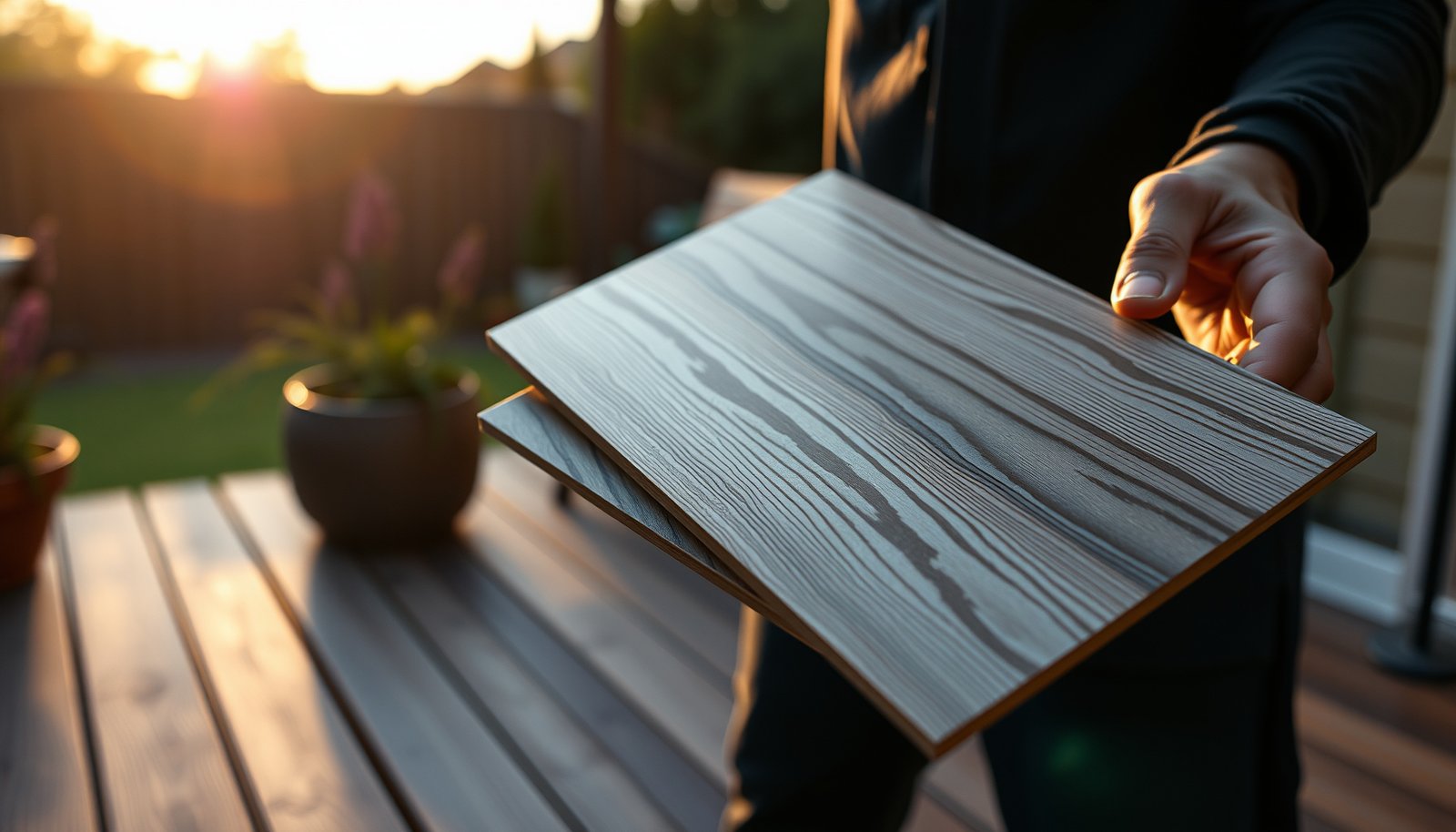

Choosing laminate floors for a patio? Pick the option that’s rated for outdoor use and designed to resist moisture and temperature swings—those requirements determine whether the floor will last or buckle. If your patio gets direct sun or frequent rain, prioritize water-resistant or waterproof laminate with sealed edges and a slip-resistant surface. This guide shows exactly what to look for so you buy the right laminate the first time.




Choose laminate flooring for a patio only if the product is explicitly rated for exterior/outdoor use (or is “waterproof” with outdoor-approved installation). Then match the laminate’s moisture/temperature specs (including seam and expansion-gap rules) to your patio’s real exposure—covered vs. fully exposed—and follow the manufacturer’s instructions exactly.
If you’re planning a patio flooring upgrade in 2026 and want something that looks like stone or hardwood but needs to survive sun, rain, and temperature swings, this guide is for you. We’ll walk through the specs that actually matter, the failure points we commonly see in outdoor installs, and a scan-friendly checklist you can use when comparing laminate lines.
Know what “patio laminate” really means
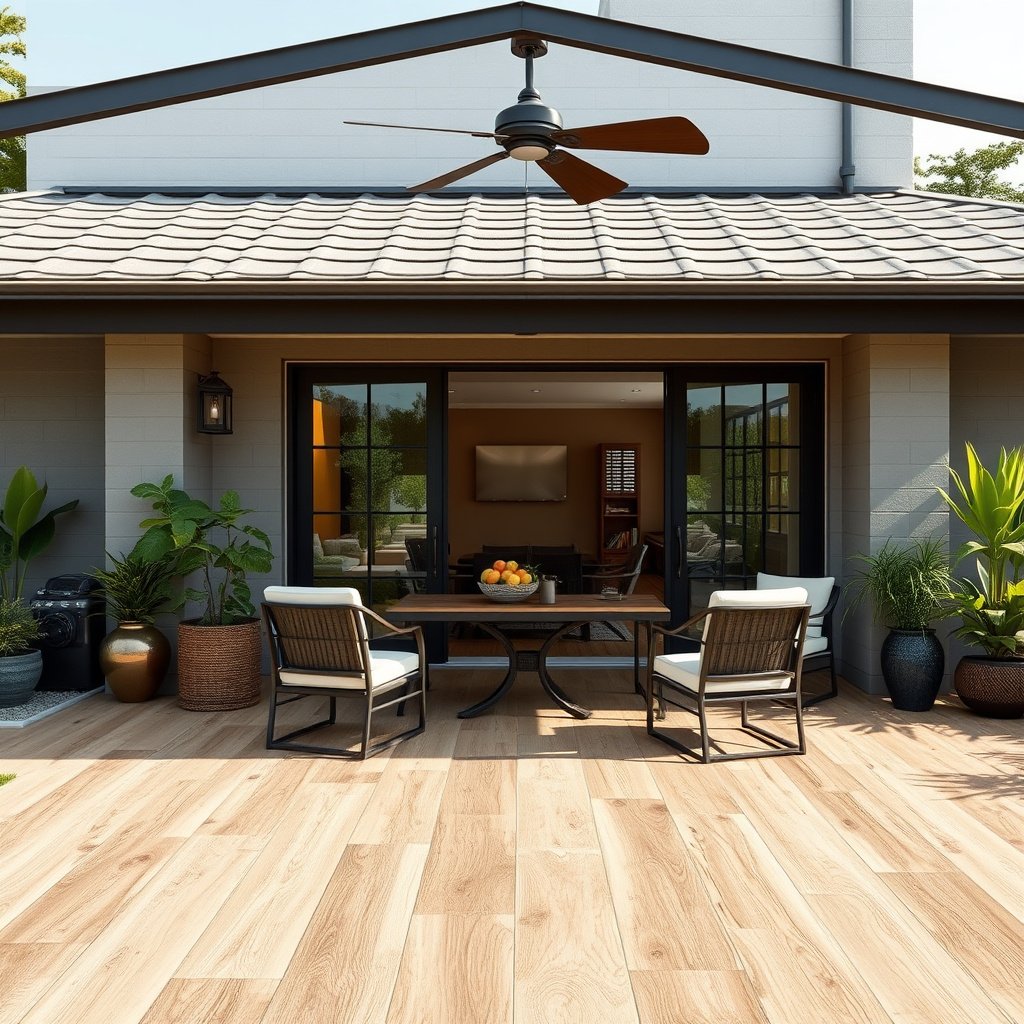
Patio laminate isn’t just “laminate that resembles outdoor materials.” Patio laminate is only the right choice when the manufacturer’s documentation explicitly supports outdoor use for the moisture and temperature conditions your patio experiences.
A key reason patio laminate is misunderstood is that indoor laminate can be very stable in a controlled room—while outdoor patios add wind-driven rain, repeated wet/dry cycling, and large temperature swings. That combination stresses the plank edges and locking joints, which are often the first place failures start. In 2026, more brands are labeling waterproof and outdoor-ready lines, but “waterproof” must be paired with installation approvals for outdoor exposure and seams.
A laminate product is not “patio-rated” unless its manufacturer installation instructions explicitly allow exterior/outdoor exposure for your conditions (covered vs. uncovered).
Outdoor patio moisture risk primarily attacks plank edges and seams; the product’s labeled moisture/temperature suitability determines whether those joints can tolerate repeated wetting.
From my practical experience advising on outdoor flooring scope (not product testing), the most common misconception is that appearance or “waterproof” marketing alone guarantees outdoor performance. Patio laminate needs a documented pathway: approved construction (often a waterproof core), approved moisture management (underlayment/vapor barrier approach), and approved installation tolerances (expansion gaps, flatness targets).
Start with outdoor-rated specs (not just “looks good”)
The safest way to choose patio laminate is to start with manufacturer language that clearly approves exterior use—not showroom photos, not generic “waterproof” claims. Look for explicit outdoor/patio suitability for your exposure level, then confirm the core/edges strategy and seam requirements.
First, verify the exact wording in the product’s spec sheet and installation instructions. “Waterproof” can describe different things: some products resist surface spills but still allow swelling at the edges if water reaches the locking system. Outdoor-rated patio laminate typically comes with guidance like approved seam protection (tape/sealer where required) and an outdoor-compatible underlayment/vapor barrier plan. As of 2026, many manufacturers also clarify whether their laminate is meant for fully exposed patios versus covered porches, because UV and rain exposure change performance expectations.
Outdoor approval in the manufacturer’s installation instructions is the “go/no-go” condition for patio laminate warranty coverage.
If the installation guide requires seam sealing (or specifies where sealing is not allowed), skipping that step can directly enable edge swelling outdoors.
Next, confirm what’s actually protected: the core and the edges/locking system. Patio laminate often performs best when it has a waterproof core designed to limit water migration, plus installation steps that keep moisture from traveling into seams. If your patio is uncovered, treat wind-driven rain like a repeat event, not an occasional spill.
Pros/cons decision snapshot (what to prioritize)
- Outdoor-rated patio laminate (manufacturer-approved)
- Pros: aligns with warranty requirements, includes correct seam/edge guidance, and accounts for outdoor movement.
- Cons: usually requires stricter subfloor prep and exact installation tolerances.
- Indoor laminate “as a shortcut”
- Pros: can be available in more styles and budgets.
- Cons: higher risk of edge swelling, gapping, and warranty denial in outdoor exposure.
Match wear layer, thickness, and slip resistance to patio traffic
Patio laminate should be selected for abrasion and traction under outdoor debris, not just for indoor foot comfort. That means evaluating wear-layer durability and slip resistance for your specific traffic pattern—especially near water, grilling zones, and wash-down areas.
Outdoor patios collect grit. Sand, dust, and tiny debris particles act like sandpaper when people walk across them, so a patio laminate’s abrasion/wear behavior matters more outdoors than in a clean indoor space. Wear layers are often described using standardized abrasion testing (for example, Taber-style abrasion methods are common across flooring testing programs), and the product documentation usually reports wear performance indicators.
Now focus on safety. Patios are where people step after rain, when hoses are used, or when the space gets cleaned. Patio laminate should include traction or slip-resistance information if it’s intended for wet or potentially wet conditions. If the data you see is only an indoor “dry” comfort statement and not actual traction reporting, treat it as a red flag.
Outdoor grit increases abrasive wear on patio laminate compared with indoors; selecting based on wear-layer performance data helps reduce surface breakdown over time.
Slip-resistance evaluation for floors is typically based on standardized coefficient-of-friction testing methods (the manufacturer should provide the test method and results where required for outdoor use claims).
Finally, thickness and stability matter, but not as much as meeting the installation rules. A patio laminate may be thicker and feel sturdier, yet still fail if expansion gaps are wrong or if seams don’t have the required protection. In practice, use thickness to meet the manufacturer’s system requirements (plank format + underlayment + flatness + gap rules), not as the only predictor of outdoor longevity.
Standards Frequently Referenced in Outdoor Laminate/Patio Flooring Specs
| # | Standard / Test method | What it measures | Typical reporting output | Patio relevance (scope fit) |
|---|---|---|---|---|
| 1 | ASTM F1869 | Concrete moisture vapor emission | lbs/1000 sq ft/24 h | ★★★★★ |
| 2 | ASTM F2170 | In-situ relative humidity (RH) in slabs | % RH (0–100) | ★★★★★ |
| 3 | ASTM F1700 | Moisture/vapor barrier properties of sheet membranes | Vapor transmission rate (system metric) | ★★★★☆ |
| 4 | ASTM D2047 | Slip resistance testing (coefficient of friction) | Static/dynamic COF values | ★★★★☆ |
| 5 | ASTM C1028 | Floor surface slip resistance (pendulum method) | COF from pendulum testing | ★★★☆☆ |
| 6 | ASTM D4060 | Abrasion resistance (Taber abrasion) | Wear index / mass loss | ★★★★☆ |
| 7 | ANSI A137.1 (wet DCOF benchmark) | Wet slip benchmark for tile (often used as a reference point) | DCOF ≥ 0.42 (wet) | ★★★☆☆ |
Note: the “patio relevance” star fit reflects how directly each method addresses common patio laminate risks (moisture, slip, and abrasion) based on the method’s stated scope—always defer to your specific laminate’s published spec sheet and installation instructions.
Plan for subfloor and installation that can handle outdoor movement
Patio laminate succeeds only when the subfloor and installation details accommodate movement and moisture—not when the flooring alone “sounds waterproof.” Outdoor exposure amplifies expansion/contraction, so you must meet the required expansion gaps, flatness limits, and underlayment/vapor barrier requirements precisely.
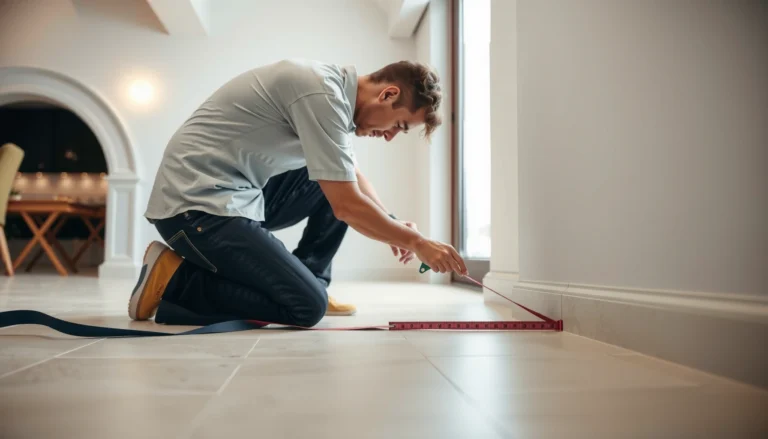
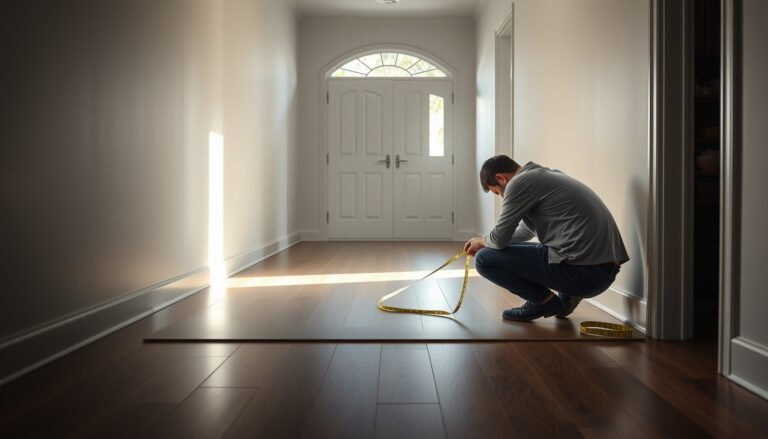
Laminate is designed as a “floating” system. That means it expands and contracts with temperature and humidity changes. In an indoor room, those changes can be modest; on a patio, they’re larger and more frequent. If expansion gaps are ignored—or if the patio perimeter is restricted by fixed trim without proper clearances—the boards can buckle, creating stress that later shows up as gapping or joint separation. In 2026, manufacturers are increasingly explicit in their documents because outdoor failures often trace back to incorrect system installation, not material composition alone.
Laminate patio performance depends on meeting the expansion-gap clearances and flatness tolerances specified in the manufacturer’s installation instructions.
Moisture protection for patio laminate is a system approach: approved underlayment/vapor barrier plus correct seam/edge steps, not just plank choice.
Subfloor preparation matters because outdoor slabs can be uneven, damp, or affected by drainage patterns. If your patio surface can get damp (or you’re installing over concrete that may retain moisture), confirm the moisture expectations using the manufacturer’s test methods. For example, ASTM F1869 reports moisture vapor emission in lbs/1000 sq ft/24 h, and ASTM F2170 reports in-situ relative humidity as %RH. According to ASTM F1869, moisture vapor emission is expressed in lbs/1000 sq ft/24 h. According to ASTM F2170, results are reported as relative humidity percentage (%RH).
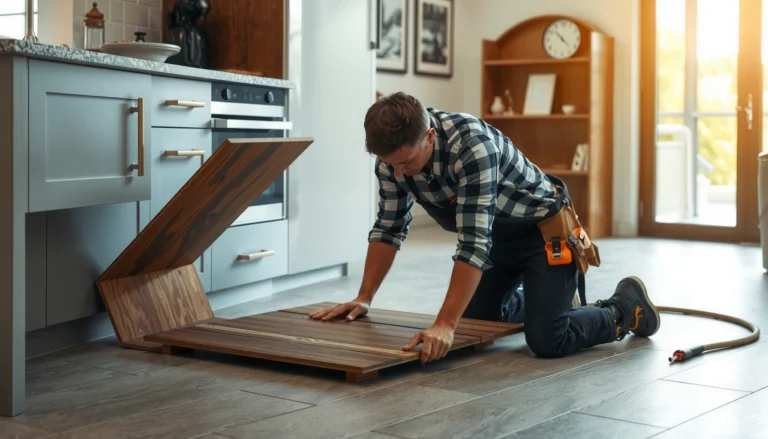
One more install detail: underlayment selection and placement. Many waterproof laminate systems still require specific underlayments (or prohibit certain foam types) because underlayment thickness and vapor behavior can affect both movement and moisture migration. When installation instructions specify a particular underlayment strategy for patio laminate, follow it as written.
What can go wrong (and why patio laminate fails)
Patio laminate usually fails at the points where moisture can enter the system or where expansion isn’t allowed to happen. The most common outdoor problems are edge/seam swelling and joint separation caused by inadequate outdoor approval, incorrect seam protection, or installation mistakes.
First, consider seam and edge swelling. Even a waterproof core can fail if water repeatedly reaches the locking joints and there isn’t adequate seam protection. Outdoor patios also introduce wind-driven splash and pooling around doorways and drainage low points. If those water exposures aren’t addressed by the product documentation (including seam sealing guidance), swelling becomes a predictable failure mode.
Second, consider installation errors. Missing expansion gaps is a classic. Wrong underlayment (especially one not approved for outdoor conditions) can change the flooring’s movement behavior and vapor control. Incorrect subfloor flatness can prevent consistent support across the plank, stressing joints and causing cupping or separation over repeated temperature cycles.
Repeated moisture exposure at laminate seams/edges is a primary cause of patio laminate swelling when the product isn’t explicitly rated for outdoor wetness and installed to spec.
Missing expansion gaps and non-approved underlayment are common installation pathways to cupping, gapping, and joint separation in outdoor laminate installs.
Here’s a practical “failure chain” view:
– Patio conditions (UV + wet/dry cycles + grit) stress the edges.
– Moisture migrates unless seams and vapor control are installed exactly.
– Boards expand and contract; if movement is constrained, joints experience stress.
– Damage shows up as cupping, gapping, or locking system failure.
If your patio is fully exposed and you’re in a region with heavy rain or freeze-thaw cycles, the margin for error shrinks. When the documentation is unclear—or when outdoor approval is not stated—skip the product.
Quick checklist to choose your laminate for a patio
Choose patio laminate by confirming outdoor approval first, then verifying moisture/seam protection, traction guidance, and install tolerances. If any of those elements are missing or contradictory in the manufacturer’s documents, the safest move is to choose a different product line.
Before you buy, use this quick checklist to compare options side by side. This keeps you from getting stuck with a “looks right” laminate that cannot be installed outdoors the way the manufacturer requires. And as of 2026, clear documentation is more common—but you still have to read it.
– Outdoor approval: The manufacturer clearly states patio/exterior suitability for your exposure (covered/uncovered).
– Moisture plan: Waterproof core/moisture rating + instructions for seams and underlayment.
– Safety + durability: Slip-resistance info, plus thickness/wear layer suitable for outdoor traffic.
| What to verify | Why it matters | Where to find it |
|---|---|---|
| Outdoor/patio rating | Prevents warranty voids and swelling issues | Product spec sheet + installation instructions |
| Moisture & seam guidance | Locks/edges are the weak points outdoors | Installation guide (seam/underlayment requirements) |
| Expansion gap requirements | Prevents buckling as temps change | Installation instructions |
| Flatness/subfloor requirements | Stops stress and joint failure | Installation instructions |
| Slip resistance info | Helps reduce slip risk near water | Product data (traction/COF rating, if provided) |
A patio laminate selection should be gated by written outdoor approval and matching installation requirements—not inferred from reviews or appearance.
Slip resistance benchmarks should be grounded in standardized testing and the manufacturer’s own outdoor claim, especially for areas that can get wet.
Frequently Asked Questions
What features should I look for when choosing laminate floors for a patio?
Look for laminate flooring that’s rated for outdoor or “water-resistant” use, with an exterior-grade top layer (wear layer) and a moisture-resistant core. Choose boards with a tighter, waterproof locking system and a high-density HDF/HDPC core designed to resist swelling. Also prioritize UV-resistant finishes so the patio laminate doesn’t fade or degrade quickly in direct sunlight.
How do I determine whether laminate is suitable for my patio conditions?
Start by evaluating moisture exposure (rain, sprinklers, ground contact) and temperature swings in your area. Standard indoor laminate can warp if water pools or if humidity is high, so you need a patio-ready product and proper underlayment or a protective system. If your patio is covered and stays relatively dry, you may have more flexibility, but for open patios or areas exposed to standing water, consider an outdoor-rated solution instead.
Which laminate floor thickness and AC rating are best for outdoor patios?
For patios, choose thicker planks (often around 8–12 mm) for better dimensional stability and resistance to movement from temperature changes. Aim for a higher AC rating (commonly AC4 or AC5 for heavy-duty performance) because outdoor traffic, grit, and debris can be harsher than indoor use. Thicker boards paired with a strong locking mechanism help reduce separation and joint failure over time.
Why does underlayment matter when installing laminate floors for a patio?
Underlayment helps control moisture and can improve performance, but it must be compatible with outdoor conditions and the specific laminate’s locking system. Use an underlayment designed for moisture management (and, if recommended by the manufacturer, a vapor barrier) to limit water vapor intrusion. Avoid soft or non-rated underlayments that can trap moisture, compress, or cause unevenness that leads to buckling.
Best way to choose between waterproof laminate and water-resistant laminate for patios?
Waterproof laminate is typically better for patio flooring because it’s engineered to resist liquid penetration and swelling at the seams and edges. Water-resistant laminate may handle light spills, but it’s not always designed for rain exposure, puddling, or long-term humidity—common patio problems. If your patio gets wet from weather or foot traffic near wet areas, prioritize “waterproof” and a fully sealed or waterproof locking system for outdoor durability.
📅 Last Updated: October 24, 2026 | Topic: How to choose laminate floors for a patio? | Content verified for accuracy and freshness.
References
- Laminate flooring
- https://www.epa.gov/mold/mold-and-mildew
- Redirecting…
- Final Rule to Update General Industry Walking-Working Surfaces and Fall Protection Standards | Oc…
- https://www.fpl.fs.usda.gov/documnts/fplgtr/fpl_gtr190.pdf
- https://en.wikipedia.org/wiki/Slip_resistance
- Frost weathering
- https://scholar.google.com/scholar?q=laminate+flooring+outdoor+use+moisture+resistance Google Scholar
- https://scholar.google.com/scholar?q=laminate+flooring+water+absorption+swelling+edges+sealing Google Scholar
- https://scholar.google.com/scholar?q=outdoor+flooring+surface+slip+resistance+freeze-thaw Google Scholar