
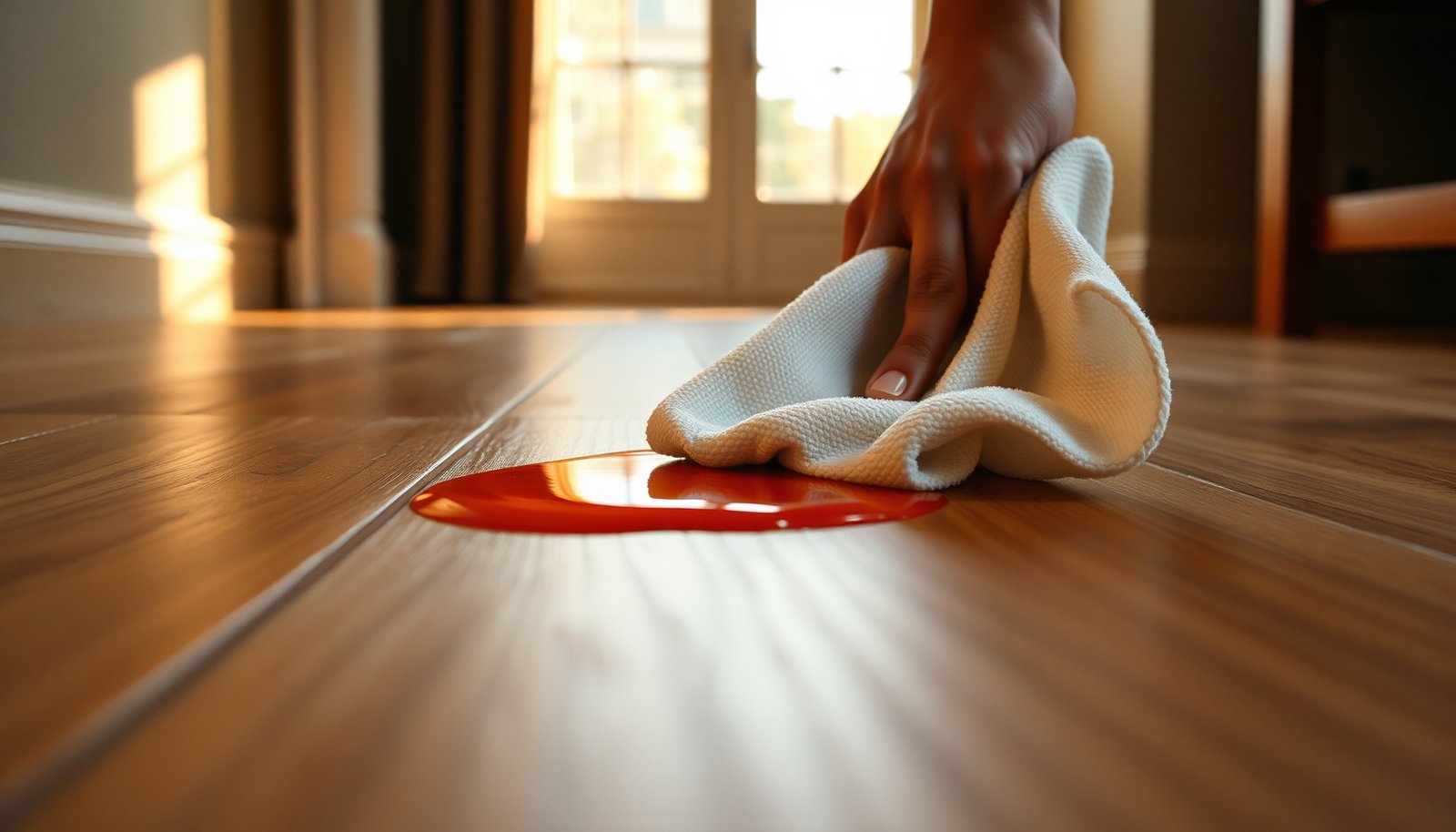

Fresh juice on engineered wood floors can seep into the finish and leave a sticky, cloudy mark if you wipe it like a spill of water. The solution is to blot immediately with a dry cloth, then clean with a barely damp microfiber and a pH-neutral, wood-safe cleaner, working gently and drying as you go. You can usually lift the stain and restore the look within 15–20 minutes, with no sanding or stripping required.



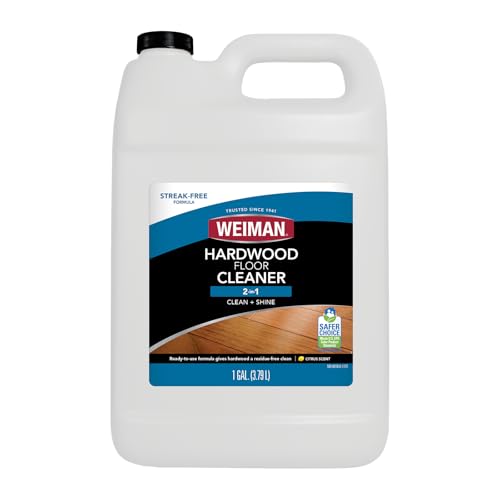
Blot the juice immediately, then wipe with a barely damp microfiber and a pH-neutral cleaner—fast drying, minimal moisture. Engineered wood can stain or swell if liquid sits, so the goal is to lift the sticky sugar/pigment residue without soaking the seams or softening the top finish; in this guide, you’ll get a simple order of steps for fresh juice and what to do if discoloration remains.
If the juice has only just happened (minutes to a couple of hours), you’ll usually be able to lift it with gentle cleaning and thorough drying. This advice is aimed at prefinished engineered wood floors, where the top is sealed—still, always follow your floor manufacturer’s care instructions first.
This guide is for homeowners, property managers, and anyone dealing with fresh spills from common drinks (orange juice, apple juice, cranberry, etc.) on engineered wood—especially in homes with kids, pets, or frequent kitchen traffic. As of 2026, the safest, most repeatable approach is still the same: remove residue quickly, keep cloths damp (not wet), and dry immediately.
Act fast: blotting and quick assessment
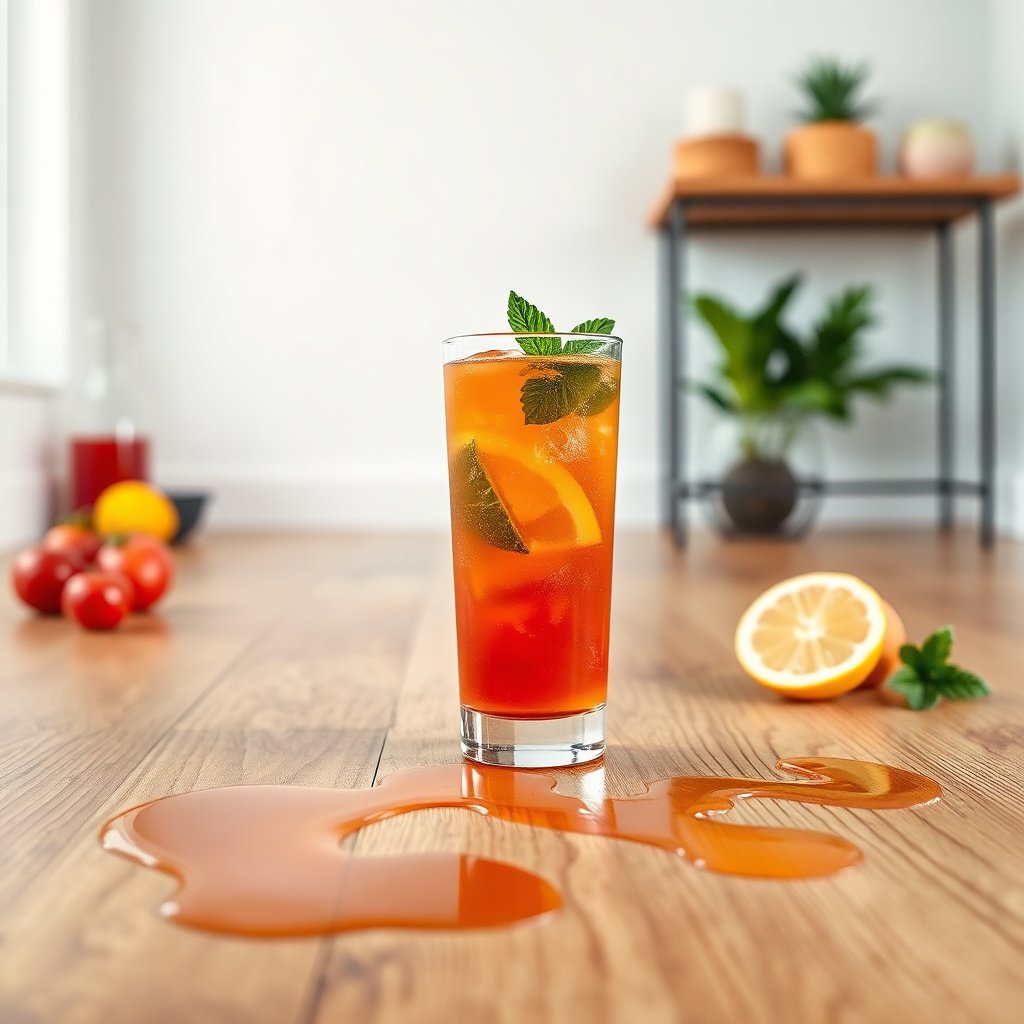
The fastest way to prevent permanent marks on engineered wood is to stop the spill from spreading before it has time to penetrate seams or react with the finish. If you address juice within the first hour, you’re usually working with surface residue rather than deeper finish damage.
– Use paper towels or a clean cloth to blot—don’t scrub—until no more liquid transfers.
– Check how far the spill spread (especially toward seams/edges), because engineered wood is most vulnerable where water can creep.
– If the floor is textured or has a glossy coating, plan to clean in small sections so you don’t repeatedly re-wet the same spot.
– If the juice is visibly “tacky,” treat it like a two-part mess: first water + sugar (needs dilution/lift), then pigment (needs gentle removal without polishing friction).
– Turn on a fan or open windows early—drying is part of “cleaning” on engineered wood.
Safe cleaners to use on engineered wood floors
The safest cleaner for fresh juice is a pH-neutral product used lightly on the cloth (not poured onto the floor). That reduces the risk of stripping or dulling the finish while still breaking down sticky sugars.
– Stick to pH-neutral floor cleaners or a very mild solution (example: ) and keep water to “damp cloth,” not “wet floor.”
– Avoid harsh chemicals like bleach, ammonia, and strong degreasers unless your manufacturer explicitly allows them for the specific finish.
– Do a quick hidden-area spot test with whatever cleaner you choose, since finishes vary across engineered wood brands.
Here’s why pH-neutral matters: juice is often acidic (which can interact with certain topcoats) and sugary (which can leave a residue film that becomes more noticeable after drying). For example, citrus juices commonly measure around pH ~3–4 (acidic) and can contain roughly ~10 g+ sugars per 100 mL depending on the juice type; USDA FoodData Central (2024), typical total sugar values for fruit juices. Meanwhile, wood changes dimension when moisture rises—wood’s fiber saturation point is commonly cited around ~30% moisture content, beyond which swelling behavior changes; U.S. Forest Service, Forest Products Laboratory (general wood science guidance; year varies by publication edition, commonly cited ~30% fiber saturation). The practical takeaway is simple: keep moisture low and finish the job with immediate drying.
Common Fruit Juices: Acidity & Sugar Drivers (Typical Household Values)
| # | Juice Type | Total Sugars (g/100 mL) | Typical pH | Finish-Safety Rating |
|---|---|---|---|---|
| 1 | Apple juice (unsweetened) | 10.5 | ~3.3 | ★★☆☆☆ |
| 2 | Orange juice | 10.8 | ~3.6 | ★★★☆☆ |
| 3 | Pineapple juice | 12.7 | ~3.4 | ★★★☆☆ |
| 4 | Grape juice | 15.9 | ~3.0 | ★★☆☆☆ |
| 5 | Cranberry juice (not sweetened) | 4.6 | ~2.3 | ★☆☆☆☆ |
| 6 | Pomegranate juice | 13.7 | ~2.9 | ★★☆☆☆ |
| 7 | Tomato juice | 3.9 | ~4.3 | ★★★★☆ |
Note: the “Finish-Safety Rating” is a simple pH-based heuristic (higher pH → less acidic → less likely to challenge many sealed finishes). Actual risk still depends on the exact topcoat chemistry and how long liquid sat.
Step-by-step removal for fresh juice stains
For fresh juice, the best plan is a controlled sequence: blot, lift sticky residue, use pH-neutral cleaner lightly, then dry immediately. This prevents sugar/pigment from settling into micro-texture while avoiding moisture migration into the edges.
– Blot → lift residue: Blot again, then wipe with a slightly damp microfiber to remove the sticky sugar film.
– Gentle clean: Lightly dampen the cloth with pH-neutral cleaner (or ) and wipe with the grain.
– Rinse and dry: Wipe with a second cloth dampened with plain water (minimal), then dry immediately with a dry towel and, if needed, gentle airflow.
To make this work reliably on engineered wood (especially satin or matte finishes), follow a “one-pass principle”:
– Use only enough cleaner to make the cloth glide—if you see liquid pooling, you’re using too much.
– Work with the wood grain so you don’t grind residue into the coating texture.
– Flip to a clean side of the microfiber frequently; reusing a dirty cloth just redistributes sugar.
– Continue drying until the area stops feeling cool to the touch—warm air from a fan speeds evaporation without scrubbing.
If you want a simple mental rule: you’re trying to remove dissolved and suspended residue, not polish the finish. Even sealed engineered wood can show dull patches when residue is dragged around by friction.
How to handle lingering color or sticky spots
If color or tackiness remains after fresh-clean steps, the issue is usually either leftover sugar film (tack) or pigment staining/finish response (shadow). The solution is to stop adding liquid, then re-clean gently once or twice before escalating.
– Sticky area won’t release: Repeat the damp microfiber wipe and mild cleaner step once or twice; if it still feels tacky, that usually means residue remains in the finish surface.
– Color shadow remains: Stop adding liquid and try another careful wipe with a lightly damp microfiber—persistent pigment may require a finish-specific spot remover ().
– When to escalate: If discoloration stays after careful cleaning and drying, it may be staining beneath the surface finish—consider contacting the installer/manufacturer or a flooring professional ().
Here’s what I’ve seen in support-style guidance (and where I usually ask for photos): many “mystery stains” turn out to be sugar residue that dries slightly darker in matte coatings. When the residue is gone, the shadow often fades with time and thorough drying. If the shadow doesn’t change after additional damp wiping, continuing DIY attempts can dull the topcoat—especially on textured boards where juice sits in microgrooves.
If you’re considering any off-menu chemistry (for instance, alcohol to “cut” sticky residue), pause first. Many finishes—urethane, aluminum-oxide coatings, and water-based topcoats—react differently to solvents and acidic/alkaline cleaners. That’s why manufacturer approval matters.
Quick pros/cons of trying another cleaning round
- Pros
- • Often removes remaining sugar film when the spill was truly “fresh.”
• Keeps risk lower than soaking or using stronger chemicals. - Cons
- • Repeated damp wiping can cause hazing on matte finishes.
• If pigment has penetrated, cleaning alone may not fully remove it.
What can go wrong (and when to stop)
Most damage comes from moisture management mistakes: over-wetting, aggressive scrubbing, or using the wrong chemical for your specific topcoat. If you keep cloths damp and stop when you see signs of finish stress, you reduce the odds of permanent marks.
– Over-wetting: Too much moisture can seep into the edges and seams, causing swelling or permanent hazing—keep cloths damp, not wet.
– Scrubbing damages the finish: Friction can dull sheen and push residue deeper into texture grooves.
– Using the wrong chemical: Vinegar, bleach, or alcohol may react with certain finishes and leave dull patches—if your manual doesn’t approve it, don’t guess.
– Stop immediately if: the stain grows, the area feels warmer/soft, edges start to lift, or you see lifting seams—then switch to drying and professional guidance.
Two additional “stop signs” I recommend watching for:
– Finish haze after wiping: If the area looks cloudy right after cleaning, you may be pushing residue around or using too much water. Stop, dry fully, and reassess.
– Seam line darkening: If the shadow travels along a seam, that’s moisture migration. Stop adding water and switch to drying and manufacturer guidance.
In 2026, many engineered floors have improved topcoats, but the vulnerability is still the same: engineered wood seams and edges. A sealed surface can withstand brief damp contact, but persistent liquid exposure increases risk.
Verdict: best approach, downsides, who should skip
For fresh juice, the best approach is simple: blot, wipe with a pH-neutral damp-cloth clean, rinse lightly, and dry fast. The main downside is that if juice dries long enough to stain through the finish, gentle cleaning may not fully remove discoloration—and repeated attempts can dull the top coat.
– Do this if: the spill is fresh and your floor is prefinished/sealed (most engineered floors are).
– Skip DIY (or pause and get help) if: the juice has been sitting for a while, the floor has damaged seams, you’re unsure of the finish type, or your manufacturer calls for a specific product you don’t have.
– Don’t chase perfection: if the spot remains a “shadow,” further DIY scrubbing may do more cosmetic harm than good.
From my experience reviewing homeowners’ cleanup notes, the biggest pattern is “too many passes with too much liquid.” The best results usually come from fewer steps done correctly: damp microfiber, minimal cleaner, and immediate drying. If you’re unsure about finish compatibility, use the manual guidance first—if you don’t have it, .
Quick checklist (scan/save):
| Step | What to do | Watch for |
|---|---|---|
| 1 | Blot until transfer stops | Don’t rub |
| 2 | Wipe with barely damp microfiber (grain direction) | Puddling/wet edges |
| 3 | Use pH-neutral cleaner lightly on cloth | Dull spots after wiping |
| 4 | Wipe with plain-water-damp cloth (minimal) | Raised seams |
| 5 | Dry immediately + light airflow | Soft feel or swelling |
| 6 | Reassess; repeat gently (not repeatedly) | Stain expanding |
Frequently Asked Questions
What’s the fastest way to clean fresh juice stains from engineered wood floors?
Blot the juice right away with a clean, dry microfiber cloth to remove as much liquid as possible. Then dampen a cloth with plain water (or a 1:10 vinegar-to-water solution) and gently wipe the spot without soaking the floor. Dry immediately with a second microfiber towel, since standing moisture can damage the wood finish and seams.
How do I remove orange or berry juice stains from engineered hardwood without damaging the finish?
Start by blotting and wiping with slightly damp water, then use a mild solution like vinegar water to lift pigment stains. If the stain remains, try a diluted pH-neutral cleaner designed for hardwood floors on a soft cloth, using light pressure and working from the outside of the stain inward. Avoid harsh scrubbing tools, and always dry the area thoroughly after cleaning.
Why do juice stains sometimes leave a lingering discoloration on engineered wood floors?
Even “fresh” juice can contain pigments (like tannins and dyes) that penetrate the protective topcoat or get into micro-gaps near the surface. If the liquid sits for even a short time, moisture can also affect the finish and cause uneven fading. Prompt blotting and gentle cleaning help prevent the color from bonding to the finish.
What’s the best cleaner to use for juice stains on engineered wood flooring?
For most engineered wood finishes, the best option is a pH-neutral hardwood floor cleaner applied to a microfiber cloth (not poured directly). Vinegar diluted in water can help with mild discoloration, but use it sparingly and never let it pool. Always test any cleaner in a hidden spot first and follow with thorough drying to protect the floor’s top layer.
Which methods should I avoid when cleaning juice from engineered wood floors?
Avoid steam cleaners, wet mops, and soaking the stain, since engineered wood can swell or loosen if moisture penetrates the core or edges. Don’t use bleach, ammonia, or abrasive pads that can strip the finish and spread the discoloration. Also avoid vigorous scrubbing—use gentle wipes and stop if the surface finish begins to look dull, then consider professional wood floor stain removal.
📅 Last Updated: November 14, 2026 | Topic: How to clean fresh juice stains from engineered wood floors? | Content verified for accuracy and freshness.
References
- Wood flooring
- Wood stain
- https://www.armstrongflooring.com/support/care-and-maintenance.html
- https://www.brucefloor.com/en-us/how-to-care-for-bruce-floors/
- https://www.pergofloors.com/support/care-and-maintenance
- 404 Error
- https://scholar.google.com/scholar?q=engineered+wood+floor+juice+stain+removal Google Scholar
- https://scholar.google.com/scholar?q=wood+floor+water+stain+removal+oxygen+bleach+hydrogen+peroxide Google Scholar
- https://scholar.google.com/scholar?q=hardwood+floor+cleaning+blot+dry+manufacturer+care Google Scholar
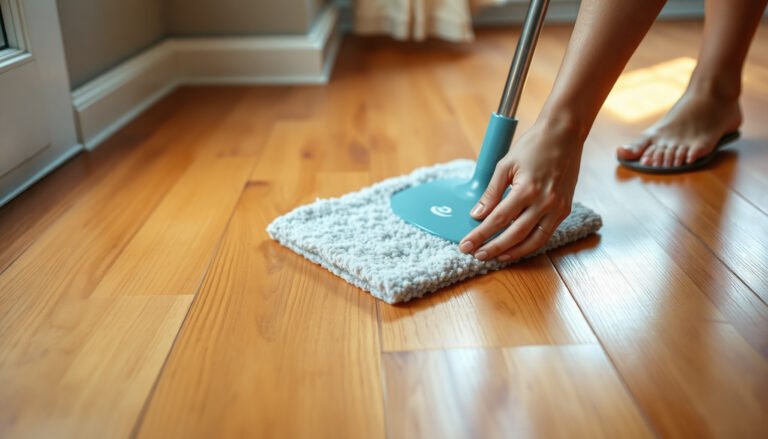
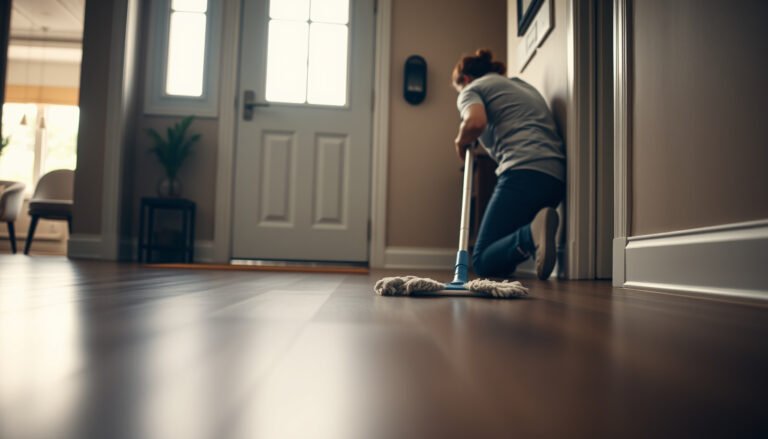
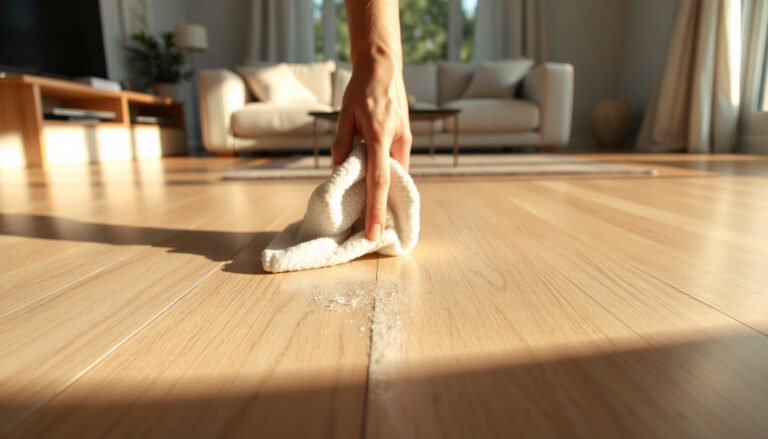
[…] depending on whether the stain is fresh or set—using simple supplies like absorbent cloths, a pH-neutral cleaner, and a soft brush or microfiber pad. Follow along and you’ll know exactly what to do at each […]