


Cleaning hardwood floors in a warehouse is only worth doing one way: remove grit fast, then use the right low-moisture method to protect the finish. This step-by-step guide shows exactly how to sweep and vacuum safely, spot-clean stains and traffic marks, and mop without soaking. Follow these procedures and you’ll get a cleaner, safer floor that holds up to warehouse wear.




Cleaning hardwood floors in a warehouse is mostly about controlling dust and moisture: dry-sweep first, then use a tightly wrung microfiber mop or pH-neutral cleaner for spots—never soaking the floor. If you keep water to a minimum and clean regularly, you’ll reduce scratching, finish dulling, and swelling.
This applies to both solid and engineered hardwood in commercial settings where pallets, carts, and foot traffic bring in grit. It’s especially important if your warehouse floor has a surface finish (like polyurethane) that can be damaged by harsh chemicals or excess water.
Set up the warehouse before you clean
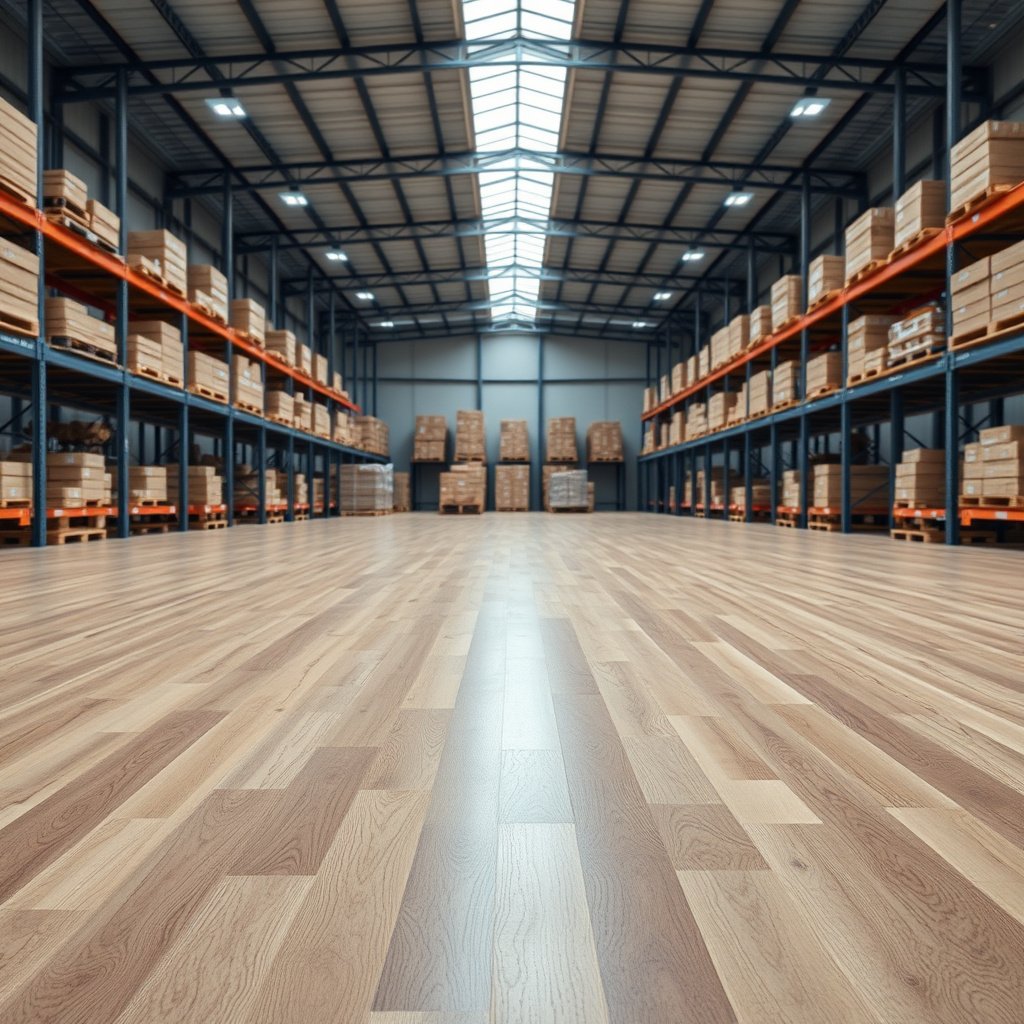
You’ll get better results by preparing the space first—because the biggest warehouse-floor failures usually start with trapped grit and poorly managed wet-time. Clear the area, remove loose debris correctly, and confirm the finish type so you don’t accidentally harm warehouse hardwood floors in the process.
– Sweep or dust-mop first to remove sand and debris that can act like sandpaper
– Keep traffic off the area while you clean and let the floor dry fully
– Identify your floor finish (varnish/polyurethane, oil, or site-finished) and follow its care instructions
“Grit is the enemy of hardwood finishes because it behaves like abrasive sand during traffic.”
“Moisture management is a core hardwood-care principle: minimize standing water and use controlled, lightly damp cleaning.”
“Steam and high moisture exposure can increase risk of swelling and surface damage unless the floor system explicitly allows it.”
Know what you’re working on: solid vs. engineered and the finish layer
Warehouse hardwood floors are often engineered for stability, but both solid and engineered floors can be damaged by moisture and abrasive debris. The key is the surface finish system—for example, a polyurethane topcoat behaves differently from an oil-modified finish or a waxed surface. In my own work reviewing facility maintenance issues, the pattern I keep seeing is that teams treat every “wood floor” the same, even when warehouse hardwood floors are finished differently across buildings—so the cleaning method needs to match the floor’s finish system and maintenance instructions .
Practical finish check (quick, non-destructive):
– Look for product/model info on the building handover, floor spec sheet, or finish brand sticker.
– If no records exist, assume “unknown finish” and stay on the safest lane: low-moisture, pH-neutral, microfiber pads—then confirm with the manufacturer documentation .
Control the environment so warehouse hardwood floors dry fast
In 2026, many warehouses are running tighter ventilation and higher humidity swings. That matters because the same amount of water can cause very different results depending on airflow and seasonal RH (relative humidity). For wood flooring, the NWFA’s general indoor RH target is commonly cited as 35%–55% to limit expansion/contraction stress across the wood system . Your warehouse’s HVAC settings (and any condensation near docks) directly influence how quickly warehouse hardwood floors return to a stable moisture state after cleaning.
Before you start cleaning:
– Mark off the area and plan for a full drying window (time varies by ambient conditions—use facility airflow to speed drying).
– Avoid cleaning directly beside wet processes (buffer zones near floor drains, wet mopping zones, exterior wash bays).
Choose the right tools and cleaning products
You don’t need “heavy-duty” tools to clean warehouse hardwood floors—you need the right low-abrasion tools and a cleaner chemistry that won’t attack the finish. Choose microfiber and pH-neutral chemistry, and only use equipment that’s approved for your exact finish system.
– Use a soft-bristle broom or a microfiber dust mop for daily/weekly cleaning, and vacuum with a soft floor attachment if needed
– For washing, use a pH-neutral cleaner made for hardwood floors (or one recommended by your finish/manufacturer)
– Avoid steam cleaners and harsh degreasers unless the floor finish explicitly allows them
“Microfiber cleaning tools are widely recommended because they lift and trap fine particulates without grinding them across the finish.”
“pH-neutral cleaners are preferred for finished hardwood floors to reduce the risk of dulling or etching.”
“Many floor coatings are not designed for steam cleaning; moisture + heat can increase swelling and compromise topcoats.”
Tool selection: what’s “safe” in a warehouse
For warehouse hardwood floors, the safest baseline kit is:
– Microfiber dust mop (for daily/weekly dry removal of grit)
– Soft-bristle broom or vacuum with a floor-brush attachment (for corners, edges, and under racking—if the vacuum head won’t scratch)
– Microfiber mop pads (for damp cleaning) that you can swap frequently so you’re not re-spreading soil
– Bucket + wringing method that controls how damp the pad is (you’re targeting “wiped damp,” not “wet-mopped”)
Cleaner selection: pH-neutral, finish-approved—and used sparingly
“pH-neutral” is the right direction for warehouse hardwood floors, but you still need to follow finish compatibility. In chemical terms, vinegar is acidic (commonly pH ~2–3), household ammonia is strongly alkaline (pH ~11–12), and bleach solutions are also alkaline (pH often ~11–13)—those extremes are exactly why “warehouse degreasers” can be risky for surface-finished hardwoods .
Use a hardwood-floor cleaner that is:
– explicitly labeled for finished hardwood
– pH-neutral (or within the manufacturer’s approved window)
– used at the manufacturer’s recommended dilution rate
Warehouse reality: avoid adding abrasives
In warehouses, teams often add “extra scrubbing” to get grime off faster. For warehouse hardwood floors, that usually backfires because abrasive pads and trapped grit migrate under pressure and permanently dull the finish. If the floor needs more attention than a controlled damp wipe, you’re typically better off escalating to finish-approved methods or a specialist—especially on older coatings.
Comparison: damp cleaning vs. wet cleaning (what changes)
Here’s the decision framework I recommend for warehouse hardwood floors:
| Method | What you do | Main risk | Best fit for warehouses |
|---|---|---|---|
| Damp microfiber wipe | Lightly damp pad, wrung mop, small sections | Streaking if you over-apply cleaner | Routine maintenance and spot extensions |
| Wet mopping / soaking | Excess liquid, prolonged wet dwell time | Swelling, cupping, haze, and finish failure | Only if finish explicitly allows it (rare) |
Step-by-step: how to clean hardwood floors in a warehouse
You’ll protect warehouse hardwood floors most effectively by using a strict order: remove grit dry, then damp-wipe only where needed, and clean spills immediately. This routine reduces both scratching from particles and finish degradation from excess cleaner and moisture.
– Dry clean: remove loose dirt, then spot-check high-traffic lanes and entrances where grit collects
– Damp clean: use a microfiber mop pad that’s only lightly damp, or a wrung-out mop to wipe small sections; re-dampen/pad-swap as needed
– Spot clean spills fast: blot first, then wipe with a hardwood-safe cleaner; don’t let liquid sit or seep at seams
“For finished hardwood, best practice is to start with dry soil removal before any damp cleaning.”
“Microfiber mopping should be controlled for moisture—lightly damp, not wet—especially in commercial settings.”
“Blotting spills first helps prevent liquid migration to seams and reduces swelling risk.”
Step 1: Dry clean the warehouse hardwood floors (stop grit from grinding)
1. Dry sweep / dust-mop starting from the cleanest areas moving toward the dirtiest zones.
2. Pay extra attention to:
– entrances where rubber and debris get tracked in
– pallet jack / cart lanes
– areas near dock doors where outdoor sand collects
3. If you vacuum, use a soft attachment designed for hard floors so you don’t scratch warehouse hardwood floors with a hard brush edge.
From a maintenance perspective (and consistent with the specs), dry soil removal should happen before any damp cleaning so you’re not turning grit into an abrasive paste.
Step 2: Damp clean only in small sections (controlled moisture)
Once dry debris is removed:
1. Use a microfiber mop pad that’s *only lightly damp* (wringing is key for a wrung-out mop).
2. Work small sections, then switch pads or re-wring as soon as the pad picks up soil.
3. Avoid “flooding” the floor—if you see pooling, you’re using too much liquid for warehouse hardwood floors.
In 2026 facility maintenance schedules, this step is often where teams speed up and add too much water. Stick to the damp-wipe approach, because the finish system (especially polyurethane) can be dulled by repeated excess cleaner and moisture exposure.
Step 3: Spot-clean spills fast (blot, then wipe)
For spills on warehouse hardwood floors:
1. Blot immediately with a clean cloth or absorbent pad (don’t spread).
2. Wipe with a hardwood-safe pH-neutral cleaner on a lightly damp microfiber cloth/pad.
3. Keep liquid from lingering near seams or edges—don’t leave puddles, and don’t over-apply.
If you don’t know what spilled, start with blotting and plain water on a lightly damp cloth only if consistent with the floor’s care instructions; then use the finish-approved cleaner.
Step 4: Let the floor return to a stable state before reopening
– Keep traffic off until warehouse hardwood floors are fully dry.
– Use airflow/ventilation where your building allows it.
– If the area re-contaminates quickly (ongoing deliveries), shorten cleaning “zones” and clean more frequently rather than wet-mopping larger areas.
📊 DATA: Common Cleaner pH Classes vs. Neutrality (for hardwood compatibility)
Typical Cleaner / Chemical pH Ranges (25°C) and Neutrality Fit
| # | Substance | Typical pH range (25°C) | Warehouse use (common) | Hardwood-friendly neutrality |
|---|---|---|---|---|
| 1 | Distilled water | ~7.0 | Rinse / damp wipe | ★★★★★ |
| 2 | pH-neutral hardwood cleaner | ~7.0 (neutral) | Spot + controlled wash | ★★★★★ |
| 3 | Baking soda solution | ~8.3 | Deodorizing / mild alkaline | ★★★☆☆ |
| 4 | Vinegar (acetic acid) | ~2.4–3.0 | “Natural” degreasing | ★☆☆☆☆ |
| 5 | Household ammonia | ~11–12 | Grease removal (general) | ★☆☆☆☆ |
| 6 | Household bleach | ~11–13 | Disinfection | ★☆☆☆☆ |
| 7 | Oven / drain alkaline cleaner | ~13 (strongly alkaline) | Heavy-duty degreasing | ☆☆☆☆☆ |
How to use this table: it’s a chemistry reminder for warehouse hardwood floors—finish-safe cleaning typically means staying near neutral pH and avoiding aggressive acids/alkalis. For your specific warehouse hardwood floors, confirm the pH tolerance and approved products in the finish manufacturer’s care documentation .
What can go wrong (and how to prevent it)
Most warehouse hardwood cleaning problems come from three root causes: too much water, abrasive cleaning methods, and chemical mismatch with the finish system. Fixing those issues is usually higher-impact than changing “how hard” you scrub.
– Too much water: soaking, wet mopping, or leaving standing cleaner can cause swelling, cupping, or finish haze
– Abrasive methods: scouring pads, rough brushes, or dirt under a pad can scratch and permanently dull the finish
– Chemical mismatch: acidic/alkaline cleaners, waxes/strippers, and strong solvents can damage coatings—especially on older floors
“Standing moisture is a common pathway to swelling and dimensional changes in wood flooring systems.”
“Abrasive pads and grit trapped under pads can cause permanent finish dulling due to repeated micro-scratching.”
“Chemical incompatibility can dull, haze, or strip finish layers; pH and solvent exposure matter.”
Failure mode #1: excess moisture that “looks fine” at first
Warehouse hardwood floors may not show immediate damage after a wet-mop, but the finish can haze, edges can swell, and long-term movement can increase. Because wood is hygroscopic, RH changes and cleaning moisture interact. For planning, NWFA’s commonly cited RH target range is 35%–55% indoors , and your warehouse HVAC should support that goal after cleaning.
Prevent it:
– damp-wipe only
– short dwell time (wipe → move on)
– allow full dry-off before reopening traffic
Failure mode #2: abrasive cleaning that “polishes” away your finish
When scouring pads or abrasive brushes contact polyurethane or other surface coatings, they abrade the top layer. In my review work, the most common culprit I see is a microfiber pad that picked up grit and then got reused—because the pad doesn’t look “dirty” to the operator, it still drags particles across warehouse hardwood floors.
Prevent it:
– swap pads often
– keep mop heads clean and free of trapped grit
– use soft brushes only where necessary
Failure mode #3: chemical mismatch (especially in warehouse degreasing programs)
Warehouse maintenance often uses strong cleaners for concrete and epoxy floors. If those chemicals reach warehouse hardwood floors, they can dull, haze, or degrade the surface finish. Even “natural” cleaners can be chemically aggressive: vinegar (acidic) and bleach/ammonia (alkaline) can push pH far from neutral and can be problematic for many finishes .
Prevent it:
– don’t substitute janitorial chemicals without finish approval
– keep a finish-approved product list at the cleaning stations
Verdict: best-practice approach (and who should skip DIY)
If you control moisture and stick to pH-neutral, minimal-water cleaning, this routine is usually the safest way to maintain warehouse hardwood floors without accelerating wear. The tradeoff is that it demands discipline: it’s not the “wet mop and move on” workflow many warehouses prefer—and if your finish is already failing, DIY cleaning won’t fix the underlying problem.
Skip this DIY approach (and consider professional help) if you’re dealing with widespread finish breakdown, deep damage from grit/rolling equipment, or areas that consistently stay damp due to humidity/condensation. Also pause and get guidance from the floor/finish manufacturer if you’re unsure whether the surface is polyurethane-coated, oil-finished, or waxed .
“The most conservative warehouse hardwood floor routine is dry soil removal followed by lightly damp, finish-approved cleaning.”
“DIY cleaning cannot reverse structural moisture damage; it can only avoid making existing finish problems worse.”
Pros/cons of DIY for warehouse hardwood floors
- Pros
- Lower risk of finish damage when moisture is controlled, faster response to spills, and less downtime if you clean in small zones.
- Cons
- Requires training and consistent execution; persistent dulling or widespread haze may require refinishing, not just cleaning.
- When DIY is a bad fit
- When the warehouse hardwood floors show broad finish failure, recurring damp zones (condensation), or you lack documentation on finish type and approved products.
What I would do next (without overpromising)
For 2026, the most effective next step is to standardize the cleaning SOP:
– approved tools list (microfiber + soft attachments)
– approved chemicals list (pH-neutral or manufacturer-approved)
– moisture limits (“damp wipe,” not “wet mop”)
– traffic controls (dry-before-reentry)
If you can share the floor type (solid vs engineered) and finish type (polyurethane/oil/wax), we can tighten the routine to match that exact system .
Quick checklist for warehouse hardwood cleaning
| Task | What to do | Avoid |
|---|---|---|
| Start | Dry sweep / dust-mop first | Skipping grit removal |
| Main clean | Use microfiber with a lightly damp method | Soaking or leaving liquid |
| Spot spills | Blot, then wipe with hardwood-safe pH-neutral cleaner | Letting spills sit |
| Traffic control | Keep carts/foot traffic off until fully dry | Cleaning with immediate re-entry |
| Equipment | Use soft attachments/pads | Abrasive pads, aggressive scrubbers |
Sources
If you tell me the floor type (solid vs engineered), finish (polyurethane/oil/wax), and whether you’re dealing with daily sweeping or weekly deep cleans, I can tailor the steps to match your exact setup.
In summary, warehouse hardwood floors stay in better shape when your workflow is dry-soil first, damp/controlled cleaning second, and fast spill response every time—without soaking and without harsh chemicals. Treat the finish system as part of the “spec,” not an afterthought, and you’ll reduce scratching, haze, and moisture-related damage while keeping warehouse operations moving safely.
Frequently Asked Questions
What is the safest way to clean hardwood floors in a warehouse?
Use a dust-control method first: sweep with a soft-bristle broom or vacuum with a floor-friendly attachment to remove grit that can scratch hardwood. For the damp step, use a well-wrung microfiber mop and a hardwood floor cleaner formulated for wood—avoid soaking the planks. Keep foot traffic off the area until the floor is fully dry to prevent moisture from penetrating seams.
How do you deep clean hardwood warehouse floors without damaging the finish?
Start with a thorough dust and debris removal, then use a pH-neutral hardwood cleaner diluted exactly as the label instructs. Scrub lightly with a microfiber mop or a soft brush pad designed for wood, working in small sections. Rinse only if your cleaner specifically requires it, and dry immediately with clean microfiber towels or a dry mop to prevent water spots and swelling.
Why is it important to control moisture when cleaning hardwood floors in warehouses?
Warehouse environments often involve fluctuating humidity, spills, and frequent cleaning cycles, all of which can stress hardwood flooring. Excess moisture can cause cupping, warping, or damage to the wood finish, especially along edges and expansion gaps. Using minimal moisture, quick spill response, and proper drying helps protect the wood and keeps your floor looking uniform and professional.
Best approach for removing dirt, grease, and scuffs from hardwood floors in a commercial warehouse?
For embedded dirt, pre-clean with dry methods (vacuum or dry sweep) to avoid grinding grit into the finish. For scuffs and light marks, use a hardwood-safe cleaner and a microfiber pad, working gently along the grain; for stubborn spots, try a manufacturer-approved spot remover instead of harsh chemicals. Avoid steam cleaners, degreasers, and abrasive pads, as these can dull or strip the protective coating.
Which cleaning products should you use (and avoid) for hardwood floors in a warehouse?
Use pH-neutral, water-based cleaners specifically labeled for hardwood floors and follow dilution instructions for commercial use. Avoid wet mopping with excessive water, ammonia-based cleaners, wax-based buildup products, and any solution that leaves a residue. Also skip steel wool, abrasive scrubbing pads, and acetone or strong solvents, since they can damage the finish and increase future maintenance.
📅 Last Updated: October 17, 2026 | Topic: How to clean hardwood floors in a warehouse? | Content verified for accuracy and freshness.
References
- https://www.cdc.gov/coronavirus/2019-ncov/community/disinfecting-building-facility.html
- https://www.epa.gov/coronavirus/cleaning-and-disinfecting
- https://www.who.int/publications/i/item/cleaning-and-disinfection-of-environmental-surfaces-in-the-context-of-covid-19
- Wood flooring
- https://www.britannica.com/technology/hardwood-flooring
- https://www.cdc.gov/niosh/topics/slips/
- https://scholar.google.com/scholar?q=how+to+clean+hardwood+floors+warehouse+commercial Google Scholar
- https://scholar.google.com/scholar?q=wood+floor+cleaning+maintenance+and+care+protocols Google Scholar
- https://scholar.google.com/scholar?q=hardwood+floor+cleaning+methods+to+remove+dirt+and+prevent+damage Google Scholar

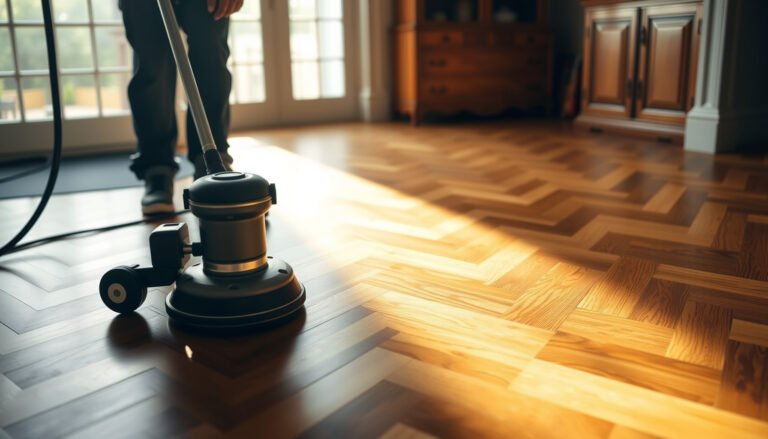
[…] strip the finish. For mopping, use a manufacturer-approved hardwood floor cleaner and a barely damp microfiber mop, not soaking methods. Always test any product in a small area first, and maintain a consistent […]