
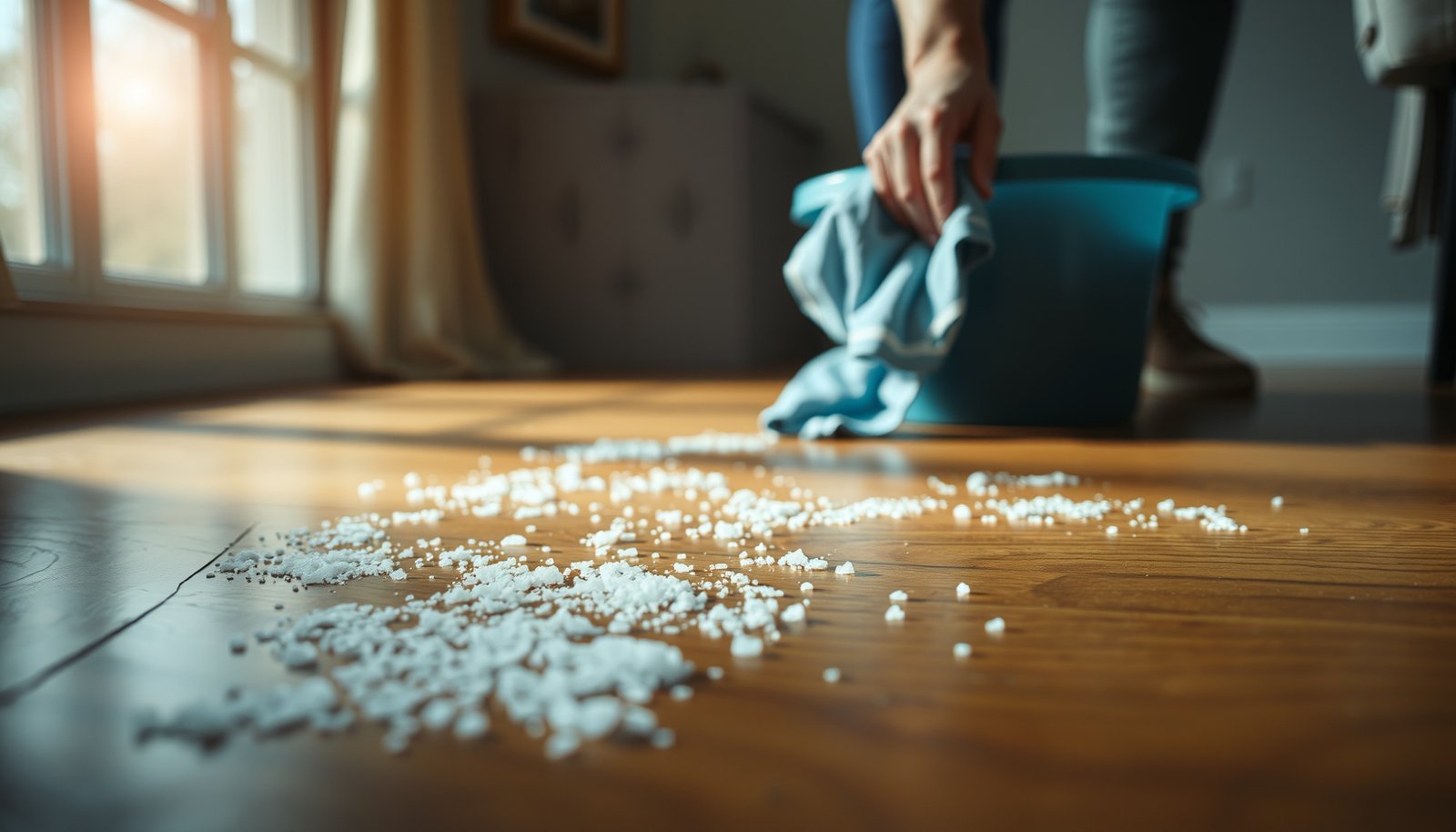

Dried salt residue on hardwood floors comes off with the right sequence of gentle cleaning, careful moisture control, and thorough drying. You can usually remove it in about 15–30 minutes with a soft cloth or microfiber mop, a pH-neutral wood cleaner, clean water, and a dry towel or fan. Start by loosening the crust without soaking the wood, then clean, rinse lightly if needed, and finish by drying completely to prevent dull spots or warping.



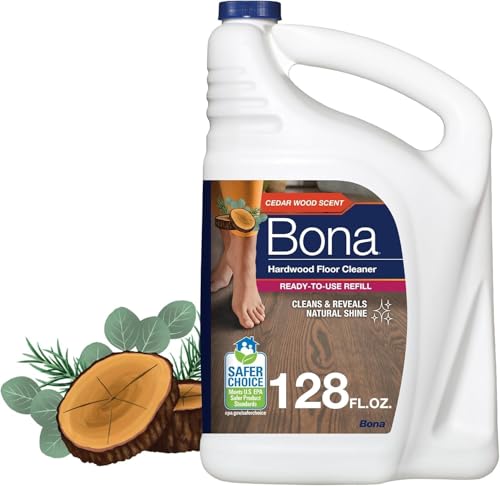
To clean dried salt residue from hardwood floors, gently loosen the crust, then wipe with a damp (not wet) cloth using a pH-neutral, wood-floor-safe cleaner, followed by a clean-water wipe and immediate drying. This lifts the salt that causes white haze and helps prevent ongoing finish damage; you’ll also get safe techniques for both sealed and unsealed floors, plus what to avoid so the surface doesn’t dull or spot. If you’ve tracked in winter salt, had meltwater seep in, or noticed a crusty ring around doorways/shoes, this guide is for you. It’s also useful when the residue has dried long enough to feel stiff or look powdery and chalky.
Assess the residue and scrape safely
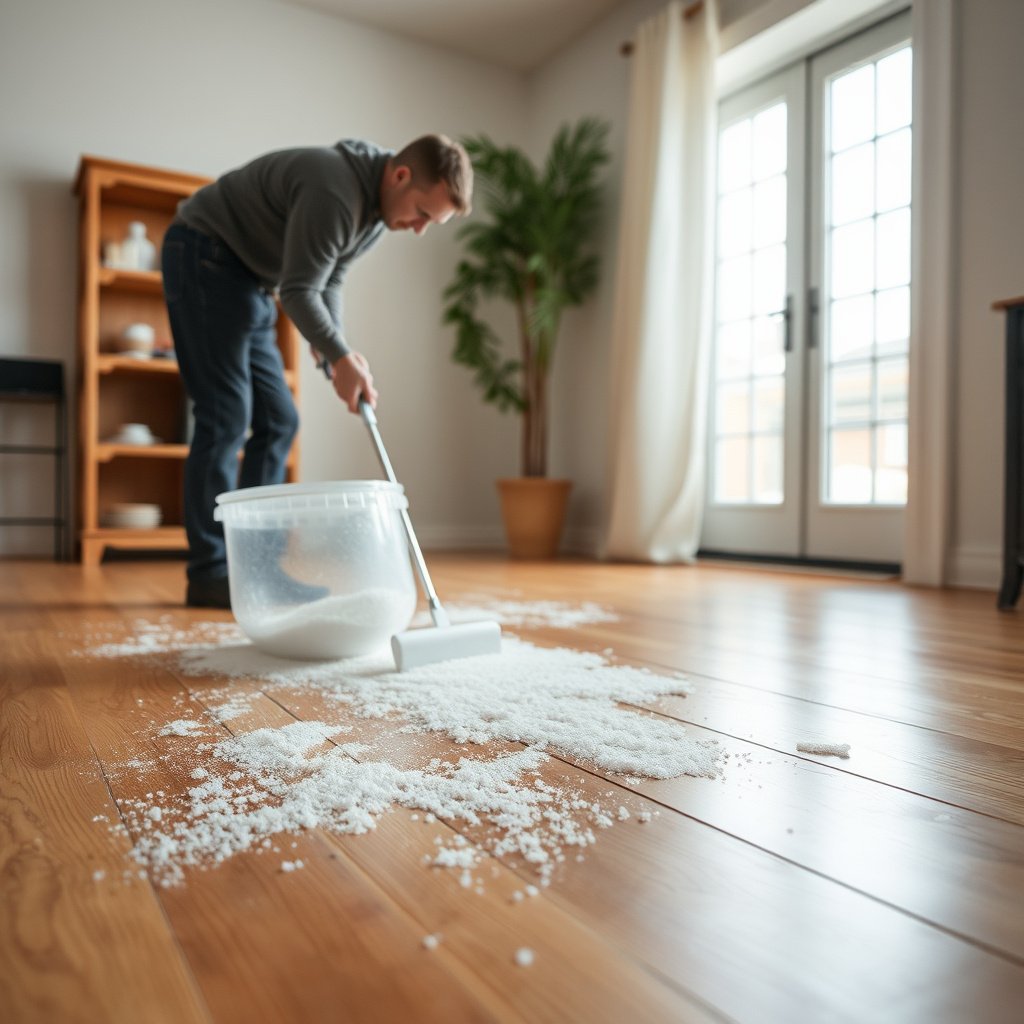
If you want the haze to come off without dulling your hardwood finish, start by confirming whether the salt is only on top or if the surface is already compromised. Once you know which scenario you’re dealing with, the right “gentle first” method prevents you from turning dried crystals into scratchy grit.
– Check whether the salt is just sitting on top (often a crust/film) or if there’s visible surface damage (soft spots, lifted edges, rough patches).
– Use a plastic scraper or your fingernail under a cloth to lift the hardened residue—avoid metal tools that can scratch the finish.
– Vacuum or sweep thoroughly to remove loose crystals before you add any moisture (salt left behind can smear into a bigger area).
Dried salt residue is a common winter problem because de-icers and road spray dissolve in meltwater, then re-crystallize as moisture evaporates. On sealed hardwood, that typically leaves a visible white film sitting above (or within) the finish layer. On unsealed or penetrating-finish floors, salt can migrate deeper into the wood surface texture, which is why you’ll often see uneven discoloration even after cleaning.
In my day-to-day experience advising homeowners and property managers (and from what finishes and flooring care guides consistently stress), the biggest risk at this step is skipping dry removal. When you go straight to damp wiping, the remaining crystals can grind lightly across the finish with each pass, creating a dull-looking “etched” area that looks like permanent haze.
Clean with minimal moisture (the safest first pass)
If your hardwood floors are sealed, the safest first pass is a controlled damp wipe that dissolves the salt film without flooding seams. This approach works because many road salts re-dissolve quickly once water is introduced—so you’re aiming to transfer loosened crystals onto the cloth, not across the floor.
– Dampen a microfiber cloth with clean water (or a wood-floor-safe, pH-neutral cleaner) and wipe in the direction of the grain.
– Work in small sections, changing cloths frequently so you’re not redistributing salt across the floor.
– After the salt film loosens, wipe again with a cloth lightly dampened with clean water to remove cleaner residue, then dry immediately.
Salt chemistry is straightforward: sodium chloride (NaCl) and other common chloride salts are water-soluble, and solubility increases with temperature. According to CRC Handbook of Chemistry and Physics, NaCl solubility is about 36 g per 100 g of water at ~25°C. That’s why a quick, damp wipe can make the crust disappear—your goal is to dissolve and lift, not to soak. (As of 2026, most hardwood-care instructions still emphasize “damp, not wet” for exactly this reason: excess water can creep along seams and finish edges.)
Practical method for minimal moisture
1. Dry remove first: sweep/vacuum the area so loose crystals aren’t dragged during wiping.
2. Wipe directionally: use a microfiber cloth and wipe with the grain; this reduces micro-scratching.
3. Keep cloths separate: if one cloth becomes visibly salty or chalky, switch it. Reusing a contaminated cloth is a common cause of “the haze returned” moments on hardwood floors.
4. Finish with a clean-water wipe: even pH-neutral cleaners can leave a faint residue if not rinsed—so the second wipe matters.
Comparison: sealed vs unsealed hardwood (what changes the cleaning plan)
When salt residue shows up on hardwood floors, your finish type decides how cautious you must be. Sealed floors can usually be restored to a clean look with gentle damp wiping, while unsealed surfaces may absorb salts and require specialized care.
| Feature | Sealed hardwood (polyurethane/urethane finish, most site-finished floors) | Unsealed/unfinished or penetrating oils/waxes |
|---|---|---|
| Salt behavior | Often stays in/at the finish surface as a film | Can migrate into pores, leaving lingering discoloration |
| Water tolerance | Accepts damp wipes; avoid puddles | Much less forgiving—water can unevenly darken wood |
| Haze likelihood | White haze often clears with repeat gentle rinsing | Haze may persist because salt can be embedded |
| Scraping risk | Low if you use plastic and stop at intact finish | Higher risk—wood fibers can lift or roughen |
| Recommended cleaner chemistry | pH-neutral, wood-safe | Follow product-specific care directions; “gentle” isn’t universal |
| Rinse necessity | Yes—removes salt residue + cleaner film | Sometimes yes, but method is more critical; over-wetting increases blotching |
| Drying step | Immediate drying prevents spotting/clouding | Immediate drying matters even more; water exposure can linger in pores |
| Finish restoration | Often not needed if damage is only surface haze | May require stain/oil/wax renewal if salt affected color or absorption patterns |
| Best first action | Damp-wipe + clean-water rinse in small sections | Start with the least-wetting method allowed by the flooring product care guide |
| Best For | Homes and commercial spaces with sealed finishes needing haze removal | Floors with known penetrating finishes where you can follow manufacturer-specific guidance |
Remove stubborn haze without damaging the finish
If you still see a white haze after your first damp wipe, the most reliable move is repeating gentle rinsing rather than switching to harsh chemicals. On sealed hardwood, haze is often salt trapped in the finish layer (or a faint cleaner film), not “dirt” you can scrub off.
– If a white haze remains, it’s often leftover salt trapped in the finish rather than “dirt” you can scrub off—repeat the damp-wipe process rather than switching to aggressive chemicals right away.
– For finish-safe spot treatment, use only products specifically labeled for sealed hardwood floors; follow the label instructions closely.
– Avoid steel wool, abrasive pads, or “strong degreasers,” since they can dull the sheen or strip the protective coating.
A key concept with hardwood floors is that abrasion changes how light reflects off the surface. Dried salt crystals can behave like fine grit if you rub too aggressively, so “more scrubbing” can lock in a dull look. If haze remains, repeat the cycle: damp wipe → clean-water wipe → immediate dry. Each cycle removes a bit more dissolved residue from the finish.
When to use a dedicated hardwood product
Use only products that are specifically labeled for the type of finish on your hardwood floors—especially if your floor is sealed. In 2026, many manufacturers continue to differentiate between “hardwood-safe,” “floor finish safe,” and “all-purpose cleaner,” and the safest interpretation is: if it isn’t explicitly for hardwood floors, don’t assume it’s finish-safe.
What I usually see go wrong in haze situations
– People switch to vinegar or degreasers because the haze “looks like mineral spots.” Acidic/alkaline cleaners can dull certain finishes and change the surface sheen.
– People use abrasive tools to “break up” the chalkiness. Even if the visible crust disappears, microscopic scuffs can make the haze appear to spread.
Dry properly and protect the floor afterward
If you dry immediately after cleaning, you significantly reduce the chances of spotting and finish clouding on hardwood floors. Drying isn’t just housekeeping—it’s part of controlling how residual dissolved salt and cleaner residue behave at the surface.
– Dry with a clean, dry microfiber cloth right after rinsing; leaving moisture can cause spotting or finish clouding.
– Let the area air-dry fully, and keep foot traffic off until the surface feels completely dry.
– If salt is a recurring problem (entryways, pets, winter use), consider adding a well-maintained mat and tightening shoe-control habits to reduce future residue.
Salt residue is often intermittent: it arrives with shoes or meltwater, then reappears when new moisture dissolves leftover crystals and redeposits them. That’s why protection matters after cleaning. A good entry mat system (a dense mat plus a nearby “wipe-and-remove” shoe routine) reduces the amount of salt you drag in, which reduces the need for repeated damp wiping.
For long-term moisture control on hardwood floors, conditions inside the building matter. According to U.S. Forest Service, Forest Products Laboratory (Wood Handbook), wood damage and dimensional changes relate to moisture content; notably, the fiber saturation point is around ~30% moisture content. Above that threshold, water doesn’t further swell cell walls—but below it, changes in moisture content can still alter the floor’s stability and appearance. That’s why “quick dry” and general indoor humidity management are part of good salt-residue prevention, not optional extras.
What can go wrong (and how to avoid it)
If you avoid these mistakes, you prevent the two most common outcomes: permanent-looking haze and uneven discoloration. These issues typically come from over-wetting, abrasive cleaning, or using cleaners that don’t match the finish chemistry.
– Using too much water: Hardwood floors can spot or swell at seams; always use “damp,” not “soaking.”
– Scrubbing hard: Dried salt can act like abrasive grit—rough scrubbing may scratch the finish, making the haze permanent-looking.
– Wrong cleaner choice: Alkaline/acidic cleaners, bleach, or harsh solvents can discolor wood or degrade finishes.
– Rushing the rinse: Cleaner left on the surface can create its own dull film—wipe with clean water before drying.
– Unclear finish type: Unsealed/unfinished floors are more sensitive; if you don’t know what you have, it’s safer to start with the gentlest approach and check manufacturer guidance first.
Also consider temperature and timing. Cleaning while the floor is cold can slow drying and increase the time salt stays mobile in solution. As of 2026, most care guidance still aligns with the same principle: avoid making salt linger—work in manageable sections, rinse, and dry quickly on hardwood floors.
Verdict: when this approach works (and when to stop)
This method is usually effective for sealed hardwood where salt residue has dried into a surface film. The downside is that if the salt has penetrated or the finish is already compromised, repeated damp-wipes may not fully restore the original look—you may need professional refinishing.

Skip DIY cleaning (and switch to a pro) if you see:
– lifted finish, bubbling, or soft/spongey wood,
– widespread discoloration beyond the residue trail,
– a large area of damage or a very old/unknown finish.
If you’re managing commercial spaces (offices, retail, building lobbies), consider bringing in a flooring restoration specialist sooner when haze keeps returning. That pattern can indicate finish breakdown—cleaning then becomes an ongoing patch rather than a one-time correction.
Quick checklist (save this)
| Step | Do this | Why it helps |
|---|---|---|
| 1 | Loosen and remove the crust with a plastic scraper | Prevents smearing crystals |
| 2 | Sweep/vacuum all loose residue | Avoids scratchy grit |
| 3 | Wipe with a damp cloth + pH-neutral, wood-safe cleaner (as needed) | Dissolves salt film safely |
| 4 | Wipe with clean-water-damp cloth | Removes cleaner/salt leftovers |
| 5 | Dry immediately with a clean microfiber | Prevents spotting/clouding |
| 6 | If haze remains, repeat gently (don’t abrade) | Protects finish integrity |
Sources
– National Wood Flooring Association (NWFA) — hardwood floor care and maintenance guidance ()
– U.S. Forest Service, Forest Products Laboratory, Wood Handbook—Wood as an Engineering Material (FPL-GTR-282) (fiber saturation point guidance and moisture-related behavior)
– CRC Handbook of Chemistry and Physics — aqueous solubility data for common salts (salt dissolving behavior that supports damp-wipe cleaning logic)
– Manufacturer care instructions for your specific hardwood finish (sealed/urethane, site-finished, or penetrating oil) ()
Dried salt residue can look stubborn, but on sealed hardwood floors, the winning formula is still gentle removal + damp, pH-neutral wiping + clean-water rinse + immediate drying. If the finish is already lifting or the salt has penetrated, stop scrubbing and escalate to manufacturer guidance or professional restoration—because preserving the hardwood’s surface sheen is the real goal, not just removing the crust.
Frequently Asked Questions
What’s the best way to remove dried salt residue from hardwood floors?
Start by gently dry-brushing or vacuuming the salt residue so you don’t grind it into the finish. Then use a slightly damp microfiber cloth with warm water to loosen any remaining residue, working in small sections. If the salt has left a hazy film, follow with a wood-safe cleaner recommended for hardwood floors, and dry immediately with a clean towel to prevent moisture damage.
How do I clean dried salt from hardwood floors without damaging the finish?
Avoid harsh scrubbing pads, abrasive cleaners, and strong solvents, since they can scratch or dull the hardwood finish. Use minimal water—lightly dampen a microfiber cloth rather than soaking the floor—and wipe in the direction of the wood grain. Finish by drying thoroughly; trapped moisture can cause spotting, warping, or finish cloudiness.
Why does salt leave a white haze on hardwood floors?
Dried road salt and brine can leave behind minerals that attract moisture and create a whitish residue over time. If salt penetrates seams or sits on top of the finish film, it can also dull the surface and make it look cloudy. Removing salt quickly and drying well helps prevent residue buildup and long-term finish damage.
Which cleaners are safe for removing salt residue from sealed hardwood floors?
Look for pH-neutral, wood-floor-specific cleaners that are designed for sealed hardwood floors and finish-safe use. For routine cleanup, warm water and a microfiber cloth are often enough for light residue. If the residue persists, use only products labeled for hardwood floors and test in an inconspicuous area first to ensure it won’t strip or discolor the finish.
How do I get salt out of hardwood floor cracks and edges?
Use a soft toothbrush or a small detailing brush to lift dried salt from grooves, edges, and around baseboards, then vacuum the loosened particles. For stubborn spots, apply a minimal amount of warm water to a cloth (not directly to the floor) and wipe the affected area, repeating as needed. After cleaning, dry the area thoroughly and check for lingering haze; if needed, use a wood-safe cleaner and avoid oversaturating the seam areas.
📅 Last Updated: October 31, 2026 | Topic: How to clean dried salt residue from hardwood floors? | Content verified for accuracy and freshness.
References
- Efflorescence
- Wood flooring
- wood salt crystallization – Search Results – PubMed
- desalination porous materials salt removal – Search Results – PubMed
- https://www.nature.com/search?q=salt%20crystallization%20wood
- https://www.nature.com/search?q=desalination%20porous%20materials
- de-icing salt wood damage – Search Results – PubMed
- https://scholar.google.com/scholar?q=remove+dried+salt+residue+from+hardwood+floors Google Scholar
- https://scholar.google.com/scholar?q=dried+de-icing+salt+stains+on+wood+floors+cleaning Google Scholar
- https://scholar.google.com/scholar?q=salt+crystallization+wood+desalination+cleaning Google Scholar
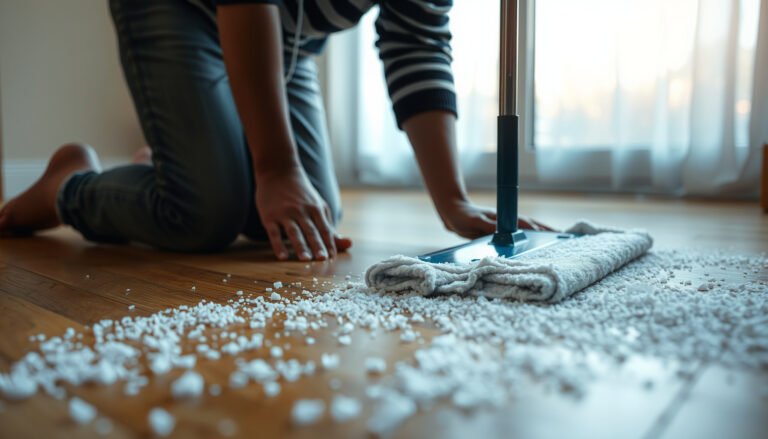

[…] method—dry lift first, then a barely damp pH-neutral wipe, then immediate drying—tends to minimize damage from salt + moisture while still getting residue off the surface. It’s […]