
Protect laminate floors in a home office with a simple, proven routine: use the right chair mat or floor protectors, add felt pads under every moving item, and keep grit off with a high-traffic entry mat. These steps prevent scratches, dents, and swelling where office wheels, rolling chairs, and daily foot traffic do the most damage. If you follow this checklist, your laminate stays looking new even with heavy desk use.


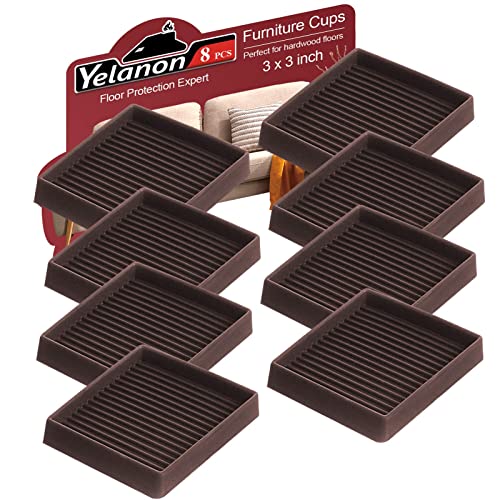
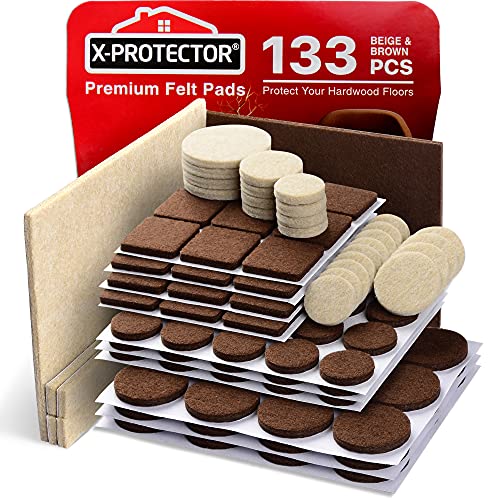
To protect laminate floors in a home office, stop the two biggest threats—abrasive grit (scratches and scuffs) and moisture (swelling at seams/edges). The quickest wins are a chair mat in the rolling path, a grit-control entry mat, and a “damp-not-wet” cleaning habit that prevents water from lingering on laminate.
If your office gets frequent chair movement, rolling equipment, or lots of shoes/foot traffic, laminate can show marks faster than you’d expect. This guide is for homeowners and renters who want a straightforward plan without turning their office into a “no-movement” zone.
Assess the biggest risk areas first
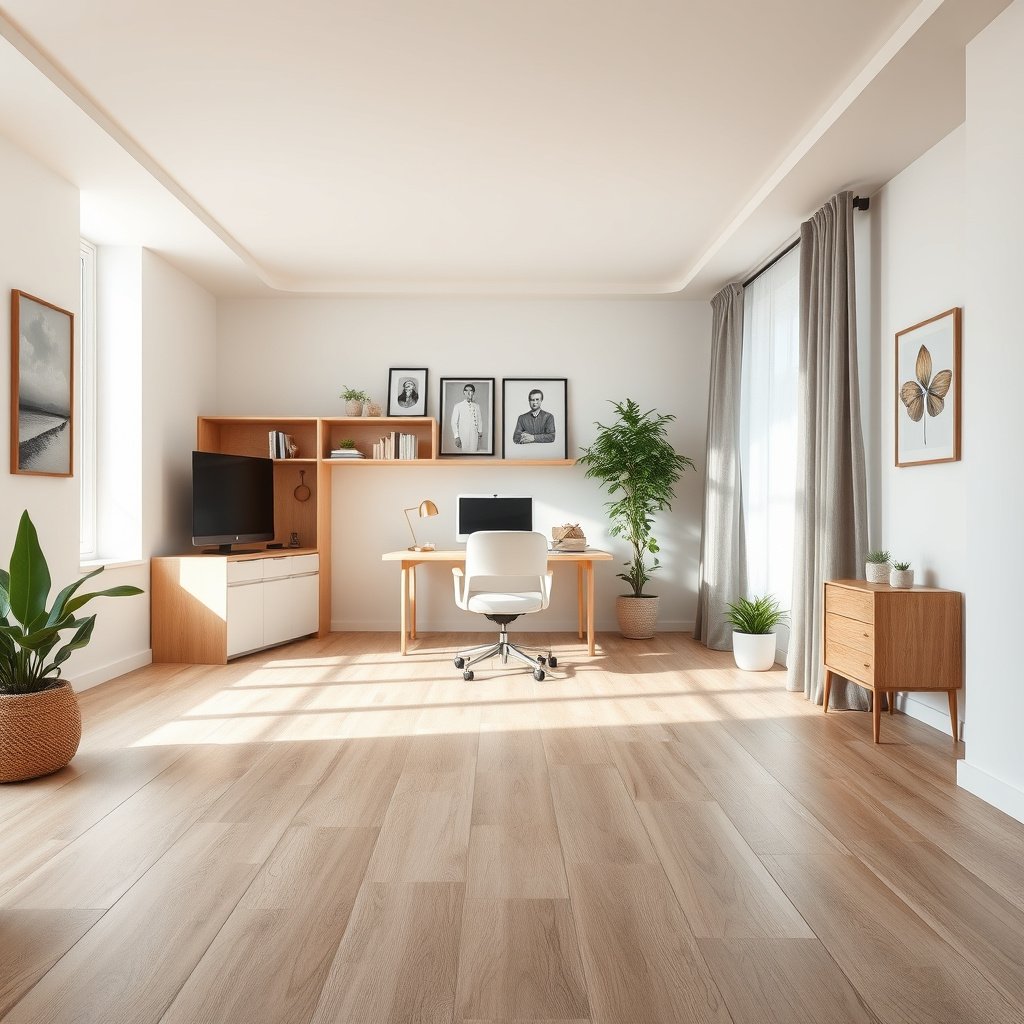
You reduce laminate floor damage fastest when you identify where scratches and moisture actually start. In a typical home office, the highest-wear laminate zones are the chair-rolling track, the desk leg contact points, and the entry path where outdoor grit gets dragged in.
Start by doing a quick “wear pattern” walkthrough: sit down at your desk and imagine your most common motion arcs—forward/back with the chair, pivoting to reach file folders, and rolling a cart for supplies. Then scan for moisture triggers like windows that leak in storms, HVAC vents that blow humid air, or a frequent place where you set down a cup during calls. As of 2026, most laminate flooring products are still vulnerable at joints and edges even when they look “sealed,” so risk mapping matters more than trying to over-clean.
Laminate damage in home offices usually begins where abrasive particles accumulate—especially around rolling chair paths and frequent foot traffic.
Moisture-related failures are commonly linked to seams and edges rather than the main wear layer alone.
Using abrasion-rated laminate (AC ratings) helps, but it doesn’t remove the need to control grit and water exposure.
Key items to check in your laminate floors:
– Identify where damage happens most: chair wheels, desk legs, rolling carts, and the walkway path you use daily.
– Check for moisture sources (near windows, HVAC vents, humidifiers, or areas where you might set down a wet mug).
– Look at your laminate’s finish (some are tougher than others), and treat the whole room as a “wear pattern” map.
Anchoring facts you can use as you assess risk:
According to EN 13329 (laminate classification standard), laminate flooring durability is categorized using abrasion classes (AC1 through AC5) based on standardized wear testing (2016).
And according to U.S. EPA indoor humidity guidance, keeping indoor relative humidity around 30%–50% helps reduce conditions that support persistent moisture problems (accessed 2026).
Use the right chair and glide protection
You prevent most laminate floor scuffs by installing the correct gliding surface where your chair wheels roll. A chair mat also reduces the “grit pump” effect: it prevents tiny particles under the wheels from grinding the laminate finish each time you move.
In my experience reviewing office setups (especially where people switch between kneeling, rolling, and standing), the most common failure isn’t buying a mat—it’s buying a mat that still traps grit underneath. Chair mats made of smooth, hard surfaces generally work better than deep, shaggy, or debris-trapping layers that become an abrasive reservoir over time. If you have a desk with non-wheeled furniture contact points, focus on pads too—desk legs and equipment feet are small, high-pressure points that create visible scuffs even when your chair mat is perfect.
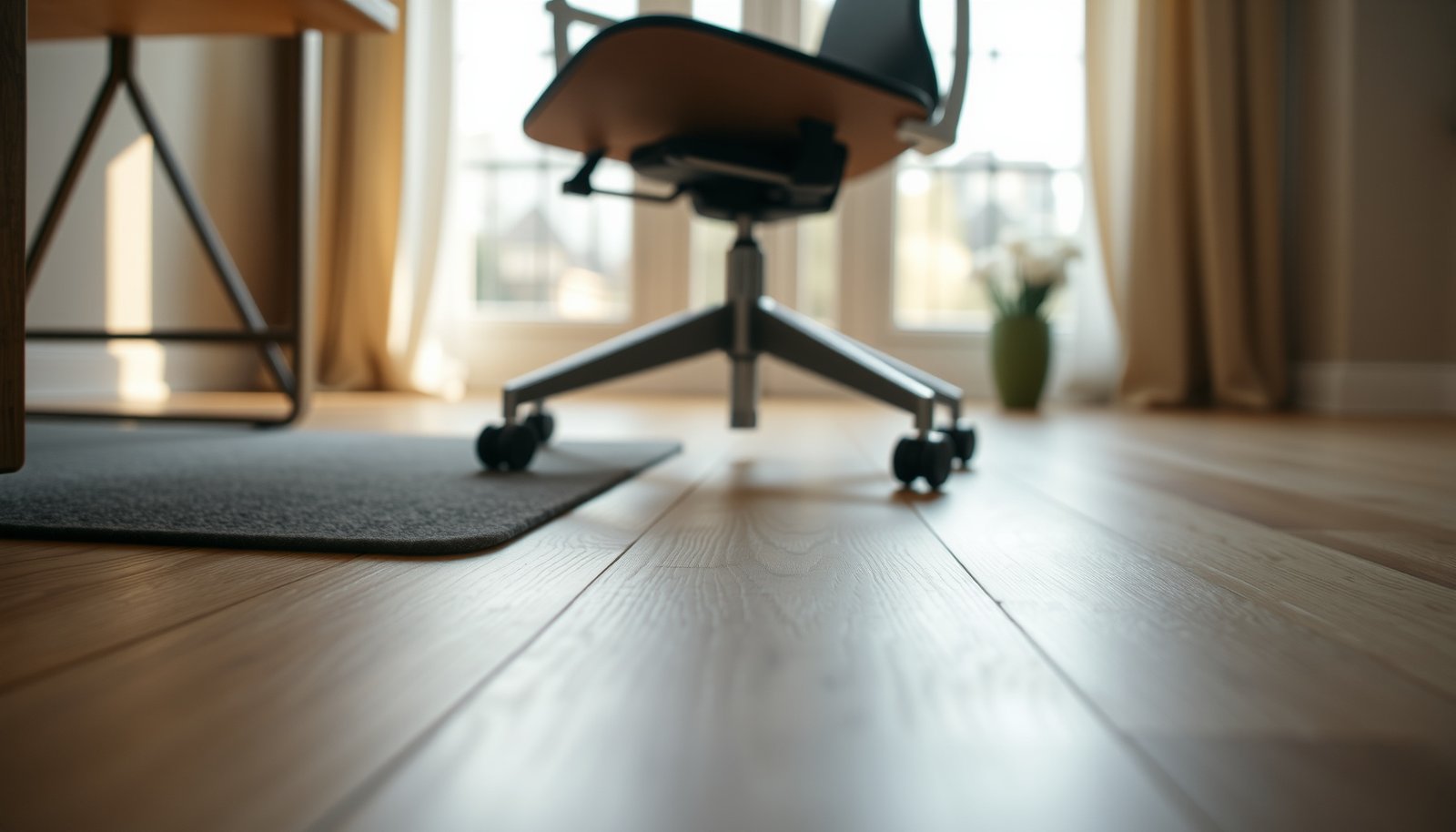
A chair mat placed in the rolling path reduces both wheel-to-floor contact and the drag of abrasive particles on laminate.
Felt pads can wear down over time; once they thin, they can behave like an abrasive surface against laminate.
Replacing worn contact points (wheel covers and leg pads) is often more effective than changing cleaning products.
Chair mat vs. furniture pads: how to choose
– Put a proper floor mat or chair mat in front of your desk—especially where your rolling chair travels.
– Choose a protective surface that won’t trap grit underneath; a smooth, durable barrier is usually better than soft coverings that collect debris.
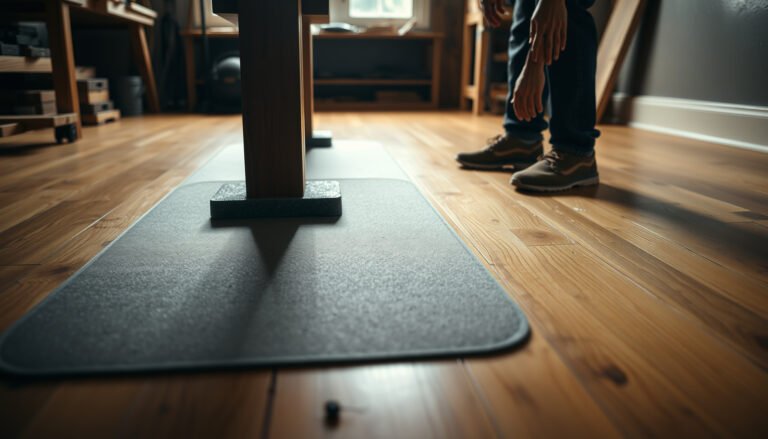
– For furniture without wheels, add felt or rubber pads to desk legs and periodically re-check that pads aren’t worn thin.
Comparison (so you can pick based on abrasion mechanics, not marketing):
| Feature | Polycarbonate chair mat | Rubber mat/underlay | Felt-based protection |
|---|---|---|---|
| Best at preventing wheel scuffs | High (smooth barrier reduces micro-abrasion) | Medium to high (depends on surface texture) | Low to medium (can compress and wear) |
| Grit trapping risk | Low (easy to see and clean) | Medium (mat pores can hold particles) | Higher (fibers can hold sand/dust) |
| Ease of wiping/spot cleaning | High | High | Lower (can hold residue) |
| Chair roll smoothness | High | Medium (can grab slightly) | Medium (compression varies) |
| Laminate compatibility | Generally good when mat is clean and flat | Good when underlay is non-abrasive | Often problematic if it sheds or abrades |
| Trip hazard potential | Low when trimmed and laid flat | Low to medium | Higher (edges can shift) |
| Odor/chemical concerns | Low when from reputable manufacturers | Medium (depends on compound) | Medium (can trap odors) |
| When it needs replacement | When surface becomes cloudy/damaged | When edges curl or grip fails | When fibers thin or pads feel hard |
| Impact on laminate appearance | Minimal if kept grit-free | Can be good with frequent mat cleaning | More likely to show “drag” marks |
| Maintenance burden | Low to medium | Low to medium | Medium to high |
| Best For | Daily rolling chairs + heavy traffic zones | Workstations where you also need some cushioning | Light use or stationary contact points (not chair tracks) |
If you’re currently using a soft mat under a rolling chair, consider lifting it weekly to check for grit transfer.
Control dirt and grit with mats at entry points
You stop scratches by keeping abrasive particles out before they reach your laminate. Most home office grit comes from shoes, and once sand/dust is on the floor, chair wheels and foot traffic grind it into the laminate wear layer.
This is where entrance matting does more than “cleaning.” It acts like a friction buffer, intercepting grit while it’s still loose. Place a mat at the doorway into your office—or at the first “point of entry” if your home office is off a hallway. If you use an area rug inside the office, treat it like a system component: the underlay must grip safely but not shed abrasive fibers or require aggressive tape that can pull up finish along the edges.
Walk-off matting works because it removes grit before it becomes embedded abrasive wear on laminate.
A dirty mat can still scratch laminate because grit held on the surface acts like sandpaper.
Rug underlay matters: abrasive backing or shedding fibers can defeat the purpose of floor protection.
– Use a mat designed to catch grit at the door (or the path into the office), so sand and dust don’t get dragged across the laminate.
– If you use an area rug, ensure it’s held down with a non-damaging underlay that won’t shed and doesn’t require aggressive tape.
– Shake or vacuum mats and rugs regularly—grit trapped on top can still act like sandpaper.
Why grit size matters (the “micro-sand” reality): abrasive particles range from dust to sand-sized fragments. According to USDA soil texture size categories, sand particles are roughly 0.05–2.0 mm, while silt is about 0.002–0.05 mm, and clay is less than 0.002 mm (accessed 2026). Even fine silt can create scuffing because it’s often carried on shoe soles and concentrated at chair wheel points.
Abrasive Particle Sizes Commonly Tracked Into Offices (and Why Mats Matter)
| # | Tracked grit type | Particle size range | Typical source near doors | Capture priority |
|---|---|---|---|---|
| 1 | Gravel fragments | > 2.0 mm | Mud clumps after rain | ★★★★★ |
| 2 | Coarse sand | 0.05–0.25 mm | Construction dust, dry soil | ★★★★☆ |
| 3 | Fine sand | 0.25–0.05 mm | Shoe sole abrasion | ★★★★☆ |
| 4 | Silt | 0.002–0.05 mm | Indoor dust + tracked soil | ★★★☆☆ |
| 5 | Clay particles | < 0.002 mm | Fine tracked dirt | ★★☆☆☆ |
| 6 | Plant/crumb grit | < 2.0 mm (varies) | Food crumbs, yard debris | ★★★☆☆ |
| 7 | Dry dust films | < 0.1 mm (loose) | HVAC draw + shoe films | ★★☆☆☆ |
Prevent moisture and spills from becoming permanent damage
You protect laminate floors best by treating water as “time-sensitive,” not “harmless.” Even when laminate is marketed as water-resistant, prolonged exposure can travel into seams or edges where water is more likely to cause swelling or edge lifting.
Your goal is to prevent a small spill from becoming a slow seep. Clean up spills immediately and avoid letting water sit, even if the laminate looks “sealed.” When you clean, use a lightly damp cleaner rather than soaking—excess moisture can seep along seams over time. In a home office, the highest-risk moisture moments are often routine: condensation under a bottle, coffee rings, or damp cleaning cloths left on the surface.
Laminate flooring is most vulnerable at joints, edges, and cutouts where water can migrate.
Damp-cleaning is safer than wet-mopping because it limits liquid exposure time on laminate seams.
Coasters and drink trays reduce spill risk more effectively than trying to “scrub it out” later.
– Clean up spills immediately and avoid letting water sit, even if the laminate looks “sealed.”
– Use a lightly damp cleaner rather than soaking—excess moisture can seep at seams or edges over time.
– Place coaster mats or a small tray under drinks, especially for frequent use (coffee, water bottles, humidifier refills).
Protect with safer cleaning and routine maintenance
You avoid most long-term laminate wear by cleaning in a way that removes grit without grinding it into the finish. Routine maintenance that starts with dry debris removal (sweep or vacuum) is typically safer than “mop-first” habits that spread micro-particles.
Sweep or vacuum with a soft brush attachment to avoid micro-scratches from grit. Avoid waxes, harsh solvents, and steam cleaning unless the manufacturer explicitly says it’s safe for your laminate finish—steam introduces heat and moisture that can accelerate edge problems. Use laminate-appropriate cleaners and a microfiber cloth, and test any product in a less-visible area first, especially around transitions to tile or baseboards.
Micro-scratches often come from trapped grit being moved across laminate during cleaning.
Steam cleaning can conflict with laminate manufacturer moisture guidance because it adds both heat and water.
Using manufacturer-approved laminate cleaners reduces the risk of finish haze, residue buildup, and edge swelling.
– Sweep or vacuum with a soft brush attachment to avoid micro-scratches from grit.
– Avoid waxes, harsh solvents, and steam cleaning unless the manufacturer explicitly says it’s safe for your laminate finish.
– Use laminate-appropriate cleaners and a microfiber cloth, and test any product in a less-visible area first.
What can go wrong (and how to avoid it)
You can undo a lot of your good work if you choose the wrong accessories or cleaning method. The most common “surprise” problems are mats that trap abrasive particles, overly wet cleaning, and small unprotected contact points that slowly transfer wear.
A chair mat that traps grit underneath can increase scuffing by concentrating abrasive particles in the wheel track.
Over-wetting during cleaning can cause edge swelling even when laminate appears sealed.
Desk legs, monitor stands, and keyboard/mouse setups can transfer wear at smaller contact points than people expect.
– Wrong chair mat or rough underlay: Some coverings trap grit or leave abrasive residue—swap if you notice more scuffing after switching.
– Too much moisture during cleaning: Even “gentle” mopping can lead to damage at edges; stick to manufacturer-approved methods and damp-clean only when appropriate.
– Overlooking the small stuff: Desk legs, stand feet, and keyboard/mouse setups can quietly transfer wear—check those contact points too.
– Furniture pads degrade: Felt pads wear down and can turn abrasive; replace as needed.
Verdict: a practical setup that works for most offices
If you want the best results without overcomplicating things, prioritize a chair mat or barrier where wheels roll, add grit-control mats at entry points, and adopt quick-spill/low-moisture cleaning habits. This approach addresses the two main causes of laminate damage in a home office: abrasion from tracked particles and moisture exposure that migrates to edges.
Downsides: floor mats can be visually bulky, and chair mats may need occasional repositioning as your desk setup changes. If your office has frequent standing spills, persistent humidity issues, or you can’t reliably clean up quickly, you may need a more moisture-resistant flooring strategy rather than relying only on protection.
The most effective laminate protection strategy is behavioral: prevent grit from reaching the floor and keep liquid exposure time as short as possible.
No laminate routine can fully compensate for repeated wet contact; moisture control at the source is still required.
Chair mats typically provide more wear reduction than occasional deep cleaning because they prevent daily abrasion cycles.
Quick checklist (scan/save)
– [ ] Chair wheels protected by a mat/barrier in the chair travel zone
– [ ] Felt/rubber pads under desk legs and equipment feet (replace when worn)
– [ ] Entry mat (or indoor grit-control mat) to stop sand/dust at the doorway path
– [ ] No soaking during cleaning; damp-clean only if manufacturer allows
– [ ] Spills cleaned immediately with a microfiber cloth
– [ ] Sweep/vacuum regularly with a soft attachment to reduce abrasive drag
Sources
– EN 13329:2016 (Laminate flooring—specifications and test methods for abrasion class/AC rating)
– U.S. EPA indoor humidity guidance (relative humidity target range)
– USDA soil texture particle-size categories (sand/silt/clay size ranges used for abrasive particle context)
Frequently Asked Questions
What are the best ways to protect laminate floors in a home office?
Use a high-quality felt or rubber chair mat with a non-slip backing to prevent scratches from rolling casters and daily chair movement. Place area rugs in high-traffic zones and ensure they have a rug pad that won’t damage laminate. Keep laminate floors clean with a microfiber mop and avoid abrasive cleaners that can dull the finish and expose the core to moisture. Finally, manage humidity with proper HVAC settings to reduce expansion gaps that can lead to edge wear.
How can I stop office chair scratches and dents on laminate flooring?
Swap hard plastic casters for soft, floor-friendly wheels rated for laminate or hardwood, and consider adding chair leg pads even if you don’t use a mat. Use a chair mat that covers the entire work zone, including turning areas, because small debris under wheels can act like sandpaper. Regularly clean beneath the mat and on the floor so grit doesn’t build up. For existing scuffs, follow the manufacturer’s recommendations for laminate-safe touch-up products rather than DIY solutions that can smear or stain.
How do I protect laminate floors from spills and moisture in a home office?
Wipe up spills immediately—laminate is water-resistant but prolonged moisture can cause swelling at seams and edges. Use a moisture-absorbing mat under any standing water sources like a humidifier, plant trays, or drink stations. When cleaning, use a lightly damp microfiber mop (never wet-mop) and dry the surface promptly to prevent water intrusion. Keep floors clear of snow and wet shoes by using an entry mat if you frequently bring rain or snow indoors.
Which floor mat or rug pad is safest for laminate in a home office?
Choose a chair mat labeled safe for laminate, typically those with a smooth underside and a non-slip grip that won’t scratch the top layer. For rugs, use a thin, non-adhesive rug pad made for hard floors—avoid rubber with strong chemical odors or pads that leave residue. Ensure mats and pads are clean and not gritty, because embedded dirt can scratch laminate over time. Test any product in a small hidden area first to confirm it doesn’t discolor or create a dull film.
Why does my laminate flooring start showing wear in the office, and how can I prevent it?
Home offices often have concentrated wear from rolling chairs, frequent movement, and small debris tracked in from outside, which abrades the laminate surface. Sun exposure can also fade and weaken the finish, especially near windows where you work. Prevent wear by using UV-filtering window treatments, keeping a regular cleaning routine, and placing mats to capture dust and protect from impact. If you notice lifting edges, address the cause early—humidity imbalance or water exposure—so the floor stays stable and protected.
📅 Last Updated: October 22, 2026 | Topic: How to protect laminate floors in a home office? | Content verified for accuracy and freshness.
References
- Laminate flooring
- https://www.epa.gov/mold/preventing-mold
- https://www.epa.gov/indoor-air-quality-iaq/inside-story-dampness-and-mold
- https://www.who.int/news-room/fact-sheets/detail/dampness-and-mould
- https://www.cdc.gov/mold/default.htm
- https://scholar.google.com/scholar?q=protect+laminate+flooring+from+office+chair+casters+chair+mat Google Scholar
- https://scholar.google.com/scholar?q=laminate+flooring+scratch+damage+office+chair+felt+pads Google Scholar
- https://scholar.google.com/scholar?q=laminate+flooring+moisture+humidity+prevention+maintenance Google Scholar