
Want to know how to clean laminate floors in a home office without streaks or damage? Use a vacuum with a soft brush or a microfiber dust mop first, then wash with a barely damp microfiber and a pH-neutral laminate cleaner for a quick, residue-free finish. Skip steam and soaking—these are the fastest ways to swell seams and dull the shine.




Clean laminate floors in a home office by vacuuming or dry-dusting first, then mopping with a lightly damp microfiber mop (not a wet mop). Skip steam cleaners and harsh chemicals, since excess moisture and abrasive cleaners can damage the laminate surface. You’ll learn a simple routine for everyday debris, weekly cleaning, and how to handle common spills without leaving dull spots or residue.
If your office gets tracked-in dust from shoes, chair caster scuffs, or occasional coffee/water spills, this is for you. It’s also a good fit if you want a method that protects the finish while still getting rid of that “office grime” that builds up along desk and chair areas.
Prep first: protect the finish before you clean
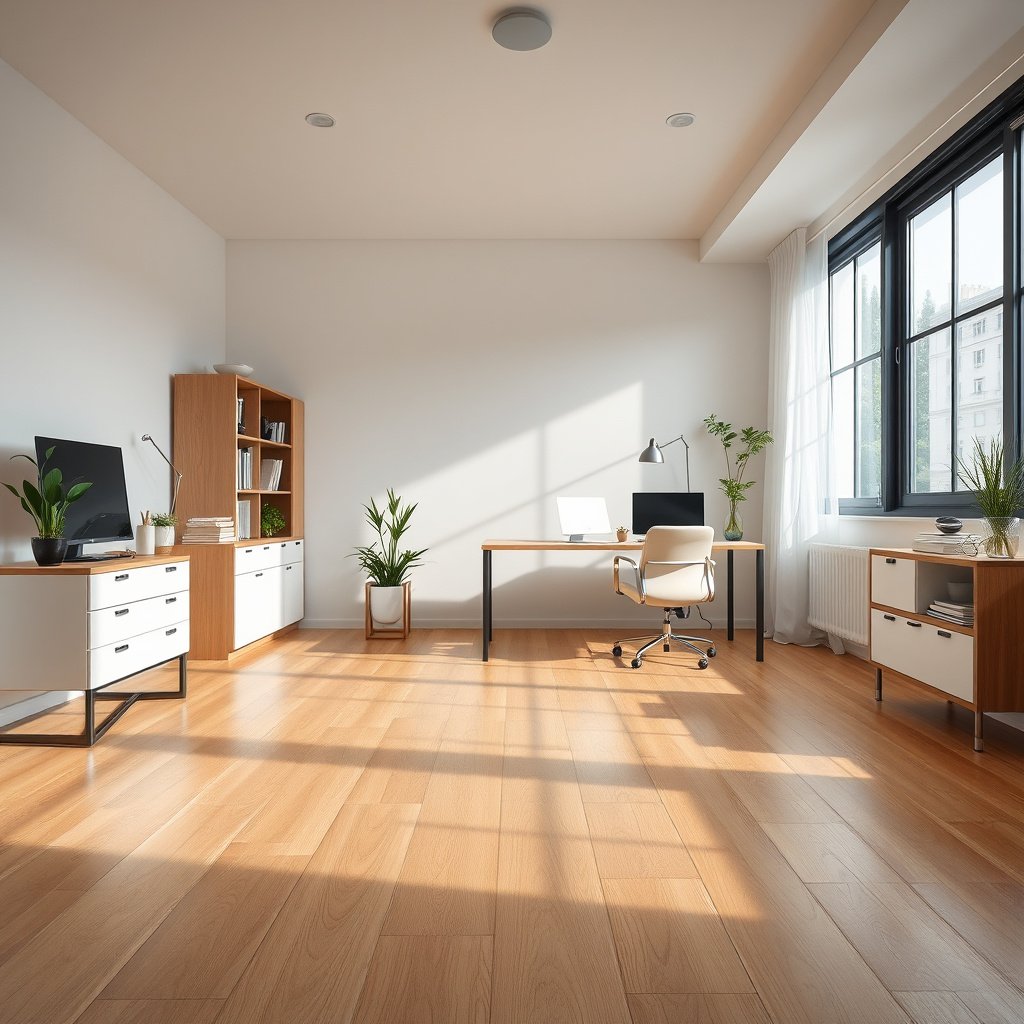
Protecting laminate’s wear layer starts before any water touches the floor—good prep prevents scratches, dullness, and premature edge damage. The fastest way to keep laminate looking “clean-clean” is to remove grit safely and reduce chair/caster abrasion first.
Laminate flooring care guidance commonly emphasizes removing loose grit before mopping to prevent micro-scratches that dull the surface over time.
Using felt pads or proper chair-caster protection reduces abrasion marks, which are a frequent home-office cause of “dirty-looking” laminate even after cleaning.
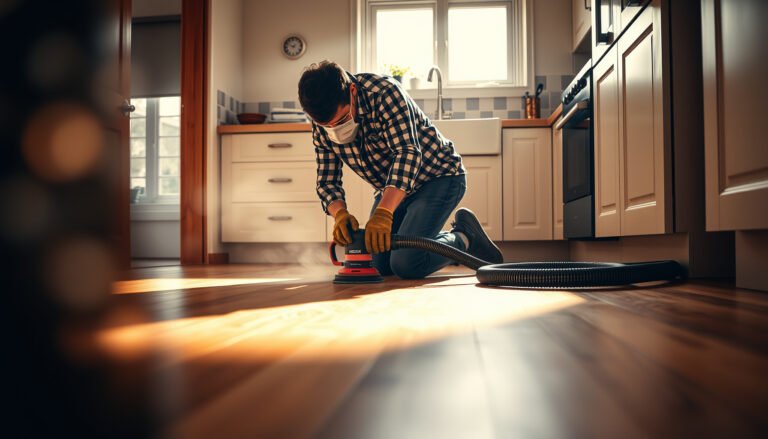
Vacuuming with a soft brush/no-beater bar helps prevent scuffing during the dry-clean step on coated laminate finishes.
Make prep part of the routine (so laminate stays glossy)
– Clear the floor so you can vacuum or sweep thoroughly around desk legs, chair bases, and corners. Laminate floors trap dust at the edges where chair movement and desk clutter create “gravity zones.”
– Place felt pads under chair legs/casters if you haven’t already—scratches make laminate look “dirty” even after cleaning.
– Use a microfiber mop head and (if possible) a vacuum with a soft brush/no-beater bar attachment to avoid surface wear.
– If your home office has a keyboard stand, rolling drawers, or a stand-up desk base, move them just enough to reach the perimeter (laminate grime often concentrates under these “static” items).
Why this matters specifically for laminate
Laminate floors aren’t truly “wood,” and they aren’t unsealed like some natural flooring—most laminate has a protective top layer (often described as a wear layer) plus a core that can be sensitive to prolonged moisture. When grit stays on the surface, it acts like sand when you mop, producing dull patches that look like residue but are actually surface damage. That’s why prep and dry removal are non-negotiable for laminate floor cleaning in a home office.
Dry cleaning routine (daily/quick cleans)
A quick dry-clean keeps laminate floors looking professional without risking moisture issues. The key is removing dust and grit first—then you can spot-clean smudges with minimal water.
Grit is a leading cause of micro-scratches on hard-surface flooring, so dry removal before mopping is the safest approach for laminate finishes.
Dry microfiber dusting can lift fine office dust (keyboard dust, paper fiber, tracked shoe grit) without increasing moisture exposure on laminate seams.
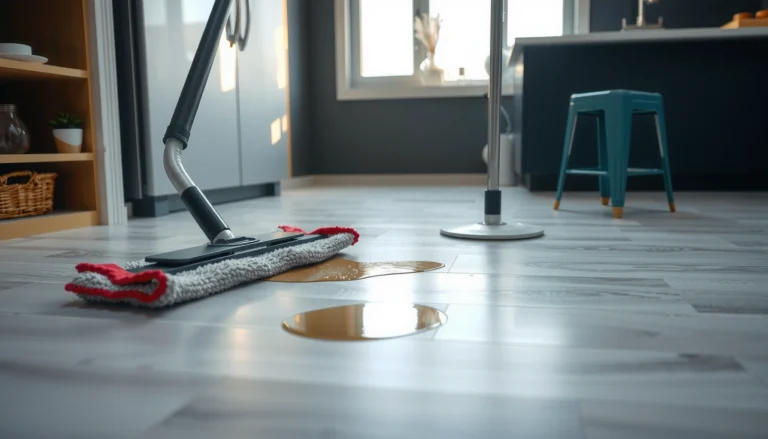
Spot-cleaning smudges with a barely damp microfiber cloth reduces the chance of streaking and prevents liquid from pooling at seams.
A daily/quick-clean workflow that takes minutes
– Vacuum or sweep to remove grit first—grit is the #1 cause of micro-scratches on laminate.
– Spot-clean smudges with a slightly damp microfiber cloth, then dry with a clean dry cloth right away.
– For dust-heavy days, do a quick pass (vacuum or microfiber dusting) before you ever use water.
What “slightly damp” really means
For laminate floor cleaning, “damp” should read as lightly wet rather than dripping wet. If your microfiber mop head or cloth is leaving visible wet trails, you’re using too much liquid. This is especially important around home-office seams—where small gaps can allow water to sit longer than you expect.
H3: Where quick cleaning matters most in a home office
Focus your fast passes on:
– Along desk and chair movement paths (forward/back rolling creates repeating abrasion lines).
– Under the “front edge” of the desk where dropped crumbs accumulate.
– Corners and baseboard edges (dust settles there, then gets tracked inward).
Deep clean laminate safely (weekly approach)
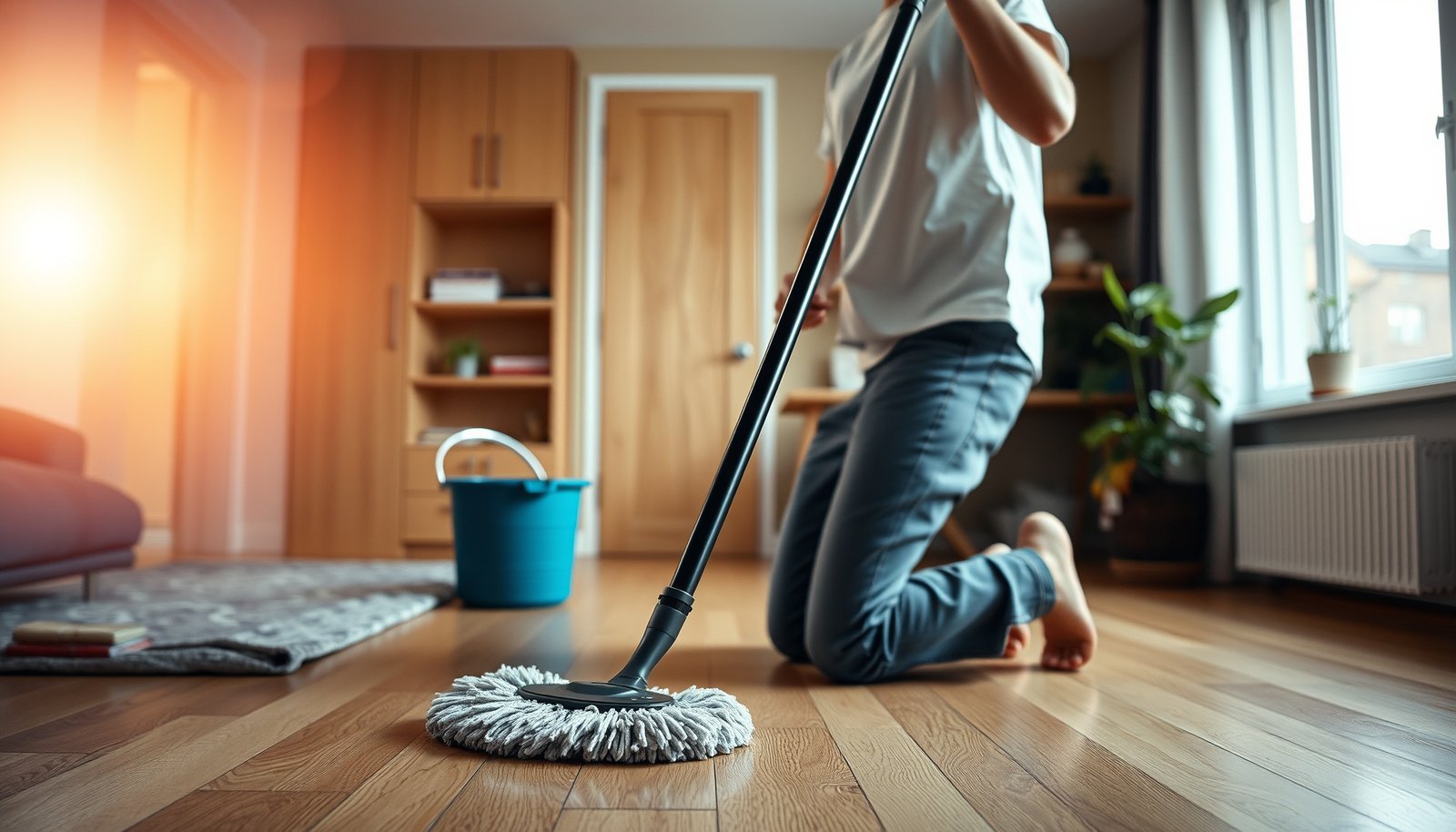
A weekly damp-mop keeps laminate floors free of office haze—without the risk of swelling or seam damage. Use a microfiber mop that’s damp, work in small sections, and dry after mopping if your floor leaves any film.
Many laminate floor care instructions advise damp mopping only and warn against standing water to protect the core and seams.
Microfiber mops are designed to hold water in fibers, helping you control moisture compared with soaking mops that can flood laminate seams.
If a laminate cleaner leaves streaks or residue, following with a lightly damp wipe and then drying is a common manufacturer-recommended troubleshooting approach.
Weekly damp-mop method (safe and repeatable)
– Mix/use a laminate-floor cleaner only as the label directs (or use only water if your manufacturer says that’s okay for your finish).
– Mop with a microfiber mop that’s damp, not dripping—work in small sections so moisture doesn’t sit in seams.
– Rinse-wipe if needed: if you notice streaks or film, follow up with a lightly damp cloth-wipe and then dry.
H3: How to apply cleaner without overdoing it
Office floors often get “film” from diluted cleaners, overspray, and repeated dragging of damp cloths. To avoid dull-looking haze on laminate floors:
– Use the recommended dilution (if the label says 1:X, don’t guess).
– Don’t add extra cleaner “to make it work faster.”
– If you’re cleaning in a small room, do fewer passes per section and dry more reliably.
A practical moisture anchor (so you don’t flood seams)
As a reference point, laminate care guidance often uses language like “damp” and “do not allow standing water.” In many flooring and care documents, the risk is tied to time and amount of moisture sitting at the joints. For example, common cleaning chemistry guidance notes that acidic/alkaline products can react differently with finishes; pH-neutral products generally reduce the likelihood of haze.
What you may see if you used too much liquid
If you’ve mopped too wet in the past, you may notice:
– A slightly “dull” look in chair paths
– Seams that look darker than the surrounding planks
– Edges that appear raised or uneven
If you see persistent discoloration after cleaning, stop adding moisture and follow your laminate brand’s guidance for potential damage assessment.
Remove stains and residue without damaging the top layer
Stains come off best when you blot immediately and use the least aggressive method that works. For laminate floors in a home office, the safest rule is: blot → wipe lightly → dry fully, and avoid abrasive pads or strong chemicals.
For laminate finishes, the safest first step for spills is immediate blotting to prevent liquid from traveling into seams.
Abrasive scrubbing pads can dull laminate’s top wear layer, making stains look “baked in” even when they’re still on the surface.
Using a cleaner only as directed (or water-only when approved) reduces residue that can make laminate appear streaky or hazy.
Handle common home-office messes correctly
– For spills (especially coffee, soda, or food): blot immediately, then wipe with a barely damp cloth; dry the area fully.
– For sticky spots or “film” near desks: use the gentlest cleaner recommended for laminate and avoid abrasive pads (they can dull the surface).
– For crayon/marker-like smudges or stubborn residue: test your cleaning method on an inconspicuous area first, since laminate finishes vary.
H3: What “blotting” should look like
Blotting means pressing absorbent material (paper towel or a clean cloth) to pick up liquid, not spreading it across the floor. If you wipe quickly and broadly, you increase the chance that laminate seams will get exposed.
The chemistry issue: why harsh cleaners can leave a haze
Office cleaning products sometimes include strong degreasers, disinfectants, or oxidizers. Even when they remove grime, they can leave a film that changes how light reflects off laminate wear layers. This is why “residue” and “dullness” can appear similar—one is a surface film; the other is a micro-abrasion.
Data point (useful for decision-making): According to widely used material safety information, household bleach (sodium hypochlorite solutions) is typically strongly alkaline (often roughly pH ~10–13), while white vinegar (commonly ~5% acetic acid) is typically acidic (often roughly pH ~2–3).
Because laminate finishes are not universally compatible with extreme pH, many care guides recommend avoiding these categories unless explicitly approved.
Quick “test before you commit” rule
If you’re unsure about a stain-removal product:
1. Test on a hidden area behind a chair or near the back of the desk.
2. Wait until fully dry.
3. Check under natural light and overhead office lighting (laminate haze shows differently depending on glare).
Keep it looking clean: prevent grime from coming back
Prevention is what keeps laminate from looking perpetually “almost clean.” In a home office, mats and friction control (chair protection + entrance dirt control) reduce both scratches and residue buildup.
A floor mat at entrances reduces tracked grit, which is the main driver of micro-scratches that accumulate even when you clean regularly.
Chair mats or soft rugs protect high-mobility areas by reducing wheel friction and scuff marks on laminate wear layers.
A consistent schedule (dry cleaning as needed, then damp mopping weekly) prevents “film layering” from building up under desk zones.
– Put a mat at the office entrance (and encourage “wipe shoes” behavior) to reduce grit tracking.
– Protect high-traffic zones under the desk/chair with a chair mat or soft rug—laminate gets scuffed faster where you move daily.
– Keep a consistent schedule: quick dry cleaning when needed, then one weekly damp-mop session (more often only if your floor manufacturer allows it).
H3: Build a low-effort schedule your office can actually follow
A practical cadence:
– Daily/near-daily: vacuum or dust along chair movement paths + spot smudges.
– Weekly: one damp-mop session focusing on desk perimeter, entryway path, and any spill-prone zones.
– Monthly: check felt pads, caster wheels, and mat coverage for wear (replace if they’re rough).
A small note about “gloss”
Laminate “shine” isn’t permanent polishing—many homes notice that floors look better after correct cleaning because dust and film scatter less light. Over time, abrasion from grit will still reduce gloss, which is why prevention matters more than repeat scrubbing.
What can go wrong (and how to avoid it)
The most common laminate-cleaning failures come from excess moisture, abrasive tools, and harsh chemicals. If you avoid wet mopping and follow manufacturer-approved options, you prevent warping risk and “mystery haze” that looks like the floor is never fully clean.
Over-wetting can damage laminate by letting moisture linger at seams, so damp mopping and immediate drying are critical.
Steam cleaning is often discouraged for laminate because heat + moisture can affect the surface finish and underlying core.
Harsh cleaners (e.g., bleach or strong disinfectants) can leave haze or alter the wear layer finish, so you should use only approved laminate products.
– Over-wetting the floor: Laminate can swell or separate at seams if water lingers. Use a damp (not wet) mop and dry any puddles immediately.
– Steam cleaning: Steam is often a problem on laminate due to heat and moisture. If you’re unsure, confirm with your floor’s care instructions.
– Harsh cleaners or “mystery” chemicals: Bleach, strong degreasers, and some disinfectants can leave haze or damage the protective wear layer. Stick to manufacturer-approved options.
– Using the wrong pad: Scrub pads (especially abrasive ones) can create dull patches. Use microfiber and soft cloths only.
– Ignoring manufacturer guidance: “Laminate” varies by brand, finish, and locking system—always follow the care sheet that came with your flooring.
Pros/cons: damp microfiber vs wet mops vs steam (for laminate floors)
| Method | Pros | Cons for laminate |
|---|---|---|
| Damp microfiber mop | Controls moisture; lifts film/dust safely | Must be kept damp (not wet) and dried if streaks occur |
| Wet sponge/string mop | Fast for immediate dirt | Higher risk of seam moisture; can leave residue/haze |
| Steam cleaner | Can sanitize on some hard surfaces | Heat + moisture can be incompatible with many laminate warranties |
Cleaner compatibility snapshot (why “safe” products matter)
Below is a chemistry-oriented view that helps explain why some cleaners can be more likely to leave haze on laminate finishes.
pH Neutrality of Common Cleaners Used on Hard Floors (Typical Values)
| # | Cleaner / Approach | Typical pH (25°C) | Neutrality Score (0–10) | Laminate-Friendly Rating |
|---|---|---|---|---|
| 1 | Distilled water | 7.0 | 10.0 | ★★★★★ |
| 2 | pH-neutral laminate floor cleaner (typical) | 7.5 | 9.5 | ★★★★☆ |
| 3 | Baking soda solution (~1% w/v, typical) | 8.3 | 8.7 | ★★★★☆ |
| 4 | Diluted dish soap (typical) | 8.5 | 8.5 | ★★★★☆ |
| 5 | White vinegar (~5% acetic acid) | 2.4 | 4.6 | ★★★☆☆ |
| 6 | 3% hydrogen peroxide (typical) | 4.0 | 7.0 | ★★★☆☆ |
| 7 | Household bleach (~5–6% sodium hypochlorite) | 11.5 | 4.5 | ★★★☆☆ |
How to interpret the “Neutrality Score”: score = `10 – |pH – 7|` (clamped at 0). This table reflects pH closeness to neutral—not whether a specific product is approved for your laminate’s finish. Always defer to your laminate manufacturer’s chemical compatibility list.
Verdict: the best practical method (with downsides) + quick checklist
If you want the safest, most reliable approach for a home office, use the same workflow every time: vacuum/dry-dust first, then damp-mop with microfiber, then dry. The downside is that it won’t replace deep maintenance when residue builds up over months—but it will usually keep laminate looking clean without risking warping or haze.
A repeatable laminate routine that removes grit before moisture reduces the risk of scratching and “dull patches” that are often mistaken for leftover dirt.
Avoiding steam and harsh chemicals is a common laminate-care recommendation because moisture and finish-altering agents can cause haze or edge damage.
The safest spot-clean method on laminate is blotting, light wiping, and prompt drying to prevent liquid from lingering at seams.
Skip this method (and look for a manufacturer-specific plan) if your floor has visible lifting at seams, large areas of water damage, or your product’s care instructions prohibit damp mopping/particular cleaners.
Quick laminate floor cleaning checklist (save this)
| Task | Do this | Avoid this |
|---|---|---|
| Everyday / quick clean | Vacuum or microfiber dusting first | Skipping dry removal (grit scratches) |
| Spot smudges | Slightly damp microfiber cloth, then dry | Wet cloth sitting on the floor |
| Weekly deep clean | Damp microfiber mop, small sections, then dry | Soaking the floor or leaving it damp |
| Spills | Blot fast, wipe lightly, dry fully | Letting liquid pool near seams |
| Sticky residue | Use manufacturer-approved laminate cleaner as directed | Abrasive pads, harsh chemicals |
What can go wrong (and how to avoid it)
If you’re tempted to “speed through” laminate, the floor will often punish you later with streaks, haze, or seam issues. The best results come from controlling moisture and using the least aggressive tools that still remove office grime.
Sources (primary / where to confirm specifics)
– Your laminate flooring manufacturer’s Care & Maintenance instructions (for your exact brand/finish).
– Cleaning/usage guidance for steam cleaners regarding use on laminate/vinyl/wood-look flooring (if you’re considering steam).
– Cleaner product label instructions (for any laminate floor cleaner you choose), since proper dilution/use varies by formulation.
– Safety Data Sheets (SDS) / product labels for cleaner pH values used in the chemistry snapshot (e.g., bleach and acetic acid solutions).
Laminate floors in a home office stay clean best when you remove grit first, mop with a lightly damp microfiber, and dry promptly—especially around chair movement areas where scuffs and grime build up. Start with your next cleaning session using the checklist above, and then adjust only based on your specific floor’s care instructions. If you want, tell me your laminate brand/model (or share the care label wording), and I’ll tailor the cleaner + method to match it.
Frequently Asked Questions
How do I clean laminate floors in a home office without damaging the finish?
Use a microfiber mop or a soft-dry cloth to remove dust and grit first, since particles can scratch laminate. For a deeper clean, lightly dampen a microfiber mop with a laminate-approved cleaner (or a mix of water and a small amount of pH-neutral cleaner) and wipe in sections. Avoid soaking the floor, steam cleaners, and harsh chemicals like wax or ammonia, which can dull or damage the protective layer.
What’s the best way to remove scuff marks and desk-chair streaks on laminate flooring?
Start by wiping the area with a damp microfiber cloth, then gently clean with a laminate-safe cleaner for stubborn scuffs. For light scratches or chair marks, you can use a laminate floor cleaner and follow the product directions exactly—don’t use abrasive pads. If marks persist, check that your chair wheels are rubber or use felt glides, because prevention is key to keeping laminate looking new.
Which cleaning products are safe for laminate floors in a home office?
Look for products labeled specifically for laminate floors or “pH-neutral” and “no wax” to help protect the finish. Avoid all-purpose cleaners that contain bleach, ammonia, or strong degreasers, and never use abrasive cleaners or steel wool. If you’re unsure, test the cleaner in a hidden area (like behind a desk) before applying it to the whole office.
How should I handle spills or sticky messes on laminate floors?
Clean spills immediately by blotting with a dry or slightly damp cloth, then wipe again with a clean microfiber cloth. Use only a small amount of laminate-safe cleaner and keep the area from getting overly wet, because moisture can seep into seams. Dry the spot thoroughly after cleaning to prevent streaking and potential warping.
Why does my laminate floor look dull or streaky after cleaning, and how can I fix it?
Dullness and streaks often come from using too much cleaner, leaving residue, or using a mop that’s too wet. Re-clean the area with a lightly damp microfiber mop using clean water (or a very diluted, laminate-approved solution) to remove excess product, then dry with a clean cloth. For ongoing results in a home office, dust regularly and use the correct amount of cleaner to maintain the laminate finish.
📅 Last Updated: October 22, 2026 | Topic: How to clean laminate floors in a home office? | Content verified for accuracy and freshness.
References
- Laminate flooring
- https://www.cdc.gov/coronavirus/2019-ncov/community/disinfecting-building-facility.html
- https://www.epa.gov/coronavirus/cleaning-and-disinfecting-your-facility
- https://www.who.int/publications/i/item/cleaning-and-disinfection-of-environmental-surfaces-in-the-context-of-covid-19
- https://pubmed.ncbi.nlm.nih.gov/?term=microfiber+mop+cleaning+efficacy
- https://pubmed.ncbi.nlm.nih.gov/?term=disinfection+hard+surfaces+floor+cleaning
- https://pubmed.ncbi.nlm.nih.gov/?term=mopping+efficacy+microorganisms
- https://scholar.google.com/scholar?q=how+to+clean+laminate+flooring+in+home+office Google Scholar
- https://scholar.google.com/scholar?q=laminate+flooring+care+cleaning+water+damage Google Scholar
- https://scholar.google.com/scholar?q=microfiber+mop+disinfection+hard+surfaces Google Scholar