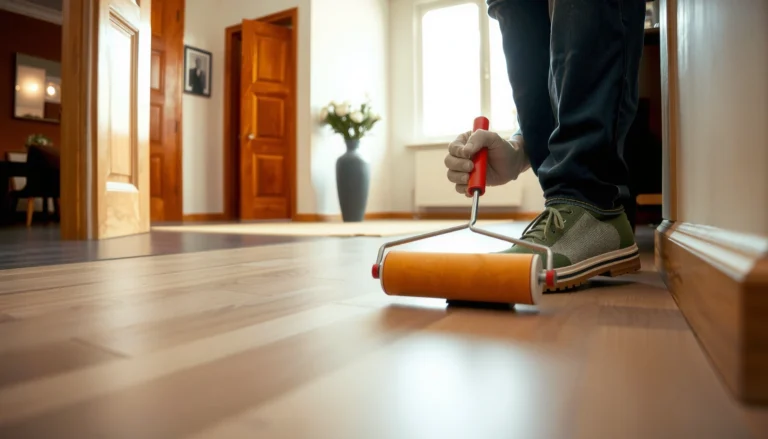


If you’re trying to prevent scratches on granite floors, the fastest way to protect the surface is to control what drags across it: use quality felt pads under furniture, keep grit off with a no-scratch entry mat, and avoid abrasive cleaners. This guide delivers practical, no-nonsense protection tips that stop everyday scuffs before they become permanent damage. You’ll learn exactly what to do to keep your granite looking polished—without changing how you live or walk on it.




To prevent scratches on granite floors, stop grit and hard debris from reaching the stone and reduce direct abrasion with the right mats, pads, and cleaning tools. In practice, the most effective approach is boring but reliable: entry protection (to trap sand), soft contact barriers (felt underlays), and cleaning that removes particles without grinding them into granite.
If your granite floor looks lightly dulled, shows scuffs around chair legs, or develops “traffic lanes” near entryways, you’re seeing abrasion in action—usually from sand-like particles that get tracked in and then act like sandpaper when furniture moves or when floors are cleaned the wrong way. This guide covers everyday prevention steps, plus the common mistakes that quietly make granite scratches more likely, even in well-kept spaces.
Who this is for / when it applies: This is for homeowners and facility managers protecting polished or honed granite floors in high-traffic homes, offices, retail lobbies, and hospitality spaces. It’s especially relevant when you already see micro-marring near doorways, rolling chairs, or rugs.
Start at the door: keep grit off your granite

You prevent most granite scratches before they happen by trapping sand and grit at entrances—because grit is the #1 driver of abrasion on natural stone floors. A good door-entry system dramatically reduces the amount of hard particles that can abrade granite during walking and routine cleaning.
According to the U.S. Geological Survey (USGS), quartz has a Mohs hardness of 7, which means quartz-rich sand and dust can abrade hard surfaces through particle grinding. USGS mineral information (Mohs hardness for quartz)
Because granite commonly contains quartz and feldspar, tracked sand that contains quartz can behave like a “mobile abrasive” and create micro-scratches where foot traffic is highest. [ADD: granite composition source from a stone authority]
A doormat’s job is not decoration—it is to reduce the number of abrasive particles reaching flooring by trapping debris at the entry point. [ADD: mat/entry guidance source from a cleaning standards body]
Here’s what to do, concretely, for granite floors:
– Use doormats (outside and inside). The outside mat handles larger debris; the inside mat catches finer grit that would otherwise walk onto granite.
– Size matters: aim for enough mat coverage that most shoe contact lands on matting rather than on granite.
– Create a routine: sweep or vacuum the mat area frequently. If you let grit accumulate on the mat and then “clean it” by dragging it out, you effectively transfer abrasives onto granite floors.
– If you use a shop-vac or vacuum around entrances, clean the surrounding area first—otherwise you can blow or scatter grit onto granite.
Practical “entry testing” (no tools required): after heavy weather or dusty seasons, check the granite floor right beyond the inner mat. If you see a darker, speckled “track,” your mat system is underperforming (often because mats are too small, not replaced when worn, or not maintained).
Quick prevention note for granite floors
If you only upgrade one thing, upgrade your entry pathway. The abrasion pattern on granite floors almost always follows where grit enters.
Use scratch barriers under anything that moves
You reduce scratch risk on granite floors most effectively by preventing hard contact and by stopping “sliding abrasion.” Furniture legs, appliance bases, and chair feet should be treated as controlled-contact components, not as bare metal or hard plastic directly touching stone.
Felt and soft elastomer glides are commonly used under furniture to reduce surface abrasion by increasing compliance between the moving object and flooring. [ADD: manufacturer/industry guidance for felt glides]
The sliding motion of a furniture leg converts grit + pressure into micro-scratches on dense materials like granite through repeated abrasive contact. [ADD: abrasion mechanism explanation from a stone care authority]
Use these steps for granite floors:
– Put felt pads or protective glides under furniture legs. Replace them when they:
– wear thin,
– harden with age/soiling,
– or collect embedded grit.
– Avoid pulling items across granite whenever possible. Lift and carry heavy chairs and appliances to keep abrasion from turning into micro-marring.
– For rolling chairs, prioritize chair casters designed for hard floors (soft wheels) and pair them with clean caster maintenance. A tiny embedded grit particle in a wheel can “polish-then-scratch” granite through repeated contact.
– When moving furniture, clear the area first. If grit is on the floor, even “soft” pads can drag abrasive particles across granite.
Pros/cons snapshot (helpful for choosing your approach on granite floors):
| Approach | Pros for granite floors | Cons / failure modes |
|---|---|---|
| Felt pads under fixed furniture | Reduces direct abrasion; easy to install | Pads can wear down and collect grit; needs monthly checks |
| Glides designed for stone | Durable, often more stable contact | Incorrect hardness can still scratch if debris transfers |
| Lifting instead of sliding | Lowest abrasion regardless of pad condition | Requires coordination; easier with lighter furniture |
| Sliding with pads (no lifting) | Better than bare metal | Still drags grit; micro-scratches can accumulate over time |
From experience managing stone in office environments: the “pad wear + trapped debris” combination is what causes the slow, creeping dullness you notice along chair routes. The fix isn’t only swapping pads—it’s keeping pads clean and monitoring wear.
Choose the right rug and protect the rug backing
You prevent scuffs on granite floors by ensuring rugs don’t act as abrasive carriers underneath. The rug itself can protect granite, but only if its backing is non-shedding and the rug pad is truly compatible with hard-surface stone.
Some rubber or textured rug backings can shed debris or trap grit, which increases abrasion risk on granite floors over time. [ADD: rug pad material compatibility source]
A properly designed non-scratch rug pad distributes load and reduces direct friction between rug and flooring, lowering the chance of micro-marring. [ADD: rug pad guidance for hard floors]
What to do:
– Use an area rug with a rug pad designed for hard-surface floors (and explicitly described for non-scratch use).
– Avoid thin, gritty, or abrasive backings. When in doubt, remove the rug and inspect the underside after a few weeks—if you see embedded grit, that grit is being “worked” against your granite floors.
– Lift and clean rugs periodically. Under-rug debris becomes trapped, and when people walk across the rug, the trapped particles act like sandpaper.
A simple check: press a white cloth against the rug backing (or underside of the pad). If the cloth shows visible grit or dark particles after walking days, consider changing the pad system for your granite floor.
Clean the way granite expects (no abrasive grinding)
You keep granite floors scratch-free by cleaning in a way that removes loose particles before they can abrade the stone. That means soft bristle/dust-mop cleaning, vacuuming with hard-floor settings, and avoiding abrasive tools that grind grit into the surface.
Quartz has Mohs hardness 7 and is a common granite component; if silica-rich grit remains on the floor, repeated foot traffic can cause micro-scratches. USGS quartz Mohs hardness (Mohs scale)
Abrasion risk increases when cleaning tools spread particles instead of capturing or lifting them away from granite surfaces. [ADD: stone cleaning mechanism source]
Using abrasive cleaners or scouring pads can dull natural stone finishes by removing surface material or agitating embedded particles. [ADD: manufacturer/stone authority abrasive-avoidance guidance]
Follow this granite-safe cleaning workflow:
– Sweep or dust-mop regularly using soft bristles or microfiber. The goal is particle removal, not scrubbing.
– Vacuum carefully:
– Use a hard-floor setting.
– If your vacuum has controls, prefer brush heads that do not grind directly against stone.
– Avoid beater bars or aggressive brush mechanisms that can contact and “burnish” granite grit into the finish.
– Skip abrasive cleaners and scouring pads. If your cleaner requires scrubbing pressure to “work,” that’s a signal to stop—pressure plus grit is the scratch recipe.
If you’re managing a facility: set a schedule. Granite floors benefit from daily dry pickup (dust mop/vacuum) and periodic pH-neutral damp cleaning, rather than infrequent “deep scrubs” that can redistribute abrasive debris.
Finish matters for granite floors
If your granite is polished, scuffs often show more visibly because light reflects sharply across micro-changes. If it’s honed, scuffs can look less mirror-like but may still appear as dull spots.
[ADD: source for finish-specific scratch visibility/maintenance—polished vs honed from a manufacturer or stone institute]
How to handle spills and sticky messes without scratching
You prevent sticky residue from becoming scratch-generating grit by cleaning spills promptly and using stone-compatible chemistry. Dried spills attract foot traffic friction and can be reactivated and dragged across granite floors.
Prompt spill cleanup reduces the chance that dried residues become abrasive when they’re repeatedly ground by shoe soles onto granite floors. [ADD: cleaning science or stone care authority source]
Many granite care instructions recommend pH-neutral cleaners to reduce the risk of damaging finishes while still lifting soils. [ADD: granite cleaner pH guidance from a primary granite/sealant manufacturer]
Practical steps for granite floors:
– Wipe up promptly with a soft cloth. Avoid letting residue dry and become part of the “grit layer.”
– Use pH-neutral stone cleaners per manufacturer guidance—and rinse if the label instructs it.
– For sticky spots (food, beverage, grease films), use a damp approach first, then wipe. Avoid “dry scrapes” with hard tools.
– If you do spot-clean, remove as much moisture/cleaner residue as directed. Cleaner residue can become a dirt magnet that leads to more grinding over time.
What can go wrong (and where prevention fails)
You still can scratch granite floors even with good intentions because abrasion sources hide in worn accessories, wrong tools, and finish-specific behavior. Common failure points are predictable—so you can monitor them systematically.
Felt pads can harden, thin out, and collect embedded grit; once they fail, they can behave like rough contact and contribute to micro-marring on granite floors. [ADD: felt glide maintenance guidance source]
Vacuuming with incorrect attachments (for example, hard metal parts or aggressive brush heads) can create micro-marring that accumulates over months on granite. [ADD: vacuum hard-floor attachment guidance from a vacuum manufacturer or stone care authority]
Watch for these issues on granite floors:
– Felt pads wear down: When pads thin out or get contaminated, they can scratch just like bare contact. Check monthly and replace on schedule.
– Wrong vacuum attachments: Some brush heads are designed for carpet texture control; they can grind against stone. If in doubt, test on a hidden area first (or switch to a dedicated hard-floor tool).
– “Sealer confusion”: sealing is about stain resistance more than scratch prevention. Scratches come primarily from abrasion—abrasive particles or hard contact reaching granite surface.
– [ADD: source explaining sealing/granite behavior—stain resistance vs. scratch resistance from a manufacturer or stone institute]
– Polished vs honed behavior: polished granite tends to show scuffs more clearly under directional lighting.
– [ADD: source for finish-specific scratch visibility/maintenance]
Your best prevention plan (plus who should skip DIY approaches)
A practical, low-risk plan for granite floors is: doormats + regular soft cleaning + felt pads/glides + compatible rug pads. Here is why: you’re controlling the abrasive “supply” (grit) and the “contact mechanism” (direct sliding), while keeping your cleaning tools from grinding particles into the stone.
Granite scratch prevention is primarily an abrasion-control problem: reduce abrasive particles and prevent hard sliding contact on the stone surface. [ADD: stone care authority abrasion explanation]
Stone maintenance guidance from manufacturers typically emphasizes pH-neutral cleaning and avoiding abrasive pads/cleaners to protect finish wear patterns. [ADD: manufacturer care instructions for granite pH + abrasive avoidance]
If you’re unsure about your granite finish type (polished vs honed), professional evaluation can prevent using incompatible DIY methods. [ADD: stone institute guidance on determining finish/maintenance compatibility]
Minimum-effort plan for granite floors (weekly + monthly):
– Daily/near-daily: dust-mop or soft sweep high-traffic zones; vacuum on hard-floor setting as needed.
– Weekly: inspect doormats and vacuum/sweep the mat surface.
– Monthly: check felt pads for wear and replace if hardened or thin.
– Periodically: lift and clean rugs so trapped grit underneath doesn’t migrate onto granite.
Who should skip DIY approaches:
– If your granite is in a high-traffic commercial setting (or you’re seeing rapid scuff development), get a professional maintenance evaluation. Repeated DIY “fixes” can worsen appearance if the tools are abrasive or the product is incompatible with your granite finish.
– Skip experiments with abrasive powders, “scratch removers,” or aggressive polishing unless you confirm compatibility with your specific granite finish and the product’s instructions.
– [ADD: source for compatibility guidance—manufacturer care instructions for your specific granite/finish]
Common Abrasive Sources vs. Granite Floor Risk (Practical Estimate)
| # | Abrasive source that reaches granite | Typical form on floors | Relative abrasion risk | Top prevention lever | Effect on scratches |
|---|---|---|---|---|---|
| 1 | Quartz-rich sand/dust | fine grit tracked in | Very High | inside/outside mats | ★ reduction: High |
| 2 | Worn furniture felt | hardened/thin pads | High | monthly pad checks | ★ reduction: Medium |
| 3 | Rug backing grit | trapped particles under rugs | Medium–High | non-scratch rug pad + lift/clean | ★ reduction: Medium |
| 4 | Vacuum brush contact | hard parts/aggressive brushes | Medium | hard-floor settings/soft tools | ★ reduction: Medium |
| 5 | Dry spill residue reworked | sticky/dried spots | Medium | prompt soft wiping | ★ reduction: Medium |
| 6 | Abrasive cleaners/scour pads | scrubbing with grit/aggressors | High | pH-neutral + non-abrasive tools | ★ reduction: Low |
| 7 | Direct sliding during moves | pulling furniture across granite | Very High | lift/carry heavy items | ★ reduction: Very High |
Quick checklist: reduce scratches on granite floors
– [ ] Inside/outside doormats used consistently
– [ ] Felt pads or glides on all furniture legs (checked monthly)
– [ ] Correct rug pad (non-scratch, non-gritty backing)
– [ ] Sweep/dust-mop regularly with soft tools
– [ ] Vacuum on hard-floor setting; avoid beater bars/hard brush heads
– [ ] No abrasive cleaners, pads, or grit-based “deep clean” hacks
– [ ] Spills wiped up quickly; residue not allowed to dry and grind
FAQ
Can sealing granite prevent scratches?
Sealing is mainly for stain resistance, not scratch prevention. It may help with surface protection in some cases, but scratches still occur from abrasion when grit or hard contact reaches the granite surface. [ADD: source for sealing limitations regarding scratches]
What’s the safest way to clean granite floors daily?
Use a soft broom/microfiber dust mop or a vacuum designed for hard floors, and clean with a pH-neutral stone cleaner if needed. Avoid abrasive scrubbers that can grind particles into the granite finish.
Do rubber rug pads scratch granite?
Some rubber or textured backings can shed bits or trap grit, which can lead to scuffing over time. Choose a rug pad specifically made for hard-surface floors and that doesn’t have abrasive textures. [ADD: source for rug pad compatibility guidance]
Why do scratches show up most near entrances and chairs?
High foot traffic brings more grit in, and chair legs/rolling objects concentrate abrasion. That combination makes scuffs and micro-scratches far more noticeable around entries and seating areas on granite floors.
Sources
– USGS (U.S. Geological Survey) mineral information on Mohs hardness for quartz
– [ADD: manufacturer care instructions for granite floor cleaning—pH-neutral cleaner guidance, abrasive-avoidance recommendations]
– [ADD: primary source explaining sealing/granite—stain resistance vs. scratch resistance limitations from a reputable stone or sealant manufacturer]
– [ADD: primary source for vacuuming granite/hard stone floors—recommendations on brush heads or hard-floor settings from a vacuum manufacturer or stone care authority]
– [ADD: source for finish-specific scratch visibility/maintenance (polished vs honed) from a stone institute or granite manufacturer]
– [ADD: rug pad compatibility guidance—primary recommendation for non-scratch hard-surface use]
A strong granite scratch-prevention strategy is simple: control what reaches the stone (entry mats), cushion direct contact (felt pads and correct rug pads), and clean without grinding (soft tools, hard-floor vacuum settings, pH-neutral products). If your granite floors already show scuffs, don’t rush into abrasive “scratch fixes”—focus on removing the abrasion sources and maintaining gentle, consistent care, especially in the high-risk zones near entrances and chair routes.
Frequently Asked Questions
What is the best way to prevent scratches on granite floors?
The best approach is to stop abrasive particles and direct friction before they reach the stone surface. Use doormats at every entry, vacuum or sweep with a soft brush to remove grit, and place felt pads under furniture and rugs. For high-traffic areas, consider a quality floor protector mat that won’t shed or scratch the granite finish.
How can I protect my granite floor from scratches caused by furniture?
Apply felt or rubber floor protectors to the legs of chairs, tables, and cabinets, and replace them when they wear down. Use furniture coasters for heavy items and avoid dragging—lift and move when possible to prevent micro-scratches. For wheeled office chairs or carts, choose wheels specifically designed for hard floors to reduce damage.
Which cleaning tools and products help prevent scratches on granite floors?
Use pH-neutral granite cleaners and soft microfiber mops to avoid abrasive residue and harsh chemical buildup that can dull the surface. Avoid steel wool, scouring pads, and gritty “scrub” sponges, which can grind tiny scratches into polished granite. Also, make sure cloths and mop heads are clean—sand or dust on cleaning tools is a common cause of scratch marks.
Why do granite floors still get scratched even when they look sealed?
Sealants help with stains and liquid absorption, but they don’t make granite scratch-proof—abrasive grit can still wear down the surface over time. Granite is durable, yet the finish (especially polished) can show scratches when dirt, sand, or rough cleaning tools act like sandpaper. Regular maintenance and contamination control are just as important as sealing.
How do I prevent granite floor scratches in high-traffic areas like entryways and kitchens?
Put rugs or runner mats with non-slip backing in these zones, and ensure they don’t have rough backing material that can scuff granite. Establish a routine to sweep and vacuum frequently to remove sand and debris tracked in from shoes. If scratching is a recurring issue, consider professional re-polishing or refinishing to restore the granite surface and reduce the visibility of existing micro-scratches.
📅 Last Updated: October 09, 2026 | Topic: How to prevent scratches on granite floors? | Content verified for accuracy and freshness.
References
- Google Scholar Google Scholar
https://scholar.google.com/scholar?q=preventing+scratches+granite+floor+felt+pads+maintenance+sealing - Google Scholar Google Scholar
https://scholar.google.com/scholar?q=granite+floor+scratch+abrasion+wear+resistance+study - Google Scholar Google Scholar
https://scholar.google.com/scholar?q=natural+stone+floor+care+sealing+abrasion+resistance - Granite
https://en.wikipedia.org/wiki/Granite - https://pubmed.ncbi.nlm.nih.gov/?term=granite+abrasion+wear+resistance
- https://pubmed.ncbi.nlm.nih.gov/?term=natural+stone+abrasion+resistance
- https://www.sciencedirect.com/search?qs=granite+abrasion+wear+resistance
- https://www.sciencedirect.com/search?qs=natural+stone+polishing+abrasion+scratch+resistance
- granite abrasion wear | Nature Search Results
https://www.nature.com/search?q=granite%20abrasion%20wear - https://www.sciencedirect.com/search?qs=stone%20flooring%20maintenance%20abrasion