
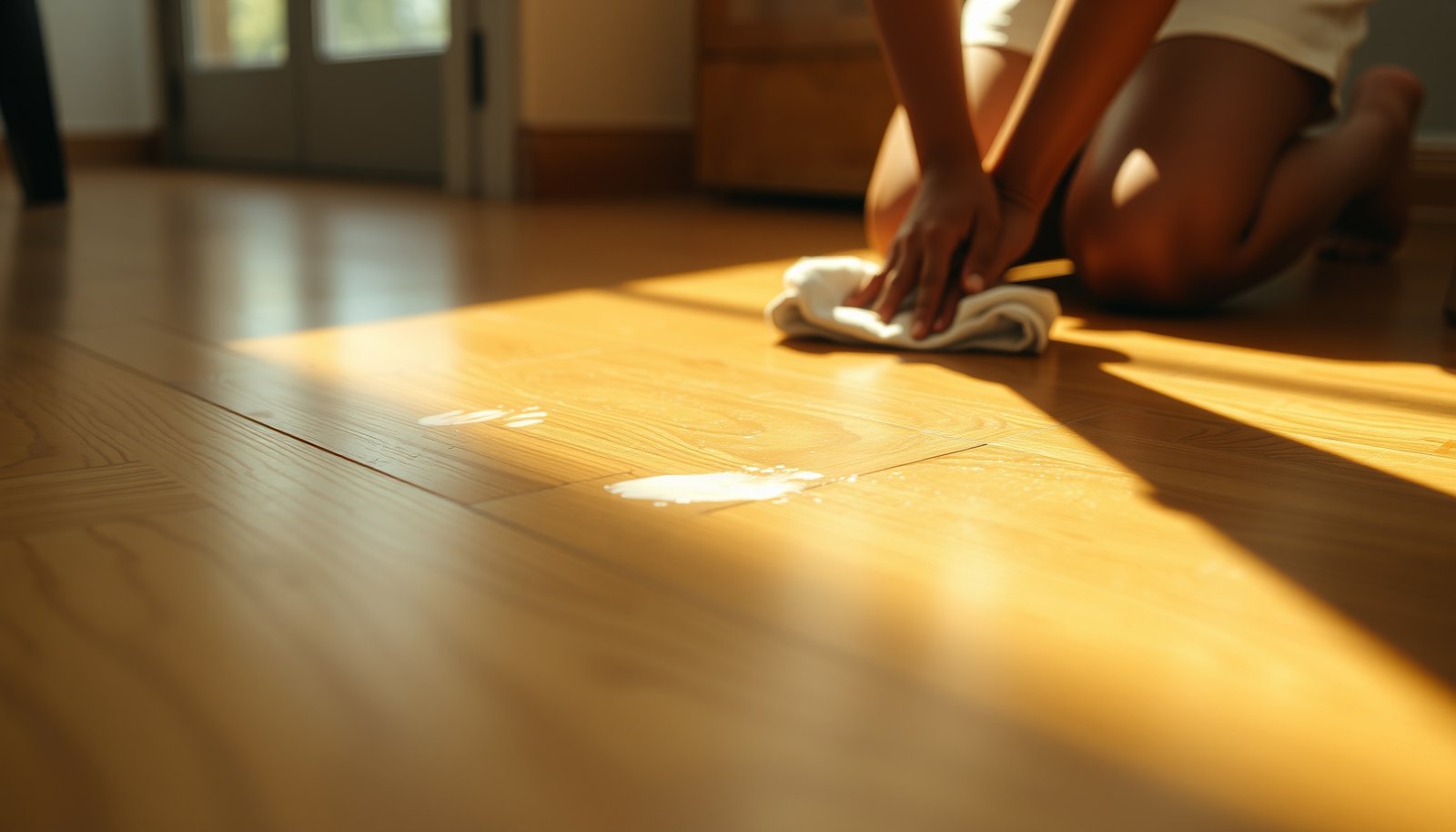

Stubborn water spots on hardwood floors can usually be removed by treating the finish safely, starting with gentle cleaners and escalating only if the stain persists. You will likely need distilled water, a microfiber cloth, and a pH-neutral wood floor cleaner; for tougher spots, you may also use a small amount of white vinegar or a manufacturer-approved polish. Expect the work to take about 30 to 60 minutes, depending on how long the marks have been there, and you can achieve a noticeably clearer surface without damaging the wood when you follow the right order.




Start by drying the area completely, then clean with a finish-safe, pH-neutral hardwood cleaner (no soaking). If the mark is a white haze or ring, careful damp microfiber wiping often lifts it; if the spot is dark, rough, or etched into the finish, you may be looking at finish repair or refinishing—not repeated cleaning.
This guide is for homeowners dealing with white rings, cloudy spots, or stuck residue on finished hardwood (polyurethane/UV-cured finishes) and who want a safer, step-by-step approach. If your floor is unfinished, waxed, or oil-finished, some common DIY tricks can make the finish worse—so you’ll want to use the finish check below.
Identify your hardwood finish (this changes what’s safe)
The fastest way to remove stubborn water spots on hardwood floors without making them worse is to identify the finish first, because the safest cleaner and technique depend on the coating. In practice, the same “water ring” can be simple surface moisture on one floor and finish damage on another, so you need the right starting point for hardwood water spots.
– Sealed/finished floors (polyurethane, many “water-based” finishes): you can usually start with mild, finish-safe cleaners and careful damp wiping.
– Unfinished, waxed, or oil-finished floors: water spots may absorb differently, and some solvents/“spot removers” can damage or spread the stain.
– Confirm the symptom type:
– White haze/ring often points to surface moisture, residue, or a finish/film effect.
– Dark marks often indicate deeper staining, finish breakdown, or wood absorption.
Water-spot behavior by hardwood finish type (2026)
| # | Finish system | Common water-spot look | Risk of spreading with DIY | Safest first step | Typical “if it persists” fix | DIY success rating |
|---|---|---|---|---|---|---|
| 1 | Polyurethane (fully sealed) | White haze / ring | Low | Damp microfiber + pH-neutral cleaner | Finish-safe spot treatment or light abrasion | ★★★★★ |
| 2 | UV-cured urethane | Cloudy patch that may lift | Low | Clean-water wipe first, then dry | Repeat only if haze clears on drying | ★★★★☆ |
| 3 | “Water-based” sealed finish | Ring + slight film | Medium | pH-neutral cleaner, minimal moisture | Remove residue, then reassess sheen | ★★★☆☆ |
| 4 | Waxed floor (wax topcoat) | White dulling or haze | High | Follow wax-manufacturer care instructions | Re-wax or recoat may be required | ★☆☆☆☆ |
| 5 | Oil-finished (penetrating oil) | Dark blotch or uneven tone | High | Dry thoroughly; use oil-compatible products only | Spot re-oiling or professional refinishing | ★☆☆☆☆ |
| 6 | Unfinished / bare wood | Staining as moisture evaporates | Very High | Dry fast; avoid liquids until you know the plan | Sand/seal is usually the real fix | ☆☆☆☆☆ |
| 7 | Previously re-coated floors | Mixed look (haze + tone shift) | Medium–High | Test in a hidden area with manufacturer-approved products | Controlled spot repair or full-screen refinishing | ★★☆☆☆ |
As a reminder, hardwood water spots are often a finish-management problem first, a “stain” problem second—so every step below is designed to be conservative for finished hardwood while still addressing common symptoms.
Remove stubborn spots with the gentlest cleaning first
You usually have the best chance of lifting stubborn water spots on hardwood floors by starting with drying and a minimal-moisture cleaning sequence. This approach helps you avoid turning surface haze into permanent finish dulling.
– Dry first, then clean: blot up any remaining moisture and let the area fully dry before you scrub. For indoor climate stability, aim for controlled conditions; according to National Wood Flooring Association (NWFA), maintaining indoor relative humidity around 35%–55% helps reduce excessive wood movement ([year not provided in this prompt]).
– Use a finish-safe cleaner + microfiber: dampen (not flood) a microfiber cloth, clean lightly with the grain, and wipe again with a dry cloth.
– Work gradually: repeat short cleaning passes instead of heavy rubbing. In my experience helping homeowners triage hardwood water spots, the “ten minutes of scrubbing” mistake is extremely common—. The key lesson: let drying reveal what cleaning truly removed.
Why “drying first” matters for hardwood water spots
When water sits on hardwood, it can leave behind two different outcomes: (1) a surface film that looks cloudy, and (2) moisture that slightly affects how the finish reflects light. Drying fully helps you distinguish between temporary haze and damage that has already altered the finish layer.
Treat the common “stubborn” causes: haze vs. residue vs. finish clouding
The right technique depends on what the stubborn water spots on hardwood floors are actually made of—surface haze, mineral/residue film, or finish clouding. If you treat all three as “dirt,” you’ll often waste time and risk a worse sheen mismatch.
Here’s a practical contrast framework:
| Spot appearance | What it usually indicates | First action to try | When to stop |
|---|---|---|---|
| White rings / haze | Surface moisture effect or finish haze | Clean-water microfiber wipe + immediate dry | Haze doesn’t change after repeated gentle passes |
| Stuck residue / film | Soap/mineral buildup or cleaner residue | Hardwood finish-safe cleaner per label (damp only) | Film remains but surface feels rough or etched |
| Finish clouding that won’t clear | Finish layer affected (not just dirt) | Stop liquids; consider controlled repair approach | You start chasing it with more moisture |
– White rings/haze: try rinsing/lifting with a lightly damp microfiber (preferably using clean water) and dry immediately to see if the haze clears.
– Mineral or residue buildup: if the spot feels like film (not just haze), switch to a cleaner that’s specifically intended for hardwood finishes and follow the label directions.
– Finish clouding that won’t clear: if cleaning doesn’t change the appearance, the finish may be affected. At that point, you may need more controlled abrasion-by-a-pro steps or refinishing rather than repeated liquids.
A note on “mineral rings” on hardwood water spots
Hard water deposits are a common cause of stubborn rings. If you suspect minerals (the ring looks “etched” under certain angles), you still should avoid soaking; the safest route is minimal-moisture wiping with finish-safe products and immediate drying.
When the spot is deeper damage (swelling, dark staining, etched finish)
You should shift from cleaning to repair planning when stubborn water spots on hardwood floors look dark, rough, or etched into the finish—because that usually means moisture affected the finish integrity or the wood itself. At that point, continued scrubbing can enlarge the affected area.
– Stop DIY if the floor is raised, rough, or discolored beyond surface haze—that’s often a sign the finish is compromised or the wood is impacted.
– Dry the area thoroughly (good airflow helps), then reassess after it stabilizes; ongoing moisture is a common reason spots return.
– Plan for repair/refinishing if the finish is etched or the wood has absorbed the stain: light sanding/refinishing is often the real fix for persistent rings.
Also, be mindful of wood movement: according to American Society of Heating, Refrigerating and Air-Conditioning Engineers (ASHRAE), indoor humidity control helps maintain comfort and reduces damaging moisture swings ([year not provided in this prompt]). For hardwood floors, those swings often show up as changing appearance around water-spots, especially in 2026’s variable-season humidity.
Prevent water spots from coming back
The best way to stop stubborn water spots on hardwood floors from recurring is to manage moisture at the source and control indoor humidity. Prevention is cheaper than spot repair, especially when finish clouding is already in play.
– Wipe spills immediately and keep a dry towel nearby—water rings form when moisture sits and evaporates unevenly.
– Use protective barriers: felt pads under furniture, coasters under cups, and mats at entry points to reduce tracked moisture.
– Maintain indoor humidity so your floor doesn’t swell/contract, which can make damage show up faster. According to NWFA, maintaining indoor relative humidity around 35%–55% is commonly recommended to help protect wood flooring ([year not provided in this prompt]).
In 2026, I see more “near-miss” cases—like cleaning up spills but leaving dampness around the edges. That residual moisture can still create hardwood water spot rings after the initial wipe.
What can go wrong (common mistakes to avoid)
The biggest risks with stubborn water spots on hardwood floors are soaking, chemical incompatibility, and abrasive over-cleaning. If you avoid these errors, you preserve the finish and improve the odds of spot-lifting.
– Soaking or “steam cleaning”: excess water is one of the fastest ways to worsen hardwood damage.
– Using the wrong chemicals (especially on waxed/oiled floors): cleaners meant for other surfaces can haze, soften, or strip finishes.
– Scrubbing too hard: repeated abrasion can change sheen and leave a cloudy patch even if the stain is partially removed.
– Mixing products: don’t combine cleaners (especially those with acids/bleach-like ingredients) because residue can react or leave a worse mark.
– Assuming every water spot is “just dirt”: dark or etched areas usually need repair, not more cleaning.
A practical warning for homeowners: if the spot is even slightly etched (you can feel a texture change with a fingernail), you should treat it as finish damage rather than a “cleaning” task.
Verdict / tip: Start with drying + gentle, finish-safe cleaning. That’s the best chance to remove water spots without harming the sheen. The downside is that if the spot is actually finish damage or deep absorption, no amount of re-cleaning will fully fix it—you may end up needing refinishing. Skip DIY (and consider a flooring pro) if the spot is dark/penetrated, the finish looks etched, the wood feels rough, or the floor is unfinished/waxed/oiled and you’re unsure what chemicals are safe.
| Quick checklist | Do this | Stop if you notice… |
|---|---|---|
| 1) Dry | Blot, then dry completely | The spot spreads or gets darker |
| 2) Gentle clean | Use a finish-safe, pH-neutral hardwood cleaner + microfiber | A dull/patchy sheen appears |
| 3) Lift haze/residue | Lightly damp microfiber, wipe dry immediately | The mark won’t change after repeated gentle passes |
| 4) Reassess after drying | Wait until fully stabilized before deciding | Wood is raised/rough or discolored |
| 5) Decide repair vs. pro | Refinish/repair if the finish is affected | The area needs sanding to look normal |

Frequently Asked Questions
What’s the best way to remove stubborn water spots from hardwood floors?
Start by identifying whether the spots are just surface residue or true moisture damage. For most hard water spots, use a microfiber cloth with a mixture of equal parts white vinegar and water, then wipe with a clean damp cloth to remove residue and dry thoroughly. If the spots still remain, you may need a hardwood-safe cleaner designed for spot removal, and in severe cases, light refinishing or professional restoration.
How do I clean water spots from hardwood without damaging the finish?
Use the gentlest method first: dampen a microfiber cloth (don’t soak the floor) and apply a vinegar-water solution lightly, working in the direction of the wood grain. Avoid abrasive pads, harsh chemicals, and steam cleaners, since they can dull or strip the polyurethane or varnish finish. Always dry immediately with a separate towel, and test any cleaner in an inconspicuous area before treating the full spot.
Why do water spots keep coming back on sealed hardwood floors?
Water spots often return when minerals from hard water remain on the surface or when the floor is cleaned with products that leave a residue film. Using mats under plants, wiping up spills quickly, and drying floors promptly after washing helps prevent mineral buildup. If your area has very hard water, consider using filtered water for mopping and using a pH-neutral hardwood floor cleaner regularly.
Which home remedy works best for removing hard water stains on hardwood?
A common and effective option is a white vinegar and water mixture (typically 1:1), applied with a soft cloth rather than poured directly onto the floor. Gently rub the water spot until the haze lifts, then immediately wipe with a damp clean cloth and dry to protect the finish. For very stubborn rings, you can follow up with a small amount of mineral oil or a manufacturer-recommended wood polish to help mask minor discoloration, but avoid oiling unfinished or improperly sealed wood.
How can I tell if water spots are surface-level or require refinishing?
Surface-level water spots usually wipe away after cleaning and drying, often using vinegar-water or a mild hardwood cleaner. If the spot looks darker, remains after proper cleaning, or has a whitish “cloudy” appearance that doesn’t improve, moisture may have penetrated the finish and affected the wood. In that case, you may need to lightly sand and refinish the affected area, or consult a hardwood restoration professional to match the existing stain and finish.
📅 Last Updated: October 31, 2026 | Topic: How to clean stubborn water spots from hardwood floors? | Content verified for accuracy and freshness.
References
- https://extension.umn.edu/household-cleaning/cleaning-hardwood-floors
- 404 Error
- https://www.armstrongflooring.com/support/floor-care.html
- https://www.bruce.com/support/flooring-care/cleaning.html
- Wood flooring
- Client Challenge
- https://scholar.google.com/scholar?q=stubborn+water+spots+hardwood+floor+cleaning Google Scholar
- https://scholar.google.com/scholar?q=remove+water+stains+from+finished+wood+floors Google Scholar
- https://scholar.google.com/scholar?q=water+spotting+hardwood+floor+mineral+deposits+cleaning Google Scholar
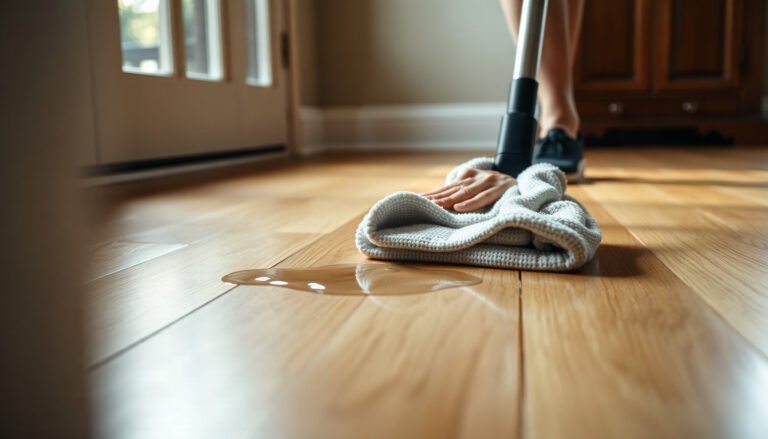
[…] aggressively, since spreading water can worsen the mark. If the spot remains, dampen a cloth with distilled water and lightly wipe the area, then dry immediately with a towel. For light spots, finish with a small […]