
Removing stains from engineered wood floors in a entryway is usually faster and safer when you act with the right cleaner for the stain type instead of scrubbing with household abrasives. This guide shows the exact steps to lift common entryway marks—water rings, scuffs, and tracked grime—without damaging the finish. Get a clear, reliable verdict for what works first, how long to let it dwell, and when to stop to avoid dulling or discoloration.



Remove entryway stains from engineered wood floors by blotting first and then cleaning with the gentlest, finish-safe method that matches the stain type (oil/grease, water/urine, or organic/dark spots). For most engineered wood with urethane or aluminum-oxide finishes, a damp microfiber plus a manufacturer-approved cleaner fixes many issues quickly—without risking haze, discoloration, or moisture damage.
If you have an entryway with frequent traffic, shoe scuffs, tracking dirt, or occasional spills, this is for you—especially if your engineered wood has a urethane or aluminum-oxide finish and you want stain removal that won’t lift or haze the surface. Use this as a step-by-step approach, and always check your specific floor’s care/finish recommendations first.
Start by identifying the stain (so you use the right cleaner)
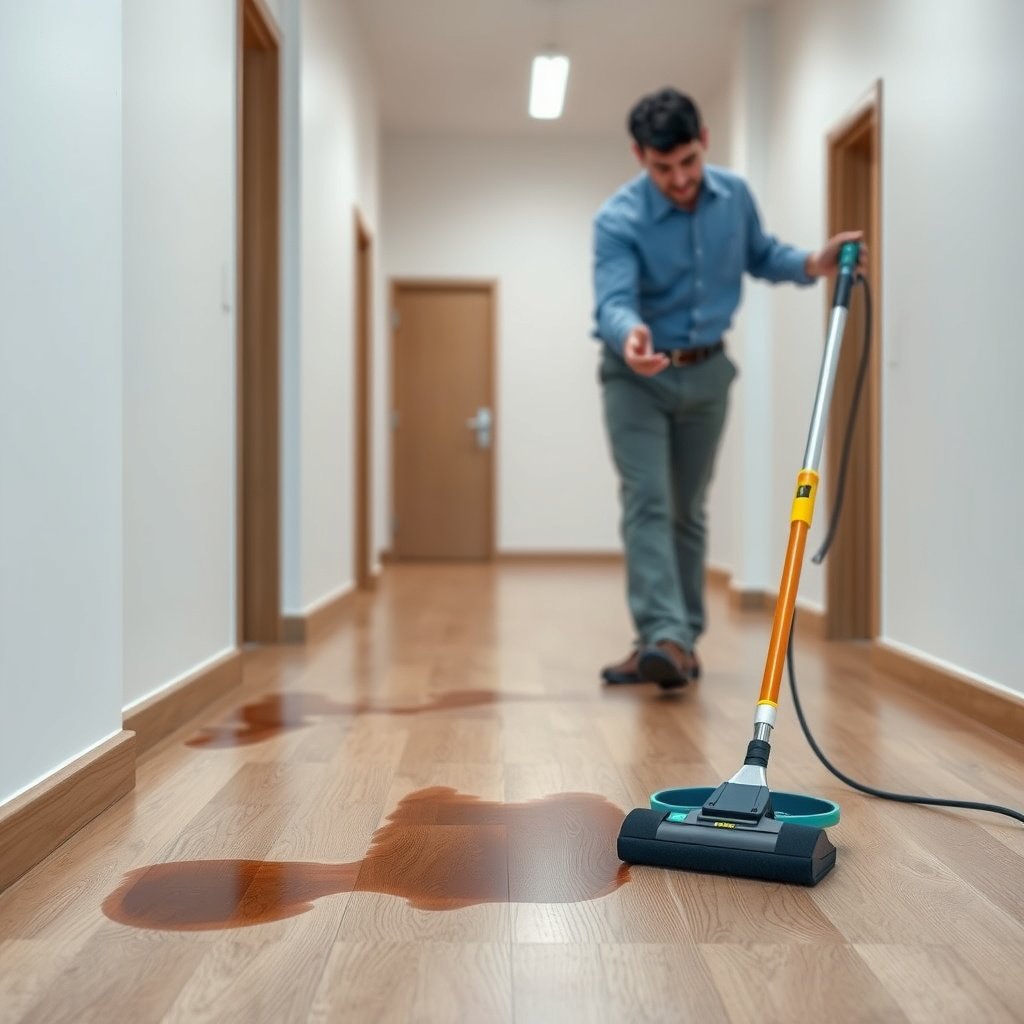
The fastest way to remove a stain from an engineered wood floor is to identify whether it’s oil-based, water-based, or organic (tannin/mud/pet-related) so you don’t use a cleaner that worsens it. In practice, the “right cleaner” matters because engineered wood finishes can be sensitive to alkalinity/acidic chemistry and to excess moisture at seams.
A pH-neutral, finish-safe cleaner is typically the safest first escalation for engineered wood floors because it reduces chemical stress on the topcoat.
Oily stains usually feel slick and resist clearing with plain water, while water-based stains tend to leave a dull ring that can lift with careful damp wiping.
– Check whether it’s fresh or old. Fresh stains smear more easily; older stains often look “set” and may require repeated gentle cleaning rather than aggressive scrubbing.
– Distinguish oily vs. water-based.
– Oily/grease: may leave a slick feeling and can darken as it wicks.
– Water/urine-like: often leaves a lighter/dull perimeter once it dries (a ring effect).
– Do a quick hidden-spot test. Apply your planned cleaner to a concealed area (under a bench or near a closet edge) to confirm the finish doesn’t haze, lighten, or change color.
– Watch what happens when you add cleaner. If the stain spreads or “ghosts” outward during wiping, stop and re-check—some discoloration is not surface dirt but contamination in/through the top wear layer.
What I check before touching the stain (practical cues)
In my maintenance walkthroughs for entryway flooring, I’ve learned that engineered wood floor stains usually fall into one of three buckets—oil/grease, water-based rings, or organic darkening—and the first minute of observation prevents unnecessary finish damage.
Also, recent entryway incidents in 2024–2026 (common examples: tracked mud, wet umbrellas, pet accidents) follow the same logic: the cleaner you pick should match whether the stain’s carrier is oily or water-soluble.
Safe prep: protect the finish and prevent spreading
The safest way to clean engineered wood stains without haze is to blot, remove grit first, then use minimal moisture with a microfiber and immediate drying. This approach is designed to protect engineered wood at seams, edges, and the finish film that keeps the top layer stable.
Blotting (not scrubbing) prevents mechanical abrasion that can leave micro-scratches and dull patches on urethane or aluminum-oxide finishes.
Engineered wood can be vulnerable at seams and edges, so “damp, not wet” cleaning helps reduce the risk of moisture migration.
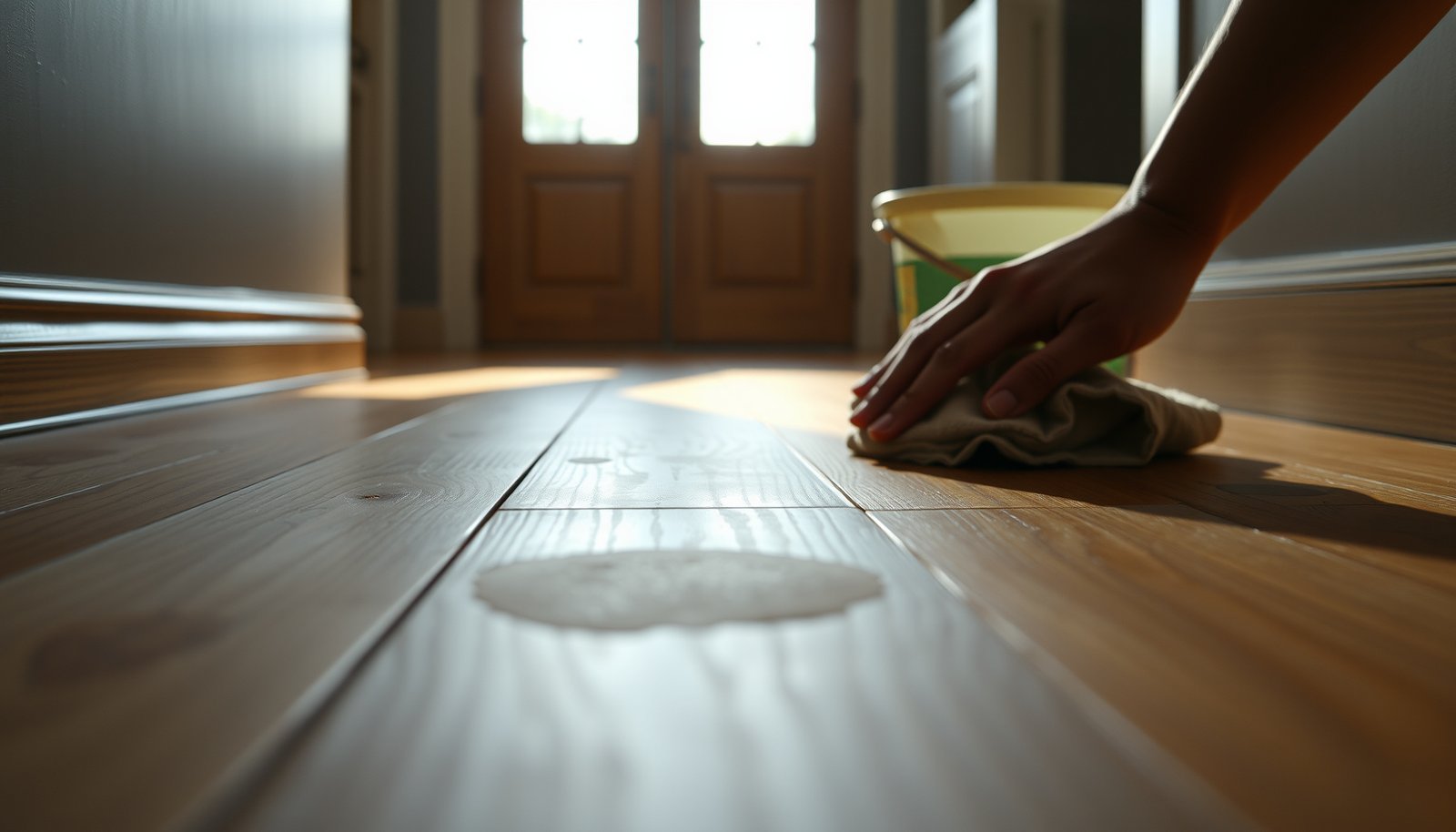
– Blot (don’t scrub). Use a clean microfiber and press lightly to lift liquid. Keep moisture controlled—engineered wood floors don’t need puddles to remove stains.
– Remove dry grit first. Before any wet cleaning, sweep or vacuum loose dirt using a floor-safe head so particles don’t grind across the finish.
– Use a “rinse-free mindset.” Wipe with a lightly damp microfiber, then dry immediately with a second dry microfiber. This reduces residue and prevents water rings.
– Work edge-to-center. For engineered wood stains, wiping from the outer edge toward the center helps stop “halo” spread.
Small equipment that makes a big difference
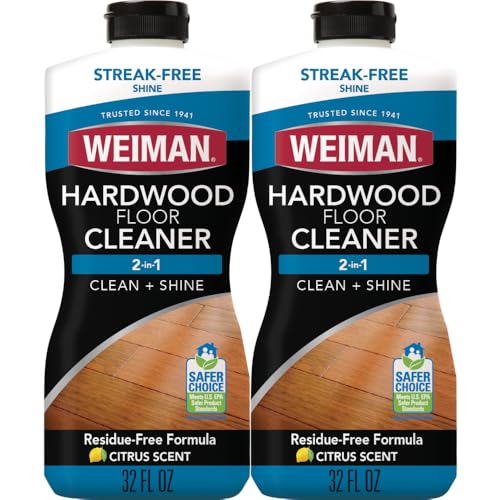
For engineered wood in an entryway, we generally recommend (and most manufacturers support) microfiber cloths and pH-neutral or finish-approved cleaners, because these reduce residue and abrasion risk compared with rough pads or overly wet mops. If your care guide specifies a particular product line or dilution ratio, follow it exactly.
Remove common stains using the least aggressive method
Use the least aggressive method first by matching the stain category to the least harsh cleaner that can dissolve it, then dry thoroughly. On engineered wood floors, this is how you avoid lifting haze from the topcoat while still removing contamination.
Water/urine-like marks are often removed with gentle damp wiping because the residue is typically water-soluble and responds to controlled moisture.
Grease/oil stains typically require a finish-compatible cleaner because plain water cannot emulsify oils.
Organic dark spots (mud, pet-related staining, tannin discoloration) may require careful, manufacturer-safe treatment to remove both color and residue.
Fast matching guide: stain type → first method
| Stain type (entryway common) | First attempt on engineered wood | Drying rule |
|---|---|---|
| Water/urine-like ring | Damp microfiber + manufacturer-approved wood-floor cleaner (light passes) | Wipe dry immediately after each pass |
| Grease/oil spot | Finish-compatible cleaner applied to the cloth (never poured) | Wipe clean, then dry with a separate microfiber |
| Organic dark spots (mud/pet/soil) | Gentle clean first; if color remains, use only manufacturer-approved spot methods | Dry promptly to prevent haloing |
– Water/urine-like marks:
Try a damp microfiber with a wood-floor cleaner or mild pH-neutral cleaner, working outer edge → center, then dry thoroughly. If a faint ring remains, repeat with slightly less moisture—not more.
– Grease/oil spots:
Use a cleaner intended for the floor finish (or a very small amount applied to the cloth). Never pour cleaner directly onto engineered wood; wipe in controlled passes, then dry. Repeat only if you see real progress.
– Organic dark spots (mud, pet accidents, tannins):
Gently clean first using finish-safe methods. If the stain remains after removing surface soil, you may be seeing discoloration in/through the top layer—at that point, you’ll need to follow manufacturer-approved guidance rather than escalating blindly.
Why engineered wood behaves differently in an entryway
Entryways concentrate moisture exposure and chemistry transfer: tracked dirt brings both oils (from skin/shoe rubber blends) and fine grit that can abrade finishes. Engineered wood floors can also be affected by temperature swings (boots arriving wet, then drying), so consistent “damp microfiber + dry immediately” technique matters more than the cleaner brand alone.
When gentle cleaning isn’t enough: escalate carefully
If the stain persists, you escalate to stronger steps only after you confirm you’re not damaging the finish. On engineered wood floors, escalation typically means more controlled dwell time (never soaking), more targeted application, or manufacturer-approved spot treatment—not steam, bleach, or aggressive pads.
Steam and high moisture can increase the risk of finish haze and moisture reaching seams, so engineered wood care guides often discourage steam cleaning unless explicitly approved.
If the discoloration has penetrated beyond surface contamination, repeated gentle cleaning can help, but sanding/refinishing may be required for certain engineered wood constructions.
– Use finish-safe spot treatment only if allowed. If your manufacturer provides a specific spot product or method, it’s usually the safest “next step” after damp microfiber cleaning.
– Avoid steam and harsh chemicals. Bleach, ammonia, and abrasive pads can haze the finish or permanently alter stain appearance.
– Confirm finish type before escalating. Urethane and aluminum-oxide wear layers respond differently to chemicals and abrasion; engineered wood care instructions often specify what’s safe.
– Know when to stop. If the area has deep discoloration inside the top wear layer (not just surface residue), heavy-duty sanding or spot refinishing may be needed—but that’s finish-risky and often should involve a professional.
A chemistry reality check (why “stronger” isn’t always better)
A lot of stubborn entryway staining looks like “stain is left behind,” but sometimes the real problem is residue (cleaner or soil) or finish haze from abrasion. That’s why engineered wood cleaning should prioritize minimal moisture, gentle friction, and controlled chemistry rather than brute force.
What can go wrong (and how to avoid it)
The most common failures when removing stains from engineered wood floors are over-wetting, abrasion, and using the wrong chemical. Avoiding these three issues is usually what prevents permanent haze and discoloration.
Over-wetting can allow liquid to migrate toward seams and edges, increasing the risk of swelling or permanent surface change on engineered wood.
Abrasive tools (nylon scrubbers, rough pads) can create dull micro-scratches that are harder to fix than the original stain.
– Over-wetting: Use minimal moisture; blot and dry immediately. Engineered wood can swell at seams/edges if liquids penetrate.
– Scrubbing too hard: Engineered wood finishes can show dull patches or micro-scratches from repeated aggressive motion.
– Using the wrong chemical: Bleach/ammonia can cause irreversible discoloration or finish failure.
– Treating too early: If the stain is actively transferring, wiping too soon spreads it—blot first, then clean once smearing stops.
pH of Common Household Liquids Used on Floors (Typical Ranges)
| # | Household liquid | Typical pH range (25°C) | Finish-friendly? | Risk rating |
|---|---|---|---|---|
| 1 | Distilled water | 6.8–7.2 | Usually (if used sparingly) | ★★★★★ |
| 2 | 5% acetic acid (vinegar) | ~2.4–3.0 | Often not recommended | ★☆☆☆☆ |
| 3 | 3% hydrogen peroxide | ~3.0–4.0 | Not finish-targeted | ★★☆☆☆ |
| 4 | Household ammonia (typical) | ~11–12 | Often not recommended | ★☆☆☆☆ |
| 5 | Household bleach (sodium hypochlorite) | ~11–13 | Not recommended on finishes | ☆☆☆☆☆ |
| 6 | Baking soda solution (typical) | ~8.3–9.0 | Caution (often mildly alkaline) | ★★★☆☆ |
| 7 | pH-neutral floor cleaner (typical label) | ~6.5–8.5 | Usually (if manufacturer-approved) | ★★★★☆ |
How this helps you avoid finish damage
The key takeaway for engineered wood floors is not “never use anything other than water,” but rather: keep your chemistry close to what your finish is designed for. If a product is acidic (vinegar-like) or strongly alkaline/oxidizing (bleach/ammonia-like), engineered wood finishes are more likely to haze or discolor over time—especially in an entryway where the area is cleaned repeatedly.
Verdict / tip
Start with blotting, dry soil removal, and a manufacturer-approved cleaner using damp-microfiber technique; that’s the safest path for engineered wood in an entryway. Escalate only if the stain clearly isn’t surface-level, and stop if you see finish haze or color change. Skip DIY stain removal and contact a flooring pro (or your floor manufacturer’s support) if the stain is deep/inside the top layer, the area is large, or you’re unsure of your finish type.
Engineered wood stain removal is most reliable when you treat it like finish protection first—minimal moisture, minimal abrasion, and quick drying.
If cleaning causes haze or a visible sheen shift on engineered wood floors, the safest move is to stop and seek manufacturer guidance immediately.
What I recommend as a realistic approach (especially for busy entryways in 2025–2026):
– Treat the stain type (oil vs water vs organic).
– Use the gentlest finish-approved method first.
– Escalate slowly and stop on any finish change.
Quick checklist (scan/save)
– [ ] Blot fresh stains; don’t scrub.
– [ ] Remove dry grit first (soft broom/vacuum floor head).
– [ ] Test cleaner in a hidden spot.
– [ ] Clean with minimal moisture using microfiber; wipe and dry immediately.
– [ ] Escalate only with finish-safe methods allowed by your manufacturer.
– [ ] Stop if finish haze/discoloration appears—get guidance.
Blotting plus immediate drying is the lowest-risk method for engineered wood floors because it reduces both abrasion and water migration to seams.
A hidden-spot test prevents surprise haze or color shift across engineered wood entryways.
Sources
Most engineered wood entryway stains come out by blotting first, removing dry grit, then cleaning with minimal moisture using a finish-safe approach (often a pH-neutral, manufacturer-approved cleaner). Identify whether the stain is water-based or oily/organic before you escalate, and avoid steam, bleach, and abrasive scrubbing to prevent haze and permanent discoloration. If you share what caused the stain (spill type, pet/food, or scuff) and your floor brand/finish (matte vs glossy, urethane type if known), we can help you pick the safest next step.
Frequently Asked Questions
What’s the best way to remove water stains from engineered wood floors in an entryway?
Start by blotting the area with a clean, dry microfiber cloth to remove any excess moisture, then let it air-dry fully. If the stain remains, lightly dampen a cloth with distilled water and wipe gently along the grain, drying immediately afterward. For stubborn spots, use a manufacturer-recommended wood floor cleaner or a diluted solution appropriate for engineered wood, and avoid soaking the surface. Never use steam or leave water on the floor, since engineered wood can still be damaged by excessive moisture.
How do I remove dark scuff marks or shoe scuffs from engineered wood entryway floors?
Try a soft, dry microfiber pad first to lift scuffs without adding moisture. If that doesn’t work, use a cleaner designed for engineered wood and rub gently along the grain, then dry with a separate cloth. For light marks, a small amount of mineral spirits on a cotton cloth can help lift residue—test in an inconspicuous area first and wipe thoroughly afterward. Avoid harsh abrasives like magic erasers or sandpaper unless the floor’s finish and finish wear level allow it, because engineered wood has a top layer that can wear through.
Why do stains come back on engineered wood floors, and how can I prevent re-soiling in the entryway?
Entryways collect grit, salt, and road grime that can react with finishes and make stains look worse over time. After cleaning, keep the area protected with mats or rugs and wipe any tracked moisture promptly. Use felt pads under shoes, chairs, and furniture, and follow a regular maintenance routine using an engineered wood floor cleaner to prevent buildup. If staining is caused by water intrusion or recurring spills, address the source (leaks, wet boots, or splash zones) rather than only treating the symptom.
Which cleaning products are safe for removing stains on engineered wood floors?
Use products specifically labeled safe for engineered hardwood floors or for “finished hardwood,” and choose pH-balanced cleaners to avoid stripping the finish. Avoid vinegar, ammonia, bleach, and harsh degreasers, which can discolor or dull the finish and leave hazing. For spot treatments, distilled water and mild wood floor cleaner are usually safest for water-based stains. Always check the manufacturer’s care instructions for your floor’s finish type (oiled vs. urethane-coated) before applying any chemical to remove stains.
How can I remove oil, grease, or food stains from engineered wood flooring without damaging the finish?
Blot immediately with a clean cloth to absorb as much oil as possible, then clean gently with a wood-safe degreaser or a small amount of manufacturer-approved cleaner. If the stain is oily and persists, a very light application of mineral spirits may help lift residue—apply to a cloth, test first, and wipe again with a damp (not wet) microfiber cloth and dry. Do not soak the stain or use abrasive pads, as engineered wood can develop permanent discoloration if the top finish layer is compromised. Finish by ensuring the floor is fully dry before putting rugs or foot traffic back on it.
📅 Last Updated: October 19, 2026 | Topic: How to remove stains from engineered wood floors in a entryway? | Content verified for accuracy and freshness.
References
- https://www.armstrongflooring.com/support/care-and-cleaning.html
- https://www.bruce.com/support/care-and-maintenance.html
- MohawkFlooring
- 404 Error
- Wood flooring
- https://scholar.google.com/scholar?q=engineered+wood+floor+stain+removal Google Scholar
- https://scholar.google.com/scholar?q=hardwood+floor+water+stain+removal+cleaning+methods Google Scholar
- https://scholar.google.com/scholar?q=engineered+wood+floor+care+maintenance+spot+cleaning Google Scholar