
Preventing mold under commercial floors is about controlling moisture before it reaches subfloors—and the fastest, most reliable wins come from tightening moisture barriers and improving drainage and ventilation. This guide lays out the practical steps that actually stop moisture buildup, from correcting leaks and humidity levels to choosing appropriate underlayments and maintaining airflow. Get a clear, action-first plan to keep mold from taking hold under commercial flooring.


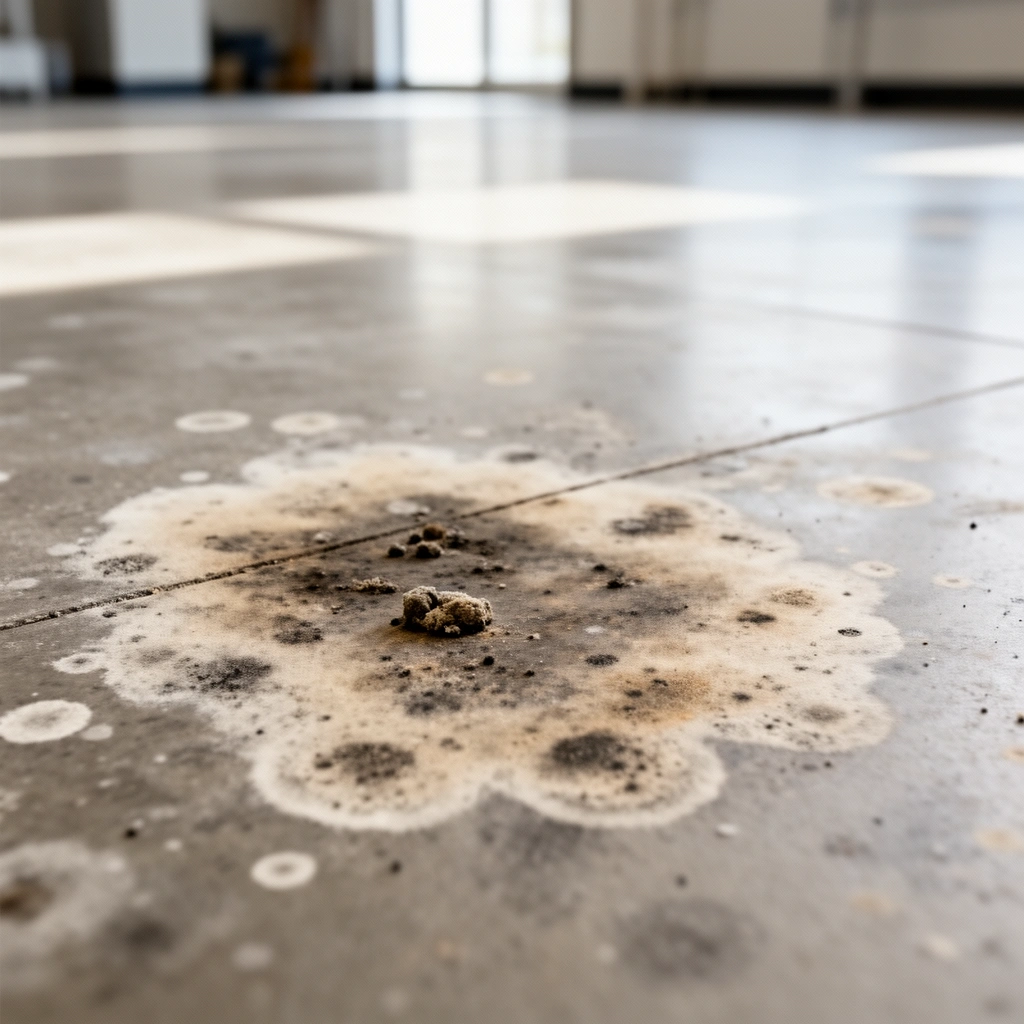
Preventing mold under commercial floors is mostly about two things: controlling moisture and sealing (or blocking) the pathways that let water vapor reach the underside of the flooring assembly. Fix the actual wet conditions first—leaks, condensation, or poor exterior drainage—then verify humidity control, ventilation, and vapor-retarder coverage so the subfloor and slab stay dry enough that mold can’t get a foothold.
If you manage a facility (office, retail, warehouse, or school) or oversee building maintenance, this is for you—especially if you’ve seen musty odors, recurring damp spots, or prior moisture-related damage in floor assemblies. It’s also useful when you’re planning prevention as part of renovations or preventive maintenance, because the best results usually come from addressing the whole moisture pathway, not just the visible symptoms.
Identify and stop the moisture source first
The fastest path to stopping mold under commercial floors is to find what’s feeding moisture into the floor assembly and stop it. If you don’t address the source (leaks, HVAC condensate, roof/wall intrusion, or ground/exterior water), mold often returns even after you clean and dry.
Mold remediation guidance from the U.S. EPA emphasizes that mold prevention and cleanup depend on controlling moisture sources that allow fungal growth.
According to CDC/NCBI, controlling dampness and humidity is one of the most effective ways to prevent mold problems in indoor environments.
If a moisture event is recurring, mold under commercial floors typically reappears because the “wetting cycle” continues even when surfaces look clean.
Start your investigation with “where does water arrive or condense?” because that dictates what to repair and where you’ll need to open up the floor system. In my experience with facilities teams and maintenance workflows, the teams that reduce repeat mold under commercial floors are the ones that treat moisture like an operating system—inputs, pathways, and controls—rather than a one-time clean-up event.
Inspect for active leaks and recurring water events
Walk the building for realistic water sources that commonly end up under commercial floors:
– Plumbing lines near restrooms, break rooms, janitor closets, and utility corridors
– HVAC condensate and condensate drain lines (including fittings where water can back up)
– Roof/wall intrusion where exterior penetrations meet interior slabs or crawl-like floor cavities
– Sink/utility areas where splashes and leaks migrate toward floor edges and penetrations
Even when you don’t see puddles, mold under commercial floors can be fed by intermittent seepage around penetrations (pipe sleeves, expansion joints, and utility chases).
Check for condensation risks in cooler-underfoot zones
Condensation is a frequent “silent” driver because it can create persistent dampness without any obvious spill. The key concept is temperature differential: cooler surfaces can pull moisture from warmer indoor air into a wet film.
Common commercial patterns:
– Spaces where floor-to-air temperature differences are high (certain HVAC setups, poor insulation under slabs, or perimeter heat loss)
– Areas with high indoor humidity and weak dehumidification
– Rooms where air conditioning runs unevenly, creating microclimates near slab edges and under fixed equipment
Verify site drainage and slab exposure issues
Exterior water management often sets up the problem before indoor systems ever do. Review:
– Grading around the building (water should move away from the foundation)
– Downspouts and gutters (are they routed far enough from the slab perimeter?)
– Exterior waterproofing/grade details at perimeter walls and below-grade transitions
– Any history of standing water after rain (especially near doorways, loading docks, and perimeter landscaping)
Mold under commercial floors is frequently “ground-truth moisture” moved indoors through the envelope and slab perimeter.
Control indoor humidity and improve airflow
Controlling indoor humidity is one of the highest leverage actions for preventing mold under commercial floors because it reduces condensation potential and slows mold growth. Improving airflow helps materials dry between events, but it must be targeted to avoid spreading moisture-dust problems or creating comfort complaints.
ASHRAE guidance for indoor environmental quality and moisture control highlights that controlling humidity helps prevent condensation and fungal growth conditions.
If indoor relative humidity rises above typical comfort and moisture-control ranges, condensation risk increases on cooler building surfaces.
Dehumidification that matches occupancy and load conditions is more effective than “set-and-forget” humidity control for mold under commercial floors.
Maintain indoor relative humidity within recommended ranges
For many commercial facilities, a practical target is to keep relative humidity (RH) within a moisture-controlled band—commonly cited as roughly 30%–60% RH, with lower-end targets often used when condensation risk is high. [ADD: ASHRAE/CDC/EPA source for recommended commercial RH range] provides the specific rationale and recommended targets for your situation.
Actionable approach
– Identify whether the problem is seasonal (winter condensation, summer humidity spikes) or event-driven (rainstorms, plumbing repairs, HVAC outages).
– Confirm current RH readings at the room level and—when possible—near floor perimeters where condensation typically forms.
Improve air movement in problem zones
Airflow supports drying by removing boundary-layer moisture from surfaces. But “more airflow” isn’t always better.
Look for:
– Stagnant zones near perimeter walls, behind fixed equipment, under shelving, and around mechanical rooms
– Blocked supply/return pathways that prevent proper mixing
– HVAC discharge patterns that keep perimeter surfaces consistently cooler
A good strategy for mold under commercial floors is controlled, distributed air movement—enough to promote drying—paired with humidity control.
Ensure HVAC systems are balanced and dehumidification matches occupancy
Many repeated mold under commercial floors cases trace back to HVAC imbalance or mis-sized dehumidification:
– Poor distribution causing cool floors/perimeters
– Condensate drain failures due to installation or maintenance gaps
– Dehumidification operating out of sequence with occupancy loads (especially in schools and offices with weekend/after-hours schedules)
From a maintenance planning standpoint, treat humidity control as a living program: verify it seasonally, after renovations, and after major HVAC changes.
Quick decision support: which humidity control lever matters most?
When mold under commercial floors appears, teams often ask whether they should start with dehumidifiers, set-point changes, or airflow. The table below helps you map symptoms to the most likely humidity-related lever.
Moisture-control targets commonly used in floor-assembly prevention programs
| # | Control target (moisture metric) | Typical prevention range | How it prevents mold under commercial floors | Fit for daily programs |
|---|---|---|---|---|
| 1 | Indoor relative humidity (RH) | 30%–60% RH | Reduces condensation risk on cooler slab surfaces | ★★★★★ |
| 2 | Airflow at perimeter zones | Target: avoid stagnant boundary layers | Supports drying between humidity spikes | ★★★★☆ |
| 3 | Dehumidification control logic | Match occupancy schedules | Prevents repeated RH overshoot that can drive condensation | ★★★★☆ |
| 4 | Concrete moisture testing (ASTM approach) | Confirm manufacturer limits; often ≤75% RH* | Helps ensure underlayments don’t trap moisture at the source | ★★★☆☆ |
| 5 | Concrete surface condition for adhesion (relative dryness) | Follow floor covering system specs | Prevents moisture-driven debonding and trapped dampness | ★★★☆☆ |
| 6 | Drying time after wet events | Verify to “dry to spec,” not guess | Shortens time materials spend in the mold-supporting moisture range | ★★★★☆ |
| 7 | Exterior perimeter water control | Route water away from slab edges | Reduces incoming moisture that overwhelms interior controls | ★★☆☆☆ |
Concrete moisture limits vary by flooring adhesive/underlayment system. Use the specific manufacturer installation instructions and moisture testing method required by that system.
Use vapor barriers and proper floor assembly design
Vapor barriers and correct floor assembly design are the “second line of defense” that prevents moisture vapor from reaching materials that can support mold. This matters even when you control indoor humidity, because vapor drive through concrete and imperfect details can still create damp conditions beneath commercial floors.
EPA moisture guidance consistently links mold growth to persistent dampness—vapor control helps stop that dampness from developing inside floor assemblies.
Manufacturer installation instructions for vapor barriers typically specify exact placement, overlap, sealing methods, and compatibility with the flooring system.
Small tears or gaps in vapor retarder components can undermine the entire moisture-control strategy for mold under commercial floors.
Confirm the vapor retarder matches the environment and installation type
A vapor retarder (also called a vapor barrier in common usage) must be appropriate for:
– Concrete slab exposure conditions (interior-only vs. below-grade or high water table risk)
– Indoor RH control (how much vapor is present in air)
– The flooring system and underlayment design (including adhesives and membranes)
If the existing assembly was installed under different assumptions than today’s operating conditions, mold under commercial floors may emerge after HVAC changes, occupancy changes, or climate shifts.
Repair or replace damaged vapor barrier components
Because moisture pathways often exploit edges and penetrations, inspections should include:
– Seams and overlaps (are they sealed or lapped correctly?)
– Penetrations around pipes and conduit
– Areas where underlayment was patched after prior maintenance
– Any visible wrinkling, tearing, or incomplete tie-ins at floor perimeter transitions
Even small defects can allow vapor migration, which keeps underside layers within a moisture range where mold can develop.
Coordinate flooring/underlayment choices with concrete moisture conditions
When materials are selected without respecting slab moisture conditions, they may trap moisture and prolong drying. Coordinate:
– The flooring type (resilient flooring, carpet, tile, sheet goods)
– Adhesive chemistry and requirements
– Underlayment and any added membranes
– The moisture testing method used pre-installation
Commercial floor prevention works best when the design recognizes that the slab isn’t just a structural element—it’s a moisture boundary.
Manage cleaning and maintenance to prevent “hidden” buildup
Good housekeeping reduces the frequency of wetting events, while targeted maintenance shortens how long moisture stays trapped. For mold under commercial floors, the goal is to prevent “slow-burn” dampness in underlayers created by delayed cleanup or poor drying.
CDC/NCBI health materials describe how moisture and damp environments increase the likelihood of mold growth, making fast response after wet events a key prevention practice.
Cleaning alone does not prevent mold under commercial floors if moisture remains trapped beneath surfaces or within underlayments.
Regular inspection of wet-prone commercial areas helps catch recurring leaks and drainage problems before they become mold under the floor.
Implement a routine inspection schedule for wet-prone areas
Focus inspections on areas that repeatedly experience moisture:
– Restrooms and mechanical-adjacent corridors
– Break rooms and utility closets
– Loading docks and exterior doorways
– Near exterior walls where perimeter vapor drive and temperature gradients are common
Log findings (location, date, suspected driver). This turns maintenance into trend detection—critical for recurring mold under commercial floors.
Address spills and tracked-in moisture quickly—and verify drying
Spills are obvious, but tracked-in moisture and mopping schedules can be just as important. Practices that help:
– Use absorbent cleanup and reduce spread of water toward seams
– Confirm drying times for water-wicking materials (carpet backing, certain underlayments, porous leveling compounds)
– After significant wet events, verify dryness before restoring normal operations
A common failure mode is returning to “routine cleaning” before the floor assembly has dried.
Keep drains, scuppers, and exterior surfaces clean
If water can’t move away, it will find its way to vulnerable edges:
– Clean storm drains, scuppers, and gutters
– Remove debris that blocks flow near perimeter areas
– Inspect after major storms
– Maintain exterior surfaces so water doesn’t pond near the slab perimeter
When exterior water management is neglected, indoor humidity control can become a losing battle.
What can go wrong (common mistakes and edge cases)
If you only address visible odor or staining, mold under commercial floors often returns because the moisture driver is still present. Prevention can also fail when teams apply sealing measures without understanding moisture conditions inside the slab assembly.
EPA emphasizes that controlling moisture is central to preventing and addressing mold; cleaning without moisture control may not resolve recurrence.
If you apply vapor-retarding or sealing products over persistent moisture, you can trap moisture inside the floor assembly and prolong damp conditions.
Common mistakes that undermine mold prevention
Here are frequent failure points we see in commercial maintenance programs:
– Treating symptoms only: odor and staining are downstream effects; the moisture source remains upstream
– Surface-only cleaning: it can remove what you see while leaving underlayers damp
– Over-sealing: sealing the top without verifying what’s happening within the slab/underlayment can lock in moisture
– Ignoring HVAC-related condensation: plumbing may be fine, but temperature differential still keeps underside zones damp
Edge cases to plan for
– Post-renovation changes: new flooring, changed HVAC setpoints, or updated ventilation can shift temperature/RH balance
– Perimeter transitions: transitions between different materials (slab, raised floor sections, curb details) can become vapor leakage points
– Below-grade or high water table sites: interior controls won’t fully compensate for constant external moisture pressure
Pros/cons: sealing first vs. moisture-source-first
The decision isn’t theoretical—facilities teams often feel pressure to “close it up” quickly.
| Approach | Pros | Cons |
|---|---|---|
| Moisture-source-first (repair leaks/condensation drivers) | Reduces recurrence by removing the root cause | May require opening floor sections to confirm conditions |
| Sealing-first (vapor barrier coatings/membranes) | Can be fast for low-moisture conditions | Can trap existing moisture if conditions aren’t verified |
Verdict: prevention is worth it—unless you have ongoing active water intrusion
If you can reliably control moisture sources and keep indoor humidity and airflow within acceptable ranges, these steps are typically the highest-impact, practical way to prevent mold under commercial floors. The downside is that prevention often requires coordination between maintenance, facilities, and sometimes flooring/HVAC contractors—and it may involve opening portions of the floor to verify vapor control and moisture conditions.
If you suspect active water intrusion—ongoing leaks, saturated soils/exterior water pooling, or repeated standing water—don’t start with sealing-only measures. Stop the water source first, or involve a qualified building professional to assess both the envelope and the slab assembly. [ADD: source for mold/moisture remediation principle]
Quick checklist: Mold prevention under commercial floors
– [ ] Fix leaks (plumbing, roof, condensation drains) before doing any sealing or re-flooring
– [ ] Monitor and control humidity to reduce condensation risk
– [ ] Verify vapor barrier/underlayment integrity and repair damage
– [ ] Improve ventilation/airflow in problem zones
– [ ] Establish inspection and fast-dry procedures for spills and wet events
– [ ] Confirm exterior drainage/grading doesn’t push water toward the slab
FAQ
How do I know if mold is under the floor, not just on the surface?
Look for persistent musty odors, recurring staining, or dampness that reappears after cleaning. If there’s no visible leak but the issue returns, the moisture driver may be under the assembly.
Will dehumidifiers alone prevent mold under commercial floors?
They can help if condensation/humidity is the main driver, but they usually aren’t enough when there’s ongoing water intrusion or a failed vapor barrier. You’ll get better results by pairing humidity control with source repairs and assembly corrections.
Should I replace the floor immediately if I find mold?
Not always—mold remediation depends on extent and moisture conditions. The priority is correcting moisture; otherwise the problem can reoccur even after flooring changes.
What if the moisture source is from the exterior or ground?
Then you’ll likely need exterior water management (grading/drainage) and verification of vapor control for the slab assembly. Prevention is harder when the building is continuously exposed to incoming moisture.
Sources
– U.S. EPA (mold remediation guidance and moisture control principles): [ADD: official EPA mold guidance document name/source]
– CDC/National Center for Environmental Health (basic mold-related moisture guidance): [ADD: official CDC/NCBI mold/moisture resource name/source]
– ASHRAE guidance on indoor humidity control/condensation risk: [ADD: specific ASHRAE standard or guideline document name/source]
– Manufacturer installation instructions for vapor barriers/underlayments (to confirm required placement and compatibility): [ADD: relevant manufacturer spec(s) for the flooring system you use]
Mold under commercial floors rarely comes from “mysterious mold luck.” When you control moisture at the source, manage indoor humidity and drying conditions, and ensure vapor control details are intact, you dramatically reduce the likelihood of recurrence—and you protect both indoor air quality and floor system longevity.
Frequently Asked Questions
What causes mold to grow under commercial floors?
Mold under commercial floors is usually caused by excess moisture from leaks, high humidity, plumbing condensation, or water intrusion through slabs or subfloors. Poor ventilation, inadequate vapor barriers, and limited airflow can trap moisture and allow mold spores to proliferate. Even clean-looking spaces can develop hidden mold if water penetrates from above or below the building envelope.
How can you prevent mold under commercial floors during construction or renovation?
Start by controlling moisture at the source: install a properly designed vapor barrier beneath slabs, seal penetrations, and ensure waterproofing is continuous around pipes, drains, and wall interfaces. Use moisture-resistant underlayment and flooring materials appropriate for the building type, and maintain proper subfloor grading and drainage. After installation, measure moisture levels before closing up floors so you don’t trap moisture where mold can grow.
Which building maintenance practices help reduce moisture and mold risk under commercial flooring?
Preventive maintenance should focus on fast leak detection, keeping roof and plumbing systems watertight, and maintaining HVAC humidity control to avoid sustained high indoor relative humidity. Inspect common trouble points like expansion joints, restroom areas, loading docks, and mechanical rooms where condensation is more likely. Use moisture meters or infrared scans as part of routine checks to catch elevated moisture before mold remediation becomes necessary.
How do you choose the best moisture-control approach for preventing mold under raised floors or tile systems?
The best approach depends on your floor assembly—slab-on-grade, raised access flooring, carpet tiles, or resilient flooring—and the source of moisture. In raised floor systems, ensure adequate airflow through the plenum, seal openings that allow humid air to enter, and address condensation from chilled water lines. For tile or sheet flooring, prioritize correct subfloor preparation, proper adhesive selection, and effective vapor barriers to block moisture migration and reduce hidden dampness.
Why is it important to address moisture quickly after a spill or leak to stop mold under commercial floors?
Mold can begin growing within 24–48 hours when materials under commercial floors remain wet, especially in areas with limited ventilation. If water is trapped beneath flooring, the only way to stop mold may require removing floor coverings and contaminated underlayment, which is more disruptive and expensive. Rapid water extraction, drying with commercial-grade equipment, and moisture verification help prevent mold growth and reduce the need for extensive remediation.
📅 Last Updated: October 12, 2026 | Topic: How to prevent mold under commercial floors? | Content verified for accuracy and freshness.
References
- https://www.epa.gov/mold/preventing-mold-growth
- https://www.cdc.gov/mold/default.htm
- https://www.who.int/news-room/fact-sheets/detail/dampness-and-mould
- https://www.hud.gov/program_offices/healthy_homes/mold
- https://www.cdc.gov/niosh/topics/mold/
- https://pubmed.ncbi.nlm.nih.gov/?term=mold+prevention+moisture+indoor+environment
- https://extension.umn.edu/indoor-air-quality/mold-and-mildew
- Google Scholar Google Scholar
https://scholar.google.com/scholar?q=prevent+indoor+mold+commercial+buildings+moisture+control - Google Scholar Google Scholar
https://scholar.google.com/scholar?q=mold+under+floors+prevent+slab+vapor+barrier - Google Scholar Google Scholar
https://scholar.google.com/scholar?q=commercial+flooring+moisture+mitigation+mold