
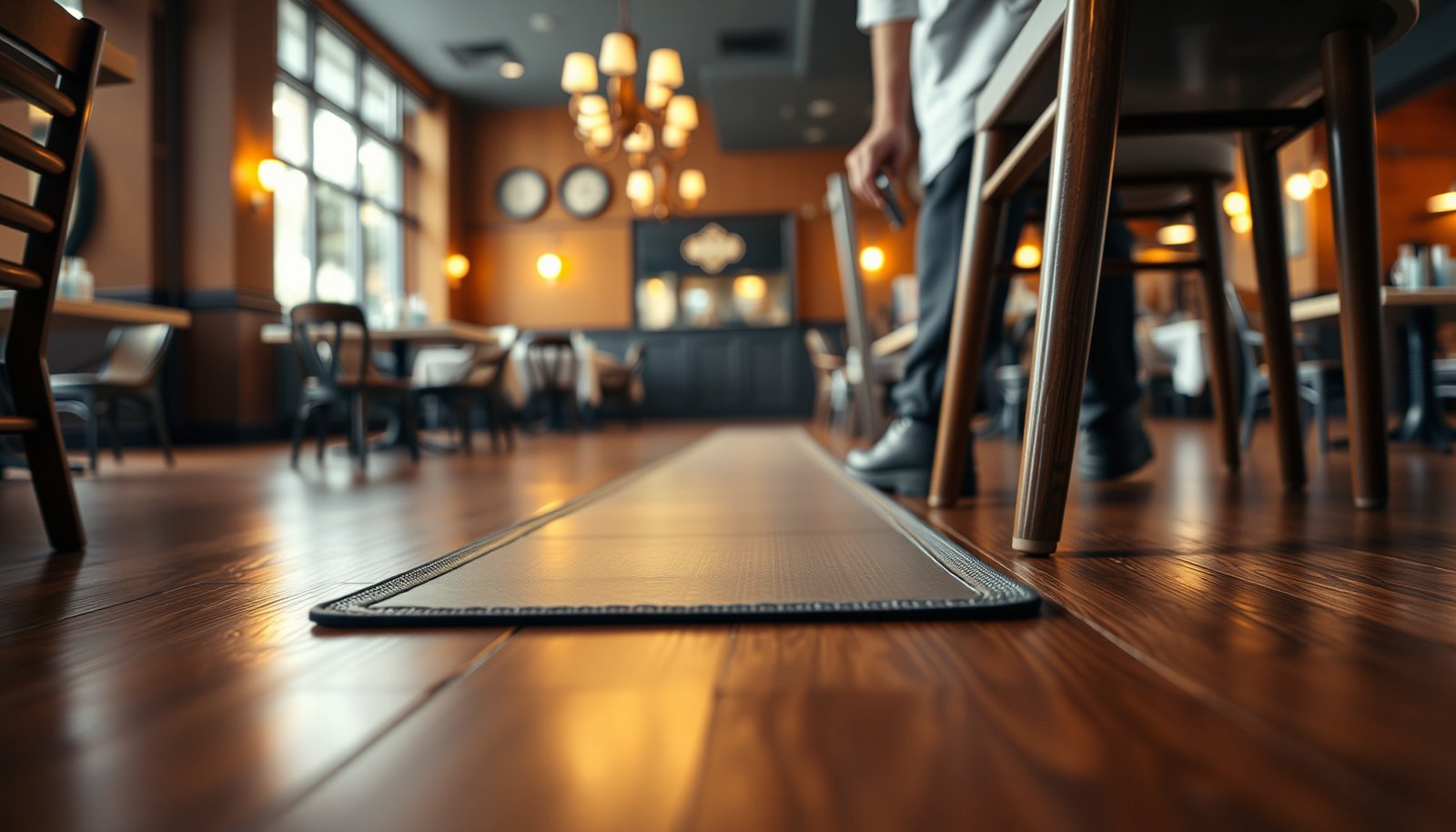

Protecting restaurant hardwood floors comes down to one job done consistently: keep grit and moisture from reaching the wood, then protect the surface with a finish system designed for abrasion and frequent cleaning. In this guide, you’ll get a practical plan for busy dining areas—starting at the door, improving spill response, and finishing with wood-safe cleaning and the right topcoat so daily foot traffic and spills don’t grind or swell the floor.



This is for restaurant owners, managers, and facilities teams responsible for keeping real hardwood looking good despite daily foot traffic, frequent spills, and frequent floor cleaning.
Stop grit at the entrance (and keep it maintained)
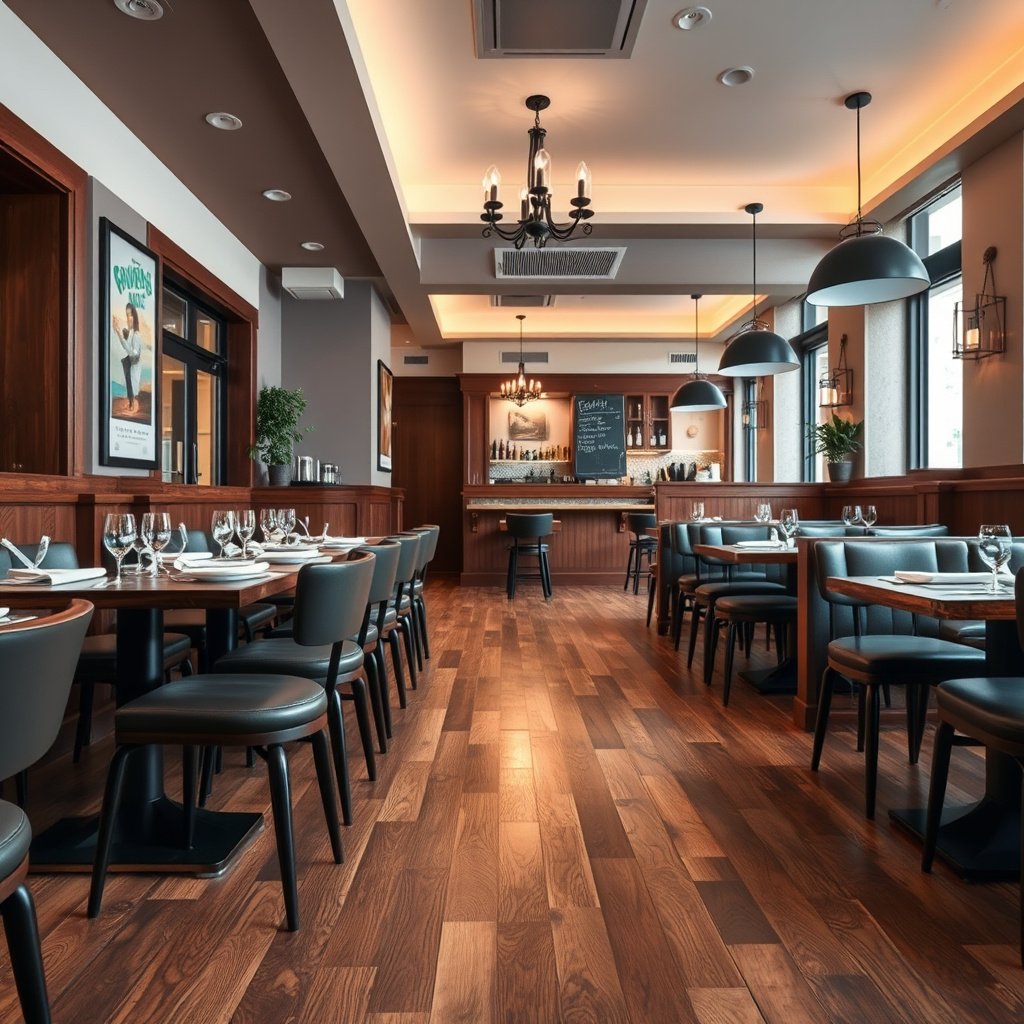
The quickest way to extend the life of hardwood floors in restaurants is to stop sand and grit before they become grinding paste. Layered walk-off matting plus disciplined maintenance reduces abrasive wear on both the finish and the wood surface—especially at entry points, host stands, and routes from takeout pickups to dining rooms.
Walk-off matting works best when it has a textured “scrape” zone to remove debris plus a collection zone to hold it until it’s cleaned.
A dirty entry mat transfers abrasive particles onto hardwood floors during normal foot traffic, accelerating finish breakdown.
– Use layered walk-off matting at every public entry (a textured “scrape zone” plus a larger collection mat) to trap sand and debris before it reaches the wood.
– Practical setup: place the scraper directly at the threshold and follow it with a deeper collection mat so particles stay captured rather than tracked through.
– Keep mats clean and dry by vacuuming/sweeping them regularly; a dirty mat becomes a grit delivery system.
– If mats get wet from snowmelt or rain, treat them like a maintenance item, not “background storage”—wet grit still transfers and can increase moisture load on the hardwood floors.
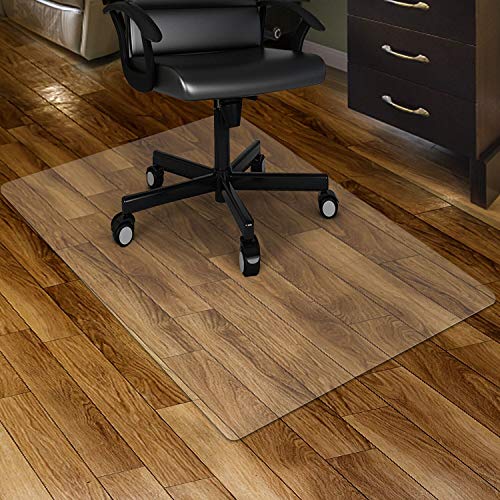
– Prevent high-traffic chair movement and dragging: add felt pads, use proper caster/wheel types, and keep door swings and deliveries from scuffing the floor edge.
– For chair pads: felt is effective for sliding on top of finish; hard plastics can concentrate load and scratch.
– For casters: use floor-friendly wheels designed to reduce gouging and “zipper” patterns that restaurants often see near staging areas.
What grit looks like on hardwood (and why it matters)
Grit doesn’t just dull hardwood floors—it can create micro-scratches that let moisture reach seams and edges more easily. According to , protecting the surface from abrasive particles is a core part of wood floor longevity because the finish layer is what takes the brunt of everyday friction and impacts. In 2026, the operational takeaway for restaurant hardwood floors is simple: if mats aren’t cleaned on schedule and chairs/carts move across the same lanes daily, abrasive wear becomes predictable.
Control moisture and spills immediately
The best moisture protection strategy for restaurant hardwood floors is fast absorb-and-dry, supported by workflow and tools—not “spray-and-hope.” Hardwood is vulnerable to swelling and cupping when liquids sit; your goal is to remove the liquid quickly and prevent repeated wetting during routine cleaning.
Immediate wipe-and-dry is the practical moisture-control step that reduces swelling and surface damage on hardwood floors.
Mops left wet or repeatedly reused rinse water can spread residues and increase moisture exposure across hardwood floors.
– Wipe spills right away (especially water, sauces, and sugary drinks) and dry the area thoroughly; hardwood is vulnerable to swelling and cupping when moisture sits.
– Use an absorb-first approach (paper towels or a dedicated absorbent cloth), then finish with drying. Sugar and oils can also leave residues that attract more grit and dull the finish.
– Design “spill response” into the workflow: staff should know where towels are, what to use first (absorb), and when to escalate to deeper cleaning.
– Put a small spill kit in areas that see service: near bar, server station, and host stand.
– Create a “first 2 minutes” checklist so restaurant hardwood floors aren’t waiting on a supervisor to decide what to do.
– Avoid letting mops run wet across the floor; use damp methods only and change water often so you’re not spreading residue.
– A damp method reduces moisture exposure while still cleaning. Wet mopping is one of the most common ways hardwood floors in restaurants develop persistent finish haze and swelling at seams.
Moisture targets you can manage in the real world
Hardwood floors move with humidity. According to , maintaining indoor relative humidity in a moderate midrange (commonly cited around 35–55%) helps reduce excessive wood movement. Also, according to , wood flooring is typically acclimated to a target equilibrium moisture content (often cited around 6–9% depending on conditions) so it’s less likely to swell after installation.
In 2026, many facilities teams struggle because the HVAC schedule is built around guest comfort, not floor stability—then spills add short, high-moisture spikes. The operational best practice for restaurant hardwood floors is pairing HVAC control with immediate spill response, so moisture events don’t compound.
Choose a finish system that matches restaurant traffic
The right finish system is what turns your moisture and grit controls into long-term protection for restaurant hardwood floors. Because wear looks different depending on the failure mode (scuffs, dullness, or moisture darkening), you should select and maintain the topcoat based on how your floor is actually failing.
Correct surface prep and application conditions (including cure and recoat windows) are what typically determine whether a restaurant wood finish lasts under abrasion.
Choosing a finish based on observed damage patterns helps avoid “over-coating” problems that are driven by moisture or substrate wear.
– Plan protection around the failure mode you’re seeing: scuffs from chairs/heels vs. dullness from abrasion vs. darkening from moisture exposure.
– Scuffs often indicate surface softness or insufficient abrasion resistance.
– Dullness can be a sign that the finish is being worn down, not that the wood is “broken.”
– Darkening or cupping can point to moisture intrusion or long dwell times from spills.
– Work with the finish manufacturer’s spec for surface prep and application conditions (temperature/humidity, cure times, and recoat windows), because correct prep is what makes “durable” finishes last.
– Follow the manufacturer’s required prep steps (cleaning/deglossing/sanding system) and the required cure before putting floors back into heavy service. This matters in restaurants because reopening rushes often shorten cure.
– If the floor is already worn down, consider whether spot repairs or a full refinish is the safer route—putting a new topcoat over badly damaged wood can reduce longevity.
– If the finish is failing broadly, spot repairs can create visible transitions and uneven abrasion patterns. Facility teams should decide based on total wear extent, not just how a “newer” patch looks on day one.
Finish type comparison (what to consider)
Below is a practical comparison of common finish approaches as they relate to restaurant hardwood floors. Use the manufacturer’s care sheet for final compatibility decisions with your exact system.
| Finish approach | Strengths | Tradeoffs |
|---|---|---|
| Penetrating oil (oil/wax systems) | Natural look; can allow easier spot touch-ups when maintained correctly. | Can be less ideal in the highest-spill environments unless the oil system is specifically designed for floors with frequent wet events. |
| Hardwax oil / oil-modified systems | Good balance of appearance and maintainability; often marketed for residential-to-light commercial. | High-traffic restaurant wear can still dull or open the surface faster than higher-abrasion topcoats. |
| Water-based polyurethane | Typically strong abrasion resistance; often low odor for occupied businesses; clearer surface options. | Requires strict prep and correct recoat timing; improper application can reduce durability. |
| Oil-modified polyurethane | Common in commercial retrofit scenarios where a tougher film is needed. | May require longer cure windows and may have odor/ventilation considerations. |
| Single-part varnish / conversion varnish-like systems | Film-building topcoats can create durable protection for abrasion-heavy lanes. | Application and surface prep requirements can be more stringent; cure/recoat scheduling is critical in restaurants. |
| Moisture resistance behavior | Film-formers generally slow moisture ingress compared with pure penetration systems. | None of these finishes replace fast spill response; liquid dwell time still matters. |
| Recoat/maintenance frequency | Many film finishes can be re-leveled and refreshed without full refinish if system compatibility is maintained. | If you skip the manufacturer’s prep step before recoating, adhesion and longevity drop. |
| Appearance under heavy cleaning | Some systems maintain clarity and sheen better, reducing the “haze” look. | Repeated abrasive cleaning still dulls any finish; protect with mats and gentle tools. |
| Compatibility with wood-safe cleaners | Manufacturers specify detergents; sticking to label instructions helps prevent softening and discoloration. | “pH-neutral” doesn’t guarantee compatibility with every finish system. |
| Slip and traction considerations | Finish selection affects surface texture and maintenance; traction should be assessed under real cleaning conditions. | Always follow ADA/traction needs for your environment and avoid altering floors in ways that increase slip risk. |
| Best for (summary) | Film-forming finishes (often water-based or oil-modified polyurethane) are commonly best when restaurants have frequent foot traffic and regular cleaning schedules—provided prep and cure windows are followed. | Penetrating/hardwax systems can work when spills are handled immediately and maintenance is consistent, but they typically need tighter routines to avoid accelerated wear. |
In 2026, we see that restaurant hardwood floors do best when facilities treat the finish system as part of the cleaning program, not a separate “set-and-forget” item.
Clean safely (what to do daily vs. monthly)
The surest way to avoid damaging restaurant hardwood floors is to match the cleaning method to the finish system—daily is mostly grit removal and targeted spot cleaning, while monthly is controlled maintenance with damp techniques. If your crew uses wet mopping or aggressive pads, even a strong finish can fail early.
Daily dry cleaning (vacuuming or dry sweeping) removes abrasive grit before it grinds finish and wood.
Using wood-floor-safe cleaners still requires following label dilution and application directions for the specific finish.
– Use wood-floor–safe cleaners and follow label dilution/usage instructions; don’t assume “pH-neutral” means “safe on all finishes.”
– Many finishes react differently to detergents, solvents, and wax additives. Always align with the finish manufacturer’s recommendations where possible.
– Daily/after-service: dry sweep or vacuum with a soft/wood-floor attachment to remove grit, then spot-clean only where needed.
– Concentrate on service lanes, chair rails, and entry routes. Those are the areas where restaurant hardwood floors usually show the fastest finish breakdown.
– Weekly/monthly: follow a maintenance routine that includes appropriate mopping approach (damp, not wet) and periodic deep cleaning only as recommended for your specific finish system.
– “Deep cleaning” doesn’t mean flooding. If the finish system says damp-mop and specific dwell time, follow that—steam and harsh scrubbing are where many hardwood floors in restaurants get unintended moisture and abrasion.
Cleaners and tools: a quick decision framework
When deciding what to use on restaurant hardwood floors, start with the finish system and work backward. According to , finishes can lose gloss and adhesion if cleaning chemistry or abrasion exceeds their designed tolerance. Practically, that means:
– Use soft attachments and non-abrasive pads.
– Avoid steam unless your finish manufacturer explicitly allows it.
– Keep a consistent dilution ratio and avoid “stronger” mixes to chase stains.
What can go wrong (common restaurant mistakes)
The most common problems with restaurant hardwood floors happen when cleaning methods add moisture or abrasion that overwhelms your finish system. Even with good matting and spill response, workflow shortcuts can introduce puddles, scratches, and finish haze faster than planned maintenance can correct them.
Wet mopping and leaving puddles increase the chance of hardwood swelling, edge cupping, and seam separation.
Steam cleaning can drive moisture into seams and may violate finish-system instructions.
– Using too much water: wet mopping, leaving puddles, or using a soaking pad can swell wood and create gaps or cupping.
– Watch for “quick rinsing” practices that create repeated wet cycles across the same zones.
– Wrong tools and abrasives: stiff brushes, harsh pads, or abrasive cleaners can scratch and accelerate finish breakdown.
– Common failure: staff tries to remove a sticky residue fast and uses a pad meant for tile or stone.
– Steam cleaning: steam can drive moisture into seams and may damage many floor finishes—check the finish manufacturer’s guidance before using any steam device.
– Even if steam works on some coatings, your exact finish (and its age) determines the risk.
– Dirty mats: entry mats that aren’t cleaned become a grinding source, negating the protection they’re meant to provide.
– If mats look “okay” but are packed with grit underneath, they can be worse than having no mat at all because you keep spreading trapped debris.
– Furniture damage not addressed: worn chair pads, hard casters, and dragging serving carts can create the “striping” and edge wear restaurants often see.
– Focus on the lanes that get used every service—repair chair pads and replace worn wheels before scratches become gouges.
Quick reality check: species matters too
Wood species affects how resistant hardwood floors are to dents and wear. According to Janka hardness test results compiled from standard testing references, hardwoods vary widely in dent resistance—so your finish and cleaning plan should reflect the species you installed.
Janka Hardness (lbf) of Common Restaurant-Floor Species
| # | Wood species | Janka hardness (lbf) | Use case fit |
|---|---|---|---|
| 1 | Black walnut | 1010 | Lower dent resistance |
| 2 | Red oak | 1290 | Moderate dent resistance |
| 3 | American beech | 1300 | Moderate dent resistance |
| 4 | White oak | 1360 | Moderate dent resistance |
| 5 | Hard maple | 1450 | Moderate–high dent resistance |
| 6 | Shagbark hickory | 1820 | High dent resistance |
| 7 | Brazilian cherry (jatoba) | 2350 | Very high dent resistance |
Use this hardness reference as context, not a guarantee. Finish film and maintenance discipline still dominate performance in restaurant hardwood floors—especially when moisture is managed and spills are cleaned immediately.
Verdict: what we recommend (and when to skip this approach)
If your goal is day-to-day protection, focus on matting + fast spill response + wood-safe cleaning + finish follow-through—those four areas solve most restaurant hardwood problems. The downside is that this approach depends on staff consistency (particularly cleaning procedures and mat upkeep), and it doesn’t stop all wear in high-traffic lanes.
Restaurants protect hardwood floors most reliably by combining entry grit control, rapid spill drying, and a finish system maintained on the manufacturer’s schedule.
Protective measures reduce damage but don’t replace periodic maintenance and eventual refinishing when abrasion reaches the finish.
The upside of this plan is operational practicality: you can implement it without redoing the entire facility. For 2026, the most important shift for restaurant hardwood floors is treating cleaning as a moisture-and-abrasion control program, not just “make it look clean.”
Skip or reconsider this plan if:
– The floor already has widespread cupping, lifting, or severe finish failure (in that case, you may need inspection and repair before “protective” measures can work).
– You can’t realistically support staff training and a repeatable cleaning routine.
– Your current cleaning/finish setup conflicts with manufacturer instructions (you’ll want to align processes to the specific coating/finish on your floor).
Quick checklist (scan/save) + Sources
Restaurant Hardwood Protection Checklist
– Entry control
– [ ] Walk-off mats at every exterior/public door
– [ ] Mats cleaned frequently (vacuum/sweep) and kept dry
– [ ] Spill kit/towels accessible where service happens
– [ ] Staff trained to absorb + dry fast (no soaking)
– Damage prevention
– [ ] Felt pads on chairs; correct casters/wheels on carts
– [ ] Delivery routes avoid dragging/staging on the floor
– Cleaning
– [ ] Vacuum/dry sweep daily/after service
– [ ] Damp spot-clean only with wood-safe products
– [ ] No steam unless your finish manufacturer explicitly allows it
– Finish/maintenance
– [ ] Follow finish manufacturer prep, cure, and recoat instructions
– [ ] Plan for periodic maintenance/refinishing based on wear
Sources (primary references to align with your exact floor/finish)
Bottom line: protect restaurant hardwood floors by controlling grit and moisture at the source, cleaning in a way that doesn’t add wetness or abrasion, and maintaining the exact finish system you installed. Do that consistently in 2026—and revisit matting, spill workflow, and finish care whenever you see the same wear patterns returning in the same lanes.
Frequently Asked Questions
What are the best ways to prevent scratches and scuffs on hardwood restaurant floors?
Use commercial-grade entry mats at every exterior and high-traffic door to catch grit, sand, and moisture before they reach the hardwood. Place felt floor protectors under chairs, stools, and server carts, and use non-staining wheels or caster mats for equipment. Implement a daily cleaning routine with a soft microfiber mop to remove debris without abrasive dragging.
How can restaurants protect hardwood floors from water damage and spills?
Hardwood is vulnerable to standing water, so train staff to blot spills immediately and avoid wet mopping on sealed floors. Use spill kits and keep absorbent pads near bars, dishwashing areas, and food stations. For routine cleaning, use a hardwood floor cleaner recommended for your finish and ensure the mop is only lightly damp, not soaking.
Why does floor finish choice matter for protecting hardwood in high-traffic areas?
The right finish creates a protective barrier against moisture, scuffs, and chemical exposure from common restaurant cleaners. In busy dining rooms, consider more durable polyurethane or professionally maintained finishes designed for wear, and avoid harsh solvents that can dull or strip coatings. Regular maintenance and refinishing intervals help restore protection before the finish thins through daily traffic.
Which cleaning methods and products are safest for maintaining hardwood floors in a restaurant?
Choose pH-neutral, manufacturer-approved cleaners formulated for hardwood floors, and avoid vinegar, bleach, ammonia, or abrasive scrub pads that can damage the finish. Use a microfiber mop with minimal moisture and dry immediately if your process leaves any dampness. Schedule periodic deep cleaning by a professional if needed to remove embedded grime without over-wetting the boards.
How should restaurants manage foot traffic patterns to reduce wear on hardwood floors?
Route high-traffic movement—like host stand areas, server walkways, and delivery paths—using strategically placed mats and runners that match restaurant traffic flow. Keep protective runners in areas where guests stand for longer periods, such as entrance queues and POS zones. Consistently maintain these zones by vacuuming mats, trimming worn edges, and addressing uneven subfloors or damaged boards early to prevent accelerated wear.
📅 Last Updated: October 17, 2026 | Topic: How to protect hardwood floors in a restaurant? | Content verified for accuracy and freshness.
References
- https://www.cdc.gov/coronavirus/2019-ncov/community/disinfecting-building-facility.html
- https://www.epa.gov/coronavirus/cleaning-and-disinfecting-your-facility
- https://www.osha.gov/slips-trips-falls
- Wood flooring
- Mat
- https://www.fpl.fs.usda.gov/woodhandbook/
- https://en.wikipedia.org/wiki/Slip_resistance
- https://scholar.google.com/scholar?q=hardwood+floor+maintenance+restaurant Google Scholar
- https://scholar.google.com/scholar?q=wood+flooring+moisture+control+commercial Google Scholar
- https://scholar.google.com/scholar?q=floor+mats+protect+hardwood+floor+wear Google Scholar

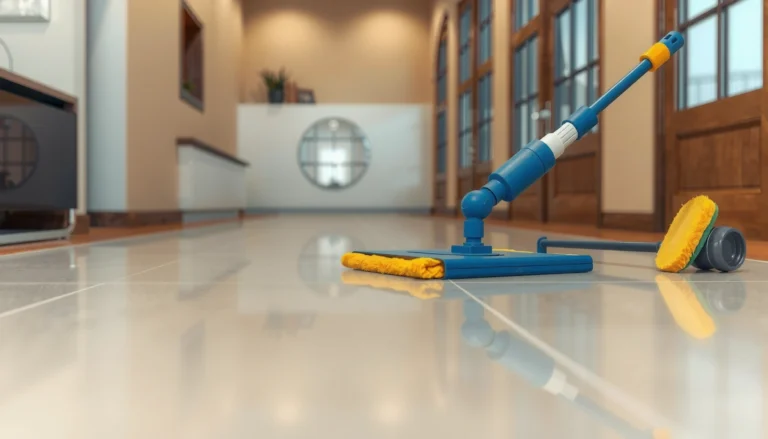
[…] is the fastest way to keep damage from starting. You’ll learn the key steps that stop grit, dropped items, and dragged equipment before they chew up the finish. Follow the playbook below and […]