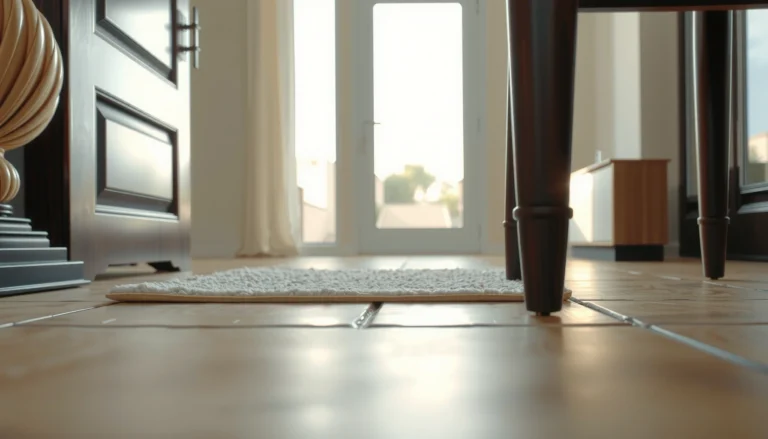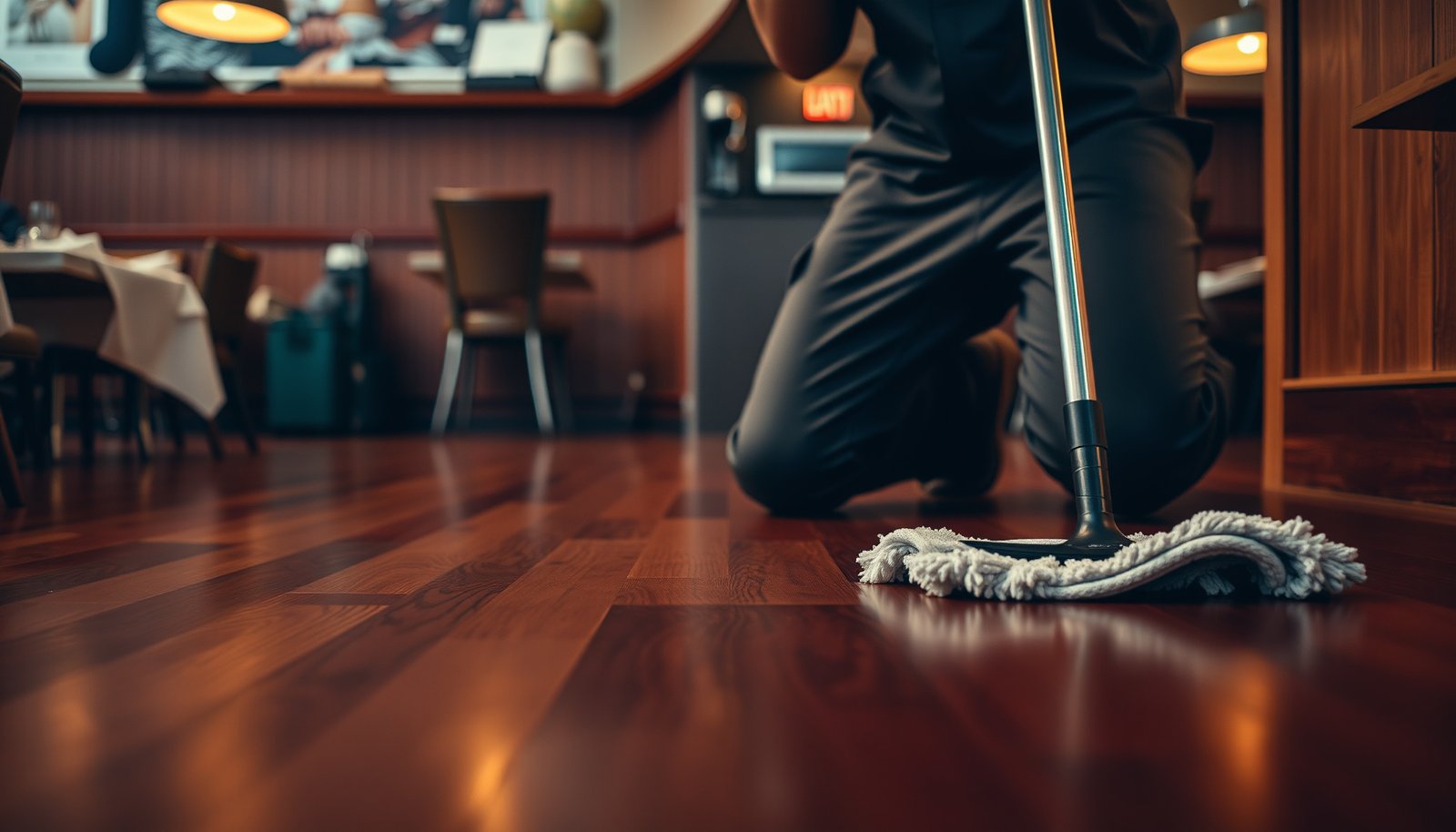

Maintain hardwood floors in a restaurant with the fastest path to long-lasting performance: control water, traffic, and finish wear. This guide lays out the best practices—daily cleaning, proper mat placement, spill response, and scheduled refinishing—that prevent warping, scratches, and dulling in high-traffic areas. Get the clear, restaurant-proven routine that keeps your hardwood looking consistent floor after floor.




Hardwood floors in a restaurant last longest when you control moisture and grit first, then maintain on a predictable schedule (not only when damage shows up). That means strong entry matting, restaurant-safe cleaning with minimal moisture, and protection for high-traffic and chair/bar contact points—so scratches don’t become dull wear patches and spills don’t trigger swelling or finish failure.
If you run a dining room, bar, or high-traffic prep area with wood flooring, this is for you—especially if you’re seeing scuffs, uneven wear, or dull patches near entrances and tables. It’s also useful for maintenance managers who want a practical schedule that aligns with how restaurant traffic and cleaning actually work.
Control dirt and moisture at the door

The fastest way to protect hardwood floors is to stop abrasive grit and excess water before they reach the wood. In a restaurant, the “door zone” is where most scratching starts—fine sand, salt, and debris behave like sandpaper on the finish.
Using entry mats (indoors and outdoors) reduces the amount of abrasive particulates that reach hardwood floors, which helps prevent finish scratches and dulling.
Promptly removing tracked spills prevents the moisture exposure that can lead to board swelling and dimensional movement in hardwood floors.
Keeping restaurant entryways dry reduces the chance of residue buildup that dulls polyurethane and similar finish systems over time.
What to install at entrances (and why it matters)
– Put durable entrance mats (indoors + outdoors) to trap grit before it grinds into the finish.
– Aim for a “two-stage” approach: scrape/collect outdoors, then deeper capture indoors. This is especially important for doors where guests arrive with shoes carrying road grit.
– Use door-sweep/track cleaning so water, salt, and sand don’t get tracked onto the boards.
– Salt is a risk factor not just for moisture, but also for sticky residues that attract more dirt to hardwood floors.
– Maintain mat coverage consistently.
– A worn mat (missing fibers, curled edges, or damaged backing) loses its ability to trap grit, which increases abrasion on hardwood floors near the door.
How to handle the door-zone spill reality
– Wipe up tracked spills fast—standing liquid is one of the biggest triggers for cupping / movement-like dimensional response in hardwood floors.
– If you have a drinks-to-go lane or bar entrance with frequent splashes, keep absorbent tools staged (microfiber towels + disposable absorbents) so staff don’t improvise.
Daily cleaning that protects the finish
Daily cleaning should remove what guests bring in—without adding unnecessary moisture. For hardwood floors, the default should be dry or barely damp cleaning, because flooding is the fastest path to finish haze, residue, and swelling risk.
Hardwood floor finish systems are designed to handle light, controlled cleaning; flooding or soaking introduces moisture beyond what most finishes and installations tolerate.
Sand and grit left on hardwood floors during daily mopping act like abrasives, accelerating finish wear in the same direction as foot traffic.
Using a vacuum with the proper hard-floor setting helps remove grit while reducing surface abrasion on hardwood floors.
The daily method that works in busy restaurants
– Sweep or vacuum using a hard-floor setting to remove sand and debris; avoid abrasive bristle brushes.
– Restaurant floors accumulate particulate quickly, and that particulate is what turns “minor scuffs” into permanent dull patches.
– Spot-clean spills immediately with a cleaner appropriate for finished hardwood (per the floor finish manufacturer’s guidance).
– Use the product label and dilution instructions; don’t “make it stronger” for speed.
– Keep damp mopping minimal; never flood—use only as much moisture as the manufacturer recommends.
– If you can smell cleaner residue or see a sheen drying unevenly, the process is likely too wet or too concentrated for your hardwood floors.
A note on restaurant chemicals
Restaurants often use multiple cleaners for different surfaces (grease, glass, bathrooms). Hardwood floors should be cleaned with products explicitly approved for finished hardwood (or “pH-balanced” hardwood cleaners that match the finish type). If your kitchen uses strong degreasers nearby, prevent overspray and splatter from landing on hardwood floors.
Weekly care: deeper clean without damaging wood
A weekly deeper clean restores look and reduces residue buildup—without crossing the moisture line that can harm hardwood floors. The goal is controlled residue removal, careful drying, and early detection of dull, sticky, or moisture-stressed zones.
Residual oils from drinks and food contact areas can build up on hardwood floors and create sticky zones that attract dirt, increasing dull wear.
Weekly inspections catch lifted edges, early swelling, and persistent dull patches before hardwood floors require disruptive refinishing.
Many hardwood finish systems require diluted, finish-compatible cleaners applied with well-wrung microfiber or a properly dampened mop.
What to do in a realistic restaurant schedule
– Remove residue with a hardwood-safe cleaner and the method the finish system specifies (often diluted, applied with a well-wrung mop).
– In my day-to-day experience coordinating facility routines for high-traffic interiors, the biggest improvement in hardwood floors came from standardizing “how damp” the mop was—not from changing the cleaner every week.
– Check for sticky spots near bar areas and entrances where oils and drink residues build up.
– Sticky residue is a dirt magnet; once it forms on hardwood floors, routine cleaning often spreads the residue wider before it’s fully removed.
– Inspect floor condition weekly (gaps, lifted edges, persistent dull areas) so you can address issues early.
– Look specifically along entrance paths and under stools where spills are likely.
When “dull” is actually two problems
Dulling can be from:
– Abrasion (scratch-and-wear across the finish), or
– Residue/haze (cleaner residue, hard-water spotting, or repeated improper damp cleaning)
Knowing which one you have determines whether you need better cleaning technique or finish restoration later.
Protect high-traffic zones and furniture contact points
Hardwood floors fail fastest where guests stand, staff pivot, and furniture glides. Protecting those micro-areas is usually more cost-effective than frequent refinishing because it reduces both abrasion and localized moisture transfer.
Protective mats/runners in standing and waiting zones reduce grit abrasion and slow finish breakdown on hardwood floors.
Felt pads (and prompt replacement of worn pads) help prevent chair and stool legs from concentrating abrasion onto hardwood floors.
Rotating moveable pieces where feasible reduces permanent wear pattern formation on hardwood floors.
The practical upgrades that pay off
– Add protective mats/runners where guests stand for long periods (hosts’ stations, bar fronts, waiting lines).
– Choose runners designed for hard floors and use stable backing so the runner itself doesn’t abrade the wood.
– Use felt pads or floor protectors under chairs, stools, and table legs; replace worn pads quickly.
– Replace pads on a schedule, not only when they’re obviously missing.
– Rotate moveable pieces when feasible to prevent permanent “map” wear patterns.
– Even rotating by a few inches changes the wear geometry on hardwood floors.
Furniture wheels and glides
If you use carts, rolling stools, or wheeled chairs, make sure the rolling components are hardwood-compatible. Hard plastic wheels or frequent dragging can create dull trails that don’t respond to routine cleaning.
Hardwood Floor Maintenance Cadence for Restaurants (Typical Schedule)
| # | Maintenance task | Frequency | Target area | Wear-prevention impact |
|---|---|---|---|---|
| 1 | Entrance mat vacuuming/cleaning | Daily | Outdoors + indoors mat runs | ★★★★★ |
| 2 | Hard-floor vacuum/sweep (grit removal) | Daily | Dining paths and bar perimeter | ★★★★★ |
| 3 | Spill blotting + immediate wipe-down | On occurrence | All zones (especially entrances) | ★★★★☆ |
| 4 | Weekly damp (manufacturer-approved) residue clean | Weekly | Entire dining floor | ★★★★☆ |
| 5 | Bar-zone and sticky-residue check | Weekly | Bar fronts + drink contact paths | ★★★★☆ |
| 6 | Furniture pad inspection/replacement | Every 30–60 days | Chairs, stools, table legs | ★★★☆☆ |
| 7 | Seasonal humidity and wear inspection | Twice/year | Whole floor + entrance transitions | ★★★★☆ |
Seasonal and long-term maintenance plan
Long-term hardwood floor performance comes from controlling indoor conditions and planning refinishing before the finish fully breaks down. In 2026, more restaurants are investing in moisture monitoring and consistent cleaning workflows—because hardwood floors respond quickly to even small environment swings.
Hardwood floor dimensional movement is driven by moisture exchange with the indoor air, so stable humidity and temperature protect hardwood floors.
According to the National Wood Flooring Association (NWFA), maintaining indoor relative humidity in the 35%–55% range helps reduce seasonal movement in hardwood floors (NWFA care guidance, n.d.).
According to the U.S. EPA, indoor relative humidity should generally be kept in a range that helps reduce mold risk (commonly cited as about 30%–60%) (U.S. EPA, n.d.).
Build the plan around your finish type
– Schedule periodic maintenance based on finish type: some floors need refinishing/recoating before bare wood shows through wear.
– The “when” depends on whether your floor has surface-sealed hardwood finish (e.g., polyurethane) and how the restaurant’s abrasion and spill profile affects it.
– Keep indoor humidity stable; follow the hardwood and finish manufacturer’s recommended indoor range (don’t guess).
– According to NWFA care guidance, a commonly recommended indoor relative humidity target is 35%–55% for hardwood stability (NWFA care guidance, n.d.).
– Plan an annual (or per-manufacturer) inspection of wear, finish breakdown, and localized water damage.
– Map problematic zones: near entrances, bar fronts, restrooms adjacent to service hallways, and any place where equipment can leak.
Humidity control is a “whole building” task
Hardwood floors can’t compensate for large humidity swings caused by HVAC changes, frequent door openings in winter, or dry forced air in heated seasons. If you’re using humidification/dehumidification, treat it as part of hardwood floor maintenance—not a separate facility program.
What can go wrong (and how to avoid it)
Most hardwood failures in restaurants are predictable: excessive moisture, abrasive cleaning, residue buildup, or neglected small leaks. If you tighten cleaning controls and monitor moisture-prone equipment areas, you prevent the problems that later force costly refinishing.
Using incorrect cleaners or excessive moisture can dull hardwood floors, leave residue haze, and accelerate finish breakdown.
Unchecked small leaks under sinks or behind refrigerators can increase moisture exposure long enough to swell boards and loosen edges in hardwood floors.
Steam and high-moisture extraction tools can be risky on hardwood floors depending on the finish and installation method; follow manufacturer allowances.
Common mistakes that ruin hardwood floors in commercial spaces
– Using the wrong cleaner (or too much moisture) can dull the finish, cause haze, or leave residues that attract more dirt—always match the product to the floor’s finish.
– Skipping entry-mat maintenance often leads to “grit grinding,” which permanently scratches the surface even if you clean regularly.
– Overlooking small leaks (under sinks, behind refrigerators, ice bins) can swell boards and loosen edges—monitor high-risk equipment areas.
– Using steam or high-moisture extraction devices on hardwood can be risky depending on finish and installation; follow manufacturer allowances only.
Cleaner approach: tradeoffs you should understand
| Approach | Pros for hardwood floors | Cons / risks |
|---|---|---|
| Dry vacuum/sweep | Removes grit that abrades the finish; lowest moisture risk | Doesn’t remove sticky residue or oily films |
| Damp (approved) spot + damp mop | Targets residues while staying within controlled moisture | If “too wet” or over-concentrated, can haze and leave residue |
| Steam / high-moisture extraction | Can feel effective for sanitation | Often unsupported or not recommended for many finished hardwood systems; can damage edges and finish |
Verdict: a realistic hardwood routine for restaurants
Hardwood floors are maintainable in a restaurant when you treat grime control as a moisture-and-abrasion prevention system. The best results come from consistent entry mat control, finish-safe cleaning that avoids flooding, and immediate protection for chair/bar contact points—because spot-fixing after the fact rarely reverses wear and swelling.
The downside is operational: hardwood floors require staff habits that stay consistent during high-volume shifts. If you’re unsure of your floor’s exact finish type or installation method, pause aggressive refinishing plans and start by confirming finish/installation details and following the manufacturer’s care instructions. Who should skip this approach: restaurants that rely on steam cleaning as a standard routine for the entire facility, or buildings with uncontrolled humidity swings and no monitoring plan for hardwood floors.
Quick checklist (save-worthy)
– Entrance mats maintained and replaced when worn
– Sweep/vacuum daily (hard-floor setting)
– Spills wiped immediately; no standing water
– Spot-clean with hardwood-finish-approved products
– Felt/floor pads on furniture; replace as soon as worn
– Inspect weekly for lifted edges, gaps, and persistent dull patches
– Keep humidity stable per manufacturer guidance
Sources
– National Wood Flooring Association (NWFA) care and maintenance guidance for hardwood floors (humidity and cleaning recommendations), n.d.
– U.S. Environmental Protection Agency (EPA), indoor humidity and moisture guidance (mold risk reduction), n.d.
Frequently Asked Questions
What’s the best way to prevent scratches and dents on hardwood floors in a restaurant?
Use high-traffic entry mats at every exterior and interior door to capture grit, sand, and moisture before they reach the hardwood floor. Install felt pads on furniture and equipment legs, and use protective floor coverings under rolling carts, trash bins, and bar equipment. Keep regular cleaning and spot checks so small debris doesn’t turn into grinding scratches from foot traffic.
How often should you deep clean hardwood floors in a restaurant?
In most restaurant environments, schedule deep cleaning about every 1–3 months, depending on foot traffic and the level of spills. Use hardwood-safe cleaners and avoid soaking the floor—excess water can damage finish and cause warping or cupping. Between deep cleans, use daily or nightly maintenance like sweeping/mopping with a properly diluted cleaner and a microfiber mop to control dirt without degrading the finish.
How do you handle spills and water exposure on hardwood floors to avoid warping?
Clean spills immediately—water and sticky liquids can penetrate seams and finish, leading to discoloration or warping. Use a dry microfiber cloth or absorbent pads first, then follow with a hardwood-safe cleaner and minimal moisture. For kitchens and bars, make sure staff are trained on spill response and keep the right absorbents and pH-neutral cleaners readily available.
Why is routine floor finish maintenance important for restaurant hardwood floors?
The protective finish on hardwood floors is what resists moisture, stains, scuffs, and everyday wear from chairs, boots, and cleaning products. Over time, restaurant traffic and frequent mopping can wear down the top layer, making the floor more vulnerable to damage. Periodically recoat or refinish based on wear conditions—your flooring professional can recommend whether spot refinishing or a full screen-and-recoat is needed.
Which cleaning products and mopping methods are safest for hardwood floors in restaurants?
Choose pH-neutral, manufacturer-approved hardwood floor cleaners and avoid harsh chemicals, abrasive pads, and steam mops unless the floor’s warranty explicitly allows them. Use a microfiber mop and apply cleaner lightly—never flood the surface—then dry or allow proper air-drying to prevent residue buildup. Maintain a consistent routine by using clean mop heads and changing them often so you don’t grind grit across the hardwood.
📅 Last Updated: October 17, 2026 | Topic: How to maintain hardwood floors in a restaurant? | Content verified for accuracy and freshness.
References
- Wood flooring
- 404 Error
- https://www.fpl.fs.usda.gov/documnts/fplgtr/fpl_gtr113.pdf
- https://www.cdc.gov/coronavirus/2019-ncov/community/disinfecting-building-facility.html
- https://www.osha.gov/slips-trips-and-falls
- https://www.epa.gov/coronavirus/disinfectants-coronavirus-covid-19
- https://scholar.google.com/scholar?q=hardwood+floor+maintenance+commercial+restaurant Google Scholar
- https://scholar.google.com/scholar?q=wood+floor+cleaning+and+disinfection+food+service Google Scholar
- https://scholar.google.com/scholar?q=hardwood+floor+care+water+damage+commercial+traffic Google Scholar