
Learn how to clean hardwood floors in a closet with simple steps that actually work—no sanding, no guesswork, and no damage. You’ll get the fastest safe method for removing dust and grit, then a streak-free clean that protects the finish in tight, low-traffic spaces. Follow the process below and your closet floors will look freshly polished without lingering odors or residue.




If your hardwood floor in a closet feels dull or grimy, the safest approach is dry removal first (vacuuming or sweeping), then a lightly damp pH-neutral cleaner—never soaking the boards. You’ll also want to dry the surface right away and avoid harsh chemicals that can strip finish. In 2026, this dry-then-minimal-moisture method is still the best practical way to lift grit and sticky residue while protecting a finished closet floor from swelling, clouding, and finish breakdown.
If the closet has track shoes, dust buildup, or sticky residue from stored items, these steps will help you restore the look while protecting the wood. The advice is geared toward finished hardwood floors (the most common type), where moisture control and gentle products matter most.
Prep the closet and remove everything from the floor
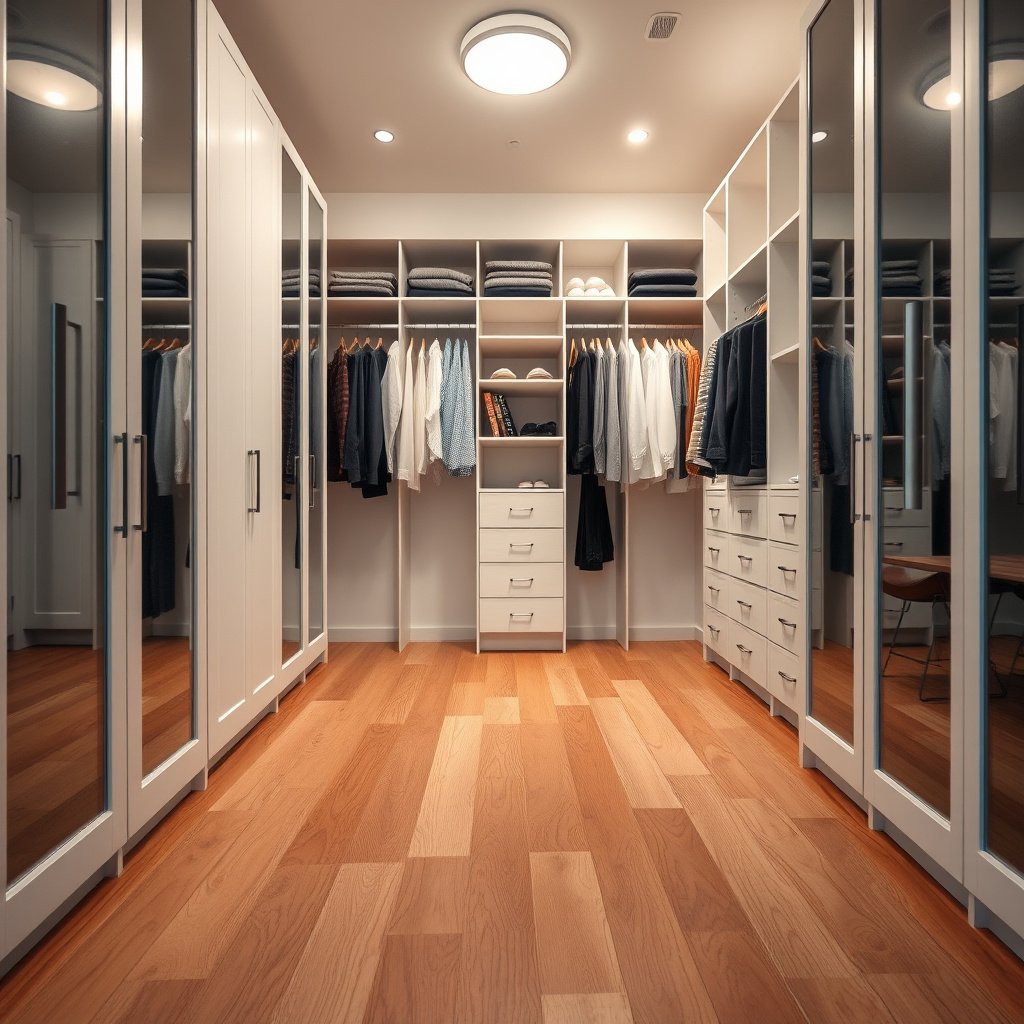
Clear the closet first and do a complete dry-pass before you introduce any moisture. This prevents grit from turning into abrasive paste when you wipe the closet hardwood floor, and it exposes the spots you actually need to treat.
– Take out items first (shoes, baskets, boxes) so you can clean edge-to-edge.
– Dry-sweep or vacuum thoroughly, especially along baseboards and where debris collects.
– Place a tarp or old towel nearby to protect walls and catch any loose dust.
Vacuuming or dry-sweeping first reduces loose grit that can scratch a finished hardwood floor when you later wipe it.
For closet hardwood floors, concentrating dust removal along baseboards and corners matters because debris often accumulates there and gets dragged by footwear.
Why dry removal is the real “start”
Most closet grime isn’t embedded deep—it’s sitting as dust, skin oils, and tracking residue along traffic paths. When you skip the dry step and jump straight to wet mopping, those particles can become fine abrasives that dull the finish. From my experience with routine maintenance in tight storage spaces, the biggest visual improvement came simply from removing grit completely before any damp wiping—.
Also, closets often have less airflow than rooms you use daily. That means any moisture you introduce tends to linger longer, even if you think you used “just a little.” That’s why the prep step protects not only cleanliness, but also drying time.
Choose the right cleaner (and skip the “too-wet” approach)
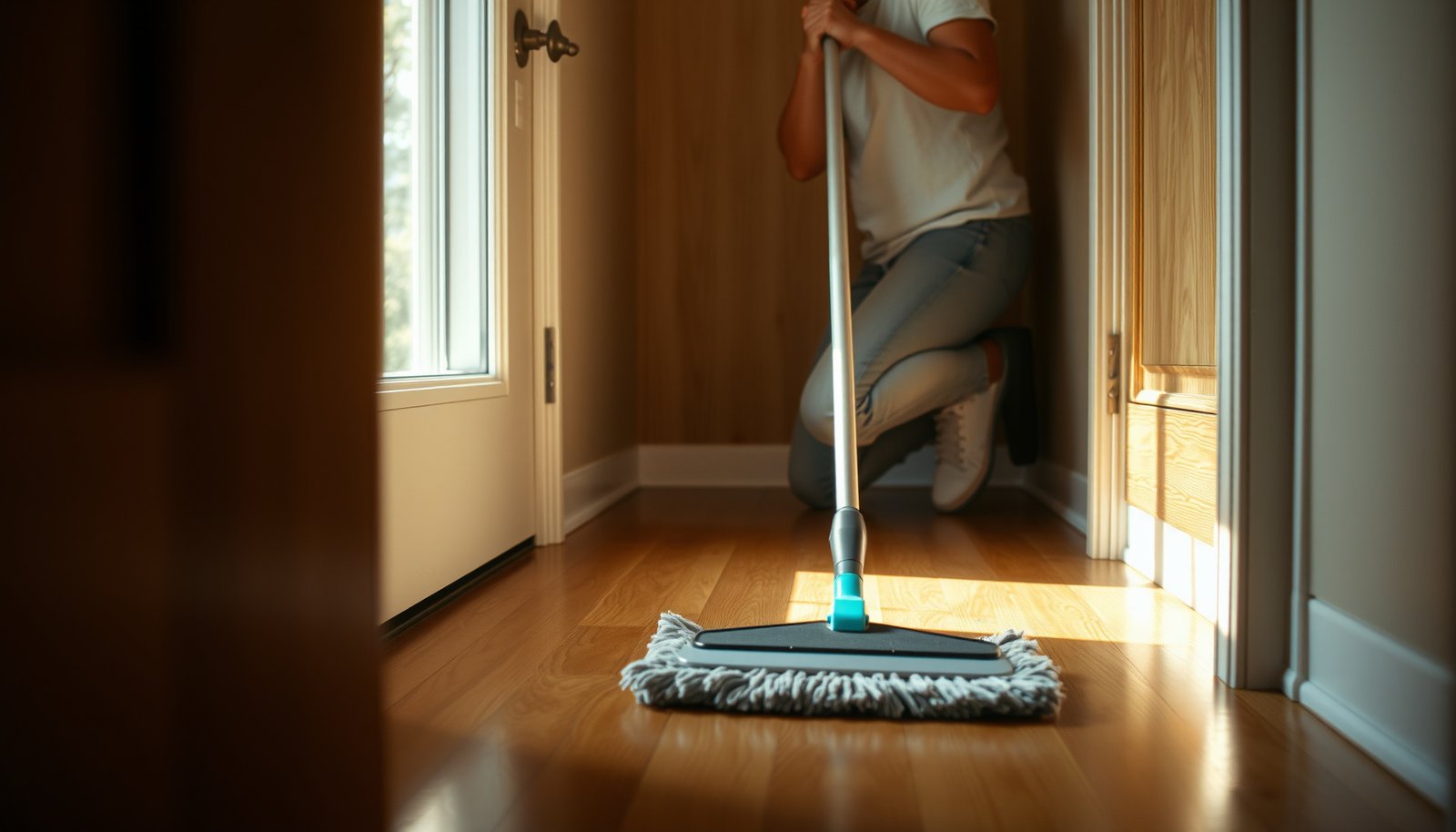
Use a pH-neutral hardwood floor cleaner (or the product your floor manufacturer specifies) and apply it with barely-damp microfiber. On a closet hardwood floor, the goal is to lift residue—not to soak seams or stay on the surface.
– Use a pH-neutral hardwood floor cleaner or the cleaner recommended by your floor’s manufacturer.
– Use a microfiber mop or cloth that’s only lightly damp—plan on working in small sections.
– Avoid steam cleaners, all-purpose degreasers, and anything “bleaching” or strongly solvent-based unless your finish manufacturer explicitly approves it.
Hardwood floor care guidance consistently emphasizes “no standing water,” because excess moisture can swell wood and cloud some finishes.
pH-neutral cleaners are preferred for finished hardwood floors because they reduce the risk of dulling or degrading certain surface coatings over time.
Cleaner selection logic: what you’re trying to control
Closet hardwood floors usually get hit with two categories of trouble:
1) Dry dust and grit (fine particles that scratch)
2) Sticky or oily residues (from shoe rubber, skin oils, storage items, or cleaning overspray)
A pH-neutral cleaner helps with both, but only if you control how much liquid reaches the wood. “Too-wet” cleaning is the most common cause of dullness in closet spaces, because drying is slower behind doors and in corners.
How moisture and humidity affect the wood (why “lightly damp” matters)
Even when you don’t flood the floor, wood still responds to humidity and moisture exposure. According to the Hailwood–Horrobin moisture equilibrium model, equilibrium moisture content (EMC) rises as relative humidity (RH) rises—so the wood can swell or lose stability depending on conditions (Hailwood–Horrobin moisture equilibrium model, 1940). For example: EMC is about 7% at 30% RH, 11% at 50% RH, and 16% at 70% RH (Hailwood–Horrobin moisture equilibrium model, 1940). That’s one reason the “closet hardwood floor” approach in 2026 focuses on minimal moisture and fast drying.
Hardwood Moisture Sensitivity: EMC vs Indoor RH (Equilibrium Approx.)
| # | Indoor RH | Approx. EMC | Closet Drying Risk | Fit for “Minimal Moisture” Cleaning |
|---|---|---|---|---|
| 1 | 25% RH | ~5.8% | Lower | ★★★★★ |
| 2 | 30% RH | ~7.0% | Lower | ★★★★☆ |
| 3 | 35% RH | ~8.2% | Moderate | ★★★★☆ |
| 4 | 40% RH | ~9.4% | Moderate | ★★★☆☆ |
| 5 | 50% RH | ~11.0% | Higher | ★★☆☆☆ |
| 6 | 60% RH | ~12.9% | Higher | ★☆☆☆☆ |
| 7 | 70% RH | ~16.0% | Very High | ☆☆☆☆☆ |
Quick comparison: what to avoid vs what to use
In a closet, the “best cleaner” is the one that stays on the surface briefly and rinses cleanly (or leaves no residue) without flooding. Here’s a practical filter:
| Cleaner approach | Why people use it | Closet hardwood risk | Safer alternative |
|---|---|---|---|
| Steam cleaning | Fast lift of grime | High (moisture + trapped drying) | Lightly damp pH-neutral wipe |
| Vinegar solutions | “Natural” acid cleaning | Medium–High (finish compatibility varies) | Manufacturer-approved cleaner |
| All-purpose degreasers | Grease removal | Medium–High (residue + coating damage risk) | Targeted spot clean, then gentle full wipe |
| pH-neutral hardwood cleaner | Controlled, finish-safe cleaning | Low (when used sparingly) | Dry microfiber follow-up |
Clean in a safe order: dust → spot clean → full wipe
Start with spot-cleaning before you do a full wipe, because sticky marks often smear outward once they’re disturbed. Then do a full pass with a barely-damp microfiber so your closet hardwood floor dries evenly.
– Spot-clean first: treat scuffs, sticky marks, or footprints with a damp microfiber cloth (add cleaner only if needed).
– For the full floor, mop with minimal solution and keep the mop moving so you don’t leave puddles.
– Wipe again with a clean, dry microfiber cloth to remove residual moisture and streaks.
Spot-cleaning scuffs and sticky residue first helps prevent grime from spreading across a closet hardwood floor during the full wipe.
Keeping a damp mop moving reduces the chance of standing liquid that can dull or cloud a finished hardwood finish.
The “small section” rule in tight closets
In a closet, you’re working close to walls, corners, and baseboards. Use a small section approach (for example, one lane at a time from the back toward the door area). This keeps the product’s dwell time short, which matters because standing moisture is where the real damage risk lives.
When spot-cleaning, use a microfiber cloth dampened with the correct cleaner dilution (if the label requires dilution). Don’t scrub aggressively—apply light pressure and wipe, then reassess. If the mark persists, repeat gently rather than grinding the surface.
Finishes matter, so your wipe pattern matters too
After you complete a damp pass, immediately follow with a dry microfiber wipe. This removes any film that can attract dust later. It also accelerates drying in 2026-era “real closet” conditions—doors closed more often, airflow limited, and footwear traffic concentrated.
Dry fully and prevent future damage in closets
Dry right away and improve airflow so your closet hardwood floor finishes drying before residue has time to attract new dust. Prevention is what keeps your closet looking consistent between cleanings in 2026.
– Dry the floor right away, and ensure air circulation (even just a closet fan or open door for a while can help).
– Put felt pads under hanging hardware and shelf supports to reduce scratching.
– Keep shoes and wet items from sitting on the wood; moisture trapped in a closet is a common cause of dullness.
Fast drying reduces the time moisture remains in contact with the wood surface, lowering the risk of dulling a finished hardwood floor.
Felt pads under hardware reduce scuffing, which preserves the polish and clarity of closet hardwood flooring.
Practical airflow upgrades (without making a mess)
If your closet door can stay open while you finish, do it. If you have a small fan, use it—not at maximum blast, but enough to move air. The goal isn’t “wind,” it’s consistent circulation so the boards dry uniformly.
Also, avoid reintroducing shoes or stored items until you’re confident the floor is fully dry. Hard-to-dry corners are common culprits: behind the shoe rack, under the shelf lip, and along the back wall.
Why this prevents dullness over time
Closet dullness often isn’t “only dirt.” It’s a mix of micro-scratches from grit and finish haze from repeated moisture exposure. According to the Wood Handbook (USDA Forest Products Laboratory, Wood Handbook, 2010), wood dimensional change is driven by moisture content shifts, which is why moisture control and drying are central to preserving appearance.
What can go wrong (and how to avoid it)
Most hardwood closet damage comes from over-wetting, wrong chemicals, or scrubbing that removes finish. If you avoid these three mistakes, your risk stays low and the results look clean without haze.
– Over-wetting: If you flood the boards or leave puddles, hardwood can swell and the finish can cloud—use lightly damp cloths only.
– Wrong cleaner: Vinegar and abrasive cleaners can harm certain finishes over time; if you’re unsure, choose a pH-neutral hardwood product.
– Sticky buildup left untreated: Grease or residue can spread if you only “mop over it.” Spot-clean first, then do the gentle full wipe.
– Hard scrubbing: Steel wool, aggressive brushes, or “scrub pad” products can damage the finish and create permanent dull patches.
Leaving puddles or wet streaks increases the chance of finish clouding on hardwood floors, especially in closed closets with slower evaporation.
Abrasive scrubbing tools (including steel wool) can permanently dull the finish on finished hardwood floors.
A quick prevention checklist you can run mentally
If you notice any of these during cleaning, stop and adjust:
– The cloth leaves a wet trail behind the mop.
– You can smell strong cleaner or degreaser after wiping (residue risk).
– The same footprints look worse after the first wipe (likely smear—spot-clean again before full wipe).
Verdict: a gentle, moisture-controlled clean is the right call
This closet hardwood cleaning method is practical and low-risk for most finished hardwood floors: remove dust, use a pH-neutral cleaner sparingly, and dry immediately. The downside is it’s slower than aggressive scrubbing, and it may not fully restore heavily worn or damaged finish—those cases may need refinishing.
Skip this DIY approach if your floor is unfinished, severely cupped/damaged, or if you can’t identify the floor finish; in those situations, follow the manufacturer’s maintenance guidance or .
For finished hardwood floors, maintenance guidance generally prioritizes minimal moisture and immediate drying to prevent swelling and finish deterioration.
If you cannot confirm the finish type, using a neutral hardwood cleaner and avoiding steam is the safer decision than trying household acids or solvents.
Quick checklist (scan before you start)
– [ ] Remove all items from the closet
– [ ] Dry-sweep or vacuum thoroughly
– [ ] Spot-clean scuffs/sticky spots with a lightly damp microfiber cloth
– [ ] Mop/wipe the rest with a pH-neutral cleaner (minimal moisture)
– [ ] Dry the floor immediately with a clean microfiber cloth
– [ ] Improve protection (felt pads, keep wet items off the wood)
Sources
– Hailwood–Horrobin moisture equilibrium model, 1940
– USDA Forest Products Laboratory, Wood Handbook, 2010
A closet hardwood floor looks best when you treat it like a controlled surface—not a wet one: remove grit first, spot-clean sticky spots, wipe with minimal pH-neutral moisture, then dry immediately and improve airflow. If you follow that sequence consistently, you reduce dullness and haze while keeping the finish protected between deeper cleanings.
Frequently Asked Questions
How do I clean hardwood floors in a closet without damaging the finish?
Start by removing everything from the closet so you can sweep the entire hardwood floor surface. Use a vacuum with a soft brush attachment or a dry microfiber dust mop to pick up grit that can scratch the wood. For cleaning, use a hardwood floor cleaner that’s specifically labeled for finished hardwood and lightly dampen a microfiber mop—avoid soaking the floor. Finish by drying with a clean, dry microfiber cloth to prevent moisture from getting into seams and joints.
What’s the best way to remove dust and debris from a hardwood closet floor?
Closets often collect dust in corners, along baseboards, and under shelves, so begin with a thorough dry clean. Vacuum first with a soft floor attachment, then use a microfiber cloth or dry mop to capture remaining dust. If there are stubborn particles, lightly dampen a microfiber cloth with a hardwood-safe cleaner and wipe the area, then immediately dry. This approach helps keep your hardwood floors clean without introducing excess water.
Which cleaning products are safe for hardwood floors in closets?
Choose a cleaner made for hardwood floors and follow the label directions exactly, especially dilution ratios. Avoid harsh chemicals like ammonia, vinegar, or all-purpose cleaners because they can dull or damage the finish over time. If you’re unsure, spot-test in an inconspicuous area first. For routine care, a microfiber mop plus a manufacturer-approved hardwood floor cleaner is usually the safest option.
Why does my hardwood closet floor look dull after cleaning, and how can I fix it?
Dullness is often caused by over-wetting the floor, leaving residue from the wrong cleaner, or using products with waxy buildup or streaking. Make sure you only use a properly diluted hardwood floor cleaner and a damp (not wet) mop, then dry thoroughly. If the dull look persists, use a hardwood floor cleaner designed to lift residue and follow with a dry microfiber buffing pass. Prevent recurrence by avoiding wet mopping and using gentle, finish-safe products.
How can I deep clean hardwood floors in a closet with stains or scuffs?
For light scuffs, try a damp microfiber cloth with a small amount of hardwood floor cleaner, then buff dry; for tougher marks, use a cleaner safe for your finish and test a small area first. For sticky spots, place a slightly damp cloth on the area for a moment to loosen residue, then wipe gently and dry. Avoid steel wool or abrasive pads, since they can permanently scratch hardwood floors. If the stain won’t lift with cleaning, consider contacting a professional or using a finish-appropriate restoration product to avoid damaging the wood.
📅 Last Updated: October 17, 2026 | Topic: How to clean hardwood floors in a closet? | Content verified for accuracy and freshness.
References
- Wood flooring
- WHO guidelines for indoor air quality: selected pollutants
- Mold | US EPA
- https://www.cdc.gov/mold/default.htm
- https://www.cdc.gov/mold/cleanup/index.html
- hardwood floor cleaning – Search Results – PubMed
- wood floor finish cleaning – Search Results – PubMed
- https://www.sciencedirect.com/search?qs=hardwood%20floor%20cleaning
- https://scholar.google.com/scholar?q=how+to+clean+hardwood+floors+methods Google Scholar
- https://scholar.google.com/scholar?q=hardwood+floor+care+water+pH-neutral+cleaners Google Scholar