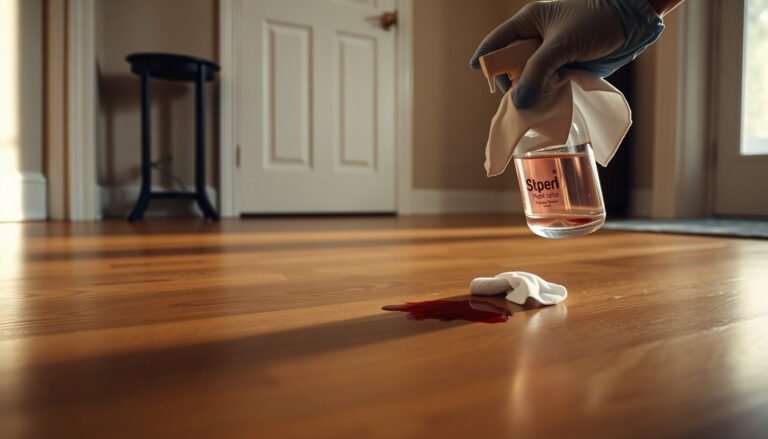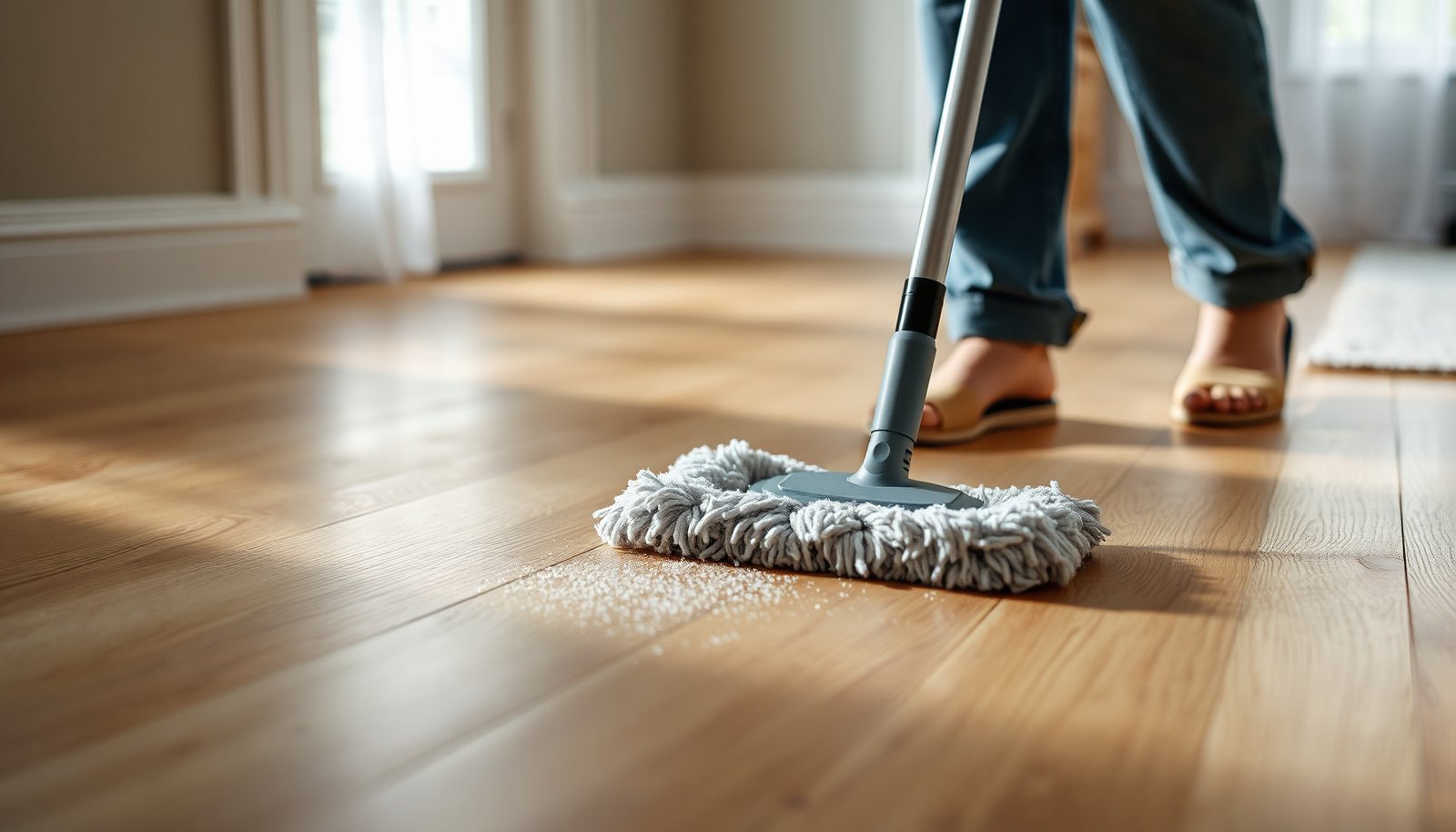

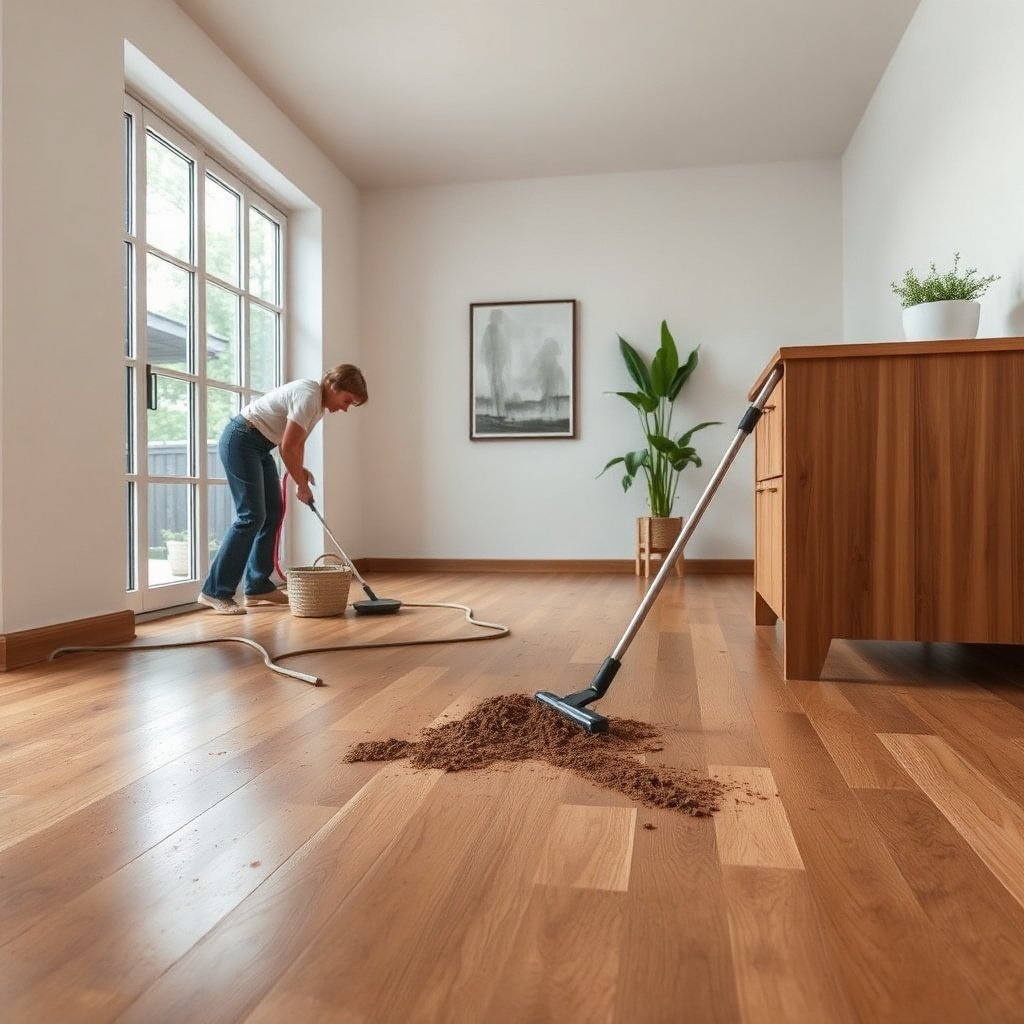
Tracked dirt on engineered wood floors can grind into the finish and leave dull scratches. With the right dry-cleaning routine, gentle spot treatment, and minimal moisture, you can lift grit without warping planks. You’ll need a soft-bristle broom or vacuum attachment, microfiber cloths, and a pH-neutral wood-floor cleaner (or water-only for light soil), plus a quick-dry plan.



Clean dirt from engineered wood floors by removing grit first (dry sweep or vacuum), then using only a lightly damp mop with a cleaner that’s approved for your flooring. Avoid soaking, steam, or harsh chemicals—engineered wood can be sensitive to excess moisture at the seams and edges. This guide walks you through a safe, simple routine that targets dirt without damaging the finish.
If your floor gets tracked-in dust, muddy footprints, or dusty “grit lines” near entryways, these steps are for you—especially if your floors have a protective top layer but you want to prevent scratching and swelling over time. Always follow your manufacturer’s care instructions where they differ from general guidance.
Engineered wood floors are built with multiple wood layers under a wear layer, so they’re often more stable than solid hardwood—yet they still react to water intrusion at joints, seams, and along the edges. As of 2026, the safest DIY approach is consistent across brands: control grit first, keep liquids minimal, and dry promptly. That’s not just “gentle cleaning”—it’s a moisture-management strategy.
Who this is for / when it applies
This is for homeowners and property managers who want an effective routine for engineered wood floors without dulling the finish or risking edge swelling. It’s especially helpful if your entryways carry abrasive dust, shoes bring in sand-like particles, or you’re tired of seeing scuffs return after “regular mopping.” In 2026, that mix of tracked-in grit and excess water is still the #1 DIY pattern that leads to long-term finish problems.
What to gather before you clean
The fastest way to avoid damage is to use the right tools before you start, because engineered wood finishes can be scratched or smeared by the wrong materials. Gather supplies that lift dirt instead of grinding it into the finish.
Here’s what to have on hand for engineered wood floors:
– Use tools that won’t grind dirt in: a microfiber pad (or mop cover), a soft-bristle broom, and a vacuum with a hard-floor setting and brush guard if you have one.
– Choose a cleaner that’s specifically approved for engineered wood or wood floors; if you’re unsure, look for your floor’s care guide and use the recommended product list.
– Have a clean, dry microfiber cloth ready for quick spot-drying after damp cleaning.
What I recommend you double-check first
Before you clean, look at your engineered wood floor’s care instructions for three items: approved cleaners, acceptable mop type, and whether the manufacturer limits water exposure or prohibits steam. If your floor uses a specific finish system (often referenced as urethane, UV-cured coating, or similar), the “compatible cleaner” list matters as much as the cleaning method.
Also, remember a key physical point: steam cleaning introduces liquid water inside the system. Steam is essentially water at high temperature—at 1 atmosphere, water boils at 100°C (212°F) (NIST Chemistry WebBook, water boiling point (2024)). Even if the surface feels dry quickly, that heat and condensation risk can still affect engineered wood seams and edges.
Typical pH of Common Cleaners vs. Engineered-wood Safety (Practical Risk View)
| # | Cleaner / Solution | Typical pH (approx.) | Finish-Impact Risk | Suitability for Engineered Wood |
|---|---|---|---|---|
| 1 | Clean water (dampening) | 6.5–7.5 | Low (if wrung out dry) | ★★★★★ |
| 2 | pH-neutral wood-floor cleaner | 5.5–8.5 | Low–Medium (follow label dwell/time) | ★★★★☆ |
| 3 | Mild dish detergent (diluted) | 7–9 | Medium (residue if overused) | ★★★☆☆ |
| 4 | Baking soda solution (light) | 8–10 | Medium (may leave film) | ★★☆☆☆ |
| 5 | White vinegar (typical acetic acid) | 2–3.5 | High (acid can dull finishes) | ★☆☆☆☆ |
| 6 | Household ammonia | 11–12.5 | High (finish/film damage risk) | ★☆☆☆☆ |
| 7 | Chlorine bleach solution | 10.5–13.5 | Very High (strong chemical risk) | ☆☆☆☆☆ |
Start with dry dirt removal (to prevent scratches)
The safest way to clean engineered wood floors is to remove grit dry first—because wet wiping turns particles into sandpaper. If you start with a damp mop on dirty floors, you spread abrasive debris across the finish.
Do this for engineered wood floors:
– Sweep or vacuum thoroughly first, focusing on high-traffic areas and corners where grit collects.
– Don’t “wipe grit around” with a wet cloth—grains of dirt act like sandpaper and can dull the finish.
– If you use a vacuum, keep suction smooth and steady and use a setting meant for hard floors to avoid dragging debris across the surface.
Dry removal: what “thorough” looks like
I recommend doing two passes during your first clean: one pass “with the grain” (following plank direction) and one across traffic lanes. For engineered wood floors, this helps pull trapped particles from the micro-texture of the wear layer so you don’t feel them later as tiny roughness.
Dry vs damp cleaning (quick engineering trade-off)
Engineered wood floors respond better to controlled moisture than to full wet cleaning. Use this comparison to choose your approach:
| Method | Primary Benefit | Key Risk for Engineered Wood | Best Use |
|---|---|---|---|
| Dry sweep / vacuum | Removes abrasive grit before it contacts the finish | Low (risk mostly from brushing too hard) | Daily/weekly maintenance and entryways |
| Lightly damp microfiber mop | Lifts sticky residue and film without flooding joints | Medium if over-wet or delayed drying | Spot-cleaning and weekly cleaning |
| Soaking / wet mopping | Only useful for heavy messes (not typical DIY) | High—moisture can reach seams and edges | Generally avoid for engineered wood |
Clean safely with minimal moisture
The direct answer for engineered wood floors is: dampen the mop pad, wring it out, and clean in small sections—never soak. Engineered wood may be more stable than solid hardwood, but it can still swell when moisture gets into joints and edges.
Follow this method:
– Dampen the mop pad (not the floor): wring it out so it feels slightly damp rather than wet.
– Work in small sections and use gentle pressure to lift residue without flooding seams or edges.
– Rinse and re-wet only as needed; if the floor starts to look streaky, switch to a fresh, lightly damp pad and follow the cleaner’s directions.
Why “minimal moisture” matters (engineering reality)
Wood movement is driven by moisture exchange with indoor air. According to the American Wood Council, maintaining indoor relative humidity in the 35%–55% range helps reduce dimensional change in wood products (American Wood Council (2015)). When you add extra water during cleaning, you can accelerate moisture swings—especially near baseboards and along plank ends.
Also, engineered wood’s core layers and adhesives are designed for normal indoor exposure, not for repeated water pooling. As of 2026, the most reliable DIY practice is controlling how long moisture stays at the surface and how quickly it’s removed.
Handle spots, sticky grime, and stubborn dirt
Engineered wood spot cleaning works best when you remove the bulk first, then use a lightly damp cloth just long enough to lift residue. That avoids saturating the wear layer and reduces the chance of moisture migrating into seams.
Use these steps for engineered wood floors:
– For sticky residue (like tracked-in mud or food), remove the bulk with a dry cloth first, then spot-clean with a cleaner-safe, lightly damp cloth.
– For built-up grime, let the cleaner sit for the time listed on the label (don’t improvise with long soaking), then wipe and dry with a microfiber cloth.
– If your spot has dried mud, soften it by placing a barely damp cloth on the area briefly, then lift—don’t scrape aggressively with metal tools.
A note on scrapers and “quick” fixes
Avoid metal scrapers and abrasive pads on engineered wood floors. Even if you don’t see immediate damage, you can micro-scratch the finish, making dirt easier to catch later. If you’re unsure, test the cleaner approach on an inconspicuous area—manufacturer instructions always win.
Dry, protect, and prevent buildup
The safest way to finish cleaning engineered wood floors is to dry immediately after damp mopping and then prevent re-soiling at the door. Quick drying and walk-off control reduce both abrasion and moisture exposure.
Do the following:
– After any damp cleaning, dry the surface promptly with a clean microfiber towel, especially along edges and around vents/baseboards.
– Use doormats and wipeable entry rugs to cut down how much dirt reaches the planks in the first place.
– Re-clean with a consistent routine: light dry cleaning often prevents the need for heavy wet cleaning later.
Prevention is cheaper than repairs
If you can stop grit from entering, you don’t have to repeatedly “chase” it with water. For engineered wood floors, that’s the difference between a finish that stays glossy-looking and one that slowly loses uniformity where grit accumulates.
What can go wrong (and how to avoid it)
Engineered wood cleaning problems usually come from moisture overload, abrasive tools, or incompatible chemicals. If you avoid these, you protect both the finish and the underlying wood layers.
Watch for these common mistakes:
– Soaking or repeated wet mopping: excess water can seep into seams and cause swelling, warping, or joint separation.
– Using abrasive tools: scrub pads, stiff brushes, or “scouring” sponges can scratch or dull the finish.
– Harsh or questionable chemicals: avoid strong degreasers, bleach, and cleaners that contain ammonia or strong solvents unless your floor manufacturer explicitly approves them.
– Steam cleaners and wet heat: steam can drive moisture into the wood layers—skip unless your manufacturer specifically permits it. Steam introduces water at 100°C (212°F) at boiling conditions (NIST Chemistry WebBook, water (2024)).
– Not following the finish type: some engineered floors are more water-sensitive than others; if you can, confirm your floor’s finish and follow its exact care guidance.
When you should not follow DIY guidance
If your engineered wood floor already shows lifting edges, visible water damage, or warranty requirements that demand specific cleaners/tools, stop and follow the warranty instructions. In those cases, a flooring pro can determine whether moisture exposure is reversible or whether the plank layers have been compromised.
Verdict: a safe routine that’s effective (with a couple limits)
A safe approach for engineered wood is: dry first, damp second, dry again—using only approved products and minimal moisture. The downside is that this method won’t “deep clean” like soaking or steam, so very heavy buildup may require a manufacturer-approved professional or specialist cleaning.
If you’re dealing with high-traffic grit lines or sticky residue at entryways, the routine above is usually enough to restore a clean, even look while protecting your engineered wood floor’s finish.
Skip this DIY routine if your boards show lifting edges, visible water damage, or warranty requirements that demand specific cleaners/tools—in those cases, follow the warranty guidance or consult a flooring pro.
Quick checklist (scan before you start)
| Step | Do | Don’t |
|---|---|---|
| Remove dirt | Sweep or vacuum first | Wipe grit with a wet mop |
| Mop cleaning | Use a lightly damp microfiber pad | Soak the floor or leave puddles |
| Cleaner choice | Use floor-approved cleaner | Use bleach/ammonia/harsh solvents (unless approved) |
| Spot cleaning | Lightly damp cloth, gentle lift | Aggressive scraping with metal tools |
| Finish | Dry promptly after damp cleaning | Let moisture sit at seams/edges |
Frequently Asked Questions
How do you remove dirt safely from engineered wood floors without scratching?
Start by dry-cleaning with a microfiber dust mop or soft-bristle broom to lift loose grit before it drags across the finish. For stuck-on dirt, use a slightly damp microfiber cloth or mop—never a soaking wet method. Wipe with the grain and immediately dry any damp areas to prevent moisture from seeping into the seams.
What cleaning products are safe for engineered wood floors when dealing with grime?
Use a manufacturer-recommended engineered wood floor cleaner or a pH-neutral cleaner designed for wood flooring. Avoid harsh chemicals like bleach, ammonia, or steam cleaners, which can dull the finish or damage the top veneer. If you’re using a spray, apply it to the cloth first (not directly to the floor) to control moisture and reduce residue buildup.
Why is it important to clean dirt promptly from engineered wood to prevent damage?
Dirt and grit act like sandpaper, grinding against the wear layer and causing surface scratches and loss of shine over time. Moisture from dirty spills or wet wiping can also penetrate edges and joints, leading to swelling or cupping. Regularly removing debris helps maintain the protective finish and keeps the engineered wood floor looking new.
Best way to clean embedded dirt from engineered wood flooring—wipe, mop, or spot-clean?
For light buildup, a microfiber mop with a barely damp head is usually best, followed by a dry pass with a clean towel. For embedded dirt, spot-clean by loosening it with a lightly damp cloth and gentle pressure, then dry immediately. Don’t use abrasive pads, scrub brushes, or rough sponges, because they can compromise the finish and make future dirt removal harder.
Which maintenance routine helps prevent dirt from accumulating on engineered wood floors?
Place entryway mats and use a no-shoes policy to reduce tracked-in debris, and vacuum or dust regularly with a soft brush attachment. Use felt pads under furniture and keep high-traffic areas protected to minimize grinding from small particles. A consistent routine—dry dusting first, then occasional pH-neutral damp cleaning—helps prevent grit buildup while safely preserving the engineered wood surface.
📅 Last Updated: November 04, 2026 | Topic: How to safely clean dirt from engineered wood floors? | Content verified for accuracy and freshness.
References
- Engineered wood
- Maintenance | National Wood Flooring Association | NWFA
- MohawkFlooring
- 404 Error
- https://www.bruce.com/support/care-and-cleaning/
- https://scholar.google.com/scholar?q=how+to+clean+engineered+wood+floors+safely Google Scholar
- https://scholar.google.com/scholar?q=hardwood+floor+cleaning+moisture+avoidance+microfiber Google Scholar
- https://scholar.google.com/scholar?q=engineered+wood+floor+maintenance+dirt+removal+finish+care Google Scholar