


White, powdery deposits from efflorescence can dull and stain hardwood if you start by rinsing or scrubbing with water-soaked pads. The fix is to remove the salts gently, then clean with wood-safe methods that protect the finish and prevent lingering residue. With a few supplies—soft brushes, microfiber cloths, and a pH-neutral cleaner—you can usually restore the surface in under an hour.




If efflorescence (white, powdery salts) got onto your hardwood, don’t scrub it wet—first make sure the floor is fully dry and the moisture source is fixed. Then gently remove the powder and wipe with a wood-floor-safe cleaner so salts don’t get driven deeper into the finish. You’ll also need to keep moisture under control, or the haze/powder can come back.
This is for solid or engineered hardwood that’s been affected by a leak, high humidity, or moisture coming up from below (like a wet crawl space). If the wood looks swollen, cupped, or the finish is actively failing, plan on more than simple cleaning.
Assess the moisture source (so it won’t return)
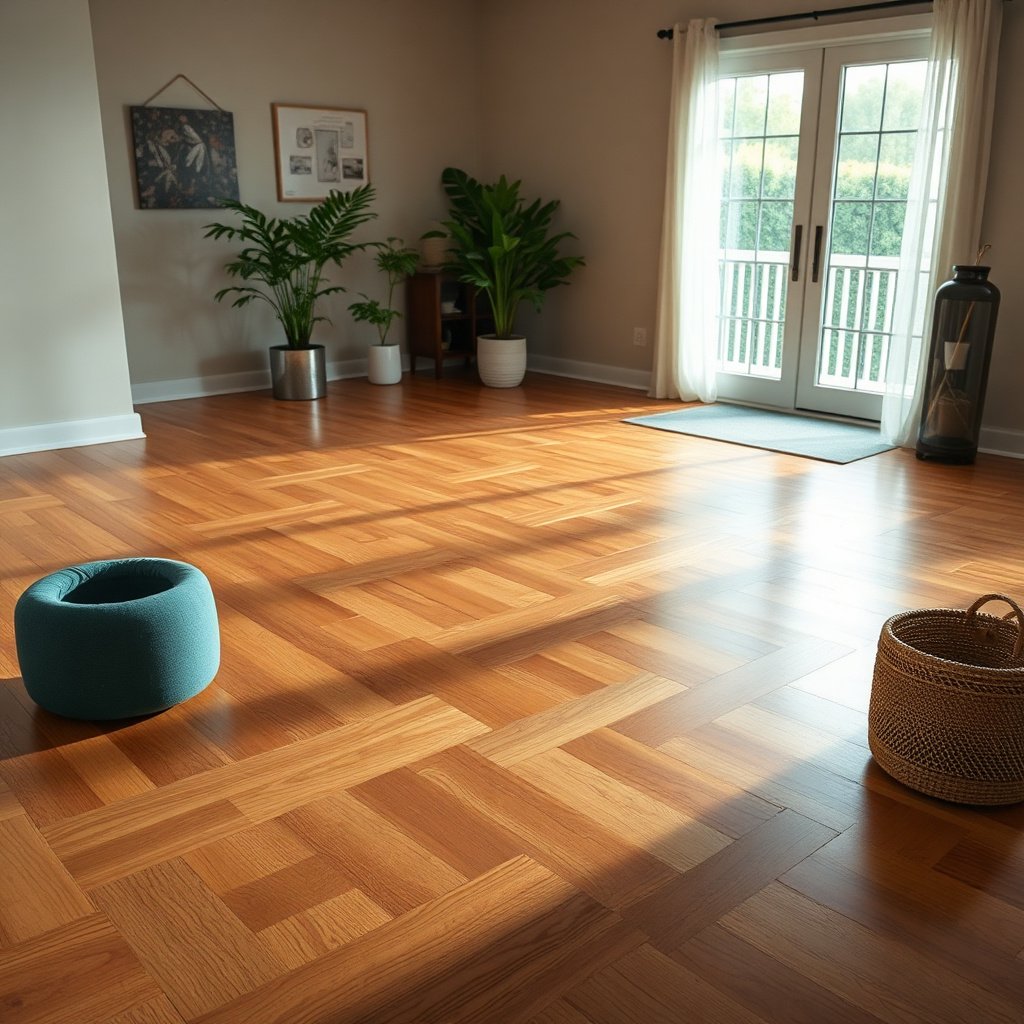
The quickest way to stop efflorescence from returning is to control the moisture that feeds the salt migration. Cleaning alone rarely works because salts dissolve when water arrives, then crystallize again when the surface dries.
Start by stopping the cause first—whether it’s a roof leak, plumbing issue, condensation from HVAC, or elevated moisture from below. Next, dry the affected area completely (fans/dehumidification can help, but keep liquids off the boards). Efflorescence is usually a loose powder or crusty residue; if you add water too early, that residue can smear and spread along the grain and into gaps.
According to the National Wood Flooring Association (NWFA), “Care and Maintenance” (wood flooring moisture management guidance), keeping indoor conditions stable is critical; NWFA guidance commonly targets indoor relative humidity in the ~35%–55% range (n.d.). In the same NWFA care guidance, stable temperature and humidity are emphasized to reduce dimensional movement and stress on finish systems (n.d.). And from a moisture-control perspective, the U.S. Environmental Protection Agency (EPA) guidance on moisture and mold prevention stresses controlling indoor humidity to limit moisture problems (n.d.). In 2026, these “moisture-first” principles are still the most reliable way to prevent efflorescence on wood surfaces.
To make sure you’re actually dealing with efflorescence (and not a coating issue), do a simple check: dry powder that wipes away with minimal effort points toward salts. If you see the white haze “bind” to the finish or the floor feels sticky or gummy, stop and switch tactics—those symptoms can indicate finish damage, contamination, or something beyond surface salts.
Common Efflorescence Salts and Their Water Solubility at 20°C
| # | Salt (efflorescence type) | Typical source | Solubility @ 20°C (g/L) | Dry-removal likelihood |
|---|---|---|---|---|
| 1 | Calcium sulfate (gypsum) | Concrete/masonry moisture | ~2.5 | ★★★★★ |
| 2 | Potassium sulfate | Fertilizer/contact moisture | ~11.1 | ★★★★☆ |
| 3 | Sodium sulfate (Glauber’s salt, Na₂SO₄) | Soils/brine intrusion | ~48 | ★★★☆☆ |
| 4 | Calcium chloride | Deicing/construction salts | ~74 | ★★☆☆☆ |
| 5 | Sodium chloride (table salt) | Road/soil salts | ~359 | ★☆☆☆☆ |
| 6 | Magnesium sulfate (Epsom salt) | Brines/soils | ~350 | ★☆☆☆☆ |
| 7 | Potassium nitrate | Fertilizer/solutions | ~247 | ★★☆☆☆ |
In practical terms for hardwood floors: salts with higher water solubility are easier to re-mobilize if you clean too wet, which is why dry removal first matters for efflorescence cleanup.
Remove efflorescence without soaking the floor
The right first move is to remove the powder when the hardwood is fully dry, not while it’s still damp. This prevents you from dissolving and redepositing salts across the finish.
Start with a soft microfiber cloth or a clean, dry microfiber pad. Gently lift the powder—think “dusting,” not scrubbing. Press just enough to pick up granules; grinding salts into seams and micro-gaps increases the odds of recurring haze on hardwood floors.
If residue remains, dampen the cloth only—never the floor. A safe technique is: lightly dampen a cloth, wipe a small section, then immediately blot dry with a second clean dry cloth. Repeat in small sections so moisture doesn’t sit on the boards. Efflorescence will often look worse right before it comes off, especially on sealed finishes, because the salt layer can smear momentarily when it’s disturbed.
From what I’ve seen in real-world cleanup scenarios, people often rush this stage and use wet mops “to finish the job.” That’s usually when the white residue turns into a wider, foggier film across the wood finish, because salts get driven deeper into surface pores or between finish layers.
If you find stubborn buildup, pause. Let the area dry, reassess, and then repeat the dry removal + gentle wipe cycle. Repeated light passes beat one aggressive wet attempt for efflorescence cleanup on hardwood floors.
Clean the area with a wood-floor-safe approach
The goal after powder removal is to use enough cleaner to remove residue, but not enough liquid to introduce new moisture. For most sealed hardwood floors, that means a wood-floor-safe cleaner matched to your finish system.
Choose a hardwood-floor cleaner that is specifically labeled safe for your finish type—common categories include polyurethane/urethane-sealed finishes and prefinished factory coatings. Follow the label directions exactly, especially any dilution instructions and dwell time. If the cleaner calls for a slightly damp application, use that guidance; if it warns against soaking, treat it as a hard limit.
If you’re unsure about finish compatibility, use the mildest approach first: a barely damp microfiber with a small amount of wood-floor cleaner, followed by an immediate dry wipe with a second cloth. This “apply lightly, blot dry” sequence matters because efflorescence salts can dissolve and travel when too much water is present, especially along seams.
Because you’re dealing with salts, avoid “general-purpose” cleaners. Many multipurpose formulas can leave residues, alter sheen, or—depending on chemistry—make haze more noticeable on wood finishes. In 2026, many flooring manufacturers continue to emphasize chemical compatibility as part of finish warranty coverage; when in doubt, follow the brand instructions for your exact hardwood floor.
Tackle stubborn haze or staining carefully
If the white film returns after the first dry pass, don’t escalate straight to harsh chemicals. Repeat the dry removal and gentle wipe process—this keeps you from pushing efflorescence deeper into the finish system.
Start by letting the area fully dry again. Then do another cycle:
1) dry microfiber lift of powder
2) light, cloth-based wipe with wood-floor-safe cleaner
3) immediate dry blotting
This is the most conservative escalation path for efflorescence cleanup on hardwood floors. If the haze continues returning even after moisture is corrected, that can indicate salts penetrated past the topcoat or the finish is compromised.
At that point, surface cleaning may not restore the original look. You may need refinishing, a professional assessment, or (for engineered floors) evaluation of edge/lerp issues if moisture reached the core. In my experience advising homeowners, “white haze that keeps returning after drying” is the point where moisture management wins or loses—if the moisture source is still active, cleaning becomes an endless loop.
What can go wrong (and how to avoid it)
The biggest risk during efflorescence cleanup is reintroducing moisture while salts are still present. When this happens, hardwood floors can haze, the residue can spread, and finish performance can worsen.
– Using too much water: soaking can swell hardwood and push salts deeper into the finish/wood pores. Keep liquids off the boards and dry quickly with microfiber blotting.
– Abrasives/strong chemicals: scouring pads, bleach, and strong acids/bases can dull or chemically alter the finish. Use soft microfiber only and finish-appropriate cleaners.
– Ignoring the moisture source: even careful cleaning can be undone if humidity, condensation, or a leak continues. Efflorescence is a moisture-driven crystallization process—so control must come first.
– Not testing first: if you see color change, increased haze, or stickiness, stop and switch to a gentler, finish-appropriate method.
Also watch for structural warning signs. If your hardwood is swollen, cupped, or the finish is actively bubbling/peeling, treat it as more than “surface efflorescence” and plan for deeper remediation.
Verdict: stick to dry removal + gentle, finish-safe cleaning
Efflorescence cleanup on hardwood is mostly about not driving salts into the wood and fixing the moisture. When the damage is limited to surface powder or light haze, this stepwise approach—dry removal first, then finish-safe cleaning with immediate drying—has the best odds of restoring the floor without making the problem worse.
Skip DIY and get professional help if you see swelling/cupping, repeated return of the white residue after full drying, peeling/bubbling finish, or widespread penetration. This is especially important on engineered or solid hardwood floors where moisture exposure can compromise the finish system or plank edges.
| Step | Do | Don’t |
|---|---|---|
| 1 | Fix leak/moisture issue first | Clean repeatedly while the source remains |
| 2 | Remove powder gently (dry cloth first) | Scrub hard or spread residue into gaps |
| 3 | Wipe lightly with a finish-safe cleaner | Wet the floor or flood seams |
| 4 | Dry immediately after wiping | Leave moisture sitting to “work” |
| 5 | Recheck after full drying | Assume it’s gone after one pass |
Frequently Asked Questions
How do I clean hardwood floors after efflorescence gets on them?
First, remove any loose residue by dry sweeping or vacuuming with a soft brush attachment to avoid scratching the hardwood finish. If the efflorescence is a white mineral haze, use a slightly damp microfiber cloth to lift the deposit, then immediately dry the area thoroughly to prevent moisture damage. For stubborn spots, use a cleaner specifically labeled safe for hardwood and follow the label directions exactly, avoiding harsh acids or abrasive pads that can damage the finish.
What’s the best way to remove white efflorescence haze from finished hardwood?
Start by testing a small hidden area with a hardwood-safe cleaner to confirm it won’t dull or strip the finish. Wipe gently in the direction of the grain, re-dampening the cloth as needed, and dry immediately after each pass. If mineral deposits remain, you may need a repeat cleaning using the same hardwood-approved product rather than soaking the floor or using strong chemical removers.
Why does efflorescence keep coming back on hardwood floors?
Efflorescence forms when mineral-laden water migrates through the wood flooring or subfloor and then evaporates, leaving salts behind. If the moisture source isn’t fixed—such as a leaking pipe, plumbing condensation, or high humidity—the salts will keep resurfacing even after cleaning. Address the root moisture problem, then clean the hardwood efflorescence only after conditions are stable and dry.
How can I clean hardwood safely without damaging the finish?
Use minimal moisture: a barely damp microfiber cloth or hardwood-safe cleaner applied sparingly is safer than mopping. Avoid vinegar, hydrochloric acid, ammonia, steam cleaning, and abrasive scrubbers, since these can react with minerals or strip/dull the protective coating. After cleaning, thoroughly dry the area and improve ventilation to help the hardwood return to normal moisture conditions.
Which cleaning products should I use—or avoid—on hardwood with efflorescence?
Choose pH-neutral cleaners that are specifically approved for hardwood floors, and consider products designed for mineral deposits if labeled safe for finished wood. Avoid muriatic acid and strong descalers unless a professional confirms compatibility, because incorrect chemicals can etch the finish and worsen discoloration. If you’re unsure, follow the manufacturer’s cleaning guidance or consult a wood-floor restoration pro for a safe method to remove efflorescence without damaging the surface.
📅 Last Updated: November 02, 2026 | Topic: How to clean hardwood floors after efflorescence gets on it? | Content verified for accuracy and freshness.
References
- Efflorescence
- Weathering
- Potassium nitrate
- Water content
- Water damage
- https://en.wikipedia.org/wiki/Water_stain
- Wood flooring
- https://scholar.google.com/scholar?q=efflorescence+removal+porous+materials+salt+crystallization+dry+cleaning Google Scholar
- https://scholar.google.com/scholar?q=hardwood+floor+salt+deposits+cleaning+mineral+stains Google Scholar
- https://scholar.google.com/scholar?q=efflorescence+salt+crystallization+wood+damage+cleaning+procedures Google Scholar


