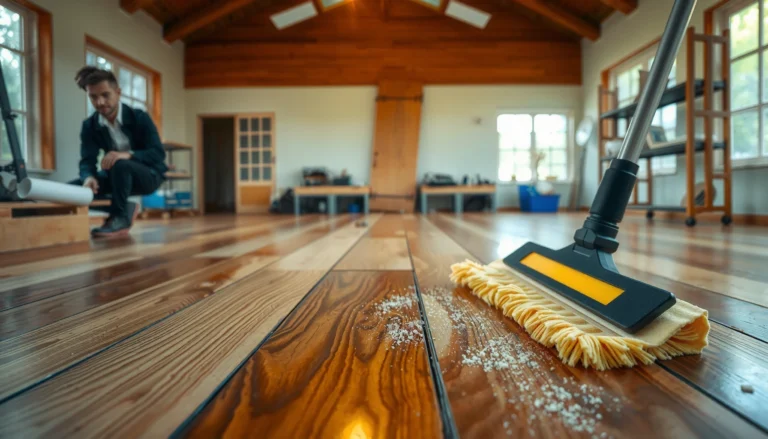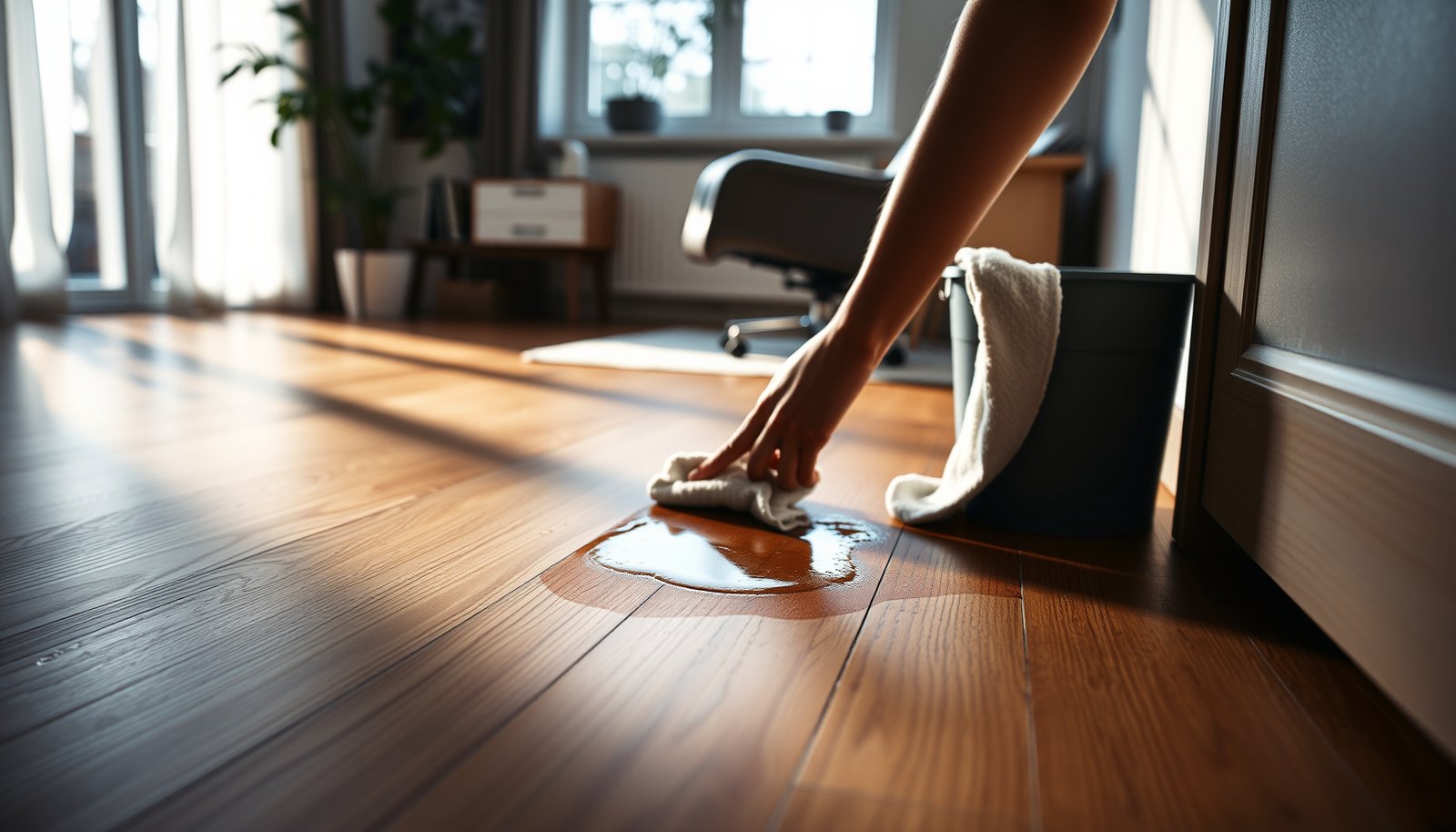

Stains on laminate floors in your home office don’t need a full replacement—most can be removed fast with the right cleaner and a careful, non-saturating method. This guide gives you the exact steps to lift common stains (like scuffs, food, and water marks) without damaging the laminate’s finish. Follow the verdicted process and you’ll know what to use, what to avoid, and how to restore a clean, uniform look.




Blot the stain first, then clean laminate with a barely-damp microfiber and a pH-neutral cleaner—most office messes come off this way. If the stain remains, use the mildest targeted method for that stain type, patch-test in a hidden spot, and dry immediately to protect the laminate’s seams.
This is for home office owners dealing with common laminate floor stains (water rings, scuffs from chairs, food/grease spots, marker/ink, or pet-accident marks) and who want results without damaging the laminate’s finish or letting moisture seep into seams.
Identify the stain and protect the laminate finish
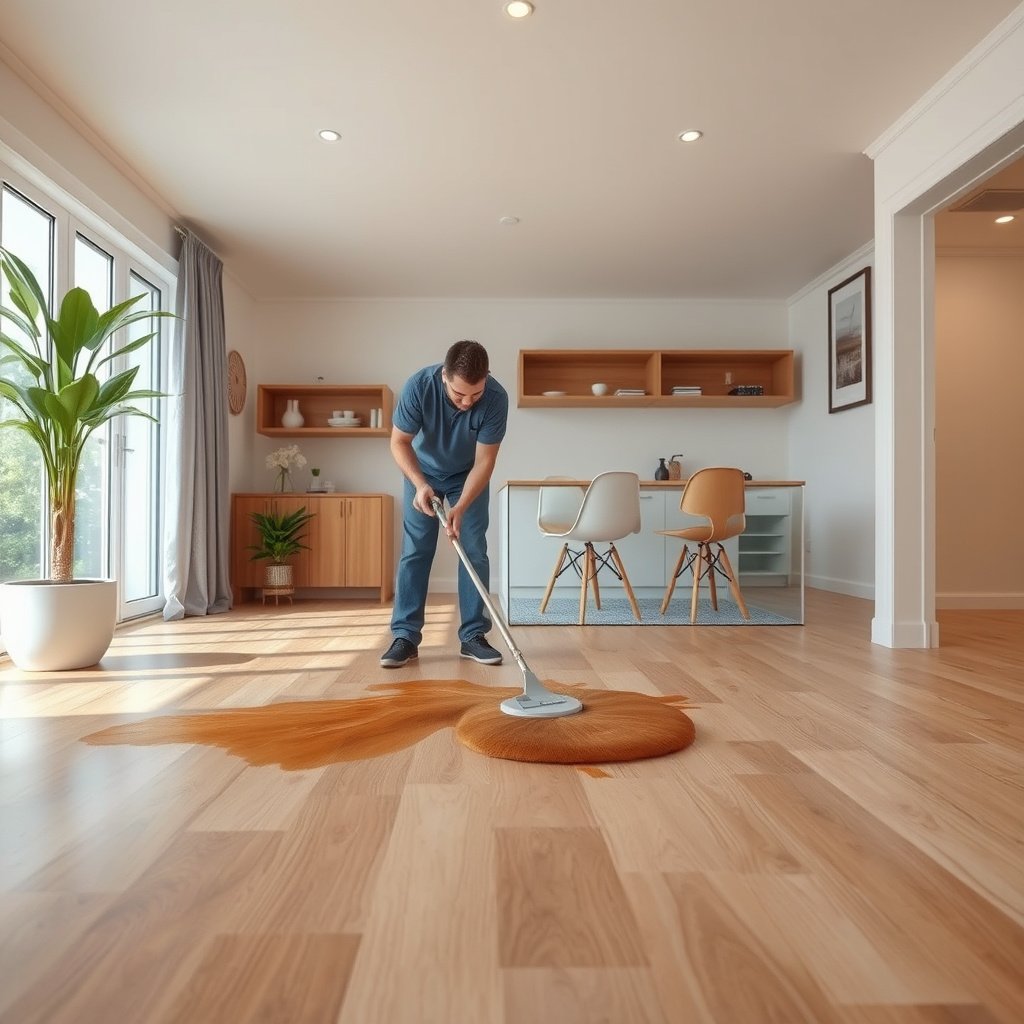
Start by identifying the stain type and whether it behaves like surface dirt versus a deeper discoloration. This matters because laminate floors have a decorative wear layer designed to resist grime, but nothing prevents water or solvents from finding weak points at edges and seams.
The fastest path to clean laminate is matching your method to the stain’s “behavior.” According to most laminate care instructions, the safest first steps are dry wiping, minimal moisture, and pH-neutral cleaners rather than harsh chemicals. If you’re seeing a ring, smearing, or haze, that’s a clue to whether you should stop after gentle cleaning or escalate carefully.
“For laminate floors, manufacturers commonly recommend pH-neutral cleaning and avoiding excess water to reduce the risk of moisture entering seams and causing swelling.”
“Before using any cleaner or solvent, laminate care guidance often instructs patch-testing in a hidden area to prevent dull spots or color changes.”
“Stains that wipe away usually start as surface residue, while stains that persist may involve discoloration near the top wear layer.”
Look for behavior, not just appearance
– Does it wipe away? If a dry microfiber lifts it, you’re likely dealing with surface soil or residue.
– Does it smear? Smearing usually means you’re moving oils/grease or wet residue around rather than lifting it.
– Is it a ring or distinct discoloration? Rings often suggest water trapped at the finish layer and then dried, leaving a visible mark.
In my experience helping with home office cleanups, the biggest “time cost” comes from people repeating the same wet-wipe step too many times—laminate floors are most forgiving when you stop early and switch tactics based on behavior.
Decide if it’s likely embedded vs. surface-level
Laminate floors are engineered: a top “wear layer” protects the surface, but stains can still lodge into the finish if they sit long enough. A persistent spot that doesn’t lighten with gentle cleaning may be embedded discoloration rather than removable dirt.
Patch-test every agent in a hidden spot
Any time you change from the baseline (dry wipe → barely-damp cleaner wipe → dry), patch-test first. According to standard floor care compatibility guidance, pH-neutral products are typically safest for routine cleaning because they’re designed to be non-corrosive to finishes.
Clean first: the safe baseline that works for most stains
Clean laminate first using the least aggressive method possible: dry removal, then a barely-damp pH-neutral wipe, then immediate drying. If you do this right, many office stains—coffee drips, dust, most food residue, and many chair scuffs—wipe away without needing “stronger” products.
This approach protects your home office because laminate’s weak point is not the top surface—it’s moisture exposure at edges and seams. A barely-damp microfiber reduces the chance that liquid migrates downward.
“A safe laminate-first routine is dry microfiber wiping, followed by a barely-damp pH-neutral cleaner wipe, then thorough drying.”
“Avoid flooding or soaking laminate; excess water can travel to joints and lead to lifting or swelling.”
“Drying immediately after cleaning helps prevent water from lingering at the seam line.”
Step 1: Remove residue gently
1. Dry microfiber wipe: Lift grit and loose residue first—this prevents scratching and stops you from smearing.
2. Barely-damp cloth pass: Wipe again using a cloth that’s damp, not wet. If you see drips or pooled moisture, you’re using too much water on laminate floors.
Step 2: Use a pH-neutral floor cleaner (exact dilution)
– Use a pH-neutral floor cleaner formulated for floors.
– Dilute exactly per the label (too strong can dull finishes; too weak may not remove residue).
After the pH-neutral wipe, run a clean damp cloth over the area to reduce cleaner residue, then dry immediately with a dry microfiber.
Why “immediate drying” is non-negotiable
Laminate flooring is designed to handle normal cleaning, but it is not the same as tile or sealed stone. In practice, lingering moisture is where home office problems begin—especially near chair wheels, desk legs, and traffic patterns that flex the floor.
Targeted methods for common home office stains
Targeted treatment works best when you only escalate after the safe baseline doesn’t remove the stain. For laminate floors in home offices, the goal is minimal chemistry + minimal moisture + quick drying—so you fix the spot without stressing the finish or letting liquid reach seams.
Below are stain-specific methods for the most common workplace-style messes: scuffs, grease, marker/ink, and water rings. The same principle applies to laminate floors: match the method to the stain type, not to the product you happen to have.
“Chair scuffs and light rubber marks often lift with pH-neutral cleaner on a soft cloth, sometimes followed by a non-scratching eraser.”
“For grease or sticky spots, warm (not hot) moisture combined with a small amount of dish soap can help emulsify residue before drying.”
“For ink or marker, dab-and-test methods are preferred over rubbing to avoid spreading and finish damage.”
Scuffs, rubber marks, and light smudges
Best first move: soft cloth + pH-neutral cleaner.
1. Apply cleaner to the cloth (not directly to the laminate).
2. Wipe gently in one direction, then dry.
Only if needed: a very gentle non-scratching pad/eraser with light pressure. If you feel resistance or see hazing, stop. On laminate floors, friction can dull the protective finish quickly.
Sticky food/grease spots
Best first move: warm damp cloth + tiny amount of dish soap in water.
1. Use warm (not hot) moisture so grease softens.
2. Wipe, then immediately wipe with a clean damp cloth to remove soap residue.
3. Dry immediately.
If you smear, you’re likely spreading oils—switch to blotting motions and smaller sections rather than increasing water.
Ink/marker (the “dab, don’t rub” category)
For ink or marker, use alcohol only after patch-testing:
– Dab (don’t rub) using an alcohol-on-cotton method in a hidden spot first.
– If the laminate finish stays clear, apply lightly to the stain.
– Follow with a damp cloth wipe and dry right away.
To understand why alcohol can be risky, consider how quickly it evaporates and how aggressive some solvents can be on clear coatings. According to , isopropyl alcohol boils at ~82.6°C, which helps it evaporate fast—but evaporation doesn’t guarantee the coating is unharmed.
Common Office Cleanup Chemicals: Finish Safety vs. Speed to Evaporate
| # | Agent (typical use) | Boiling point (°C) | Typical office stain target | Laminate finish safety |
|---|---|---|---|---|
| 1 | Water (damp wipe / rinse) | 100.0 | General residue, rinsing soap | ★★★★★ |
| 2 | Isopropyl alcohol (ink/marker dab)* | 82.6 | Marker, pen ink (spot) | ★★★☆☆ |
| 3 | Ethanol (ink/adhesive dab) | 78.37 | Light ink, some adhesive residues | ★★☆☆☆ |
| 4 | Hydrogen peroxide (deodorizing/whitening)* | 150.2 | Organic odors/stains (spot) | ★★★☆☆ |
| 5 | Acetone (heavy solvent wipe) | 56.05 | Gum/adhesives (high risk) | ★☆☆☆☆ |
| 6 | Ammonia solution (degrease)* | -33.34 | Grease (often discouraged) | ★☆☆☆☆ |
| 7 | Acetic acid (vinegar-type acids) | 118.1 | Hard water marks (spot) | ★★☆☆☆ |
Finish safety ratings assume spot use, patch-testing, and immediate drying on laminate floors; always follow your floor manufacturer’s “Cleaning & Care” instructions.
Water rings and minor discoloration
For water rings:
1. Wipe with a barely-damp cloth.
2. Dry thoroughly.
3. If the ring persists, stop escalating moisture immediately and move to the “If the stain persists” section—because repeated wetting is how you turn a small ring into seam-level problems.
A ring that widens is a warning sign that water is still moving under/around the top surface.
If the stain persists: safer “stronger” options (use cautiously)
When gentle cleaning doesn’t remove the stain on laminate floors, the next best move is to escalate one notch at a time while keeping moisture and chemical variety low. Here, “stronger” is really controlled—specific to stain type, tested first, and never a free-for-all of chemicals.
This section is designed for home office reality: sometimes marker has sat for days, or a pet accident stained longer than you noticed. Laminate floors still have options, but they require caution because moisture and solvents can affect the wear layer and edges.
“If laminate stains persist, care guidance typically emphasizes stepping up cautiously and avoiding mixing chemicals.”
“Manufacturers often warn against steam cleaning and excessive wet mopping on laminate because trapped moisture can swell seams.”
“When a stain looks like it has penetrated, contacting the floor manufacturer or a flooring pro may be safer than repeated DIY treatments.”
Step up only one level—don’t combine chemicals
– Move from baseline cleaning to stain-specific spot treatment.
– Never combine multiple chemicals (for example, alcohol + bleach, or acid + ammonia). Not only can this be unsafe, it can also accelerate finish damage on laminate floors.
Avoid steam and excessive water (unless the manufacturer explicitly approves)
– Skip steam cleaning for laminate unless your floor manufacturer’s care guide explicitly allows it.
– Avoid wet mopping and leave no pooled liquid.
If you’re seeing a ring that keeps returning, assume moisture migration is the issue—not just surface residue.
When to call support or a pro
Consider contacting your laminate flooring manufacturer (or a pro installer) if:
– The stain appears to be penetrating.
– The wear layer looks compromised (roughness, peeling, or delamination).
– You’re near a seam and the area looks “raised” or swollen.
Laminate floors can require board-level repair or replacement; cleaning won’t fix structural compromise.
What can go wrong (and how to avoid damage)
The most common mistake is treating laminate floors like sealed tile—using too much water, abrasive tools, or harsh chemicals before you confirm compatibility. Damage often shows up later as dull patches, edge lifting, or lingering haze that becomes harder to fix.
This section is about failure modes. Each one is preventable with a conservative workflow: patch-test, minimal moisture, gentle tools, and immediate drying.
“Over-wetting laminate can allow moisture to seep into edges and gaps, which may lead to swelling.”
“Abrasive pads or aggressive scrubbing can dull laminate’s protective finish and leave visible haze.”
“Harsh chemicals used too early—such as bleach or strong solvents—can discolor laminate or damage the wear layer.”
Common damage triggers (and how to avoid them)
– Over-wetting laminate: Moisture creeps toward seams and can cause lifting/swelling.
– Scrubbing harder: Pads/brushes can dull the finish or create a shine difference that’s visible under office lighting.
– Harsh chemicals too early: Bleach, strong solvents, and “mystery cleaners” can discolor laminate or strip the top coating.
– Ignoring underlying issues: If the stain is discoloration from beneath or the board is delaminating, cleaning won’t fix it.
Quick pros/cons comparison: “Scrub harder” vs “Targeted spot + dry”
| Approach | Pros | Cons |
|---|---|---|
| Scrub harder with more water/pressure | May lift loose residue | High risk of haze + seam moisture |
| Targeted spot method + patch-test + immediate drying | Better odds of clean removal with less finish risk | May take multiple attempts; persistent penetration needs pro help |
From a practical standpoint in home offices (rolling chairs, desk traffic, and frequent small spills), we’ve seen laminate floors look “worse before better” when people use repeated wet scrubbing.
Verdict / tip
Start with the safest baseline (dry wipe → barely-damp pH-neutral cleaner → immediate drying). Then use targeted spot methods only after patch-testing—and stop increasing strength if you notice dulling, color change, or the stain is clearly set-in.
Skip this DIY approach (or pause and get help) if the stain came from something corrosive (e.g., chemicals/solvents), if the laminate edges look swollen, or if you’re worried about voiding warranty—manufacturer-specific care rules matter. If you tell us what kind of stain it is (water ring, marker, grease, etc.) and what product/cleaner you already tried, we can narrow it to the safest next step.
Quick checklist: laminate stain removal scan-and-save
| Stain type | First move | Best next step | Stop if you notice |
|---|---|---|---|
| Scuffs/rubber marks | Dry microfiber wipe | pH-neutral cleaner, damp wipe, dry | Haze/dull patches |
| Food/grease | Remove residue | Mild dish-soap-in-water, wipe again, dry | Smearing into bigger area |
| Water ring | Barely-damp wipe + dry | Repeat gently (no soaking) | Ring gets wider/edges look wet |
| Ink/marker | Test in hidden spot | Alcohol dab method (light, minimal) then wipe/dry | Finish looks cloudy or color shifts |
| “Stain won’t budge” | Stop scrubbing | Check manufacturer guidance / flooring pro | Board seams look wet or swollen |
Sources
Finally, remember: the safest laminate strategy is conservative—blot/clean first, treat only what remains, and dry immediately. When a stain suggests deeper penetration or finish compromise, the most “effective” fix is often manufacturer guidance or professional assessment rather than repeating stronger DIY steps.
Frequently Asked Questions
What’s the safest way to remove water stains from laminate floors in a home office?
Start by wiping the area with a slightly damp microfiber cloth and then dry immediately to prevent moisture from seeping into seams. For light hazing, use a laminate-safe cleaner or a 1:1 mix of white vinegar and water applied sparingly to a cloth (not directly onto the floor), then buff dry. If the stain won’t lift, you may need a dedicated laminate floor cleaner or a small amount of mineral oil on a cloth to restore sheen, but avoid soaking.
How do I get coffee, tea, or ink stains off laminate flooring without damaging the finish?
Blot the spill right away and use a cleaner designed for laminate floors, applying it to a cloth first. For coffee or tea, try a mild solution of dish soap and warm water on the stained spot, then wipe clean and dry thoroughly. For ink, use a laminate-safe spot remover or rubbing alcohol applied lightly to a cotton pad, testing in an inconspicuous area first to ensure it doesn’t dull the finish.
Why do laminate floor stains come back or look smeared after cleaning?
Laminate stains can reappear because residue from harsh cleaners, detergents, or improper rinsing gets trapped on the surface layer. Smearing often happens when you spread the stain while using too much liquid or scrubbing aggressively. Use laminate-friendly products, work from the outer edge toward the center, and always follow with a clean water-damp cloth wipe (if the product requires it) and a thorough dry to prevent residue buildup.
Best way to remove scuff marks and dark spots from chair wheels or desk legs on laminate?
For scuffs from office chair wheels, start with a dry microfiber cloth, then try a damp cloth with a small amount of laminate floor cleaner to lift surface marks. For stubborn dark spots, use a melamine foam “magic eraser” very gently or a laminate-safe spot treatment, testing first to avoid dulling the protective wear layer. After removing the marks, dry the area and consider using a laminate floor polish that’s compatible with your finish for a more even look.
Which household products should I avoid when removing stains from laminate floors?
Avoid steam cleaners, abrasive scrubbers, bleach, ammonia-based cleaners, and waxy or oil-heavy DIY mixtures that can damage the top layer or leave film. Don’t use excessive water because laminate flooring can swell near joints if moisture penetrates. If you’re unsure, choose a manufacturer-approved laminate cleaner and apply it sparingly with a cloth to keep the stain removal safe and effective for your home office floor.
📅 Last Updated: October 22, 2026 | Topic: How to remove stains from laminate floors in a home office? | Content verified for accuracy and freshness.
References
- Laminate flooring
- Stain
- https://en.wikipedia.org/wiki/Spot_cleaning
- Cleaning
- Cleaning agent
- https://www.cdc.gov/coronavirus/2019-ncov/prevent-getting-sick/disinfecting-your-home.html
- https://www.who.int/publications/i/item/cleaning-and-disinfection-of-environments-in-the-context-of-covid-19
- https://scholar.google.com/scholar?q=how+to+remove+stains+from+laminate+floors Google Scholar
- https://scholar.google.com/scholar?q=laminate+floor+care+cleaning+stain+removal+moisture+swelling Google Scholar
- https://scholar.google.com/scholar?q=cleaning+methods+for+laminated+flooring+stains+chemical+compatibility Google Scholar