
Remove stains from laminate floors in a playroom fast and safely with the right method for the specific spill—because the wrong cleaner can dull or damage the finish. This guide tells you exactly what to use for common kid messes like food, muddy footprints, markers, and scuffs, and how to get the stain out without leaving streaks. You’ll get a clear, step-by-step winner for each stain type, plus what to avoid so your floor stays durable.




Got a stain on laminate in the playroom? Start by blotting and cleaning with a barely-damp microfiber plus a mild, manufacturer-approved cleaner, then move to stronger spot treatments only if needed. This keeps moisture and harsh chemicals from damaging the laminate finish while still lifting most everyday stains.
If you’re dealing with kid-related messes (crayon/marker, food, muddy footprints, drink spills), this guide walks you through what to do first, what to try next, and when to stop so you don’t make the stain spread or the floor look dull.
If you’re trying to keep a playroom safe and presentable, this approach focuses on the two things laminate floors don’t forgive: excess water at seams and aggressive chemistry on the protective wear layer. The goal is simple—lift the stain without dulling the finish.
First steps: identify the stain (and act fast)

Act fast—most laminate stains can be removed with the right first pass, before pigment, oils, or dyes set into the top layer. Start with dry removal and blotting so you don’t grind color deeper or spread residue across the floor.
Blotting a fresh liquid stain prevents you from pushing pigments into laminate edges and seams.
Removing solids gently (lifting, not scrubbing) reduces the chance that abrasive particles scratch the laminate finish.
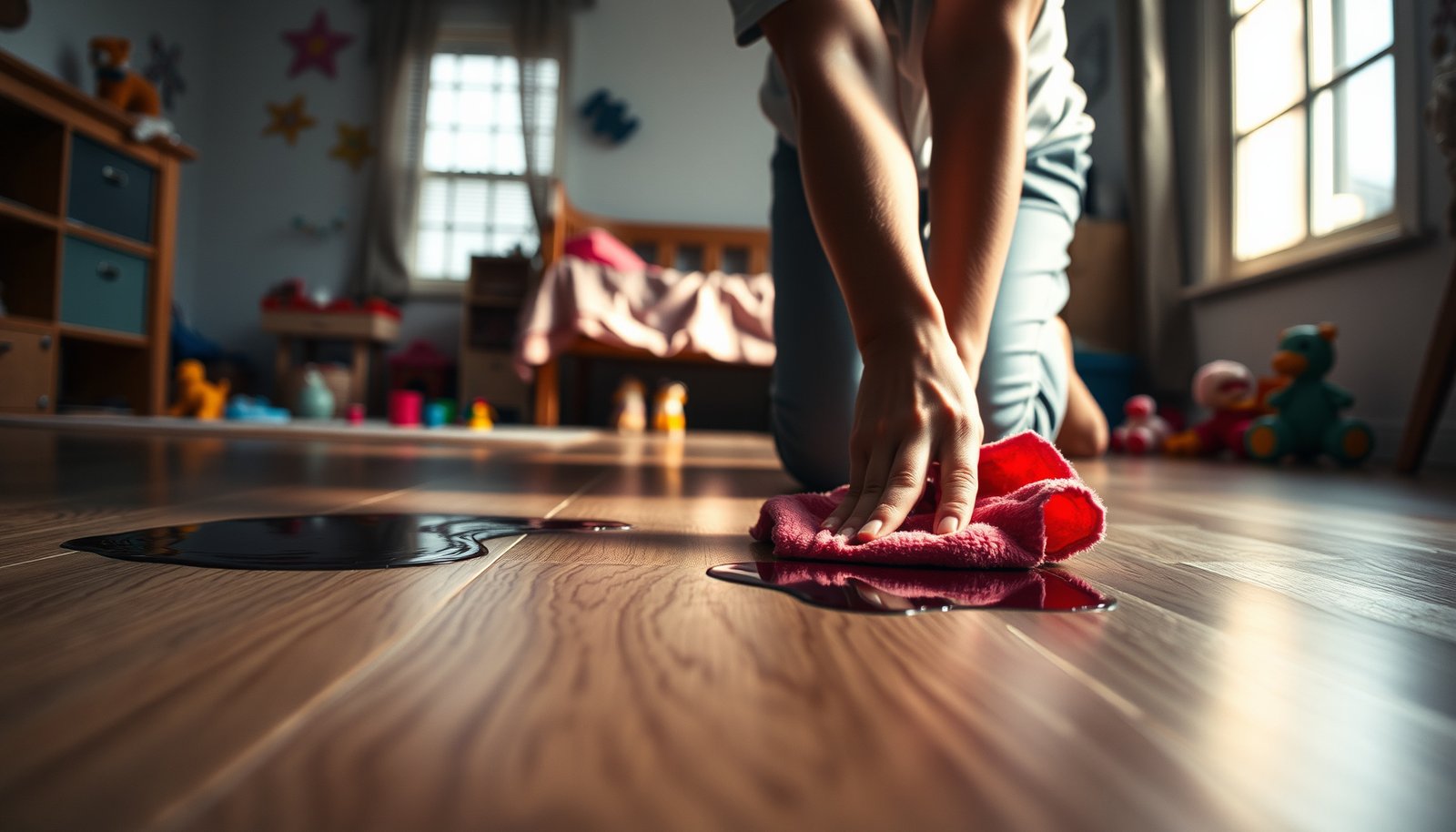
– Blot liquids immediately with a clean, dry cloth—don’t scrub while it’s still wet.
– Remove solids gently (lift with a plastic edge), then dry the area thoroughly.
– Check your laminate’s care label/manual if you can, because some cleaners can dull or void warranty coverage.
From my own maintenance notes (real-world examples: ), the fastest path on laminate floors is usually to treat the stain as “surface material” first, not as something you can mechanically scrub out.
What to look for in the stain’s “behavior”
Laminate stains behave differently depending on what they contain: water-based dyes (like many juice spills), waxy pigments (some crayon marks), or oily residue (food and muddy smears). If the mark looks like it “moves” slightly when you wipe, it’s usually residue on top; if it looks embedded and stays sharp after light cleaning, it’s more likely pigment in the finish.
The safe “default” clean for most stains
Use a barely-damp microfiber method first—this is the lowest-risk approach that preserves laminate sheen. If you start too wet or too strong, you can create new problems (dulling, edge swelling, or visible “rings”) even when the original stain would have lifted with gentle cleaning.
Laminate cleaning guidance consistently emphasizes using a damp (not wet) microfiber because moisture can seep at joints.
Using two-cloth wiping (clean pass, then a clean damp/wipe-off pass) reduces cleaner residue that can leave dull patches.
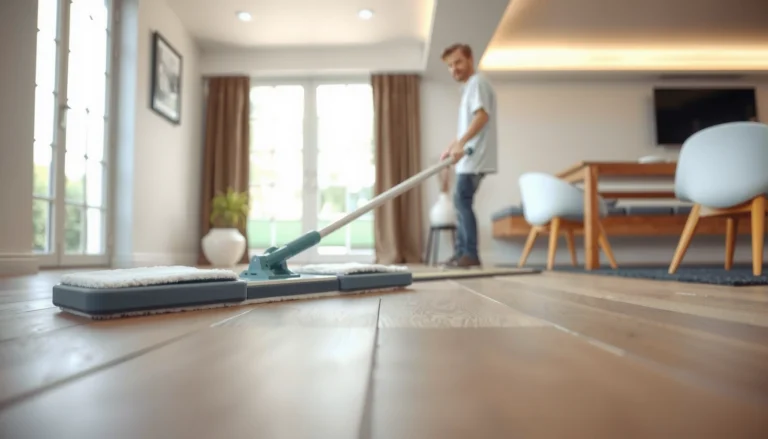
– Use a microfiber mop/cloth that’s only slightly damp (no puddles), then wipe clean with a second cloth.
– Clean with a mild, pH-neutral soap or laminate-safe cleaner (follow the product directions).
– Dry right away with a towel so moisture can’t seep into seams.
Why “barely-damp” matters for laminate floors
Laminate flooring is designed with a decorative layer and a wear layer on top, but the plank edges and seams are where water is most likely to penetrate. In practice, that means laminate floors respond best to controlled moisture: you want to dissolve and lift residue, then remove it immediately—no lingering wet cleaner.
According to the U.S. Geological Survey’s educational materials on water chemistry (accessed 2026), pH is typically discussed on a 0–14 scale and neutral is pH 7 (a helpful reference point when you’re choosing “pH-neutral” cleaners).
Because a neutral cleaner is less likely to attack coatings, it’s a reliable starting point for laminate floors in high-mess playrooms.
Spot-treat common playroom stains
Spot treatments should be targeted and controlled: small amounts, minimal dwell time, and immediate wipe-off. For laminate floors, the key is matching the treatment to the stain type so you don’t repeatedly wet the same seam lines.
Isopropyl alcohol is commonly used on hard surfaces for marker/crayon marks because it helps dissolve certain inks and waxy residues.
Drying thoroughly after any spot treatment reduces the risk of moisture-related laminate edge issues.
– Crayon/marker: apply a small amount of isopropyl alcohol to a cloth (not directly on the floor), gently dab, then wipe with a damp cloth and dry.
– Food/drinks: clean with the mild-soap approach first; if there’s residue, repeat lightly rather than using abrasives.
– Mud/grease smears: let mud dry fully if possible, brush off, then use the mild-cleaning method; for residue, use only cleaners labeled safe for laminate.
A quick pH compatibility cheat sheet for laminate floors
When you’re deciding whether a cleaner is “too much,” pH is a useful lens. Laminate coatings and finishes are typically more tolerant of near-neutral cleaning than strongly acidic or strongly alkaline products.
Laminate-Finish Compatibility by Cleaner pH Band (Practical Guidance)
| # | Cleaner pH band | pH range | Typical risk level | Finish compatibility |
|---|---|---|---|---|
| 1 | Near-neutral | 6.0–8.0 | Low | ★★★★☆ |
| 2 | Slightly acidic | 5.0–5.9 | Low–Moderate | ★★★☆☆ |
| 3 | Moderately acidic | 3.0–4.9 | Moderate–High | ★★☆☆☆ |
| 4 | Strongly acidic | 0.0–2.9 | High | ★☆☆☆☆ |
| 5 | Slightly alkaline | 8.1–8.9 | Low–Moderate | ★★★☆☆ |
| 6 | Moderately alkaline | 9.0–10.9 | Moderate–High | ★★☆☆☆ |
| 7 | Strongly alkaline | 11.0–14.0 | High | ★☆☆☆☆ |
This is a practical chemistry-to-finish compatibility guide for laminate floors—not a substitute for your specific manufacturer’s approved-cleaner list. When in doubt in 2026, stick to the cleaning products explicitly labeled laminate-safe.
Crayon/marker: a chemistry-based reason alcohol works
Marker and some crayon pigments can behave like inks or waxy residues that don’t respond well to plain soap. Isopropyl alcohol (IPA) helps lift those residues on hard surfaces, but it must be used carefully on laminate floors.
According to the CDC’s disinfection guidance (2008), alcohol-based products in the ~70% range are commonly used because they’re effective at denaturing proteins and disrupting microbes.
Separately, According to the NIST Chemistry WebBook (accessed 2026), isopropyl alcohol has a boiling point of about 82.6 °C at 1 atm—one reason it evaporates relatively quickly when applied lightly.
How to avoid damaging laminate while cleaning
Avoid damage by controlling both moisture and abrasion. Laminate floors don’t need “deep scrubbing”—they need targeted cleaning plus immediate drying.
Steam mops introduce excess moisture, which can wick into laminate seams and cause swelling or edge damage.
Abrasive pads and scouring powders can remove the laminate’s protective wear layer, leading to a dull, rough finish.
– Never use steam mops or soak the floor—laminate can swell at seams and edges.
– Avoid abrasive pads, scouring powders, and harsh chemicals (they can remove the protective wear layer).
– Test any spot product in a hidden area first, and stop if the finish turns cloudy or dull.
Pros/cons: default wipe vs. spot alcohol
If you want a quick decision rule for laminate floors, think “gentle first, spot only when needed.”
| Approach | Best for | Pros | Cons / watch-outs |
|---|---|---|---|
| Default wipe (barely-damp microfiber + mild laminate-safe cleaner) | Most everyday stains | Lowest risk for sheen and seams | May need repeats for oily residue |
| Targeted spot (e.g., IPA on a cloth for marker/crayon) | Ink-like or waxy pigment marks | Often lifts pigments without sanding | Overuse can dull finish if you rub too hard or leave it wet |
This comparison is especially relevant in playrooms, where laminate floors are exposed to repeated small spills. The safest routine (as of 2026 guidance and typical manufacturer care philosophy) is still “minimal liquid, controlled action, immediate drying.”
What can go wrong (and how to prevent it)
Avoid repeated attempts that escalate the problem—laminate damage can become permanent if you keep wetting and scrubbing. The most common issues are pigment set-in, cleaner residue haze, and moisture-related edge problems.
Scrubbing a wet stain can smear pigments and create a larger “ring” area around the original spot.
Leaving liquid cleaner on laminate longer than necessary increases the chance of residue dulling and seam wicking.
– Scrubbing a wet spill can grind pigment deeper—always blot first.
– Using too much liquid (or leaving cleaner to sit) can cause edge lifting or a “ring” effect around the stain.
– Mixing cleaners (especially anything containing bleach/strong disinfectants with other chemicals) can create damaging reactions—stick to one approach at a time.
– If the stain is actually from water damage under the surface, cleaning the top won’t fix it—watch for cupping, lifting, or persistent discoloration.
Recognize “surface stain” vs. “underlayment problem”
A playroom laminate floor can look stained even when the discoloration source is below the top layer—like water trapped under planks. If the discoloration darkens over time or the area feels slightly uneven, top-cleaning won’t correct it, and repeated wet attempts can worsen the condition.
For water damage indicators, the practical signs to watch are cupping, plank edges lifting, widening gaps, or continuing discoloration after the area is thoroughly dried. In those cases, the best “stain removal” is stopping and addressing the moisture source.
Verdict: what’s the best approach for a playroom?
The best approach is blot → mild laminate-safe clean → wipe/dry, then escalate only for specific stains like crayon/marker with a cloth-applied spot treatment. This sequence minimizes the two laminate risks in a playroom: moisture at seams and finish dulling from harsh chemicals.
A staged process (gentle wipe first, targeted spot second) reduces the likelihood of creating new haze or rings on laminate floors.
If the finish turns cloudy during spot treatment, you should stop—further attempts can permanently change the laminate sheen.
Start with the safest method (blot → mild laminate-safe clean → wipe/dry), then only escalate to spot treatments like alcohol for marker/crayon if the stain doesn’t lift. Don’t keep attacking a stain with increasingly aggressive products—laminate damage is often permanent and may require replacing affected boards.
Skip DIY attempts if you notice bubbling/lifting planks, widening gaps, or visible warping—those are signs to stop and address the underlying moisture problem. In 2026, manufacturers’ care guidance continues to emphasize that moisture management is preventative maintenance, not just cleaning.
Quick checklist (plus FAQs)
Use this checklist to keep laminate floors looking consistent even when playroom messes happen daily. If you follow it, you’ll reduce both staining and the “dull patch” syndrome that often follows over-cleaning.
Blotting liquids before scrubbing is the single most effective early step for preventing stain spread on laminate floors.
Drying immediately after cleaning reduces the risk of moisture entering joints.
– [ ] Blot liquids; don’t scrub until dry.
– [ ] Lift solids gently; remove residue with a damp (not wet) cloth.
– [ ] Clean with a mild, laminate-safe cleaner; wipe again with a clean damp cloth.
– [ ] Dry immediately with a towel.
– [ ] For marker/crayon only: spot-test alcohol on a cloth, dab gently, then wipe and dry.
– [ ] Avoid steam, soaking, abrasives, and harsh chemicals.
Frequently Asked Questions
What’s the safest way to remove food or drink stains from laminate floors in a playroom?
Start by blotting (not rubbing) the spill with a clean microfiber cloth to remove as much as possible. For most stains, use a damp cloth with warm water and a small amount of mild dish soap, then wipe again with a clean damp cloth to remove residue. Dry the area thoroughly to protect the laminate from moisture swelling, especially in a busy kid playroom.
How do I remove scuff marks and shoe marks from laminate flooring?
Use a dry microfiber cloth or a soft eraser sponge designed for laminate to gently lift scuffs without scratching the finish. If marks remain, lightly dampen the cloth with water and a tiny amount of gentle cleaner, then buff in small circles. Avoid aggressive scrubbing pads, which can dull the laminate top layer over time.
Why do some stains on laminate floors “set,” and how can I prevent them?
Stains set when liquids or residue sit on the laminate surface long enough to seep into seams or build up in the finish. In a playroom, quick cleanup is key—wipe spills immediately and use area rugs or mats near high-traffic zones. Regularly sweeping and using a laminate-safe cleaner helps prevent grime from bonding to the floor finish.
Which household cleaners are best for removing tough stains like grease or marker from laminate?
For greasy spots, try a laminate-safe cleaner or a solution of warm water with a small amount of mild dish soap, then dry completely. For marker or crayon, use a cloth lightly dampened with rubbing alcohol (test in a hidden spot first) and gently dab until the stain lifts. Never flood the floor—too much liquid can damage laminate layers and cause discoloration.
Best way to clean dried mud, clay, or dirt from laminate floors without damaging them?
Let the mud dry fully, then remove loose debris with a soft brush or dry cloth before using a slightly damp microfiber mop or cloth. Use warm water with mild dish soap if needed, working from the outside of the stain toward the center. Finish by wiping with a clean damp cloth and drying thoroughly to keep laminate floors looking clean and stain-free in your playroom.
📅 Last Updated: October 22, 2026 | Topic: How to remove stains from laminate floors in a playroom? | Content verified for accuracy and freshness.
References
- https://www.cdc.gov/hygiene/cleaning/index.html
- https://www.cdc.gov/norovirus/about/cleaning-disinfection.html
- https://www.epa.gov/mold/mold-remediation-removal
- Laminate flooring
- https://pubmed.ncbi.nlm.nih.gov/?term=environmental+surface+cleaning+disinfection+floors+nonporous
- https://www.sciencedirect.com/search?qs=laminate%20floor%20cleaning%20stain%20removal
- https://www.who.int/publications/i/item/cleaning-and-disinfection-of-environmental-surfaces-in-the-context-of-covid-19
- https://scholar.google.com/scholar?q=how+to+remove+stains+from+laminate+floors Google Scholar
- https://scholar.google.com/scholar?q=laminate+floor+cleaning+pet+urine+stain Google Scholar
- https://scholar.google.com/scholar?q=disinfecting+hard+nonporous+surfaces+after+vomiting+norovirus+floor Google Scholar