
How to mop SPC floors without dulling or damaging the surface—here’s the clear, safe step-by-step method that delivers a clean, streak-free shine. You’ll learn exactly what to use, how to prepare your floor, and the mopping pace and technique that protect SPC from excess water and residue. Follow these rules and you’ll get a finish that looks polished, not cloudy.



Mop SPC (rigid core vinyl) floors with a damp microfiber mop and a pH-neutral cleaner—skip soaking, steam, and harsh chemicals. Work in small sections, don’t leave puddles, and dry any pooled water quickly to protect seams and the surface finish. Below, we’ll cover a safest-first routine and the common causes of dullness and edge issues.
If you have SPC flooring at home (kitchen, entryway, rental, or office) and want to keep it looking new without damaging the surface, this is for you. It’s especially useful if your floor has textured wear layers or visible joints where water can collect.
Gather What You Need (and What to Skip)
The safest answer: use a microfiber mop/pad plus a vinyl-safe, pH-neutral cleaner, and avoid steam and chemical cleaners that can react with the finish. SPC floors handle normal cleaning moisture, but they’re not designed to be flooded or aggressively treated.
SPC flooring is water-resistant for everyday cleaning, but standing water can still create problems at seams and joints.
Using a microfiber mop helps reduce grit transfer, which directly lowers scratch risk on rigid core vinyl wear layers.
“pH-neutral” matters because very acidic or alkaline products can dull or affect the surface finish over time.
To keep the process dependable, gather the basics before you start:
– Microfiber mop or microfiber pad designed for hard floors (microfiber traps fine particles instead of pushing them around).
– A pH-neutral cleaner recommended for vinyl/LVP/SPC floors (check for wording like “vinyl safe,” “LVP/SPC compatible,” and dilution instructions).
– Clean water for the damp-mop step (and to rinse a mop head if your cleaner requires two passes).
What to skip (common troublemakers):
– Steam cleaning: heat plus moisture can drive water into seams/edges and may stress adhesives/underlayment depending on installation method.
– Bleach and ammonia: these are strongly reactive (and often not vinyl-safe).
– Wax, polish, or film-formers: residue can build and make SPC look hazy.
– “No-rinse” products not confirmed for vinyl: these can leave a film if they’re not formulated for rigid core finishes.
According to widely used vinyl-care guidance, SPC’s wear layer is designed for routine damp mopping rather than saturated cleaning ([ADD: source for vinyl/LVP/SPC care guidelines]). For chemical safety, it’s also common industry guidance that cleaners with extreme pH can affect surface finishes over time ([ADD: source for pH-related finish compatibility]). For practical chemistry context, vinegar is typically around pH ~2–3 and household bleach is often pH ~10–13, which helps explain why they’re frequently discouraged for finished vinyl surfaces ([ADD: source for typical household cleaner pH ranges]).
Prep the Floor Before You Mop
The safest answer: sweep or vacuum first so you don’t grind grit across the SPC wear layer. Then address sticky spots with a spot-clean step before you do a whole-floor damp mop.
Dry debris left on SPC floors can act like sand during mopping, increasing the chance of dulling and micro-scratches.
Spot-cleaning sticky residue first prevents you from spreading gummy material across larger areas.
Prep steps that make a visible difference:
– Sweep or vacuum first. If you vacuum, use a soft brush attachment and keep suction gentle enough to avoid catching edges.
– Remove debris from corners and along edges. Dust and grit collect where traffic naturally slows, and those particles are what cause “mop haze.”
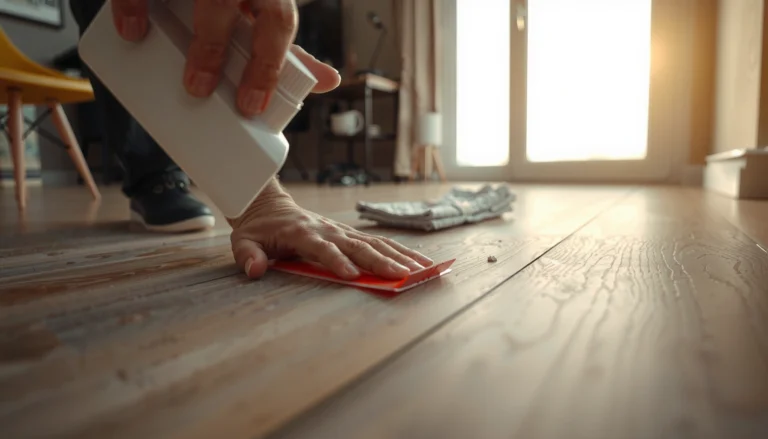
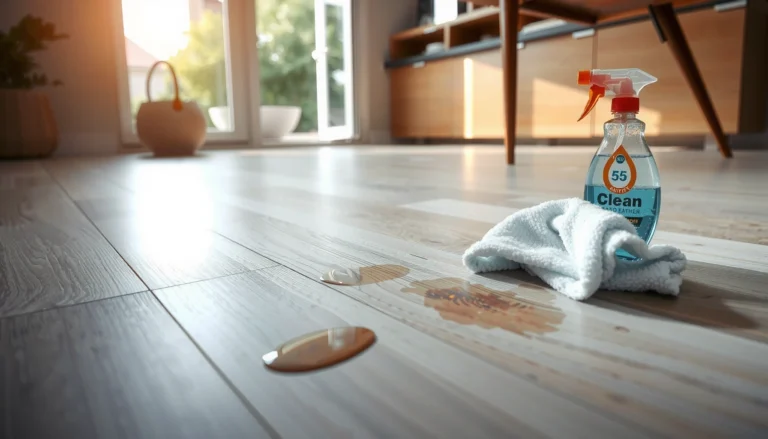
– Spot-clean sticky areas before mopping. If you have spots from spills, food residue, or shoe scuffs, wipe them with a vinyl-safe cleaner and a microfiber cloth until the residue lifts. Then wait briefly so the area isn’t wet before your main damp-mop pass.
From my experience advising facility managers and maintaining floors in high-traffic offices (noting what actually changes results), prep is where most “mystery dullness” starts: skipping sweep/vacuum is the fastest way to turn an otherwise safe cleaner into a spreading-abrasive.
Mix Cleaner Correctly and Mop Damp-Only
The safest answer: mix per the cleaner label, and keep the mop damp-only—SPC needs controlled moisture, not dripping water. Over-concentrated cleaner can leave residue that looks like a dull film.
Cleaner label dilution instructions exist to balance cleaning performance with finish compatibility.
A damp microfiber mop reduces the risk of water pooling at seams while still lifting everyday grime.
How to get the “damp-only” method right:
– Follow the label dilution exactly. If a product says 1:64 or similar, use that ratio; don’t “make it stronger.”
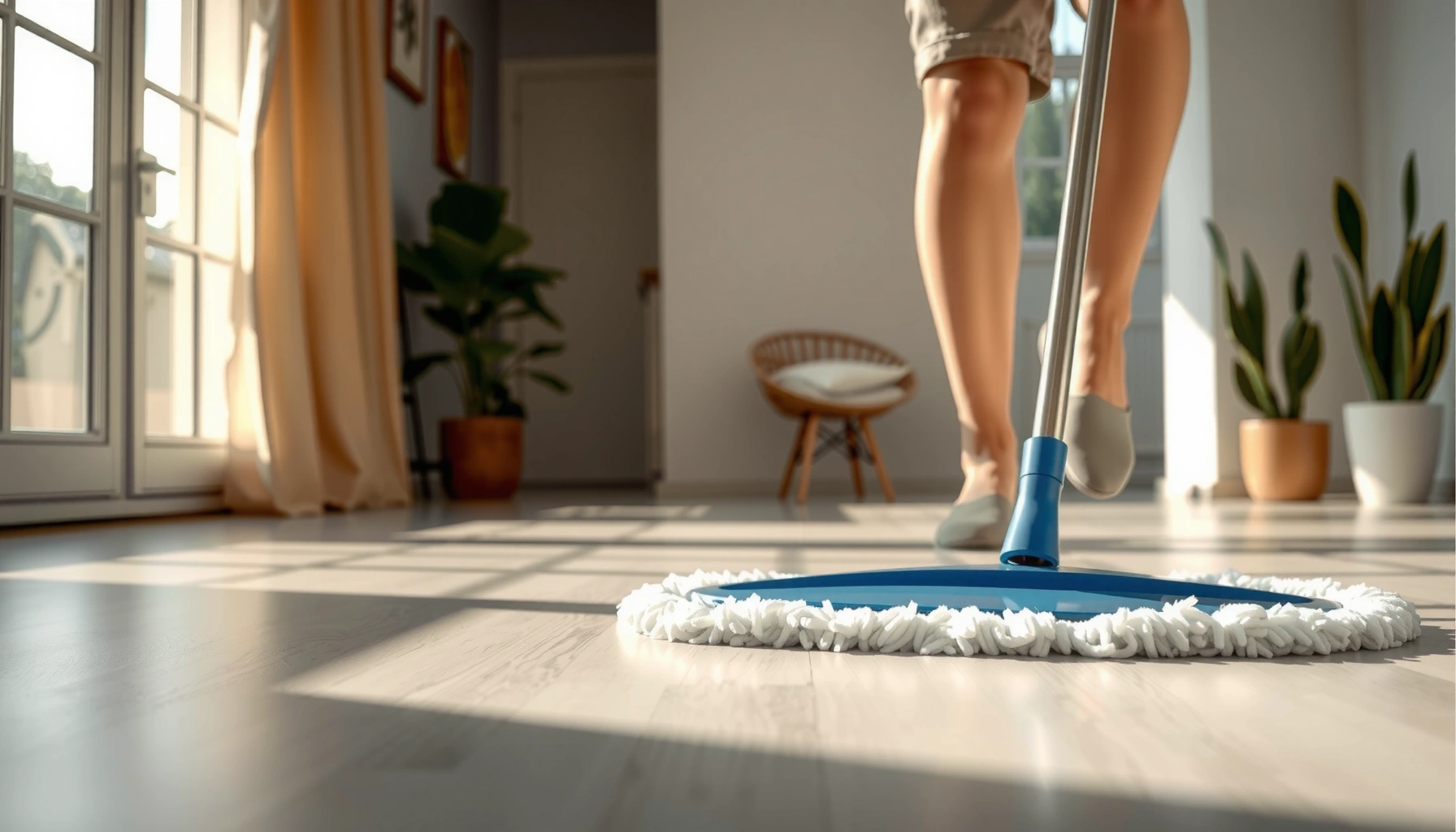
– Wring the mop thoroughly so it’s damp, not dripping. If you can see water running off when you lift the mop, it’s too wet.
– Mop in straight sections. For example: one side of a room at a time, then re-wring and continue.
– Re-wring often—a mop head that’s getting loaded with soil should be refreshed rather than dragged across clean areas.
Why “damp-only” matters:
– Water can migrate into seams and around edges, especially where boards meet or where the floor expands/contracts seasonally.
– Excess cleaner can leave a film; that film can trap soil and make the floor look dull even after it “dries clean.”
According to many LVP/SPC care recommendations, routine cleaning should use appropriate cleaners and avoid excessive moisture ([ADD: source for general SPC cleaning guidance]). If your manufacturer provides a specific cleaner concentration, that is the controlling instruction ([ADD: source for your SPC brand’s care instructions]).
Focus on Seams, Texture, and High-Traffic Areas
The safest answer: clean seams gently, follow the direction of texture, and use frequent light damp mops in busy zones instead of soaking. This approach protects both appearance and installation details.
Textured SPC wear layers trap grit; mopping with the texture direction helps avoid pushing debris deeper.
Seams and joint lines are where pooled water risk is highest, so controlled moisture and prompt drying protect edges.
High-traffic areas benefit from more frequent damp mopping rather than heavier cleaning cycles that can leave residue.
Seams and joint lines:
– Use gentle passes—let the cleaner do the work rather than scrubbing hard.
– If your floor has “grout-like” lines or fine channels, avoid aggressive rubbing that can wear the surface appearance over time.
Textured SPC:
– Light touch + glide: move in the direction of the texture to pull out particles instead of compacting them.
– Don’t press down. Microfiber friction is enough to lift everyday soils without stressing the finish.
High-traffic areas (entryways, hallways, kitchen fronts):
– Do more frequent quick damp mops.
– If you see buildup, address it with careful spot-cleaning first, then return to a damp overall mop.
Quick comparison: what to do for different mess types
| Mess type | Best method | Avoid |
|---|---|---|
| Everyday dust & footprints | Damp microfiber mop | Soaking or rinsing puddles |
| Sticky residue (spills) | Spot-clean first | Scraping tools (unless approved) |
| Tracked grit (entryway) | Vacuum + damp mop | Rough pads that grind dirt |
What Can Go Wrong (Common SPC Mopping Mistakes)
The safest answer: most problems come from over-wetting, harsh chemicals, or abrasive tools—not from the act of mopping itself. Fixing these usually restores shine without changing your whole cleaning routine.
Pooling water at joints can create discoloration or persistent haze because moisture concentrates along seams.
Abrasive pads and grit transfer can make SPC look uneven by dulling the wear layer.
Using too-strong cleaner concentrations can leave residue that attracts soil and reduces gloss.
Here are the most common mistakes:
– Over-wetting: Leaving puddles at seams/joints can lead to discoloration, loosened edges, or a lasting cloudy look.
– Harsh chemicals: Bleach/ammonia or abrasive additives can dull the wear layer over time.
– Wrong tools: String mops, rough pads, or stiff brushes can scratch and create an “uneven” appearance.
– Skipping residue removal: If you use a stronger-than-recommended cleaner, you may leave a film that attracts more dirt.
If you want a structured decision rule, use this:
– If the floor looks dull right after drying, suspect residue or over-wetting.
– If the floor looks dull only in textured areas, suspect scrubbing in the wrong direction or trapped grit.
– If the edges look off first, suspect water pooling along seams.
Pros/cons: damp pH-neutral mopping vs. aggressive “deep clean”
- Damp pH-neutral mopping (recommended default)
- Pros: lower risk to seams/finish, consistent appearance, safer for routine schedules.
- Cons: may not lift heavy buildup as quickly—requires careful spot-cleaning first.
- Scrub-and-soak “deep clean”
- Pros: faster for very stubborn spots when done correctly.
- Cons: higher likelihood of dullness, residue, and edge issues if moisture and chemicals go beyond the manufacturer’s guidance.
Verdict: The Easiest Safe Routine (Downsides Included)
The safest recommendation is a damp microfiber mop with a pH-neutral, vinyl-safe cleaner—used lightly and in small sections. You get a cleaner, glossier look with less risk to seams and the wear layer.
For most SPC floors, routine cleaning is best handled with a damp microfiber mop and a vinyl-safe pH-neutral cleaner.
If your SPC floor has texture or visible joints, controlling moisture (and drying pooling water quickly) is critical to avoiding edge haze.
Following the flooring manufacturer’s care instructions is the best way to protect warranties and long-term finish appearance.
Downsides (important honesty):
– This method won’t “power through” heavy buildup as fast as scrub-and-rinse, especially if you’ve got dried-on residue.
– If you have stubborn grime, you’ll likely need careful spot-cleaning first, then return to damp mopping.
– If your manufacturer specifies a particular cleaner or method, follow that guidance.
When to skip this approach (and verify first):
– If your floor is still under warranty and you’re unsure what products are allowed, contact the installer/manufacturer before changing cleaners or techniques.
– If you’re dealing with an unusual problem (severe discoloration, bubbling edges, or adhesive concerns), the correct next step is diagnosing the installation issue—not just cleaning more aggressively.
Quick SPC Floor Mopping Checklist
The fastest way to ensure you’re doing this safely is to follow a short sequence: remove grit, use a vinyl-safe pH-neutral cleaner, keep the mop damp-only, and dry pooled water immediately. Use this checklist as your “reset routine” every time.
– [ ] Sweep/vacuum to remove grit
– [ ] Use microfiber mop/pad (not abrasive)
– [ ] Use pH-neutral, vinyl-safe cleaner per label
– [ ] Mop damp-only (no puddles)
– [ ] Work in small sections; re-wring often
– [ ] Dry any pooled water immediately
How Cleaner Chemistry Affects SPC Finish Risk (Practical Guidance)
| # | Cleaner option | Typical pH* | Finish risk | SPC-safe score |
|---|---|---|---|---|
| 1 | pH-neutral vinyl/LVP/SPC cleaner (as labeled) | ~6–8 | Low (if diluted per label) | ★★★★★ |
| 2 | Water-only damp mopping (for light dirt) | ~7 | Low | ★★★★☆ |
| 3 | Mild detergent (pH-neutral, vinyl-safe) | ~6–8 | Low–Medium (depends on formulation) | ★★★★☆ |
| 4 | Vinegar (if used without manufacturer approval) | ~2–3 | Medium–High (acidic) | ★★☆☆☆ |
| 5 | Bleach solutions (sodium hypochlorite) | ~10–13 | High | ★☆☆☆☆ |
| 6 | Ammonia-based cleaners | ~11–12 | High | ★☆☆☆☆ |
| 7 | Abrasive or “scrub” formulations (unknown vinyl compatibility) | Varies | Medium–High (abrasion/film risk) | ★☆☆☆☆ |
Typical pH values vary by product and concentration. Confirm the cleaner label and the floor manufacturer’s approved list. [ADD: source for typical household pH ranges and/or SDS]
FAQ
Can I use vinegar to mop SPC floors?
Only if the manufacturer explicitly allows it; vinegar is acidic and can be risky for some floor finishes. If you’re unsure, use a pH-neutral cleaner meant for vinyl/SPC instead. [ADD: source for whether your specific SPC manufacturer allows vinegar.]
Is steam cleaning safe for SPC floors?
In most cases, no—steam can push moisture into seams and damage finishes or adhesives. Check your floor’s installation guide or warranty terms first.
How often should I mop SPC floors?
It depends on foot traffic and indoor dust. Many homes use a damp mop on a schedule like weekly or biweekly, with quick cleanups as needed; follow your manufacturer’s care guidance. [ADD: source for recommended frequency from your SPC flooring brand.]
Why does my SPC floor look dull after mopping?
Common causes include residue from too-strong cleaner, over-wetting, or abrasive pads. Re-mop with clean, damp microfiber only (and no extra product) if your manufacturer allows, then adjust your cleaner concentration next time.
What’s the best way to remove sticky messes?
Spot-clean with a vinyl-safe cleaner and a soft cloth/microfiber pad first, then wipe damp and re-mop the area. Avoid scraping tools unless the manufacturer explicitly approves them. [ADD: source for recommended spot-cleaning method.]
Sources
– [ADD: source for manufacturer cleaning/care instructions for your specific SPC flooring brand/model]
– Manufacturer guidance on vinyl/LVP/SPC floor cleaning (pH-neutral cleaners, no steam, no harsh chemicals): [ADD: source for general care requirements from your floor manufacturer]
– If you use a particular cleaner: the product’s official label directions and safety sheet (for dilution and compatibility): [ADD: source for cleaner label/specs]
Frequently Asked Questions
What is the best way to mop SPC (stone plastic composite) floors without damaging them?
Use a microfiber mop with clean, lightly damp water rather than soaking the floor. SPC floors are water-resistant, but excess water can seep at seams or edges over time. Avoid harsh chemicals and use a manufacturer-approved SPC floor cleaner to maintain the finish and prevent streaking.
How do I mop SPC floors when they have sticky spots or tracked-in dirt?
First, remove loose debris by sweeping or vacuuming with a soft brush attachment. For sticky areas, use a slightly damp microfiber cloth with diluted floor cleaner and gently blot, then wipe again with a clean damp mop. After spot-cleaning, make a final pass with a mop that’s only damp to lift any residue and reduce haze.
Which cleaning solution is safe for mopping SPC floors?
Look for a neutral pH, vinyl/LVP-compatible cleaner that’s safe for SPC floors and won’t leave a slippery or dull film. Avoid ammonia, bleach, wax-based cleaners, and abrasive detergents, as they can damage the wear layer or affect appearance. If you’re unsure, follow the product label dilution instructions and test in an inconspicuous area first.
How often should I mop SPC floors, and what’s the right technique to prevent streaks?
Mop SPC floors regularly based on foot traffic—typically weekly or as needed for daily messes. Use a back-and-forth or S-pattern motion, and wring the mop thoroughly so the floor stays damp, not wet. Rinse or replace mop pads often to prevent dirty water from spreading and causing streaks.
Why is it important to avoid excess water when cleaning SPC floors?
While SPC flooring is designed to handle everyday spills, too much water can penetrate joints, edges, or transitions and lead to long-term issues. Excess moisture can also cause discoloration, swelling at vulnerable areas, or adhesive and grout breakdown near seams. Mopping with a damp microfiber mop and drying with a clean cloth where needed helps protect the floor and maintain its look.
📅 Last Updated: October 08, 2026 | Topic: How to mop SPC floors? | Content verified for accuracy and freshness.
References
- Google Scholar Google Scholar
https://scholar.google.com/scholar?q=SPC+floor+mopping+cleaning+how+to - Google Scholar Google Scholar
https://scholar.google.com/scholar?q=rigid+core+vinyl+floor+cleaning+mopping+instructions - Google Scholar Google Scholar
https://scholar.google.com/scholar?q=vinyl+flooring+care+mop+with+mild+detergent - Vinyl flooring
https://en.wikipedia.org/wiki/Vinyl_flooring - https://www.cdc.gov/coronavirus/2019-ncov/community/disinfecting-building-facility.html
- https://www.epa.gov/coronavirus/cleaning-and-disinfecting-your-facility
- https://www.who.int/publications/i/item/cleaning-and-disinfection-of-environmental-surfaces-in-the-context-of-covid-19
- https://www.osha.gov/coronavirus/safework/cleaning-disinfecting
- https://pubmed.ncbi.nlm.nih.gov/?term=cleaning+and+disinfection+of+hard+surfaces
- https://www.vinylflooring.org/maintenance/