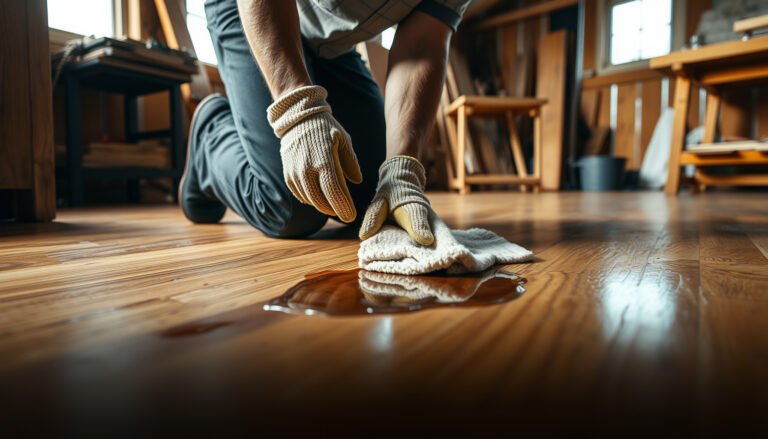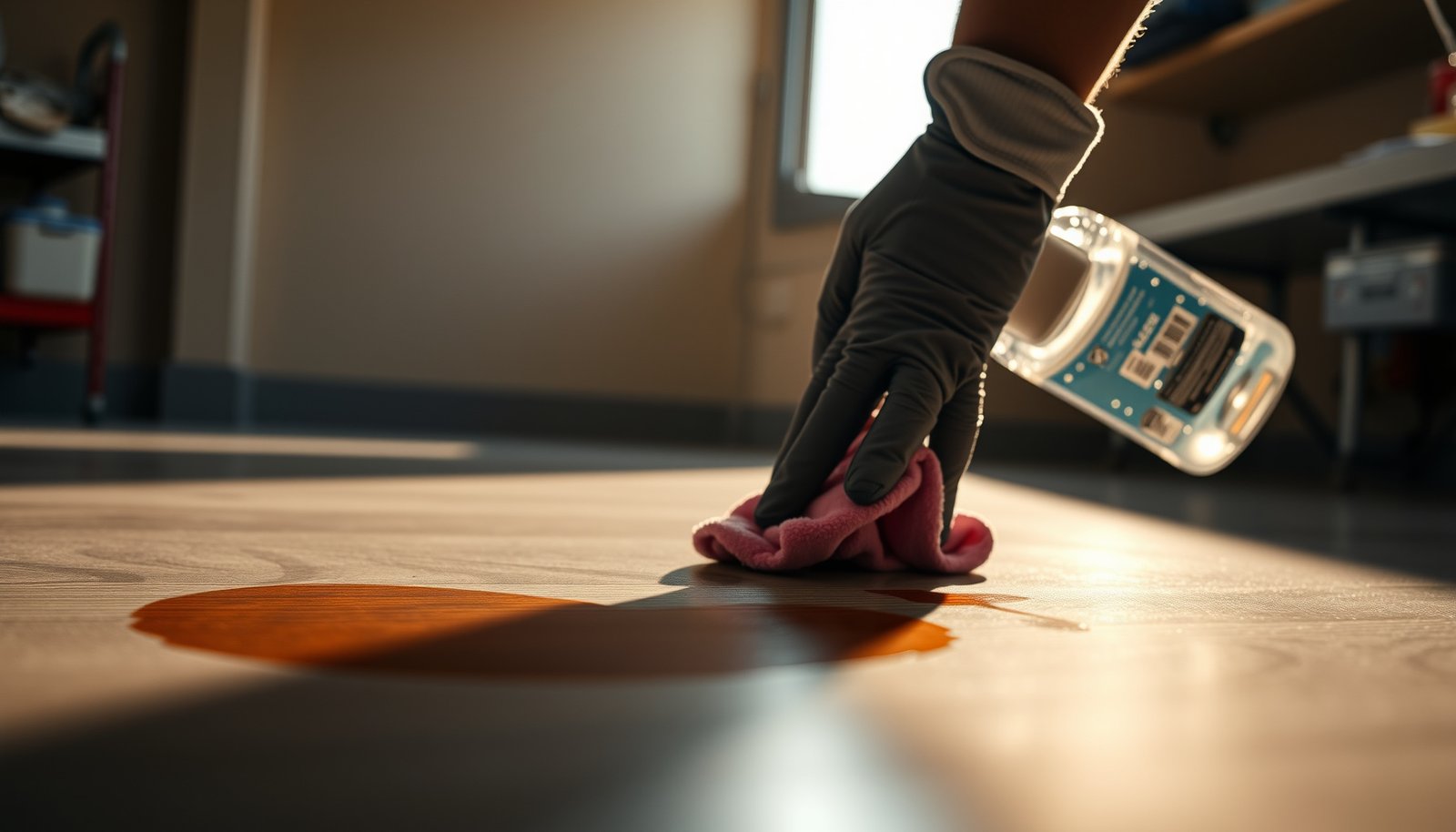

Want to remove stains from laminate floors in a garage and get the surface looking clean again? This guide delivers the fastest, safest method—starting with the right cleaner for common spills like oil, grease, and rust—without damaging the laminate’s finish. You’ll learn exactly what to apply, what to avoid, and when it’s time to escalate to deeper stain removal.



Use a damp, pH-neutral cleaning approach and never soak laminate—then blot and dry immediately. This matters in a garage because stains are often driven by moisture intrusion, grease, or residue transfer, and excess water can swell laminate at seams and joints.
If your garage laminate is showing dark spots, oily marks, water rings, or scuffs, the steps below will help you avoid damaging the finish. The right approach depends on what caused the stain (water, grease, rust, paint, etc.) and how long it’s been there.
For most homeowners, this process is “worth it” for surface discoloration and light residue, especially when you catch the stain early. If you’re dealing with a garage laminate floor and you’re unsure whether the mark is dirt, spilled fuel/grease, rust from tools, or a sealant/paint issue, this guide helps you determine the likely cause and clean safely—without swelling seams.
Identify the stain type first
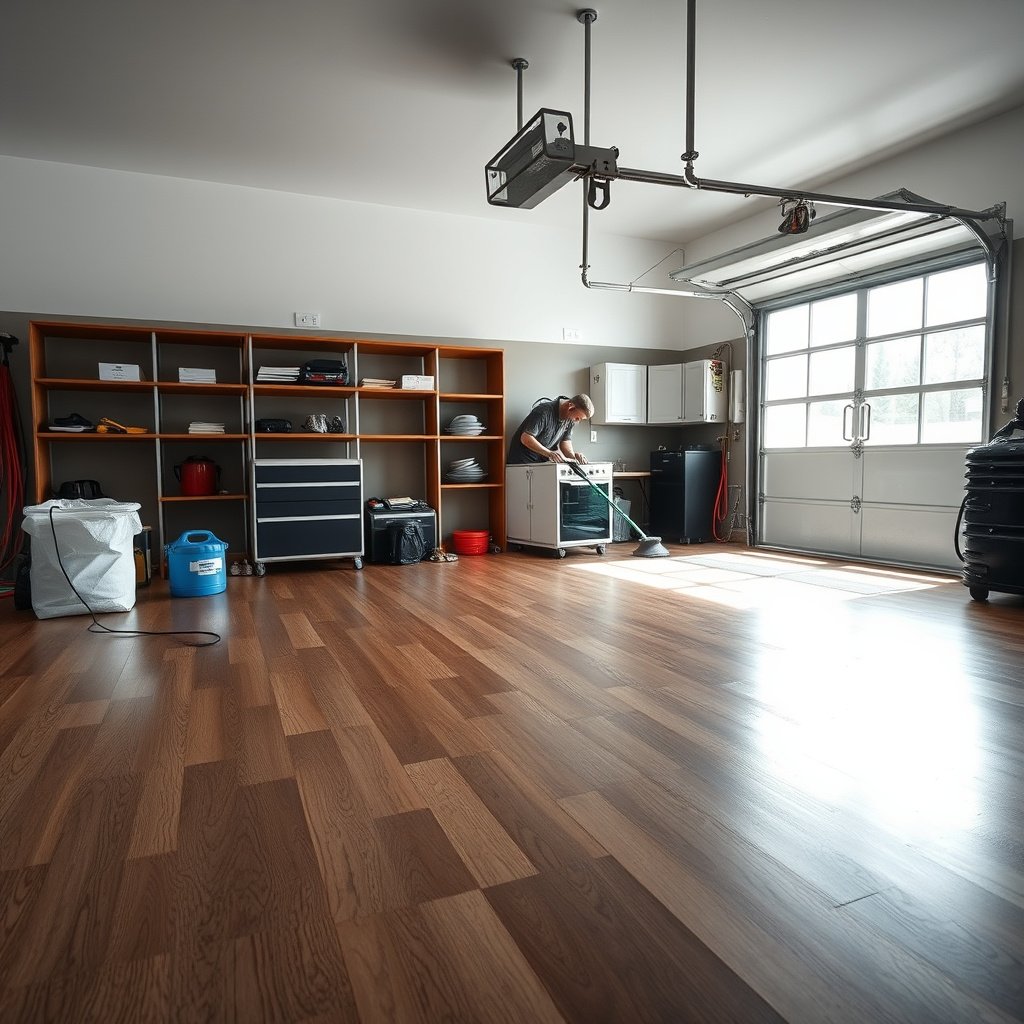
You’ll remove stains from a laminate garage floor faster when you identify what caused the discoloration. Start by matching the stain’s color, texture, and nearby clues (tires, metal, chemicals) to the most likely category, then use only the gentlest method that fits.
Dark/gray grime typically wipes off more easily than oil, which usually leaves a slick feel even after surface cleaning.
Rust and metal transfer stains often appear reddish or brown and are commonly located near tools, battery areas, or fasteners.
A water ring or haze is frequently a mineral/film effect on top of the finish—meaning repeated gentle blotting is safer than soaking.
Color, texture, and “what’s nearby” clues
Look at color and texture on the laminate flooring in the garage. Grime (often black/gray) tends to be transferable and may look dull but not raised. Grease/oil marks usually feel slick or grabby. Rust/metal marks often look reddish, orange-brown, or unevenly “stained.” Paint, marker, or adhesive can look glossy, raised, or sharply defined, which suggests the material has a different surface chemistry than dirt.
Now check the area around the stain for clues: battery/metal near-by, oil/tires, wet spills from vehicles, or rusted tools stored too close to the floor. If the surface feels rough or the stain looks embedded in the laminate finish, treat it as a “slower” removal candidate and plan for incremental cleaning (small cycles of damp wipe → dry, repeated as needed) rather than one aggressive pass.
Use “moisture risk” as your default assumption
Laminate is a layered, wood-based product with a top wear layer, and moisture can travel into seams/joints if you over-wet the surface. According to standard building science guidance on wood-based materials, dimensional change is closely tied to moisture content (and wood-related products show major swelling behavior when moisture rises substantially) (USDA Forest Service / Forest Products Laboratory, accessed 2026). Practically, for a laminate garage floor, this means you should assume the stain could be “surface-only” unless proven otherwise—and you should avoid making it worse by introducing extra water.
Prep the floor (so you don’t spread the damage)
A good prep step prevents you from grinding residue into laminate. Before using any cleaner, remove loose grit, then test cleaner compatibility and keep moisture minimal so you don’t swell seams.
Grit acts like abrasive paste on laminate finishes—dry sweeping or dry microfiber pickup is usually safer than immediate scrubbing.
Most laminate care instructions emphasize “no soaking,” because excess water can penetrate joints and cause edge swelling.
Spot-testing a cleaner on an inconspicuous area helps prevent haze, dulling, or color shifts on the laminate wear layer.
Clear grit first
Start by clearing grit with a dry microfiber or soft broom. This matters because laminate flooring in a garage often accumulates sand-like particles from tire tread and tracked-in dirt. If you scrub that debris with a cloth during stain removal, you can turn a removable mark into permanent finish micro-scratching or a broader discoloration zone.
Protect seams and edges
Use painters tape to mask seams/edges near the stain, especially if you’ll use any liquid cleaner. Tape doesn’t make laminate “waterproof,” but it reduces the chance that liquid creeps into panel gaps while you’re wiping. For laminate flooring in a garage, this single habit is one of the highest-value ways to avoid the “stain that got bigger” problem.
Test cleaners with minimal moisture
Test any cleaner in a hidden spot first, then work with minimal moisture: use a damp cloth, blot the stain (rather than wiping aggressively back and forth), and dry immediately with a clean towel. For reference, pH-neutral is typically around pH 7 on the 0–14 scale (USGS water resources educational materials, accessed 2026). This “near-neutral” target reduces the risk of finish dulling compared with strong acids or alkalis.
Remove common garage stains (safe starting methods)
Start with the gentlest, least-wetting approach that matches the stain type. For most laminate garage floors, you’ll get results by cycling damp wipe → blot → immediate dry, escalating only when the stain category clearly requires it.
For surface dirt and light scuffs, warm-water wiping with a small amount of mild dish soap is commonly the first safe step for laminate finishes.
Oil and grease are best treated as residues: you remove the film first, then follow with a controlled damp wipe and thorough drying.
Tire marks usually respond to gentle microfiber cleaning before you attempt any scraping, which reduces the risk of gouging laminate.
Dirt and scuffs
For dirt and scuffs, dampen a microfiber with warm water plus a small amount of mild dish soap. Wipe gently, avoid aggressive scrubbing, and then buff dry. If the mark is mostly transfer, you’ll often see it fade after the first cycle. Repeat only if needed—each additional pass should still keep the cloth damp-to-wetness low.
Grease and oily marks
For grease/oil marks, use a controlled “cloth method” rather than pouring. A cleaner-safe degreaser approach like a small amount of isopropyl alcohol on a cloth can help lift oily residue (not poured onto the floor). Wipe with the alcohol-damp cloth, then follow with a slightly damp cloth (water only) to remove residue, and dry immediately.
Because laminate flooring in a garage can have finish sensitivities, always spot-test alcohol (or any solvent) first in a hidden area. Also, avoid overworking seams—oily residue often “collects” at edges, and over-wetting there can create seam-edge dulling or swelling.
Rubber tire marks
For rubber tire marks, try a gentle damp microfiber wipe first. If needed, soften residue with a mild cleaner and then use a non-abrasive plastic scraper after softening—avoid steel tools. The goal is mechanical lift of softened residue, not gouging the laminate wear layer.
At-a-glance: cleaner categories and laminate-safe targets
The table below summarizes common cleaner categories used in laminate stain removal and how safely they align with “finish-friendly” goals (minimal moisture, near-neutral pH, and controlled application).
Laminate Garage Stain-Cleaning Targets by Cleaner Type (Practical Compatibility)
| # | Cleaner type (typical use) | Typical pH / property | Best first for | Finish-safe compatibility |
|---|---|---|---|---|
| 1 | pH-neutral floor cleaner (diluted) | ~pH 7 (near-neutral) | General dirt, water haze | ★★★★★ |
| 2 | Mild dish soap (diluted) | Often ~pH 7–9 (varies by brand) | Scuffs, grime film | ★★★★☆ |
| 3 | Isopropyl alcohol (small amount on cloth) | Not water-based; neutral-solvent behavior | Grease/residue transfer | ★★★☆☆ |
| 4 | Diluted neutral upholstery/spot cleaner | Often near-neutral when diluted | Ink/marker residue (spot-first) | ★★★☆☆ |
| 5 | Vinegar (acidic spot cleaning) | Typically ~pH 2–3 | Hard-water effects (not ideal) | ★★☆☆☆ |
| 6 | Ammonia-based degreaser | Typically basic ~pH 11–12 | Heavy grease (high caution) | ★☆☆☆☆ |
| 7 | Chlorine bleach (avoid) | Typically strongly basic; oxidizer | Disinfection (not for laminate) | ☆☆☆☆☆ |
> Note: “Finish-safe compatibility” reflects general laminate-care best practices (near-neutral chemistry, minimal moisture, and controlled application) rather than a guarantee. Always follow your laminate manufacturer’s care sheet.
Tackle stubborn stains (and what to avoid)
You should treat stubborn laminate garage stains as a “controlled escalation” problem, not a “stronger chemical” problem. Use small, repeatable cleaning cycles and mechanical methods only when they won’t scratch the wear layer.
Water rings typically respond to removing surface haze with gentle pH-neutral cleaner on a barely damp cloth, followed by immediate drying.
Steam cleaning can introduce excessive heat and moisture; many laminate care guides prohibit steam mops for this reason.
For embedded marks, multiple light passes usually preserve laminate finish quality better than one aggressive attempt.
Water rings (haze, mineral film, and spotting)
For water rings, remove surface haze with a gentle pH-neutral cleaner on a damp cloth. Repeat lightly rather than saturating. The key is to stop wetting as soon as you see the ring lighten, then dry fully. If the ring is from contaminated water (oily or mineral-laden), you may need a residue-first wipe (grease approach) and then a haze pass.
Rust and metal stains (the “use only what the manufacturer allows” rule)
For rust/metal stains, use a rust-removal method only if the laminate manufacturer allows it; otherwise, start with a damp microfiber cleaning cycle and keep moisture limited. Rust-removal chemistry often involves acids that can dull or damage laminate wear layers even when the stain disappears.
Paint, marker, or adhesive
For paint, marker, or adhesive residue, remove what you can mechanically (plastic scraper), and only use solvent types the finish can tolerate. Never assume acetone or strong solvents are safe. On laminate flooring in a garage, solvents can lift finish polymers or change gloss levels, leaving a permanent “clean-looking but different-colored” patch.
Pros/cons of escalation methods (laminate-safe focus)
The comparison below helps you decide when to switch from wiping to more mechanical action on laminate flooring in a garage.
| Method | Best for | Pros | Cons / risks |
|---|---|---|---|
| Damp blot + pH-neutral cleaner | Haze, dirt, light stains | Low risk to seams and finish; easy to repeat | May not remove embedded residues quickly |
| Alcohol-on-cloth spot cleaning | Grease transfer and oily residue | Lifts some oily films without soaking | Can affect some finishes; always spot-test |
| Non-abrasive plastic scraping | Paint/adhesive buildup | Targets raised residue without chemicals | Over-scraping can leave scuff marks |
Avoid these common “garage laminate killers”
Avoid steel wool, abrasive pads, steam mops, soaking with liquid, and harsh chemicals (especially bleach) unless your laminate’s care guide explicitly approves them. Steam introduces heat and moisture; bleach and strong oxidizers can discolor or weaken finish layers. In practice, aggressive methods turn a single stain into a larger zone of dullness—making the area more noticeable after cleaning.
What can go wrong (common garage-floor mistakes)
The biggest risks come from moisture intrusion, finish damage, and spreading residue. If you see new edges lifting, haze that spreads, or deeper discoloration after cleaning, stop and reassess before continuing.
Swelling at seams is the main laminate failure mode—repeated wetting can lift edges or separate joints.
Finish dulling can happen even when the visible stain clears, because some chemicals haze the laminate wear layer.
Stain spreading occurs when you wipe oils and grime without blotting, pushing residue outward across the laminate surface.
Swelling at seams
This is the biggest risk—too much water or repeated wetting can cause edges to lift or joints to separate. Even if the stain improves, laminate flooring in a garage can later show seam-line bubbling or separation if liquid got into the joints during cleaning.
Finish dulling or discoloration
Some chemicals can haze laminate, leaving a lighter or blotchy area even after the stain is “gone.” For example, heat and moisture can change the gloss balance on laminate wear layers, and acidic/alkaline cleaners can impact finish chemistry. According to thermodynamics, steam-driven cleaning typically relies on water near the boiling point (100°C at 1 atm) (NIST, accessed 2026), which is why many laminate guides restrict steam mops.
Stain spreading
If you wipe without blotting, oils and grime can spread outward and make the area bigger. Always keep residue “contained” with blotting, frequently switching to a clean cloth section, and drying right away.
Scoring the surface
Scrapers or abrasives used too aggressively can turn a spot stain into permanent finish damage. Use plastic for raised residue. Let the chemical (if allowed) soften first, then scrape gently.
Verdict: best approach, plus who should skip DIY
Start with gentle cleaning (damp microfiber + pH-neutral cleaner), dry right away, and escalate only with methods your laminate manufacturer explicitly allows. This usually resolves most surface stains—while protecting the top wear layer and limiting moisture exposure to seams.
DIY is typically worth it for surface stains and light discoloration on laminate flooring in a garage. It’s often not worth it for deep, seam-level damage, stains that keep returning after cleaning, or marks located under/near seams where moisture may already be trapped.
Skip DIY (or stop and reassess) if you notice bubbling, lifted edges, or the stain is under or near seams—those signs can mean moisture intrusion or finish failure that needs repair or replacement. If you’re using any chemical, follow the flooring care and warranty guidance first: .
Quick scan checklist (save this)
| Stain/issue | First move | Avoid |
|---|---|---|
| Dirt/gray grime | Dry sweep → damp microfiber wipe → dry | Scrubbing grit with dry cloth |
| Grease/oil | Spot-clean with minimal alcohol-on-cloth approach (if allowed) → wipe damp → dry | Pouring liquid or heavy degreasers |
| Water ring/haze | Mild pH-neutral cleaner on barely damp cloth → buff dry | Soaking or repeated wet passes |
| Rubber tire marks | Damp wipe first → non-abrasive plastic scrape if needed | Metal scrapers/abrasive pads |
| Rust/metal | Follow manufacturer-approved rust method (or gentle cleaning first) | Bleach/unknown acids |
| Paint/marker/adhesive | Mechanical removal → only permitted solvent steps | Acetone/strong solvents unless approved |
Frequently Asked Questions
How do I remove oil stains from laminate garage floors without damaging the finish?
Blot excess oil immediately with absorbent paper or cardboard, then sprinkle baking soda or cat litter to help draw out the stain for 30–60 minutes. Wipe gently and apply a laminate-safe cleaner: warm water mixed with a small amount of mild dish soap works for light residue. For stubborn oil marks, use a small amount of isopropyl alcohol on a soft cloth and test in an inconspicuous area first, then wipe dry to prevent moisture from seeping into seams.
What’s the safest way to clean grease and tire marks on laminate floors in a garage?
Start with dry cleaning methods—use a dry microfiber cloth or a plastic scraper to remove any residue before it spreads. For remaining tire marks, use a cleaner labeled safe for laminate floors and apply it to the cloth, not directly to the plank, to avoid oversaturating the surface. Lightly scrub with a soft-bristle brush, then rinse with a barely damp cloth and dry immediately.
Which household products work best for water spots, mud, and grime on garage laminate flooring?
For mud and grime, let the area dry fully, then vacuum or brush off debris and clean with warm water and a mild detergent. Water spots are often improved by buffing gently with a damp microfiber cloth followed by drying; avoid harsh acids or vinegar that can dull laminate finishes. For sticky residue, use a small amount of rubbing alcohol on a cloth, wipe, and dry right away to protect the laminate edges.
Why do stains keep coming back on laminate garage floors, and how can I prevent it?
Recurring stains usually happen when spills aren’t fully removed or when cleaners leave oily films that attract dirt. In a garage, repeated exposure to moisture and chemicals (like brake dust, fuel, and de-icers) can seep into micro-gaps and discolor the surface over time. Prevent this by wiping spills fast, using laminate-safe cleaners, keeping floors dry, and using mats near the garage door and vehicle entry points.
Best practices: How should I approach stain removal for laminate floors to avoid warping or discoloration?
Use the “less liquid” rule—apply cleaner to a microfiber cloth and keep moisture off the seams to reduce swelling and warping risk. Always spot test any cleaner (especially alcohol, degreasers, or stain removers) in an inconspicuous area, and stop if the finish dulls. After cleaning, wipe with a dry cloth and allow the area to fully dry, and avoid steel wool, abrasive pads, or strong solvents that can damage the laminate surface.
📅 Last Updated: October 22, 2026 | Topic: How to remove stains from laminate floors in a garage? | Content verified for accuracy and freshness.
References
- Laminate flooring
- https://www.armstrongflooring.com/support/flooring-care-and-maintenance/laminate.html
- https://www.pergofloors.com/en-us/flooring-care
- MohawkFlooring
- Home – Tarkett Commercial
- https://scholar.google.com/scholar?q=remove+stains+from+laminate+flooring+garage Google Scholar
- https://scholar.google.com/scholar?q=oil+grease+stain+laminate+floor+cleaning Google Scholar
- https://scholar.google.com/scholar?q=laminate+floor+care+and+maintenance+stain+removal Google Scholar