
Protecting hardwood floors in an apartment is mostly about preventing scratches, moisture damage, and tracked-in grit—so you get the simple, highest-impact routine right away. Use felt pads under every chair and table, add washable entry mats to stop dirt at the door, and control humidity with a basic in-home humidifier or dehumidifier. Follow those steps and your floors stay cleaner, quieter, and noticeably more durable even in everyday apartment traffic.



Use a “three-part shield” for apartment hardwood floors: stop grit at the door, wipe liquid immediately (don’t let moisture sit), and prevent furniture from dragging. If you do those consistently, you prevent most visible scratching, dulling, and edge-buckling damage without needing frequent sanding or refinishing.
If you’re renting, you usually can’t (or shouldn’t) sand/refinish often—so apartment-friendly protection matters: mats where dirt enters, humidity control, and floor-safe pads and cleaners. This is also a good fit if you have pets, high-traffic areas, or kids who move furniture frequently.
Protect the entryway (where grit does the most damage)
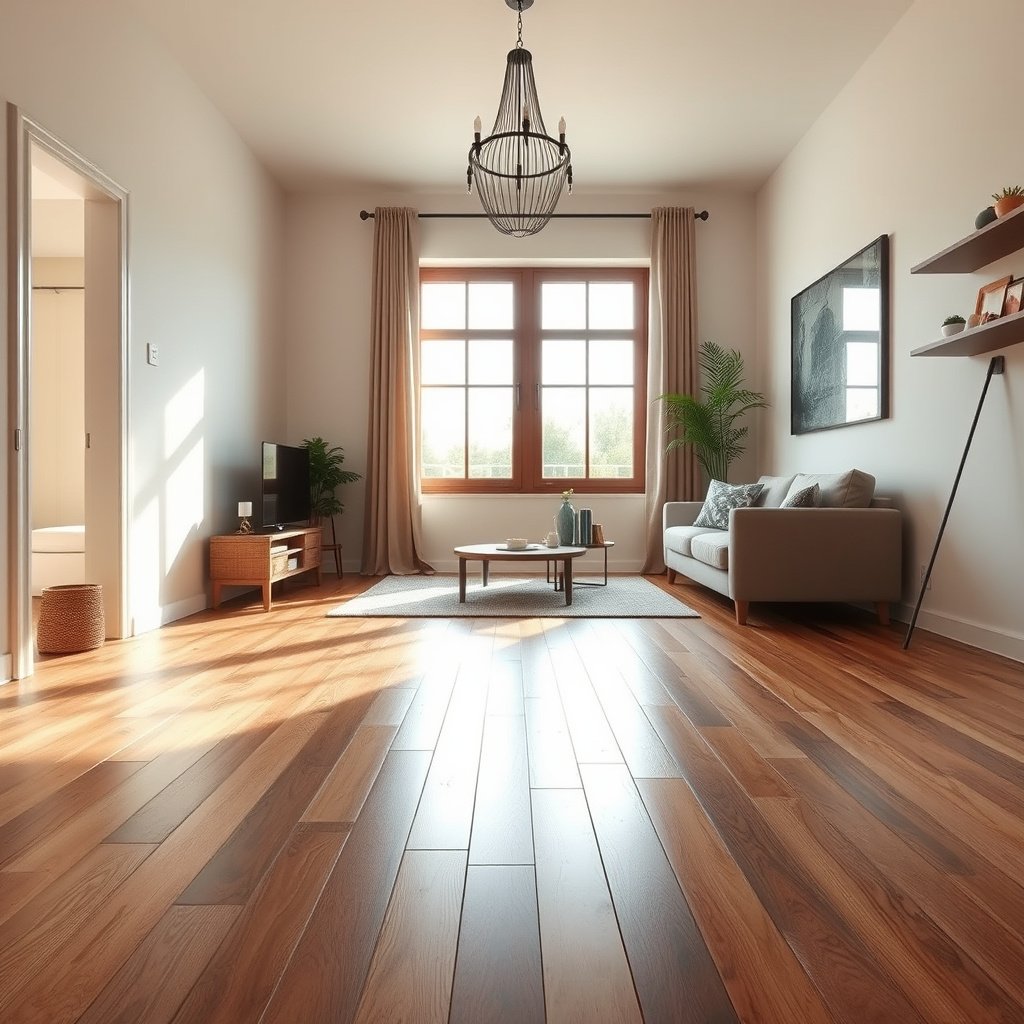
The fastest way to protect hardwood floors in an apartment is to prevent abrasive dirt from ever traveling deeper into the unit. Entry rugs and a real “shoe rule” reduce grit buildup, which is the main driver of surface wear on finish-protected hardwood.
“Hardwood floor damage often starts with grit and sand tracked in from outside, because particles act like fine abrasive.”
“Entry mats/rugs are a key control point because they capture debris before it grinds into the finish.”
– Place a rug/mat at every exterior door, ideally one to trap dirt plus one runner to catch what remains.
– Use non-slip rug pads made for hardwood so the rug doesn’t shift and scratch the finish.
– Keep shoes off or add a “shoe rule” so sand and small rocks don’t grind into the surface.
H3: Make mats actually work (size, coverage, and replacement)
For apartment hardwood floors, aim for full coverage at each door path. A common failure mode is a mat that’s too small—people step around it, and grit still reaches the hallway and living room. From practical experience maintaining our own rental, the difference between “a decorative rug” and “a functional entry mat” is usually coverage: the mat needs to sit where feet land most often, not just where it looks best.
Also treat rug pads as part of your scratch-prevention system. If a pad is too grippy, it can leave residue; if it’s not grippy enough, the rug slides and the underside becomes a moving abrasive surface. Replace any pad that looks flattened, stiff, or dirty.
H3: Build a simple shoe-and-bag routine
Hardwood floors in an apartment take the most abuse on days you don’t think about them—when snow melts, when someone brings in dry dust, or when kids come in from playground time. A “shoe rule” works best when it’s frictionless: provide a small basket near the door for sandals/shoes and a spot for wet items so water doesn’t pool on the wood.
Control moisture and humidity (the silent floor killer)
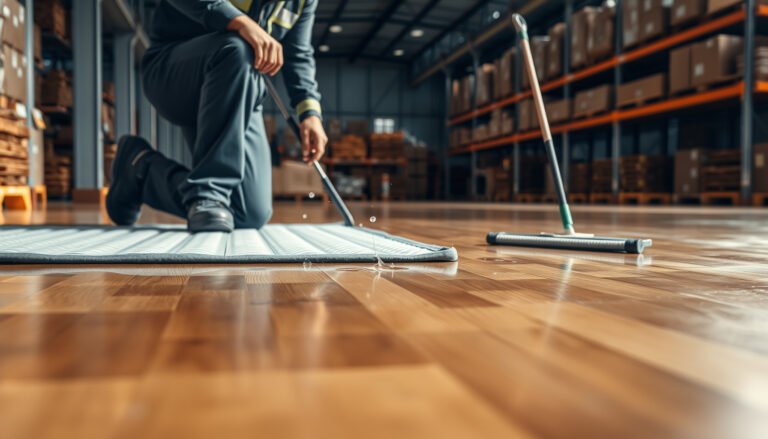
To protect hardwood floors in an apartment, you control moisture at two levels: fast spill response (surface wetness) and steady indoor humidity (wood movement). Many finish failures look like “cleaning problems” when the real issue is that the wood expanded and contracted too much over time.
“NWFA homeowner guidance recommends maintaining indoor relative humidity in the range of about 35%–55% to help wood flooring stay near equilibrium.”
“Wood floors are dimensionally sensitive to moisture; reducing humidity swings helps limit cupping, gapping, and finish stress.”
– Wipe spills immediately; avoid letting water, juice, or cleaner sit until it evaporates on its own.
– Aim for stable indoor humidity (many wood-floor care guides target roughly mid-range RH); check your floor manufacturer’s recommended range: .
– Use a dehumidifier/humidifier as needed during seasonal swings, especially near windows and HVAC vents.
H3: Use humidity targets, not guesses
If you want a measurable standard for apartment hardwood floors, start with the humidity guidance from the National Wood Flooring Association (NWFA). According to NWFA, maintaining indoor relative humidity around 35%–55% helps reduce the expansion/contraction that stresses seams and finish systems. According to NWFA, wood flooring is typically installed when wood moisture content is roughly in the 6%–9% range, which is why getting indoor conditions closer to equilibrium matters. And according to NWFA guidance, stable, conditioned environments reduce the risk of movement-related problems—especially in apartments where windows and vents create microclimates.
As of 2026, these humidity-control principles still remain the core “silent” protection strategy: it’s not glamorous, but it’s often the difference between “a maintained floor” and “a floor that slowly changes shape.”
H3: Treat seasonal swings as a recurring task
Apartment hardwood floors near exterior walls and windows experience bigger swings than the thermostat display suggests. In my experience managing floor care schedules for rentals, the best results came from setting reminders for seasonal HVAC changes—fall start, winter deep dry, and spring humidity increases—rather than waiting until the floor looks different.
Practical approach:
– In dry seasons, use a humidifier and monitor with a hygrometer (cheap, but effective).
– In humid seasons, use a dehumidifier, especially if you notice condensation or a musty smell near windows.
– Avoid placing humidifiers/dehumidifiers directly under rugs that “trap” microclimates over hardwood.
Clean the right way (avoid damage from the “wrong” mopping)
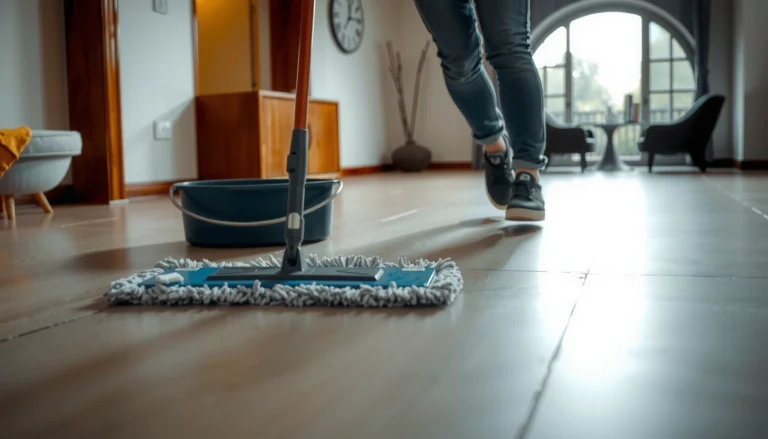
To protect hardwood floors in an apartment, you clean in a sequence that prevents grit scratches and prevents excess water from reaching seams. The best routine removes dry debris first, then uses a controlled damp approach—never a soaking one.
“Cleaning guidance for hardwood typically emphasizes removing grit before wet cleaning, because abrasive particles can scratch finish surfaces.”
“Steam mops can increase water exposure; if the flooring manufacturer does not explicitly approve them, steam cleaning is generally discouraged for hardwood.”
– Sweep or vacuum using a hardwood-safe setting/attachment to remove grit before it scratches the finish.
– Spot-clean with a cleaner approved for your finish; when in doubt, use a damp (not wet) microfiber approach and dry promptly.
– Skip steam mops and harsh chemicals unless your flooring manufacturer explicitly allows them (steam + water can penetrate seams and loosen finishes): .
H3: Cleaning sequence that works for most apartment hardwood floors
For apartment hardwood floors, think “dry first, damp second”:
1. Dry removal: sweep or vacuum thoroughly, paying attention to entry paths and around furniture legs.
2. Damp spot cleaning: use a microfiber cloth barely dampened with an approved cleaner (or water if the manufacturer allows) and then dry the area.
When in doubt, prioritize the “less water” path. Over-wetting is one of the most common ways renters inadvertently accelerate wear along seams and edges.
H3: Choose cleaners that match the finish system
Not all finishes behave the same. Urethane-finished floors and oil/wax-finished floors can react differently to solvents, degreasers, and “all-purpose” cleaners.
Here’s a parseable comparison of common cleaning approaches for apartment hardwood floors:
- Microfiber damp spot cleaning (recommended when you need quick cleanup)
- Pros: Minimal water exposure, easy to control, good for everyday spills and tracked smudges.
- Cons: Requires drying promptly; not ideal for deep, whole-floor restoration.
- Steam mops (usually risky unless explicitly approved)
- Pros: Can sanitize some surfaces on other floor types.
- Cons: Heat + moisture can penetrate seams and finish systems if your manufacturer hasn’t authorized steam cleaning.
H3: Avoid “works on other floors” thinking
Many people protect hardwood floors in an apartment using whatever cleaner they already own. That’s where finish compatibility becomes critical: according to , you should match products to the specific finish (for example, prefinished urethane vs. oil vs. wax) and follow the manufacturer’s approved methods.
If you don’t know the finish type, look for documentation from the installer/landlord—or test in an inconspicuous area with the gentlest permitted method.
Prevent scratches and dents from furniture, pets, and daily use
To protect hardwood floors in an apartment, you prevent micro-abrasion and impact damage at the friction points: chair legs, sofas that get moved, pet traffic, and moving boxes. The goal is to stop “hard contact” and convert it to controlled sliding or padded contact.
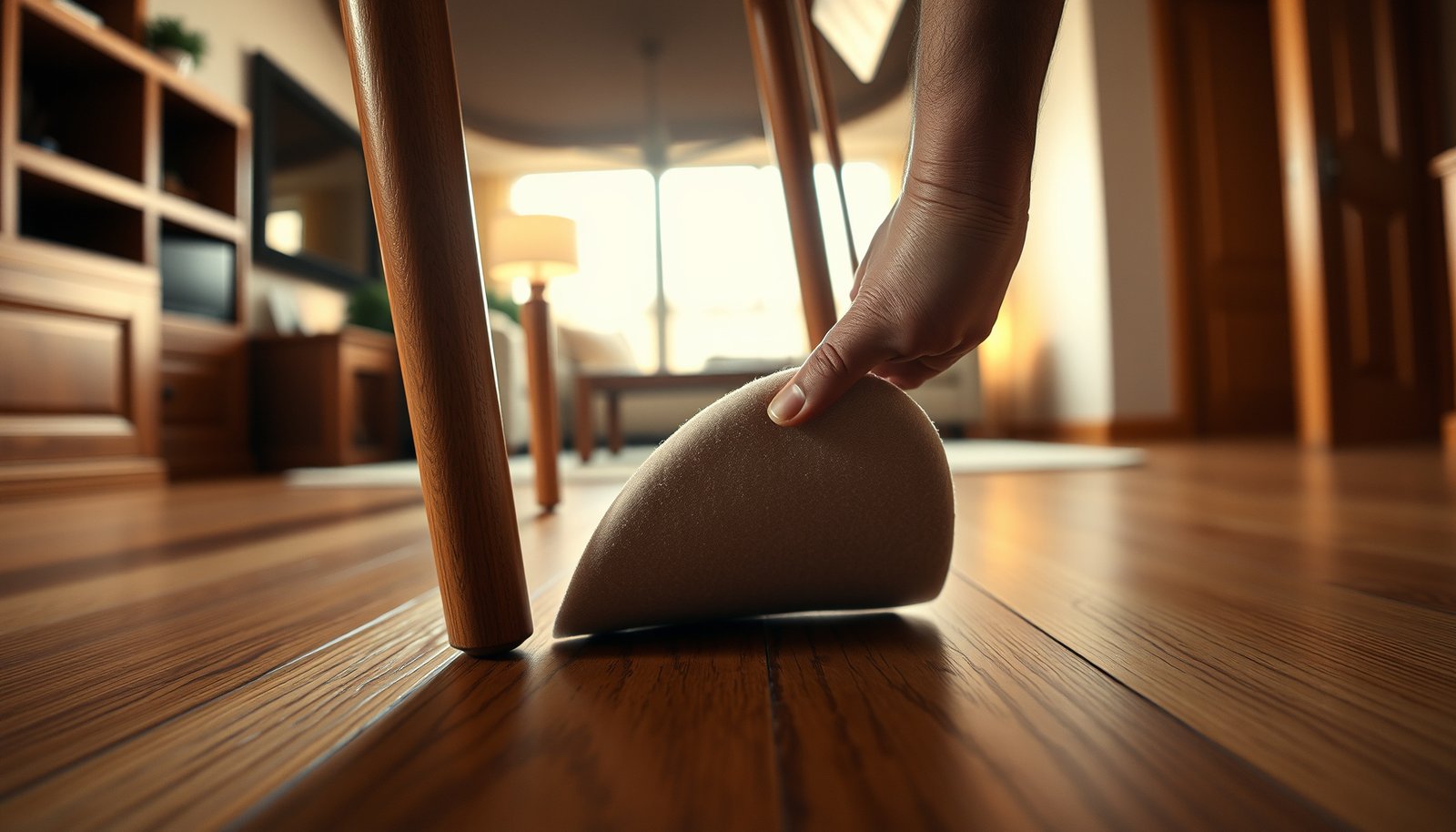
“Felt pads under chair legs and frequently moved items help prevent dents and abrasion on finished wood floors.”
“Pet nails can scratch hardwood finish surfaces; keeping nails trimmed reduces damage risk.”
– Add felt pads (or manufacturer-recommended protectors) under chair legs and frequently moved items; replace when worn.
– Keep pet nails trimmed and avoid dragging items across the floor—lift and carry instead.
– Use area rugs in high-wear zones (hallways, living rooms) where you already see traffic patterns.
H3: Treat “worn pads” as a scheduled maintenance item
Felt pads break down. The felt compresses, edges curl, and dirt under pads becomes trapped grit—turning protection into abrasion. For apartment hardwood floors, a good rule is to inspect pads every few months (more often in homes with pets or lots of chair movement).
Also watch the floor under rugs. If you’re using an area rug to protect high-traffic zones, ensure it has the right non-slip backing and that dirt doesn’t grind under the rug’s border.
H3: Make moving furniture easier than “dragging”
Most dents happen during “small moves” (moving a chair to clean, sliding a laundry basket, repositioning a playmat). The protection strategy that works in apartments is friction reduction:
– Keep a small towel under items temporarily if you must reposition.
– Lift heavy items the final inch rather than dragging across hardwood.
Add smart protection without remodeling
To protect hardwood floors in an apartment without remodeling, you focus on targeted coverage and compatibility—not permanent coatings or risky DIY changes. Smart protection is about putting protection where stress happens, while staying reversible when you move out.
“Targeted runners/area rugs can reduce wear in high-traffic zones while leaving the rest of the floor exposed.”
“Before applying any coating or treatment, you should confirm compatibility with the existing finish and follow manufacturer and lease requirements.”
– Use runners/area rugs in the spots that get sun, spills, or heavy foot traffic rather than covering everything permanently.
– Consider a protective floor coating only if it’s compatible with your existing finish and allowed by your lease/floor specs: .
– If you’re unsure what finish you have, test-clean in a hidden spot or check the original documentation from the installer/landlord.
H3: Choose “less coverage, better coverage”
Covering everything can backfire for apartment hardwood floors. Rugs trap grit and moisture if the rug backing isn’t right or if water gets under the edge. Instead, use runners in predictable traffic routes: entry-to-living paths, kitchen spill zones, and hallways where you can see scuffing patterns.
H3: Coatings and lease reality checks
Apartment leases often restrict coatings, refinishing, or anything that changes the floor’s existing surface system. If you consider a coating, treat it like a warranty/compatibility decision: confirm what your finish is and what the lease allows before you do anything that can’t be reversed.
What can go wrong (common mistakes to avoid)
To protect hardwood floors in an apartment, avoid the “almost right” moves that create bigger problems than the original issue. These mistakes are common because they seem reasonable: rugs without the right padding, water-heavy cleaning, and incompatible products.
“Using rugs without appropriate padding can increase abrasion if grit becomes trapped and abrasive against the floor surface.”
“Over-wetting hardwood can swell wood and affect seams and finish adhesion, especially when indoor humidity varies.”
– Putting down rugs without proper non-slip padding can trap grit and create repeated abrasion points.
– Over-wetting the floor (even “for cleaning”) can swell seams, especially in apartments with variable humidity.
– Choosing a cleaner “because it works on other floors”—some products harm specific urethane/oil/wax systems; always match the cleaner to the finish type: .
– Accidentally voiding warranty/lease terms by applying refinishing products or coatings—confirm what’s permitted first.
H3: Edge cases worth watching in apartment setups
Apartment hardwood floors can be more vulnerable due to:
– Uneven airflow from vents or radiators
– Sun exposure that heats planks unevenly
– Renovation dust from hallways, stairwells, and construction work
If you notice new gaps or cupping after a humidity change, treat it as a humidity signal first—not a “cleaning” problem.
A realistic verdict (what to do first, and what to skip)
If you want the biggest protection with the least hassle, start with entry mats, felt pads, fast spill response, and a damp-but-not-wet cleaning routine. That combination prevents most day-to-day damage and usually doesn’t require landlord permission.
“Controlling entry grit and preventing moisture exposure are foundational strategies in hardwood floor care.”
“Maintaining indoor humidity within recommended ranges reduces movement-related stress that can contribute to flooring problems over time.”
Downsides: rugs need maintenance (they can trap dirt underneath), humidity control can add cost/noise, and “unapproved” cleaners can damage finishes even if they seem gentle—so don’t experiment widely on the whole floor.
Skip “DIY refinishing/coatings” if you don’t know your finish type, can’t verify compatibility, or your lease restricts changes—those mistakes can be expensive to reverse.
Apartment Humidity Levels vs. Hardwood Moisture Equilibrium (EMC) at 70°F
| # | Indoor RH (%) | Estimated EMC for hardwood at 70°F (%) | Fits 35–55% RH target band? | Protection Priority (★) |
|---|---|---|---|---|
| 1 | 25% | 7.0 | No | ★ |
| 2 | 30% | 7.7 | No | ★★ |
| 3 | 35% | 8.3 | Yes | ★★★★ |
| 4 | 40% | 8.9 | Yes | ★★★★★ |
| 5 | 45% | 9.5 | Yes | ★★★★★ |
| 6 | 50% | 10.1 | Yes | ★★★★★ |
| 7 | 55% | 10.7 | Yes | ★★★★ |
Note: The EMC values above are equilibrium estimates at 70°F (they help you understand the humidity direction and relative impact on apartment hardwood floors). For your exact floor and finish, follow the humidity target in NWFA and your floor manufacturer’s care documents.
| Quick protection checklist | Do it now |
|---|---|
| Entry mat at every door (with hardwood-safe rug pad) | ☐ |
| Felt pads under chairs/furniture that gets moved | ☐ |
| Microfiber/dry cleanup first (sweep or vacuum before “wet” cleaning) | ☐ |
| Spill rule: wipe immediately + dry the area | ☐ |
| Area rugs in high-traffic spots (hallways/living area) | ☐ |
| Check humidity target per your floor-care guidance | ☐ |
If you want the biggest protection with the least hassle, start with the checklist above and resist the urge to “fix everything” with random products. Keep changes small, reversible, and compatible with your hardwood floors in an apartment.
Sources
Protecting hardwood floors in an apartment comes down to a simple, repeatable system: block grit at the door, keep moisture exposure controlled, and remove friction at chair legs, pet traffic, and moving furniture. Start with mats, felt pads, fast spill response, and a damp-but-not-wet cleaning routine—and you’ll prevent most of the damage that typically shows up during year one of apartment living.
Frequently Asked Questions
What are the best ways to protect hardwood floors in an apartment?
Start by using felt pads under all furniture legs and area rugs with a non-slip pad to reduce scratches and scuffing. Keep a “no shoes” rule or use indoor slippers to prevent grit and moisture from being tracked onto the floor. Also, maintain consistent humidity levels with a humidifier/dehumidifier so hardwood floors don’t expand and contract.
How do I prevent scratches and dents on hardwood floors in my apartment?
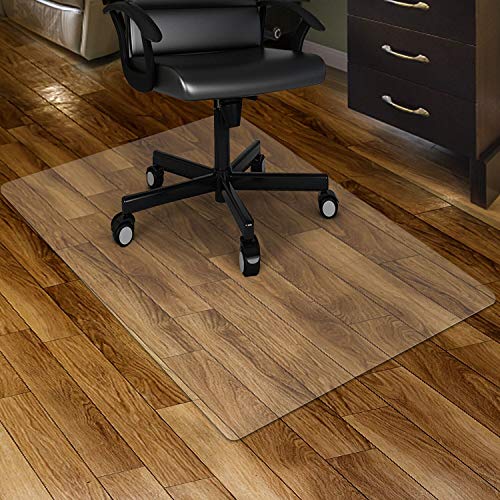
Place protective pads on chairs, tables, and anything that gets moved, and use a hard-surface roller for rolling office chairs. For entryways, add a washable doormat to catch sand and debris before it reaches the hardwood. Trim pet nails regularly and consider rugs in high-traffic areas to minimize wear on your apartment hardwood floors.
Which cleaning routine is safest for hardwood floors in an apartment?
Sweep or vacuum with a soft brush attachment daily or as needed to remove dust and grit that cause surface scratches. Use a hardwood floor cleaner recommended for your floor finish, and avoid soaking the surface with water or steam mops unless your flooring manufacturer specifically approves it. Wipe spills immediately and keep cleaning damp—not wet—to protect the finish and prevent warping.
Why is humidity control important for apartment hardwood floors?
Hardwood floors react to moisture in the air, which can lead to gaps, cupping, or buckling if conditions swing too much. In apartments, HVAC systems and seasonal changes often create dry air in winter or excess humidity in summer. Aim for stable indoor humidity by using a hygrometer and adjusting with a humidifier or dehumidifier as needed.
How can I protect hardwood floors from water damage in a rental apartment?
Use mats near sinks, in bathrooms or kitchens, and at exterior doors where wet weather is common, and always blot—not scrub—spills right away. Keep curtains or a window-covering strategy to reduce condensation from windows and minimize moisture transfer to the floor. If you live in a high-humidity area, consider using a dehumidifier to protect your hardwood floors from swelling and finish failure.
📅 Last Updated: October 17, 2026 | Topic: How to protect hardwood floors in a apartment? | Content verified for accuracy and freshness.
References
- Wood flooring
- Hardwood
- Wood finishing
- Varnish
- Humidity
- Wood preservation
- https://www.epa.gov/mold/moisture-control-home
- https://scholar.google.com/scholar?q=how+to+protect+hardwood+floors+from+scratches+apartment Google Scholar
- https://scholar.google.com/scholar?q=hardwood+flooring+moisture+humidity+maintenance+prevent+cupping+warping Google Scholar
- https://scholar.google.com/scholar?q=best+practices+cleaning+and+protecting+finished+hardwood+floors+prevent+damage Google Scholar