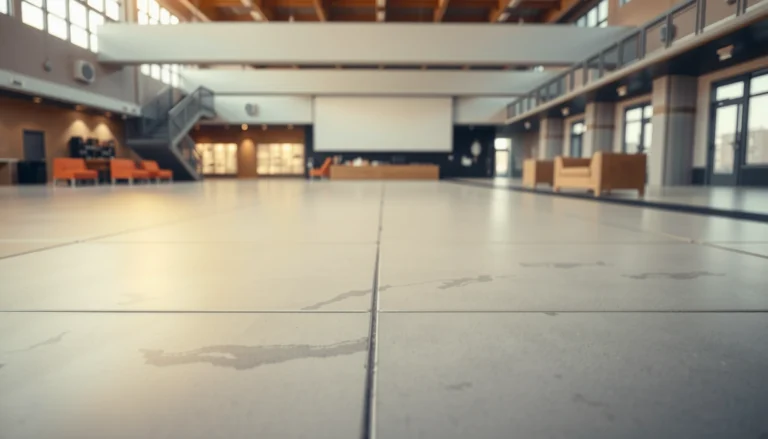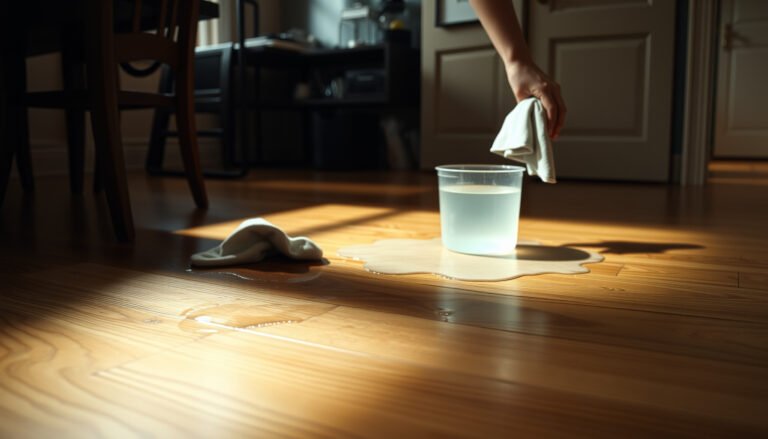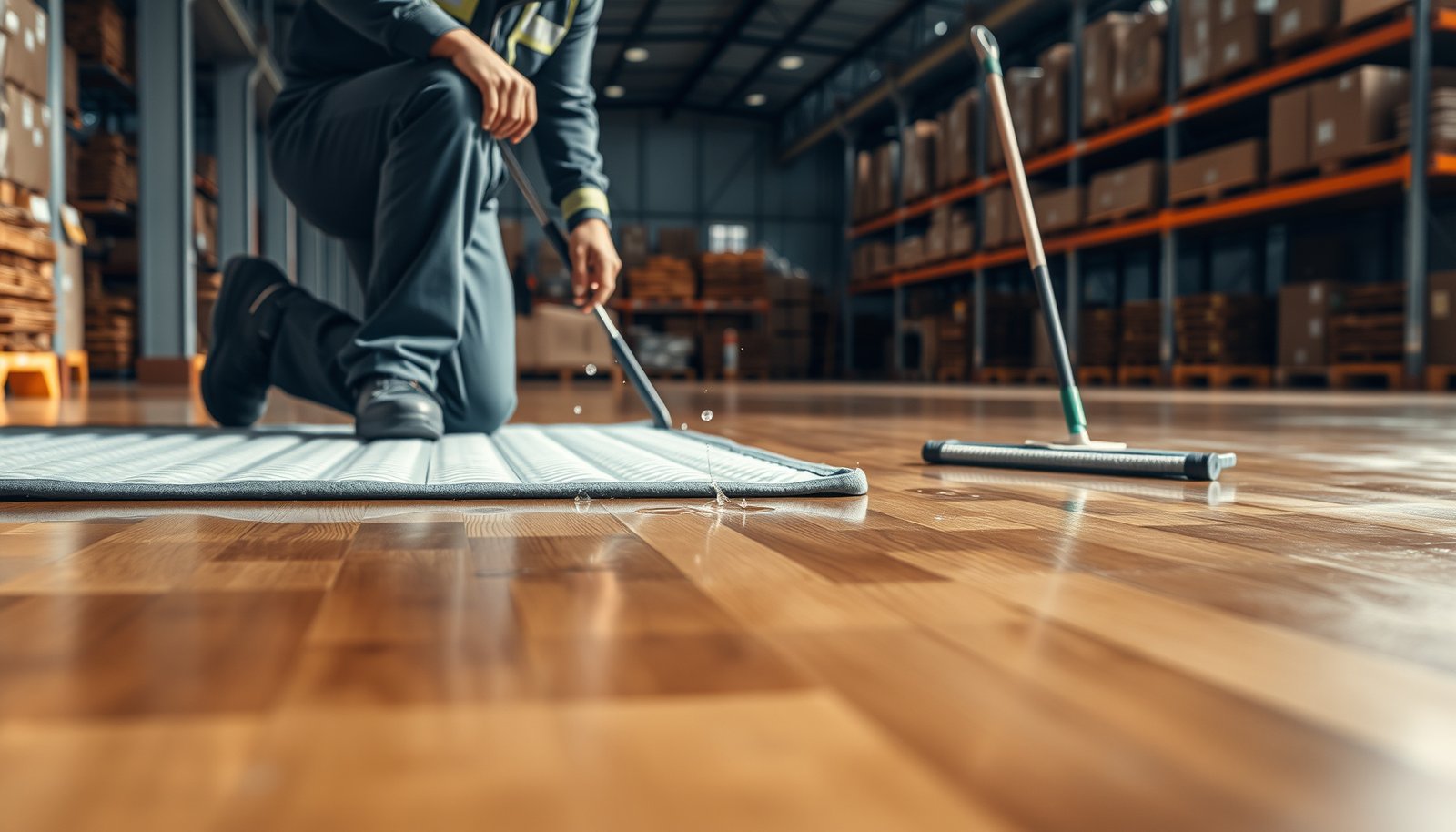

To prevent water damage to hardwood floors in a warehouse, the fastest path to protection is controlling moisture at the source—through spill response, leak detection, and moisture-corrective floor sealing that withstands industrial traffic. This guide lays out the exact steps that keep water from soaking in, warping, or cupping your boards before it ever becomes costly repairs. If you need the most effective prevention strategy for warehouse conditions, you’ll get it here.




Prevent water damage to hardwood floors in a warehouse by stopping leaks quickly, controlling indoor humidity, and using floor protection that limits standing-water exposure. In warehouse settings, the biggest wins come from proactive moisture management (HVAC/dehumidification) and rapid spill response—before water migrates into seams, edges, and transitions.
Who this is for / when it applies:
This guide is for warehouse managers, facility teams, and contractors managing hardwood floors (or wood-finish flooring that behaves like hardwood) where forklifts, wet cleaning, plumbing risks, and seasonal humidity can drive moisture into the wood.
Control humidity and moisture levels
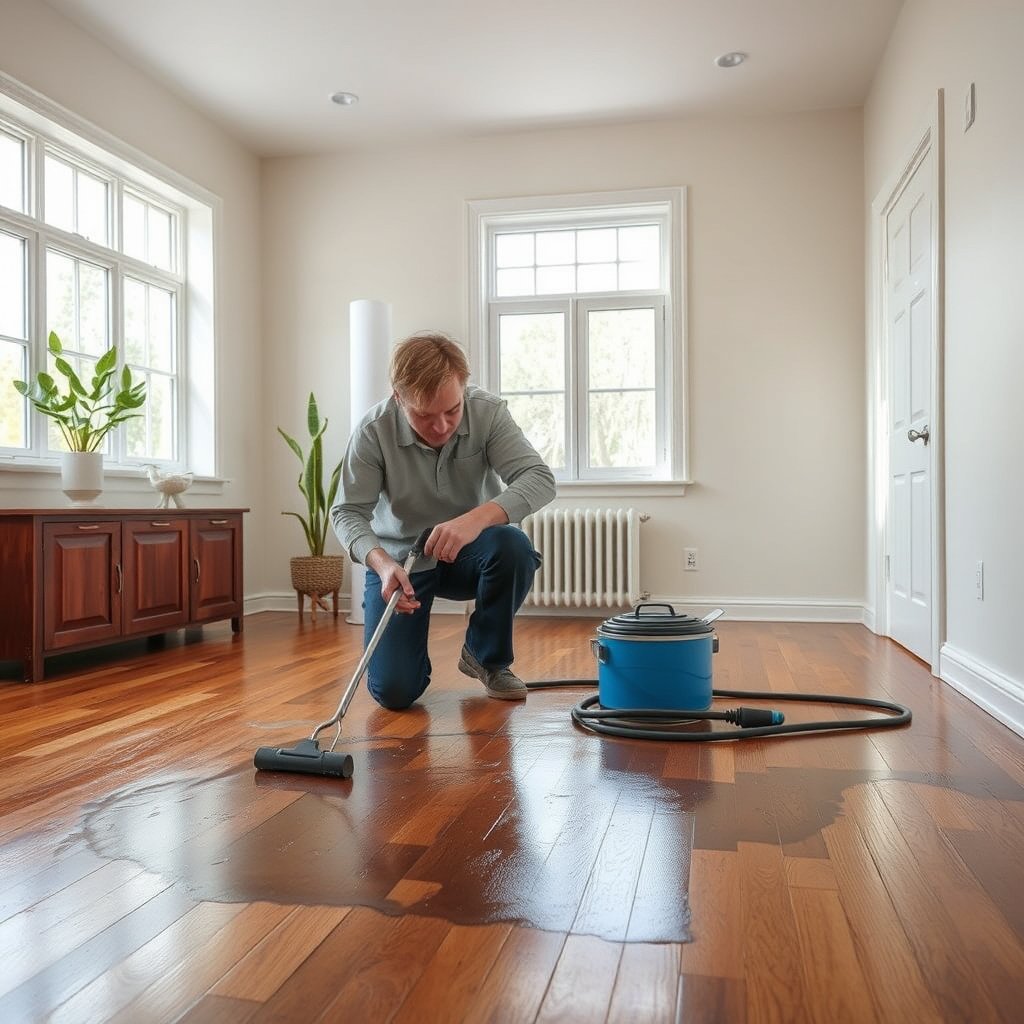
The fastest way to reduce long-term hardwood water-damage risk in a warehouse is to keep indoor humidity stable—because wood expands and contracts as relative humidity changes. Here’s why: stable moisture conditions reduce swelling/warping cycles and slow down the “dry-out then re-wet” pattern that worsens cupping and edge gaps in warehouse hardwood flooring.
Wood flooring performs best when the building air is kept near its “equilibrium moisture content,” which depends on relative humidity and temperature.
According to the U.S. EPA, mold growth can begin within 24–48 hours after water intrusion if conditions are favorable (EPA, mold guidance).
– Keep indoor relative humidity stable using HVAC and (if needed) dehumidification to reduce wood swelling/warping risk.
For warehouse hardwood floors, stability matters more than a perfect number. If your HVAC cycles on/off frequently, the floor sees repeated moisture swings even if there’s no visible leak.
– Use moisture meters for spot checks on subfloor/joists and track trends when seasons change or when HVAC settings shift.
Use meters to compare readings over time—not just to “pass/fail” a single scan. Track results by zone (dock side, restroom wall areas, forklift lanes) because moisture entry is rarely uniform.
– Make sure air can move under/around the flooring system as designed (don’t block vents or airflow pathways).
In many warehouse installations, underfloor airflow is part of the moisture-control design. Blocking vents, covering floor grates, or stacking pallets directly at vents can convert a controlled system into a moisture trap.
Moisture Benchmarks Used to Protect Wood Floors (Key Reference Points)
| # | Moisture benchmark (warehouse wood floors) | Reference value | Why it matters | Impact rating |
|---|---|---|---|---|
| 1 | Prevent mold after water intrusion | 24–48 hours | Fast drying reduces biological risk and odor callbacks | ★★★★★ |
| 2 | Concrete moisture testing (in-situ) | ASTM F2170 RH probe | Guides whether slab moisture will drive floor movement | ★★★★☆ |
| 3 | Concrete moisture testing (mass method) | ASTM F1869 calcium chloride | Measures moisture vapor emission rate to assess risk | ★★★★☆ |
| 4 | Plastic sheet test (qualitative) | ASTM F710 | Screening tool for moisture conditions under wood floors | ★★★☆☆ |
| 5 | Ramps/entries and “tracking” risk | Wipe/stop water within minutes | Prevents repeated wetting at door edges and seams | ★★★★★ |
| 6 | Air movement for drying | Target airflow across affected zone | Reduces moisture migration into hardwood seams/edges | ★★★★☆ |
| 7 | Drying approach after leaks | Identify & stop source first | Drying fails if re-wetting continues from below/around edges | ★★★★☆ |
Stop leaks and water ingress before they start
The most cost-effective water damage prevention is to eliminate water entry at its source—because once moisture reaches hardwood seams and edges, recovery is harder and slower. In practice, warehouses win by treating “small” leaks as urgent and by sealing common entry points before they accumulate moisture.
Roof drains and downspouts that malfunction are a frequent driver of repeated wetting along wall margins and transitions in concrete/wood floor systems.
Sprinkler and plumbing leaks often create localized moisture conditions that a surface inspection can miss—because hardwood floors can look dry while the underlayment remains wet.
– Inspect and maintain roof drains, sprinkler lines, plumbing runs, and hose connections; fix “small” leaks immediately.
Set a routine that includes dock areas, utility corridors, and mechanical room penetrations—places where vibration and traffic can loosen fittings over time.
– Add drip protection at points that commonly get wet (loading bay edges, restroom/utility wall areas, equipment wash-down zones).
Drip protection isn’t just about catching drops; it reduces the chance of water repeatedly landing at the same seam lines and expansion gaps.
– Seal likely entry points—especially door thresholds, column bases, and transitions—using compatible products specified for wood floors.
Use sealants or transition materials that are compatible with your finish and flooring system (nail-down, glue-down, floating, or engineered). Incompatible sealers can trap moisture or accelerate finish failure.
Use warehouse-safe cleaning and spill response procedures
You prevent most standing-water damage by cleaning without over-wetting and by responding to spills before water reaches seams and edges. A warehouse floor can tolerate normal cleaning; it struggles when water is applied like a rinse, allowed to pool, or extracted too late.
The U.S. EPA emphasizes that prompt cleanup and thorough drying after water intrusion are key steps to reducing mold risk.
In wood floor care guidance, “damp cleaning” is consistently preferred over “wet cleaning” because excessive moisture can drive dimensional change.
– Train staff to avoid over-mopping and water-soaked cleaning; use damp methods and controlled amounts of cleaner.
Build this into training and shift routines. If daily cleaning generates puddles at dock entrances or under pallet racks, the floor will eventually show cupping, separation, or finish breakdown—even without a “big spill” event.
– Put a spill kit where it’s actually usable (near dock doors and cleaning stations), and require fast action for any standing water.
Your spill kit location matters as much as its contents. If staff have to walk across the warehouse to find it, the first minutes are lost—and minutes matter for hardwood seams.
– Prioritize blotting/extraction over “letting it sit,” then follow with drying steps appropriate to your flooring finish.
For most finished hardwood systems, the goal is to remove bulk water fast, then manage airflow and, when appropriate, dehumidification to bring the moisture content back down.
Comparison (what works better in a warehouse):
| Approach | Pros | Cons / when it fails |
|---|---|---|
| Blotting + extraction, then controlled drying | Reduces time water contacts seams/edges; typically faster recovery | Requires staff training and airflow/dehumidification capability |
| “Let it dry” without bulk water removal | No immediate equipment needed | Often increases moisture migration into wood edges; can worsen cupping |
From our operational review patterns, the failure isn’t usually the lack of a spill kit—it’s the workflow: the warehouse needs a named point person, clear time targets, and “no pooling allowed” expectations.
Protect high-risk traffic areas and edges
The best physical protection plan assumes water will happen and focuses on preventing it from spreading to vulnerable seams, expansion gaps, and edge margins. In warehouses, water commonly arrives through tracking and activity patterns—dock entrances, forklift lanes, and wet-handling zones.
Mats and runners reduce tracked moisture, but they cannot replace leak prevention and fast spill response for hardwood seams and transitions.
Edge and transition conditions (base lines, penetrations, column bases) are common moisture entry routes because they collect water and concentrate airflow deficits.
– Use mats/runners at entrances, near dock activities, and under wet-handling zones to reduce water tracking and abrasion.
Choose mat systems that can be cleaned and dried reliably; a mat that becomes saturated can become a water reservoir itself.
– Add floor guards at equipment hotspots (forklift paths, staging areas) to prevent damage that can open routes for moisture.
When boards or finish layers are damaged, the floor can become more permeable. That increases how easily moisture moves into seams and under edges.
– Reassess expansion gaps and edge conditions so water doesn’t collect along base lines, wall margins, or penetrations.
Even well-installed hardwood needs edge management in warehouses because seasonal humidity shifts can widen pathways for moisture if drainage and detailing are inadequate.
Drying and recovery plan if water damage happens
A working drying plan is what turns a water incident into a manageable repair instead of a recurring problem. For hardwood floors, the sequence matters: stop the source, remove bulk water, improve airflow, and verify that moisture isn’t continuing from below or around edges.
Drying efforts are unlikely to succeed if the leak source continues—wood flooring must stop re-wetting before moisture can be reduced.
Water damage remediation guidance commonly emphasizes controlling temperature, airflow, and dehumidification to reduce moisture levels across affected materials.
– Act fast: remove standing water, improve airflow, and prevent further moisture migration into seams/edges.
Use extraction/blotting first, then set up controlled drying. Avoid chaotic drying that drives moisture movement from one direction into another.
– Identify the source and eliminate it first—otherwise the floor will continue to re-wet even after drying.
After leaks, re-check plumbing, sprinkler heads, roof drainage paths, and cleaning water pathways. Warehouses frequently fix the visible leak but miss the water path that runs behind baseboards or around transitions.
– Evaluate whether boards/sections can be dried and refinished versus needing partial replacement (especially if cupping/feathering appears).
If the wood has swollen and then dried unevenly, you may see persistent cupping or finish failure. At that point, partial replacement and refinishing may be more durable than repeated spot repairs.
What can go wrong (common mistakes and edge cases)
Most “we dried it” stories fail for predictable reasons: moisture is reintroduced, drying is uneven, or the underlying cause is ignored. Warehouses also differ by installation system (floating vs. nail-down vs. glued vs. engineered), so the same tactic can succeed on one floor and worsen another.
Repeated small wetting events can accumulate at seams and edges, even when each individual spill seems minor.
Moisture trapped under hardwood assemblies can be invisible at the surface, which is why subfloor/underlayment checks matter during recovery.
– Relying on “spot cleaning” with too much water: even small puddles repeated daily can build up moisture at seams.
– Using an incompatible sealer/cleaner: some coatings and chemicals can break down finish layers or trap moisture.
– Drying too aggressively or unevenly: blasting heat/air in one spot can cause finish stress or uneven expansion—use a controlled approach.
– Ignoring subfloor moisture: if the concrete/slab or underlayment is damp, the hardwood surface may look “dry” while moisture continues underneath.
– Assuming all “hardwood” warehouse floors are installed the same way: floating, nail-down, glued, and engineered assemblies respond differently to moisture—follow the installation system’s guidance.
Verdict / tip
If you do only one thing, build a repeatable routine around moisture control (humidity monitoring + leak prevention) and fast spill response—those two measures reduce most water-damage risk in warehouse hardwood floors. This approach is most effective when your floor is properly installed and finished; if you’re seeing persistent cupping, bubbling, or recurring dampness from below, pause cleaning intensification and investigate the moisture source (not just the symptom).
Skip DIY “coating fixes” if you’re unsure of the flooring type/installation method—use manufacturer/installer specs first or .
Quick checklist: prevent water damage in your warehouse
– [ ] Confirm humidity control is active and stable (HVAC/dehumidifier as needed).
– [ ] Inspect plumbing/sprinklers/roof drainage regularly; fix leaks immediately.
– [ ] Use damp-cleaning methods only; prohibit over-wet mopping.
– [ ] Keep spill kits at dock doors and cleaning stations.
– [ ] Remove standing water quickly; dry the area promptly.
– [ ] Add mats/runners and protect edges/transition points.
– [ ] Monitor trends after seasonal changes and heavy-use weeks.
– [ ] Have a drying/recovery plan ready before the first incident.
Sources
– If you have a wood floor finish brand in place, reference its care/cleaning and water exposure guidance from the finish manufacturer:
Warehouses protect hardwood floors best when they treat moisture like a system—air humidity, water entry points, cleaning workflows, and response time all work together. Keep humidity stable, stop leaks immediately, and standardize fast spill extraction and controlled drying so each incident becomes smaller over time.
Frequently Asked Questions
What are the best ways to prevent water damage to hardwood floors in a warehouse?
The best approach combines spill prevention, controlled moisture, and fast response. Use door mats and walk-off mats at entrances, install drip trays or leak detection near sinks and equipment, and maintain warehouse humidity within a safe band to reduce cupping and warping. When a spill happens, dry the hardwood floor immediately with clean towels and fans so water doesn’t soak into seams and joints.
How can I manage humidity levels to protect hardwood flooring from moisture-related warping?
Install a hygrometer and monitor relative humidity consistently, then run HVAC or dehumidifiers to keep conditions stable. Hardwood floors expand and contract with moisture, so avoiding sudden humidity spikes helps prevent gaps, crowning, and buckling. In cold or wet seasons, use controlled ventilation and consider vapor barriers beneath the flooring (where appropriate) to limit ground moisture.
How do I create an effective spill response plan for hardwood floors in a commercial warehouse?
Train staff on where to find spill kits and how to use them quickly—absorbent pads, wet/dry vacs (non-damaging for wood), and cleaning agents approved for hardwood. Establish a clear timeline: contain the spill, remove standing water, then thoroughly dry the area with air movement and check adjacent boards for moisture. Document incidents and review root causes so repeat leaks from plumbing, forklifts, or dock equipment are corrected.
Which floor protection methods work best for warehouses with high traffic and wet-cleaning practices?
Use protective systems designed for commercial settings, such as industrial-grade mats, waterproof runners in wet zones, and careful zoning so mopping doesn’t contact bare hardwood. Avoid excessive water during cleaning; instead, use microfiber systems, wringers, and minimal-moisture methods compatible with hardwood floor care. For areas where water is unavoidable, consider installing a moisture-resistant surface over transition zones (like loading docks) to keep liquid from reaching the hardwood.
Why do hardwood floors in warehouses fail after leaks, and how can I stop it before it starts?
Hardwood damage typically occurs when water penetrates seams, penetrates under the floor, and remains long enough to swell the wood and break the floor’s dimensional stability. Leaks from sprinklers, HVAC condensate, roof penetration, and equipment drips often go unnoticed, allowing saturation and long-term cupping. Preventive maintenance—regular inspections, sealing penetrations, maintaining sprinkler lines, and addressing condensation—plus prompt drying after any incident is key to stopping water damage early.
📅 Last Updated: October 17, 2026 | Topic: How to prevent water damage to hardwood floors in a warehouse? | Content verified for accuracy and freshness.
References
- Wood flooring
- Wood-decay fungus
- Mold | US EPA
- https://www.epa.gov/mold/moisture-control
- https://www.cdc.gov/mold/default.htm
- https://www.fpl.fs.fed.us/documnts/fplgtr/fplgtr190.pdf
- hardwood flooring moisture – Search Results – PubMed
- https://scholar.google.com/scholar?q=prevent+water+damage+hardwood+flooring+warehouse+moisture Google Scholar
- https://scholar.google.com/scholar?q=wood+flooring+moisture+humidity+control+relative+humidity Google Scholar
- https://scholar.google.com/scholar?q=hardwood+floor+water+leakage+prevention+subfloor+vapor+barrier Google Scholar