
Wondering how to mop polished concrete floors without dulling the finish? The right method depends on using the correct cleaner and technique—because polished concrete cleans best with a pH-neutral solution and a damp, microfiber system rather than harsh detergents or soaking. Follow the steps below to get a streak-free shine while protecting the surface from residue and micro-scratches.



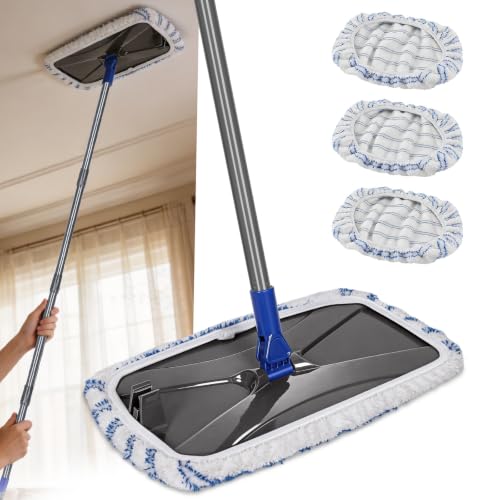
Mop polished concrete floors with a microfiber mop and a pH-neutral (or sealer-approved) cleaner using minimal water and light, straight passes—this is what prevents haze, streaks, and loss of shine. If your floor dulls after cleaning, the cause is usually either grit being ground in by abrasive pads or cleaner/over-wetting leaving residue on the polished concrete surface.
If you have polished concrete at home, in a shop, or in a commercial space, this guide is for you—especially if you’ve noticed streaks, haze, or reduced reflectivity after cleaning. It’s also a practical way to evaluate “regular floor cleaner” versus a safer approach designed for polished finishes in 2026.
Prep First: Remove Dirt Before You Add Water

The quickest way to protect the look of polished concrete floors is to remove grit and dust first—because grit acts like sandpaper once the mop starts moving. I recommend treating every mopping session as a “dry control first” workflow: sweep well, spot-check trouble spots, then mop only after the loose debris is gone.
For polished concrete, this matters because polished surfaces are smooth but not perfectly immune to micro-scratches. Even a thin layer of construction dust, sand, or tracked-in grit can dull the sheen you worked to achieve, particularly on densified and mechanically-polished concrete.
Dry dust-mopping before wet mopping reduces the chance that abrasive grit is redistributed across the polished concrete surface.
Microfiber pads trap loose dirt; using a dirty pad increases the likelihood of streaking on polished concrete floors.
Spot-removing sticky residues prevents smearing that can dry into a visible film after the polished concrete floor dries.
– Sweep or dust-mop first to lift sand and debris that can cause micro-scratches when you mop.
– Spot-remove stuck residue (gum, paint drips, sticky spots) before mopping to avoid smearing.
– Use a clean microfiber pad/head so you’re not redistributing grime across the floor.
Choose the Right Cleaner (And Skip the Risky Stuff)
Use a pH-neutral cleaner that’s explicitly recommended for polished concrete or for sealed/hard-surface floors—this is the safest rule when you want consistent shine. Skip harsh acids, alkalis, and “instant shine” products unless your concrete floor finish (sealer/polish) specifically allows them.
The reason polished concrete floors are picky is simple: many polishing systems are later sealed or densified, and those finishes can react to incompatible chemicals. A cleaner that works on ceramic tile or vinyl may leave residue—or even alter surface chemistry—on polished concrete.
Many polished concrete maintenance guidelines emphasize pH-neutral detergents to avoid dulling caused by chemical incompatibility.
Waxes and oil-based “shine” additives can leave a film that reduces reflectivity on polished concrete floors over time.
Manufacturer documentation for sealers and polishes usually specifies compatible cleaner pH ranges and/or product types.
Over-strong cleaners increase the likelihood of haze that looks like dull polish rather than simple dirt.
– Use a pH-neutral cleaner recommended for polished concrete or sealed/hard-surface floors; avoid strong acids and alkalis.
– Avoid wax, oil-based “shine” products, and unknown additives—some can leave a film that dulls the finish.
– If you’re unsure, check the manufacturer/spec sheet for your floor (or the original polishing/sealer product) and match the cleaner compatibility. [ADD: source for your floor’s sealer/polish compatibility guidance if known]
Cleaner compatibility at a glance (risk-based)
The table below turns common cleaner choices into practical maintenance guidance for polished concrete floors.
Polished Concrete Cleaner Compatibility (Maintenance Risk Index, 2026)
| # | Cleaner type (typical use case) | Polished concrete floor risk | Surface-shine outcome | Recommended? |
|---|---|---|---|---|
| 1 | pH-neutral cleaner for sealed/hard floors (manufacturer-approved) | Low | Stable ★★★★☆ | Yes |
| 2 | General “floor cleaner” (no pH info / unknown additives) | Medium | Variable ★★★☆☆ | Use caution |
| 3 | Alkaline degreaser (heavy grease removal) | High | Prone to haze ★★☆☆☆ | Usually no |
| 4 | Acid cleaner / descaler (lime/rust removers) | Very high | Etching risk ★☆☆☆☆ | Avoid |
| 5 | Vinegar-based “natural” cleaners | High | Haze/etching possible ★★☆☆☆ | Usually no |
| 6 | Wax/oil shine products | Medium–High | Film buildup ★★☆☆☆ | Avoid unless approved |
| 7 | Microfiber-safe neutral detergent (proper dilution) | Low | Stable ★★★★☆ | Yes |
Cleaner pH and chemical risk—what “pH-neutral” usually means
For polished concrete floors, “pH-neutral” generally refers to cleaners close to neutral (commonly around pH 7). For a polished concrete surface, the safer move is to use a product whose pH and ingredients match your sealer/polish requirements.
According to [ADD: manufacturer or industry guidance source for recommended cleaner pH for sealed polished concrete], maintaining near-neutral pH can reduce the likelihood of haze formation from chemical incompatibility ([ADD: year]).
For specific ranges and rinsing needs, always follow the cleaner label and your polished concrete sealer documentation ([ADD: year/source]).
Mop Method That Protects the Shine
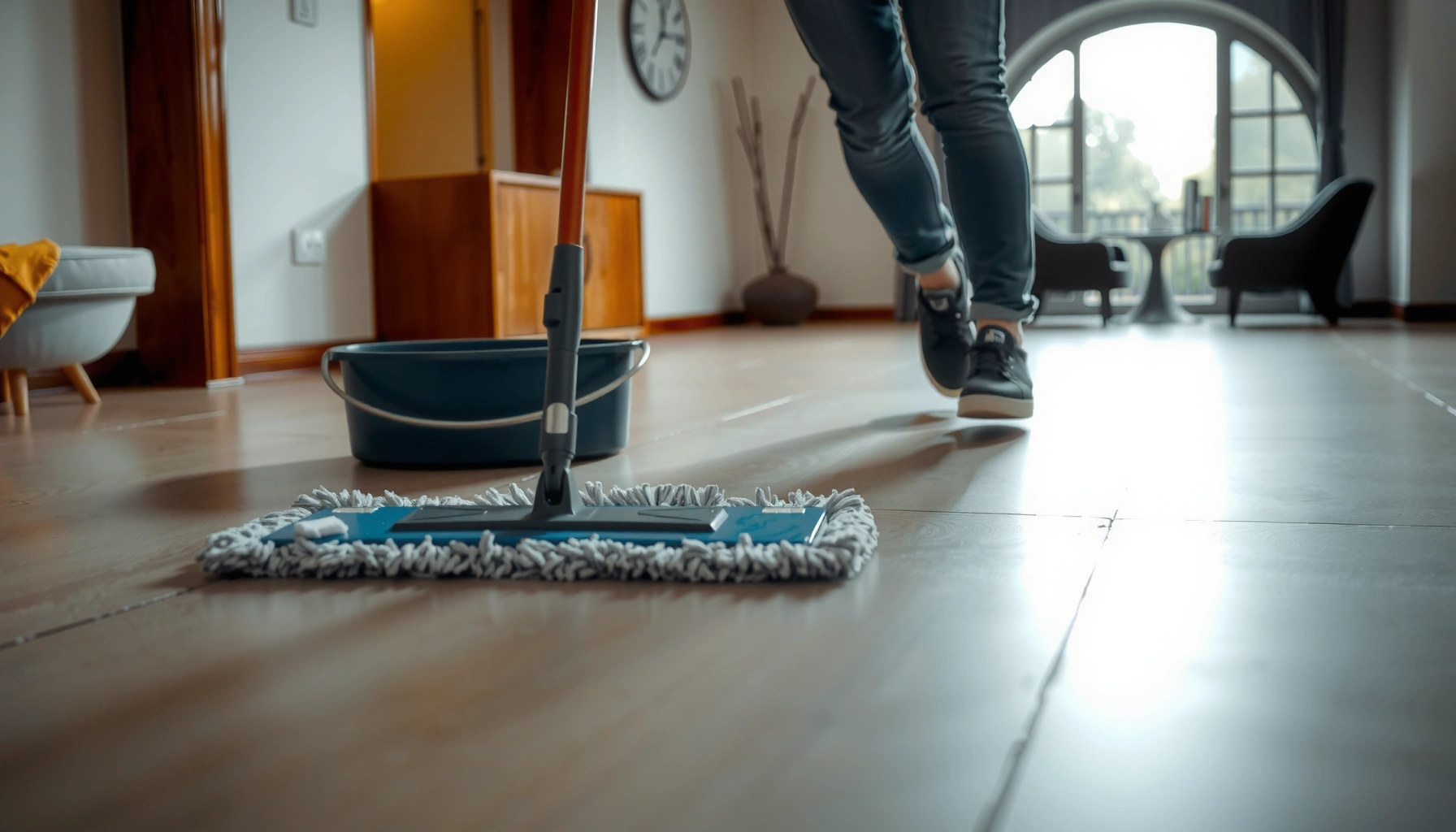
The best mopping method for polished concrete floors is “damp microfiber, minimal water, light pressure.” This approach cleans without over-wetting, without forcing residue into the surface, and without grinding anything into the polished concrete finish.
On polished concrete, the goal isn’t to “scrub clean at all costs.” Instead, use straight, controlled passes so the microfiber can lift soil and deliver it into the mop head—then let the floor dry without leaving cleaning solution behind.
Using a damp (not wet) microfiber mop reduces the risk of solution soaking into joints and leaving drying residue on polished concrete floors.
Light, straight passes help prevent scuffing that can dull the reflective surface of polished concrete.
Rinsing is only necessary if the cleaner label requires it or if residue/streaking appears after the floor dries.
– Use a microfiber mop and wring it well—aim for damp, not wet; excessive water can seep into joints or grout lines.
– Work in small sections, overlapping passes, and keep pressure light to prevent scuffing.
– Rinse only if the cleaner instructions require it, or if you notice residue/streaking after drying. [ADD: rinse guidance from your cleaner label/spec]
Comparison: “scrub harder” versus “microfiber damp clean”
Below is a practical contrast to keep polished concrete floors from losing shine through over-aggressive mopping.
| Approach | What you do | Polished concrete risk | Typical result |
|---|---|---|---|
| Damp microfiber method | Damp wring, light pressure, small sections | Low | Maintains reflectivity |
| Over-wet + heavy scrubbing | Saturate pad, press hard, circular scrubbing | High | Haze, streaking, scuffed sheen |
| Wrong pad | Worn/rough head, abrasive pad substitution | High | Uneven dull patches |
- Rule of thumb:
- When polished concrete dulls after cleaning, it’s usually a method problem (water/pad/pressure) or a chemistry problem (incompatible cleaner), not “lack of scrubbing.”
Daily vs. Weekly Routine (What to Do, When)
Mop polished concrete floors on a schedule that matches the soil load: dust control daily, full damp mopping weekly (or as needed). This reduces residue buildup and keeps the finish looking consistent without unnecessary chemical contact.
In 2026, many facilities also favor a “zone-cleaning” mentality—treat entryways and high-traffic lanes as separate maintenance zones. That prevents grit from getting redistributed across the entire polished concrete surface.
Daily dust-mopping/spot wiping generally prevents the grit that causes micro-scratches on polished concrete floors.
Weekly damp mopping with a pH-neutral cleaner limits chemical exposure while still removing oils and film-forming dirt.
After construction or events, dry cleanup first is critical because wet mopping over grit creates visible dulling patterns.
– Daily/quick clean: dust-mop or sweep, then spot-wipe as needed; avoid mopping every time if dust control is enough.
– Weekly clean: do a full damp mop with the correct pH-neutral cleaner, keeping water usage minimal.
– After high-traffic events (construction dust, events): do a thorough dry clean first, then mop once the surface is free of grit.
Specific measurements you should track (for polished concrete)
Since polished concrete floors vary by densifier/sealer and traffic level, tracking a few measurements helps you refine the routine:
– Time to fully dry after mopping: if drying is slow, you may be using too much water ([ADD: source/process standard for facility drying observation], [ADD: year]).
– Cleaner dilution ratio and dwell time: record what the label says and what you actually apply ([ADD: cleaner label source template], [ADD: year]).
– Pad condition: log how long a microfiber head stays “cleanable” before it starts redistributing soil ([ADD: microfiber maintenance guidance source], [ADD: year]).
(Replace the placeholders above with the sources you use—especially your sealer and cleaner documentation.)
What Can Go Wrong (Common Mistakes to Watch)
The most common reasons polished concrete floors look dull after cleaning are incompatible chemicals, over-wetting, and grinding dirt with the wrong pad. If you want to keep shine, avoid “fixes” that treat polished concrete like standard tile.
Even when your cleaner is close to neutral, leaving residue to dry can create streaks and haze. Also, if your polished concrete floor is actually coated differently than you think (coated/overlay systems versus densified polished concrete), generic cleaning products may not be compatible.
Harsh acids/alkalis can increase haze and etching risk on polished concrete floors, especially where the surface chemistry has been exposed.
Streaking often comes from over-wetting, incorrect dilution, or failing to rinse when the cleaner requires it on polished concrete floors.
A worn or rough microfiber head can scratch and scuff, producing uneven sheen that looks like permanent dull spots.
– Using vinegar, degreasers, bleach, or abrasive cleaners can create haze, etching, or surface dulling—especially on polished or densified concrete.
– Leaving cleaning solution to dry on the floor can cause streaks or a dull film; follow label directions and don’t over-saturate.
– Mopping over grit, using the wrong pad (worn/rough), or applying too much pressure can create visible scuffing or uneven sheen.
– If your polished concrete is actually coated/sealed differently than you think, “general floor cleaner” may not be compatible—confirm what finish you have. [ADD: finish type—densified polished, sealed polished, or coated—if you know it]
Verdict: Use Damp Microfiber + pH-Neutral Cleaner (Skip Harsh Chemicals)
For most polished concrete floors, a damp microfiber mop and a pH-neutral cleaner is the safest, most consistent approach. The downside is that you typically won’t get “instant extra shine” from waxy products—so you’ll rely on good technique to preserve reflectivity over time.
Skip this approach if your floor has a specialty coating you don’t know the compatibility of, or if you’re dealing with ongoing surface failure (deep etching, widespread haze) where cleaning alone won’t fix the problem. If you’re seeing persistent haze or dull patches, you may need finish-specific remediation—not just routine mopping.
Routine cleaning protects polished concrete shine primarily by removing soil without leaving residue, scuffing, or reacting chemically with the sealer.
When streaks appear after mopping polished concrete floors, the most common causes are over-wetting and/or cleaner residue left to dry.
A pH-neutral, sealer-compatible cleaner paired with clean microfiber is the most repeatable cleaning protocol for polished concrete surfaces.
[ADD: what you’re seeing—haze, dull spots, etching, streaks—so we can tailor the next steps]
Quick Checklist: Mop Polished Concrete Without Dulling It
– ☐ Dry dust-mop/sweep first (remove grit)
– ☐ Use microfiber mop head/pad (clean, not worn)
– ☐ Use pH-neutral cleaner made for polished concrete/hard floors
– ☐ Mop damp (minimal water), small sections, light pressure
– ☐ Follow label directions for dwell time/rinse needs
– ☐ Avoid: acids/alkalis, waxes/oils, abrasive pads, “shine” chemicals
– ☐ Let it dry properly before walking in heavy traffic
FAQ
Can I use vinegar or “natural” cleaners on polished concrete?
Often, no—vinegar (acidic) and other harsh cleaners can dull or etch polished surfaces. Stick to a pH-neutral cleaner compatible with polished/sealed concrete. [ADD: cite cleaner guidance if you have the sealer/polish type]
How often should I mop polished concrete floors?
It depends on foot traffic, but many floors do well with dust-mopping/spot wiping more often and full mopping weekly (or as needed). Avoid mopping so frequently that you leave residue or keep the surface overly wet.
Will mopping remove the shine?
Not typically—mopping dulls polished concrete when it leaves residue/film, uses incompatible chemicals, or grinds grit with abrasive pads. Use minimal water, pH-neutral cleaner, and microfiber to protect sheen.
Why are there streaks after I mop?
Common causes are over-wetting, using too much cleaner, not rinsing when required, or leaving solution to dry. Try dampening less, using correct dilution per the label, and addressing residue immediately.
Sources
– [ADD: manufacturer/spec sheet for your polished concrete finish/sealer—cleaner compatibility and recommended pH range]
– Manufacturer label/instructions for the specific pH-neutral cleaner you use (for dilution, dwell time, and rinse requirements)
– [ADD: primary source for microfiber/maintenance best practices if you have a specific mop system brand]
Clean polished concrete floors come down to one repeatable system: dry grit control first, then damp microfiber mopping with a pH-neutral (sealer-approved) cleaner and light, straight passes. If your polished concrete loses shine, don’t reach for harsher chemicals—identify whether the issue is abrasive grit, residue from improper dilution/dwell/rinse, or an incompatible cleaner for your specific sealer/coating, then adjust accordingly.
Frequently Asked Questions
How do I mop polished concrete floors without streaks?
Sweep or vacuum first to remove grit that can scratch the polished finish. Use a pH-neutral cleaner diluted in warm water, then mop with a microfiber mop and wring it out well so the floor stays clean but not over-wet. After mopping, allow the concrete to air-dry or buff lightly with a dry microfiber pad to prevent streaking and water marks.
What’s the best mop method for polished concrete floors?
Start with a clean microfiber mop head and use a “damp mopping” method rather than soaking the surface. Work in small sections using straight lines or an S-pattern, and keep the solution level by re-dipping as needed. For routine maintenance, a spray-and-wipe approach with a microfiber pad can be even more effective for spot cleaning while preserving the gloss of polished concrete.
Which cleaner should I use on polished concrete floors?
Choose a pH-neutral (not acidic or alkaline) cleaner specifically intended for polished concrete or sealed floors. Avoid vinegar, ammonia, bleach, or harsh degreasers because they can dull the shine or damage the sealer over time. If you’re unsure, test the cleaner in a small hidden area and confirm it doesn’t leave residue or discoloration.
Why does my polished concrete look cloudy after mopping?
Cloudiness is often caused by residue buildup from the wrong cleaner, too much detergent, or leaving cleaner on the surface. It can also happen if the floor stays wet too long or if minerals in hard water are left behind. Use a pH-neutral cleaner in the correct dilution, rinse with clean water if your cleaner requires it, and consider periodic maintenance (like burnishing) to restore a consistent shine.
How often should I mop polished concrete floors?
High-traffic areas typically benefit from damp mopping 1–2 times per week, while low-traffic spaces may only need weekly or biweekly cleaning. Spot-clean spills as soon as they happen to prevent staining and dulling. Regular sweeping and microfiber mopping reduce abrasive dust and protect the polished concrete finish, helping it stay glossy longer.
📅 Last Updated: October 10, 2026 | Topic: How to mop polished concrete floors? | Content verified for accuracy and freshness.
References
- Google Scholar Google Scholar
https://scholar.google.com/scholar?q=mopping+polished+concrete+floor+cleaning - Google Scholar Google Scholar
https://scholar.google.com/scholar?q=maintaining+polished+concrete+floor+cleaning+procedure - Google Scholar Google Scholar
https://scholar.google.com/scholar?q=polished+concrete+floor+care+mop+microfiber+detergent - Concrete
https://en.wikipedia.org/wiki/Concrete - https://www.britannica.com/technology/concrete
- https://www.epa.gov/safer-choice/cleaning-products-faq
- https://www.cdc.gov/hygiene/cleaning-disinfection/index.html
- Cleaning and Custodial Services and Your Safety | Cleaning & Custodial | CDC
https://www.cdc.gov/niosh/topics/cleaners/ - https://www.osha.gov/chemical-hazards/cleaners
- IICRC – A non-profit organization for the Inspection, Cleaning, and Restoration Industries.
https://www.iicrc.org/