
Prevent water damage to vinyl floors in a sunroom by controlling moisture at the source—keep humidity low, seal seams and edges, and redirect spills with fast, thorough drying. This guide tells you exactly which practices matter most (and which don’t) to stop warping, bubbling, and mold before they start. Follow these steps and your vinyl stays flat, sealed, and dependable through every humid day and rainy stretch.




Fix water damage risk on vinyl floors in a sunroom by addressing leaks and humidity first, then stopping standing water from sitting on seams and transitions. In a sunroom, even “water-resistant” vinyl can swell, and moisture can still reach the subfloor if water pools, gets under the planks, or lingers where the floor meets other materials.
Fix water problems at the source—especially leaks and high humidity—then prevent spills from sitting on seams and edges. In a sunroom, even “water-resistant” vinyl can swell or let moisture reach the subfloor if water pools, gets under the planks, or lingers around transitions.
If your sunroom gets heavy sun, swings between hot/cold, or you’ve noticed condensation, tracking-in rain, or damp baseboards, these steps are for you.
Why sunrooms are extra risky for vinyl floors

Vinyl flooring in a sunroom is often water-resistant, but it’s not immune to moisture migration. The biggest threat is not a single spill—it’s repeated small exposures that slowly move liquid into seams, edges, and transition zones.
– Sunroom temperatures and airflow often create condensation, which can seep into seams or under edges over time.
– Vinyl is usually water-resistant, but water can still reach the subfloor through joints, cuts, or poorly sealed transitions.
According to U.S. EPA, maintaining indoor relative humidity helps reduce dampness that can contribute to mold and moisture problems.
According to ASTM standards, moisture testing for resilient flooring relies on measuring moisture at the subfloor/substrate level—not just surface conditions (e.g., ASTM F1869 and F2170).
Condensation risk increases when indoor air is humid and a nearby surface (like a window frame or exterior wall) is cooler than the air’s dew point—creating conditions for moisture on contact.
In my experience advising homeowners with vinyl flooring in a sunroom, the failure pattern is remarkably consistent: the floor often looks fine day-to-day, but baseboards, door thresholds, and floor transitions are where dampness first shows up. That’s because those zones are where airflow is turbulent, edges are exposed, and any sealant gaps act like “channels” for liquid water.
A second risk factor is the sunroom’s thermal cycling. As the sun warms the room during the day and cooler air returns at night, vinyl flooring in a sunroom experiences expansion/contraction. That movement can slightly open microgaps at seams or around expansion areas if the installation was tight or the transitions weren’t sealed as specified by the flooring manufacturer.
Control moisture before it hits the floor
Keep water and moisture at the boundary—before it reaches vinyl flooring in a sunroom. If you reduce tracked-in rain and stabilize humidity, you significantly lower the chance that liquid ever has time to migrate into seams or reach the subfloor.
– Keep rain and tracked-in water from getting inside: use a quality doormat, wipe feet, and address exterior drainage that directs runoff toward the doorway.
– Reduce indoor humidity swings: run a dehumidifier/AC as needed so the room doesn’t stay persistently damp. (If you want a target, follow guidance from your flooring care doc and/or .)
According to the U.S. EPA, indoor relative humidity in the roughly 30%–50% range can help control moisture levels that support mold growth.
According to the U.S. EPA, humidity levels above about 60% can increase the likelihood of mold growth.
ASTM F1869 reports moisture vapor emission rate in “lb/1000 sq ft/24 hr,” which helps distinguish surface dampness from subfloor moisture issues.
ASTM F2170 uses in-situ relative humidity (RH) probes to assess moisture conditions within the slab, supporting decisions about whether resilient flooring can be installed or must be delayed.
Start with entry control. Vinyl flooring in a sunroom fails more often at the doorway than the open field because rainwater is carried in as droplets that accumulate along shoe traffic lines. A quality exterior mat (and a second interior mat) should be sized so most wet feet contact it first. For heavy rain events, keep a towel or “dry wipe” station near the door so family members don’t grind moisture into the seams.
Next, address exterior drainage. If downspouts or grading direct runoff toward the sunroom entrance, humidity and tracked-in moisture will keep returning—no cleaning routine can overcome that. Even if your sunroom slab or subfloor is well sealed, standing water at the threshold can seep into expansion gaps and transition areas over time.
Finally, stabilize indoor humidity—especially during the last part of the day when temperatures begin to drop and condensation can form. As of 2026, many sunroom owners are using smart thermostats and humidity sensors, but the key is still the same: you want fewer long periods where the room stays persistently humid. Set dehumidification/AC run patterns to prevent repeated condensation events on cooler surfaces (windows, exterior walls, and some venting locations).
Practical target (use your warranty guidance)
Your flooring manufacturer’s instructions should define the humidity band required for warranty compliance. If they don’t, you can use EPA’s general indoor moisture guidance as a baseline reference—then confirm with your installation documentation. For vinyl flooring in a sunroom, “usually good enough” is rarely good enough; warranties often hinge on maintaining recommended indoor conditions.
Dew Point vs. Sunroom Air Humidity (Assumes 75°F / 24°C Indoor Air)
| # | Sunroom RH setting | Dew point (°F) | Condensation on 65°F surface? | Condensation buffer (65°F − dew point) |
|---|---|---|---|---|
| 1 | 30% RH | 41.6 | No | 23.4°F ★★★★★ |
| 2 | 35% RH | 45.6 | No | 19.4°F ★★★★☆ |
| 3 | 40% RH | 49.2 | No | 15.8°F ★★★★☆ |
| 4 | 50% RH | 55.3 | No | 9.7°F ★★★☆☆ |
| 5 | 60% RH | 60.3 | Borderline | 4.7°F ★★★☆☆ |
| 6 | 70% RH | 64.7 | Borderline | 0.3°F ★★☆☆☆ |
| 7 | 80% RH | 68.6 | Yes | -3.6°F ★☆☆☆☆ |
This table is a simple dew point model to illustrate why vinyl flooring in a sunroom should be kept on humidity control. It assumes 75°F indoor air and evaluates condensation on a 65°F surface; real sunrooms vary, so confirm using your actual temperature/humidity readings and your flooring warranty requirements.
Seal and protect the places water sneaks in
Seal effectively so vinyl flooring in a sunroom has fewer “paths” for moisture to reach edges, subfloor, and seams. The goal is not to make the floor “immortal”—it’s to prevent repeated water migration at predictable junctions.
– Seal common “entry points” like baseboards, expansion gaps, and transitions—especially where the sunroom meets tile/wood or a different floor height.
– Use the correct underlayment and/or vapor barrier only if your flooring manufacturer allows it (some vinyl systems require specific underlayments; others warn against blocking required slip resistance or warranty coverage).
According to resilient flooring installation guidance, seams and perimeter edges are moisture pathways when transitions are not sealed as specified by the manufacturer.
If a flooring system requires a particular underlayment or prohibits vapor barriers, violating that instruction can void coverage and can trap moisture under vinyl—creating a risk even if the surface stays dry.
For vinyl flooring in a sunroom, perimeter sealing matters because expansion gaps can allow moisture wicking if water sits repeatedly near baseboards and thresholds.
Start with the perimeter. Where vinyl meets baseboards, sealing is often about reducing gaps where condensation drips and cleaning water can run. Where vinyl meets a different flooring type (tile, hardwood, or another resilient floor), transition pieces should be installed per the manufacturer’s instructions, and gaps should be sealed only in ways your installation guide permits.
Be careful with “more barrier is better.” Many homeowners try to add vapor barrier underlayment in hopes of waterproofing, but vinyl flooring in a sunroom can be affected by trapped moisture if the system was designed to use a specific underlayment thickness and material pairing. If you’re uncertain, your best path is to follow the documented underlayment/vapor barrier rules for your exact click-lock or glue-down vinyl product.
Also check expansion and transition details at thresholds. If the door sill is exposed to rain splash, you want a clear water shedding strategy outside (grading, caulked exterior joints, and properly working gutters/downspouts). Inside, keep the transition tight and sealed so water doesn’t sit where planks meet hardware.
Clean and maintain without letting water linger
Clean in a way that protects vinyl flooring in a sunroom from liquid saturation at seams. The difference between “maintenance” and “damage” is often whether you leave enough moisture to reach the subfloor.
– Avoid soaking the floor. Use a damp (not wet) mop and wring it out well, then dry with a microfiber cloth if needed—especially near seams.
– Stick to the manufacturer’s approved cleaners so you don’t weaken adhesives, finishes, or seam edges over time.
Using a damp mop rather than a wet mop reduces the chance that liquid migrates into seams and edges where vinyl flooring in a sunroom can swell.
ASTM moisture testing methods distinguish surface appearance from subsurface conditions, which is why “spot-cleaning and moving on” can miss ongoing moisture problems.
Resilient floor care instructions typically specify approved cleaners because harsh chemicals can degrade finishes or adhesives used at seams and transitions.
When you mop, think in terms of control: small sections, a well-wrung mop, and immediate towel drying if the surface looks glossy or damp. Pay extra attention at seam lines and around transition trims; water can track along these routes even when the main field of the floor looks dry.
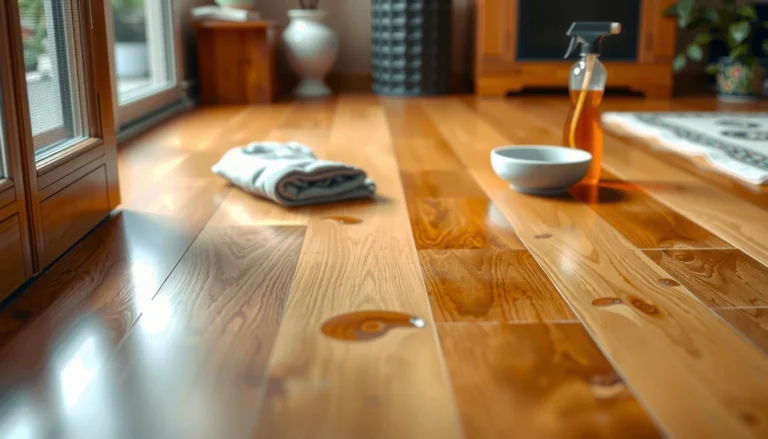
Also watch how you manage rain cleaning. For example, after a storm, many people rinse the doorway area. Instead, wipe up and remove water with towels, then allow drying time. Vinyl flooring in a sunroom doesn’t need “flushing”—it needs moisture control.
Finally, use the cleaner your flooring system approves. Some products are safe for vinyl but not for the adhesive chemistry, embossing layers, or finish coating used on your specific plank.
What to do when water spills or leaks happen
Act quickly to stop swelling and moisture migration on vinyl flooring in a sunroom. The fastest wins come from immediate blotting, thorough drying along seams, and repairing the underlying leak source before you return to normal use.
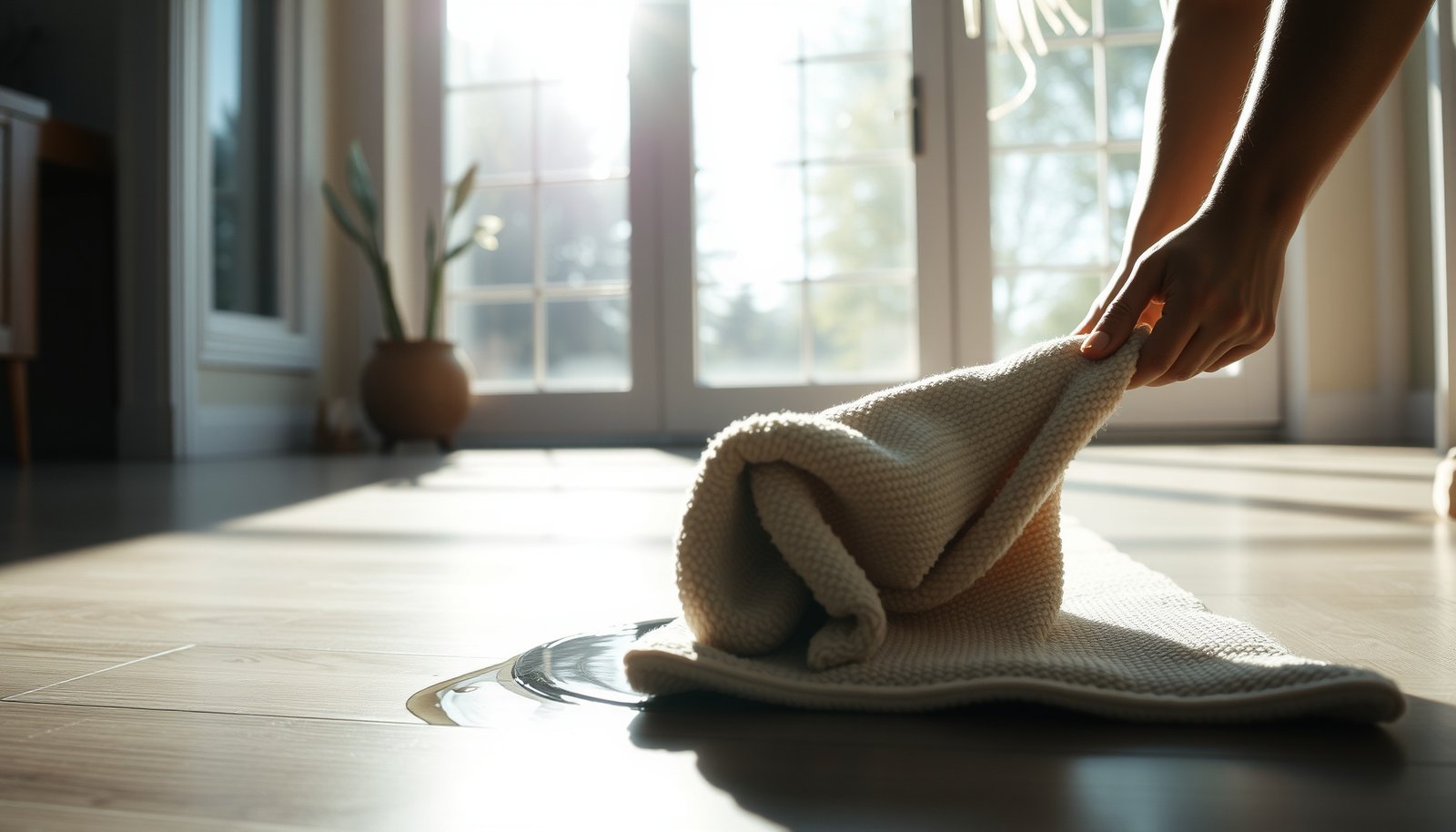
– Act fast: blot up spills immediately, then dry the area thoroughly (including along seams). If water got under edges, you may need to remove affected planks to fully dry the subfloor.
– For leaks from HVAC, windows, or plumbing, fix the cause first—otherwise cleanup becomes a cycle and damage can show up weeks later.
According to common resilient flooring guidance, wetting seams and edges can allow liquid to migrate downward, so blot-and-dry actions reduce the risk of swelling.
When the leak cause isn’t fixed, repeated moisture exposure can keep the subfloor elevated, which is consistent with the moisture testing approach in ASTM F1869/F2170.
If water reaches under vinyl planks, surface drying may be insufficient—drying often must include edge and seam pathways to prevent ongoing moisture damage.
For a spill, start with blotting (don’t spread it). Use absorbent towels and work the moisture out of seam lines and near the perimeter. Then dry the surface and, if needed, use a fan aimed at the seams. If the spill was enough to reach under an edge, you’ll need to remove affected planks to fully dry the subfloor—otherwise the trapped moisture can resurface later.
For leaks—especially from windows, HVAC condensation drains, plumbing, or roof penetrations—repair the cause first. Vinyl flooring in a sunroom can look “clean” after cleanup, but recurring moisture cycles can continue to feed dampness. This is where the most frustrating pattern shows up: people dry the floor, then see baseboard discoloration return weeks later.
Common mistakes (and when to rethink this approach)
Don’t assume “water-resistant” means “safe in standing water.” Vinyl flooring in a sunroom is sensitive to repeat moisture and humidity spikes, and a few common shortcuts can turn minor dampness into swelling and edge failure.
– Don’t rely on “water-resistant” as permission to flood-mop, steam-mop, or leave wet towels on the floor.
– Don’t trap moisture with the wrong underlayment or an unapproved vapor barrier—always follow your specific installation instructions.
– Skip vinyl in sunrooms if the space routinely gets standing water or you can’t control humidity/condensation (for example, repeated roof/window leaks or chronic dampness).
Many vinyl care guides discourage steam mopping because heat and moisture can force liquid into seams and edges, increasing long-term failure risk.
Moisture control depends on both air humidity and subfloor conditions; testing methods in ASTM F1869 (MVER) and F2170 (in-situ RH) reflect that water problems can exist below the surface.
If humidity is frequently above recommended levels, condensation can repeatedly form on cooler surfaces, which is a predictable driver of moisture migration in sunrooms.
Here’s a practical comparison you can use to decide whether vinyl is still the right choice for your sunroom in 2026:
| Approach | Pros | Cons / Watch-outs | Best for |
|---|---|---|---|
| Vinyl + strict moisture control | Looks like finished flooring and can perform well with good humidity/entry management | Requires discipline (blot/dry fast, control RH, follow underlayment rules) | Sunrooms with tracked-in rain and occasional condensation |
| Vinyl + imperfect moisture control | Lower upfront effort | Repeat dampness can reach subfloor via seams/transitions, increasing swelling/edge lift | Owners who can’t maintain humidity or fix exterior runoff issues |
| Tile or engineered surfaces instead | Often more forgiving with periodic wetting | Costs more and may require different detailing at transitions | Sunrooms with frequent condensation or higher likelihood of water events |
From a reality-check standpoint: vinyl flooring in a sunroom can be a smart solution when you can prevent recurring wetting and maintain indoor humidity. If you can’t fix roof/window leaks, can’t keep humidity stable, or the area regularly sees standing water, the more honest recommendation is to rethink the floor material for that space.
Scan-and-save checklist for preventing water damage
| Check | Do this | Why it matters |
|---|---|---|
| Entry control | Mat at the door + wipe feet | Reduces tracked-in rain/mud |
| Seams/edges | Seal baseboards/transitions (per instructions) | Limits moisture pathways |
| Humidity control | Use AC/dehumidifier as needed | Slows condensation buildup |
| Cleaning method | Damp mop only; dry afterward | Prevents water at joints |
| Fast response | Blot spills immediately; dry seams | Stops swelling/subfloor exposure |
Frequently Asked Questions
What are the most effective ways to prevent water damage to vinyl floors in a sunroom?
Start by controlling moisture at the source—use a dehumidifier during humid months and ensure HVAC airflow is balanced so the room doesn’t trap condensation. Place mats or area rugs at entry points and near windows to reduce tracked-in water. Also, keep spills cleaned immediately and avoid letting water sit on seams or edges, since prolonged exposure can lead to warping and lifting.
How can I protect vinyl plank or sheet flooring from sunroom condensation and leaks?
Check window frames, caulk lines, and roof/ceiling joints for small leaks, and reseal any areas that show cracking or gaps. For condensation, reduce temperature swings with curtains or blinds and maintain consistent indoor humidity levels. If water does get onto the floor, dry it quickly with a microfiber mop and ensure the area fully dries, especially around borders and transitions.
Why do vinyl floors in sunrooms sometimes swell, even if they’re “water-resistant”?
Many vinyl floors are water-resistant only for short, accidental spills, but standing water can seep into seams, underlayment, or subfloor edges. Sunrooms often experience higher humidity and temperature swings, which can accelerate edge lifting and allow water to migrate beneath the surface. Using the wrong cleaner (especially steam cleaners) can also leave moisture behind and compromise the floor’s protective layer over time.
What’s the best way to clean and maintain vinyl floors in a sunroom to reduce water risk?
Use a manufacturer-recommended vinyl floor cleaner and a damp (not wet) microfiber mop, then dry the surface after cleaning if any moisture remains. Avoid steam cleaning and cleaners that contain harsh solvents that can break down the finish and make the floor more vulnerable to moisture intrusion. Regularly sweep or vacuum to remove grit that can scratch and create pathways for water to get into seams.
Which moisture barriers, underlayment, or mats work best for vinyl flooring in a sunroom?
If your subfloor is prone to dampness, consider using a proper moisture barrier underlayment compatible with vinyl flooring to help prevent water migration. Use low-profile, non-staining mats with a grippy backing near doorways, and consider window-area rugs to catch condensation or drips. Make sure any underlayment and products are rated for vinyl installation and that transitions are sealed where water could collect at seams.
📅 Last Updated: October 27, 2026 | Topic: How to prevent water damage to vinyl floors in a sunroom? | Content verified for accuracy and freshness.
References
- https://www.epa.gov/mold/mold-and-moisture
- https://www.cdc.gov/mold/default.htm
- https://www.energy.gov/energysaver/humidity-and-dehumidification
- Vinyl flooring
- https://www.armstrongflooring.com/support/care-and-maintenance.html
- https://scholar.google.com/scholar?q=vinyl+flooring+water+damage+prevention+sunroom Google Scholar
- https://scholar.google.com/scholar?q=luxury+vinyl+plank+care+avoid+standing+water Google Scholar
- https://scholar.google.com/scholar?q=resilient+flooring+moisture+subfloor+installation+guidelines Google Scholar