
Want to know how to polish chevron floors for a true high-gloss finish? Follow a step-by-step process built around proper sanding, careful stain/filler prep, and progressively finer polishing pads—skipping shortcuts that leave chevron lines cloudy. If you want the fastest route to glass-smooth shine, this is the winning method to restore clarity across every angled seam.

- For use on: Resilient Linoleum, Vinyl Composition Tile/VCT, Vinyl Tile, Asphalt Tile, Asbestos Tile, Laminate Flooring, Luxury Vinyl Tile/LVT
- High quality floor finish protects all resilient flooring and meets or exceeds ASTM standards for slipping and dries to a high gloss finish
- Ready to use formula: For best results apply with lambswool applicator

Polish chevron floors by matching your method to the floor’s existing finish: clean thoroughly, lightly abrade only if needed, then use the correct polish/protectant system. Start with the gentlest approach (proper cleaner + buffing), and only step up to sanding/buffing pads if you’re dealing with dullness, scuffs, or minor residue—this helps keep the parquet pattern crisp and avoids uneven sheen across chevron lines.
If your chevron floor is hardwood/parquet, this guide is for restoring shine without damaging the pattern or finish. It’s especially useful when the surface looks hazy, feels sticky, or has dull spots from daily wear, wax build-up, or prior polishes.
Identify your chevron floor type and finish
You get the best high-gloss outcome when you first identify whether the chevron floor is sealed (film-forming topcoat) or oil/waxed (penetrating finish). Here’s why: the “right” polish is very different, and using the wrong one can cause tackiness, clouding, or streaks along the chevron V-grooves.
According to the National Wood Flooring Association (NWFA), maintaining indoor conditions helps prevent finish haze and adhesion problems—targeting typical ranges like 35–55% relative humidity (RH) supports stable wood behavior.
NWFA guidance also emphasizes controlling temperature and moisture—commonly referenced ranges such as about 60–80°F help reduce the finish-related dullness that shows up after seasonal swings.
When haze is caused by residue (not worn clear coat), haze often lifts with the correct residue-safe cleaner; when haze is true dullness, you need controlled abrasion (screening/buffing pads) plus a compatible protectant.
– Determine whether your chevron floor is sealed with a finish (polyurethane/urethane, water-based topcoat) or oil/waxed (more maintenance-friendly but easier to dull).
– Check for wax/residue buildup (sticky feel, cloudy haze) versus true surface dullness (no tackiness, just reduced gloss).
– If you’re unsure, test a small hidden area with the least aggressive cleaner you have and observe whether the haze lifts—then use the same approach across the floor.
Finish decision: what to look for in real chevron wear
Chevron parquet tends to telegraph problems because light catches the repeating “V” lines. Residue often looks like irregular cloudiness that follows cleaning habits; true dullness usually looks more uniform across boards while still emphasizing the pattern.
Also, remember that “sealed” doesn’t always mean the same chemistry: some urethanes are more resistant to film-building polishes, while others can haze when incompatible products are layered. If you don’t know what’s installed, you can still proceed safely by using a neutral, finish-appropriate cleaner first and avoiding aggressive abrasives until you confirm what the surface is doing.
Chevron Floor Restoration: Abrasion Intensity vs Pattern Safety (Typical Practice)
| # | Polishing/Prep Option | Abrasive level | Most common issue fixed | Best for finish type | Pattern integrity impact |
|---|---|---|---|---|---|
| 1 | pH-neutral cleaner + microfiber/dry buff | 0 (non-abrasive) | Light haze | Sealed or oil/wax | +1.0 ★★★★★ |
| 2 | Soft pad bonnet buffing (low speed) | Very low | Micro-dullness | Sealed (topcoat) | +0.6 ★★★★☆ |
| 3 | Residue-safe deep clean (finish-approved) | 0 (chemical cleaning) | Sticky haze / film | Sealed or oil/wax (per label) | +0.3 ★★★★☆ |
| 4 | Screening pad: 180–220 equivalent grit | Low-medium | Dullness without damage | Sealed only (if needed) | -0.4 ★★★☆☆ |
| 5 | Fine abrasive disc: ~150–180 grit | Medium | Scuffs + uneven sheen | Sealed (controlled) | -0.9 ★★☆☆☆ |
| 6 | Medium stripping pad (if compatible) | Aggressive | Heavily built-up films | Sealed only (advanced) | -1.6 ★☆☆☆☆ |
| 7 | Full refinishing (sanding + recoat) | High | Finish failure / wear-through | Sealed or oil/wax (refresh) | -2.2 ★☆☆☆☆ |
Prep: clean thoroughly and protect the pattern
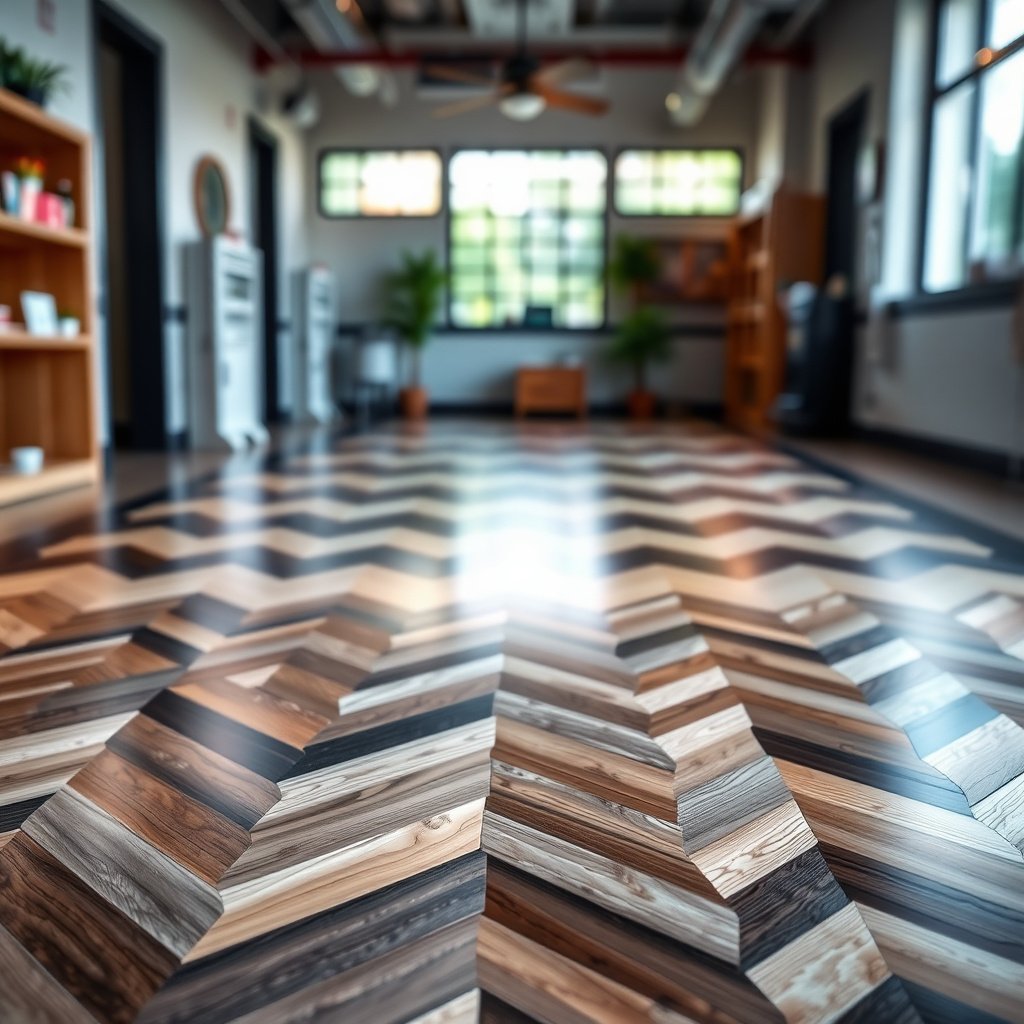
You’ll prevent most chevron “polishing problems” (streaks, ghosting, swirls) by doing a full prep: remove grit first, then clean with finish-compatible chemistry. Chevron lines amplify residue and scratch marks, so prep determines whether your high-gloss finish looks even.
NWFA care guidance highlights that grit and abrasive dust during floor cleaning can scratch the surface and create visible dull patches after finishing.
For hardwood floors, most manufacturer care instructions discourage soaking and emphasize using damp cleaning methods to avoid moisture trapped at board gaps or along edges.
Masking/taping transitions helps avoid “burnishing edges,” which can leave darker or lighter stripes that follow chevron lines.
– Vacuum or dry-sweep first to remove grit, because grit will scratch and “ghost” through your polishing.
– Use a cleaner approved for your finish type (or a neutral, water-dilutable cleaner if the manufacturer allows it) and avoid soaking seams/edges.
– Tape off transitions (baseboards, vents, metal tracks) so pad edges won’t leave marks or uneven burnishing along the chevron lines.
– Use two-bucket technique if you’re doing damp cleaning: one bucket for solution, one for rinse (especially helpful on sticky residues).
– Change microfiber cloths/pads as soon as they pick up soil; reusing dirty pads transfers haze back onto the chevron pattern.
Protect the parquet geometry (chevron-specific)
Chevron floors often have slight height variation due to installation and wear. If you press harder at the “V” edges, you can round off the pattern detail, making lines look thinner over time. When you prep, you should also:
– Keep equipment centered and avoid angling the pad so it rides the chevron “points.”
– Allow proper drying before buffing—wet film can temporarily haze and later dry with patchy sheen.
Polish the right way (sealed vs oil/wax floors)
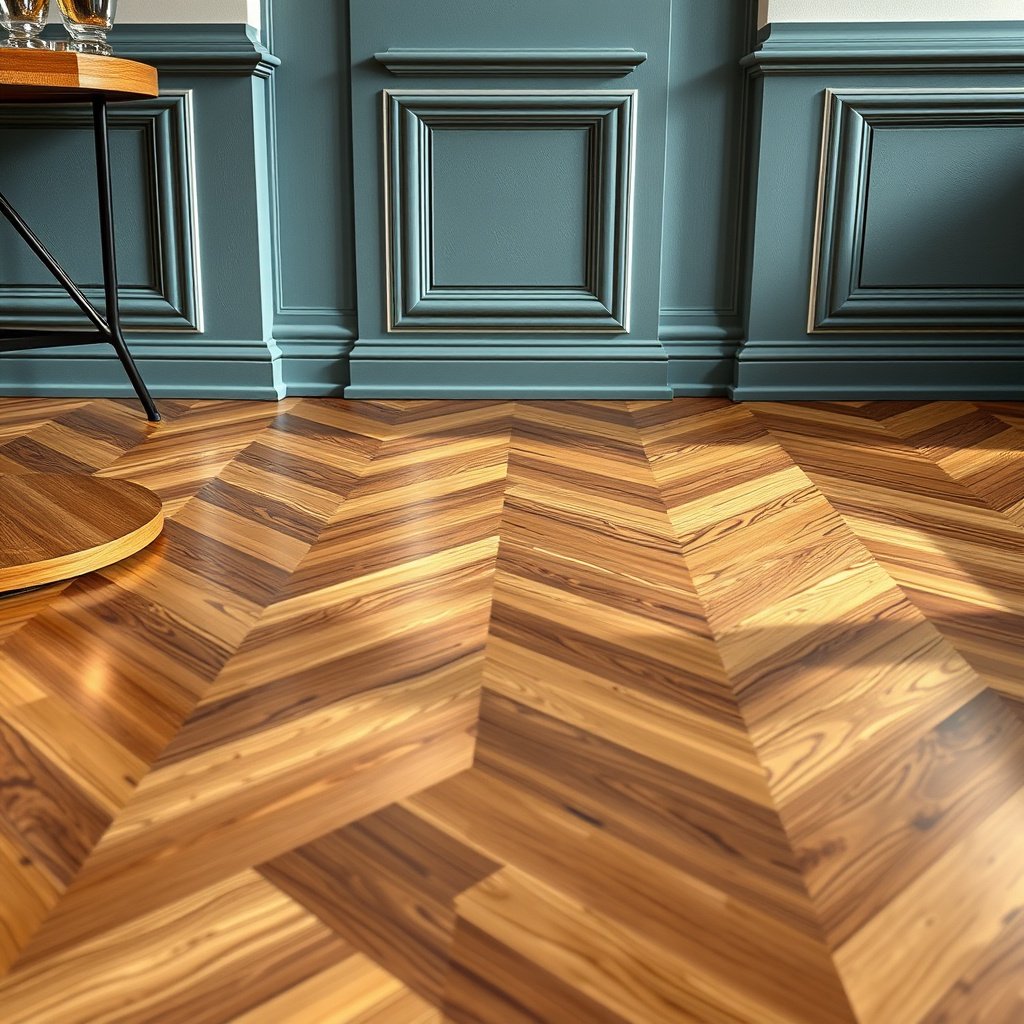
You restore high-gloss chevron floors by using the correct system for the finish you found—sealed floors typically need buffing + compatible polish/protectant, while oil/wax floors need maintenance that refreshes the penetrating layer. If you apply the wrong chemistry, you can trap residue and create a cloudy “film over film” look.
Bona and similar wood-floor manufacturers emphasize product-system compatibility: polishes/protectants should be designed for the existing finish type to avoid haze or tackiness.
Oil/wax care is generally maintenance-focused rather than “build-up polishing,” because heavy film-formers can sit on top unevenly and magnify sheen differences across parquet.
When the problem is deep wear (not just surface dullness), polishing alone won’t restore clarity; controlled abrasion or refinishing is required to reset the finish profile.
– Sealed hardwood (poly/urethane topcoat): polish should typically be a buffing + compatible polish/protectant. If the floor is hazy from old residue, you may need a residue remover that’s safe for your specific finish *before* polishing.
– Oil/wax finishes: “polishing” usually means refreshing the protective layer (oil/wax maintenance) rather than relying on heavy film-building polishes. Too much film can create uneven sheen over parquet.
– If the floor has deep scratches or uneven wear, polishing alone often won’t fix it—you’ll likely need abrasion (light sanding/screening) followed by refinishing or a finish refresh.
– Work in small sections so the product stays within the manufacturer’s recommended working time (important for streak-free gloss).
Sealed vs oil/wax: choose the method that matches physics
Chevron gloss differences usually come from uneven topcoat thickness or residue distribution. The comparison below helps you select the safest starting point.
| Feature | Sealed (polyurethane/urethane, topcoat) | Oil/Wax (penetrating finish) |
|---|---|---|
| How sheen is achieved | Topcoat clarity + buffing | Refreshed protective layer in wood surface |
| Best “polish” product style | Compatible polish/protectant designed for sealed floors | Finish-matched oil/wax refresh system |
| Common haze cause | Old residue or incompatible film on top | Dried/low-build protection causing reduced reflectivity |
| How to start | Clean → (optional residue-safe removal) → buff → protect | Clean → spot refresh oil/wax → even maintenance |
| Risk to chevron edges | Moderate if you over-buff one section | Moderate if you over-apply and don’t level it |
| “Film build” behavior | Can build if you layer incompatible polishes | Heavy filmers can create uneven sheen |
| When to escalate beyond polishing | Deep scratches, worn-through topcoat, severe unevenness | Finish loss, persistent dark spots, uneven penetration |
| Best equipment for large floors | Buffer/buffing machine with correct pads | Applicator + controlled wipe/burnish workflow |
| Result you can expect quickly | Haze reduction and uniform gloss after proper residue removal | More even reflectivity as protection re-establishes |
| Best for | Sealed topcoats and film-based protection | Oil/waxed maintenance and penetration refresh |
Hand-polishing vs machine polishing (safe workflow)
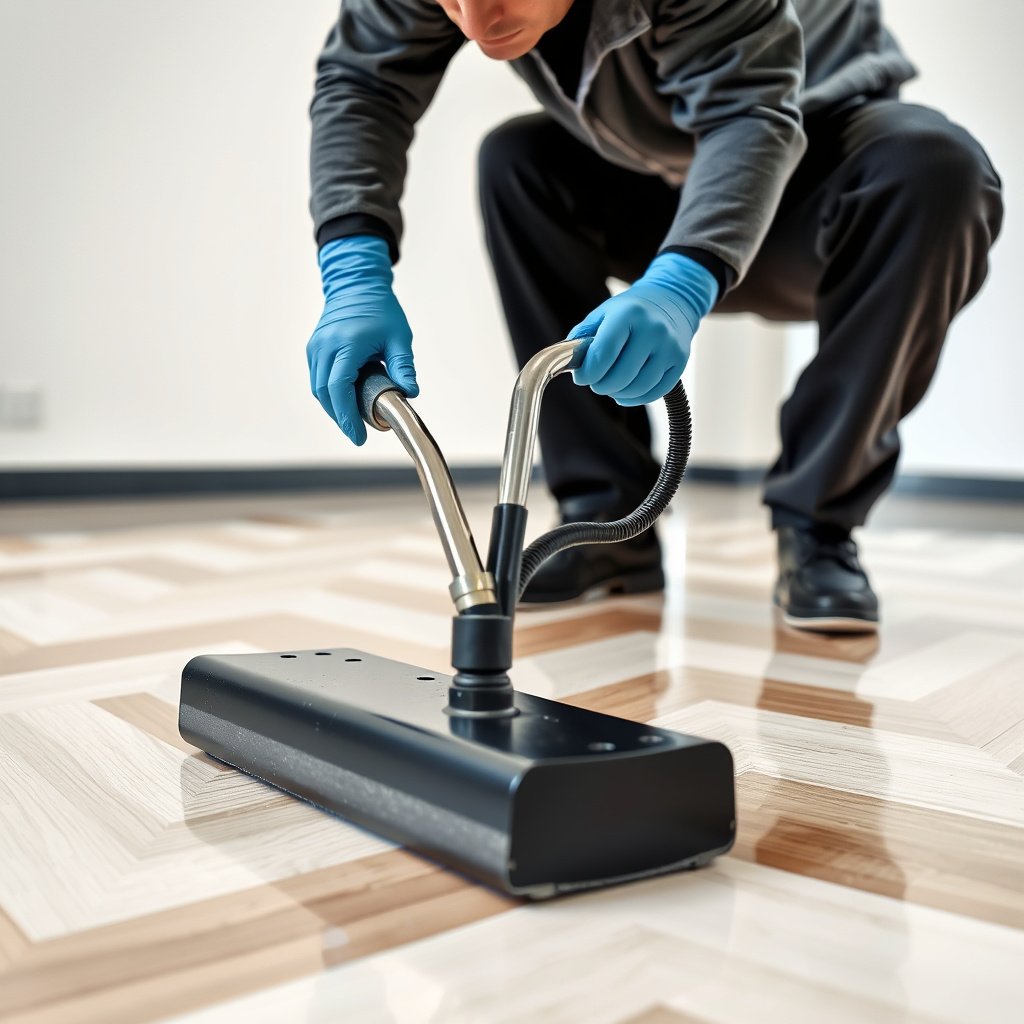
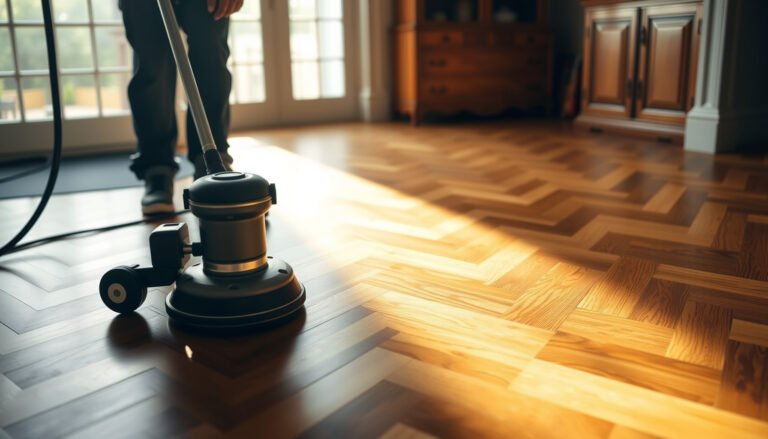
You’ll typically get the most uniform gloss with machine buffing, but you should switch methods based on where the floor is uneven and where pattern detail matters. For chevron parquet, the safest workflow is: use hand work for edges and touch zones, then use a machine for broad, consistent sheen.
Most wood-floor manufacturers recommend using clean, manufacturer-approved pads because dirty or worn pads can smear residue and create swirls that polishing can’t “erase.”
Consistent pressure and overlap patterns reduce blotches—spot work often creates local gloss differences that show up along chevron “V” geometry.
Hand application can better control edges and transitions (baseboards, vents), which helps prevent rounding or uneven sheen where chevron lines terminate.
– Hand polishing: best for small areas, touch-ups, and edges. Use microfiber/pads made for floor finishing and keep pressure consistent so the chevron pattern doesn’t look blotchy.
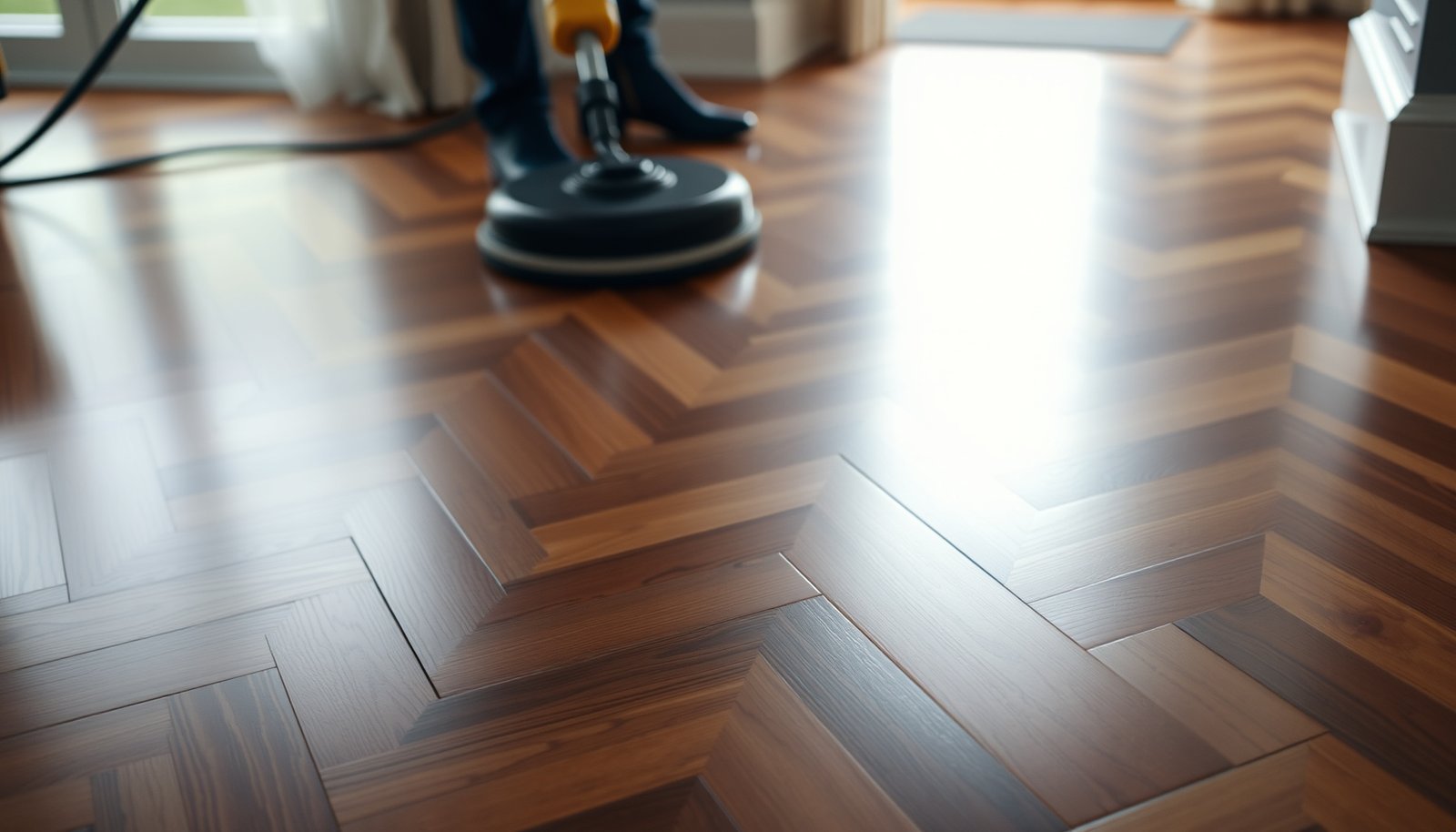
– Machine polishing/buffing: better for even gloss across a large floor, but you must control heat and pad condition—worn or dirty pads can smear residue and leave swirls.
– Use a consistent pass direction and overlap method (don’t “spot work” for long in one area). The goal is uniform sheen, not maximum shine from over-buffing one section.
– Keep pad edges clean and flat: if a pad picks up residue, replace it before continuing.
– Work with the buffer straight and avoid riding the chevron points; let the pad do the work rather than leaning into the pattern.
A practical, pattern-safe pass plan
For chevron floors, I recommend thinking in “bands” that run with your V direction: you buff one band uniformly, then overlap slightly into the next band. That simple overlap habit prevents the “gloss seams” that look like faint straight lines across the parquet.
What can go wrong (and how to avoid it)
You usually get haze, streaks, or pattern dullness when you skip residue removal, use incompatible products, or over-aggressively abrade along the chevron points. The fix is to identify the root cause (residue vs dullness) and escalate step-by-step.
Uneven gloss is commonly caused by residue left behind or inconsistent pad pressure; polishing can redistribute contamination, making haze appear worse in patches.
Over-wetting can create temporary clouding or longer-term dullness because moisture can affect wood movement and finish adhesion—especially near seams and edges.
Using film-forming polishes over incompatible coatings can trap or cloud existing finishes; compatibility with the installed topcoat system is the safest rule.
– Uneven gloss / cloudy patches: usually comes from residue left behind, inconsistent pad pressure, or skipping thorough cleaning between steps.
– Edge damage and pattern dulling: sanding/buffing too aggressively near edges can round off parquet details. Keep abrasion light and stop early if you see the finish changing.
– Swirls and haze from dirty pads: always clean or replace pads when you switch from cleaning/residue removal to polishing; otherwise you’re redistributing what you meant to remove.
– Over-wetting or forcing cleaner into seams: parquet floors can trap moisture at grout-like gaps or between boards; stick to the manufacturer’s guidance for wet-cleaning limits.
– Using the wrong product for the finish: film-forming polishes over an incompatible coating can turn hazy or tacky. When in doubt, follow the finish manufacturer’s care/maintenance instructions rather than mixing brands.
When your “shine problem” isn’t a polishing problem
If you can see cupping, raised edges, deep scratches, or finish peeling, you’re past the polishing stage. In those cases, polishing won’t restore the original topcoat thickness or level; you’ll need a screening/refinishing plan matched to the installed finish system.
Also, if your chevron floor was recently refinished and still curing, wait for the manufacturer’s recommended cure time before heavy buffing—otherwise the surface can haze or mark.
Verdict + quick checklist you can save
If you want a reliable, low-risk path, start with cleaning + compatible buffing/polish, and only escalate to light abrasion/residue removal if the haze won’t clear. This approach usually restores shine on many chevron floors while reducing the risk of uneven sheen across the chevron “V” geometry.
A stepwise workflow—cleaning first, then compatible buffing, then only light abrasion—reduces the chance of building uneven residue that causes patchy gloss on parquet.
If a surface is sticky or cloudy from film build-up, the fastest route to clarity is usually finish-safe residue removal before any polish/protectant layer.
When chevron floors show dullness without tackiness, controlled buffing (or screening if needed) is often more appropriate than aggressive sanding or heavy film polishes.
When to skip polishing and choose a different plan
– Skip “DIY polishing-only” if you have deep scratches, significant wear-through, peeling, or a finish failure—those often require refinishing/screening.
– Skip aggressive machine abrasion if you don’t know whether your floor is wax/oil vs sealed or if you can’t confirm pad/chemical compatibility.
Scan-able checklist
– [ ] Identify finish type: sealed topcoat vs oil/wax
– [ ] Vacuum/dry-sweep to remove grit
– [ ] Clean using a compatible cleaner (no soaking)
– [ ] Check: haze/residue (sticky/cloudy) vs true dullness
– [ ] If residue: remove with finish-safe method, then rinse/neutralize per label directions
– [ ] Polish/buff with compatible product + clean pads
– [ ] Keep a consistent pass pattern to avoid blotches
– [ ] Let the floor dry/cure fully before heavy walking or rugs
Frequently Asked Questions
What’s the best way to polish chevron wood floors without damaging the pattern?
Start by inspecting for loose boards, deep scratches, and worn-through finish, then sand evenly so the chevron lines stay crisp. Use a progressive sanding sequence (coarse to fine) and keep the sander flat to avoid rounding the angles between the chevron inlays. Finish by applying a high-quality wood floor polish or topcoat specifically designed for hardwood floors, then buff lightly between coats for a smooth, even sheen.
How do I polish chevron floors if the finish is peeling or has scratches?
You’ll typically need to repair the damaged surface before polishing—spot-sanding peeled areas and filling scratches with a compatible wood filler. After repairs cure, sand the whole floor enough to level the sheen, then clean thoroughly so no dust affects adhesion. Once smooth and uniform, apply a new protective layer and use floor polish products that match the existing system (oil vs. water-based vs. polyurethane).
Why does chevron flooring look dull even after mopping, and how can polishing help?
Chevron floors often lose luster because of ground-in grime, wax buildup, oxidation, and micro-scratches that mopping alone can’t remove. Polishing with proper abrasion (screening/sanding as needed) restores surface clarity and removes dulling residue. Pair that with a fresh protective topcoat or compatible polish so the chevron wood grain and pattern reflect light evenly.
Which sanding grit and polishing products work best for chevron floors?
Many chevron floors are best processed with a grit progression such as 80–100 for leveling, 120–150 for smoothing, and 180–220 for finishing before coating. For polishing, choose a product meant for hardwood floors—either a professional-grade buffer system or a dedicated floor polish that won’t haze. Always follow the manufacturer’s cure times and use pads designed for hardwood to avoid uneven gloss lines between chevron sections.
How do I avoid swirl marks and uneven shine when polishing chevron floors?
Prevent swirl marks by using the correct pad (buffing pad for polishing, sanding screens for abrasion) and keeping consistent pressure and speed across the whole chevron pattern. Work in sections, keep a wet/dry vacuum for dust control, and buff in overlapping passes to maintain a uniform finish. After polishing, inspect the floor under strong lighting from multiple angles—then do light buffing between coats or a final screen-and-buff step to even out gloss.
📅 Last Updated: October 15, 2026 | Topic: How to polish chevron floors? | Content verified for accuracy and freshness.
References
- Parquet
- Wood flooring
- https://www.britannica.com/art/parquetry
- https://www.epa.gov/saferchoice/how-choose-cleaning-products-your-home
- Silica and Worker Health | Silica | CDC
- Silica, Crystalline – Overview | Occupational Safety and Health Administration
- https://scholar.google.com/scholar?q=how+to+polish+parquet+floor Google Scholar
- https://scholar.google.com/scholar?q=parquet+floor+polishing+sanding+finishing+guide Google Scholar
- https://scholar.google.com/scholar?q=chevron+parquet+floor+maintenance+refinishing Google Scholar