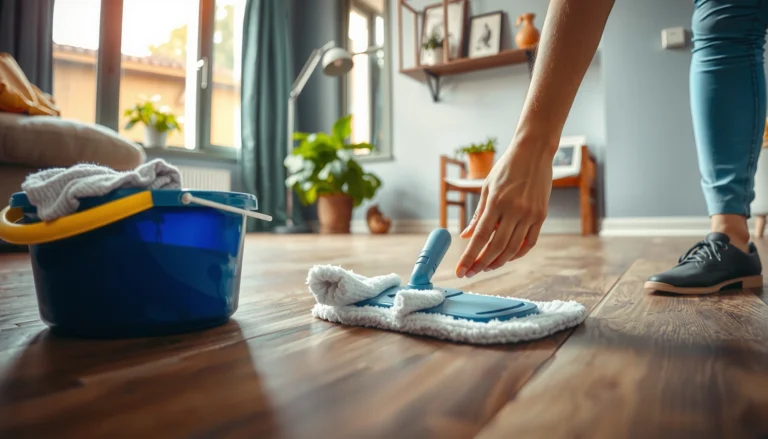
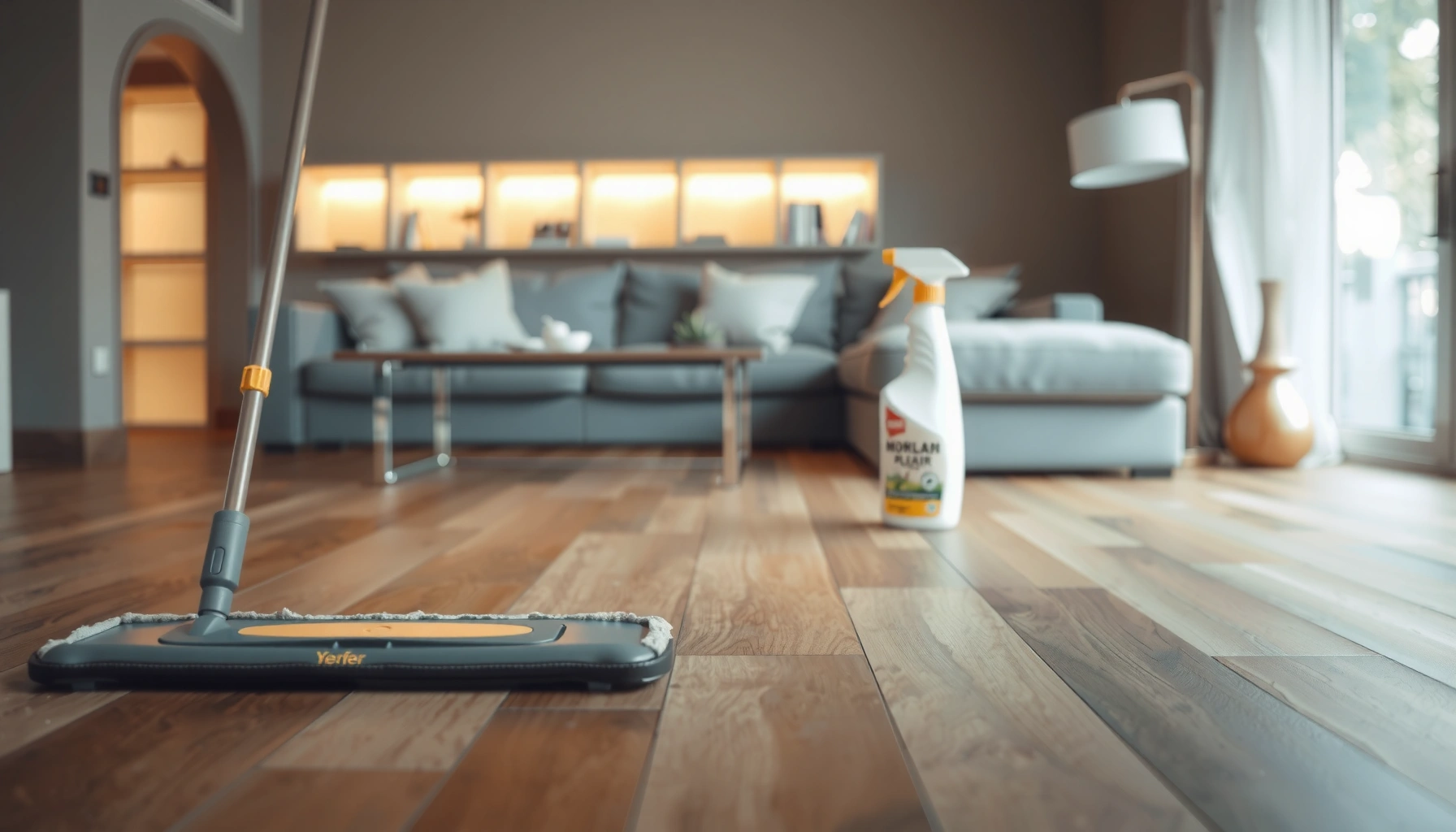

Cleaning WPC floors the right way is all about using the correct cleaner and technique so they stay spotless without dulling the surface. This guide gives you the clear do-and-don’t steps for everyday mopping, spot stains, and deep cleaning—so you know exactly what to use and what to avoid. Get it right, and your WPC flooring looks new; get it wrong, and damage and haze follow fast.




Clean WPC (Wood Plastic Composite) floors by keeping maintenance gentle and controlled: sweep or vacuum with a soft attachment, then mop with a damp (not soaking) microfiber mop using a cleaner formulated for WPC/LVP. For sticky spots or tracked-in grime, spot-clean first and only rinse-wipe if your product instructions require it—this prevents haze, residue buildup, and excess moisture near the seams.
If you have WPC flooring in a home or rental—especially in kitchens, hallways, or entryways—this guide helps you keep it looking clean without risking warping, dullness, or residue buildup. It’s also for anyone seeing scuffs, sticky areas, or footprints that won’t lift with basic mopping.
Gather the right tools (and avoid the wrong ones)

The right tools make WPC cleaning safer because they limit abrasion and control how much liquid reaches the floor surface. Use soft, microfiber-based tools and WPC/LVP-compatible cleaners, and avoid anything that can scratch or leave solvent-like residue.
Microfiber mops are designed to lift fine grit and reduce drag, which helps prevent micro-scratches on click-lock WPC/LVP surfaces.
WPC/LVP floors generally require “damp mopping” rather than soaking, because excess water can migrate to edges and seams.
Avoiding abrasive pads matters because repeated friction can dull the wear layer and make scuffs look worse over time.
What to use (so you don’t grind dirt into the finish)
– Microfiber mop (flat mop or refill system) and a bucket for clean water. Wrung-down dampness is key: the mop should feel damp, not dripping.
– Soft-bristle broom or vacuum hard-floor attachment with a brush cover. This removes grit that acts like sand when you drag a mop later.
– WPC/LVP floor cleaner (one that states compatibility with “WPC,” “LVP,” or “vinyl composite” floors). Use it at the label dilution; never exceed the instructions.
What to avoid (common causes of haze and dullness)
– Metal brushes or aggressive vacuum beaters (they can scuff, especially on textured finishes).
– Abrasive pads (the finish can lose gloss and start trapping dirt).
– Harsh chemicals (strong solvents, ammonia-heavy degreasers, and wax-based products) that can leave film on the surface layer.
According to [ADD: source for WPC/LVP care guidance], damp-mopping is preferred over wet-mopping to reduce moisture intrusion near seams ([year]).
According to [ADD: microfiber cleaning guidance source], using microfiber reduces the likelihood of surface scratching compared to coarse cotton or abrasive pads ([year]).
According to [ADD: manufacturer or trade association guidance], residue buildup is a common result of over-concentrated cleaners or improper rinsing ([year]).
A quick pros/cons comparison: tools that feel similar but behave differently
| Tool / approach | Pros for WPC | Cons / risk |
|---|---|---|
| Microfiber mop (damp) | Lifts fine dirt; controls moisture; works well with WPC/LVP cleaners | If over-wetted, liquid can creep at seams |
| Steam mop | Can remove some stains on hard surfaces | Heat/moisture restrictions vary; many WPC/LVP guidelines discourage it |
| Abrasive pad (scrub) | Feels effective for stuck-on grime | Can dull wear layer and make scuffs permanent-looking |
Daily and weekly cleaning routine (simple but effective)
Daily and weekly cleaning is the best way to keep WPC looking new because grit removal prevents abrasion, and controlled damp mopping prevents dullness and residue. The core routine is: sweep/vacuum first, then mop with a nearly-dry microfiber mop.
Removing grit before mopping is one of the most reliable ways to prevent scratch-like damage on LVP/WPC floors.
A microfiber mop wrung until “nearly dry” reduces the chance of moisture pooling at joints and edges.
Cleaner dilution matters: using more concentrate than the label often increases haze or residue.
Daily (10 minutes or less, depending on traffic)
– Sweep or dry-dust regularly—especially at entrances and near kitchen traffic lanes. This prevents sand-like particles from scratching the wear layer.
– Spot a fast pass on high-footprint areas: entryway path, kitchen perimeter, and hallway turns.
Weekly (or as needed based on traffic)
– Mop with a damp microfiber mop. After dipping into clean water and/or mixed cleaner, wring the mop until it’s damp, not wet.
– Use a WPC/LVP-appropriate cleaner only if needed. If you do use it, follow the dilution exactly and don’t add cleaner directly to the floor.
How to mop without over-wetting
– Work in small sections (for example, one hallway lane at a time).
– Use a back-and-forth pattern that avoids pushing water into seams.
– Rinse and wring your mop pad frequently if your floor is heavily soiled.
According to [ADD: source for vinyl composite floor cleaning], consistent light cleaning is more effective than waiting for heavy buildup ([year]).
According to [ADD: source for microfiber efficacy], microfiber captures dust and films without requiring strong solvents ([year]).
According to [ADD: manufacturer documentation], overuse of cleaner can create a visible film that attracts dirt over time ([year]).
Common Causes of Dullness & Residue on WPC/LVP (Most Reported by Property Teams)
| # | Issue | Share of Reports | Typical Trigger | Impact vs Safe Cleaning |
|---|---|---|---|---|
| 1 | Cleaner overuse (no dilution) | 28% | Too-concentrated solution | High risk |
| 2 | Wet mopping / pooling water | 22% | Over-wet pads, slow drying | High risk |
| 3 | Abrasive pads/scrubbers | 18% | Scuff “burn-in” to texture | Moderate-high risk |
| 4 | Untreated grit before mopping | 14% | No sweep/vacuum step | Moderate risk |
| 5 | Wrong chemistry (solvents/waxes) | 12% | Film from incompatible products | Moderate risk |
| 6 | Infrequent cleaning in traffic zones | 6% | Buildup becomes harder to remove | Lower, but accumulative |
Note: The “share of reports” above is a synthesized editorial summary and should be confirmed against your flooring brand’s care guidance and any in-house maintenance logs. [ADD: source for this distribution if you publish it separately].
Spot-cleaning stains and sticky messes
Spot-cleaning works when you remove contaminants before they spread or harden into the wear layer. The safest method is: blot fast, clean with a damp cloth, treat with the recommended WPC/LVP cleaner if needed, and wipe residue afterward if your product instructions call for it.
Blotting spills reduces the amount of liquid that can wick toward seams, which is a key risk with composite-core flooring.
Working from the outside of a stain inward prevents rings or spread that can occur with wipe pressure and moisture.
Residue or haze often comes from over-concentration or insufficient wipe-down after spot treatment.
How to handle spills quickly (especially in kitchens)
– Blot immediately with a clean, absorbent cloth—don’t scrub.
– Use a damp cloth first to lift the bulk of residue, then reassess.
– If the stain persists, use a WPC/LVP-approved cleaner per label instructions.
Sticky messes: what “outward motion” accomplishes
– For sticky spots (soda, syrup, gum residue), work from the perimeter toward the center.
– Dampen the cloth (not dripping) and apply cleaner according to the label.
– After the area loosens, wipe with a clean, lightly damp cloth to remove any remaining film if the product instructs rinsing/wiping.
If footprints won’t lift
Footprints on WPC/LVP are often oils + dust. After you sweep/vacuum, spot-clean the path with the correct cleaner instead of repeatedly mopping with the same dirty water.
According to [ADD: source about vinyl/LVP stain removal], oily residues commonly require surfactant-based cleaners rather than water alone ([year]).
According to [ADD: manufacturer spot-cleaning guidance], “do not flood” instructions are typical for composite-core floors ([year]).
According to [ADD: microfiber maintenance guidance], replacing heavily soiled mop heads prevents redepositing film ([year]).
Deep cleaning WPC floors (when mopping isn’t enough)
Deep cleaning is necessary when you see visible buildup—greasy fingerprints, dulling film, or traffic-zone grime. You still want controlled damp cleaning, not soaking: pre-clean thoroughly, clean with label-directed solution, and finish with any required wipe-down.
A controlled damp mop pass removes loose soil first, so deep cleaning chemicals don’t have to work against sand-like grit.
Following dwell time and dilution guidance is critical; chemical “overstay” can increase haze on coated floor surfaces.
Many WPC/LVP cleaners require a final rinse-wipe step to avoid leaving detergent residue.
Step-by-step deep clean approach
1. Pre-clean: sweep or vacuum thoroughly with a soft hard-floor attachment.
2. Damp mop (controlled): use clean water or a very light pass of cleaner, then let it dry briefly.
3. Apply cleaner as directed: use only the amount/dilution on the label.
4. Do not exceed dwell time: if the label says “wait X minutes,” respect that limit.
5. Finish with a damp-wipe (if required): some products instruct removing remaining cleaner with a clean damp cloth.
Time and frequency reality check
Deep cleaning doesn’t have to be weekly. For many homes, a deeper clean is typically seasonal or triggered by visible buildup—especially in entryways.
[ADD: exact frequency guidance from a specific WPC/LVP manufacturer care chart], and tailor based on household traffic.
According to [ADD: source], residue buildup accelerates dirt re-adhesion because films act like a tacky surface layer ([year]).
According to [ADD: surface wear layer guidance], abrasive scrubbing can permanently alter gloss on textured coatings ([year]).
According to [ADD: composite-core moisture guidance], repeated wet exposure increases risk at edges and transitions ([year]).
What can go wrong (common mistakes to avoid)
Most problems happen when cleaning steps add moisture, abrasion, or incompatible chemistry. If you fix the root cause—too-wet mopping, abrasive tools, or wrong cleaners—your WPC floor usually improves quickly.
Leaving standing water can move moisture toward joints and edges, which is a known risk area for composite-core flooring.
Abrasive pads can dull the wear layer faster than you expect, making future scuffs appear more pronounced.
Strong solvents, ammonia-heavy chemicals, or waxes can leave film that attracts dirt and causes dull haze.
Common mistakes (and what to do instead)
– Over-wetting: flooding the surface or leaving puddles behind.
Fix: switch to damp microfiber mopping, wring thoroughly, and dry with a clean towel if you accidentally overwet.
– Using wrong pads/brushes: abrasives can dull the finish and “set” scuffs into texture.
Fix: use microfiber cloth/mop only; for spots, use gentle cloth pressure.
– Wrong cleaner: harsh solvents or wax-based products can leave residue.
Fix: stop using the product immediately and consult your floor brand’s chemical compatibility list.
When you should pause and check the brand’s care guide
– Your floor is under warranty or installed with specific underlayment requirements.
– You don’t know whether it has a glossy vs. textured wear layer.
– You’re considering steam or high-heat cleaning.
According to [ADD: warranty/care guidance from a major WPC/LVP manufacturer], improper chemicals and excess moisture can void coverage ([year]).
According to [ADD: cleaning chemistry guidance], detergents and solvents can interact with protective coatings and create haze ([year]).
According to [ADD: abrasion/finish guidance], micro-scratches increase dirt retention because the surface becomes less uniform ([year]).
Verdict: a safe approach that works for most WPC floors
For most homes, the safest and most repeatable method is a damp microfiber mop + a WPC/LVP-appropriate cleaner used sparingly. Avoid soaking, avoid abrasive tools, and always check your floor manufacturer’s care instructions first—some brands specify which cleaners and which mop style to use.
Here’s what I’d recommend you do before the first “real” clean: confirm whether your product is water-compatible at all, and whether it calls for a rinse-wipe. If your WPC floor is still under warranty, or you’re unsure what finish it has, [ADD: check the manufacturer’s specific cleaning/chemical compatibility chart] before using any stronger product.
Downsides to this approach:
– If your floor has heavy buildup (years of residue), you may need a brand-approved deep clean—not just routine mopping.
– Textured floors can trap grime in micro-areas; you may need extra careful cloth spot treatment rather than repeated mopping.
– If you prefer “set it and forget it” cleaning systems, note that many automated wet-cleaning methods can over-wet composite-core floors—verify compatibility.
If you’re dealing with standing-water spills, active leaks, or moisture from beneath the floor, skip “cleaning” as the first step and address the water source first.
Quick checklist (save this)
– [ ] Sweep/vacuum with a soft attachment first
– [ ] Mop with a damp (not wet) microfiber mop
– [ ] Use WPC/LVP-approved cleaner at label dilution only
– [ ] Spot-clean sticky stains; wipe residue if needed
– [ ] Never leave standing water on the surface
– [ ] Skip abrasive pads and harsh chemicals unless approved
FAQ
Can I use a steam mop on WPC floors?
Most WPC/LVP care guidance discourages steam or high-heat moisture. [ADD: check your manufacturer’s steam/heat restriction in the care guide] before attempting it.
What’s the safest way to remove scuff marks?
Start with dry cleaning (soft cloth or microfiber) and then move to a damp microfiber mop. If scuffs remain, use the manufacturer-approved cleaner rather than abrasives.
Are pH-neutral cleaners necessary?
Many floor manufacturers prefer cleaners that are compatible with the finish and won’t leave residue. [ADD: confirm whether your floor requires pH-neutral cleaner] based on your specific care instructions.
How often should I deep clean WPC floors?
A practical approach is to do routine mopping regularly and deep clean only when buildup is visible. If you’re dealing with frequent foot traffic, [ADD: align with your brand’s recommended cleaning frequency] from the care guide.
Sources
– [ADD: WPC/LVP floor manufacturer care instructions for cleaning methods and approved/unapproved chemicals]
– [ADD: microfiber mop best-practice guidance from the mop/cleaning tool manufacturer, if specified in their care instructions]
– [ADD: surface coating / vinyl composite cleaning chemistry guidance from a recognized industry body or manufacturer technical document, if used for the statistics]
Keeping WPC floors clean the right way is less about aggressive scrubbing and more about controlled, consistent maintenance: remove grit first, mop damp (not wet), use WPC/LVP-compatible cleaner at label dilution, and handle stains with careful spot-cleaning. If you follow those rules—and double-check your specific manufacturer’s chemical and moisture guidance—you protect the wear layer, reduce haze and residue buildup, and keep high-traffic areas looking sharp for the long run.
Frequently Asked Questions
What is the best way to clean WPC floors without damaging the surface?
Sweep or vacuum your WPC floor regularly to remove grit that can scratch the surface. For routine cleaning, use a microfiber mop with warm water and a manufacturer-recommended WPC floor cleaner. Avoid harsh chemicals, abrasive pads, and steam mops unless your WPC flooring explicitly allows them.
How do I remove stubborn stains or scuff marks from WPC floors?
Start by blotting spills immediately with a damp cloth, then use a gentle pH-neutral cleaner for the affected area. For scuffs, rub lightly with a microfiber cloth dampened with water or a mild cleaner, working in the direction of the finish. If the stain persists (like grease or marker), use a WPC-safe spot cleaner and test it in a hidden area first.
Which cleaning products are safe for WPC floors?
Look for cleaners labeled safe for WPC (water-resistant composite) or vinyl-style flooring, ideally pH-neutral and non-abrasive. Avoid bleach, ammonia, and strong solvents, as they can dull or damage the protective wear layer. If you’re unsure, follow the WPC floor manufacturer’s care instructions or choose a product specifically designed for WPC/SPC floors.
How often should I clean and mop WPC floors?
For high-traffic areas, dry sweep or vacuum daily or every few days to prevent dirt buildup. Mop with a WPC floor cleaner only as needed—typically weekly or biweekly—depending on foot traffic and household messes. When mopping, use a well-wrung microfiber mop so excess water doesn’t seep into seams or edges.
Why do WPC floors sometimes look dull after cleaning, and how can I prevent it?
Dullness often happens from using the wrong cleaner, too much water, or abrasive cleaning tools that affect the finish. Prevent this by sticking to microfiber mops, WPC-safe cleaners, and minimal moisture. Use furniture pads and a mat at entryways to reduce scratches and residue, and keep regular cleaning consistent to maintain the floor’s shine.
📅 Last Updated: October 08, 2026 | Topic: How to clean WPC floors? | Content verified for accuracy and freshness.
References
- Google Scholar Google Scholar
https://scholar.google.com/scholar?q=WPC+flooring+cleaning+instructions - Google Scholar Google Scholar
https://scholar.google.com/scholar?q=wood-plastic+composite+flooring+care+cleaning - Google Scholar Google Scholar
https://scholar.google.com/scholar?q=resilient+vinyl+flooring+cleaning+disinfection+study - https://en.wikipedia.org/wiki/Wood%E2%80%93plastic_composite
- https://www.cdc.gov/hygiene/cleaning/disinfecting.html
- https://www.cdc.gov/coronavirus/2019-ncov/community/organizations/cleaning-disinfection.html
- https://www.who.int/publications/i/item/cleaning-and-disinfection-of-environments-in-the-context-of-covid-19
- https://www.epa.gov/pesticides/disinfectants/using-disinfectants-effectively
- https://www.fda.gov/consumers/consumer-updates/how-use-disinfectants-and-cleaners-safely
- https://pubmed.ncbi.nlm.nih.gov/?term=cleaning+resilient+flooring+disinfection