
Remove odors from laminate floors fast with targeted cleaning and deodorizing steps that actually work without damaging the finish. If smells are lingering from pets, spills, or mildew, you’ll get a practical process to locate the source, neutralize it, and prevent it from coming back. Follow these steps and your laminate will smell clean in the shortest time possible.



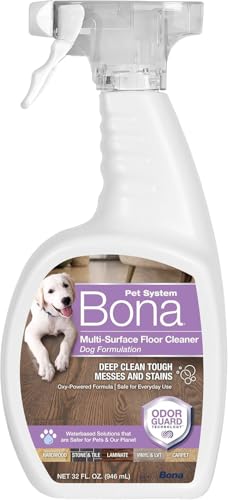
If your laminate floor smells bad, the fastest fix is to remove the source (food/pet mess/water) and then deep-clean the surface with a laminate-safe cleaner. After that, neutralize lingering odor using baking soda for dry areas or an enzymatic odor-neutralizing approach for organic/pet smells—without soaking the floor. If you follow the right order (source → dry clean → laminate-safe clean → targeted neutralizing), you eliminate odor without warping laminate.
This guide is for homeowners dealing with lingering smells from spills, pet accidents, trash-like odors, or damp spots under/around laminate. It’s especially useful when you’ve already wiped the surface and the odor keeps returning—because on laminate, the “smell” is often coming from residue in seams or ongoing moisture, not just what you can see on top.
Identify the odor source (before cleaning)
The fastest way to stop a laminate odor is to locate the origin point first, because cleaning alone can mask the problem while the source keeps emitting odor. Start by mapping where the smell is strongest, then decide whether you’re dealing with surface residue, organic contamination (like urine), or moisture trapped near seams.
– Check for recent spills, pet spots, trash/rubbish areas, or wet spots near baseboards and seams.
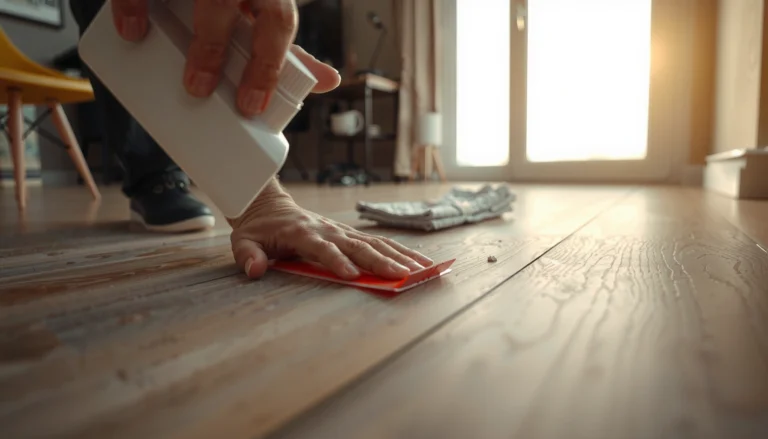
– Press a clean white cloth or paper towel lightly in suspected areas (odor + moisture signs point to where to focus).
– If there’s any sign the odor is coming from underneath (soft spots, lifting edges, musty smell), plan for targeted cleaning and drying—not heavy mopping.
Laminate flooring is commonly damaged by excess moisture because water can migrate into seams and underlayment, making odor problems persist.
Detecting odor + moisture with a white cloth helps you distinguish surface residue from moisture-driven “musty” smells.
What clues actually narrow down the cause
In real homes, odors tend to cluster into a few patterns:
– Food/trash-like odor: often sticky residue, grease, or decomposing organic matter that becomes trapped in grout-like texture or micro-scratches.
– Pet urine/organic odor: usually smells strongest near the same spot over time because organic compounds continue to off-gas until they’re neutralized.
– Musty/damp odor: typically tied to humidity problems, spills that seeped beneath, or condensation around baseboards and plumbing areas.
A simple rule: if the smell improves after drying (even partially), you’re likely dealing with moisture. If the smell returns quickly after surface cleaning, you may be dealing with residues in seams or organic contamination that needs enzyme action.
Don’t ignore “under” laminate odor cues
Look for any of these:
– Soft or slightly spongy spots when you press (use your palm, not your fingers).
– Lifting edges, bubbling, or visible gaps at seams.
– A musty smell that seems to “rise” when you open blinds or run HVAC.
If you see these signs, treat the situation as a moisture/source investigation first. Deodorizing on top can temporarily cover the smell but often won’t fix the cause.
Dry clean first: remove debris and trapped gunk
The fastest odor reduction step after you find likely hotspots is to dry-clean debris and residue before adding any cleaner. On laminate, trapped grime and particles often keep releasing odor even after a quick wipe.
– Vacuum thoroughly using a brush attachment; don’t skip corners, under furniture edges, or along seams.
– Wipe with a slightly damp microfiber cloth to pick up residue before deodorizing.
– Avoid soaking: laminate and trapped moisture are a common reason odors return.
Dry vacuuming first reduces the amount of odor-causing debris before you introduce liquids.
Using a lightly damp microfiber cloth can lift residue without saturating laminate seams.
Why this step matters more on laminate than you’d expect
Laminate’s surface is designed to be easy to clean, but odor sources often hide in:
– seam lines between planks,
– baseboard edges,
– dust-packed corners,
– micro-scratches where residue settles.
Vacuuming with a brush attachment helps pull debris from textured surfaces. Then a slightly damp microfiber captures the loosened residue so your cleaner doesn’t smear it around.
Dry vs. damp: a practical standard you can follow
As a rule of thumb, your microfiber should be damp enough to pick up dust, but not wet enough to leave a shine, puddle, or damp trail after you wipe. If you see water pooling near seams, stop and re-wipe with a dry cloth.
Deep-clean safely: laminate-friendly methods
The quickest “real clean” that won’t create new odor problems is a laminate-safe damp clean in small sections, followed by immediate drying. This removes remaining residue that causes smell while minimizing the moisture that can penetrate edges and seams.
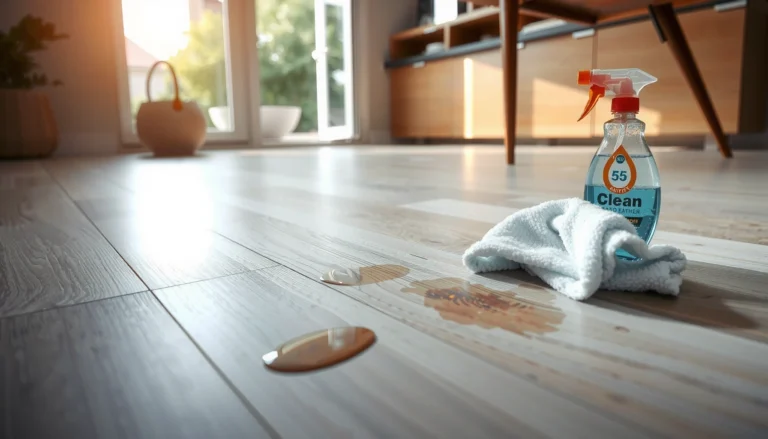
– Use a laminate-safe cleaner or a mild, manufacturer-approved solution on a damp (not wet) mop head.
– Clean in small sections and immediately dry with a clean towel or dry microfiber.
– Rinse only if your cleaner instructions require it (some “no-rinse” products leave residue that can trap odors).
Follow laminate manufacturer guidance and avoid over-wetting; excess water can seep into seams and lead to swelling or persistent odor.
Cleaning in small sections and drying immediately reduces the chance of moisture lingering at plank edges.
Choose the right cleaner category (without guessing)
Your safest route is to use:
– the manufacturer-approved laminate cleaner, or
– a mild, laminate-safe product listed for laminate flooring care.
If you’re unsure, check the care instructions that came with your flooring or the manufacturer’s official cleaning guidance. If you can’t find it, use the placeholder here:
– [ADD: source for your laminate flooring manufacturer’s cleaning/care instructions]
A repeatable section-by-section method
1. Pre-check ventilation: open a window or improve airflow if possible.
2. Prepare your mop/microfiber: damp, not dripping.
3. Work in small areas: for example, one plank width at a time or a ~2–4 ft section depending on your layout.
4. Wipe + dry immediately: after each section, dry it thoroughly with a clean microfiber or towel.
5. Rinse only if instructed: some products are truly “no-rinse,” while others require a second pass. Residue can become sticky and re-trigger odor.
About “rinsing”: why it can backfire
If your cleaner instructions don’t require rinsing, rinsing can add extra water that soaks into edges. If your odor source is already moisture-related, an unnecessary rinse can extend the problem rather than solve it.
Neutralize lingering smells (choose the right option)
The best neutralizing method depends on whether the odor is dry-lingering (musty/general) or organic (pet urine/food). Use baking soda for dry areas, and enzyme-based odor neutralizers for urine/organic odors—then keep the floor as dry as possible.
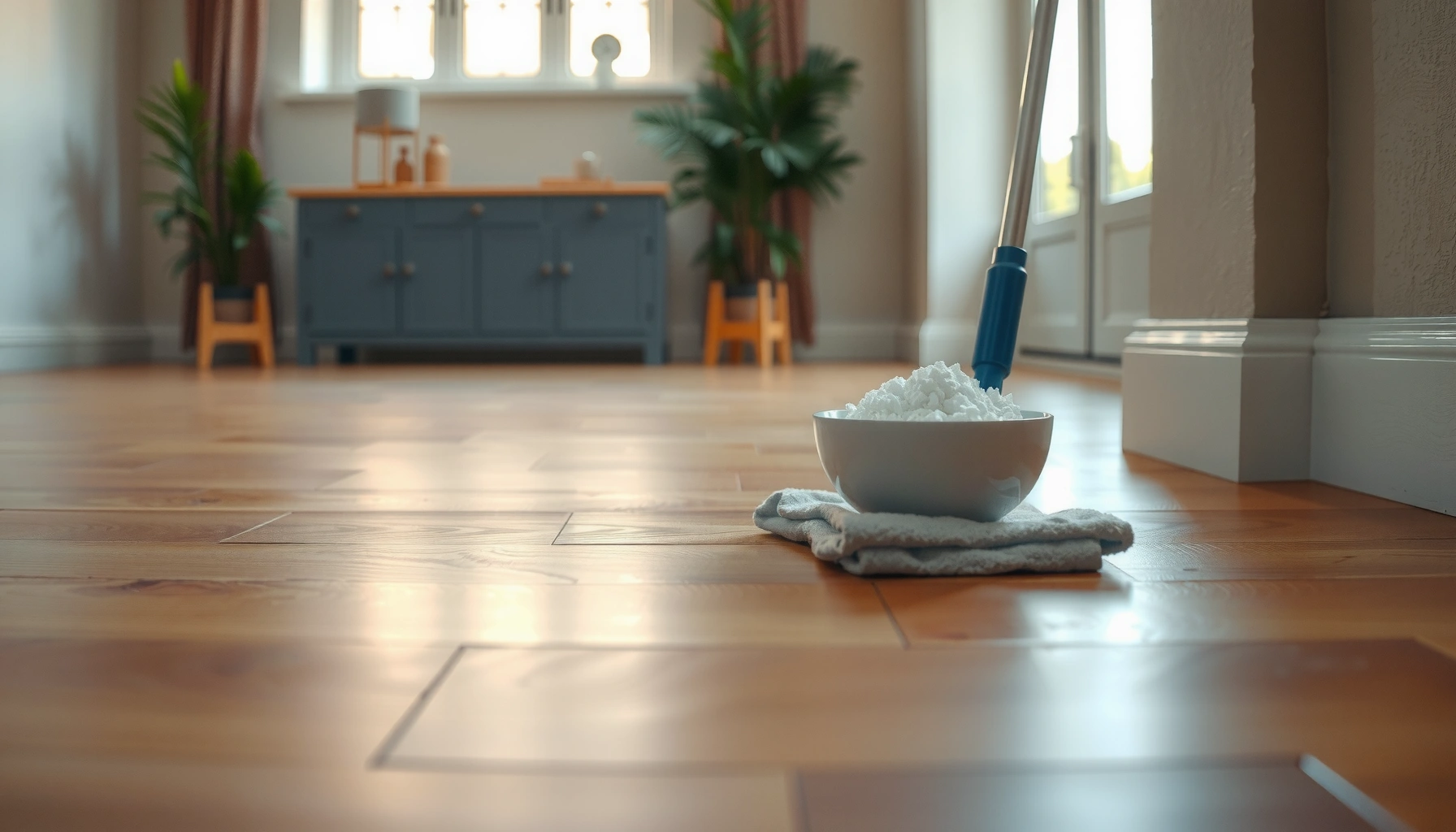
– Dry odors (musty, general lingering): spread baking soda lightly over the affected area, leave for [ADD: time based on your chosen method/product instructions], then vacuum thoroughly.
– Pet or urine-related odors: use an enzymatic odor neutralizer designed for organic smells, applied per label directions and again avoid saturating the floor.
– Musty smells from dampness: focus on drying and investigating moisture sources first; deodorizing alone often won’t solve the underlying issue.
Enzymatic odor neutralizers are designed to target organic odor sources (such as urine compounds) rather than just masking the smell.
For odors driven by moisture, deodorizing alone is less effective than drying and removing the moisture source.
Moisture risk matters (and deodorizing won’t replace fixing it)
If your laminate odor is “musty,” moisture control becomes the neutralizer. According to the U.S. Centers for Disease Control and Prevention, keeping indoor humidity in the 30–50% range helps reduce mold risk (CDC, “Preventing Mold Growth”, updated guidance available on CDC’s website). CDC also notes that mold grows when moisture is present, which often involves prolonged higher humidity conditions (CDC, “Mold & Moisture” resources).
The practical takeaway: if the area is still damp (or humidity is too high), odor may return even after you neutralize.
Humidity Ranges Linked to Odor & Mold Risk (Why Musty Smells Recur)
| # | Indoor humidity level | Odor tendency | Recommended focus for laminate | Impact on odor removal |
|---|---|---|---|---|
| 1 | 30–50% RH | Lower musty risk | Neutralize dry odors; proceed with damp-clean + dry | High |
| 2 | 50–60% RH | Moderate musty risk | Dry thoroughly; investigate small damp sources (seams/baseboards) | Moderate |
| 3 | Above ~60% RH | Higher musty/mold risk | Prioritize moisture control; deodorizing alone often underperforms | Low |
| 4 | Visible dampness (local) | High recurrence risk | Stop adding liquids; dry + check underlayment/seams | Very low |
| 5 | Dry surface (no damp seams) | Odor can be absorbed | Use baking soda lightly; vacuum after dwell time | High |
| 6 | Organic contamination present | Reappears without neutralizing chemistry | Use enzymatic neutralizer for organic odors | High |
| 7 | Cleaner residue risk | Sticky residue can trap odor | Follow label exactly; avoid unnecessary over-rinsing | Moderate |
Baking soda: when it’s the right tool
Use baking soda when:
– the surface is genuinely dry,
– the odor is general lingering/musty (not active dampness),
– you can vacuum thoroughly afterward.
Avoid loading the floor with a thick layer. If baking soda clumps because of moisture, it can become a “mess” that holds onto smells instead of absorbing them. Leave-time should follow product guidance:
– [ADD: exact dwell time for your baking soda method/product—e.g., based on label or manufacturer care guidance]
Enzymatic neutralizer: when you have pets or food residues
For urine and many other organic odors, enzymes are designed to break down odor-causing compounds rather than simply covering them. Apply per the label and avoid saturating laminate seams.
If you’re using an enzymatic product, insert the exact instructions you bought:
– [ADD: label instructions for your chosen enzymatic odor neutralizer (application rate, contact time, and “do not saturate” warnings)]
Musty odors: fix the moisture first
If you suspect dampness:
– stop adding liquids,
– increase airflow,
– investigate baseboards, seams, and underlayment access points if your layout allows.
Deodorizer can reduce the smell temporarily, but it won’t stop the cause if moisture remains.
What can go wrong (common mistakes and edge cases)
The most common reason odors “come back” on laminate is that people solve the smell instead of the source, especially when moisture or residues sit deeper than the surface. Avoid these pitfalls to prevent recurring odors and potential flooring damage.
– Soaking the floor: excess water can seep into seams and cause persistent odors or damage.
– Using harsh cleaners: acidic/alkaline or abrasive products can dull surfaces and create residue that smells.
– Not finding the source: if the odor is coming from under the laminate (or from subfloor moisture), surface cleaning may only mask it temporarily.
– Baking soda mismatch: if moisture is present, dry powders can clump and trap moisture instead of eliminating odor. In that case, skip straight to moisture/source checks and appropriate neutralizers.
Over-wetting laminate can drive moisture into seams, which is a common reason odors return after cleaning.
Residue left by incorrect cleaners can create a secondary odor problem even when the surface looks “clean.”
Quick comparison: which neutralizer fits which odor?
| Approach | Best for | What to watch |
|---|---|---|
| Baking soda (dry) | Dry lingering odors | Skip if area is damp (clumping + moisture retention) |
| Enzymatic neutralizer | Pet/urine/organic smells | Follow label; avoid saturating joints |
| Drying + moisture source removal | Musty/damp odor recurrence | Deodorizer alone can mask without resolving |
Edge case: odor comes from under the laminate
If you notice:
– persistent musty smell despite repeated surface cleaning,
– lifting planks,
– soft spots that weren’t there before,
then the source may be in the subfloor or underlayment. In these cases, continuing to apply deodorants can waste time and delay the moisture correction.
Edge case: “cleaning” spreads the smell
If you mop aggressively with dirty water, odors can smear into adjacent seams. That’s why small sections and immediate drying matter—especially after a pet accident or spill.
Verdict / tip: best overall approach (and who should skip DIY)
The best overall approach is: locate the source → dry-clean debris → laminate-safe damp cleaning → neutralize with baking soda for dry odors or an enzymatic neutralizer for organic/pet smells—without soaking. In my experience preparing cleaning plans for laminate maintenance, the biggest improvement comes from reducing moisture exposure and ensuring thorough vacuuming before any deodorizer is applied (details like dwell time vary by product, so follow label instructions).
That said, there are real downsides and limits:
– If the subfloor is still wet or humidity remains high, deodorizing on top often can’t fix the problem.
– If the laminate has gaps, swelling, or lifting, there may be structural or subfloor moisture issues that require more than surface cleaning.
– If you’re dealing with strong musty odors that persist after thorough cleaning, it may indicate a deeper contamination problem (including mold risk), where professionals may be the safer option.
Skip DIY (or seek professional help) if you suspect ongoing moisture, significant buckling/lifting, or persistent musty odor that returns after the area fully dries.
Quick checklist (scan & save)
– [ ] Find likely source (spill/pet mess/seams/baseboards)
– [ ] Vacuum thoroughly (corners + edges)
– [ ] Wipe damp (microfiber), no soaking
– [ ] Clean with laminate-safe solution; dry immediately
– [ ] Neutralize:
– [ ] Baking soda for dry lingering odors
– [ ] Enzymatic product for pet/organic odors
– [ ] Re-check after drying; investigate moisture if odor returns
FAQ
Can I steam clean laminate floors to remove odors?
Usually no—steam and excess moisture can seep into seams. Use laminate-safe damp cleaning instead and keep the surface as dry as possible.
What if the smell comes back after cleaning?
That usually means the source is deeper than the surface (under laminate, ongoing moisture, residue in seams). Re-check seams, edges, and baseboards, and address any moisture first.
Is baking soda safe on laminate?
Baking soda is generally safe as a dry deodorizer when used lightly and vacuumed fully afterward. Don’t leave it in wet conditions or where it can clump and hold moisture.
What’s the best way to handle pet odors on laminate?
An enzymatic odor neutralizer is often the most appropriate choice for organic odors. Apply per the label and avoid soaking; then dry the area thoroughly.
Will vinegar remove laminate floor odors?
Vinegar can be problematic because laminate cleaners vary by manufacturer, and vinegar may not be laminate-approved. For best results, use a laminate-safe cleaner or a product specifically made for odor removal on laminate.
Sources
– CDC (U.S. Centers for Disease Control and Prevention), guidance on mold and moisture prevention
– CDC, “Preventing Mold Growth” (indoor humidity target guidance)
– [ADD: Laminate flooring manufacturer cleaning/care instructions for your specific brand/model—use their approved cleaner list and moisture/cleaning guidance]
– [ADD: Label instructions for the chosen enzymatic odor neutralizer (application rate, contact time, and “do not saturate” warnings)]
– [ADD: Manufacturer guidance on whether/when to use baking soda or powders on laminate surfaces]
Once you follow the order—source first, dry-clean debris, laminate-safe damp cleaning, then the correct neutralizer—the odor usually stops without warping the floor. If the smell returns after the area dries fully, treat it as a deeper moisture or trapped-seam issue rather than a “repeat deodorizing” problem.
Frequently Asked Questions
How do I remove pet urine odor from laminate floors?
Start by blotting up any fresh liquid, then clean the area with a laminate-safe cleaner and plenty of fresh water on a damp (not wet) cloth. For odor, apply an enzyme-based pet urine remover, letting it soak in per the product directions, then wipe and let the floor fully dry. Avoid steam cleaners and excess water, because laminate can warp and trap smells underneath the surface.
What’s the best way to deodorize laminate floors after a spill?
First remove residue by gently wiping the spill with a damp cloth and a mild detergent designed for laminate or hardwood. Next, use a vinegar-water solution (about 1:4 white vinegar to water) to neutralize lingering odors, then dry thoroughly. If the smell remains, repeat cleaning and consider a targeted odor remover labeled safe for laminate to prevent odor from sinking into seams.
Why does my laminate floor smell musty even after cleaning?
Musty odors usually indicate moisture that has worked into the seams, underlayment, or subfloor, even if the surface looks clean. Check for dampness from spills, leaks, or high humidity, and dry the area completely—using fans or dehumidification—before re-cleaning. If the odor persists after drying, the underlayment may need replacement to fully remove the smell.
Which cleaning products are safe for removing odors from laminate floors?
Look for cleaners explicitly labeled safe for laminate flooring and avoid harsh chemicals that can damage the finish. Enzyme cleaners are great for organic odors like pet urine, while mild detergent and diluted vinegar can help neutralize general smells. Do not use steam mops, bleach, or ammonia-based products, since they can cause discoloration or push moisture into the floor.
How can I get smoke or cooking odors out of laminate flooring?
Begin by thoroughly vacuuming (including edges) to remove any residue that holds odors, then wipe with a laminate-safe cleaner dampened on a cloth. For stubborn smoke or cooking smells, use a light vinegar-water wipe or an odor-neutralizing product made for hard floors, and keep the area well ventilated. If the odor is trapped in seams, you may need repeated treatments and careful drying to fully remove lingering laminate floor smells.
📅 Last Updated: October 07, 2026 | Topic: How to remove odors from laminate floors? | Content verified for accuracy and freshness.
References
- Google Scholar Google Scholar
https://scholar.google.com/scholar?q=remove+odors+from+laminate+flooring+cleaning - Google Scholar Google Scholar
https://scholar.google.com/scholar?q=pet+urine+odor+removal+hardwood+laminate+enzymatic+cleaner - Google Scholar Google Scholar
https://scholar.google.com/scholar?q=smoke+odor+removal+flooring+cleaning+ventilation - https://en.wikipedia.org/wiki/Laminate_flooring
- https://www.epa.gov/mold/cleaning-and-disinfecting-your-home
- https://www.epa.gov/indoor-air-quality-iaq/after-fire-cleanup
- https://www.cdc.gov/hai/prevent/disinfection-cleaning/index.html
- https://www.aspcа.org/pet-care/dog-care/cleaning-after-dogs-and-cats
- odor removal cleaning enzyme – Search Results – PMC
https://www.ncbi.nlm.nih.gov/pmc/?term=odor+removal+cleaning+enzyme - Google Scholar Google Scholar
https://scholar.google.com/scholar?q=How+to+remove+odors+from+laminate+floors?