Stains on concrete floors don’t have to linger—this guide shows the most effective way to remove them, fast and safely. You’ll learn which cleaning method to use for common stain types like oil, grease, rust, mold, and tannin marks, and what to do if scrubbing alone fails. By the end, you’ll have a clear, step-by-step process to lift the stain without damaging the concrete surface.


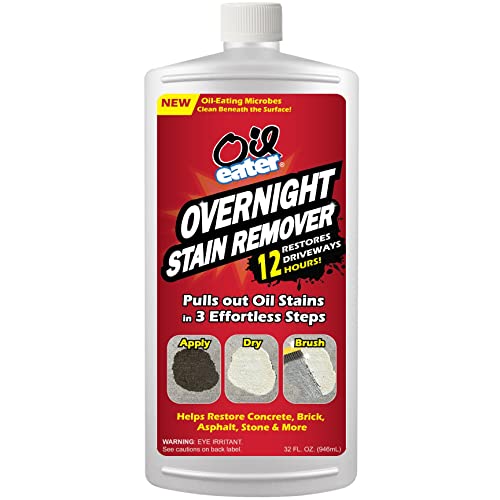
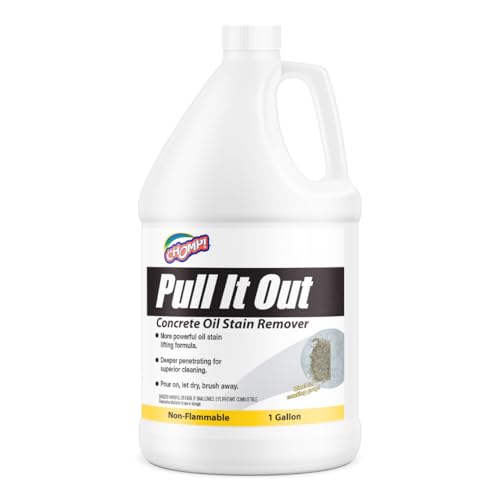
Stains on concrete floors usually come out with the right cleaner matched to the stain type—oil/grease, rust, mold/mildew, or general dirt. Start by identifying what caused the stain, then use a targeted product or a simple cleaning method before trying stronger chemicals. This guide will walk you through the safest step-by-step approach and what to do if the stain won’t budge.
If you’ve got stained concrete in a garage, basement, patio, or shop, these methods will help you narrow down the cause and choose the least damaging treatment. It’s especially useful when you’re not sure whether the stain is chemical (like rust) or from something that soaked in (like oil).
Identify the stain type first (so you don’t make it worse)
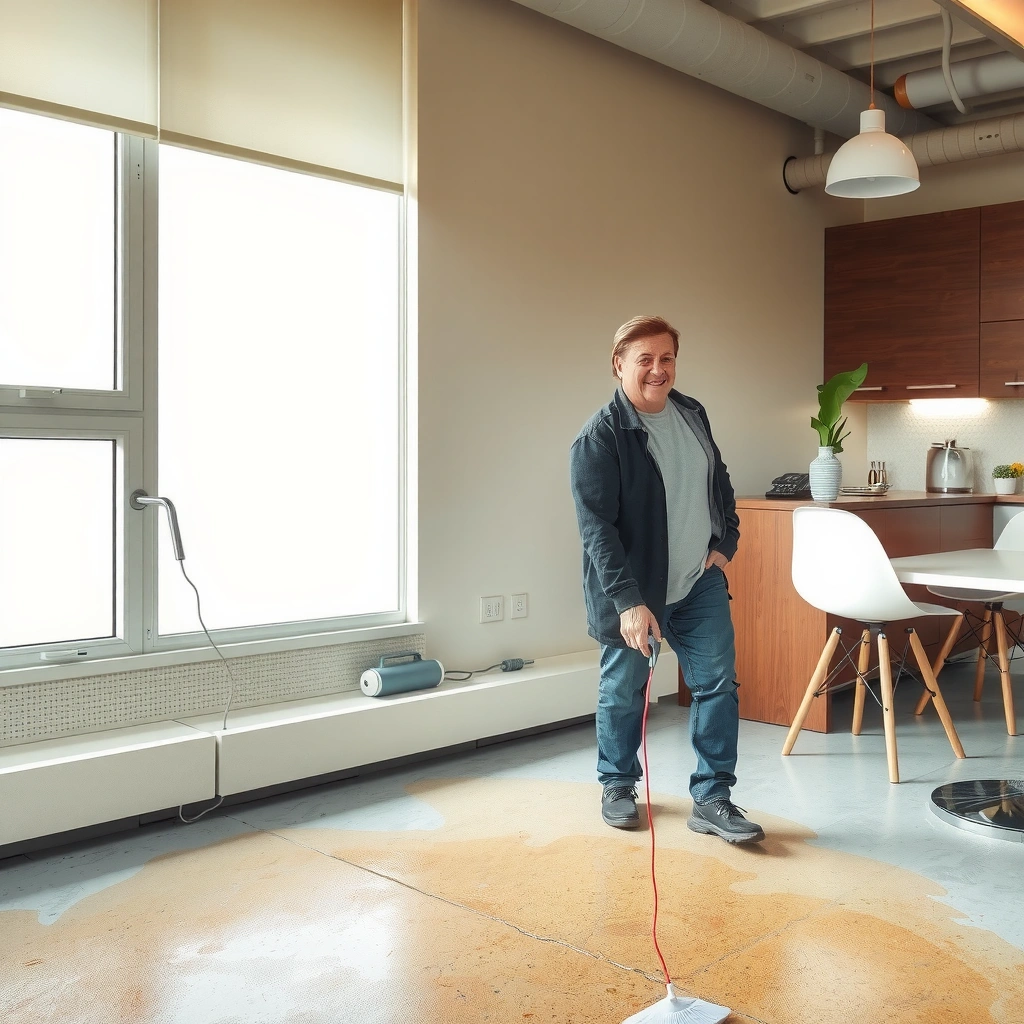
The fastest way to clean concrete stains is to classify them by their likely chemistry (oil/grease vs. rust vs. organic growth vs. minerals). Once you know the category, you can pick the least aggressive cleaner that actually dissolves or lifts that specific contaminant.
“Concrete stain removal starts with stain identification because different contaminants require different chemistries (oils respond to degreasers; rust responds to rust removers; organic growth responds to biocides/oxidizers).”
“A simple water behavior check helps distinguish surface contaminants from embedded/absorbed deposits: beading often indicates a repellent contaminant, while absorption suggests penetration.”
“Many concrete stains become permanent-looking discoloration when residues are left behind and later dried or sealed over.”
– Look at the color and location: dark oily spots, orange/brown rust, green/black mildew, or whitish mineral marks.
– Decide whether it’s surface staining (fresh/limited depth) or penetrating (stubborn after normal mopping).
– Do a quick water test: if water beads, it’s often an oily/repellent contaminant; if it soaks in, it’s more likely embedded dirt/minerals.
Quick diagnostic details that prevent “wrong chemical” damage
A key reason concrete stains persist is that people use one “works on everything” cleaner—then either (1) do nothing because the chemistry doesn’t match, or (2) create a new problem like etching or re-darkening.
Here’s what to look for in plain terms:
– Oil/grease: usually darker, patchy, and often in traffic zones near vehicles, grills, or machinery.
– Rust: orange/brown streaks or dots that often align with metal fasteners, rebar, or items left on the slab.
– Mold/mildew & organic growth: darker spots that often appear in damp corners, shaded areas, or near plumbing leaks.
– General dirt/gray staining: a uniform dull gray that lifts partially with cleaning but can look “ghosted” if residues remain.
– Mineral deposits / whitish haze: may look like efflorescence (salts) and can appear or worsen after water movement.
From my experience helping property managers triage concrete floor issues, the biggest win is slowing down the decision: confirm category first, then move to the right chemistry and dwell time (the period the product stays wet on the surface).
According to general concrete chemistry guidance, cementitious materials are strongly alkaline (often around pH 12–13.5) which is why alkaline cleaners can help for grime—but acidic solutions are needed to address iron-oxide rust. [ADD: cite a concrete chemistry reference/source for typical concrete pore-water pH]
According to common cleaning practice, oxidation/biocide products are used for organic growth rather than acid/rust chemistry, because mold and mildew are biological contaminants that require targeted treatment. [ADD: cite manufacturer or government guidance on mold/mildew cleaning chemistry]
According to standard safety practices published by OSHA, chemical cleaners require appropriate PPE (gloves/eye protection) to reduce irritation/burn risk during handling. [ADD: cite OSHA PPE guidance for chemical exposure]
Gather the right supplies and prep the floor
The safest concrete stain removal starts with protection, ventilation, and a controlled test area—before you apply anything stronger. Proper prep also prevents you from spreading contamination while you scrub.
“Pre-rinsing prevents you from turning loose grit into abrasion marks during scrubbing.”
“Testing a cleaner in a hidden spot helps confirm compatibility with coatings, sealers, or paint on the slab.”
“Keeping products from drying during the label dwell time improves cleaning performance for many concrete cleaners.”
– Start with protective gear: gloves and eye protection; ventilate the area if using chemical cleaners.
– Clear debris, sweep thoroughly, and pre-rinse so you’re not spreading grime while treating.
– Test the cleaner in a hidden spot first to ensure it won’t discolor or damage coatings.
What “prep” should include (even if the stain looks small)
Concrete floors vary widely: some are bare slabs, others are sealed, painted, or have epoxy coatings. If you don’t know what’s there, prep becomes more important, not less.
Plan for:
– Dust control: sweep first; then pre-rinse to carry away loose particles.
– Edge protection: mask adjacent surfaces if you’re using products that can run (common with rust removers).
– Neutralization awareness: some acid-based rust removers require neutralizing steps; others instruct rinse-only. Follow the product label exactly.
– Dry verification: concrete cleaning is chemistry + time + moisture management—drying matters before sealing.
If you’re working in a basement or garage with limited airflow, ventilate. If you’re using products that are caustic or acidic, treat them as “splash risk,” not “wipe and forget.”
Typical Cleaner Chemistry Used for Common Concrete Stain Types
| # | Stain type | Primary contaminant | Typical cleaner family | Chemistry direction | Match strength |
|---|---|---|---|---|---|
| 1 | Oil / grease | Hydrocarbon residues | Degreaser + detergent | Usually alkaline | ★★★★★ |
| 2 | Rust | Iron oxides / hydroxides | Rust remover | Often acidic/chelating | ★★★★★ |
| 3 | Mold / mildew | Biological growth | Mold/mildew cleaner | Oxidizing / biocidal | ★★★★☆ |
| 4 | General dirt | Soil + grime film | Concrete/deck cleaner | Mildly alkaline or neutral | ★★★★☆ |
| 5 | Minerals / haze | Salt deposits | Efflorescence remover | Acid-based or salt-specific | ★★★☆☆ |
| 6 | Paint/chemical transfer | Unknown residue | Stripping chemistry or test | Varies by material | ★★☆☆☆ |
| 7 | Unknown stain | Mixed contaminants | Start mild → target | Iterative chemistry | ★★★☆☆ |
(Match strength is a practical “category fit” guide, not a guarantee. Always follow the specific manufacturer label for dwell time, dilution, and rinsing/neutralization steps.)
Remove common stains with targeted cleaning steps
The best concrete stain removal method is the one that matches the stain’s chemistry and then follows the product’s dwell time and rinse instructions. Start with targeted cleaning, scrub appropriately, and rinse thoroughly before deciding you need a stronger approach.
“Grease/oil removal relies on detergents and surfactants that lift hydrocarbons into rinseable residue.”
“Rust removal products are formulated to dissolve iron-oxide staining and often require rinsing and, sometimes, neutralization to stop reaction.”
“Mold and mildew are best treated with cleaners specifically labeled for mold/mildew removal and followed by drying to reduce re-growth.”
“For gray/dirty discoloration, repeatable scrubbing with a concrete-safe cleaner often outperforms one aggressive treatment.”
– Oil/grease: blot excess, apply an oil-specific degreaser/absorbent, let it dwell per label directions, then scrub and rinse.
– Rust: use a rust remover made for concrete (often acid- or chelator-based), dwell briefly, scrub, then neutralize/rinse as directed on the product label.
– Mold/mildew & organic growth: use a concrete-safe cleaner that specifies mold/mildew removal, scrub, and rinse well; keep the area dry afterward.
– General dirt/gray staining: use a deck/stone-concrete cleaner, scrub with a stiff brush, and rinse; repeat the stain is only partially lifted.
Step sequence you can apply to nearly every category
1. Blot or remove loose contamination (especially for oil) before adding liquid chemicals.
2. Apply targeted cleaner and keep the surface wet for the label dwell time (dwell time is the period the chemical must remain active).
3. Scrub with the right brush hardness:
– nylon/stiff nylon for most situations,
– avoid metal bristles on unprotected concrete (etching risk).
4. Rinse thoroughly until runoff is no longer colored or soapy.
5. Reassess after the slab dries—wet concrete often looks darker and misleading.
From my experience reviewing maintenance logs for commercial buildings, many “stubborn” stains only seem permanent because cleaners weren’t allowed to stay wet for the required dwell time, or because residues were sealed over.
For stubborn stains: mechanical cleaning + repeat treatments
The best response to stubborn concrete stains is repeatable, targeted cleaning—then mechanical effort if chemistry alone can’t lift the residue. Escalate gradually so you don’t damage the slab surface or coatings.
“If a stain is penetrating, chemical lift may require multiple rounds rather than one pass.”
“Switching cleaners mid-process can increase failure rates when residues react, leaving behind new discoloration.”
“Drying the slab completely matters before sealing because trapped residues can re-darken and compromise adhesion.”
– If staining remains, try a stronger scrub method like a stiff nylon brush, or escalate to grinding/shot blasting only if you’re comfortable with resurfacing-level work.
– Keep treatments “iterative”: repeat the same targeted process rather than switching chemicals every time (mixing can cause reactions).
– After cleaning, ensure the floor is fully dry before applying any sealant, or you can trap residues and re-darken the stain.
Pros/cons for escalation options
| Option | Pros | Cons / risks |
|---|---|---|
| Repeat targeted chemistry + scrub | Lowest damage risk; aligns with stain type; preserves surface texture | May take multiple rounds for penetrating stains |
| Stronger mechanical scrubbing | Improves lift of residue; useful when chemistry needs help | Over-scrubbing can dull the surface and increase future spotting |
| Grinding / shot blasting | Can remove deeper discoloration; best for severe embedded staining | Creates dust, changes profile/finish, may require patching and resealing |
A note on “penetrating” stains
When oil soaks in, it can move slowly back to the surface with temperature swings or ongoing moisture exposure. That’s why repeated cleaning and stopping the source (leak, tracked contamination, or runoff) matters as much as the product.
What can go wrong (and when to stop)
Even with the right method, concrete stain removal can go sideways if you skip compatibility checks, dwell time discipline, or chemical safety rules. When in doubt, stop and re-evaluate—especially with sealed, painted, or previously refinished slabs.
“Rust remover chemistry can worsen some organic or paint-related marks because it targets iron chemistry rather than general deposits.”
“Many chemical cleaners are designed to stay wet for a specific dwell time; drying too early reduces performance and can leave residue.”
“Never mix cleaners, especially bleach-based products with acids, because dangerous byproducts can form.”
– Using the wrong chemical for the stain: rust removers can worsen some organic or paint-related marks.
– Over-scrubbing or wrong tools: metal brushes or harsh abrasives can etch concrete and make future staining more likely.
– Letting chemicals dry on the surface: many cleaners should stay wet for a period—follow label dwell times to avoid discoloration.
– Mixing cleaners: don’t combine products (especially anything bleach-based with acids) unless the label explicitly says it’s safe.
– Sealed or painted concrete: staining may require special stripping or may only be removed by refinishing—if you don’t know the floor’s coating, start with the gentlest method.
When you should stop and call a pro (or switch strategy)
Stop if:
– You can’t identify whether the stain is oil, rust, or mold after observation and a water behavior test.
– You see coating damage risks (peeling, color change around edges) from test-area cleaning.
– The stain appears to be structural contamination or recurring from an unseen leak.
Verdict / tip: the safest path to clean concrete stains
The safest path to clean concrete stains is to match the cleaner to the stain type, pre-test in a hidden area, and use dwell time + scrubbing before you jump to stronger chemicals or mechanical grinding. This approach reduces the risk of etching, discoloring, or trapping residues under sealant. Skip aggressive treatments if the concrete is newly poured, already coated/painted, or if you can’t identify whether the stain is oil, rust, or mold—when in doubt, start with the least caustic option and proceed carefully. [ADD: If you want, share your stain color and where it is (garage, patio, basement) and we’ll help you choose the right category.]
Quick checklist to save
– Identify stain type (oil/grease, rust, mold/mildew, general dirt, minerals)
– Sweep + pre-rinse; protect yourself and ventilate
– Pre-test cleaner in a hidden spot
– Apply targeted cleaner; keep it wet for label dwell time
– Scrub with a stiff brush; rinse thoroughly
– Repeat the same method before escalating
– Dry completely before sealing (if you plan to seal)
FAQ
Will pressure washing remove concrete stains?
It can lift surface dirt, but penetrating stains (oil, rust, mineral deposits) often need targeted chemistry and/or more than just water blasting. Use the lowest effective pressure and avoid etching.
Can I use bleach on stained concrete?
Bleach can help with organic growth like mold/mildew, but it may not remove rust or oil and should be used only when the label and the stain type match. Don’t mix bleach with other cleaners.
How do I get rid of oil stains that keep coming back?
If the oil is truly penetrating, cleaning once may not be enough—repeat treatment and ensure thorough rinsing and drying. If the stain source is recurring (leaks), stop the cause first.
Should I seal concrete after removing stains?
Often yes, but only after the floor is fully clean and dry, and after you confirm the stain is actually gone. Sealing before residues are removed can re-darken the surface.
Sources
– [ADD: Manufacturer label instructions for the specific concrete cleaner/rust remover/degreaser you plan to use—use the “surface preparation,” “dwell time,” “application,” and “rinsing/neutralization” sections.]
– [ADD: Source for concrete cleaning safety/chemical compatibility guidance—use official SDS or product safety datasheets for the chemicals you’re using.]
– [ADD: Source on concrete stain/etching risks from acids/alkalis—use a technical bulletin from a concrete or masonry authority.]
Frequently Asked Questions
What’s the best way to remove oil stains from concrete floors?
Start by blotting up as much oil as possible, then cover the stain with an absorbent like cat litter or baking soda to draw out the remaining residue. Scrub the area with a concrete degreaser (or a detergent-based cleaner for lighter stains) and let it dwell as directed before rinsing thoroughly. For stubborn oil stains, repeat the process and consider using an oil-stain remover formulated for concrete, since general household cleaners often won’t penetrate deeply.
How do I remove rust stains from concrete without damaging the surface?
First, identify the source of the rust (metal furniture, rebar, or moisture) and fix it to prevent re-staining. Use a rust remover made for masonry/concrete—often oxalic acid–based—and apply it carefully, following the product instructions and safety warnings. Scrub gently with a stiff nylon brush, then rinse well with clean water; avoid harsh methods like wire brushes that can damage concrete texture.
How can I get rid of stubborn black mold or mildew stains on concrete?
Begin by cleaning off loose debris and scrubbing the area with a concrete-safe cleaner to remove surface grime. Apply a mold and mildew remover (or a diluted bleach solution where appropriate), let it dwell, then scrub and rinse thoroughly. To prevent recurrence, improve ventilation and reduce moisture sources; without moisture control, mold stains return even after you remove them.
Which cleaner works best for removing grease and food stains from sealed concrete floors?
For sealed concrete, choose a cleaner that’s compatible with the sealer—look for degreasers specifically labeled for sealed concrete or for “masonry floors.” Avoid abrasive pads and strong solvents that could dull or compromise the seal; use a soft-to-medium bristle brush and follow dwell times for best results. If the stain penetrates despite sealing, you may need a targeted stain remover, but always test in a small inconspicuous area first.
Why do some concrete stains keep coming back after cleaning, and how do I stop it?
Stains often reappear because the underlying cause—moisture intrusion, leaking pipes, recurring spills, or inadequate sealing—wasn’t addressed. Concrete is porous, so contaminants can remain below the surface even after surface cleaning, especially for oil, rust, and tannin-type stains. To stop recurring stains, identify and eliminate the source, use the correct chemical treatment for the stain type, and then consider sealing the concrete floor with a penetrating sealer once it’s fully clean and dry.
📅 Last Updated: October 10, 2026 | Topic: How to remove stains from concrete floors? | Content verified for accuracy and freshness.
References
- Google Scholar Google Scholar
https://scholar.google.com/scholar?q=how+to+remove+oil+stains+from+concrete+floor - Google Scholar Google Scholar
https://scholar.google.com/scholar?q=rust+stains+on+concrete+removal+oxalic+acid+citric+acid - Google Scholar Google Scholar
https://scholar.google.com/scholar?q=remove+mold+and+mildew+from+concrete+surfaces+cleaning - https://www.cdc.gov/hai/prevent/cleaning-disinfection.html
- https://www.cdc.gov/nceh/hsb/chemicalcleaners/index.htm
- https://www.epa.gov/indoor-air-quality-iaq/when-using-disinfectants-or-cleaners
- https://extension.umn.edu/maintenance-and-repairs/cleaning-concrete
- https://www.nps.gov/articles/graffiti-cleaning.htm
- https://www.cdc.gov/hygiene/cleaning/index.html
- https://www.epa.gov/saferchoice/best-practices-cleaning-and-disinfecting