
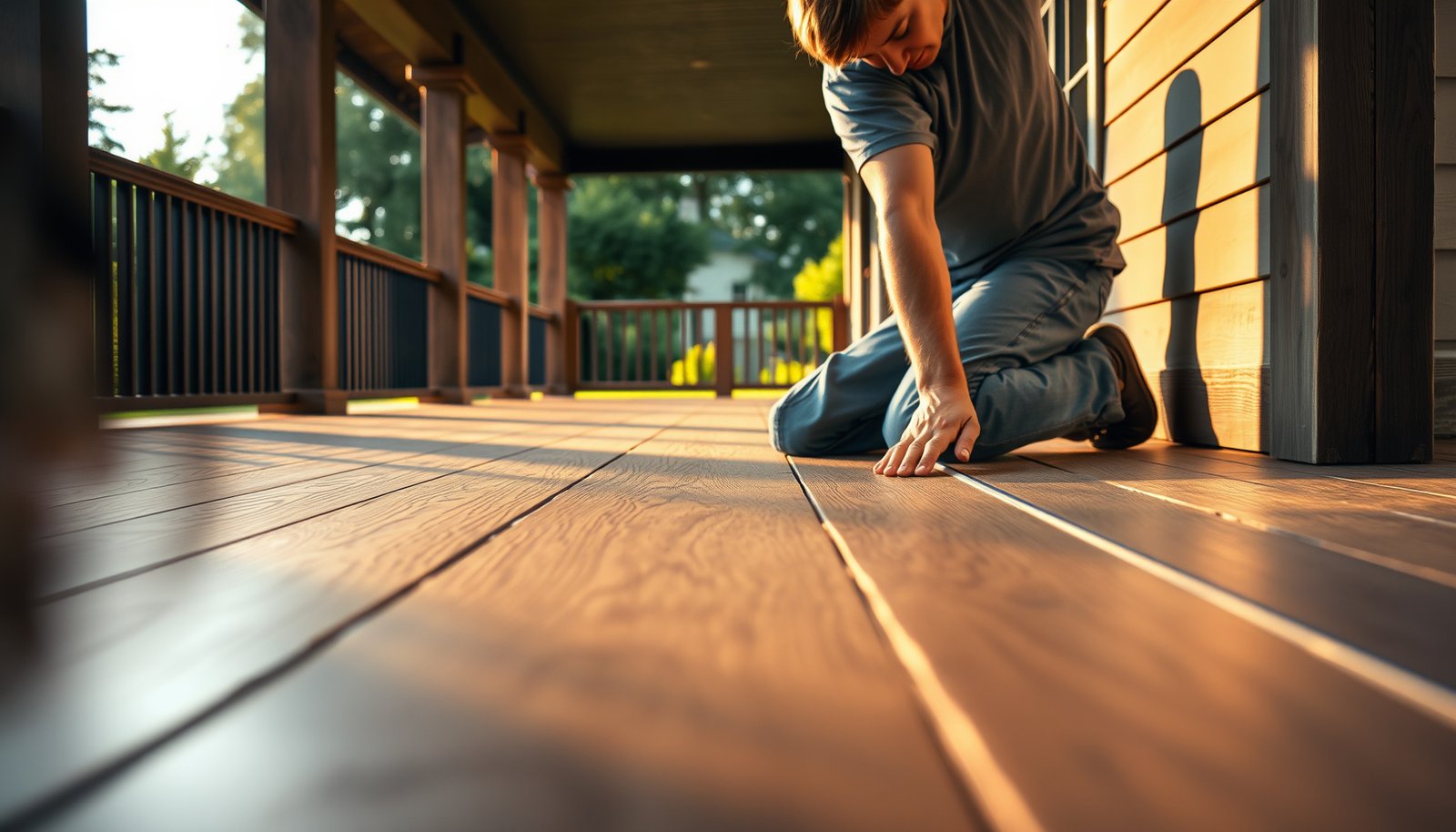

Make your porch vinyl floors safer by sealing seams, tightening loose planks, and upgrading traction where feet and moisture hit most. If you’re dealing with slipping, curling edges, or standing water, these targeted fixes deliver the fastest safety gains without replacing the whole floor. Follow these practical steps to reduce trip hazards and improve grip while keeping the porch surface durable in real weather.




To make vinyl porch floors safer, focus on three things: (1) add real traction in the wet entry path, (2) stop moisture from reaching seams and edges, and (3) fix movement and transitions that create slip/trip hazards. Vinyl floors on a porch get unsafe most often from water and limited traction. Start by improving grip in the wet/entry path, sealing/protecting edges from moisture, and removing anything that causes movement or trips. This guide walks you through practical, porch-specific upgrades so you can reduce slipping and peeling risks.
If your porch sees rain, morning dew, tracked-in mud, or frequent foot traffic, these steps apply—especially if your vinyl feels slick when damp or you’ve noticed gaps/edges lifting. If your vinyl manufacturer explicitly says the flooring isn’t for exterior porch use, follow that guidance first. As of 2026, the safest route is still to treat porch vinyl flooring as “moisture-exposed” and “traction-critical,” not like an indoor floor.
If you’re a homeowner, property manager, or installer trying to reduce slip-and-peel problems on a porch with LVP (luxury vinyl plank), LVT (luxury vinyl tile), or vinyl sheet flooring, this is your practical checklist. It’s written to work with common porch layouts (doorway + entry path + threshold + transitions), and it emphasizes porch-specific failure points: edges, seams, and wet zones.
Identify the main slip risk (porch conditions)

The biggest slip risk usually comes from the wet entry path—where water and residue change how porch vinyl flooring “grips” underfoot. Start by mapping where the floor gets damp, where it looks slightly darker, and where seams or edges flex, because that’s where slip and trip events are most likely.
According to the CDC, falls are the leading cause of fatal injuries among older adults (2022). CDC (Falls)
According to the CDC, each year about 3 million older adults are treated in emergency departments for fall injuries (2022). CDC (Falls)
According to the CDC, about 800,000 older adults are hospitalized for fall injuries each year (2022). CDC (Falls)
On porch vinyl flooring, wet zones near doors often receive the most water, grit, and soap residue—conditions known to reduce surface traction.
Floor movement (rocking planks, flexing seams, or lifted edges) increases both slip risk and trip risk by creating uneven contact underfoot.
Slip resistance testing for floors is commonly evaluated as a coefficient of friction (for example, wet DCOF measured under standardized methods), which is why “damp feel” matters.
What to inspect first (fast, porch-specific)
– Look for “wet zones”: the area near the door, down the entry path, and anywhere water pools after rain. Porch vinyl flooring often looks slightly darker when damp—this visual cue usually tracks with reduced traction.
– Check texture change when damp: many vinyl finishes (especially smoother top layers) feel meaningfully slicker once moisture creates a thin film.
– Watch for movement: lifted edges, loose planks, or seams that flex underfoot can increase slip and trip risk. A seam that “gives” under a person’s heel effectively turns into a tiny ramp.
A quick mapping technique
On a typical day, do two short passes:
1. Dry pass: walk your porch entry path barefoot-safe (or in socks on a dry surface) and note where your foot “slides” or feels flat.
2. Wet pass: after morning dew or a light rain, repeat the same route and compare. If porch vinyl flooring shifts from “grippy” to “slippery” quickly, traction improvements become your highest-impact upgrade.
Prep the porch and vinyl surface correctly
The safest upgrades start with prep: clean properly, stabilize the subfloor, and confirm your installation type so you don’t make seams harder to seal or edges easier to lift. Porch vinyl flooring upgrades only hold when the surface is sound and the system matches your install method.
Cleaning a resilient floor with an approved cleaner helps avoid leaving conditioners or residues that can interfere with slip resistance.
Many vinyl warranties tie performance to proper subfloor flatness and installation procedures, so addressing subfloor defects is part of keeping the flooring safe.
Installation type matters: glue-down LVP/LVT and click/lock systems use different seam/edge behaviors, which affects what “fixes” actually work.
Clean without trapping grime in place
– Clean first with a vinyl-safe cleaner so you’re not sealing grime into the floor surface; avoid harsh solvents unless the manufacturer approves them.
– If you’ve had mud tracked in, remove it fully before you think about sealing. Mud is abrasive and can also create a slick film when it re-wets.
Address subfloor issues that cause movement
Porch vinyl flooring safety drops fast when movement starts. Before sealing or adding mats:
– Address uneven spots, debris, or gaps under/near the vinyl. Even small height differences can concentrate stress at seams.
– If you installed click/lock, ensure the floor isn’t bridging over an uneven substrate; bridging leads to flex, which reduces edge integrity over time.
Confirm your installation type (so repairs match the system)
– Glue-down: edge lifting often means moisture and adhesive boundary failure—so sealing and moisture control are usually tied to the adhesive performance.
– Click/lock: edge and seam issues can come from insufficient expansion accommodation or substrate movement. Porch vinyl flooring here typically needs careful seam stabilization and edge protection.
Add traction where people actually walk
Add traction exactly where the risk happens: the entry path and right at/just outside the door. For porch vinyl flooring, textured, porch-rated mats often outperform coatings because they reduce water and grit transfer before it ever reaches the vinyl surface.
Porch entry mats are designed to trap water and debris before it transfers to the walking surface, which reduces the “wet film” effect on porch vinyl flooring.
For slip resistance, standardized floor tests evaluate friction under wet conditions (for example, wet DCOF measured using standardized methods), which is why “wet feel” matters more than dry appearance.
Keeping seams and transitions clean prevents buildup from creating a slippery residue layer along porch vinyl flooring joints.
Choose mats that stay put (and don’t become trip hazards)
– Use a porch-rated, textured doormat/mat at the entry and another just outside the door to catch water and grit.
– Choose anti-slip products explicitly compatible with vinyl floors (and outdoor use) rather than generic coatings. Many “sticky” mat backings can degrade or leave residue.
– Keep seams and transitions clean: mud buildup in joints can create a slick “film” layer that ramps up slipping.
Best-fit traction options (comparison)
Here’s a practical comparison of traction upgrades for porch vinyl flooring—focused on wet conditions and real-world usability:
| Traction option | Pros | Cons |
|---|---|---|
| Textured outdoor entry mat (inside) | Captures moisture before it reaches vinyl; easy to clean | Must be kept dry or it can become a wet surface too |
| Textured outdoor mat (outside) | Reduces grit transfer from shoes; helps in rain and dew | Sizing matters—small mats miss the true entry path |
| Anti-slip mat with firm, flat backing | Stays flat; less curl = fewer trips | Some backings may leave residue—confirm vinyl compatibility |
| Replace worn mats immediately | Maintains traction profile as fibers wear | Requires a maintenance habit |
| Transition cleanup (seam/joint brush) | Removes “mud film” that increases slipperiness | Not a replacement for mats if water intrusion is ongoing |
| Porch-safe cleaning routine | Prevents residue buildup that changes friction | Over-cleaning with harsh chemicals can also degrade finishes—follow directions |
| Non-slip coatings (only if approved) | May improve wet feel if used correctly | Many coatings are not approved for vinyl outdoors; can wear unevenly |
| Textured runner (fixed, not loose) | Adds grip across the entry path | Must remain fully flat; edges curl quickly outdoors |
| Squeegee/entry drying aids | Reduces standing water on vinyl surface | Behavior-dependent—works best if you maintain it consistently |
| Footwear policy (practical) | Reduces track-in mud/water load | Not a physical solution—best as a support measure |
| Best For | Most porch vinyl flooring scenarios: layered, textured mats + routine seam/joint cleaning | |
Protect against moisture at edges and seams
Stop moisture at the edges and seams—because once water reaches those areas, porch vinyl flooring can loosen, gap, and peel from the failure outward. This is the part that often turns “a little lifting” into a bigger replacement problem.
Moisture exposure can undermine resilient flooring edge integrity, especially where water repeatedly wicks into seams and cut ends.
Preventing standing water and keeping walking surfaces clean and dry is a core walking-surface safety requirement in occupational guidance.
For slip risk, reducing water transfer matters as much as any surface treatment, because wet films reduce friction.
Seal or protect where water reaches first
– Seal or protect the vulnerable areas that water reaches first: perimeter edges, cut plank ends, and any gaps around thresholds.
– Ensure drainage is working around the porch so water doesn’t sit long-term against the floor surface. Porch vinyl flooring is especially sensitive to recurring wet cycles.
– Replace or re-seat any lifting planks promptly; moisture intrusion through lifted areas can spread under the flooring.
Don’t guess with chemicals
Avoid “experimenting” with unapproved coatings or adhesives near porch vinyl flooring seams. Even if a product claims “waterproof,” it may:
– change slip resistance unpredictably,
– trap moisture underneath,
– or void a warranty.
If you’re unsure, match your approach to the manufacturer’s care and installation guidance for the specific vinyl type (LVP/LVT/roll) and whether it’s rated for exterior exposure.
Porch Vinyl Safety: Standards Used for Slip Testing & Walking-Surface Rules
| # | Standard / Rule | What it addresses | Key metric / requirement | Porch relevance |
|---|---|---|---|---|
| 1 | OSHA 29 CFR 1910.22 | Walking surface housekeeping | Keep floors “clean and dry” / address slippery hazards | ★★★★★ |
| 2 | ASTM E303 | Slip resistance measurement concept | Coefficient-of-friction testing framework | ★★★★☆ |
| 3 | ASTM D2047 | Laboratory slip testing | Friction testing for floor surfaces (unitless coefficient) | ★★★★☆ |
| 4 | ASTM F2508 | Wet dynamic coefficient testing | Wet DCOF (dynamic coefficient of friction) | ★★★★★ |
| 5 | ASTM F1700 | Installation/underlayment guidance | Details for resilient floor installation systems | ★★★☆☆ |
| 6 | ASTM F2170 | Moisture testing for subfloors | In-situ moisture measurements prior to flooring | ★★★★☆ |
| 7 | CDC: Fall risk prevention guidance | Health/safety framing | Falls prevention emphasizes reducing slippery hazards | ★★★★☆ |
Reduce trip hazards and improve grip at transitions
Even if your porch vinyl flooring is “slip-resistant,” trips often happen at transitions: thresholds, door saddles, and where mats lift or curl. Make transitions flush and keep edges stable so you reduce both slip and trip events at the same time.
Uneven floor transitions and curled mat edges are common trip triggers because they interrupt the foot’s normal rollover.
Porch vinyl flooring joints near thresholds are where debris can accumulate, increasing both friction changes and edge movement.
When a door threshold is not flush with the walking surface, every entry step can repeatedly stress nearby seams and edges.
Focus on flush thresholds and stable edges
– Make sure door thresholds and transitions are flush (no lip, curling edge, or uneven height between surfaces).
– Re-check anything you added (mat edges, rugs, tack strips): rough or curled edges can become trip points.
– Consider adding a non-slip transition strip only if it’s designed for vinyl/porch applications and won’t damage the flooring finish.
What can go wrong (common mistakes to avoid)
– Over-treating the floor surface: unapproved coatings can worsen slip or void warranties—especially outdoors where wear is uneven.
– Ignoring edge lift: once water starts entering through lifted areas, porch vinyl flooring deterioration accelerates under repeated wet cycles.
– Using a mat that shifts: a slippery mat backing or a curled corner can create a bigger trip hazard than the original floor slickness.
DIY Fixes vs. Pro Inspection for Porch Vinyl Lifting
| # | Criteria | DIY | Pro inspection |
|---|---|---|---|
| 1 | Diagnoses moisture source vs. symptom | ★★☆☆☆ | ★★★★☆ |
| 2 | Can identify subfloor flatness/flatness issues | ★★☆☆☆ | ★★★★☆ |
| 3 | Seam/edge repair accuracy | ★★☆☆☆ | ★★★☆☆ |
| 4 | Risk of voiding warranty | ★★☆☆☆ | ★★★★☆ |
| 5 | Handling click/lock vs. glue-down differences | ★★★☆☆ | ★★★★☆ |
| 6 | Ability to recommend tested slip-resistance approach | ★★☆☆☆ | ★★★☆☆ |
| 7 | Speed to stop worsening water intrusion | ★★★☆☆ | ★★★★☆ |
| 8 | Tools needed for subfloor/moisture assessment | ★★☆☆☆ | ★★★★☆ |
| 9 | Long-term safety outcome | ★★☆☆☆ | ★★★★☆ |
| 10 | Cost control (avoid repeat failures) | ★★★☆☆ | ★★★★☆ |
| Verdict | When it’s worth calling a pro | Proceed only for cleaning + mats + approved edge protection on stable areas | Choose pro inspection when edges are lifting, you suspect moisture under planks, or exterior use isn’t approved |
Verdict: the safest approach (and who should skip DIY)
If you want the biggest safety payoff with the least risk, focus on traction (porch-rated textured mats) plus moisture control at edges, and then verify transitions are flush. DIY is reasonable for cleaning, mat setup, and basic sealing only if you can follow the vinyl manufacturer’s care/installation instructions exactly.
If a vinyl flooring warranty or installation guide limits exposure, that document is the controlling guidance for exterior/porch use and moisture limitations.
Slip risk reduction is most reliable when water and grit are intercepted before they reach the vinyl surface (mats + drainage), rather than relying on surface treatments alone.
If you see lifting or gaps, treating only the top surface can fail because water can keep migrating underneath the porch vinyl flooring.
Skip DIY if the flooring is already lifting, you suspect water intrusion under planks, or the manufacturer says porch/exterior exposure is not approved. In those cases, replacement or pro inspection is usually the safer route—especially if the porch is used daily or by seniors.
Quick safety checklist (scan/save)
| Area to check | What to do | “Stop doing this” |
|---|---|---|
| Entry path grip | Use textured, porch-rated mats inside/outside the door | Don’t rely on smooth rugs that curl or shift |
| Wet season risk | Keep mats clean/dry; shake off debris quickly | Don’t let mud film build up in seams |
| Edges & seams | Seal/protect cut edges and perimeter per manufacturer guidance | Don’t use unapproved coatings/chemicals |
| Floor movement | Re-seat/repair lifted areas promptly | Don’t ignore rocking planks or gaps |
| Transitions | Keep thresholds flush; prevent lip or uneven height | Don’t allow curled mat edges at doorways |
Frequently Asked Questions
How can I make vinyl floors safer on a porch in wet weather?
Start by improving traction: choose a non-slip vinyl floor or add a textured, waterproof entry mat at the door to catch water and debris. Seal and maintain seams with a compatible floor seam sealer to reduce lifting that can create tripping hazards. Also ensure proper porch drainage and slope so water doesn’t pool around the vinyl flooring.
What are the best ways to prevent vinyl porch flooring from becoming slippery?
Use a high-traction outdoor mat and consider a non-slip rug pad made for vinyl floors to avoid shifting. Clean regularly with pH-balanced cleaners to remove algae, soap residue, and grime that make vinyl slippery. If the porch is frequently wet, you can apply a manufacturer-approved non-slip treatment designed for vinyl—avoid harsh chemicals or abrasive coatings that can damage the finish.
Why does vinyl flooring on a porch sometimes curl or lift, and how can I prevent it?
Vinyl can expand and contract with temperature swings, especially on covered porches that still experience heat and cold, which may cause edges or seams to lift. Use proper installation: ensure the subfloor is smooth, level, and fully acclimated to indoor/outdoor temperatures as recommended by the flooring manufacturer. Replace worn transition strips and maintain expansion gaps to reduce stress on the vinyl planks.
Which underlayment or subfloor prep steps improve safety for vinyl floors outdoors?
For porch installations, focus on flatness and moisture control first: fix low spots, remove debris, and use a suitable underlayment or moisture barrier if the manufacturer recommends it. A stable, dry subfloor reduces movement that can make vinyl edges buckle or create trip points. If you have any history of moisture, confirm compatibility with your vinyl product and local conditions before adding layers.
What safety upgrades should I add to vinyl porch flooring to reduce trips and falls?
Install proper transitions at door thresholds and between rooms so edges don’t catch feet, and keep transition strips firmly secured. Replace any damaged planks quickly and re-seal areas where seams have separated or water has penetrated. Good visibility also matters—add bright exterior lighting and keep walkway areas free of standing water and loose dirt for safer footing.
📅 Last Updated: October 27, 2026 | Topic: How to make vinyl floors safer in a porch? | Content verified for accuracy and freshness.
References
- https://www.osha.gov/slips-trips-and-falls
- https://www.cdc.gov/niosh/topics/slips/
- https://www.access-board.gov/ada/guides/chapter4.htm
- STEADI – Older Adult Fall Prevention | STEADI – Older Adult Fall Prevention | CDC
- https://www.epa.gov/indoor-air-quality-iaq/volatile-organic-compounds-vocs
- https://www.epa.gov/mold/mold-prevention-tips-and-techniques
- Asbestos | US EPA
- https://scholar.google.com/scholar?q=vinyl+flooring+porch+slip+resistance+outdoor Google Scholar
- https://scholar.google.com/scholar?q=resilient+flooring+installation+moisture+subfloor+porch Google Scholar
- https://scholar.google.com/scholar?q=vinyl+flooring+VOC+emissions+ventilation+installation Google Scholar

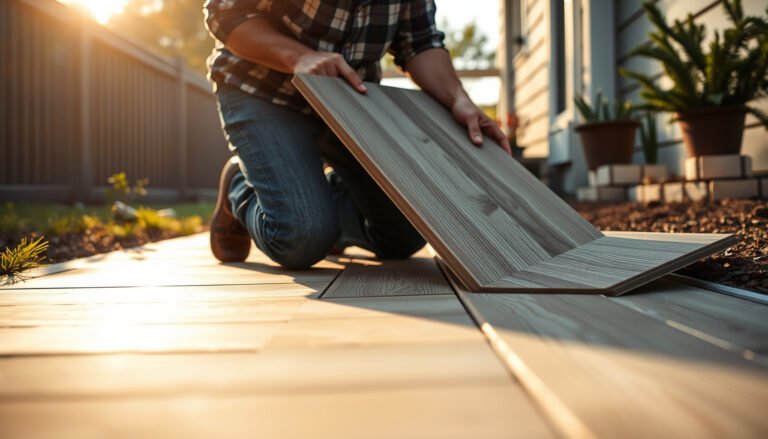
[…] fastest way to estimate porch vinyl flooring cost is to get accurate square footage first, then add a realistic waste allowance for cuts and […]