
Want to make LVP floors safer in a living room? Your safest upgrade is improving traction and reducing slip and dent risk with the right underlayment and grip-enhancing area rugs, then locking down the edges to prevent trips. This guide answers exactly how to apply those fixes so your LVP performs securely under everyday foot traffic.




To make LVP floors safer in a living room, prioritize traction and a smooth, stable surface—keep the floor dry, address any lifted edges/uneven spots quickly, and use rugs that don’t slide. You’ll learn the most common causes of slips and trip hazards with LVP, plus what to adjust in cleaning, underlayment, and layout to reduce risk.
If your home has kids, older adults, pets, or you’ve noticed the floor feels slick when wet, this guide is for you. It focuses on fixes that don’t require replacing the whole floor.
Make safety improvements fast (start here)
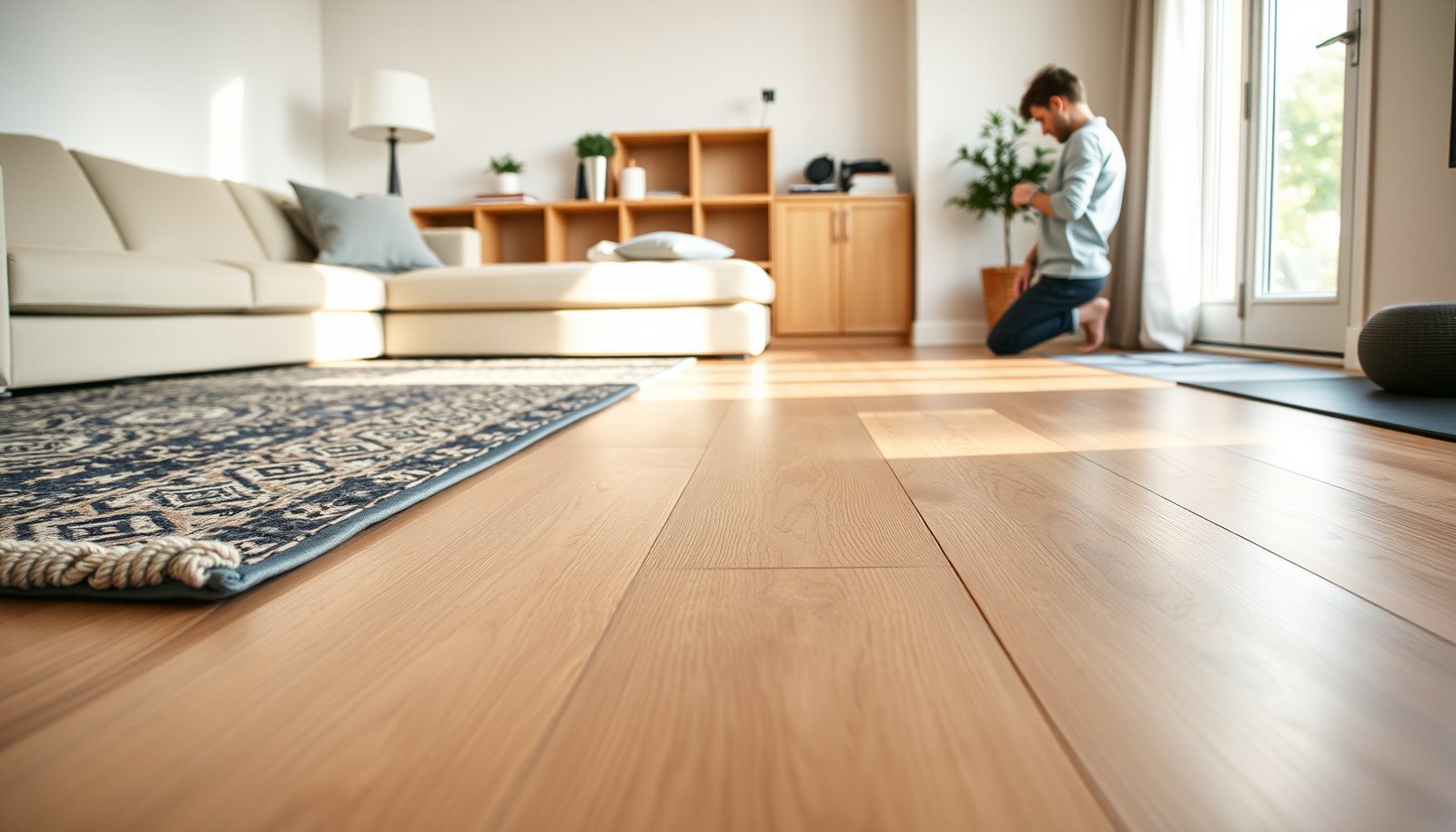
Fixing safety issues quickly is mostly about removing immediate slip and trip triggers before they become a pattern. Start with a simple walkthrough so you know whether you’re dealing with slippery traction, raised edges, or rug-related sliding—those require different solutions.
CDC reports that one in four adults aged 65+ falls each year, which is why small slip-and-trip risk reductions in living spaces matter.
ASTM D2047 is a standard test method that evaluates the static coefficient of friction of floor surfaces, which helps explain why “dry vs. wet” cleanliness changes traction.
Walkthrough: where LVP safety issues show up first
LVP problems that create real-world hazards usually appear in predictable locations: seams, transitions to tile/carpet, and areas where rugs bunch or corners lift. In 2026, most living rooms still have the same risk pattern—foot traffic plus daily spills plus furniture loads—so your first pass should focus on what people actually step on.
– Walk the room and mark hazards: any loose planks/edges, raised transitions, and areas where you’ve slipped.
– Choose the right mat/rug setup: area rugs should have non-slip backing made for hard floors.
– Set a “spill rule”: wipe liquids immediately rather than letting them sit long enough to affect traction.
Quick action plan (today vs. this week)
If you find lifted edges or a transition you can feel with your foot, treat it as a “today” fix: identify the plank area, stop using the rug in that spot, and reduce pressure until it’s addressed. If the floor only feels slick when wet, treat it as a “this week” workflow change: switch cleaning methods and tighten spill response. LVP safety improvements tend to compound—fixing one trigger often makes the other hazards easier to manage.
Reduce slips: traction, cleaning, and rug choices
Reduce slipping on LVP by keeping the wear surface dry, using approved cleaners, and preventing rug movement with backing designed for hard floors. In practice, most slip problems come from over-wetting, residue, or rug corners that create micro-sliding right where people step.
Many LVP care instructions warn against soaking or leaving standing moisture, because a wet film can reduce friction and increase slip risk.
EN 13893 addresses the slip resistance of floor coverings, reflecting how surface conditions (especially moisture) change real traction.
Cleaning that protects traction (not just appearance)
In 2026, LVP maintenance guidance increasingly emphasizes that “clean” is not the same as “wet.” When cleaning leaves a thin residue film—whether from too much water, an unapproved chemical, or a cleaner that isn’t rinsed—it can make the floor look good while reducing grip. LVP floors are designed with a wear layer; if you alter that layer, you may permanently change how it feels underfoot.
– Use manufacturer-approved cleaners and avoid over-wetting; many LVP floors get slick when there’s too much water left on the surface.
– Skip harsh “finish-changing” cleaners: strong chemicals can alter the surface and make glare or slipperiness worse.
– Pair rugs with proper backing and good edges: frayed rug corners and curled edges are classic tripping points.
Rug setup that stops sliding (without creating a new hazard)
Even when the LVP itself is fine, rugs can introduce both slip and trip hazards. A rug pad that isn’t intended for hard floors can shift; a rug edge that curls becomes a “ramp” underfoot. If you have pets, also expect more paw-tracked moisture—LVP may be dry enough most days, but rug movement spreads contamination into the step zone.
Pros/cons: wet mopping vs. low-moisture cleaning for LVP
| Approach | Pros | Cons (risk points) |
|---|---|---|
| Wet mopping / leaving film | May remove visible soil faster when done occasionally. | Increases likelihood of wet film or residue staying on LVP, reducing traction; can affect nearby rugs and cause tracking. |
| Low-moisture cleaning / dry buffing | Protects friction by avoiding standing moisture; easier to dry promptly. | Requires consistent technique (don’t “overdo” cleaner); may take slightly more time for heavy spots. |
Data table: the most common LVP slip/trip drivers and what to change first
Use this scan to connect what you see (wetness, residue, rug edge, raised seams) to the safest LVP adjustment.
7 LVP Safety Levers in Living Rooms (2026 Priorities)
| # | Observed issue | What it does | Best immediate fix | Safety priority |
|---|---|---|---|---|
| 1 | Wet mopping or leftover cleaner | Creates a wet film/residue | Switch to manufacturer-approved, low-moisture cleaning and dry promptly | ★★★★★ |
| 2 | Rug corner lift/curl | Turns into a step edge | Use hard-floor non-slip backing; trim/replace curled rugs | ★★★★☆ |
| 3 | Loose seam or edge lifting | Creates a lip underfoot | Stop foot traffic there; investigate planks and resolve the lift per install guidance | ★★★★★ |
| 4 | Unmatched transitions (tile/carpet) | Height mismatch increases tripping | Adjust/repair transition strips so the walking path is level and flush | ★★★★☆ |
| 5 | Underlayment mismatch or omission | Can change feel/sound and allow movement | Verify you used the manufacturer-specified underlayment (or none, if required) | ★★★☆☆ |
| 6 | Debris under furniture/rug edges | Reduces traction and creates grit paths | Use protectors and vacuum/sweep regularly in high-contact zones | ★★★☆☆ |
| 7 | Furniture dents creating micro-peaks | Alters foot contact and can collect moisture | Install felt pads/glides to prevent dents and debris traps | ★★★☆☆ |
Improve stability: subfloor flatness, underlayment, and transitions
Improve LVP stability by verifying the subfloor is flat enough, using the underlayment your LVP manufacturer specifies, and making sure transitions are smooth and level. Stability matters because movement turns into raised edges and “click” points—two of the most common causes of real trip hazards.
In many LVP installations, manufacturers require a specific subfloor flatness tolerance because unevenness can cause plank flex and edge lift over time.
Using manufacturer-specified underlayment is a core installation requirement because it can affect how the locking system behaves and how the floor feels underfoot.
Flatness: the hidden driver of movement on LVP floors
If your LVP has gaps, clicking, or slightly lifted seams, don’t assume it’s “just wear.” LVP safety issues often begin when the subfloor is uneven: the planks flex, the lock points experience repeated stress, and edges can gradually rise where feet land most. As of 2026, many installation failures people notice in living rooms trace back to flatness and transition execution—not the surface finish.
– Confirm flatness before you blame the planks: LVP safety issues often start when the subfloor is uneven, which can lead to movement and “click” points that catch feet.
– Use the underlayment (or none) specified by your LVP manufacturer—wrong underlayment can change feel, sound, and stability.
– Fix transitions promptly (tile-to-LVP, carpet-to-LVP, doorway thresholds): uneven height differences can turn into tripping hazards.
Transitions: make the walking path continuous
Transitions are where people change stride. If you can feel a lip with a bare foot, that lip is likely magnified by shoes, pets, or slippers. For LVP floors, the goal is not just “covered”—it’s flush, stable, and properly secured so it doesn’t rock when stepped on.
Prevent movement and edge lifting (where trips happen)
Preventing movement on LVP floors comes down to reducing stress at the edges, stopping debris traps, and respecting expansion behavior designed into click-lock products. When LVP shifts or edges lift, it creates a height difference that your foot discovers before you notice it.
Locking LVP systems are designed to accommodate normal movement; ignoring expansion requirements can increase seam stress near walls and thresholds.
Furniture glides and felt pads help reduce abrasion and dents that can trap grit and moisture, indirectly protecting traction on LVP floors.
– Check for gaps at edges and around furniture legs; if the floor shifts or edges lift, it can create a lip you’ll feel with bare feet.
– Keep expansion requirements in mind when placing heavy furniture: blocky loads can restrict natural movement, depending on the product design.
– Use furniture protectors (felt pads for most furniture, or appropriate glides for heavier pieces) to prevent dents that can collect debris and change traction.
Practical “trip-zone” checks
Focus on the exact spots that get re-stepped during daily routines: the path from couch to coffee table, around the entry rug, and near chair legs. With LVP floors, small irregularities compound—debris reduces friction, and micro-lips interrupt your stride. In 2026, this is still the fastest way to identify safety problems without tearing anything up.
What can go wrong (common mistakes and limits)
What often goes wrong is assuming you can “clean” slipperiness without changing the underlying cause. LVP floors can be inherently less grippy when wet, and some damage (like wrong chemicals or subfloor unevenness) can’t be fully reversed with routine maintenance.
Over-wetting can reduce traction because a wet film changes friction behavior on many hard floor surfaces, including LVP with protective wear layers.
Using cleaners outside a manufacturer’s approved list can void warranty and may alter the wear layer’s surface characteristics.
– Overusing water during mopping: even if the cleaner “works,” leaving a thin wet film can increase slip risk.
– Using the wrong cleaner: some degreasers/abrasives can make the wear layer slick or dull, affecting grip.
– Assuming all LVP is the same: locking systems, underlayment rules, and approved maintenance vary by brand and construction—follow the exact instructions for your floor.
When you should stop DIY
If you see widespread plank movement, repeated edge lifting, or tripping height differences that can’t be corrected with rug adjustments and minor cleaning, the root cause may be subfloor flatness, failed underlayment, or improper install tolerances. At that point, a professional inspection is the safest option.
Verdict / tip + scan checklist (and a few FAQs)
The best overall approach for safer LVP floors is simple: keep it clean but not wet, eliminate rug sliding, and fix lifted edges/uneven transitions as soon as you notice them. The upside is that most safety improvements are achievable without replacing the entire floor—especially slip prevention and rug control—while the downside is that some traction changes from improper cleaning or installation flatness issues may require deeper remediation.
Falls are a leading cause of injury for older adults; CDC notes that about 3 million fall injuries are treated in emergency departments each year among people aged 65+.
If transitions are uneven or edges are lifted, the hazard is usually mechanical (trip height), not purely friction—so cleaning alone won’t fix it.
Downsides to know (and who should skip this)
– Traction isn’t always recoverable: If the surface wear layer has been altered by the wrong cleaner, you may not fully restore grip.
– Uneven subfloors create repeat issues: If LVP was installed over an out-of-flat subfloor, movement can return even after good cleaning and rug setup.
– Skip DIY and get help if: you see widespread plank movement, repeated edge lifting, or tripping height differences you can’t correct without rework (or if you suspect moisture intrusion under the floor).
| Quick safety checklist (scan & save) |
|---|
| □ Wipe spills immediately; don’t leave standing moisture |
| □ Use manufacturer-approved cleaner (and follow dilution rules) |
| □ Rugs: non-slip backing + flat edges (no curls) |
| □ Check transitions for height mismatch or raised strips |
| □ Inspect for lifted edges or “clicking” that feels uneven |
| □ Verify underlayment matches the LVP manufacturer’s specs |
| □ Use felt pads/glides to prevent dents and debris buildup |
Frequently Asked Questions
What are the safest ways to install LVP flooring in a living room?
Start by ensuring the subfloor is clean, level, and dry, because uneven surfaces can cause shifting or clicking sounds that may lead to gaps and trip hazards. Use the manufacturer-recommended underlayment and transitions, especially at doorways and between rooms, to keep edges flush. Install LVP planks carefully with correct expansion gaps so the floor remains stable under temperature changes. Finally, check that all locking seams are fully engaged and that no planks are raised or damaged.
How can I reduce slipping on LVP floors?
Choose a LVP with a higher traction or wear layer rating, and consider adding a low-profile, non-slip rug pad in high-traffic areas to improve grip. Keep cleaning solutions gentle—use a manufacturer-approved cleaner rather than oil-based or waxy products that can make LVP more slippery. Wipe up spills quickly and avoid wet mopping; use a damp microfiber mop and dry the surface after cleaning. For households with kids or elderly residents, consider adding runners in pathways to reduce fall risk.
Why do LVP floors feel less safe, and how do I fix the root cause?
LVP can feel unsafe when it’s installed over an uneven subfloor, when underlayment is missing or incorrect, or when seams aren’t locked properly—these issues can create unevenness that increases trips. It can also feel unstable if the room’s humidity or temperature swings cause expansion and contraction without proper gaps. Inspect for raised edges, separated seams, or “clicking” areas, then address them by re-leveling the subfloor or replacing problematic planks. Using the correct underlayment can also improve comfort and reduce the “hard floor” feel.
Which rugs and mats work best for safer LVP flooring in living rooms?
Use area rugs with a low profile and a rubber or felt rug pad designed for hard floors to prevent sliding and movement. Avoid thick, uneven pads that create raised transitions and increase trip risk at rug edges. In entryways or areas near doors, choose non-slip mats with textured backing and secure them so corners don’t curl. Regularly vacuum and check mat placement so rugs stay aligned and don’t become a hazard.
What’s the best way to maintain LVP floors so they stay safe day to day?
Sweep or vacuum with a soft brush attachment to remove grit that can scratch LVP and make surfaces less comfortable to walk on. Clean with a pH-neutral, manufacturer-approved LVP cleaner and avoid harsh chemicals that can dull the surface or leave residue. Use felt pads under furniture legs and keep any caster wheels maintained to prevent dents that could create snag points. When you notice damaged planks, lifting seams, or persistent uneven areas, replace them promptly to keep your living room safer.
📅 Last Updated: October 27, 2026 | Topic: How to make LVP floors safer in a living room? | Content verified for accuracy and freshness.
References
- Vinyl flooring
- https://www.cdc.gov/falls/index.html
- https://www.epa.gov/indoor-air-quality-iaq/volatile-organic-compounds-vocs
- luxury vinyl tile VOC emissions – Search Results – PubMed
- vinyl floor slip resistance coefficient of friction – Search Results – PubMed
- Falls in the Workplace | Falls | CDC
- D2047 Standard Test Method for Static Coefficient of Friction of Polish-Coated Flooring Surfaces …
- https://scholar.google.com/scholar?q=luxury+vinyl+tile+installation+subfloor+flatness+trip+hazard Google Scholar
- https://scholar.google.com/scholar?q=luxury+vinyl+tile+VOC+emissions+indoor+air Google Scholar
- https://scholar.google.com/scholar?q=luxury+vinyl+tile+slip+resistance+static+coefficient+of+friction Google Scholar