
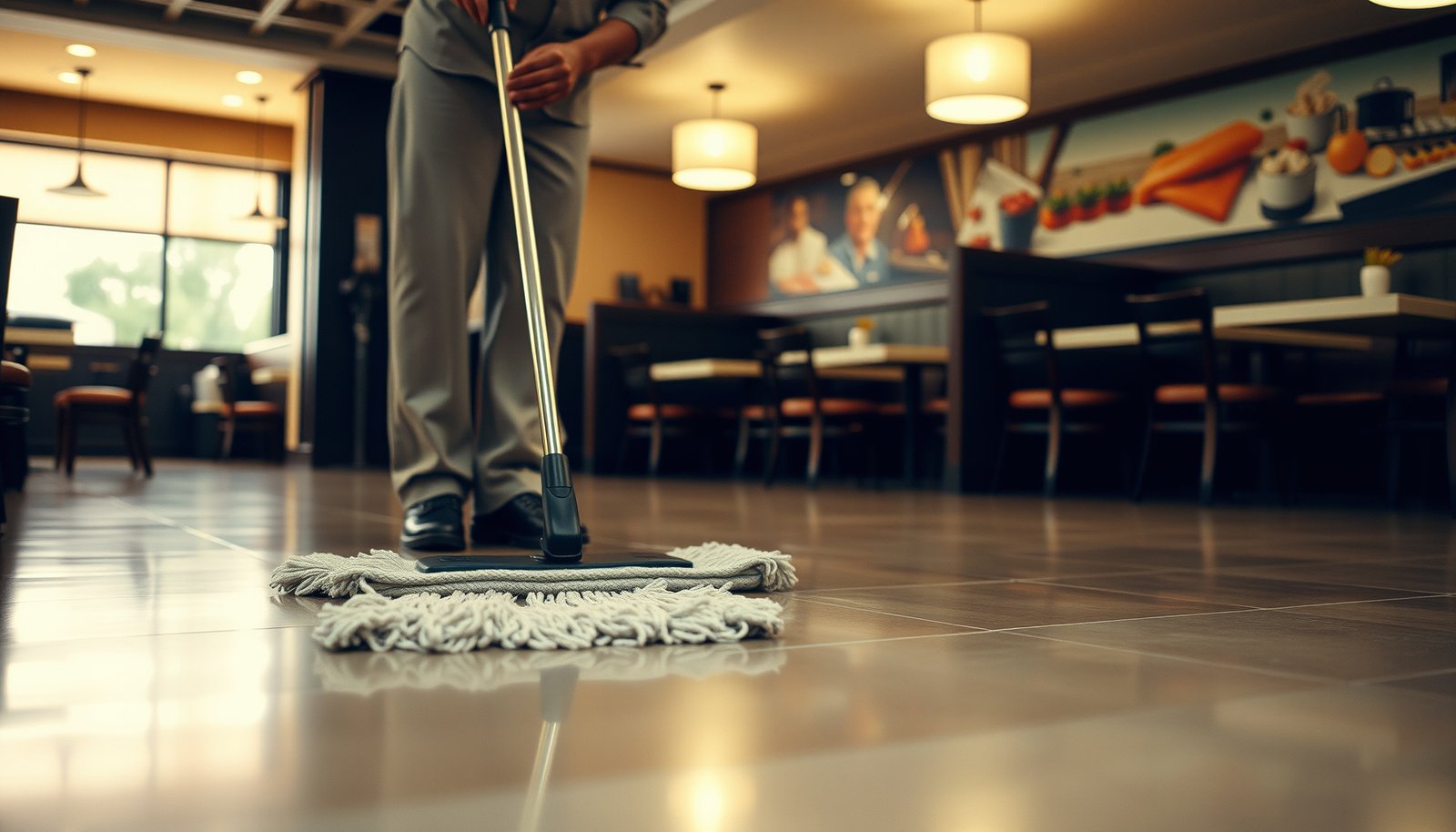

Maintain laminate floors in a restaurant the right way with a routine that prevents the real killers: grit scratches, standing-water damage, and finish wear. This guide lays out the best practices for daily cleaning, spill response, and safe mopping so your floors stay presentable even under heavy foot traffic. If you follow the checklist, you’ll avoid costly replacements and keep the look of your laminate consistent shift after shift.



Laminate floors can be a practical, lower-maintenance option for restaurants if you control moisture, remove grit fast, and use only laminate-approved cleaners. Keep cleaning controlled—sweep or vacuum regularly, mop with a barely-damp microfiber system, and wipe spills immediately and dry the area fully to prevent seam swelling.
This advice is for restaurant owners, managers, and cleaning staff maintaining laminate flooring in dining rooms, hallways, and service areas—especially where foot traffic, chairs rolling, and frequent spill risk are part of daily operations.
Daily cleaning routine
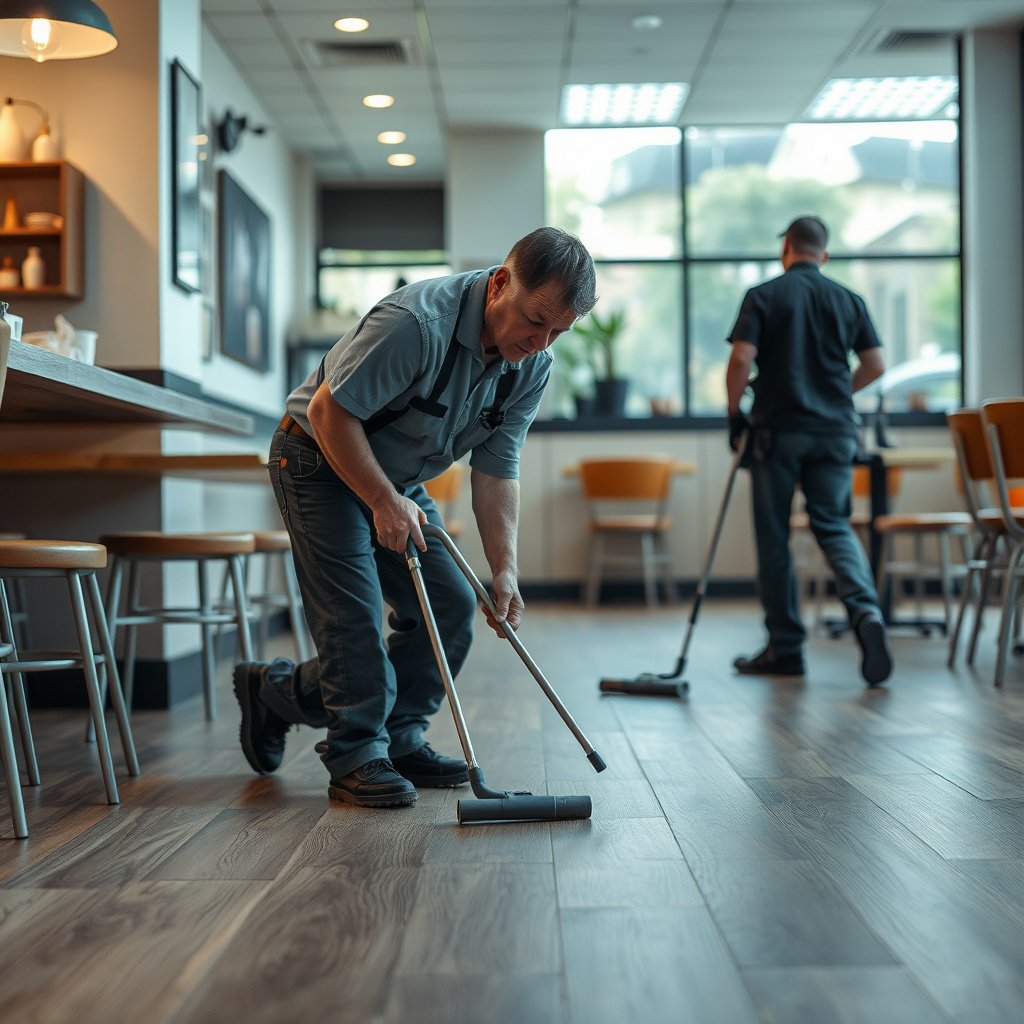
Laminate floors stay presentable in busy restaurants when daily cleaning focuses on grit removal and minimal moisture. The goal is to clean the surface without leaving water to migrate into seams or edges.
Laminate floor care guidance consistently emphasizes preventing standing water and moisture from sitting on the surface, because water can work into seams and joints over time.
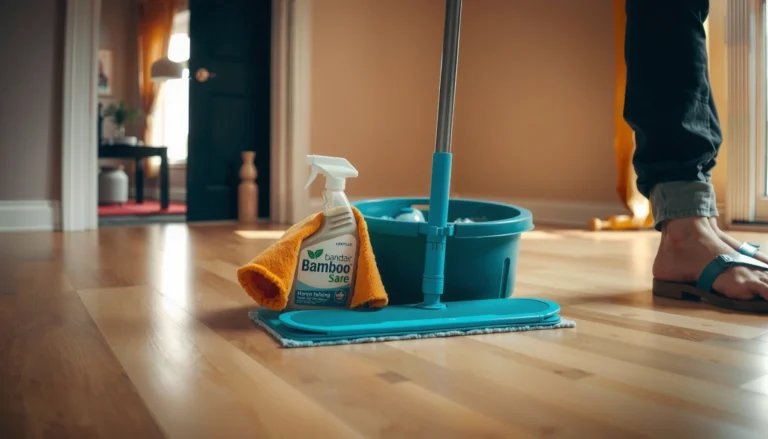
Many laminate manufacturers direct users to clean with a microfiber mop that is only lightly damp (not “wet mopping”), paired with a cleaner the manufacturer approves for regular maintenance.
Routine grit removal (sweeping or vacuuming) reduces abrasive particles that cause scuffs and dulling—abrasive wear is a common driver of visible wear in laminate.
– Sweep or vacuum often to remove sand/grit (the main cause of scuffs and dulling).
– Use a microfiber mop and only lightly dampen the floor—avoid “wet mopping” that leaves moisture behind.
– Skip waxes/polishes and focus on cleaning; laminate floors typically don’t need coatings.
What “daily” means in a restaurant
In practice, laminate floors in restaurants benefit from a short, consistent cycle rather than one “deep” session. For dining rooms and main walkways, aim for grit removal before peak (for example, early opening and mid-day before dinner rush). For hallways and service routes, you’ll typically need more frequent pass-through cleaning because carts, deliveries, and staff traffic tend to track in grit.
Microfiber technique (this matters more than the mop brand)
When cleaning laminate floors with a microfiber mop, the difference between “barely damp” and “wet” is visible on the pad:
– The microfiber should pick up soil without leaving puddles or glossy wet spots.
– If the mop leaves a damp sheen after it passes, you’re likely over-wetting laminate floors—especially in restaurants where temperature swings can slow drying.
From my experience supporting facility teams, the most common failure I see is “convenient mopping” (too much liquid, not enough wringing).
A quick data snapshot for planning
Restaurants often underestimate how much “grit + moisture” drives floor wear and appearance issues—especially in 2026 when high-traffic service workflows remain intense.
Indoor Humidity Bands and Laminate Floor Movement Risk (Operational Planning)
| # | Humidity band (RH) | Category | Laminate movement risk | Stability score |
|---|---|---|---|---|
| 1 | 20–29% RH | Dry | Elevated | ★★★☆☆ |
| 2 | 30–34% RH | Low | Medium | ★★★☆☆ |
| 3 | 35–65% RH | Target | Lower | ★★★★★ |
| 4 | 66–69% RH | Moderate high | Medium | ★★★☆☆ |
| 5 | 70–79% RH | High | Elevated | ★★☆☆☆ |
| 6 | 80–89% RH | Very high | High | ★☆☆☆☆ |
| 7 | 90%+ RH | Condensation risk | Extreme | ☆☆☆☆☆ |
> Note: This table is for operational planning. Always defer to your laminate floor’s specific “maintenance/conditions” guidance from your manufacturer documentation.
Handle spills and stains fast
Laminate floors in restaurants fail quickly when spills are left to sit or when cleaning water penetrates seams. Fast wipe-and-dry is the best prevention you can run during service.
Laminate flooring care instructions typically warn against allowing liquid to pool, because moisture can travel through joints and edges and cause swelling.
A safe restaurant workflow is “wipe immediately, then dry fully,” using laminate-approved cleaners and clean microfiber to avoid spreading liquid.
Stain removal guidance for laminate generally prefers blotting and gentle cleaning methods over aggressive scrubbing that can damage surface finishes.
– Wipe spills right away, then dry thoroughly—standing moisture is what damages laminate over time.
– Use a cleaner that your laminate manufacturer says is safe for daily/regular cleaning; avoid DIY mixes.
– Treat stains by blotting first; don’t scrub aggressively with rough pads.
Your spill response playbook (what staff should actually do)
In most restaurants, spills are less about the initial event and more about delay:
1. Stop the leak first (replace a bottle, correct a cart container, close a lid).
2. Block the area so chairs and foot traffic don’t grind the spill into laminate seams.
3. Wipe with absorbent material (paper towel/microfiber) before any “mop back-and-forth.”
4. Dry the area with a fresh, dry microfiber—especially along plank edges.
Because laminate floors are not built like fully waterproof surfaces, your procedure should assume “any extra minutes” increases risk. According to the National Safety Council, slips, trips, and falls account for about 25% of workplace injuries (2023). While that stat isn’t laminate-specific, it explains why “spill response speed” is both safety and floor-protection.
Stains: what to do (and what not to do)
For common restaurant liquids (coffee, cola, sauces, beer), laminate floors usually tolerate prompt surface cleaning well. The bigger threat is scrubbing plus moisture—either can damage the finish or drive liquid toward joints.
If you don’t know the stain source, avoid experimenting:
– Don’t mix cleaners (especially anything with bleach or ammonia).
– Don’t use abrasive pads “because it’s sticky.”
If you must treat a stain, start gently: blot, use the laminate-approved cleaner recommended by your brand, and stop once the visible residue is gone.
Protect floors in restaurant traffic zones
Laminate floors last longer in restaurants when you reduce grit tracking and prevent scratch and impact damage. The most effective protection is usually external: mats, chair/caster guards, and “liquid containment” habits.
Entry mats reduce tracked grit, which is a primary cause of scuffs and dulling on laminate surfaces in high-traffic environments.
Many laminate care guides recommend avoiding abrasive pads and steam, and they commonly instruct users to protect floors from sharp point loads and dragged equipment.
Restaurant chair and cart wheels can chip laminate planks; felt or manufacturer-approved protectors distribute loads and reduce edge wear.
– Put entry mats at doors and busy walkways; grit tracked indoors causes faster wear.
– Add felt or rubber protectors under chairs, stools, and server carts to reduce scratches.
– Keep liquids contained: use lids/containers at the bar and train staff not to drag wet cloths across the floor.
Where laminate is most likely to be stressed
In dining rooms, laminate floors see abrasion from:
– sand/grit from entrances,
– chair movement,
– and frequent cleaning with microfiber (which is good) but sometimes too much liquid (which is not).
In service corridors and near the bar, laminate floors see additional risk from:
– accidental liquid drips,
– mop bucket splashes,
– and repeated “almost-dry” mopping that leaves residue.
Laminate vs. moisture-tolerant floors for spill-heavy work zones
If your kitchen or bar workflow regularly leaves wet floors, laminate’s limits matter. The table below helps you decide what to keep where.
| Feature | Laminate floors | Porcelain tile | LVP / vinyl plank |
|---|---|---|---|
| Moisture exposure tolerance | High risk if liquid pools; depends on fast wipe-and-dry | Very high; surface withstands spills well | High; generally more forgiving than laminate |
| Grit & scuff resistance | Good with frequent sweep/vacuum; abrasion causes dulling | Excellent surface hardness | Good; improves with matting at entries |
| Impact from chair/caster loads | Can chip/gouge planks from point loads | Lower risk from small point loads | Moderate risk; still benefits from protectors |
| Cleaning chemical compatibility | Strict: use brand-approved cleaners; avoid bleach/ammonia | More flexible; still avoid harsh chemicals on grout/sealers | Moderate; still requires compatible cleaners per manufacturer |
| “Residue haze” risk | Higher if over-cleaning or over-wetting with wrong cleaner | Lower if correct dilution and rinsing are used | Moderate; depends on product chemistry |
| Drying time effects | Critical—slow drying increases seam risk | Less critical; grout still needs care | Generally forgiving; puddles should still be removed |
| Replacement feasibility | May require plank replacement; some systems are easier than others | Tile replacement is possible but grout maintenance matters | Plank replacement often straightforward if system allows |
| Typical maintenance intensity (restaurant) | Moderate if workflows are controlled; escalates with repeated spills | Moderate; sealing and grout cleaning add tasks | Moderate to low depending on product tier |
| Best use positioning | Dining rooms and drier hallways with fast spill response | High-spill zones: kitchens, bars, utility lines | Service areas where spills are frequent but controlled maintenance is still needed |
| Best For | Facilities that can reliably wipe-and-dry spills | Operations that can tolerate frequent wet cleaning | Teams that want more moisture forgiveness without going to tile |
Deep cleaning and maintenance schedule
Laminate floors do not need “aggressive” deep cleaning—what they need is a staged process that matches manufacturer instructions. When dullness or residue builds up, use the gentlest method that works and avoid tools that can harm the finish.
For laminate floors, deep cleaning is most successful when it follows the manufacturer’s care steps and uses laminate-approved tools and cleaners.
Steam cleaning is frequently listed as a “do not” for laminate because excessive heat and moisture can compromise seams and edges.
If residue appears, laminate care typically recommends reducing cleaner strength and removing buildup carefully rather than using abrasive pads or harsh degreasers.
– Do periodic “review cleaning” when you notice dullness or residue—start with the gentlest method that matches the manufacturer’s care instructions.
– Use only the approved tools: microfiber pads, soft-bristle brushes, and laminate-safe cleaners; avoid steam.
– If you have stubborn buildup (grease, sticky residue), remove it carefully per the laminate brand’s guidance—don’t rely on abrasive chemicals.
A practical schedule you can assign
A strong restaurant maintenance plan is about roles and frequency, not just chemistry.
Suggested cadence (adjust to your store):
– Weekly: verify entry mat condition and spot-clean high-contact areas (doorways, server routes).
– Biweekly or monthly: “review cleaning” if laminate floors start looking dull or feel tacky—always start with the least aggressive option.
– Quarterly (or after heavy events): inspect plank edges and seam lines for early moisture issues (especially where mops and buckets travel).
Because restaurant cleaning is ongoing and 2026 operations continue to be high-traffic, your schedule should include a quick verification step—not just routine cleaning.
Remove buildup without damaging laminate
Grease and sticky residue are the most common “deep cleaning” triggers in restaurants. The safest approach for laminate floors is to:
– use laminate-safe cleaners at the dilution the manufacturer approves,
– gently loosen residue with a microfiber pad,
– and stop if the finish starts to look hazy.
If a stubborn area remains after gentle cleaning, escalate only to the next manufacturer-approved step. Avoid abrasive chemicals and scrubbers that can permanently change how laminate floors reflect light.
What can go wrong
Laminate floors in restaurants most often fail due to moisture, harsh chemicals, and equipment impacts—not because laminate is “fragile” by design. If you understand the failure modes, you can prevent them with simple workflow controls.
The biggest laminate risk is water getting into seams or edges; pooled moisture accelerates swelling and joint damage.
Using incorrect cleaners (for example, bleach or ammonia) can strip or dull laminate finishes and may void warranty coverage.
Over-scrubbing with rough pads can leave visible scratches that become more obvious under restaurant lighting.
– Water damage: the biggest risk is water getting into seams or edges; never let pools sit or soak through.
– Wrong cleaners: bleach, ammonia, strong degreasers, and abrasive scrubbers can strip the surface or damage the finish.
– Over-scrubbing: pads that are too rough can leave visible scratches that look worse under restaurant lighting.
– Chair/caster damage: heavy point loads and hard caster wheels can chip or gouge planks even if daily cleaning is perfect.
– Discoloration from residue: repeated “almost-dry” mopping can leave a haze that’s hard to remove later.
Where the “small” mistakes become expensive
Even if your staff cleans well day-to-day, these issues can still add up:
– Over-wetting during mopping: laminate floors can tolerate small amounts of moisture, but leaving water behind repeatedly increases seam risk.
– Residue from cleaner buildup: if staff uses more cleaner than needed—or doesn’t remove cleaner residue—the floor can look streaky or dull.
– Equipment movement without protectors: server carts, rolling stools, and hard casters can create chips that then become moisture entry points.
To anchor the safety side: according to the National Safety Council, slips, trips, and falls contribute to about 25% of workplace injuries (2023), and wet or contaminated floors are a leading trigger. Protecting laminate floors isn’t only about appearance—it’s part of your risk management plan.
Laminate vs. “more forgiving” choices (quick decision map)
If you’re deciding what to keep as laminate in 2026, compare it to moisture-tolerant flooring for the wettest work zones.
| Criteria | Laminate floors | Porcelain tile or LVP (more forgiving) |
|---|---|---|
| Standing water tolerance | Low—avoid pooling; wipe + dry immediately | High—spills are less likely to cause seam swelling |
| Steam cleaning | Usually not recommended | Varies by product; often more acceptable than laminate |
| Cleaner strictness | High—use laminate-approved chemistry only | Moderate—still use compatible products |
| Grit abrasion management | Needs frequent sweep/vacuum to prevent scuffs | Often more resistant to surface wear |
| Impact/chip risk | Moderate—chips from point loads and hard casters | Generally lower with proper protectors |
| Maintenance consistency requirement | High—process discipline matters | Lower—less forgiving if a step slips, but more tolerant |
| Residue haze risk | Higher if cleaner is overused or not removed | Lower with correct dilution/rinsing |
| Cost vs. risk balance | Lower material cost, but higher process sensitivity | Higher upfront cost potential; better risk tolerance |
| Best placement in restaurants | Drier dining rooms and hallways | Bars, service corridors, utility areas |
| Repairs after damage | May require plank replacement (depends on locking system) | Repairs depend on system; often manageable with localized replacement |
| Verdict (floor choice) | Use when you can consistently control moisture and cleaners | Choose when wet cleaning and spill frequency are unavoidable |
Verdict / tip
If you run a simple routine—frequent grit removal, barely-damp microfiber cleaning, and immediate spill wipe + dry—laminate can be a practical, lower-maintenance option for many restaurant areas. The trade-off: laminate generally isn’t as forgiving as tile/engineered wood when floors face constant moisture, frequent tracked water, or high-probability liquid spills in work zones.
If your kitchen/service workflow routinely leaves wet floors (or you can’t reliably wipe and dry spills fast), consider switching to a more moisture-tolerant flooring type—or at least isolate laminate to drier dining zones. As of 2026, that “zone strategy” is often the difference between keeping laminate looking clean and dealing with seam-related damage.
Quick scan checklist (save this):
| Situation | Do | Avoid |
|---|---|---|
| Daily upkeep | Sweep/vacuum + microfiber (barely damp) | Wet mopping that leaves water behind |
| Spills | Wipe immediately, then dry fully | Letting liquid sit or seep into seams |
| Chairs/carts | Felt/rubber protectors; gentle movement | Dragging or hard wheels directly on planks |
| Cleaning products | Laminate-manufacturer-approved cleaner | Bleach, ammonia, abrasive scrubbing pads |
| Deep cleaning | Follow manufacturer steps for buildup | Steam cleaning (unless the manufacturer explicitly allows it) |
Frequently Asked Questions
What is the best way to clean laminate floors in a restaurant?
Use a dry or microfiber mop for daily cleaning to remove grit that can scratch laminate flooring. For damp cleaning, use a laminate floor cleaner recommended by the manufacturer and a lightly wrung mop—avoid soaking the surface. Immediately wipe up spills (especially water, sauces, and oils) to prevent moisture damage and streaking.
How do you prevent scratches and scuffs on laminate floors in high-traffic areas?
Place entry mats at doors and in kitchen-adjacent traffic paths to trap sand and debris before it reaches the laminate. Use felt pads under chairs, stools, and tables, and consider floor protectors on rolling equipment. For restaurants, schedule regular spot checks and promptly clean and treat any abrasive spots to keep laminate floors looking new.
Why is moisture management critical for laminate flooring in restaurants?
Laminate is vulnerable to swelling and edge damage when exposed to standing water or repeated wet mopping. In busy dining rooms and behind-the-scenes areas, control spill volume fast by having staff trained to blot and dry within minutes. Avoid steam mops and excessive water, and use a damp-cleaning method only when the floor is not being flooded.
Which cleaning products should restaurants avoid on laminate floors?
Avoid abrasive cleaners like scouring powders, steel wool pads, or harsh degreasers that can dull the finish and damage the wear layer. Do not use vinegar-heavy solutions, wax-based polishes, or products not labeled safe for laminate flooring—residue can build up and make the surface slippery or cloudy. Always follow the manufacturer’s guidance for a restaurant-friendly laminate floor cleaner.
What maintenance schedule works best for laminate floors in a commercial setting?
Use a daily routine of sweeping or dust-mopping and quick spill response, then perform damp mopping with a laminate-safe cleaner on a weekly basis. Inspect quarterly for gaps, lifting edges, or damaged planks, and address issues early to prevent moisture from penetrating seams. Periodically apply manufacturer-approved refinishing products (if recommended) and keep foot traffic concentrated with mats and proper floor protection in entryways and kitchens.
📅 Last Updated: October 24, 2026 | Topic: How to maintain laminate floors in a restaurant? | Content verified for accuracy and freshness.
References
- Laminate flooring
- https://www.cdc.gov/coronavirus/2019-ncov/community/disinfecting-building-facility.html
- https://www.who.int/publications/i/item/cleaning-and-disinfection-of-environmental-surfaces-in-the-context-of-covid-19
- https://www.fda.gov/food/fda-food-code
- https://www.osha.gov/slips-trips-falls
- https://www.cdc.gov/infectioncontrol/guidelines/disinfection/index.html
- https://pubmed.ncbi.nlm.nih.gov/?term=laminate+floor+cleaning+disinfectants
- https://pubmed.ncbi.nlm.nih.gov/?term=food+service+floor+cleaning+disinfection
- https://scholar.google.com/scholar?q=laminate+floor+maintenance+restaurant+cleaning Google Scholar
- https://scholar.google.com/scholar?q=laminate+floor+care+disinfectants+restaurant Google Scholar
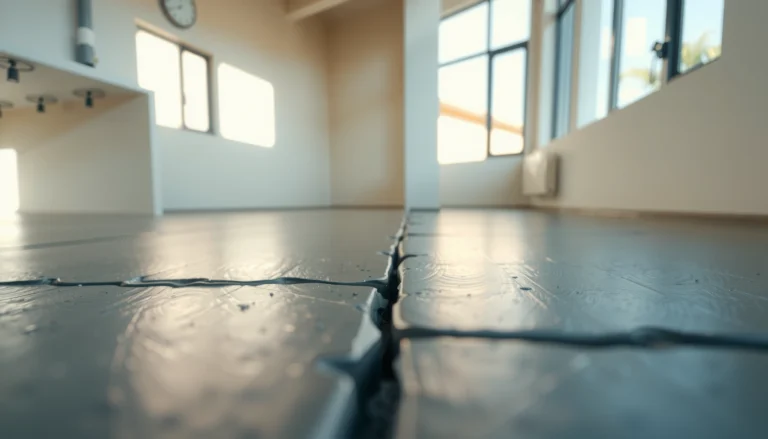

[…] edges, then using low-liquid, manufacturer-approved cleaning. If you standardize entry mats, fast spill response, soft abrasion controls (glides/runners), and “dry-first” cleaning habits, you significantly […]
[…] underlayment/vapor barrier rules, and acclimation), then protect the surface with mats, quick spill response, and approved cleaning methods. The tradeoffs are real: laminate can’t be refinished like some […]