


Want slip-resistant parquet floors without sacrificing the look? Follow this step-by-step process to achieve reliable traction by correcting subfloor flatness, choosing the right finish, and applying slip-reducing coatings with the correct curing and maintenance routine. If you do it in this order, your parquet will hold grip where it matters—especially in high-traffic areas and wet entryways.




If your parquet feels slick when wet (or just too smooth under shoes), this guide is for you—especially in entryways, kitchens, and homes with kids or elderly residents. The steps below assume you’re working on finished parquet (or you can refinish it), not replacing boards.
Choose the right finish for slip-resistant parquet floors

The best first move is selecting a coating system that is explicitly formulated for traction on wood floors, then matching that system to your parquet’s current finish condition. As of 2026, the most reliable approach is to buy a coating with published prep/application rules and (ideally) slip-performance data, rather than trying to “make anything grippy” with DIY grit.
– Look for finishes marketed as slip-resistant for wood floors and verify compatibility with parquet and your current coating/primer system.
– Prefer lower sheen finishes (matte/satin). They typically reduce glare and are often easier to keep from looking “frosted” or glossy-slick.
– If you’re considering a traction additive or texture, only use what the coating manufacturer explicitly allows for that product—unsupported grit/aggregate can weaken adhesion and durability.
Practical sheen ranges used when selecting slip-resistant parquet finishes
| # | Finish sheen label | Typical 60° gloss units (GU) | What it usually means | Grip practicality |
|---|---|---|---|---|
| 1 | Ultra-matte | 0–5 GU | Very low glare | ★★★★★ |
| 2 | Matte | 6–10 GU | Muted reflection | ★★★★☆ |
| 3 | Low-sheen satin | 11–20 GU | Balanced look | ★★★★☆ |
| 4 | Satin | 21–35 GU | Slight reflection | ★★★☆☆ |
| 5 | Eggshell / soft gloss | 36–55 GU | Noticeable highlight | ★★☆☆☆ |
| 6 | Semi-gloss | 56–70 GU | Strong reflection | ★☆☆☆☆ |
| 7 | High gloss | 71+ GU | Mirror-like sheen | ☆☆☆☆☆ |
ANSI A137.1 specifies a wet-area dynamic coefficient of friction target (DCOF ≥ 0.42) when flooring is tested per ASTM C1028/ANSI A326.1—showing how “measured” slip resistance is defined, not guessed.
ASTM D523 uses defined geometry angles (commonly 20°, 60°, and 85°) to measure gloss, which is why low-sheen systems usually correlate with lower glare and different surface micro-finish.
ASTM C1028 defines dynamic coefficient of friction (DCOF) as the frictional force relative to the normal force during the test, so a coating system’s surface chemistry and texture both matter.
Coating-only vs coating + traction additives (what to choose)
For slip-resistant parquet floors, the most predictable outcome is a coating that’s already engineered for traction. Adding random “grit” is where many installs lose durability and end up feeling either gritty or slick after wear.
| Approach | Pros for slip-resistant parquet | Cons / risks |
|---|---|---|
| Coating marketed as slip-resistant | Most consistent prep/cure instructions; better long-term durability when maintained correctly | May look less “glass-smooth” than high-gloss finishes |
| Approved traction additive / system | Can increase real traction if it’s designed to be compatible with the coating’s chemistry and film build | Can feel textured under bare feet; wrong dosage can accelerate wear or trap dirt |
| “DIY” grit added to regular varnish | Sometimes improves grip initially | High risk of poor adhesion, uneven film, and premature coating breakdown |
Prep parquet properly (traction starts here)
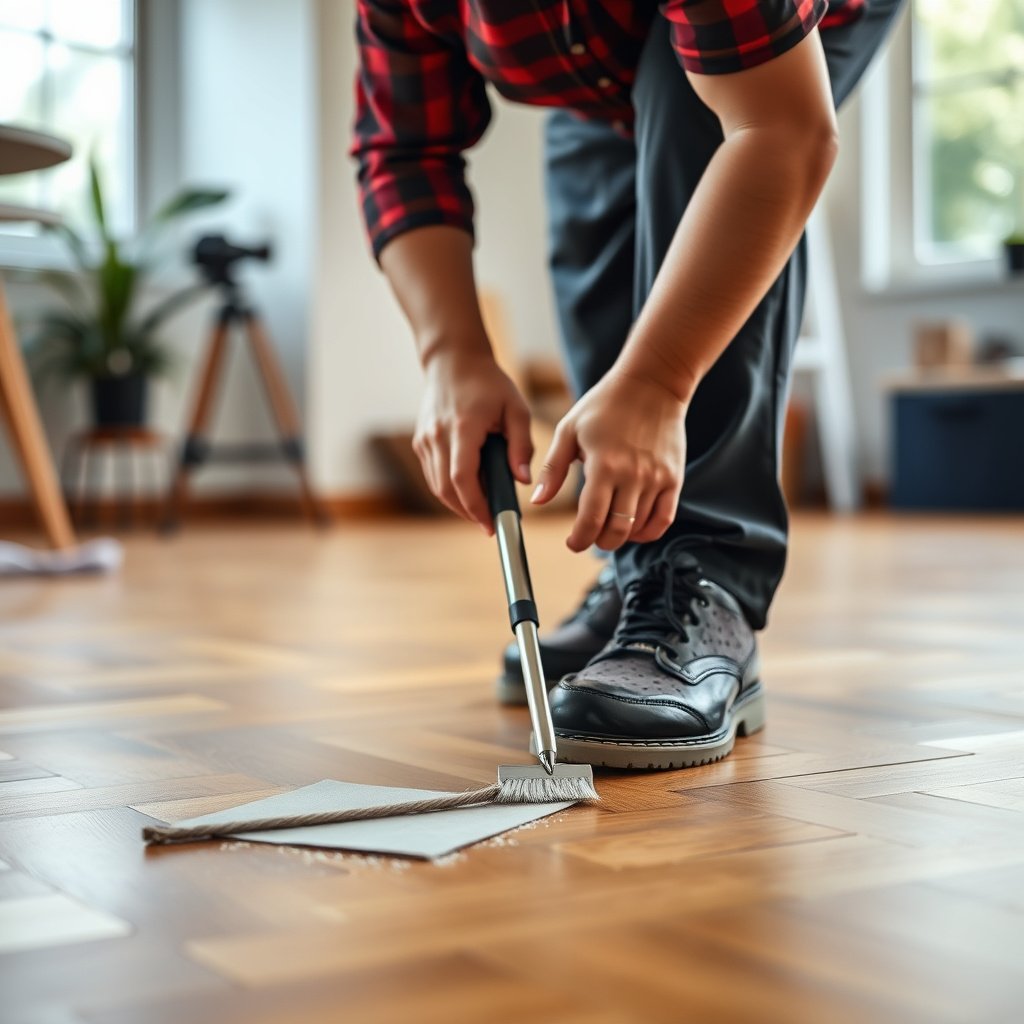
If you want slip-resistant parquet floors, prep is non-negotiable because it controls adhesion and surface uniformity. Even the best low-sheen coating can become patchy or slick if contamination (especially waxes/grease) or uneven board height prevents consistent film formation.
– Clean thoroughly and remove waxes/contaminants; trapped residue can cause coating failure and lead to slick “islands.”
– Sand/abrade as needed to reach the mechanical bond required by your coating system—especially if you’re changing from an old finish type to a new one.
– Fix loose or raised sections first (tighten boards, repair gaps, level high spots). A grippy surface can’t overcome a wobbling or uneven substrate.
Most coating failures over wood occur when the substrate surface can’t deliver uniform adhesion—so degreasing and creating a consistent profile matters as much as the topcoat choice.
Refinishing guidance from major flooring organizations consistently emphasizes sanding/abrading for mechanical bond when the finish system requires it.
Surface uniformity: why “level” affects slip feel
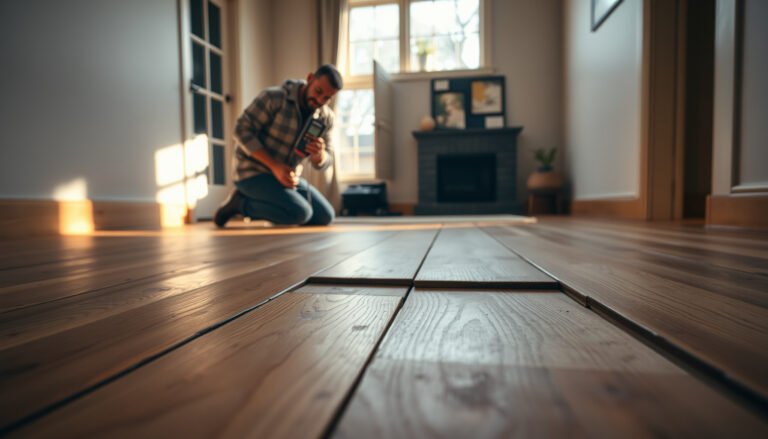
Slip resistance on parquet is tied to contact: if one area is slightly higher or the finish film is thinner there, your traction behavior changes. I recommend inspecting in low-angle light—shadows reveal waves and ridges that can harden into “micro-gloss” spots.
Apply slip-resistant coating (do it in the conditions the label expects)
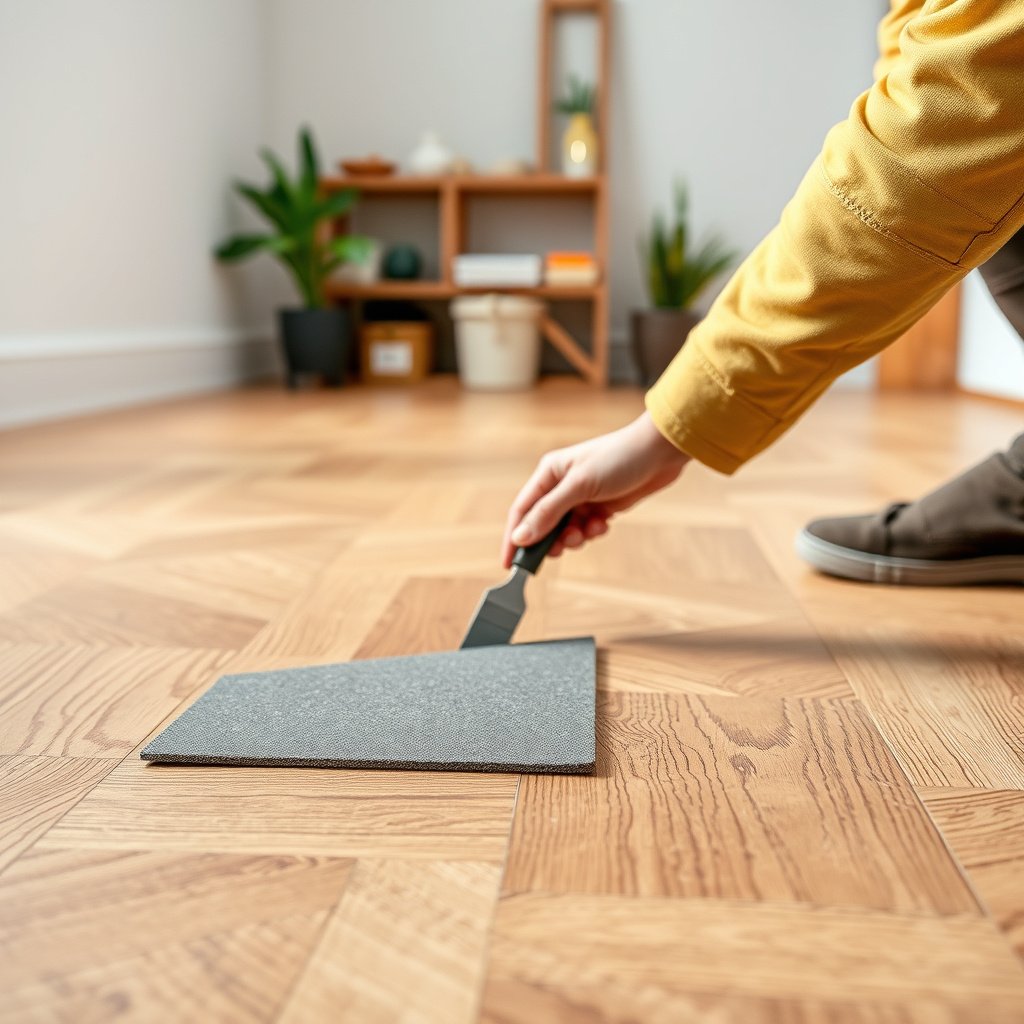
For slip-resistant parquet floors, the coating only performs as designed when you follow the technical data sheet on mixing, application, and cure timing. This is where many projects lose traction: thin spots, uneven leveling, rushed recoat windows, or premature traffic.
– Use the correct method and coverage rate from the technical data sheet (roller vs. brush patterns, number of coats, and cure time).
– Apply evenly—thin areas and overlap ridges can feel slick when fully cured even if the product is slip-resistant.
– Respect full cure before normal use. Walking too early can scuff the surface and reduce intended traction performance.
If you want extra traction (without ruining the look)
If you need more slip resistance, consider an “approved” traction system designed to integrate with the coating—not a random DIY sprinkle. Always test a small, inconspicuous area first because bare-foot feel and dirt-attraction can change.
ASTM D2047 evaluates static friction (SCOF) on polished floor surfaces under controlled conditions, which is one reason even small application differences can alter measured slip resistance.
Coating technical data sheets typically specify recoat windows and final cure periods; ignoring them can lead to reduced hardness and altered surface behavior under wet conditions.
From a chemistry standpoint, coatings achieve performance as the film crosslinks; until that cure completes, the surface is more vulnerable to scuffing and residue transfer.
Plan for everyday slip resistance: mats + maintenance
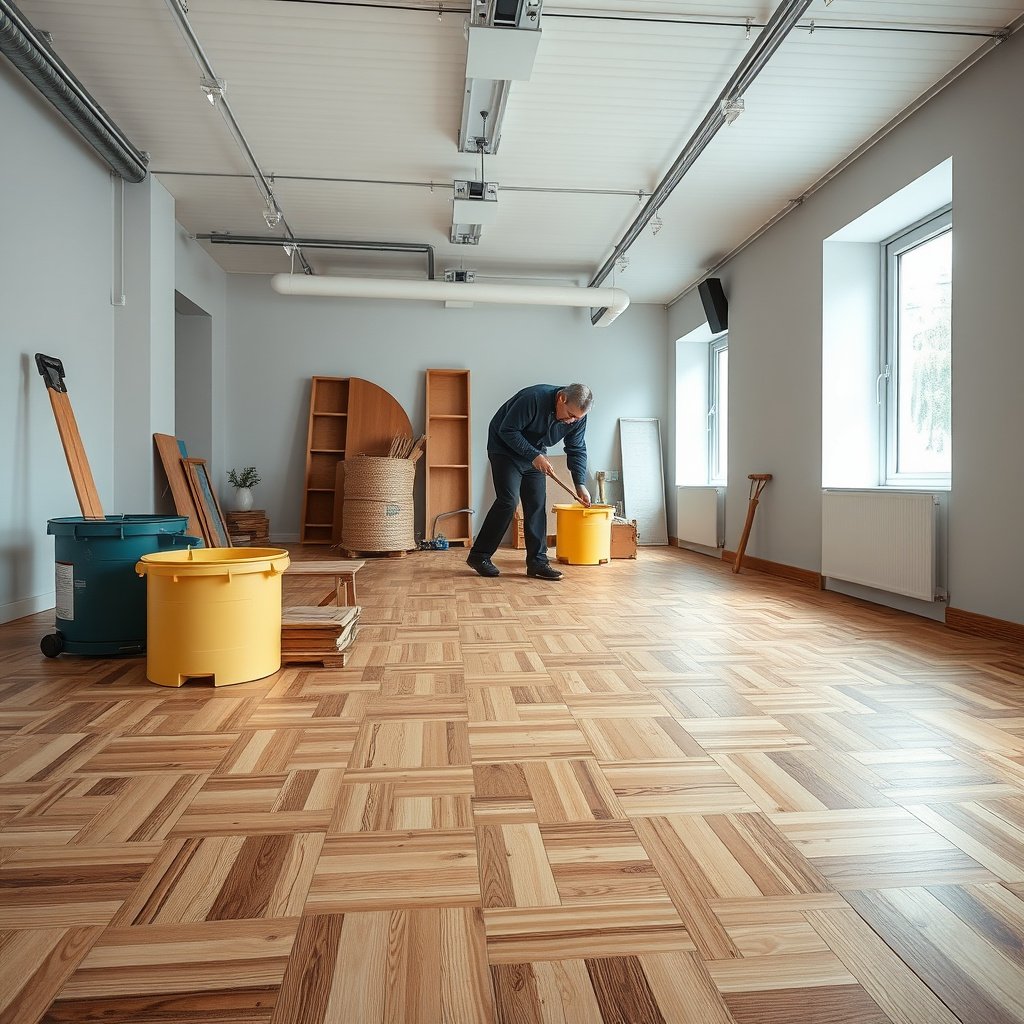
Even a properly finished surface can become slick if your household adds contaminants that change the surface chemistry. The key is a combined strategy: protect the finish with entry mats, and clean in a way that doesn’t leave a residue film.
– Use entry mats at doors to reduce water, mud, and grit—contaminants are often the real slip trigger.
– Avoid cleaners and waxes that leave a film. Film-formers can turn a grippy surface into something noticeably slick.
– Maintain with the gentlest routine your finish allows (manufacturer-recommended cleaner + microfiber approach). If streaking happens, stop and refine your method.
A practical maintenance workflow that protects traction
For slip-resistant parquet floors, consistency beats intensity. In 2026, many finish manufacturers recommend dry microfiber dusting followed by damp cleaning (not soaking), and rinsing if a cleaner leaves any surfactant residue. If you switch products, treat it like a small test: evaluate traction feel after the area fully dries.
Film-forming floor cleaners and waxes can reduce measured friction by creating an extra lubricating layer, which is why manufacturers warn against them for slip-resistant systems.
What can go wrong (and how to avoid it)
Slip-resistant parquet floors fail most often due to predictable process mistakes: poor prep, incorrect product pairing, and maintenance that leaves residue. Fixing these upstream is cheaper than trying to “patch” traction after the surface is already finished.
– Coating failure from poor prep: If residue/wax isn’t removed or sanding is insufficient, you may see peeling, soft spots, or fish-eye areas. Re-prep before recoating.
– Over-rough traction: Too much grit/texture can trap dirt, feel uncomfortable, and wear unevenly. Use only systems and dosages the finish manufacturer permits.
– Wet-behavior surprises: Even slip-resistant finishes vary when heavily wet. If your home has frequent spills, plan around mats and conservative expectations.
– Cost/time underestimate: Refinishing disrupts daily life and depends on full cure timing. If you can’t keep foot traffic off the floor for the required cure period, consider an alternate strategy (matting, different maintenance plan, or professional scheduling).
Localized adhesion failures (like peeling at edges or slick patches) are frequently traced to contamination or insufficient surface profile, not to “bad traction additives.”
Verdict: safest approach + quick checklist
If your goal is genuinely safer traction, the most reliable route is a manufacturer-approved slip-resistant wood floor coating (or permitted traction additive) applied over correct prep, paired with maintenance that prevents residue buildup. The tradeoff is real: slip-resistant finishes can be harder to keep looking uniformly “clean” than ultra-smooth systems, and some texture options can feel less “silk” under bare feet.
If you need an extremely smooth, like-glass finish—or you can’t follow label cure times—skip refinishing and instead focus on entry mats, careful cleaning, and (if needed) professional advice about compatible finish options for your specific parquet build.
Quick checklist (save this)
| Step | What to confirm | Done |
|---|---|---|
| 1 | Finish is labeled slip-resistant and compatible with your parquet/coating system | |
| 2 | Cleaning removes wax/contaminants; surface is properly degreased | |
| 3 | Sand/repair achieves mechanical bond; surface is level | |
| 4 | Application matches coat count, coverage, tool choice, and even film build | |
| 5 | Full cure time is respected before normal use | |
| 6 | Maintenance avoids film-formers; cleaning matches the product label |
Frequently Asked Questions
What causes parquet floors to become slippery?
Parquet can become slip-resistant-unfriendly due to worn or glossy finishes, soap or wax residue, improper cleaning products, and moisture or water spills that sit on the surface. High-traffic areas may also polish over time, making the floor shinier and more slippery even if the wood is not damaged. Inspect your finish condition and cleaning routine first, because slip risk often comes from surface coating behavior rather than the wood itself.
How can I make slip-resistant parquet floors without sanding?
Start by deep cleaning to remove any wax, polish, or contaminants that reduce traction, then switch to a parquet-safe cleaner designed for sealed hardwood. If the finish is intact but too glossy, consider applying a compatible anti-slip floor finish or topcoat rated for slip resistance (often marketed as “anti-slip” or “low-sheen traction” products). You can also use fine, floor-safe anti-slip additives in the refinishing coating only when the manufacturer allows it and compatible application conditions are met.
Why does humidity affect slip resistance on parquet floors?
When parquet is exposed to moisture, the surface can swell slightly and the finish may lose grip, creating a slick feel—especially in bathrooms, entryways, or near windows. Even small spills can make sealed wood temporarily less traction-friendly until fully dried. To improve slip resistance, focus on moisture control (proper ventilation, mats at entrances, quick spill cleanup) and ensure your parquet sealer or coating is still performing well.
What are the best anti-slip options for parquet flooring?
The best options combine chemistry and maintenance: an anti-slip or low-sheen polyurethane/varnish system, slip-resistant cleaning products, and targeted area solutions like non-slip mats at entrances and in kitchens. For higher safety, choose coatings specifically designed for hardwood and rated for slip resistance (rather than generic “anti-slip” sprays). Avoid adding random grit or rough patches that can trap dirt and accelerate wear—traction should be consistent across traffic paths.
Which non-damaging cleaning methods improve traction on parquet?
Use a microfiber mop and a parquet-appropriate cleaner in the recommended dilution to avoid leaving film behind, and dry the floor after mopping to prevent moisture-related slipperiness. Steer clear of oil-based cleaners, harsh detergents, and wax buildup, since residues can create a slick surface over time. If the floor is currently glossy, consider a periodic residue-removal step with a product compatible with your existing finish to restore slip resistance without damaging the parquet.
📅 Last Updated: October 15, 2026 | Topic: How to make slip-resistant parquet floors? | Content verified for accuracy and freshness.
References
- https://en.wikipedia.org/wiki/Slip_resistance
- Parquet
- 1910.22 – General requirements. | Occupational Safety and Health Administration
- https://www.cdc.gov/niosh/topics/slips/index.html
- Slips and trips – HSE
- slip resistance floor surfaces floor finish – Search Results – PubMed
- https://www.sciencedirect.com/search?qs=slip%20resistance%20floor%20surfaces
- https://scholar.google.com/scholar?q=parquet+floor+slip+resistance+coating+finish Google Scholar
- https://scholar.google.com/scholar?q=wood+floor+anti-slip+finish+traction+coefficient+of+friction Google Scholar
- https://scholar.google.com/scholar?q=slip+resistance+floor+surfaces+maintenance+cleaning Google Scholar

[…] in 2026 is still to verify compatibility and bonding conditions in the leveling manufacturer’s technical data sheet […]