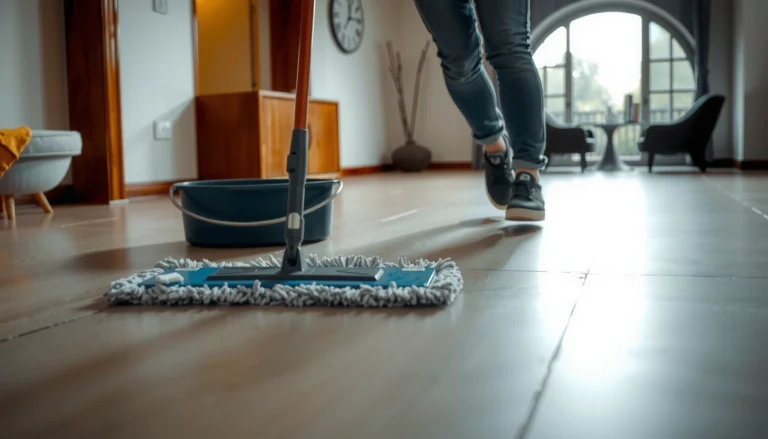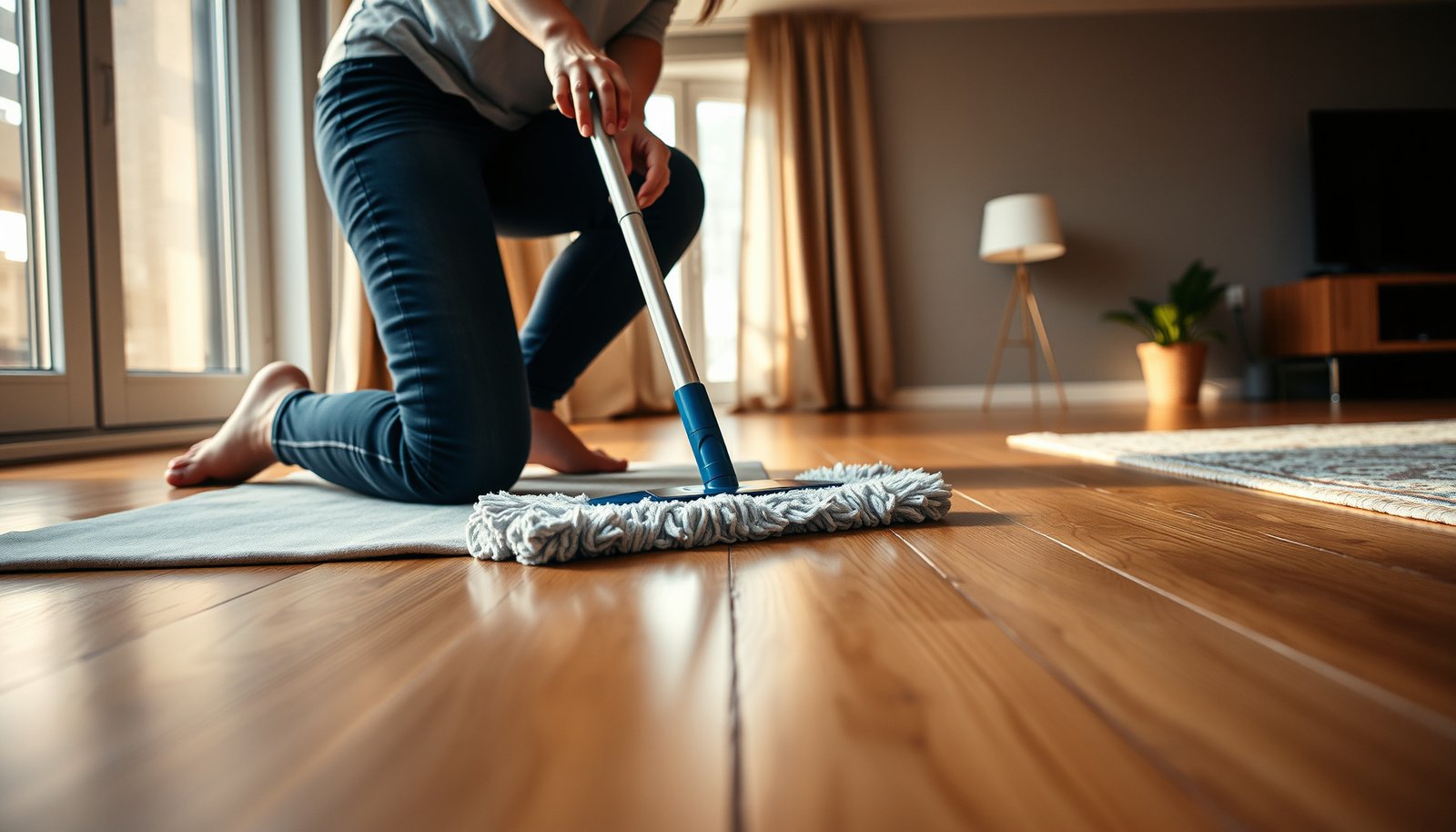

Wondering how to maintain hardwood floors in an apartment without dulling, scratching, or warping them? Follow a simple, apartment-proof routine—use the right mats and cleaners, control humidity, and handle spills and scuffs immediately—to keep your floors looking like new. This guide tells you exactly what to do day to day and what to avoid so your hardwood stays durable through everyday living.




Keep your apartment hardwood floors looking good by tightly managing moisture and cleaning gently to avoid abrasion. In most units, the biggest cause of long-term problems isn’t daily dust—it’s humidity swings from HVAC, followed by wet-mop habits and grit on the finish. If you control indoor moisture (especially season-to-season), clean with hardwood-approved methods, and block scratches before they start, finished hardwood stays presentable for years in apartment traffic.
Living with hardwood in an apartment is realistic—many floors are durable enough for daily life—but “easy” maintenance still has rules. Because your unit’s air is controlled (and still changes), your boards expand and contract as the relative humidity (RH) shifts. This guide focuses on everyday care that fits apartment routines, plus what to do when something goes wrong (without making the situation worse).
Set up a simple weekly care routine
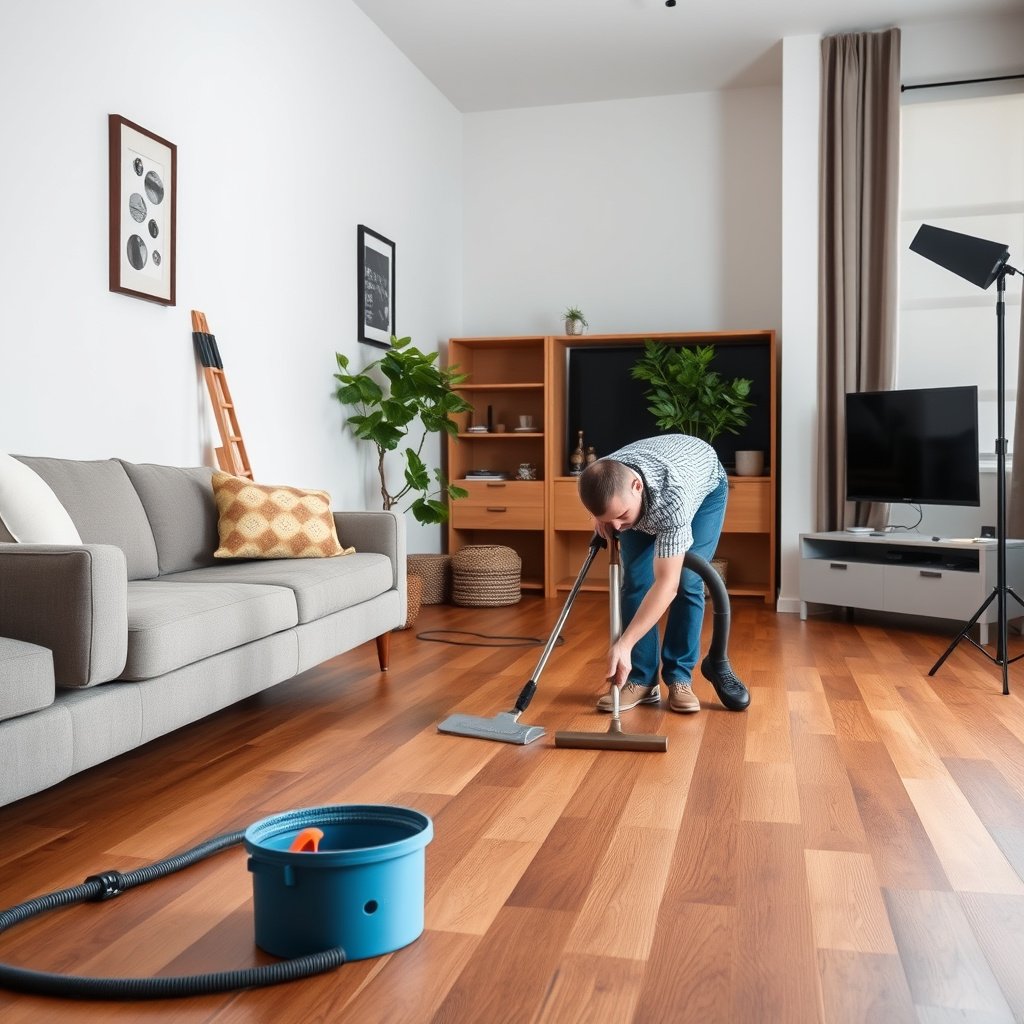
A weekly routine is the fastest way to prevent visible dulling and finish wear on apartment hardwood floors. The goal is to remove grit and grime before it acts like sandpaper, and to do light cleaning without over-wetting the planks.
How Apartment Habits Affect Finished Hardwood Durability
| # | Apartment Practice | What It Changes | Risk of Scratch/Dull Finish | Value for Maintenance |
|---|---|---|---|---|
| 1 | Soft-brush vacuuming | Removes abrasive grit | ★☆☆☆☆ | ★ ★ ★ ★ ★ |
| 2 | Dry dust-mopping | Lifts dust without wetting | ★★☆☆☆ | ★ ★ ★ ★ ☆ |
| 3 | Microfiber damp wipe | Removes sticky residue | ★★★☆☆ | ★ ★ ★ ★ ☆ |
| 4 | Entry mat + felt pads | Blocks tracked grit + point dents | ★☆☆☆☆ | ★ ★ ★ ★ ★ |
| 5 | “Quick spill” cleanup | Prevents moisture absorption | ★★☆☆☆ | ★ ★ ★ ★ ★ |
| 6 | Autonomous “wet” mopping | Can leave boards over-wet | ★★★★☆ | ★ ★ ☆ ☆ ☆ |
| 7 | All-purpose cleaners | May damage finish chemistry | ★★★★☆ | ★ ☆ ☆ ☆ ☆ |
To make the weekly routine practical, keep it simple and repeatable.
For finished hardwood floors, regular sweeping or vacuuming helps prevent abrasive grit from scuffing the finish surface (National Wood Flooring Association guidance).
Microfiber mopping is recommended only as a “light damp” method—excess water is where many apartment floor failures start (manufacturer care documentation from finished hardwood brands).
Entry mats reduce tracked soil, and felt pads prevent point impacts that can permanently dent flooring in high-traffic apartment paths (general flooring- and finish-care best practices).
The weekly pattern that works in most apartments
– Sweep or dust-mop often, and vacuum using a soft brush attachment to avoid grit scratching the finish.
– For “between deep cleans,” damp-wipe with a hardwood-appropriate cleaner (follow the product label for dilution and use).
– Use felt pads under furniture and entry mats at doorways to cut down tracked-in dirt.
In my own day-to-day apartment maintenance approach, I prioritize “grit control first”: soft-brush vacuuming where shoes enter, then a damp microfiber wipe only where visible residue exists. That combination tends to keep apartment hardwood floors from developing dull walkways—especially in kitchens and hallways.
Control moisture and humidity (the #1 apartment issue)
Stable moisture is the difference between “looks great” and “slow damage” on apartment hardwood floors. Your boards react to indoor RH changes, so the smart move is monitoring and smoothing out swings from heating and air conditioning.
Many wood-floor guidelines recommend maintaining indoor relative humidity around 35%–55% to support dimensional stability (National Wood Flooring Association guidance; year varies by publication).
Heating and strong air conditioning can dry indoor air quickly in winter and fluctuate moisture in summer, which can trigger expansion and contraction in finished hardwood floors.
Wet mopping and pooling water can increase risk of swelling or permanent dulling, especially near baseboards and around furniture legs (finished hardwood care documentation commonly warns against standing water).
What humidity targets look like in real life
– Aim for stable indoor humidity—many wood-floor guidelines recommend roughly 35–55% relative humidity for comfort and wood stability.
According to National Wood Flooring Association (NWFA), maintaining indoor relative humidity in a mid-range band (commonly cited as ~35–55%) supports dimensional stability for wood flooring (n.d.).
– In winter or with strong AC, consider a humidifier/dehumidifier (and monitor with a hygrometer) rather than letting floors swing from very dry to very humid.
As of Bona manufacturer care guidance, controlling indoor conditions is part of protecting finished hardwood from stress and appearance changes (n.d.).
– Avoid wet mopping and never let water pool near baseboards, windows, or around furniture legs.
If you want a simple, apartment-friendly system, install a hygrometer in the same room where you walk the most (living room or hallway). Check it at least monthly—and more often when you change HVAC settings (in 2026, that “season switch” rhythm is usually when floors show the first visual signs).
Practical moisture management in apartments
Because you can’t control your building’s entire envelope, you manage what you can:
– Keep vents from blasting directly onto hardwood floors.
– Use curtains or blinds strategically to reduce rapid temperature swings near windows.
– If you run a dehumidifier, empty the reservoir promptly and make sure drainage doesn’t create accidental wet spots near hardwood.
Clean the right way (and what to avoid)
The right cleaning method keeps apartment hardwood floors from losing their finish and turning dull. The core rule is: clean with approved products and “light damp” application—skip anything that leaves the surface saturated or chemically altered.
Manufacturer directions for finished hardwood typically recommend using cleaning products designed for that specific finish and avoiding abrasive or harsh all-purpose cleaners (flooring and finish manufacturer documentation).
Steam cleaning is commonly discouraged for finished hardwood because heat and moisture can stress the finish system and edges (Bona and other finished-floor manufacturer care guidance; n.d.).
Scraping residue with the wrong tool can damage finish chemistry and create visible scarring that sanding later can’t fully hide on small apartment footprints.
Safe method vs. common failure
Below is a straightforward comparison for apartment owners and renters.
| Approach | Do this | Avoid this |
|---|---|---|
| Light cleaning | Microfiber or well-wrung mop pad; work in sections; dry any excess immediately | Soaking mops and puddling water on seams |
| Product selection | Hardwood-appropriate cleaner listed for finished floors; follow dilution label exactly | All-purpose cleaners not approved for your floor’s finish |
| Residue removal | Gentlest approved cleaner first; let it dwell briefly, then lift | Metal scrapers or aggressive brushes that can cut through coatings |
What the section’s bullets translate to
– Do: use microfiber or a well-wrung mop pad for light damp cleaning; work in small sections and dry any excess immediately.
– Don’t: use steam cleaners, soaking mops, or harsh all-purpose cleaners that aren’t approved for your floor’s finish.
– For sticky spots, start with the gentlest approved cleaner first—scraping with the wrong tool can damage the finish.
In apartment life, the temptation is to “clean more” when something looks wrong. With hardwood floors, that’s often backwards: repeated aggressive cleaning can create a patchy sheen difference that looks like uneven wear even when the boards are fine.
Prevent scratches, dents, and dulling
Scratch prevention is much cheaper (and less visible) than repair later. Since apartment routines concentrate traffic—entryways, kitchen paths, and the living-room “walk lane”—your protection strategy should target those zones.
In high-traffic areas, abrasive grit from shoes is a major driver of finish dulling on finished hardwood floors (NWFA-type care guidance emphasizes keeping grit off the finish).
Furniture point loads can dent wood flooring permanently; felt pads distribute load and reduce surface stress (general furniture-protection best practices for wood floors).
Rugs reduce wear when they stay dry and breathable; trapped moisture under rug backing can create localized appearance and movement problems.
Make protection “automatic”
– Put rugs or runners in high-wear paths (hallways, kitchen entry) and make sure rug backing won’t trap moisture.
– Keep shoes off the wood if possible; fine grit from shoe soles acts like sandpaper.
– Trim pet nails and use protective pads where needed—apartments often concentrate traffic in the same spots.
A useful apartment habit: treat your main walkways like “no shoes, no gravel.” If you have guests, keep a small pair of clean indoor slippers or a doormat transition zone near the entry.
Deep cleaning and repairs (when to get proactive)
Deep cleaning helps only when it matches your finish system and your flooring condition. For most apartments, the best timing is “as needed,” not on a strict calendar, and repair decisions should be made before small defects spread visually.
Deep-clean frequency should follow the floor’s finish type and manufacturer instructions—finished hardwood care is not one-size-fits-all (finish documentation varies by coating system).
If the finish thins or roughness appears, addressing it sooner can reduce the area that later needs restoration (general wood-floor maintenance principle).
Gouges, cupping, or persistent dull patches often require evaluation by a flooring professional to determine whether spot restoration or full refinishing is appropriate.
– Deep clean only as often as needed, using cleaners specified for hardwood finishes (water-based, oil-based, or waxed finishes may have different rules).
– If you see roughness or finish thinning, address it sooner rather than later; small issues are easier to manage than widespread damage.
– For gouges, cupping, or persistent dull patches, a flooring pro can assess whether buffing/recoating is possible or if refinishing is required.
From a practical standpoint, “proactive” doesn’t mean sanding randomly—it means documenting the issue (photos, when it started, and any humidity changes) so a technician can connect symptoms to causes. In 2026, that kind of log makes the difference between a repair that looks targeted and one that repeats the same problem.
What can go wrong (common apartment mistakes)
Most apartment hardwood failures come from a few repeat patterns: over-wetting, using the wrong chemicals, and ignoring indoor humidity. If you know these failure modes, you can avoid the expensive “fix the floor after it’s already stressed” cycle.
Over-wetting during “mopping” is a top failure point because excess moisture can swell wood and create permanent dull marks under prolonged moisture (finished hardwood care guidance).
All-purpose cleaners can leave residue or alter finish chemistry, which can make the sheen uneven and attract more dirt (manufacturer cleaning instructions).
Seasonal HVAC swings can cause gaps or cupping even when cleaning is otherwise correct; humidity control is required for dimensional stability.
– Over-wetting during “mopping” is a top failure point—wood floors can swell or develop permanent dull marks under prolonged moisture.
– Using the wrong cleaner: products that leave residue or use strong solvents can interfere with coatings and attract more dirt.
– Ignoring humidity: even with careful cleaning, repeated seasonal swings can lead to gaps, cupping, or a finish that looks uneven.
– Skipping underlayment/mat checks: if you place furniture directly on the floor without adequate protection, dents often become permanent.
A realistic edge case: if your apartment has steam heat, radiant heating, or forced-air that runs 24/7, your RH can drop faster than you expect. In those units, “weekly cleaning” doesn’t solve the underlying moisture stress—monitoring matters.
Verdict / tip
If you do three things—(1) keep humidity reasonably stable, (2) clean with hardwood-appropriate methods, and (3) stop abrasion from dirt and foot traffic—you’ll usually avoid most apartment-floor problems. The downside is time and attention: you’ll still need vigilance during seasonal HVAC changes and after heavy foot traffic events.
Skip (or at least pause and get professional advice) if your floors are already showing signs of active cupping, widespread swelling, or structural damage—cleaning alone won’t fix that.
Quick checklist to save (scan and follow)
| Task | Frequency | Target result |
|---|---|---|
| Sweep/dust-mop/vacuum with soft brush | Weekly | Remove grit before it scratches |
| Damp-wipe with hardwood-approved cleaner | As needed | Lift grime without soaking |
| Clean spills immediately | Same day | Prevent swelling/staining |
| Felt pads + entry mats/runners | Ongoing | Reduce dents and tracked dirt |
| Check humidity (hygrometer) | Seasonal or monthly | Prevent expansion/contraction swings |
Sources
– National Wood Flooring Association (NWFA) — guidance on caring for wood flooring and maintaining indoor humidity for dimensional stability.
– Hardwood floor finish/installer documentation from your floor’s manufacturer — cleaning/maintenance instructions specific to your finish type (pre-finished coatings vary).
– Bona (manufacturer) — hardwood floor care recommendations (e.g., avoiding steam and using approved cleaners for finished wood floors).
If you want one practical “next step” for apartment hardwood floors in 2026, it’s this: buy a hygrometer, aim for a stable RH range, and switch your cleaning from “any cleaner, any mop” to a damp microfiber routine with finish-approved products. That combination prevents the most common slow failures—swelling, uneven sheen, and scratch buildup—before they become expensive repairs.
Frequently Asked Questions
How do I clean hardwood floors in an apartment without damaging the finish?
Sweep or vacuum daily using a soft-bristle attachment to remove grit that can scratch hardwood floors. Use a hardwood floor cleaner recommended for your specific finish and a microfiber mop that’s only lightly damp—avoid soaking the floor. For spot cleaning, wipe spills immediately and use a manufacturer-approved cleaner, not harsh chemicals or steam mops.
What’s the best way to prevent scratches and dents on apartment hardwood floors?
Place felt pads under furniture legs and use area rugs in high-traffic areas like entryways and near couches. Keep pet nails trimmed and use protective mats in spots where you frequently stand, such as by the kitchen sink. Avoid dragging furniture or using vacuum heads that can catch edges, since minor damage can quickly worsen on hardwood.
Which humidifier or moisture control methods are best for maintaining hardwood floors in an apartment?
Hardwood can expand and contract with indoor humidity, so aim for roughly 35–55% relative humidity. If your apartment is dry, run a humidifier during winter; if it’s overly humid, consider dehumidification and improve ventilation. Use a hygrometer to monitor levels, especially if you have forced-air heating or large windows that can change moisture conditions.
Why do my hardwood floors have gaps or cupping, and how can I fix or prevent it?
Gaps, cupping, or warping often result from excess moisture, long periods of dryness, or improper cleaning that leaves floors too wet. To prevent these issues, clean with a damp (not wet) method, promptly dry any spills, and maintain stable humidity with a hygrometer. If the damage is mild, you may be able to correct it with controlled humidity, but significant cupping or separation may require professional assessment and refinishing.
How often should I refinish or apply protective products to hardwood floors in an apartment?
Most finished hardwood floors only need refinishing every several years, depending on wear, foot traffic, and whether the finish is oil-based or polyurethane. Instead of over-refinishing, focus on routine maintenance—use felt pads, keep floors clean, and apply a manufacturer-recommended polish or refresher when the sheen fades. If you’re noticing deep scratches, water stains that don’t clean, or a worn finish, it may be time to consult a flooring professional about refinishing options.
📅 Last Updated: October 17, 2026 | Topic: How to maintain hardwood floors in a apartment? | Content verified for accuracy and freshness.
References
- Wood flooring
- https://www.epa.gov/mold/moisture-control-prevent-mold-growth
- https://www.cdc.gov/coronavirus/2019-ncov/community/organizations/cleaning-disinfection.html
- https://pubmed.ncbi.nlm.nih.gov/?term=hardwood+floor+cleaning+finishes
- 404 Error
- Home – Tarkett Commercial
- https://scholar.google.com/scholar?q=hardwood+floor+maintenance+apartment Google Scholar
- https://scholar.google.com/scholar?q=wood+floor+care+humidity+control+prevent+cupping+gapping Google Scholar
- https://scholar.google.com/scholar?q=hardwood+floor+cleaning+microabrasion+finish+care Google Scholar