
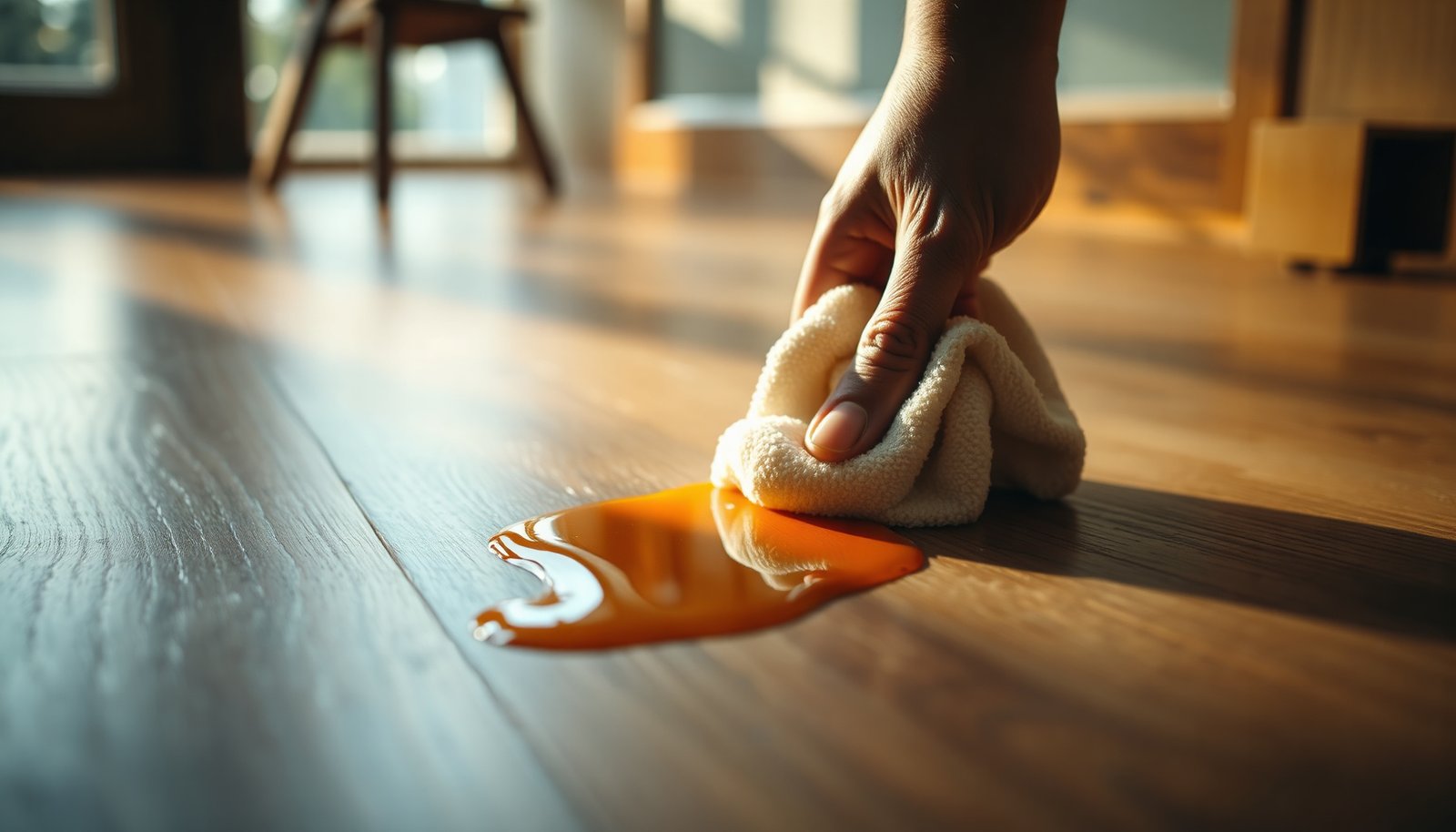

Juice spills on engineered wood floors can quickly stain the finish and leave a sticky residue that attracts dirt. Many people make it worse by scrubbing with excess water or using vinegar or ammonia, which can dull the surface and spread the discoloration. With the right approach and basic supplies like a pH-neutral cleaner, microfiber cloths, and careful blotting, you can lift the stain effectively—often within a short cleaning session.




Juice stains on engineered wood floors usually come out if you act fast: blot the spill, then clean with a pH-neutral cleaner using minimal moisture. In most cases, you can lift both the sticky sugar residue and the darker pigment tint without removing finish—so long as you avoid soaking and don’t jump straight to harsh solvents. As of 2026, manufacturers still emphasize gentle, cloth-based cleaning for engineered wood because its surface layer (the wear layer) is more vulnerable to aggressive chemicals than many people expect.
If you’ve got a sticky soda or fruit juice spill on engineered wood (planks or laminate-style engineered flooring), this is for you—especially when the stain looks darker, tacky, or slightly cloudy. The steps below assume you want to remove the stain without lifting finish or damaging the surface layer.
What to Do First (Before You Scrub)

Do this immediately: stop the spill from spreading by blotting, not wiping, so engineered wood floors don’t absorb more liquid into seams and edges. In practice, the first 60–120 seconds matter because sugar and pigments start binding to the finish and dust-residue quickly.
– Blot immediately with a clean, dry cloth/paper towel—don’t wipe, which can spread the liquid.
– If it’s still sticky, re-blot with a slightly damp cloth (wring it out well) to pick up residue before stain cleaning.
– Check the manufacturer’s care guidance if you can find it, especially if your floor has a specific finish type (polyurethane, sealed, oiled, etc.).
Why this matters for engineered wood floors: The top wear layer on engineered wood is the part you’re trying to protect—scrubbing early can grind juice sugars into the finish film. Also, engineered wood flooring seams can act like small capillaries; once moisture moves past the surface, even “mild” cleaners can end up leaving a broader halo.
Safe Cleaning Steps for Juice Stains
The safest route on engineered wood floors is gentle, pH-neutral cleaning applied to a cloth—not poured onto the floor. This approach lifts residue while minimizing the amount of moisture that reaches seams, edges, and the finish boundary.
– Use a pH-neutral floor cleaner diluted as directed on the label, applied to a cloth (not poured onto the floor).
– Work from the outside of the stain toward the center using light pressure, then wipe with a clean, damp cloth to remove cleaner.
– Dry the area right away with a soft towel and keep airflow on for a bit so moisture doesn’t sit in seams or edges.
What pH-neutral means in real terms: “pH-neutral” usually means roughly neutral (commonly around pH 6–8), which helps reduce the risk of spotting or dulling most sealed finishes used on engineered wood floors. By contrast, common household acids (like vinegar and lemon) can be significantly lower—vinegar is often in the ~pH 2–3 range, while many fruit juices are also quite acidic. According to broadly referenced chemistry guidance on acetic acid solutions, vinegar typically has a pH around 2–3
How to avoid spreading on engineered wood floors: When you wipe, you create friction that can push dissolved pigment and sugar outward. When you blot and “work inward,” you keep more of the stain concentrated, which makes later removal more predictable.
Target the Stain Without Damaging the Finish
If the stain remains on engineered wood floors, repeat gentle cloth-based cleaning rather than escalating to harsh chemicals right away. Here the goal is gradual lightening—especially for cloudy halos or persistent tackiness that indicates residue is still trapped in the finish film.
– If the stain remains, try a small amount of cleaner again and repeat gentle blotting/surface cleaning—often the stain lightens gradually.
– For stubborn marks, use a cleaner intended for wood floors rather than kitchen hacks; harsh degreasers or bleach-like products can dull or spot the finish.
– If the floor feels tacky after cleaning, do a final residue rinse with a lightly damp cloth and then dry thoroughly.
Why pigment and tack require different tactics on engineered wood floors:
– Tacky spots usually involve sugar/film that attracts dust. Removing it often requires careful re-cleaning plus a final wipe that removes any remaining cleaner.
– Darker discoloration can be pigment that’s stained the finish layer or left a thin residue film. This typically fades only after multiple gentle passes, not one aggressive treatment.
Quick comparison: which approaches are safest for engineered wood floors?
Below is a practical way to decide what to try first—and what to avoid—when juice hits your engineered wood floor.
| Cleaning approach | Pros | Cons |
|---|---|---|
| pH-neutral cleaner on a wrung-out cloth | Low moisture risk; compatible with most sealed finishes | May take multiple gentle passes for pigment |
| Water-only wipe (minimal) | Can help remove fresh, water-soluble residue | Not enough for many sugar films; can still leave halos if over-wet |
| Wood-floor cleaner “for finished hardwood” | Often formulated to lift soils without damaging finish | Still needs cloth application and immediate drying |
| Steam cleaning | Not applicable | Can drive moisture into seams/edges on engineered wood floors |
| Vinegar/lemon (DIY acids) | Sometimes removes some residues on non-wood surfaces | Risk of spotting/dulling on sealed engineered wood finishes |
| Oxygen bleach | Potential stain brightening | Can unpredictably react with finish systems used on engineered wood floors |
| Degreasers / heavy cleaners | Can break down oily residues | Can strip or haze coatings and create shiny “clean patches” |
| Magic eraser / scrub pads | May lift surface marks | Abrasive action can wear the finish film on engineered wood floors |
| Acetone/strong solvents | Can dissolve some residues quickly on other materials | High risk of softening or removing finish on engineered wood floors |
| Repeated gentle blot + wipe (recommended) | Most consistent outcome: less haloing, better finish protection | Requires patience for set-in pigment |
| Best For | Removing fresh juice stains while preserving the finish on engineered wood floors | |
How juice acidity influences what you see on engineered wood floors
More acidic juices tend to leave stronger discoloration pressure on many finishes, while the sugar content drives tackiness. That’s why the same cleaning routine still benefits from understanding what kind of juice landed on your engineered wood floors.
Typical pH of Common Juice Spills and “Finish-Friendliness” on Engineered Wood (25°C)
| # | Juice type | Typical pH | Often leaves | Finish-friendliness |
|---|---|---|---|---|
| 1 | Lemon juice | 2.0 | Tart/tacky residue | ★☆☆☆☆ |
| 2 | Cranberry juice | 2.3 | Strong pigment tint | ★☆☆☆☆ |
| 3 | Cola soda | 2.5 | Sticky sugar film | ★★☆☆☆ |
| 4 | Grape juice | 3.2 | Moderate pigment + tack | ★★★☆☆ |
| 5 | Pineapple juice | 3.3 | Cloudy film potential | ★★★☆☆ |
| 6 | Apple juice | 3.4 | Tack with mild tint | ★★★★☆ |
| 7 | Orange juice | 3.7 | Mild pigment + sticky residue | ★★★★☆ |
Notes for engineered wood floors: pH values vary by brand and whether the juice is diluted or sweetened, but the practical takeaway stays the same in 2026—more acidic spills can be harder to “neutralize away,” so fast blotting and minimal moisture are still your best levers. Typical beverage pH values for common juices are widely tabulated in chemistry/food science references; exact pH can vary by brand and preparation
What Can Go Wrong (And How to Avoid It)
Avoid these missteps on engineered wood floors and you’ll prevent the “clean patch” problem where the area looks shinier, hazier, or darker than the rest of the plank. Most failures come from over-wetting, abrasive scrubbing, or choosing chemicals that don’t match the finish.
– Over-wetting: soaking can seep into seams or under the top layer, causing swelling or long-term discoloration.
– Wrong chemicals: vinegar, lemon juice, or oxygen bleach can react unpredictably with some finishes; test any cleaner in a hidden spot first.
– Aggressive scrubbing: using a scrub pad, magic eraser, or stiff brush can haze or remove finish, leaving a shiny “clean patch.”
Engineered wood floors and moisture risk (why “minimal water” is non-negotiable): Wood responds to humidity changes. According to the Forest Products Laboratory (Wood Handbook), wood moisture equilibrium in typical indoor conditions often lands around roughly 6–9% (varies by climate), and excess liquid can push wood beyond that equilibrium. That’s why cloth-based cleaning and immediate drying are the most reliable strategies for engineered wood floors in 2026.
Also be aware of indoor climate. The National Wood Flooring Association guidance commonly recommends maintaining indoor relative humidity around 35–55% to reduce wood movement. According to National Wood Flooring Association (NWFA) humidity guidance, 35–55% relative humidity is commonly recommended for hardwood floors If your home is very dry or very humid, stains may appear to “return” as the floor cycles.
Verdict: The Honest Best Approach
The best approach for engineered wood floors is simple: blot fast, clean with a pH-neutral wood-floor cleaner on a wrung-out cloth, wipe to remove residue, and dry immediately. If the stain is still tacky or still darker after a couple gentle rounds, repeat the same method before trying stronger chemicals—because engineered wood’s finish layer is easier to haze than you might think.
That said, this method has limits. If the juice sat for a long time and the pigment has penetrated deeply (large dark area, persistent haze after repeated gentle cleaning, or finish damage), you may need a professional spot repair or refinishing of that section—especially near seams in high-traffic engineered wood floors. Skip this DIY plan if your floor is known to have an unfinished/oiled top (or if the manufacturer explicitly prohibits certain cleaners), since “safe” pH-neutral guidance may not apply to every finish system.
Finally, a practical note for 2026: if you notice the finish changing (matte vs shiny) during cleaning, stop. On engineered wood floors, finish alteration often becomes permanent unless the coating is corrected.
Quick Checklist (Save This)
– ☐ Blot spill right away (don’t wipe)
– ☐ Clean with pH-neutral floor cleaner on a wrung-out cloth
– ☐ Wipe with a lightly damp cloth to remove residue
– ☐ Dry immediately and keep the area moisture-free
– ☐ If still stained: repeat gently before trying stronger chemicals
– ☐ If finish is hazed or stain persists: stop and consider professional repair
Frequently Asked Questions
What’s the safest way to remove juice stains from engineered wood floors?
Start by blotting the juice immediately with a clean, dry microfiber cloth—don’t rub, since friction can drive liquid deeper into the wood surface. Mix a few drops of pH-neutral cleaner with water, lightly dampen a cloth, and wipe the spot gently. Afterward, dry the area thoroughly to prevent moisture from seeping into the wood layers. If the stain remains, repeat with minimal moisture or use a manufacturer-recommended engineered wood cleaner.
How do I get dried juice stains off engineered wood without damaging the finish?
For dried stains, first soften the residue by placing a slightly damp (not wet) cloth on the area for a few minutes, then gently lift loosened material. Clean with a pH-neutral solution using a barely damp microfiber cloth, working from the outside of the stain toward the center. Avoid steam cleaners and soaking—engineered wood can be harmed by excess water, especially near seams. Finish by drying completely with a towel and checking if the discoloration fades; stubborn spots may require a specialized wood-finish spot remover.
Why do juice stains leave discoloration on engineered wood, and how can I prevent it?
Juice contains pigments and sugars that can stain the top protective layer and then seep slightly into the finish over time. Moisture also increases the risk of spot darkening, especially if the floor was not wiped quickly. To prevent lasting marks, wipe spills right away with a dry cloth, then follow with a damp cloth using a pH-neutral cleaner and dry immediately. Adding felt pads to furniture and using area rugs in high-spill zones also reduces future staining.
What cleaning solution is best for juice stains on engineered wood floors?
The best option is a pH-neutral cleaner designed for hardwood or engineered wood floors, used sparingly with a microfiber cloth. For sticky residue, a small amount of diluted dish soap (very mild) can help, but always rinse-wipe with a lightly damp cloth afterward and dry thoroughly. Avoid harsh chemicals like ammonia, bleach, or vinegar, which can dull the finish or change the color. For persistent juice stains, a gentle wood-finish spot cleaner (compatible with your floor’s finish) is often safer than DIY solvents.
Which household products should I avoid when removing juice stains from engineered wood?
Avoid vinegar, ammonia, bleach, and abrasive cleaners/powders because they can strip the protective coating or cause finish haze. Do not use steam mops or flood the area with water—engineered wood is moisture-sensitive, and excess liquid can lead to warping or edge swelling. Also skip magic erasers or scouring pads unless the manufacturer explicitly approves them, since they can scratch or wear through the finish. Stick to blotting, pH-neutral cleaning, and careful drying for the most reliable stain removal.
📅 Last Updated: November 14, 2026 | Topic: How to get juice stains off engineered wood floors? | Content verified for accuracy and freshness.
References
- Engineered wood
- Wood flooring
- Wood finishing
- Wood stain
- https://en.wikipedia.org/wiki/Floor_wax
- Citric acid
- Tannin
- https://scholar.google.com/scholar?q=engineered+wood+floor+stain+removal+spill+cleaning Google Scholar
- https://scholar.google.com/scholar?q=hardwood+floor+cleaning+acidic+spills+citric+acid Google Scholar
- https://scholar.google.com/scholar?q=wood+flooring+spot+cleaning+avoid+water+damage+engineered+wood Google Scholar
[…] to deal with. The good news is you can usually clean it up safely with gentle blotting, a pH-neutral cleaner, and careful moisture control so you do not damage the finish. If you have microfiber cloths and a […]