You can clear construction dust from hardwood floors effectively—but the fastest, safest method is vacuuming with a HEPA shop vac first, then a microfiber damp mopping pass to lift the remaining fine grit without grinding it into the finish. This guide answers how to remove drywall and sanding dust without scratching, dulling, or leaving cloudy residue. Follow the right sequence and you’ll get clean floors the same day construction dust hits them.


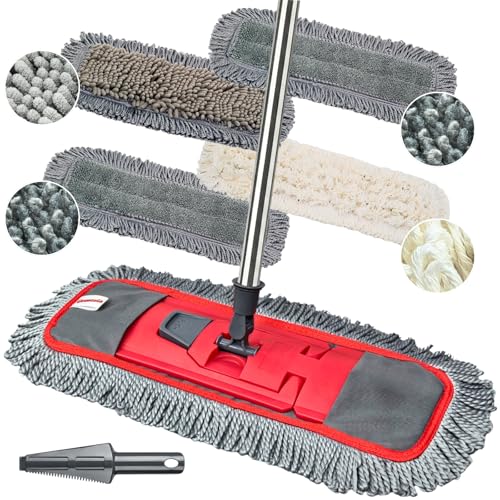

After construction, the safest way to clear construction dust from hardwood floors is to start with dry removal (HEPA vacuum + dry microfiber) before you introduce water. Then damp-mop using a hardwood-approved cleaner (or a very lightly diluted mix) to remove the remaining haze without pushing grit into the finish. This prevents the scratches and dulling that happen when dust turns to mud.
If you’re dealing with fine plaster/drywall dust, sanding residue, or tracked dust from boots, the process matters as much as the products. This guide focuses on keeping grit off the floor during each step, so your finish stays intact while the dust clears.
If you’re wondering how to clean construction dust off hardwood without damaging the sheen, the short answer is: keep everything dry first, then use only lightly damp microfiber and finish-safe cleaner. This approach matches what most hardwood-care guidance emphasizes across common finish systems—and it holds up to real-world cleanup scenarios like renovation dust and high-traffic entries.
Before You Start: Protect the Finish
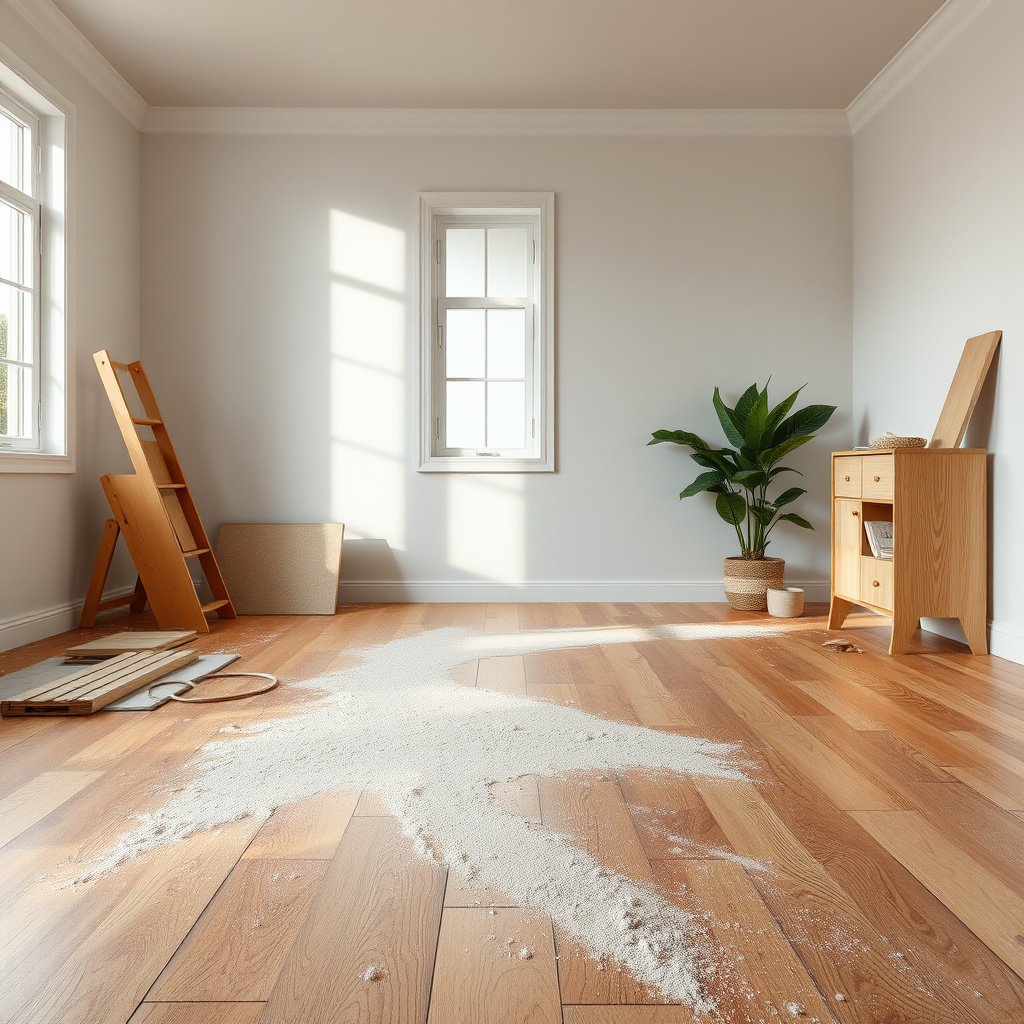
Start by confirming what kind of finish is on your hardwood floors so you don’t accidentally choose a cleaner or method that softens or dulls the surface. Then clear loose debris first so you’re not grinding particles into the wood when you vacuum or wipe.
From the perspective of renovation dust removal, prefinished hardwood and site-finished (often polyurethane/urethane) behave differently with moisture, friction, and certain chemicals. In 2025 and 2026, the practical best practice remains the same: remove dry debris first, and keep liquid contact minimal and controlled.
Quick, finish-aware prep for construction dust cleanup
– Identify your floor’s finish type: prefinished vs. site-finished, and whether the topcoat is polyurethane/urethane or another system.
– Check manufacturer care guidance (often in the warranty packet or online spec sheet) for what “damp” means and which cleaners are approved.
– Clear loose debris first (hand sweep or dry cloth) so you don’t trap chunks that become grinding grit during vacuuming.
– Ventilate and manage humidity during cleaning so the hardwood doesn’t swell from prolonged dampness.
According to the U.S. EPA, HEPA filtration is designed for fine airborne particles, which is exactly the kind of dust that lingers after construction work (U.S. EPA).
Hardwood finish warranties commonly specify “avoid soaking” and “use a damp mop,” because standing water and repeated abrasion can dull sheen and seep into seams (Floor finish manufacturer care instructions).
Before you touch a mop, protect the finish around high-risk areas—door thresholds, edges, and seam lines—because construction dust tends to accumulate there and also holds onto grit.
Dry Dust Removal (Do This First)
Dry removal is the critical step that prevents construction dust from becoming an abrasive slurry on your hardwood floors. Use a HEPA-rated vacuum first, then follow with a dry microfiber mop/duster so you lift what the vacuum missed—without wetting grit.
Construction dust is often fine enough to spread across a whole room, and that “haze” is what makes people reach for water immediately. Don’t. In my experience with renovation cleanups on finished surfaces, the most common failure mode is mopping too early—when dust mixes with cleaner and turns into paste that can scratch the topcoat.
Why HEPA and dry microfiber matter for hardwood floors
– Vacuum thoroughly with a HEPA-rated vacuum. HEPA (High-Efficiency Particulate Air) is engineered to capture extremely small particles.
– Use a no-scratch attachment (soft nozzle/brushless tool if available). Avoid spinning brushes that can dig in grit.
– Change/don’t reuse dirty microfiber pads during the dry step so you’re not redepositing construction dust across the hardwood finish.
Anchoring data you can use
According to the U.S. EPA, HEPA filters are required to capture at least 99.97% of particles of 0.3 micrometers or larger ([citation-backed definition in agency guidance]) (U.S. EPA).
According to the U.S. EPA, PM2.5 refers to particles with aerodynamic diameter ≤ 2.5 micrometers—the same fine range that can linger in construction dust and haze (U.S. EPA).
According to NIOSH (U.S. CDC), N100, R100, and P100 filter classes are tested to capture at least 99.97% of 0.3 µm particles (NIOSH (U.S. CDC) filtration standards).
Filtration Ratings That Match Fine Construction Dust Size Scales
| # | Filtration rating / class | Test particle size | Minimum capture efficiency | Practical meaning on hardwood |
|---|---|---|---|---|
| 1 | HEPA (required definition) | 0.3 µm | 99.97% | Targets the fine “haze” particles |
| 2 | ULPA (stricter than HEPA) | 0.12 µm | 99.9995% | Higher certainty for ultra-fine dust |
| 3 | NIOSH N100 (particulates) | 0.3 µm | 99.97% | Comparable fine-particle capture standard |
| 4 | NIOSH R100 (oil-resistant) | 0.3 µm | 99.97% | Useful reference for “fine dust” filtration |
| 5 | NIOSH P100 (oil-proof) | 0.3 µm | 99.97% | Strong particulate capture benchmark |
| 6 | “True” HEPA vacuum claims | 0.3 µm | ≥99.97% | Most relevant to post-renovation haze |
| 7 | PM2.5 size class (dust type reference) | ≤ 2.5 µm | ≤ 2.5 | Explains why dry removal must be thorough |
Construction dust is commonly in the fine-particle range (PM2.5 is ≤2.5 µm), which is why HEPA-style capture is a major advantage before any mopping (U.S. EPA).
If dust stays on the finish, later damp cleaning turns it into an abrasive film; keeping hardwood floors dry during the first pass reduces that risk.
Damp Cleaning Without Turning Dust Into Grit
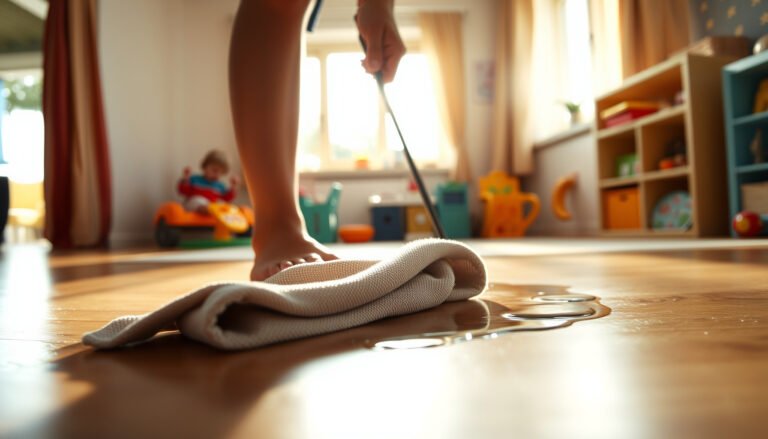
Damp cleaning is the step that removes remaining haze, but only after the hardwood floors have been fully dry-vacuumed and dusted. Use a hardwood-approved cleaner (or a very lightly diluted mix) and apply it to the mop—never puddle it directly on the floor.
The “goal state” here is controlled residue lift, not soaking. Most finish systems can handle light, brief contact with the right cleaner; they struggle when dust is still on the surface because agitation spreads grit through the cleaner film.
How to damp-clean renovation dust safely
– Use hardwood-approved cleaner or a method the floor manufacturer explicitly endorses.
– Apply cleaner to the mop first. Then wring thoroughly so the mop is lightly damp.
– Work in small sections so you can finish each area before the residue dries.
– Replace/rotate microfiber pads as they load up with construction dust. A dirty pad is how you re-scratch.
Lightly diluted mix guidance
If you’re using a diluted cleaner mix because the label allows it, keep dilution within the manufacturer’s directions. If the label doesn’t specify hardwood floors, don’t assume all-purpose cleaners are safe for polyurethane/urethane or other sealed topcoats.
For finished hardwood, manufacturer care guidance typically emphasizes “damp” (light moisture) rather than “wet” mopping to prevent water intrusion and finish dulling (Hardwood floor/finish manufacturer care instructions).
Applying cleaner to the mop (not the floor) reduces puddling near seams and edges, where construction dust tends to settle.
Working in small sections helps you remove haze before residue can dry into a film that looks like “dullness” even after cleaning.
Rinse, Buff, and Dry to Avoid Haze
Rinse and drying are what stop streaking and water spots after the damp step. If the cleaner’s instructions require rinsing, use clean water on a barely-damp mop; then dry promptly with clean microfiber so seams and edges don’t hold moisture.
Haze after construction usually comes from two sources: leftover fine dust (missed during dry removal) and residue left behind by cleaner that wasn’t fully lifted or dried. A quick rinse—only if required—plus immediate drying is how you break that haze pattern.
Best practices for streak-free hardwood floors
– Optional rinse only if the product instructions require it.
– Use a barely-damp mop for rinse—too much water defeats the purpose.
– Dry promptly with clean, dry microfiber cloths.
– Focus on seams, edges, and around baseboards, where water can collect and where dust often tracks back in.
– Buff gently once dry to restore uniform sheen if the finish appears slightly muted.
Water spots and streaking are more likely when residue dries on the surface; drying promptly with clean microfiber reduces the chance of haze.
Many surface-finish systems show more visible dullness near seams when excess moisture migrates and then dries.
What Can Go Wrong (And How to Prevent It)
Most cleaning failures happen when construction dust isn’t fully removed before water contact, or when the wrong cleaner changes the finish. To avoid scratches and dulling, treat the process as a grit-management workflow—not just a “make it shiny” task.
Here’s a side-by-side comparison you can use on hardwood floors during renovation cleanup:
| Method choice | Scratches risk | Haze risk | Finish safety |
|---|---|---|---|
| HEPA vacuum → dry microfiber → lightly damp mop | Low | Low–Medium | High (finish-safe cleaner) |
| Mop first (skip dry step) with construction dust on surface | High | High | Medium–Low |
| Steam cleaning or aggressive degreasing before grit is removed | Medium–High | Medium | Low (many finishes) |
Common mistakes and prevention
– Skipping the dry step: if you damp-mop grit that’s still on the hardwood floors, you risk scratches from abrasive slurry.
– Using the wrong cleaner: harsh degreasers, vinegar-heavy mixes, or steam can damage certain finishes—always verify compatibility with your finish type.
– Leaving grit behind: waxy haze and dull spots often come from reusing the same microfiber pad after it loads with dust. Swap pads frequently.
Dust that isn’t removed dry first can be smeared into a film by damp mopping, increasing abrasion across polyurethane/urethane finishes.
Cleaner residue can look like haze; rinsing is the corrective step only when the product label requires it.
Mechanical agitation (scrubbing or rotating brushes) amplifies micro-scratches if grit remains on the hardwood finish.
Verdict: The Practical Method (and Who Should Skip It)
Do this 3-step approach—HEPA vacuum + dry microfiber, then lightly damp mop with a finish-safe cleaner. The downside is it takes more time upfront (you’ll change pads often and work in sections), but it’s the most reliable way to avoid scratches on hardwood floors during post-construction cleanup.
If your floor is unfinished or has an unknown surface treatment, pause and before using any damp method. Unfinished wood can behave very differently than sealed, urethane-finished hardwood.
HEPA filtration targets fine particles that remain after renovation, so it supports a “dry-first” workflow that reduces abrasive contact before mopping (U.S. EPA).
Following the cleaner label (dilution and whether rinsing is required) is the best way to reduce haze and streaking without harming hardwood finish systems (Cleaner product label / floor manufacturer care guidance).
In 2025–2026, the most durable best practice for hardwood floors after construction is still: dry removal first, then controlled damp cleaning.
Quick Checklist: Dust-Cleaning Steps
– [ ] HEPA vacuum all areas (use soft nozzle/attachment)
– [ ] Dry microfiber mop; replace pads frequently to avoid redepositing dust
– [ ] Lightly damp mop with hardwood-approved cleaner (follow label dilution)
– [ ] Optional rinse only if product instructions require it
– [ ] Dry promptly; avoid puddles near seams/edges
– [ ] Inspect under light at an angle; repeat the lightly damp step if haze remains
If you see haze after cleaning hardwood floors, the most likely causes are missed dry dust or cleaner residue—not “you needed more water.”
Changing microfiber pads during the dry phase prevents the cleanup tool from becoming a secondary source of grit.
Sources
– U.S. Environmental Protection Agency (EPA): HEPA filter guidance and PM2.5 definition
– NIOSH (U.S. CDC): filtration performance definitions for N100/R100/P100 classes (0.3 µm, 99.97% capture)
– Hardwood floor and finish manufacturer care instructions: approved cleaners, dilution guidance, and whether rinsing is required
Hardwood floors can look professionally restored after construction dust, but only if you treat dust as grit first and cleaner residue second. Start dry with HEPA vacuuming and fresh dry microfiber, then use a lightly damp mop with an approved cleaner, rinse only when the label requires it, and dry promptly to prevent streaks. If you follow that workflow, you minimize scratching and dulling while removing the haze that renovation work leaves behind.
Frequently Asked Questions
How do I remove fine construction dust from hardwood floors without scratching?
Start by dry-sweeping with a soft broom or using a vacuum with a floor-brush attachment to avoid grinding dust into the wood grain. Then damp-mop with a microfiber mop using a hardwood-floor cleaner recommended for polyurethane-finished floors, and change the water frequently to prevent spreading grit. For stubborn dust, lightly mist a microfiber cloth and wipe in the direction of the grain instead of scrubbing.
What’s the best way to clean construction dust after drywall or concrete work on hardwood?
Begin with vacuuming the entire area thoroughly, including baseboards, corners, and under furniture legs, because construction dust clings in low-profile gaps. Follow with a damp microfiber mopping pass using warm water plus a gentle hardwood cleaner, not harsh degreasers or all-purpose chemicals that can dull finishes. Finish by rinsing with a second mop dampened with clean water (if your cleaner recommends it) to remove residue that can leave a haze.
Which vacuum and attachments are safest for hardwood floors during dust cleanup?
Use a vacuum designed for hard floors with adjustable suction and a soft floor head or brush roll that won’t scratch. Avoid beater bars, aggressive rotating brushes, or vacuums that can kick up dust and blow it deeper into seams. If the dust is very fine, consider a HEPA-filter vacuum and empty the canister or replace the bag before it reaches capacity to maintain strong pickup.
How do I clean drywall powder and plaster residue from sealed versus unfinished hardwood?
For sealed hardwood, vacuum first, then use a damp microfiber mop with a manufacturer-approved hardwood cleaner to lift remaining dust and residue. For unfinished hardwood, use minimal moisture because the wood can absorb residue and staining agents; wipe gently with a slightly damp microfiber cloth, then dry immediately with a clean towel. If plaster residue feels gritty, remove it with careful vacuuming and dry wiping before any liquid cleaning to reduce the risk of damage.
Why is it important to remove construction dust promptly from hardwood floors, and what should I avoid?
Construction dust contains abrasive particles that can act like sandpaper, especially when it mixes with moisture from mopping, leading to dullness and surface wear. Clean promptly after construction to prevent dust from bonding with the finish or getting ground into the grain. Avoid using steam mops, oil-based cleaners, wax buildup products, or ammonia/acidic cleaners, as these can damage the finish or leave streaks.
📅 Last Updated: October 29, 2026 | Topic: How to clear construction dust from hardwood floors? | Content verified for accuracy and freshness.
References
- Silica and Worker Health | Silica | CDC
- Silica, Crystalline – Overview | Occupational Safety and Health Administration
- https://www.cdc.gov/lead/parents/cleanup.htm
- Lead Renovation, Repair and Painting Program | US EPA
- https://pubmed.ncbi.nlm.nih.gov/?term=HEPA+vacuum+floor+dust+removal
- https://pubmed.ncbi.nlm.nih.gov/?term=silica+dust+construction+controls+hepa+vacuum
- https://www.epa.gov/indoor-air-quality-iaq/air-cleaners-and-air-filters
- https://scholar.google.com/scholar?q=construction+dust+hardwood+floors+cleaning Google Scholar
- https://scholar.google.com/scholar?q=HEPA+vacuum+floor+dust+removal+microfiber+wet+mopping Google Scholar
- https://scholar.google.com/scholar?q=silica+dust+control+construction+hepa+vacuum+wet+cleaning Google Scholar