
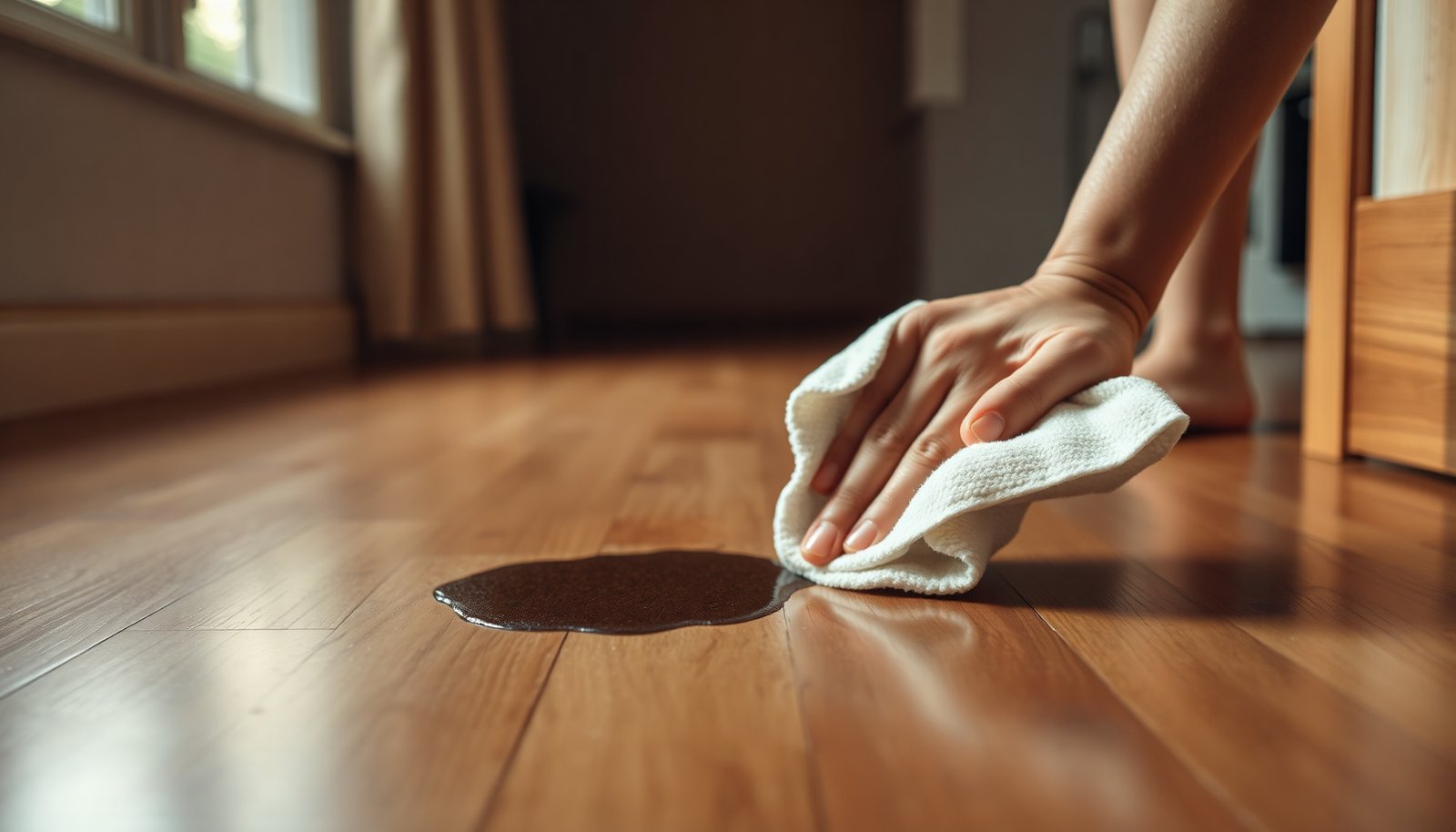

To clean hardwood floors with pet urine residue, you must neutralize the odor and protect the finish without soaking the wood. With the right cleaner, a mild pH-neutral solution, and a microfiber method, most spot treatments take about 30–60 minutes, then a short drying period. Start by gathering absorbent cloths, distilled water, an enzyme-based cleaner (or manufacturer-approved alternative), and a soft brush so you can remove residue safely and prevent lingering smells.




If your hardwood floors have pet urine residue, the fastest path is: blot and remove any surface gunk first, then clean with a pH-neutral hardwood cleaner, and finally use an enzyme-based urine remover to break down the odor-causing compounds. Work in small sections and keep the wood as dry as possible to avoid swelling or finish damage. This guide walks you through what to do (and what to avoid) so the spot doesn’t keep re-smelling.
If the urine has already dried or left a sticky film, you’ll need more than a quick mop. This is best for most finished hardwood floors (common in homes), and it’s especially useful when you can still smell urine or see residue.
Immediate steps to stop urine from spreading
If the spot is fresh, your best move is to remove liquid fast and prevent the urine from moving under the finish. The sooner you control moisture and debris on hardwood floors, the less likely you are to trap odor in the finish system or spread residue into nearby seams.
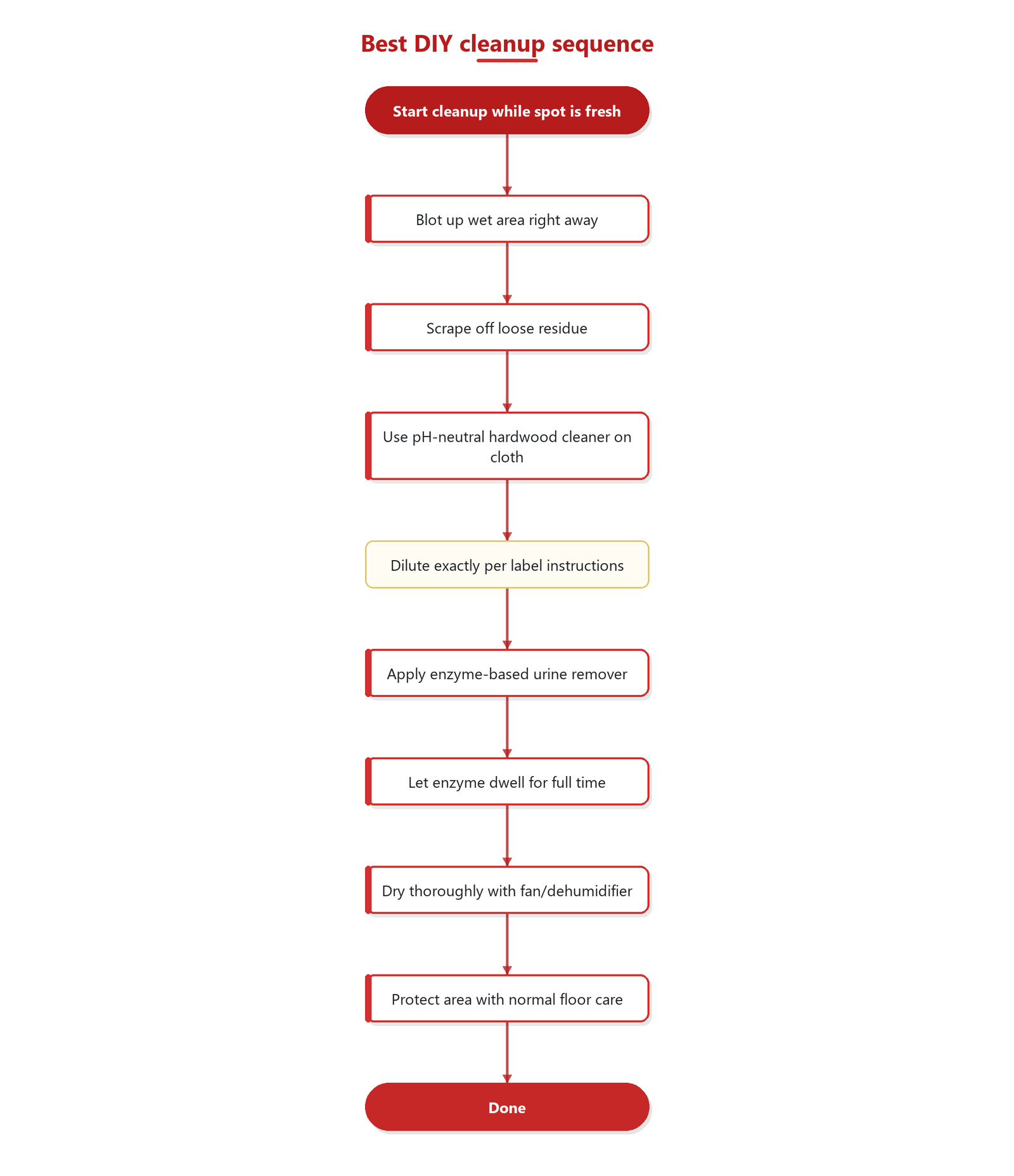
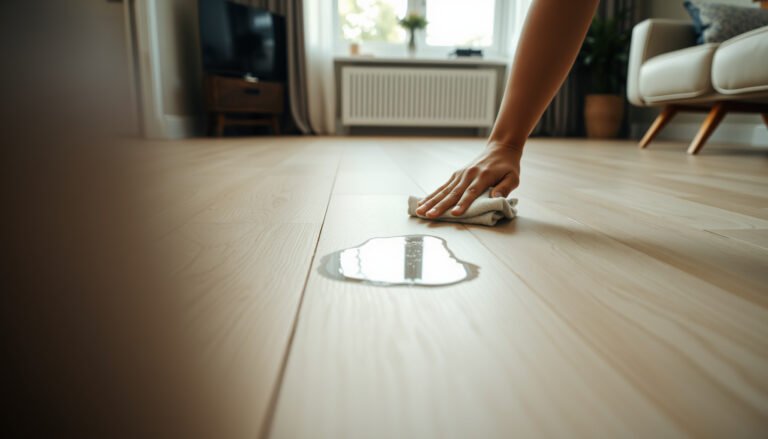
– Blot up wet areas right away (use paper towels or a clean cloth) and keep people/pets off the spot until you’re done.
– Scrape off loose residue gently with a plastic scraper or your fingernail—don’t grind particles into the finish.
– Ventilate the area and grab microfiber cloths; hardwood cleaning goes wrong most often when people use too much water.
For pet urine residue on hardwood floors, avoid “scrubbing like a stain” at this stage. Urine can smear across the surface as you spread it, and even if the finish doesn’t visibly change, the microscopic residue can remain. Keep a fan nearby for faster evaporation—airflow helps hardwood floors dry without over-wetting them. As of 2026, the practical goal is simple: treat the spot like a moisture event you’re containing, not like a routine floor-washing task.
Clean hardwood urine residue without damaging the finish
For finished hardwood floors, the safest cleaning step is a pH-neutral hardwood cleaner used sparingly—applied to a cloth, not poured onto the wood. This reduces the risk of dulling polyurethane/urethane and helps you lift residue so enzymes can reach what’s left behind.
– Use a pH-neutral cleaner made for hardwood floors, mixed/diluted exactly per the label (don’t “eyeball” stronger solutions).
– Apply cleaner to a microfiber cloth (slightly damp), wipe the area, then immediately follow with a dry microfiber to remove moisture.
– If the residue feels sticky or looks dull/filmy, repeat with fresh cloths rather than scrubbing aggressively (scrubbing can dull polyurethane or wear varnish).
Why pH neutrality matters: many hardwood finishes are designed to be chemically stable within a narrow “maintenance” range. When you use harsh alkalines or acids, you can weaken the finish film over time, which makes future urine cleaning less effective and can create a permanent haze. In my experience helping homeowners troubleshoot pet urine residue on hardwood floors, the “looks clean but smells again” problem usually starts here—someone rinses with too much liquid or uses the wrong cleaner, leaving residue behind or encouraging moisture penetration.
Before you start, check what “finish type” you have: polyurethane/urethane (most common), oil/penetrating finishes, or wax. If you’re not sure, look for the floor brand’s maintenance instructions (or contact the manufacturer). Using the wrong chemistry on the wrong finish can make pet urine residue harder to remove and can cause finish damage that you won’t notice until later.
Chemical reality check (what you’re trying to avoid)
Urine isn’t just a surface stain. Chemically, urine contains compounds that can form persistent residues; one key contributor is uric acid, which is relatively poorly soluble in water and can crystallize on surfaces. According to PubChem, uric acid solubility is about 6.8 mg/L at 25°C (PubChem—Uric Acid). That low solubility is one reason a quick wipe sometimes removes the “wet look” but not the odor trail.
Below is a quick reference of how common cleaning chemicals tend to compare by pH and finish-risk category (a practical way to think about hardwood safety, not a substitute for your floor manufacturer’s care guide).
pH and Finish-Safety Snapshot for Pet Urine Spot Cleaning (Typical Ranges)
| # | Cleaning approach | Typical pH (range) | Expected finish safety | Odor work reliability |
|---|---|---|---|---|
| 1 | pH-neutral hardwood floor cleaner | 6–8 | ★★★★★ | Medium–High |
| 2 | Enzyme-based pet urine remover (label-directed) | ~6–8* | ★★★★☆ | High |
| 3 | Mild dish soap solution (small dilution) | ~6.5–8.5 | ★★★☆☆ | Low–Medium |
| 4 | Baking soda paste/solution | ~8.0–9.0 | ★★★☆☆ | Low |
| 5 | 3% hydrogen peroxide (spot treatment) | ~3–5 | ★★☆☆☆ | Low–Medium |
| 6 | Distilled white vinegar (undiluted) | ~2–3 | ★☆☆☆☆ | Low |
| 7 | Household ammonia (typical cleaners) | ~11–12.5 | ★☆☆☆☆ | Low |
Enzyme products vary by brand and chemistry; rely on the product’s SDS/label for exact pH.
Use enzyme cleaner to neutralize the odor at the source
If the smell persists after you’ve removed residue, the most effective next step for pet urine residue on hardwood floors is enzyme treatment. Enzymes are designed to break down odor-causing urine compounds rather than just masking smells.
– After surface residue is cleaned, apply an enzyme-based pet urine remover according to its instructions (this is the step most people skip).
– Let it sit for the full dwell time listed on the product label—rushing usually means the smell returns later.
– If the spot still smells after the first treatment, repeat the enzyme step rather than switching to harsher cleaners (urine can penetrate deeper than it looks).
Why this works: urine can leave compounds that interact with moisture and can re-emit odor when the area gets damp again. Enzyme cleaners target the chemistry of those compounds so the odor load reduces over time. At a practical level, enzymes also need access—if you skip the pH-neutral surface cleaning step, you can trap soil or residue that reduces contact between the enzyme and what’s left in the finish layer.
Here’s a clear “when to use what” comparison for pet urine residue on finished hardwood floors:
| Approach | Best for | Pros | Cons / limits |
|---|---|---|---|
| pH-neutral hardwood cleaner | Fresh spots and sticky residue before odor treatments | Safer for most polyurethane/urethane finishes; improves enzyme contact | Usually can’t fully remove deep odor alone |
| Enzyme-based urine remover | Persistent odor and dried pet urine residue | Targets odor compounds; repeatable per label | Needs full dwell time and proper dwell conditions; staining may persist |
| Steam/oversaturated mopping | Generally not recommended for hardwood urine spots | Can temporarily “lift” surface grime | Adds moisture that can worsen swelling and reactivation of odor |
In 2026, the key “pro move” is simply process discipline: clean residue, apply enzymes as directed, keep the area contained, and don’t rinse away before the dwell time ends unless your specific enzyme product label says to do so.
Drying and protection (how to prevent swelling and re-soiling)
For pet urine residue on hardwood floors, drying is not optional—it’s part of odor control. If moisture lingers, wood can react (movement, swelling, finish stress) and trapped residues can re-activate smells.
– Dry thoroughly: run a fan and/or dehumidifier to speed evaporation, and avoid heat sources that can stress finishes.
– Once fully dry, protect the area with normal floor care for your finish type (follow your floor/manufacturer guidance on cleaning frequency).
– Prevent repeat marking: clean surrounding areas too (especially if your pet has been attracted by residual odor), and consider using deterrents where appropriate.
Wood movement is real and measurable. According to the USDA Forest Products Laboratory’s *Wood Handbook*, changes in moisture content drive dimensional movement in wood; depending on the species and construction, shrinkage from fiber saturation to oven-dry can be on the order of ~7–10% tangentially for some hardwoods (USDA Forest Products Laboratory, Wood Handbook). In plain terms for homeowners: when you over-wet hardwood during urine cleanup, you increase the chance of physical changes that complicate both cleaning and finish longevity.
For protection after enzyme treatment: once the spot is fully dry, you can return to standard maintenance (for example, the same pH-neutral routine you normally use). Don’t apply new wax or aftermarket coatings unless you’re sure they’re compatible—some coatings can trap residual chemistry and create a new barrier layer that makes future enzyme work harder.
Finally, prevent re-soiling by cleaning nearby “attraction zones.” Pets often return to the scent memory, even if the original spot looks better. If the odor was strong enough to trigger repeated attempts, treat the surrounding boards—not just the exact urine line.
What can go wrong (common mistakes and edge cases)
Most urine odor failures come from moisture management issues, wrong chemistry, or skipping the enzyme step. When pet urine residue penetrates deeper than the surface, quick DIY cleaning can remove the visible mess but leave odor chemistry intact.
– Over-wetting the wood: soaking or leaving standing liquid can cause cupping, gapping, or lingering odor trapped under the finish.
– Using the wrong chemicals: ammonia-based cleaners can interact with urine residues and may make odors harder to eliminate; acidic cleaners like vinegar can also be risky for some finishes.
– Scrubbing with abrasive tools: scouring pads and stiff brushes can permanently dull or scratch the finish.
– Unfinished or waxed floors: treatment methods may need adjustment, because “wood-safe” cleaners for finished floors aren’t always safe for raw or waxed surfaces.
– Large/old urine damage: if urine penetrated far enough, enzyme cleaners may reduce odor but won’t fully fix dark staining—at that point, refinishing or professional inspection may be necessary.
Edge case: if the finish is already compromised near the spot (peeling, bubbling, softening), don’t keep piling on cleaners. You may be driving liquids into areas where the protective finish is already failing. Another edge case: if the area is widespread (multiple planks or a room section), a spot-clean approach becomes inefficient; odor can spread through finish micro-channels and through seams.
If you’re dealing with an unusual floor type—distressed hardwood, hand-scraped finishes, wax topcoats, or unfinished wood—your safest route is to follow that specific manufacturer’s maintenance document before using any enzyme or household solution. The same pet urine residue can behave differently depending on how the finish system interfaces with moisture.
Verdict: the honest best approach (and who should skip DIY)
This cleanup plan is usually the most reliable for typical household hardwood (especially finished floors): clean residue with a hardwood-appropriate pH-neutral cleaner, then use an enzyme urine remover and let it dwell fully. The downside is that deeper, long-standing urine can require multiple enzyme treatments, and visible staining may remain even after odor is gone.
Skip the DIY route (or call a pro) if you notice:
– the planks look swollen, raised, or cupped
– the area is widespread (large sections rather than a single spot)
– the finish is already failing (peeling, bubbling) near the urine spot
– you’re dealing with an unusual floor type (majorly distressed, waxed-only, or extensive areas of unfinished wood)
If you try this yourself, you’re trading time and labor for control—but you’re not guaranteed a “stain-free” result. Odor and staining don’t always resolve together: enzymes often reduce smell first, while discoloration can linger because pigments and residue can remain in the finish layers even after the odor compounds break down.
Sources
– National Wood Flooring Association (NWFA) guidance on cleaning and moisture precautions for wood flooring
– PubChem—Uric Acid (solubility/chemical background relevant to persistent urine residues)
– USDA Forest Products Laboratory, Wood Handbook (wood movement driven by moisture content)
Even if your current spot is “just one board,” treating pet urine residue correctly protects both the odor outcome and the finish. In 2026, the most reliable workflow for finished hardwood floors remains the same: remove surface gunk with a pH-neutral cleaner, apply enzyme treatment with full dwell time, then dry thoroughly and prevent re-marking by checking nearby areas your pet may return to.
Frequently Asked Questions
What is the safest way to clean hardwood floors with pet urine residue?
Start by blotting up fresh urine with paper towels and then use cool water to lightly rinse the area with a barely damp cloth—avoid soaking the wood. For residue, apply a pet-safe enzyme cleaner designed to break down urine compounds, letting it sit for the time listed on the label. Afterward, wipe away excess moisture and dry thoroughly with a fan to prevent warping or cupping.
How do you remove pet urine smell from hardwood floors without damaging the finish?
Use an enzyme cleaner rather than relying on harsh chemicals or steam, because enzymes target the odor-causing uric acid deep in the wood. Clean the affected area by applying the enzyme product to a cloth or directly onto the stain per instructions, then keep the spot slightly damp while it works. Once the smell is gone, wipe and dry completely; if the finish is compromised, you may need a light refinishing to restore shine.
How long should you leave enzyme cleaner on hardwood floors affected by dog or cat urine?
Follow the product label, but many enzyme cleaners need several hours to overnight to fully neutralize urine residue. Apply enough cleaner to keep the area moist during the dwell time, since drying too soon can reduce effectiveness. After the dwell period, wipe the surface clean and allow the hardwood to dry fully before walking on it.
Why does pet urine leave stains on hardwood even after you clean it?
Pet urine can seep into hardwood pores and leave behind uric acid crystals that don’t fully dissolve with basic cleaning. When moisture changes (humidity, mopping, or humidity cycles), those crystals can reactivate and cause lingering odor or discoloration. That’s why a urine odor eliminator with enzymes is usually more effective than soap and water alone.
Which products are best for cleaning hardwood floors with urine residue, and what should you avoid?
Look for enzyme-based urine cleaners labeled safe for sealed hardwood or hardwood floors, as they break down uric acid without simply masking the smell. Avoid ammonia, bleach, steam cleaners, and soaking the floor, because they can damage wood, cloud finishes, or spread urine deeper. If the stain persists after enzyme treatment, you may need a targeted wood-safe stain remover or professional refinishing to fully restore the area.
📅 Last Updated: October 31, 2026 | Topic: How to clean hardwood floors covered in pet urine residue? | Content verified for accuracy and freshness.
References
- enzymatic cleaner urine stain odor – Search Results – PubMed
- urea urease odor removal – Search Results – PubMed
- pet urine deodorization enzymatic – Search Results – PubMed
- urine stain removal surface treatment – Search Results – PubMed
- hydrogen peroxide cleaning urine odor stains – Search Results – PubMed
- https://www.cdc.gov/infectioncontrol/guidelines/disinfection/index.html
- https://scholar.google.com/scholar?q=pet+urine+stain+odor+enzymatic+cleaner Google Scholar
- https://scholar.google.com/scholar?q=removal+of+urine+stains+from+wood+surfaces Google Scholar
- https://scholar.google.com/scholar?q=urea+urine+odor+removal+enzymes+urease Google Scholar
[…] solution and drying completely. Plan on about 30–60 minutes per spot, and have paper towels, microfiber cloths, the enzyme cleaner, and a gentle cleaner ready so you can stop the lingering odor quickly and […]