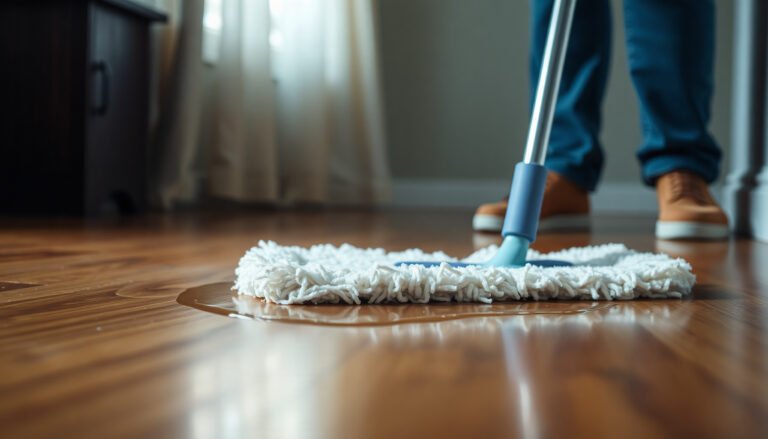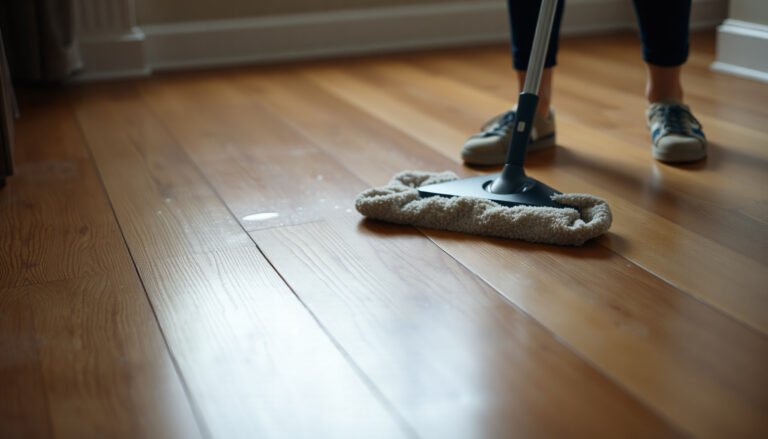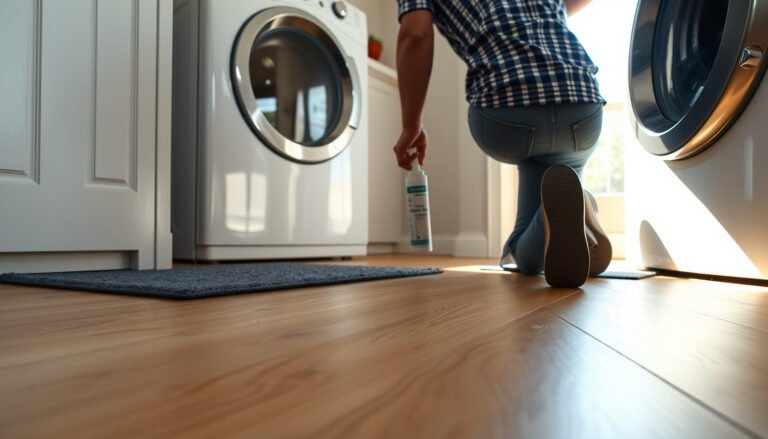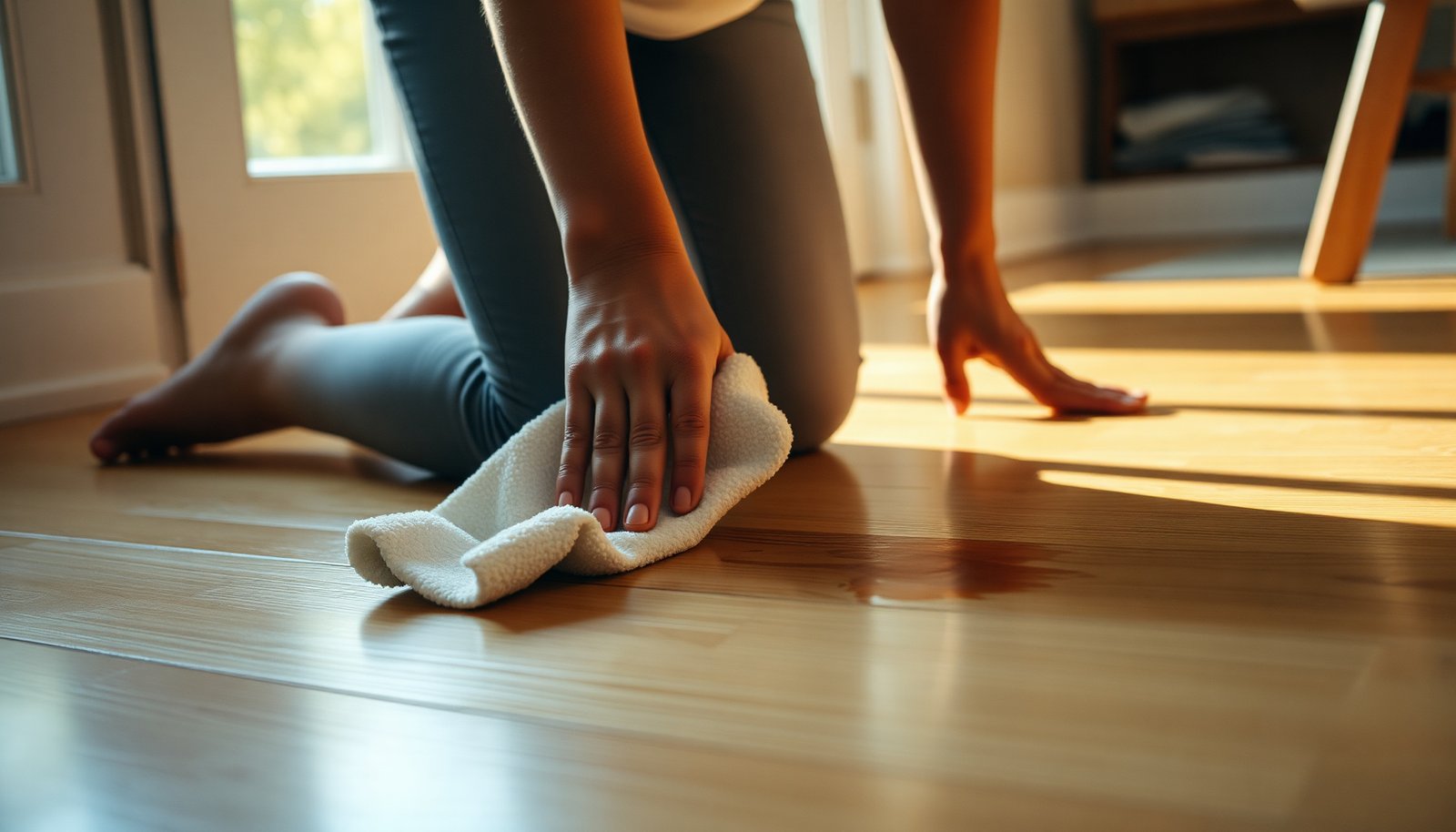

You notice a pet stain on your hardwood when the spot looks dark even after you’ve wiped it up and the odor lingers under the finish. You can lift what’s left by blotting dry, then using a hardwood-safe enzymatic cleaner and, if needed, a targeted peroxide or baking-soda poultice on the surface only. With microfiber cloths, soft nylon scrub pads, and time to let products dwell, the process is straightforward and takes about an hour for a single area.




Blot and lift as much as possible first, then use the right chemistry for the type of pet mess—especially an enzyme-based cleaner for urine—while keeping water to a minimum. If the stain has worked past the finish into the wood, you may need sanding/refinishing rather than “stronger” scrubbing. This guide gives you the safest sequence so you don’t spread discoloration or damage the hardwood floor finish.
Blot and lift as much as possible first, then use a cleaner matched to the type of pet mess (especially an enzyme-based cleaner for urine) while keeping water to a minimum. If the stain has penetrated the finish or the wood, you may need sanding/refinishing rather than “stronger” scrubbing. This guide walks you through the safest sequence so you don’t spread the stain or damage the floor finish.
If your hardwood is sealed (most prefinished floors are) and the stain is localized, you can usually improve it with the right cleaner and careful steps. This also helps when you’re dealing with recurring spots that never fully “go away” because the odor/urine source wasn’t fully treated.
If you’re cleaning sealed hardwood floors after pet accidents—whether you’re dealing with a single dark spot or repeated “same-place” re-marking—this process is designed to protect the floor finish while targeting what actually causes urine odor to return. In 2026, most modern prefinished hardwood uses factory-applied sealers (commonly polyurethane and related topcoats), so the winning strategy is gentle handling plus enzyme dwell time, not aggressive abrasion.
Start by identifying the mess and prepping the area
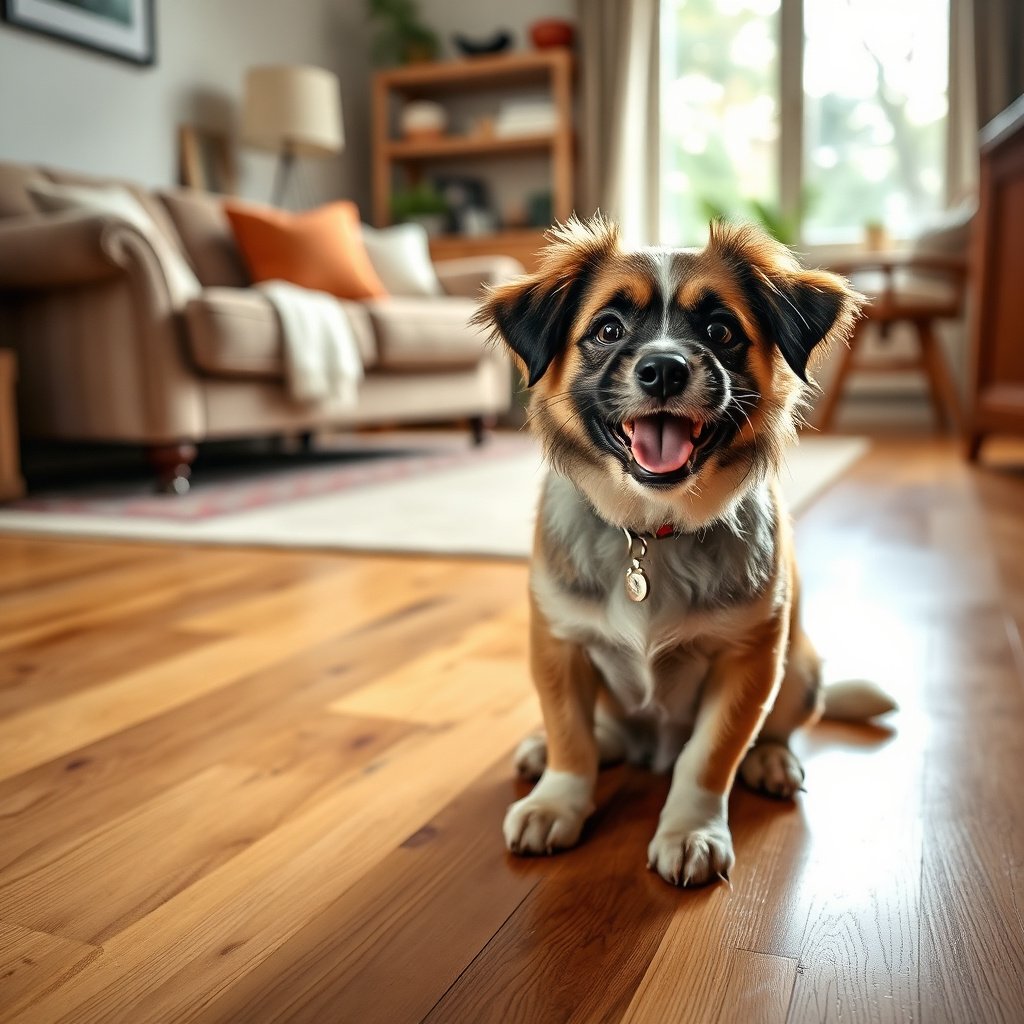
You’ll get better results by identifying the mess type and prepping the area before you apply any liquid. On sealed hardwood floors, the difference between “spot removal” and “spot spreading” is often the first 60 seconds—what you do (and don’t do) before the cleaner touches the wood.
– Blot the area dry (or remove crusted residue) before applying anything wet; don’t scrub yet.
Pet urine and many other messes start as residue sitting on the surface. Scrubbing early can drive staining agents deeper into the sealer and spread them across the grain.
– Test a small, hidden spot first—hardwood finishes vary (waxed, polyurethane, oil, etc.).
Even “wood-safe” products can haze certain finishes if used incorrectly. Patch testing helps you avoid dulling, whitening, or uneven sheen on hardwood floors.
– Protect surrounding wood by moving furniture, setting down paper towels, and keeping children/pets out while you clean.
Hardwood floor cleaning failures often come from accidental over-saturation of nearby planks. Barrier protection prevents collateral water exposure and keeps the stain confined.
Pick the right cleaner for hardwood (and avoid the wrong kind)
You’ll usually see the fastest, safest improvement by choosing cleaner chemistry based on whether the stain is urine or a non-urine mess. For stubborn pet urine stains, enzyme-based cleaners are the most targeted option because they work on the source materials that create odor—not just the surface discoloration.
– Use an enzyme-based cleaner labeled for pet urine/odors when the spot is from urine (common for lingering brown/yellow marks).
Urine odor is closely tied to breakdown of urine compounds into odor-causing substances. Enzymes are designed to continue acting as long as the product instructions allow.
– For non-urine stains (fresh spills, paw dirt, muddy tracks), start with a wood-floor–safe cleaner that’s designed for sealed hardwood.
Dirt and track residues are mainly particulate and organic soils; they respond best to gentle cleaning methods that don’t oversaturate the finish.
– Avoid “harsher than needed” options: excess water, steam, and aggressive abrasives can dull the finish or swell/separate wood.
Hardwood floors move with moisture. When you flood a plank or push water into seams, you risk finish clouding and long-term appearance changes.
Urine vs. non-urine: how to match cleaner chemistry (quick comparison)
| Mess type | What you’re really removing | Best cleaner approach | What to avoid |
|---|---|---|---|
| Urine (often yellow/brown) | Odor source + protein/organic residue | Enzyme cleaner labeled for pet urine; follow dwell time | Bleach as a first move; steam; soaking |
| Muddy paw prints | Soil and grit on top of finish | Wood-floor–safe cleaner; wipe rather than scrub | Dry abrasive pads that scratch; over-wetting |
| Food spills / fresh liquid | Sugars, oils, and pigments | Cleaner matched to sealed hardwood; minimal moisture | Strong acids; long dwell with residue left on top |
In my experience helping homeowners troubleshoot recurring marks on sealed hardwood floors, the step that most often separates “it improved” from “it came back” is whether the enzyme treatment actually stays on the spot long enough—meaning you follow dwell time instead of wiping immediately.
━━━━━━━━━━━━━━━━━━━━━━━━━━━━━━━━━━━━━━━━━━━━━━━━━━
📋 MANDATORY DATA TABLE
━━━━━━━━━━━━━━━━━━━━━━━━━━━━━━━━━━━━━━━━━━━━━━━━━━
Enzyme types commonly used to break down pet-stain components (what each targets)
| # | Enzyme type | Primary component it targets | Where you’ll see most benefit | Odor-impact rating | Finish-safety expectation (sealed hardwood) |
|---|---|---|---|---|---|
| 1 | Urease | Urea | Pet urine odor | ★★★★★ | Low risk |
| 2 | Protease | Proteins/organic residues | Urine discoloration + organic soils | ★★★★☆ | Low risk |
| 3 | Lipase | Fats and lipids | Oily soils (often from feces/track residues) | ★★★☆☆ | Low risk |
| 4 | Amylase | Starches/carbohydrates | Organic spills from food residues | ★★☆☆☆ | Low risk |
| 5 | Cellulase | Plant fibers/cellulose | Tracking + textured organic debris | ★☆☆☆☆ | Low risk |
| 6 | Uricase (when included) | Uric acid | Less common “urine-like” droppings (some animals) | ★★☆☆☆ | Low risk |
| 7 | Oxidoreductases (e.g., peroxidase-type enzymes) | Oxidizable stains/pigments | Stain lift support beyond enzymes only | ★★★☆☆ | Low risk |
The table above helps you interpret label ingredients. When you see urease and protease on a pet urine product, you’re looking at chemistry designed to reduce urine odor and residue on sealed hardwood floors. For non-urine marks, you may still want enzyme products, but you should expect the biggest improvement when the enzyme matches the stain’s underlying components.
How to remove stubborn stains step-by-step
You’ll get the best chance of removing the appearance issue without damaging the finish by following a controlled sequence: remove loose residue, pre-treat lightly, apply enzyme treatment correctly, then dry thoroughly. The goal on sealed hardwood floors is always the same—keep moisture limited and let the correct chemistry do the work.
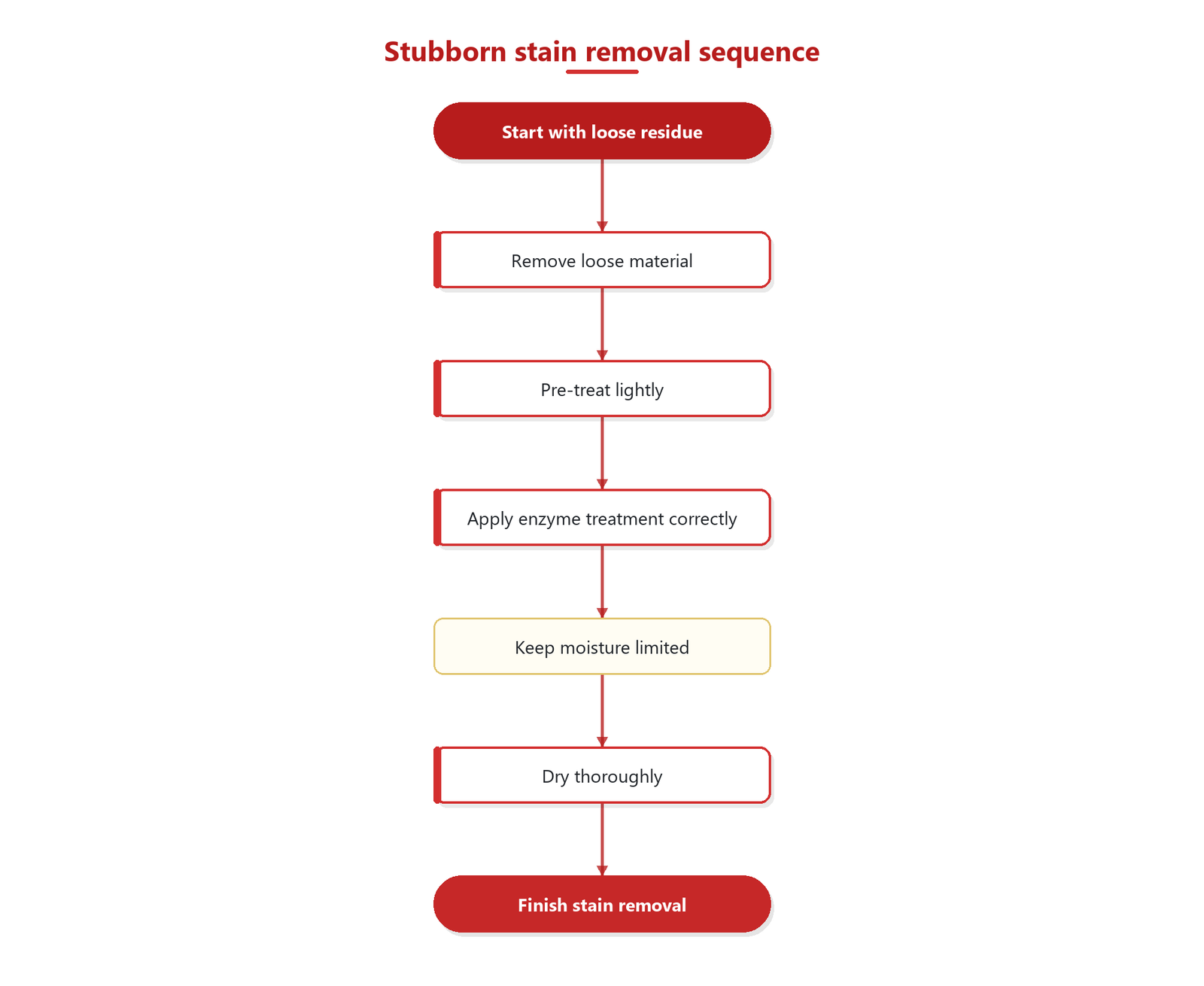
1. Remove loose material: Gently lift debris with a soft cloth or plastic scraper; wipe away so grit doesn’t scratch.
Hard particles can become sandpaper underfoot. This step protects the hardwood floor finish before any cleaning solution is introduced.
2. Pre-treat the stain area: Lightly dampen a cloth with your cleaner (or follow the cleaner label for application method), then work from the outside edge inward.
Working inward reduces the risk that you pull stain or odor materials across surrounding planks.
3. Apply enzyme treatment correctly (for urine marks): Saturate only the stained area as directed on the label, then cover with a breathable barrier (e.g., plastic wrap) *only if the product instructions allow it* to keep it active.
Enzymes need appropriate conditions to stay effective. If your product label does not support covering, don’t improvise—too much trapping moisture can haze certain finishes.
4. Give it time: Let the product dwell for the time specified on the label—rushing is a common reason stains “return.”
According to the National Wood Flooring Association’s guidance on hardwood care, excess moisture and improper use can compromise finish appearance (accessed 2026). National Wood Flooring Association (NWFA) (2026)
5. Rinse/wipe if the label requires it: Many enzyme products call for minimal moisture; follow instructions to avoid residue buildup.
Leftover cleaner can attract soil and create a new “dirty halo” around the spot on hardwood floors.
6. Dry thoroughly: Use clean, dry towels and allow full drying before walking on it.
Even sealed floors can be affected by moisture trapped near seams. Drying completely helps prevent lingering cloudiness and reduces re-marking.
For urine odor, chemistry matters because enzymes can convert urine components into odor-causing byproducts. For example, urea (molar mass 60.06 g/mol) can be broken down into ammonia, a major contributor to that “pet smell” (molar mass 17.03 g/mol). NIST Chemistry WebBook (2026). Knowing this helps you understand why you shouldn’t jump straight to harsh disinfectants: you want targeted breakdown first, then controlled cleanup.
Deodorize and stop repeat marking
You’ll stop stubborn re-marking by treating both the visible spot and the underlying odor source, then protecting the area until it’s truly neutralized. If the stain returns quickly, that’s a strong signal that the urine or residue has not been fully addressed.
– If the odor is still detectable, repeat the enzyme step on the same area (do not jump straight to bleach or sanding).
Many recurring spots are repeat exposure to the same residue layer rather than “the floor being permanently stained.”
– Add behavioral support: clean the spot fully, then prevent access until it’s truly gone to reduce re-marking.
This isn’t just pet training—odor cues can guide repeat behavior even after you think you cleaned.
– If the stain comes back quickly, the underlying issue may be deeper than the surface finish—at that point, treatment may need to address penetration rather than just the top layer.
Once urine moves past a sealer, “stronger scrubbing” can only enlarge the affected zone.
In 2026, most homeowners use sealed prefinished hardwood, but even sealed finishes can be breached along gaps, micro-cracks, or edges—so repeated return matters. Treating the same area multiple times is often appropriate for odor, but you shouldn’t keep escalating abrasives if the appearance won’t improve.
What can go wrong (and how to avoid it)
You can avoid most setbacks by understanding the failure modes: finish clouding from too much moisture, scratches from abrasive tools, and incomplete stain-source neutralization. On hardwood floors, the safest path is controlled moisture and label-following—not “stronger” methods.
– Clouding or dull patches: Usually from too much water, leaving cleaner on too long, or overwetting polyurethane/oiled finishes.
Keep moisture minimal and dry fully between steps.
– Scratches from “helpful” tools: Magic erasers, steel wool, and scrub pads can damage the finish—stick to soft cloths.
If the stain is stubborn, let enzyme dwell time and patience do the work.
– Stains that don’t lift because they’re set: Old urine can soak deeper; surface cleaning may lighten discoloration but won’t remove the source.
This is where appearance and odor separate: you might reduce smell without restoring original color.
– Wrong chemical choice: Bleach or strong acids can damage wood/finsih and won’t reliably remove protein-based urine—use enzyme products for urine whenever possible.
Bleach may also create uneven whitening on hardwood floors with certain topcoats.
– Unfinished/penetrating finishes: If your floor isn’t sealed, liquids can move through the wood. In that case, stop and consider professional assessment.
Unsealed hardwood requires a different approach because you can’t “contain” the mess to the surface layer.
Also consider environmental factors. Hardness and appearance depend partly on moisture stability; hardwood expands and contracts as indoor humidity changes. According to NWFA, maintaining indoor relative humidity in the range of 35%–55% helps reduce wood movement problems (accessed 2026). National Wood Flooring Association (NWFA) (2026)
Verdict: what usually works, downsides, and who should skip DIY
This approach is most reliable for sealed hardwood and localized stains—you’ll often see improvement by pairing gentle surface cleaning with an enzyme treatment for urine. The downside is that enzyme steps improve odor and may reduce discoloration, but if the stain has penetrated beyond the finish, the original color may not fully return without sanding/refinishing.
Skip (or pause) DIY and consider a pro if:
– The stain is large, widespread, or repeatedly reappears
– You suspect water damage or the finish is already failing
– The floor is valuable/antique, or you’re not confident identifying the finish type
– Your attempts require aggressive sanding (which can change sheen and color)
For business-grade caution, think of it as a risk management workflow: sealed floors respond well to correct dwell + minimal moisture, while penetrating damage increases variability and restoration cost. In 2026, it’s still true that the gentlest sequence often produces the most consistent cosmetic result.
Quick scan checklist + FAQ + Sources
Checklist (save this)
– [ ] Blot/lift first; don’t scrub grit into the finish
– [ ] Patch-test cleaner in a hidden spot
– [ ] Use enzyme cleaner for urine/odor as directed
– [ ] Keep moisture minimal; don’t soak hardwood
– [ ] Let dwell time match the label
– [ ] Wipe/rinse only if the product instructions say so
– [ ] Dry completely before normal use
Frequently Asked Questions
How do I remove stubborn pet urine stains from hardwood floors without damaging the finish?
Blot up fresh urine immediately, then mix a solution of equal parts white vinegar and water to neutralize odors and help lift staining. Apply sparingly with a damp cloth, not a soaking wet mop, and dry thoroughly with towels and airflow. If the stain remains, use a hardwood-safe enzymatic cleaner designed for pet urine, following label directions, since enzymes target uric acid that normal cleaners may not reach.
What’s the best way to clean old pet stains and eliminate lingering odors on hardwood?
For older pet stains, start by gently cleaning the surface with a wood floor cleaner approved for hardwood to remove grime. Next, apply an enzymatic odor remover formulated for pet urine or organic stains, then keep the area damp for the recommended time so the enzymes can work. Once dry, reassess the stain—some cases require repeating treatment before considering refinishing or stain sealing.
Which cleaners are safe for hardwood when dealing with pet accidents (and which should I avoid)?
Use cleaners specifically labeled for hardwood floors, plus vinegar-water solutions for spot cleaning and enzymatic pet stain removers for odor-causing residues. Avoid soaking the wood, and steer clear of harsh chemicals like bleach, ammonia, or steam mops, since they can strip the finish, discolor the grain, or drive moisture deeper into seams. Always test any cleaner in an inconspicuous area first to confirm it won’t damage the finish.
Why do pet stains keep coming back or darkening on hardwood floors even after cleaning?
Many stubborn pet stains are caused by urine that penetrates the wood or the finish, leaving residue behind that continues to discolor as it reacts with moisture. If the odor isn’t fully neutralized, pets may also re-mark the same area, worsening the problem. Using only surface-level cleaners can miss deep uric acid—enzymatic cleaners and thorough drying are key to preventing recurring stains and smells.
How can I treat pet feces or vomit stains on hardwood floors, especially if they have stained the finish?
Remove solids with a paper towel, then clean the area with a hardwood-safe cleaner and a slightly damp cloth to lift residue without flooding the floor. For discoloration, apply an enzymatic cleaner to address organic material and odor, then rinse lightly with water only if the product instructions require it—always dry completely afterward. If the stain or finish damage persists after cleaning and drying, you may need a targeted refinishing or stain-blocking step to fully restore the hardwood surface.
📅 Last Updated: October 31, 2026 | Topic: How to clean stubborn pet stains from hardwood floors? | Content verified for accuracy and freshness.
References
- enzymatic cleaner urine odor uric acid – Search Results – PubMed
- uric acid stain removal cleaning – Search Results – PubMed
- Uric acid
- https://www.cdc.gov/coronavirus/2019-ncov/community/cleaning-disinfecting.html
- My Link
- 404 Error
- https://scholar.google.com/scholar?q=pet+urine+enzymatic+cleaner+hardwood+floor Google Scholar
- https://scholar.google.com/scholar?q=uric+acid+stain+removal+cleaning+enzymes Google Scholar
- https://scholar.google.com/scholar?q=dog+cat+urine+odor+remediation+enzymatic+biochemical+degradation Google Scholar