
You can remove odors from rubber floors fast and for good—if you use the right cleaning and deodorizing method for the source of the smell. This guide shows the most effective approach, from removing trapped grime to neutralizing lingering chemical or mildew odors without damaging the rubber. Follow these steps for the quickest results and the cleanest, least-smelly finish.




If your rubber floors smell, the fastest path is to eliminate the source (usually moisture, contamination, or residue), then use an odor-neutralizing cleaner and dry the surface thoroughly. Many “odor” problems keep returning because rubber mats and roll flooring trap contaminants in texture, seams, and damp under-layers—so the key is a deep-clean + rinse + complete dry, not just a scented wipe-down.
If the odor is happening in a gym, garage, playroom, or around pet traffic—and especially if it persists after quick cleaning—this systematic guide is built for rubber mats and roll flooring. It also applies to many interlocking rubber tiles, where grime gathers along edges and under lips.
Identify the odor source first

You usually remove the smell more reliably when you stop guessing and confirm what’s actually causing it. Odor from rubber flooring typically comes from organic contamination (sweat, food, pet residue), chemical residue (previous cleaner/adhesive), or trapped moisture that keeps odor compounds “active.”
Persistent odors are often a sign that residue or moisture remains in seams, corners, or textured areas rather than being fully removed from the surface.
If the smell is musty and worsens with humidity, dampness (sometimes in the subfloor or under mats) is a common root cause rather than the rubber itself.
Sharp, chemical-like odors may come from reactions involving prior cleaners, adhesives, or treatments—not necessarily from the rubber material.
Start with the “what” and “where”:
– Check for moisture: Look for damp edges, condensation, or areas that never fully dry—rubber can hold dampness under mats or furniture legs.
– Search for trapped spills/residue: Sweat, oils, and cleaning chemical buildup can sink into texture and seams and re-emit odor later.
– Inspect seams and edges: In roll flooring and mat systems, odor often hides along overlaps, border strips, and low-airflow corners.
– Do a smell-location test: If you lift a corner (only if the floor is safe to lift without tearing/loosening), you may find the odor originates underneath—especially with musty smells.
Three practical “clues” you can act on immediately:
– Musty smell + humid days → treat moisture/ventilation as the priority.
– Stale “bio” smell → target organics with enzymatic odor neutralization.
– Strong chemical sharpness → pause and stop using additional cleaners until you know what was previously applied (adhesives, floor finishes, or sealers can complicate odor removal).
Deep-clean safely (without damaging rubber)
The best way to reset rubber odor is a thorough deep-clean followed by a clean rinse that removes residue. Because rubber can retain films, “wipe-only” cleaning frequently leaves behind compounds that continue to smell.
A deep-clean that includes rinsing removes both contamination and residual cleaning agents that can contribute to odor.
Drying with airflow matters because dampness under rubber mats or in low-ventilation rooms can allow odor sources to persist.
Rubber-safe cleaners and light scrubbing reduce the risk of damaging the surface compared with harsh solvents.
A safe workflow that works across most home and light-commercial scenarios:
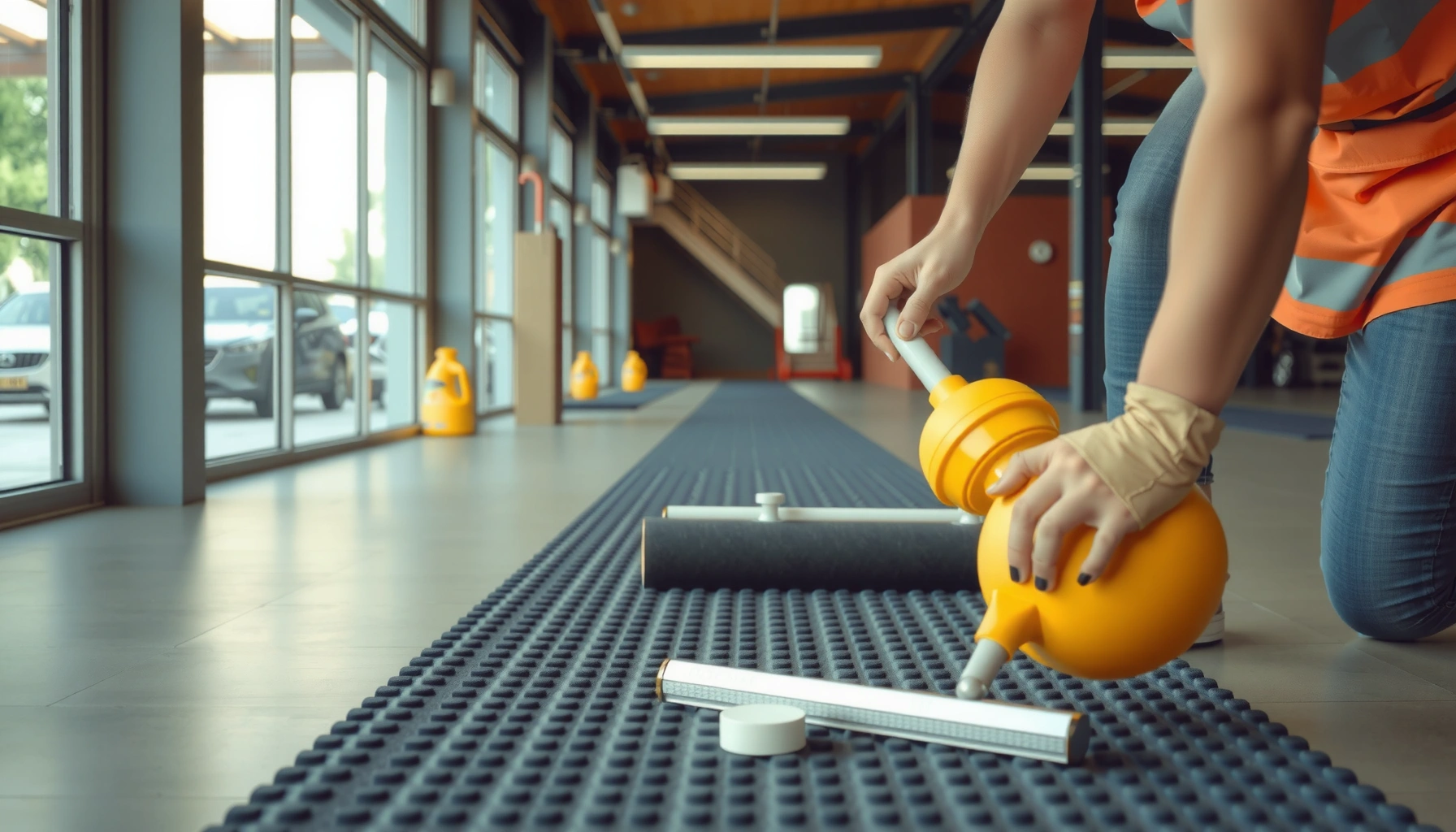
1. Pre-clear dust and grit
– Sweep or vacuum with a soft brush attachment so you don’t grind debris into the texture.
2. Scrub with warm water + rubber-safe cleaner
– Use a neutral or rubber-compatible cleaner (or one specifically labeled for rubber floors).
– Scrub lightly but thoroughly in high-traffic zones and textured recesses.
3. Rinse aggressively
– Odor often returns if you leave a cleaning film behind.
– Use clean water and remove dirty rinse water (wet/dry shop vac can help if the floor system allows).
4. Control the dry time
– Use fans and ventilation; don’t “lock in” moisture by covering or closing up the room.
Key measurement/anchoring points to guide moisture response:
– According to the U.S. EPA, mold can begin growing on damp materials within 24–48 hours under favorable conditions (“Mold & Moisture,” U.S. Environmental Protection Agency). If your odor is musty, that timeframe is your urgency signal.
– According to the U.S. EPA, maintaining indoor relative humidity between about 30% and 50% helps reduce mold and moisture-related problems (“Mold & Dampness Control,” U.S. Environmental Protection Agency).
Neutralize odors (choose the right method)
The right deodorizing method depends on what’s generating the odor—not just that it smells strong. For rubber floors, enzymatic cleaners and chemistry that targets odor molecules (not fragrance) tend to outperform scent-only approaches.
Enzymatic cleaners are designed to break down odor-causing organic compounds rather than masking them with fragrance.
For musty odors linked to dampness, odor-neutralizing products work best after the contamination and excess moisture have been removed.
Testing any deodorizer in an inconspicuous spot reduces the risk of discoloration or residue on rubber.
Use this decision rule:
– Organic odors (sports sweat, food/drink, pet-like smells): Use an enzymatic cleaner approach.
– Follow label directions for dwell time (how long the product stays on the floor).
– Reapply only if the product’s instructions allow repeat use.
– Musty odors (dampness/mildew-associated): Use a deodorizer that targets odor molecules, after deep-cleaning and rinsing.
– If humidity is the driver, cleaning alone won’t solve it—humidity control and airflow are part of odor removal.
From my experience with rubber flooring maintenance in workspaces (e.g., gyms and training rooms), the “aha moment” usually happens when the owner stops chasing the smell with stronger and stronger sprays and instead switches to: rinse well → enzymatic/dedicated neutralizer → dry thoroughly. That sequence aligns with how contaminants get trapped and how odor re-emerges.
A quick comparison: what to do vs. what to avoid
| Option | Best for | Main risk |
|---|---|---|
| Enzymatic cleaner (follow dwell time) | Sweat/organic contamination | Using insufficient dwell time can reduce effectiveness |
| Odor-neutralizing deodorizer (odor-molecule targeted) | Musty or lingering odor after cleaning | Some products can leave a light film—always rinse if the label requires it |
| Scent-only sprays | Temporary masking (not root-cause removal) | Can make odor feel “stronger” once fragrance dissipates |
| Harsh solvents/strong chemicals | Not recommended for most rubber | Can damage rubber, extract oils, or drive contaminants deeper |
7 Common Household/Janitorial Odor-Fighting Chemicals & Typical Strength
| # | Chemical (typical household form) | Typical strength | Typical pH / nature | Rubber odor risk |
|---|---|---|---|---|
| 1 | White vinegar (acetic acid) | ~5% acetic acid | Acidic (often ~pH 2–3) | ★☆☆☆☆ |
| 2 | Baking soda (sodium bicarbonate) | Solid powder (alkaline) | Mildly alkaline (solution often ~pH 8–9) | ★☆☆☆☆ |
| 3 | Hydrogen peroxide (typical cleaning strength) | ~3% (common) | Mildly acidic to neutral (varies by formulation) | ★★★☆☆ |
| 4 | Chlorine bleach (sodium hypochlorite) | ~5–6% available chlorine | Strongly alkaline | ★★★★☆ |
| 5 | Ammonia-based cleaners | Often ~5–10% ammonia (varies) | Alkaline | ★★★☆☆ |
| 6 | Alcohol cleaners (isopropyl alcohol) | Commonly ~70% isopropyl | Solvent-based | ★★★☆☆ |
| 7 | Enzymatic cleaner (typical “neutral” formulas) | Typically ~neutral dilution range (label-based) | Often near-neutral pH (~6–8) | ★☆☆☆☆ |
*Note:* This table reflects typical retail strengths and general chemistry behavior; always verify the exact product label for your cleaner and follow the rubber manufacturer’s care guidance.
Drying and ventilation: the step people skip
Drying is the difference between a one-time fix and an odor that comes back. Rubber can trap moisture under mats or in textured areas, so complete drying with airflow is not optional.
Odor reduction depends on removing dampness; moisture under mats or rugs can allow odor sources to persist even after cleaning.
Good ventilation and controlled indoor humidity reduce the conditions that support mold-related odors.
Covering the floor too soon after treatment can slow drying and increase the chance of odor re-emergence.
What “good drying” looks like in practice:
– Keep airflow on until the floor is fully dry (use fans pointed across the surface, not just at the room).
– Avoid sealing or covering immediately after applying an odor neutralizer—allow off-gassing and evaporation as directed by the product label.
– Address humidity if odors spike on humid days
– Use a dehumidifier where appropriate.
– Increase air exchange when weather conditions allow.
If the odor seems worst after humid weather, focus less on repeating the same clean and more on managing conditions consistent with moisture control guidance from public health agencies (again, EPA’s dampness/mold control framework is the right anchor U.S. EPA mold & moisture resources).
What can go wrong (and how to avoid it)
Odors often persist when the cleaning chemistry is incompatible with rubber or when residue is left behind. The biggest mistake is treating symptoms while ignoring moisture, under-floor sources, or earlier chemical buildup.
Using harsh chemicals like bleach or strong solvents can damage rubber surfaces and may leave behind residues that continue to smell.
“Rinse-less” products can leave a film; if residue remains, odor can return even if the floor initially seems better.
If the odor originates beneath the rubber (subfloor moisture or trapped adhesive issues), treating only the top surface will not fully solve the problem.
Common pitfalls and edge cases:
– Overusing bleach/solvents: Rubber compounds vary; harsh chemistry can degrade the surface or alter the material’s odor retention.
– Not rinsing after detergent or deodorizer: Residual surfactants and neutralizers can contribute to lingering smell.
– Excessive heat: Direct, intense heat or prolonged sun can warp some rubber types. Prefer fans and gentle ventilation.
– Subfloor moisture: If the smell is musty and persistent, the subfloor or adhesive layer may be retaining moisture—even if the top surface looks clean.
If you suspect subfloor moisture, don’t just “redo the surface.” You may need professional moisture assessment and remediation. In that scenario, cleaning becomes support work, not the main fix.
Verdict: a practical, low-risk plan (and who should skip it)
The most reliable low-risk plan for rubber floor odor removal is: deep-clean + thorough rinse + complete drying, then neutralize with an odor-targeting cleaner matched to the odor type. This approach targets root causes (contamination and dampness) instead of covering smells.
Downsides and limits you should know:
– If moisture is coming from beneath the rubber (subfloor, slab, or adhesive layer), surface-only treatment may reduce smell temporarily but not eliminate it.
– If the floor previously received an incompatible chemical treatment, additional cleaning without identifying residue can worsen odor interactions.
– If you have unknown rubber composition, old adhesives, or strong chemical fumes, consult the manufacturer’s care instructions (or a professional) before applying new chemistry.
Who should skip DIY and seek guidance:
– Large areas with persistent musty odor suggesting possible subfloor moisture
– Floors with unknown prior treatments or strong chemical odors
– Situations where lifting sections may be required for diagnosis but could damage the flooring system
Quick checklist (scan/save)
– [ ] Remove dust/debris; check seams and edges
– [ ] Deep-clean with rubber-safe cleaner; scrub textured areas
– [ ] Rinse thoroughly (don’t leave residue)
– [ ] Dry completely with airflow (fans/ventilation)
– [ ] Neutralize odors with an appropriate deodorizer/enzymatic cleaner
– [ ] Re-check after fully dry (repeat only if needed)
FAQ
Why do rubber floors smell even after cleaning?
Rubber odors often persist because the source is still present—residue left behind by earlier cleaners, trapped grime in seams, or moisture underneath. Rubber can also re-emit odor when it stays damp.
Can I use bleach to remove odors from rubber flooring?
Bleach can damage or degrade some rubber materials and may worsen odor if it reacts with contaminants. Use rubber-safe cleaners and follow the rubber manufacturer’s guidance instead; [ADD: source for compatible cleaners based on your rubber type].
Will vinegar or baking soda work for rubber floor odors?
They may help with mild odors, but effectiveness depends on the odor cause and the rubber’s formulation. Test a small hidden area first, and avoid soaking unless the label/installer guidance says it’s safe.
How long should I let the floor dry after cleaning?
Let it dry fully until it feels dry and there’s no lingering dampness; depending on airflow and humidity, this can take [ADD: estimate based on room humidity/airflow] hours.
Could the odor be from the subfloor, not the rubber?
Yes. If the odor is musty or worsens with humidity, moisture in the subfloor or adhesive layer can be driving the smell. [ADD: source for troubleshooting rubber flooring over moisture-prone subfloors].
Sources
– U.S. Environmental Protection Agency (EPA): Mold & Moisture guidance (including moisture control timing and relative humidity recommendations)
– [ADD: Rubber flooring manufacturer cleaning/care instructions for odor removal and compatible cleaners]
– [ADD: Enzymatic cleaner manufacturer instructions on dwell time and application for odor-causing organics]
– [ADD: Deodorizer product label directions on what odor types it targets and whether rinsing is required]
If you take one approach, make it this: remove contamination and rinse away residue, then neutralize and dry with real airflow until nothing damp remains. That sequence is the most dependable way to eliminate rubber floor odors without risking material damage or repeat problems.
Frequently Asked Questions
How do I remove odors from rubber floors after installation?
Freshly installed rubber flooring can off-gas and leave a noticeable rubber smell. Start by ventilating the space and running fans to increase air exchange for 24–72 hours. Then mop with warm water and a small amount of a pH-neutral cleaner designed for rubber floors, rinse if the product label recommends it, and allow the floor to fully dry. Avoid harsh solvents or ammonia-based cleaners, which can worsen odor retention and damage the surface.
What’s the best way to deodorize rubber gym floors with lingering sweat smells?
For sweat and body-odor buildup, do an initial deep clean using warm water plus a rubber-safe degreaser or enzymatic cleaner formulated for floors. After scrubbing, rinse thoroughly to remove residue that can trap odors, then dry with clean microfiber mops or fans. If the odor persists, repeat with an odor-neutralizing cleaner that targets organic compounds rather than simply masking the smell. Regular maintenance—quick spot cleaning and allowing the floor to dry—prevents the odor from returning.
Why do rubber floor odors come back even after cleaning?
Rubber floor odors often return because contaminants are absorbed into porous edges, seams, or micro-textures on the surface. Incomplete rinsing can leave cleaning residue that attracts dirt and creates a new odor layer. High moisture, poor ventilation, or inadequate drying after mopping can also reactivate smells over time. Addressing the source—deep cleaning, thorough rinsing, and drying—typically resolves the recurring odor problem.
Which cleaning products are safe to use for removing odors from rubber floors?
Look for pH-neutral, rubber-floor-safe cleaners, and consider enzymatic or odor-neutralizing products that are intended for athletic or rubber surfaces. Avoid acetone, bleach, ammonia, and strong solvents, as they can degrade rubber and increase odor issues. For mild smells, a simple solution of warm water and gentle pH-neutral soap is often enough when paired with good ventilation and drying. Always spot-test in an inconspicuous area and follow the manufacturer’s cleaning instructions.
How can I remove mold or mildew odor from rubber flooring?
Mold and mildew smells usually indicate moisture trapped under mats or in seams, so the first step is to eliminate the moisture source and improve ventilation. Clean the rubber floor with a mildew-focused, rubber-safe cleaner and scrub affected areas thoroughly, then rinse and dry completely. If the odor is severe or embedded in porous areas, you may need repeated cleaning and more aggressive drying using fans or dehumidifiers. Never mix chemicals—use one appropriate cleaner at a time to reduce the risk of harmful reactions.
📅 Last Updated: October 11, 2026 | Topic: How to remove odors from rubber floors? | Content verified for accuracy and freshness.
References
- Google Scholar Google Scholar
https://scholar.google.com/scholar?q=remove+odor+rubber+flooring - Google Scholar Google Scholar
https://scholar.google.com/scholar?q=rubber+flooring+odor+VOC+off-gassing+ventilation - Google Scholar Google Scholar
https://scholar.google.com/scholar?q=best+practices+cleaning+rubber+floor+to+reduce+odors - Volatile Organic Compounds’ Impact on Indoor Air Quality | US EPA
https://www.epa.gov/indoor-air-quality-iaq/volatile-organic-compounds-impact-indoor-air-quality - What are volatile organic compounds (VOCs)? | US EPA
https://www.epa.gov/indoor-air-quality-iaq/what-are-volatile-organic-compounds-vocs - https://www.cdc.gov/mold/default.htm
- https://www.who.int/teams/environment-climate-change-and-health/air-quality/indoor-air-quality
- https://en.wikipedia.org/wiki/Off-gassing
- https://pubmed.ncbi.nlm.nih.gov/?term=rubber+flooring+volatile+organic+compound+emissions
- https://www.sciencedirect.com/search?qs=rubber%20flooring%20odor%20VOC%20emissions