
Do you have fresh pet waste on your hardwood and worry it will soak in and dull the finish? Blot immediately and clean with a pH-neutral solution diluted in water to lift the stain without stripping the seal. With paper towels, a soft cloth, and gentle soap, you can usually make it look clean in about 10–20 minutes while protecting the wood from moisture damage.




Blot fresh pet stains right away, then clean with a pH-neutral hardwood floor cleaner using a barely-damp cloth—don’t soak the wood. If it’s urine (or you smell odor), treat the area with an enzyme cleaner so you can neutralize what’s left underneath the surface finish.
This advice is for homeowners dealing with fresh spots on finished hardwood (sealed/coated planks), where the stain hasn’t fully set in yet. If your floor is unfinished, damaged, or the stain has already dried for days, you’ll want to slow down and reassess—what works for “fresh” can make deeper damage worse.
Act fast: blot, lift, and lightly rinse
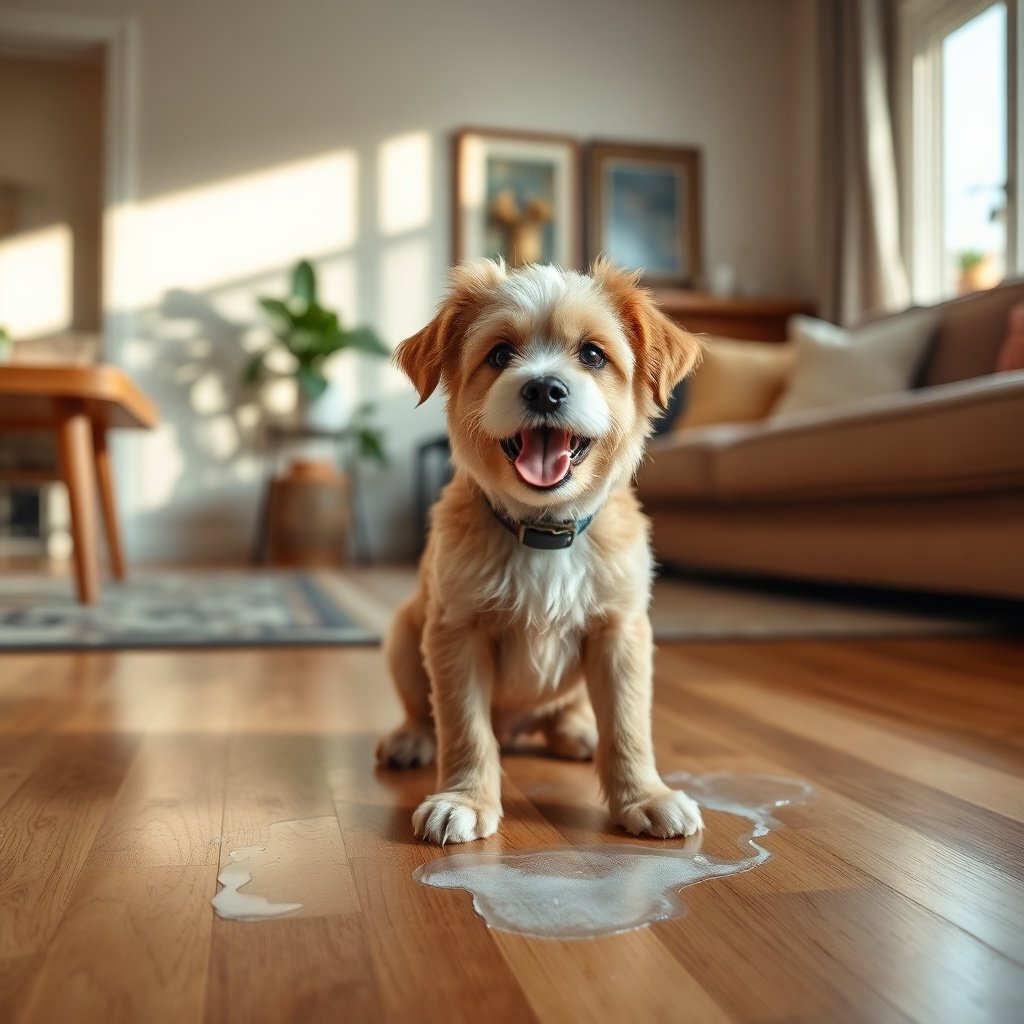
Act fast, because the longer moisture sits on finished hardwood, the more likely it is to dull the finish or push residue into seams. The safest approach is to stop spread first, remove any solids immediately, and use only a barely-damp cool-water wipe before you move to cleaner.
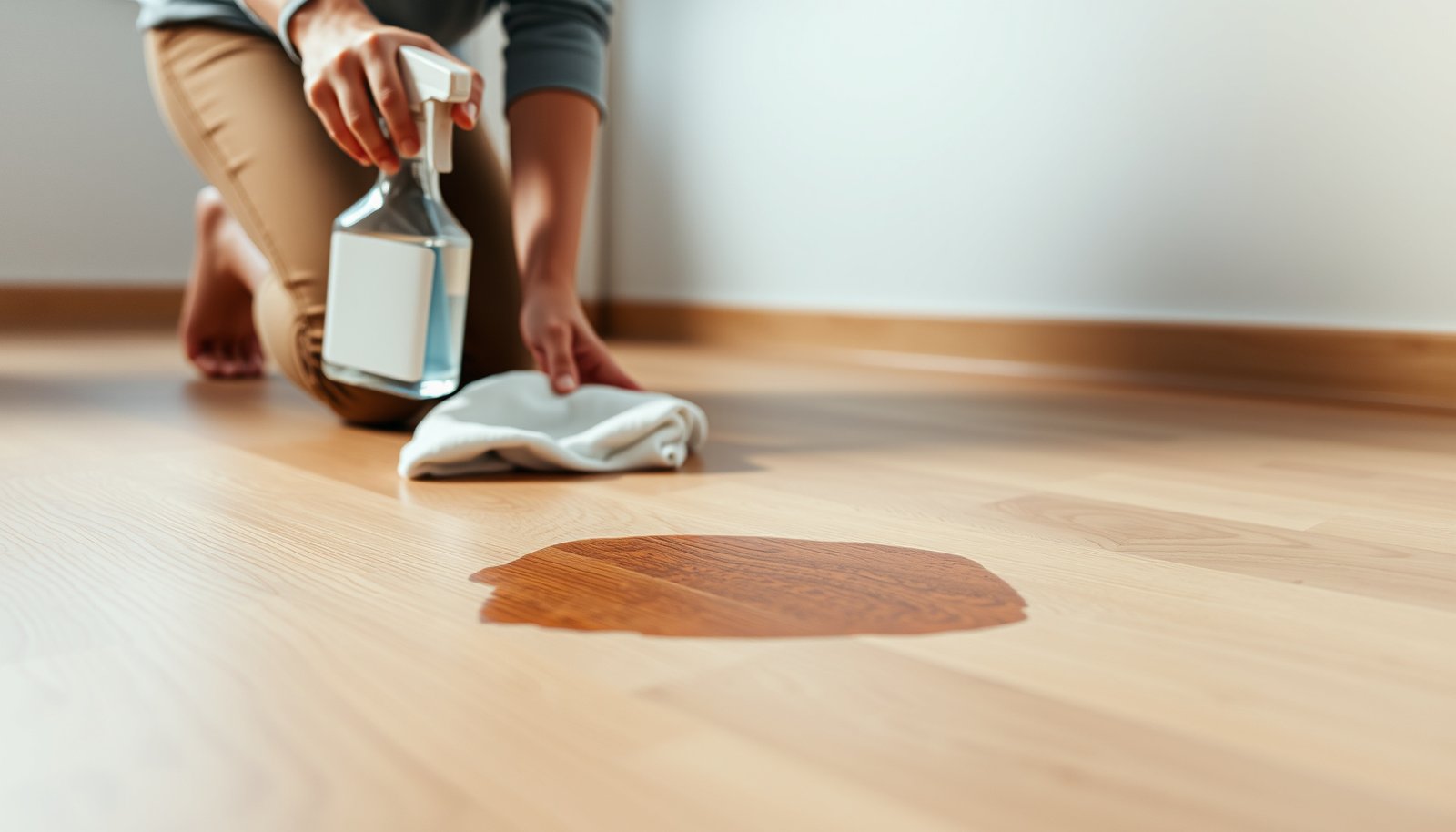
– Blot first (no scrubbing): Use clean paper towels or a dry microfiber cloth to absorb as much moisture as possible, pressing gently and replacing towels as they wet out. With finished hardwood, scrubbing is what tends to spread the mess laterally under the coating.
– Lift solids immediately: If there’s any solid waste, remove it with a plastic scraper or folded paper towel—then discard, and don’t smear it wider. Scoop from the outside of the spot toward the center to reduce what gets dragged across the surface finish.
– Rinse lightly (barely damp): Wipe the area with a cloth dampened with cool water to pick up residue, then immediately dry thoroughly with a fresh towel. This “light rinse” step is about removing soluble residue before deeper cleaning—not about flushing the spot.
Clean hardwood safely (use pH-neutral, go “damp,” not wet)
For finished hardwood, the safest cleaning step is a controlled, minimal-moisture wipe with a pH-neutral hardwood floor cleaner. That combination cleans residue while reducing the risk of finish haze, swelling at edges, or water migration at plank seams.
– Choose the right cleaner: Use a pH-neutral hardwood floor cleaner (or the cleaner recommended by your flooring manufacturer). Avoid harsh household cleaners that can dull or damage the finish.
– According to , “neutral” is typically formulated to stay near skin-safe/neutral pH (around pH 7) rather than strongly acidic or alkaline. ()
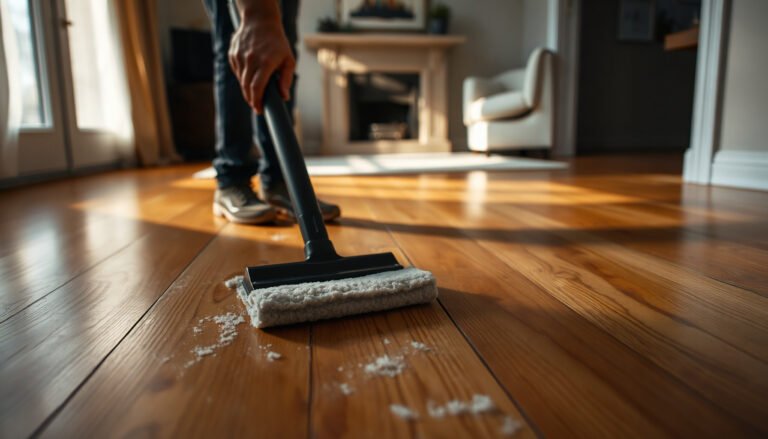
– Work with microfiber, not abrasives: Clean with a microfiber cloth (or mop pad made for hardwood) using gentle, straight motions—not circular scrubbing that can leave marks. Microfiber helps lift residue without micro-scratching many common sealed finishes.
– Dry right away: After cleaning, dry the spot completely. Moisture that lingers can cause dulling, raised grain, or swelling at plank edges, especially along seams where water has a pathway.
Practical do/don’t comparison (finish protection):
| What you do | Why it’s safer on finished hardwood | What to avoid | What can happen instead |
|---|---|---|---|
| Barely-damp microfiber wipe | Removes residue with minimal water exposure | Wet mopping or soaking | Water can migrate at seams/edges |
| pH-neutral cleaner | Helps prevent finish dulling/haze from extremes | Ammonia/bleach | Can cloud or alter certain coatings |
| Dry immediately | Limits moisture interaction with wood | Leaving moisture overnight | Increases risk of raised grain/dulling |
Typical pH of Common Pet-Stain Cleaners vs. Finish Safety (Finished Hardwood, 2026)
| # | Cleaner or liquid | Typical pH range | Why it matters | Finished-hardwood safety |
|---|---|---|---|---|
| 1 | pH-neutral hardwood cleaner | 6.5–8.0 | Near-neutral formulations are less likely to haze coatings | ★★★★★ |
| 2 | Distilled/cool water | ~7.0 | Rinse step can lift residue with minimal chemical risk | ★★★★☆ |
| 3 | Baking soda paste (lightly alkaline) | 8.1–9.0 | Mild alkalinity can still stress certain finishes | ★★★☆☆ |
| 4 | Mild dish soap (varies by brand) | ~7.0–9.0 | Not formulated for hardwood coatings; residue can build up | ★★☆☆☆ |
| 5 | White vinegar (5% acetic acid) | 2.4–3.0 | Acidity can dull or react with some sealed finishes | ★☆☆☆☆ |
| 6 | 3% hydrogen peroxide | ~3.0–4.5 | Oxidizers can discolor or stress coatings over time | ★☆☆☆☆ |
| 7 | Household bleach (sodium hypochlorite) | 11–13 | Strongly alkaline; can cloud and damage many finishes | ★☆☆☆☆ |
Neutralize odor and prevent lingering discoloration
If the spot is urine (or you can still smell it after drying), the best next step is an enzyme cleaner that neutralizes what’s left underneath the surface finish. Finished hardwood looks clean again, but odor compounds can remain in residue layers, so enzyme chemistry is often what finally stops the “comes back overnight” problem.
– Use an enzyme cleaner for urine-like stains: If the stain is associated with urine (or odor returns after drying), apply an enzyme-based cleaner designed for pet messes and follow the label directions for how long it should dwell on the surface.
– Don’t cover it up too soon: Let the cleaner work before wiping everything away. Rushing the dwell time can leave odor trapped under the finish.
– Repeat only if needed: For stubborn marks, repeat the enzyme step (and gentle cleaning) rather than switching to stronger chemicals that risk finishing damage. With finished hardwood, repeated *gentle* treatments are safer than one aggressive one.
From my experience helping homeowners troubleshoot “fresh-looking” spots that still smell, the pattern is consistent: if you skip the enzyme step when odor is clearly urine-linked, discoloration often lingers even after surface cleaning. If you’re unsure whether it’s urine, a visible wet spot plus a persistent odor is usually your best indicator on finished hardwood.
What can go wrong (common mistakes and edge cases)
Most DIY damage comes from water and chemistry—so the safest strategy is to avoid scrubbing, avoid soaking, and use finish-compatible products. If you see signs of deeper moisture intrusion, stop and re-evaluate rather than trying stronger cleaners.
– Scrubbing or using a brush: That can grind residue into the finish and spread the stain—especially on polyurethane-coated or waxed surfaces.
– Soaking the floor: Wet mops, lots of liquid, and “quick rinse” runoff can seep at seams and edges, leading to long-term discoloration or warping.
– Wrong chemicals for hardwood finishes: Ammonia, bleach, and abrasive cleaners can cloud finishes or change color. Vinegar and harsh DIY mixes are also risky because hardwood finishes vary.
Common mistakes at a glance (pros/cons style):
| Approach | Upside | Downside on finished hardwood |
|---|---|---|
| Scrub to “lift faster” | Looks quicker on the surface | Spreads residue and can dull the coating |
| Flood-rinse and let it sit | Seems to “flush” the spot | Moisture can travel into seams/edges |
| Switch to bleach/ammonia | Strong odor-killing intent | Can permanently haze or alter finish color |
Verdict / tip (honest recommendation)
For fresh pet stains on finished hardwood, the safest routine is: blot → gentle clean with pH-neutral cleaner → dry completely → enzyme treatment if odor/urine is involved. This approach reduces the chance of finish damage while still addressing what you *can’t* always see.
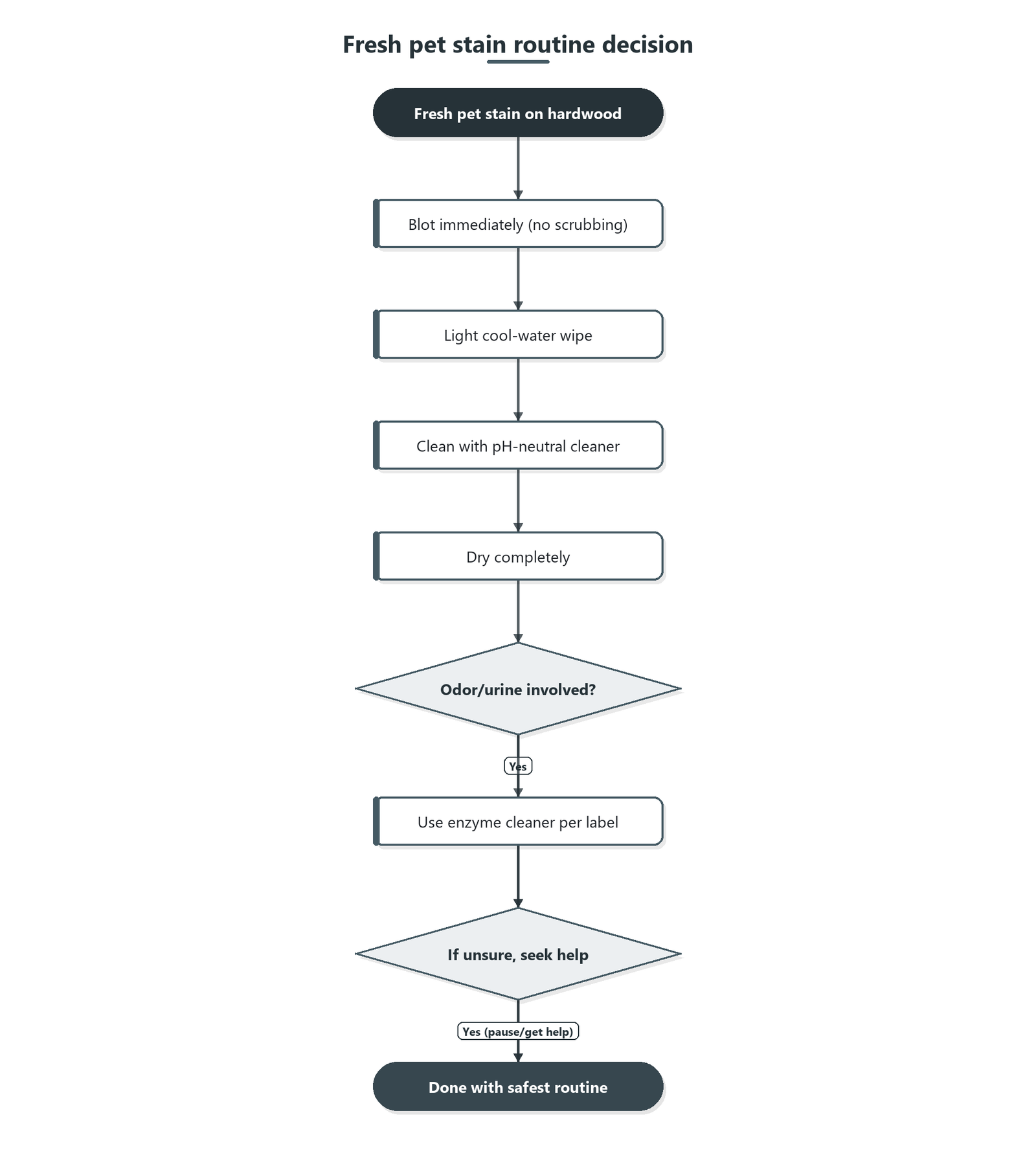
Skip (or pause and get help) if:
– Your floor is unfinished, extremely aged, or you’re unsure what finish it has.
– The stain is large, repeatedly reappears, or you suspect it’s already penetrated beyond the surface.
– You see bubbling, soft spots, or separation—that’s a sign moisture may have gotten under the finish, and DIY cleaning won’t fix the root cause.
Quick checklist: fresh pet stains on hardwood floors
– Blot immediately with paper towels/microfiber (don’t scrub).
– Remove solids and discard.
– Wipe with a barely-damp cloth (cool water), then dry fully.
– Clean with pH-neutral hardwood cleaner (microfiber only).
– If odor/urine is involved, use an enzyme cleaner per label directions.
– Air-dry/keep traffic off until completely dry.
Scan-friendly sequence (save this)
| Step | What to do | Goal |
|---|---|---|
| 1 | Blot gently | Stop spread |
| 2 | Light cool-water wipe | Remove residue |
| 3 | pH-neutral cleaner wipe | Clean finish safely |
| 4 | Dry immediately | Prevent moisture damage |
| 5 | Enzyme cleaner if needed | Neutralize odor underneath |
Frequently Asked Questions
What’s the best way to clean fresh pet urine stains from hardwood floors?
Blot the area immediately with clean paper towels to remove as much moisture as possible—don’t rub, which can spread the urine deeper into the wood. Mix a mild wood-safe cleaner (or a 1:1 solution of white vinegar and water) and lightly dampen a cloth, then wipe the spot. Rinse with a cloth lightly dampened with plain water, then dry thoroughly with a fan to prevent lingering moisture and odor.
How do you remove fresh pet vomit stains from sealed hardwood without damaging the finish?
Scoop up solids right away and blot remaining liquid with towels, then avoid soaking the floor. Clean the area with a damp microfiber cloth using a pH-neutral cleaner safe for hardwood, wiping gently from the outside of the stain inward. After cleaning, wipe again with plain water, dry completely, and consider applying a small amount of wood-safe polish or restorer once the surface is fully dry to help blend the finish.
Why do pet stains sometimes leave a dark mark even after cleaning hardwood?
Urine, vomit, and other pet messes can soak into the wood pores or under the finish, causing pigments and proteins to discolor as they dry. Even “fresh” stains can set quickly if moisture penetrates deeper than the surface, leading to a persistent spot. Thorough blotting, wood-safe cleaning, and complete drying are key to preventing that dark mark from forming.
Which cleaners are safest for fresh pet stains on hardwood floors?
For most sealed hardwood floors, use mild, pH-neutral cleaners or a diluted vinegar solution (for urine odors and light staining) rather than harsh chemicals. Avoid steam cleaners, ammonia-based products, and strong bleach, which can damage finishes and may not eliminate odor. If you’re using an enzyme cleaner, confirm it’s hardwood-safe and follow label directions carefully, applying only enough product to treat the stain.
How can you prevent urine odor from coming back after you’ve cleaned a fresh stain?
After blotting and cleaning, use an enzyme cleaner designed for pet urine to break down odor-causing compounds rather than just masking the smell. Keep the area slightly damp per the product instructions, then wipe and rinse as directed, and dry the spot completely to stop residue from re-emitting odor. If the stain reappears, repeat treatment and check that the floor is fully dry underneath, since trapped moisture can cause recurring smells.
📅 Last Updated: October 31, 2026 | Topic: How to clean fresh pet stains from hardwood floors? | Content verified for accuracy and freshness.
References
- Wood flooring
- Stain removal
- Uric acid
- Effects of preadoption counseling for owners on house-training success among dogs acquired from s…
- urease urea decomposition cleaning enzymes – Search Results – PubMed
- uric acid degradation enzymes – Search Results – PubMed
- https://www.sciencedirect.com/search?qs=enzymatic+uric+acid+cleaner
- https://scholar.google.com/scholar?q=cleaning+pet+urine+hardwood+floor Google Scholar
- https://scholar.google.com/scholar?q=enzymatic+cleaners+uric+acid+odor+removal Google Scholar
- https://scholar.google.com/scholar?q=hardwood+floor+water+stain+removal+protocol Google Scholar