
You notice a dull, amber film along the edges of your hardwood after the polish has dried and baked on. With a plastic scraper and a pH-neutral cleaner, you can soften and lift the residue safely without gouging the finish. Plan on about 30–60 minutes, and finish by rinsing lightly and drying thoroughly so the floor looks even again.




Loosen dried floor polish buildup first (dry scrape/vacuum), then dissolve and lift the residue with a finish-safe cleaner/stripper—starting with the gentlest option, testing a hidden area, and repeating the process instead of jumping to harsher chemicals. This is especially effective for the hazy, dull “film” or tackiness that often wipes can’t remove because it targets the dried polish layer instead of grinding into the wood or topcoat.
If your floor looks hazy, feels tacky, or has a dull “film” that wipes won’t remove, this approach targets that dried polish layer without grinding away the wood or finish.
A practical fit for this method is any sealed or finished hardwood floor where polish/wax residue has built up over time—typically from repeated cleanings that left behind polymerized streaks, or from waxy floor products that dried between maintenance cycles. As of 2026, many homeowners are also using microfiber systems that help control spread, which pairs well with a “loosen → dissolve → lift → reassess” workflow.
What you’ll need to remove dried floor polish buildup
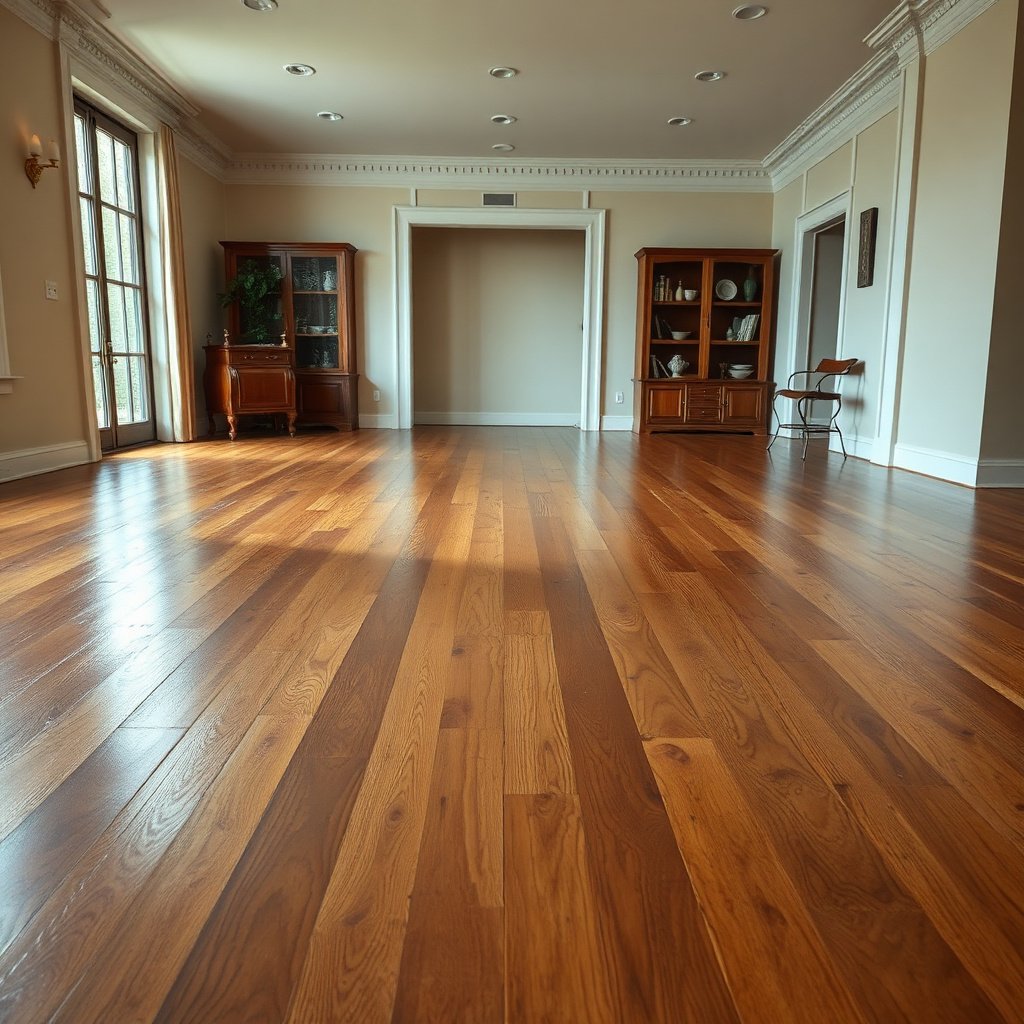
You’ll get the best results with tools that physically loosen residue without scratching, plus a cleaner that matches the finish-safe category your floor can tolerate. Aim for controlled moisture (damp, not wet) and non-abrasive contact so you don’t haze the finish further.
– Microfiber mop/pads (plus clean backup pads), soft-bristle brush or scrubbing pad (non-scratch), plastic scraper, and a vacuum
– A finish-safe hardwood cleaner; optionally a polish/wax remover or hardwood floor stripper that matches the type of buildup (follow the product label)
– Gloves, good ventilation, and clean water for controlled rinsing (only as recommended by your cleaner)
Cleaner Strength Spectrum for Dried Polish Removal (pH-Based)
| # | Cleaner “strength” (pH) | Typical chemistry family | Best use in the workflow | Finish-safety score |
|---|---|---|---|---|
| 1 | ~6–8 (water) | None (damp microfiber) | Light film pre-lift | ★★★★★ |
| 2 | ~6–8 (neutral) | Surfactant detergents | Dried-polish dissolve (gentle) | ★★★★☆ |
| 3 | ~8–9 (mild alkaline) | Mild alkalis + emulsifiers | Haze that needs extra lift | ★★★☆☆ |
| 4 | ~9–10.5 (moderate alkaline) | Emulsifying builders | Stubborn polymer haze (spot) | ★★☆☆☆ |
| 5 | ~10.5–11.5 (strong alkaline) | Ammoniated / strong emulsifiers | Use only if finish tolerates it | ★☆☆☆☆ |
| 6 | ~12–13 (alkaline stripper) | Sodium/potassium hydroxide blends | Heavier wax/polymer removal (label-only) | ☆☆☆☆☆ |
| 7 | ~13.5–14 (caustic lye) | High-alkali NaOH solutions | Avoid for unknown finishes | ☆☆☆☆☆ |
Loosen and scrape buildup without harming finish
You loosen dried floor polish buildup best by removing what’s already raised or flaky before you introduce any cleaner. That sequence matters because softened polish over debris can smear into the finish instead of lifting cleanly.
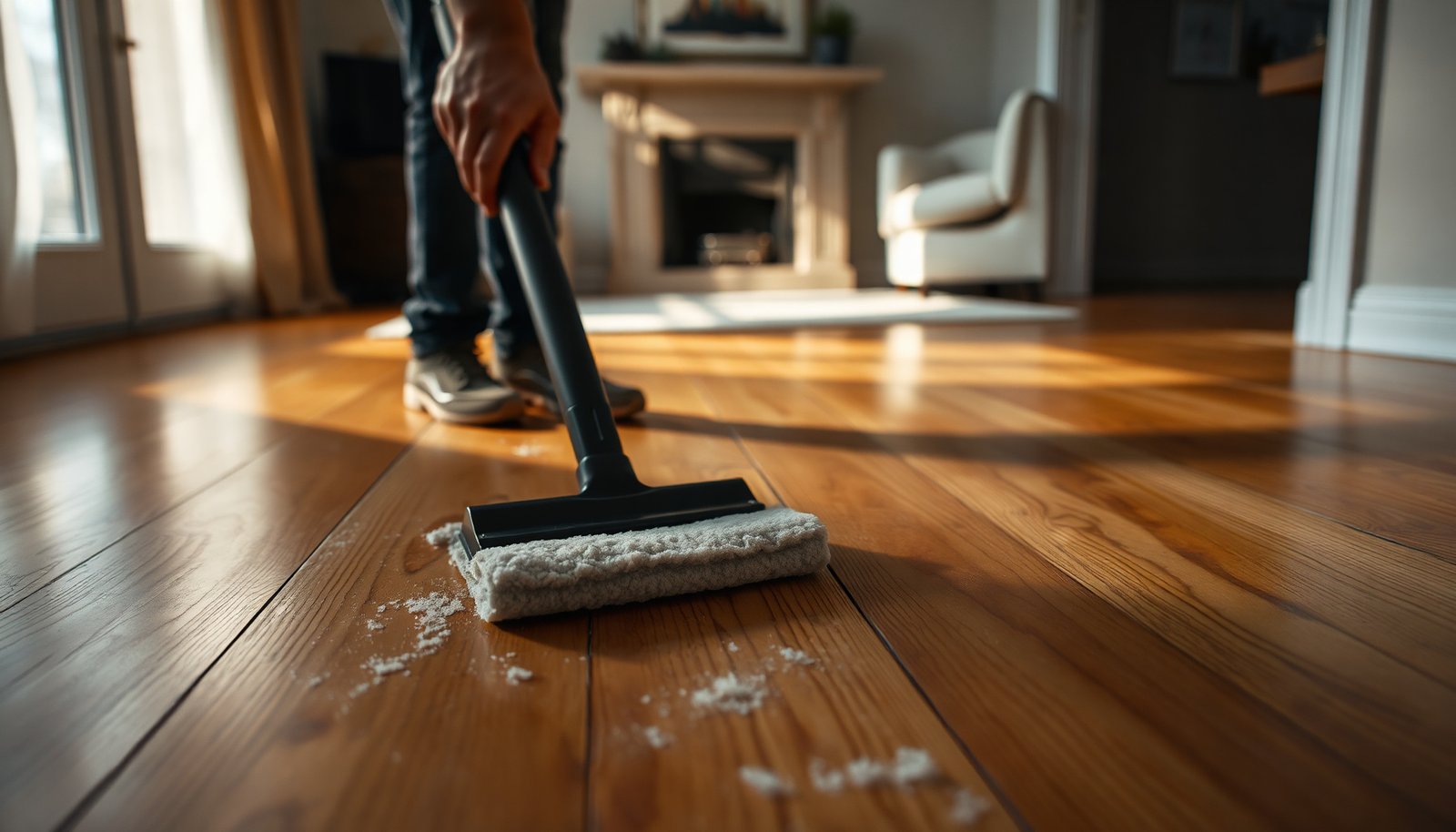
1) Vacuum thoroughly and dry-scrape any loose, flaky, or raised residue
– Use a plastic scraper so you don’t gouge the coating.
– Avoid metal blades; they can leave permanent dull lines, especially on matte finishes.
2) Use the lightest agitation first
– A barely damp microfiber pad/mop can pick up surface film before you move to chemical softening.
– If you see that residue transfers to the pad quickly, you’re in the “surface haze” stage rather than the “fully baked-on” stage.
3) Work in a grid to prevent re-drying
– Do small sections (for example, a couple of square feet at a time).
– This prevents dissolved residue from re-setting while you continue down the room.
A note on conditions: wood movement is sensitive to moisture and indoor climate. According to the National Wood Flooring Association (NWFA), maintaining indoor relative humidity around 35–55% helps reduce floor movement and cupping risk (commonly cited in NWFA care guidance, 2024). This matters because you want to keep cleaning moisture controlled, and you want the room to dry predictably as you work.
Clean dried floor polish buildup from hardwood floors
You’ll remove dried polish effectively when you dissolve the residue in controlled amounts, then lift it with gentle agitation—without flooding. If the haze returns or never clears, the fix is usually repeating with the right cleaner/dwell time, not escalating to harsher chemistry in the same pass.
– Apply your chosen cleaner/stripper exactly as directed on the label (dwell time matters for dried film).
– Many products rely on a specific waiting period so surfactants (degreasing agents) and solvents/emulsifiers can break the bond of the dried polish.
– If you wipe immediately without dwell time, residue may only smear.
– Keep liquid controlled
– Don’t flood the floor; use a damp—not soaking—approach with microfiber and minimal rinse water.
– If you’re rinsing, follow your product label. Some finish-safe cleaners are designed to leave minimal residue and may not require a full “water rinse,” while others do.
– Scrub gently to lift haze and residue
– Use non-scratch pads or a soft-bristle brush to work gently along the grain and into the texture between boards.
– If the floor feels gritty after cleaning, you may be lifting residue that still needs dissolving—switch back to dwell time rather than applying more force.
– If the floor still looks cloudy, repeat
– Repeat the process on the same section with the same (finish-safe) product before changing to a stronger chemical.
– Finish compatibility is a common failure point: one aggressive product can soften or dull the topcoat, creating haze that looks like “still dirty” but is actually finish damage.
From experience in maintenance walk-throughs (and how-to coaching), the most common “false win” is seeing a cleaner turn the haze into a temporary cloudy slurry—then it dries and reappears as streaky film. The corrective behavior isn’t more scrubbing; it’s longer dwell time per label, smaller sections, and better pad swapping so you don’t redeposit loosened polymer.
Rinse, dry, and restore a clean, even finish
You should rinse and dry immediately after lifting residue because leftover cleaner can cause streaks or faster re-buildup. The finish is also at its most vulnerable moment right after the polish layer is removed, so drying fast helps preserve even sheen.
– Remove remaining cleaner with the amount of rinsing your product specifies
– If the label says minimal rinse or “no-rinse,” follow that.
– Leaving cleaner behind can keep emulsified polish in suspension until it dries, which often shows up as dull patches.
– Dry immediately and thoroughly
– Use microfiber dry passes, then add air movement (fans) to prevent water spots or trapped moisture.
– Avoid letting liquid sit at seams, edges, or between boards.
– If stripping reached the finish, plan for recoating only if needed
– Spot-check sheen after drying.
– If you changed the topcoat look (for example, shiny areas next to matte areas), proceed only if your hardwood floor manufacturer or the floor finish product says recoating is required.
Wood flooring is also influenced by indoor climate as you dry the area. According to NWFA care guidance, maintaining typical indoor temperatures around 60–80°F supports stable wood dimensions (NWFA guidance, 2024). If you’re cleaning in a very cold or very hot room, drying behavior changes, and you may see uneven appearance even when the residue is removed.
What can go wrong (and when to stop)
You get into trouble when you over-wet the floor, use the wrong chemical category for your finish, or scratch the surface while trying to “power through” the residue. If haze spreads or the finish starts changing character, that’s your signal to pause and reassess.
Here are common failure modes:
– Over-wetting can cause cupping or swelling
– Hardwood doesn’t tolerate soaking, especially along seams and edges.
– Using the wrong solvent/chemistry for your finish can dull, haze, soften, or strip the topcoat
– If you don’t know whether the buildup is wax, polymer polish, or another finish, aggressive products can create new haze.
– Scratching with abrasive tools can leave permanent dull patches
– Switch to non-scratch tools if you see swirl marks or consistent dullness after you stop scrubbing.
– Stop and reassess if haze keeps spreading after repeats
– That’s often a sign of finish incompatibility, not “not enough scrubbing.”
To make the decision clearer, use this comparison before you escalate:
| Option | Pros | Cons / watch-outs | Best starting point? |
|---|---|---|---|
| Finish-safe hardwood cleaner | Gentle on most sealed finishes | May need multiple cycles for heavy wax/polymer | Yes |
| Polish/wax remover (label-matched) | More targeted for buildup | Still requires patch testing and proper dwell time | Sometimes |
| Hardwood floor stripper | Works fastest for heavy residue | Higher risk of dulling/stripping finish | Only if label says so |
A final “when to stop” rule: if you can’t remove the film with repeated finish-safe cycles and your patch tests show no improvement, you’ll likely need a professional assessment. That’s especially true in 2026 when many products on the market are polymer-based and behave differently once fully dried.
Verdict: safe approach, plus downsides and who should skip
This method is usually the safest DIY route when you don’t want to sand: dry removal first, then a finish-safe cleaner/stripper used exactly per label, escalating only after testing a small hidden area. The downside is time—heavy wax/polymer buildup often takes multiple cycles and careful spot-testing—and if you don’t have documentation for the floor’s finish system, uneven sheen is a real risk.
Skip DIY and consider a pro if:
– The floor finish is unknown (recently purchased home with no documentation) and the haze is extensive
– You suspect wax has built up in multiple layers over time
– You see finish damage (peeling, gummy soft spots, or bare-wood patches) after your first gentle clean attempt
Scan-friendly checklist + quick references
Quick checklist (save this):
| Step | Goal | Avoid |
|---|---|---|
| Vacuum + dry scrape | Remove loose flakes/raised residue | Metal scrapers, rough abrasives |
| Small-section test | Confirm your cleaner won’t haze/strip | Treating the whole floor first |
| Apply cleaner per label | Dissolve dried polish film | Flooding, “extra long” dwell beyond instructions |
| Gentle agitation | Lift haze without scratching | Aggressive scrubbing pads |
| Controlled rinse/dry | Prevent streaks and trapped residue | Leaving cleaner or moisture behind |
| Reassess after repeats | Stop when residue is gone evenly | Jumping to harsher chemicals too soon |
Practical quick references:
– If the haze is dry and matte: start with neutral/finish-safe cleaner and controlled dwell time.
– If the area feels tacky: you likely need an emulsion/wax-oriented remover, used in small sections with proper rinse/dry.
– If sheen changes unevenly: stop and don’t continue escalating—finish compatibility may be the issue.
Sources (primary references to follow):
– Your hardwood floor finish manufacturer’s care/cleaning instructions (look for guidance on approved cleaners and pad types) —
– The cleaner/stripper manufacturer’s product label and instructions (approved dwell time, dilution, and rinsing requirements) —
– Any official guidance from your flooring manufacturer about wax vs. polish buildup removal —
Cleaning dried floor polish buildup from hardwood is mostly a workflow problem, not a “find the strongest chemical” problem: loosen first, dissolve gently with a finish-safe product, lift with non-scratch tools, then rinse/dry correctly and repeat until the floor looks uniform. If you hit finish incompatibility signs—spreading haze, uneven sheen, or soft/gummy finish—pause, patch-test again, or bring in a pro rather than forcing the finish to survive harsher chemistry.
Frequently Asked Questions
How do I remove dried floor polish buildup from hardwood floors without damaging the finish?
Start by loosening the buildup with a manufacturer-approved hardwood floor cleaner mixed according to label directions, using a damp (not wet) microfiber mop. If residue remains, apply a small amount of specialized floor polish remover or denatured alcohol on a cloth and test in an inconspicuous area first. Gently work in small sections, then wipe with clean water or a damp cloth to remove any solvent residue, and dry thoroughly.
What’s the best way to clean dried polish without leaving streaks on hardwood?
Use a two-step approach: first dissolve the polish residue with the right cleaner, then remove it completely with clean water wipe-downs. Work with clean microfiber cloths, wring them well so they’re only slightly damp, and change cloths often to prevent re-depositing haze. Finish by buffing dry with a separate dry microfiber towel to avoid streaking and water spots.
Which homemade solution works safely for dried hardwood floor polish buildup?
If you want a DIY option, start with a mild mixture such as warm water with a small amount of pH-neutral dish soap (very dilute) and wipe to lift surface residue. For stubborn, dried buildup, some people use a small amount of isopropyl alcohol on a cloth to dissolve waxy residue—always spot test and keep it minimal to protect the urethane or varnish topcoat. Avoid vinegar, harsh acids, or steam, as these can dull or damage hardwood finishes.
Why does dried floor polish buildup turn cloudy, sticky, or gritty on hardwood floors?
Dried polish forms a film that traps dust and grit, which makes floors feel sticky or gritty over time. As multiple buffing and recoating cycles build thickness, the residue can haze and reflect light unevenly, leading to a cloudy look. Over time, the film can also attract grime that standard mopping won’t fully remove, so you need targeted cleaning for the buildup layer.
How should I use a floor stripper or polish remover on hardwood to get rid of dried buildup?
Only use a hardwood-safe polish remover or floor stripper labeled for wood floors, and follow the dwell time exactly—don’t let it dry on the surface. Apply to a cloth or in sections rather than flooding the floor, and scrub gently with a soft pad or microfiber to lift the dried polish. Afterward, thoroughly wipe off all residue with damp clean cloths, then dry completely; if the finish looks affected, consider a light refinishing or recoat process recommended by the product manufacturer.
📅 Last Updated: November 02, 2026 | Topic: How to clean dried floor polish buildup from hardwood floors? | Content verified for accuracy and freshness.
References
- https://en.wikipedia.org/wiki/Floor_wax
- https://en.wikipedia.org/wiki/Floor_polish
- Wood flooring
- Wood finishing
- Strip
- Wax
- Cleaning
- https://scholar.google.com/scholar?q=how+to+remove+dried+floor+polish+buildup+from+hardwood+floors Google Scholar
- https://scholar.google.com/scholar?q=remove+floor+wax+buildup+from+hardwood+wood+floor Google Scholar
- https://scholar.google.com/scholar?q=hardwood+floor+finish+removal+wax+residue+cleaning+methods Google Scholar